Gettysburg gets all the glory, but Pennsylvania’s Civil War story stretches far beyond that famous battlefield. Confederate troops burned towns, cavalry clashed in courthouse squares, and Union soldiers trained by the hundreds of thousands at camps across the state.
Some of these places are well-preserved and widely visited, while others hide in plain sight inside residential neighborhoods or behind quiet museum doors. This article rounds up 13 sites across Pennsylvania where the war left a mark that you can still see, walk through, or read about today.
From a hilltop museum in Harrisburg with 66,000 square feet of exhibits to a farmhouse yard where Confederate artillery once pointed toward the Susquehanna River, each stop offers a different angle on the conflict. Whether you are a lifelong history enthusiast or just curious about what happened in your own backyard, these places are absolutely worth the trip.
1. The National Civil War Museum, Harrisburg, Pennsylvania
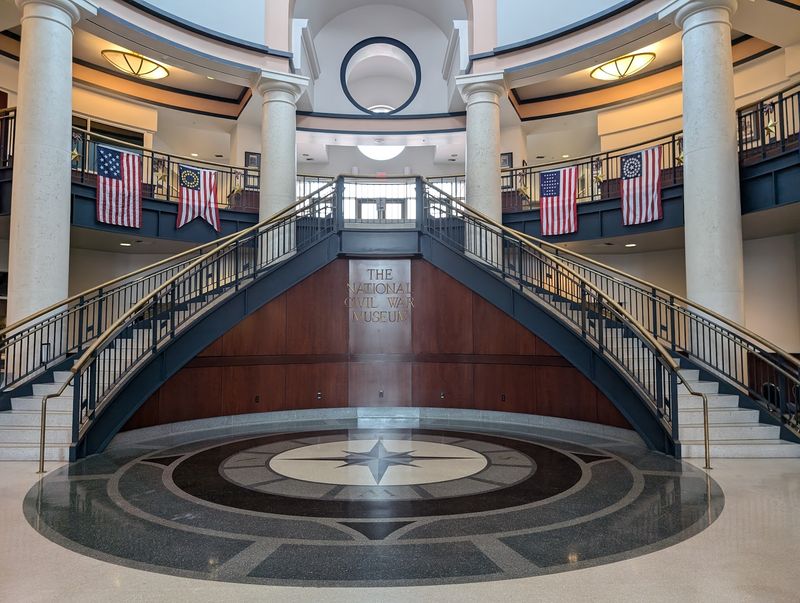
High above Harrisburg in Reservoir Park, this museum makes an immediate statement before you even reach the front door. Opened in 2001 as a Smithsonian affiliate, it covers 66,000 square feet across two floors and is one of the largest museums in the world dedicated solely to the American Civil War.
Its galleries trace the conflict from its causes through emancipation and the difficult aftermath, using artifacts, manuscripts, flags, uniforms, weapons, medical items, and multimedia presentations. Exhibits like “A House Divided” and “Women at War” give the story real texture beyond the battlefield maps.
Self-guided tours typically take two to four hours, so plan your visit accordingly. The museum is open Monday through Saturday from 10 a.m. to 5 p.m. and Sunday from noon to 5 p.m., with admission fees that include discounts for seniors and students.
2. U.S. Army Heritage and Education Center, Carlisle, Pennsylvania
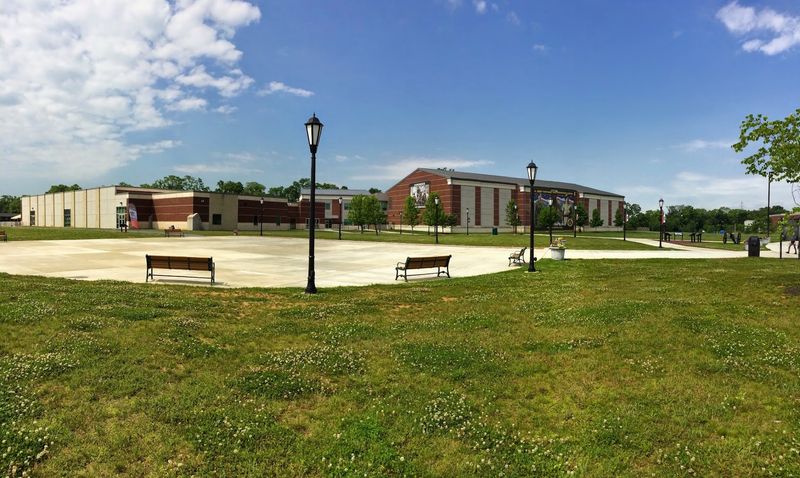
Most history museums keep everything under one roof, but this one sends you outside to walk a mile-long trail through American military history. The U.S.
Army Heritage and Education Center in Carlisle combines a detailed indoor gallery with an outdoor Army Heritage Trail that features full-scale reconstructions, including Civil War winter encampment cabins modeled on period photographs.
The cabins include a cook house, a horizontal log wall cabin, a vertical log wall cabin, and an officer’s quarters, giving visitors a surprisingly concrete sense of camp life. Inside, the Ridgway Hall holds an extensive research collection of Civil War photographs, books, and unpublished personal accounts.
Admission and parking are both free, which makes this one of the best-value history stops in the state. The museum is open Monday through Saturday from 10 a.m. to 5 p.m., and the outdoor trail is accessible daily from dawn to dusk.
3. The Old Jail, Chambersburg, Pennsylvania
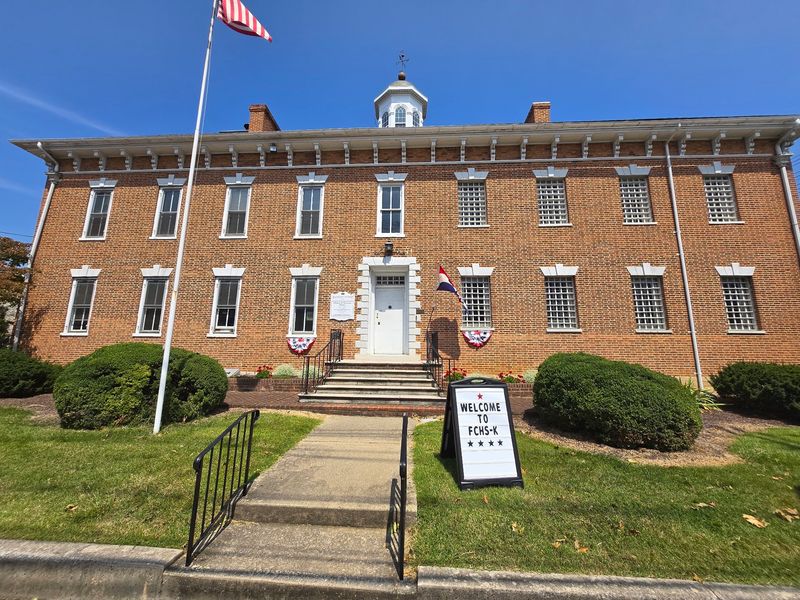
Built in 1818 with thick stone walls and enclosed by a 20-foot limestone perimeter, the Old Jail in Chambersburg looks exactly like a place designed to keep people in. When Confederate forces burned much of the surrounding town in July 1864, those walls proved their worth and the building survived almost untouched.
The jail held some notable occupants over the years, including Captain John Cook, one of the men connected with John Brown’s raid on Harpers Ferry. Tradition also holds that its cellar dungeons served as a stop on the Underground Railroad, with rings for shackles still visible in the walls.
Today the complex houses the Franklin County Historical Society and its museum of local artifacts. Guided tours lasting 45 to 60 minutes are offered Tuesday through Saturday from 10 a.m. to 3 p.m., and they remain the only way to see the interior.
4. John Brown House, Chambersburg, Pennsylvania
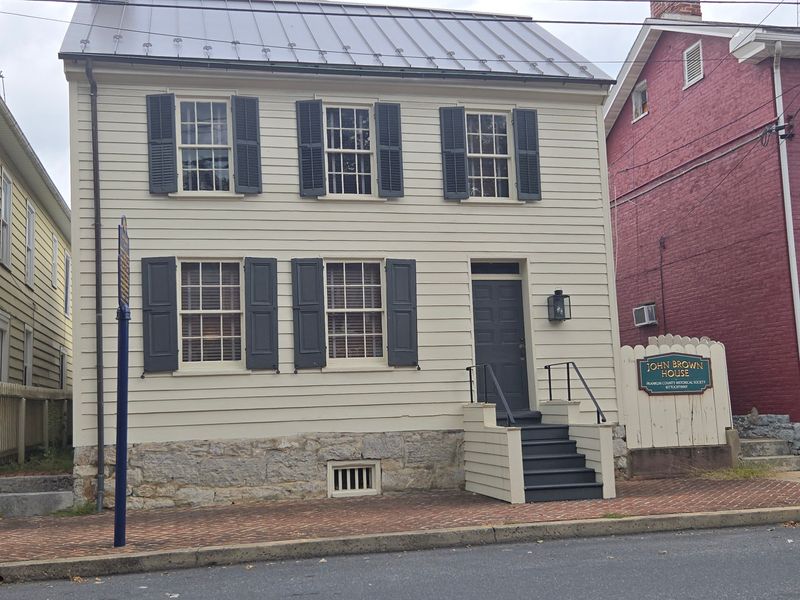
A two-story clapboard building on a quiet block holds one of the most charged pre-war stories in Pennsylvania. During the summer of 1859, abolitionist John Brown stayed here under the alias Isaac Smith while quietly gathering weapons and planning his raid on the federal arsenal at Harpers Ferry.
Brown even held a secret meeting nearby with Frederick Douglass during this period. The house was already known as a stop on the Underground Railroad, which likely explains why Brown chose it.
When Confederate forces burned Chambersburg in 1864, the house sat just outside the main area that was torched and survived.
Operated by the Franklin County Historical Society, the house is open by appointment, with visitors advised to check in at the Old Jail first. A combo ticket for both sites is available, and tours typically begin with a short film about Brown’s life and motivations.
5. Monterey Pass Battlefield Park & Museum, Waynesboro, Pennsylvania
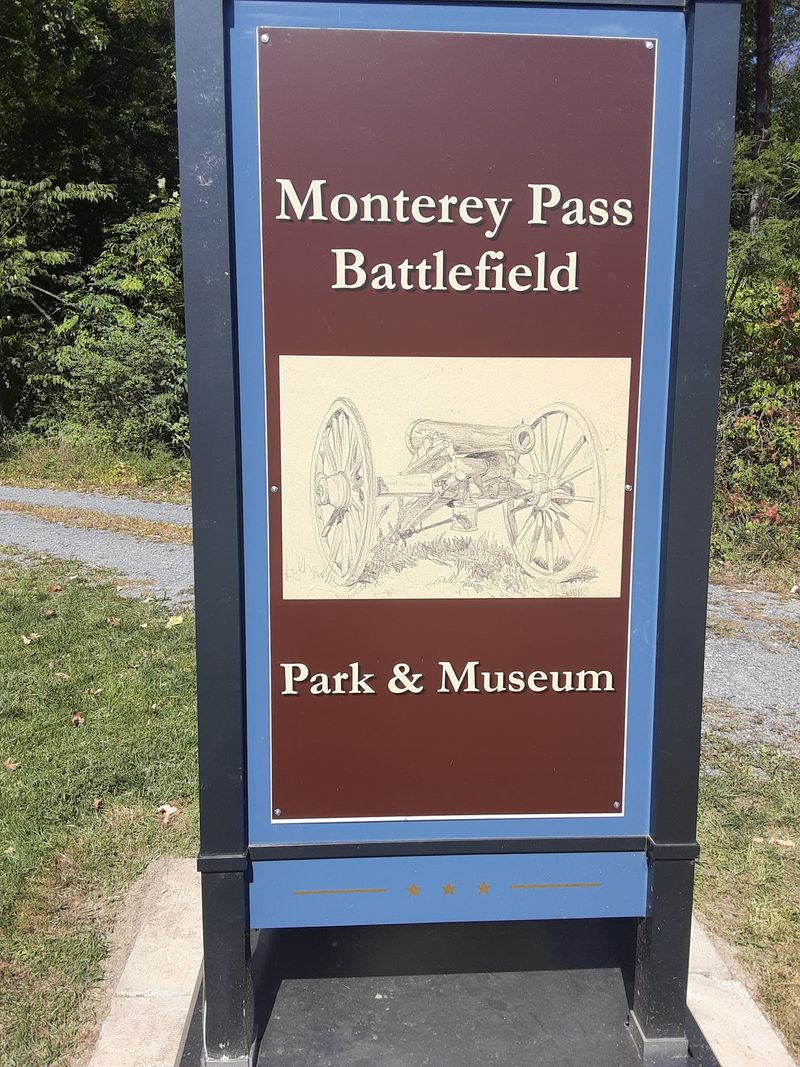
On the stormy night of July 4, 1863, Union cavalry attacked a retreating Confederate wagon train through the narrow mountain corridor of Monterey Pass, turning a dark and rain-soaked mountain road into a chaotic battlefield. With visibility limited to lightning flashes and muzzle fire, Union forces under Brigadier General Judson Kilpatrick captured over 1,500 prisoners and destroyed dozens of wagons.
A 12-year-old local girl named Hetty Zeilinger guided Union troopers around Confederate lines that night, a detail that tends to stop visitors mid-sentence. The engagement was the second-largest Civil War battle in Pennsylvania and the only one that spanned both Pennsylvania and Maryland.
Today, the park preserves 120 to 220 acres with interpreted hiking trails and a scenic overlook at Monterey Peak. The museum, open weekends from April through October, displays artifacts and explains the battle in detail, with free admission for all visitors.
6. Center Square, Hanover, Pennsylvania
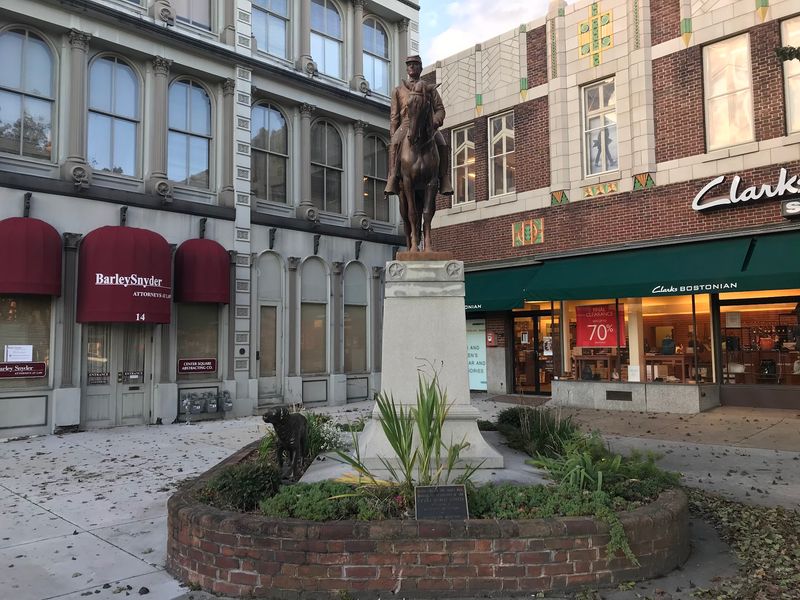
On June 30, 1863, one day before Gettysburg opened, Confederate cavalry under Major General J.E.B. Stuart collided with Union forces in the streets of downtown Hanover.
The fight swept through the square and surrounding blocks in a confused series of charges, countercharges, and artillery exchanges that left the town center looking nothing like the peaceful hub it normally was.
Stuart himself narrowly avoided capture by leaping his horse over a 15-foot-wide obstacle during the fighting. The delay caused by the Battle of Hanover prevented Stuart’s cavalry from reaching Gettysburg until the second day, a timing problem that had real consequences for Confederate operations.
A bronze statue called “The Picket,” sculpted in 1905 and depicting a Union cavalryman, stands in the square today as a permanent reminder of the engagement. The Hanover Area History Museum nearby offers additional exhibits on the town’s wartime role.
7. Hanover Junction Station, Seven Valleys, Pennsylvania
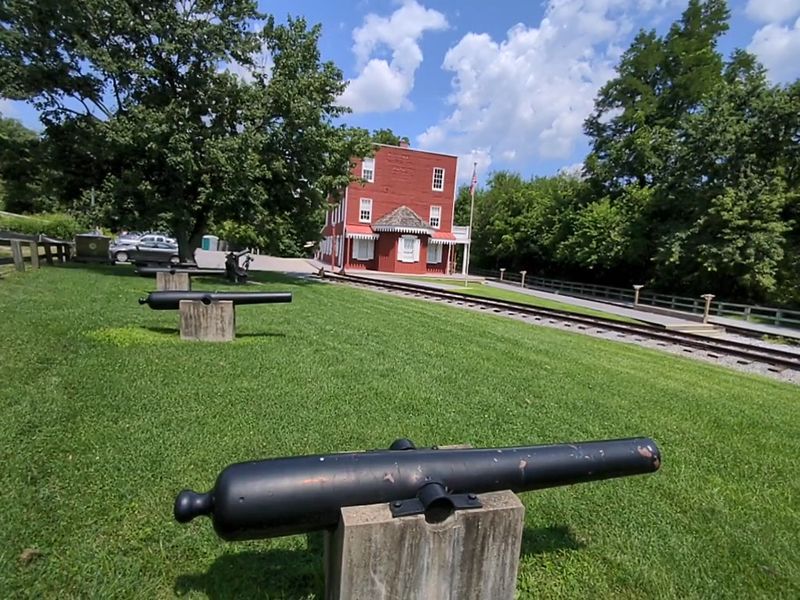
Abraham Lincoln stopped at this small York County railroad station twice, once on November 18, 1863, while traveling to deliver his Gettysburg Address, and again on his return trip. His funeral train passed through in April 1865.
For a building that looks peacefully tucked beside a trail, Hanover Junction Station has seen an unusual amount of history roll through.
Built in 1851 as a junction between the Northern Central and Hanover Branch Railroads, the station was raided by Confederate cavalry on June 27, 1863, with bridges and telegraph lines destroyed. After Gettysburg, it became a critical route for moving wounded soldiers to hospitals in northern cities.
Restored to its Civil War-era appearance in the early 2000s, the station now operates as a free museum open Saturdays and Sundays from April through October. Four Civil War cannons stand near the building, and exhibits inside include period photographs and artifacts from the era.
8. Historic Mifflin House and Farm, Wrightsville, Pennsylvania
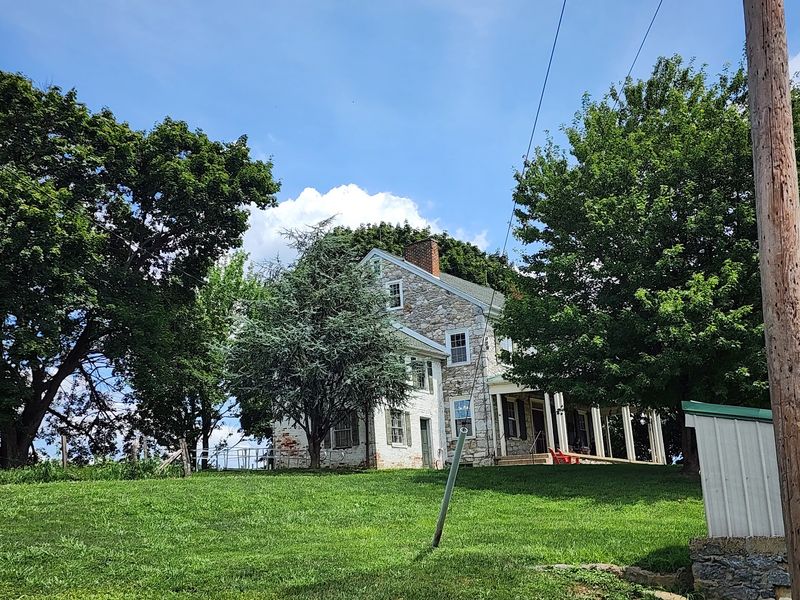
Few properties in Pennsylvania carry two chapters of history as distinct as the ones layered into this 87-acre Wrightsville farmstead. From 1810 to 1840, Quaker abolitionists Jonathan and Susanna Wright Mifflin sheltered freedom seekers here, helping them cross the Susquehanna River to safety.
The property is now an officially recognized site on the National Park Service’s Underground Railroad Network to Freedom.
Then came June 28, 1863, when Confederate General John B. Gordon positioned artillery in the farm’s front yard during the push toward the Susquehanna.
The resulting engagement led to the burning of the Columbia-Wrightsville Bridge to stop the Confederate advance.
After more than two centuries of private ownership, the property opened to the public in May 2025 as the Susquehanna Discovery Center and Heritage Park. Free guided tours run on Saturdays from 10 a.m. to 4 p.m. through October, covering both the Underground Railroad and Civil War stories.
9. Camp Curtin Park, Harrisburg, Pennsylvania
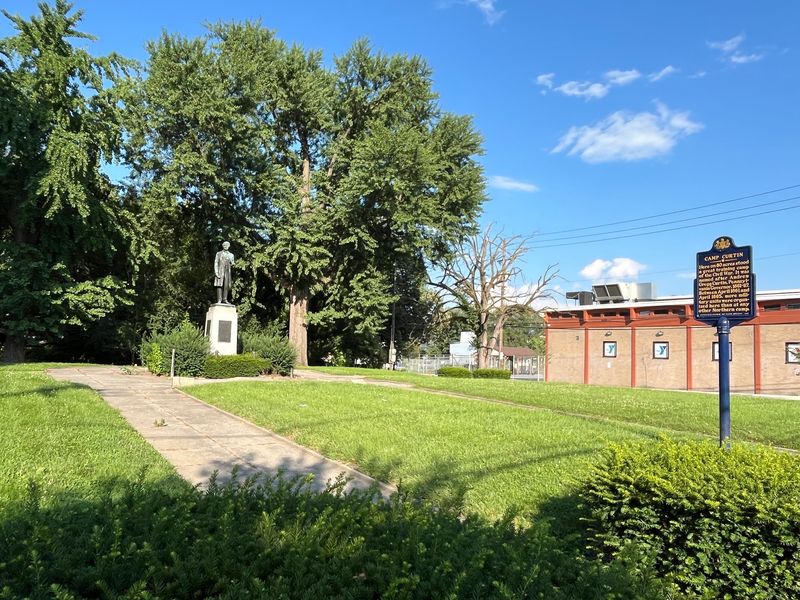
More than 300,000 Union soldiers passed through Camp Curtin during the Civil War, making it the largest Federal military training camp in the entire nation. Established on April 18, 1861, on the Dauphin County Agricultural Fairgrounds, it was named for Pennsylvania Governor Andrew Gregg Curtin, who pushed hard for the state’s rapid mobilization.
The 80-acre camp sat along major railroad lines, which made moving troops and supplies efficient. Over four years it functioned as a training center, supply depot, hospital, and prisoner-of-war camp before closing on November 11, 1865, as a mustering-out point for returning soldiers.
The original grounds covered far more land than today’s small commemorative park at North 6th Street and Woodbine Street. A statue of Governor Curtin and historical markers anchor the site, and the Camp Curtin Historical Society continues to run educational programs and a Wayside Marker Program to keep the story accessible.
10. Soldiers & Sailors Memorial Hall & Museum, Pittsburgh, Pennsylvania
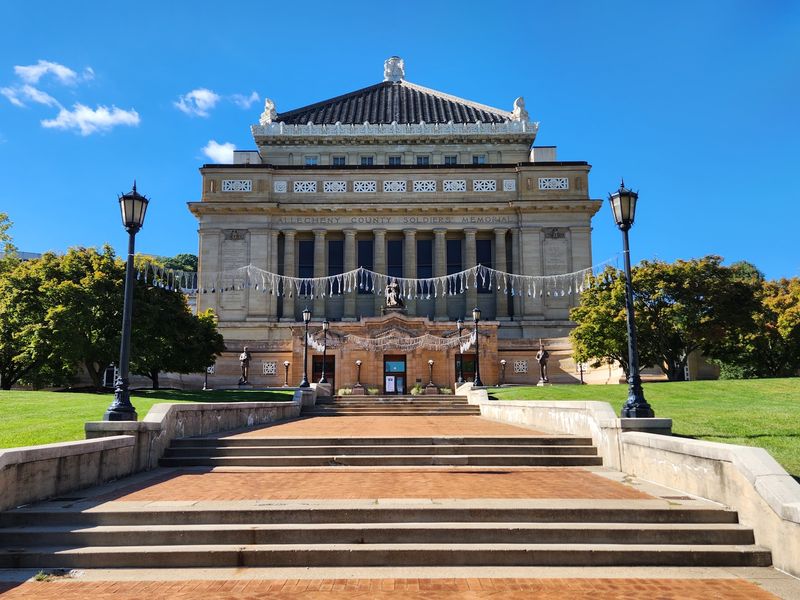
Pittsburgh’s Soldiers and Sailors Memorial Hall was conceived by the Grand Army of the Republic in 1905 and opened in October 1910 as a tribute to Allegheny County’s Civil War veterans. Designed in the Beaux-Arts style by architect Henry Hornbostel, the stone building projects a sense of formal ceremony from the outside in.
Inside, five detailed stained-glass windows reference Civil War veterans’ organizations, and bronze plaques in the hallways carry the names of over 25,000 Allegheny County Civil War veterans. The Gettysburg Room, originally a GAR meeting space, now features artifacts and exhibits from that battle, while the West Hall focuses on personal stories of local soldiers.
The auditorium holds a 78-foot-wide hand-painted canvas of Lincoln’s Gettysburg Address, considered the largest in the world. The museum is open Monday through Saturday from 10 a.m. to 4 p.m., with free entry for military personnel and veterans.
11. Fort Mifflin, Philadelphia, Pennsylvania
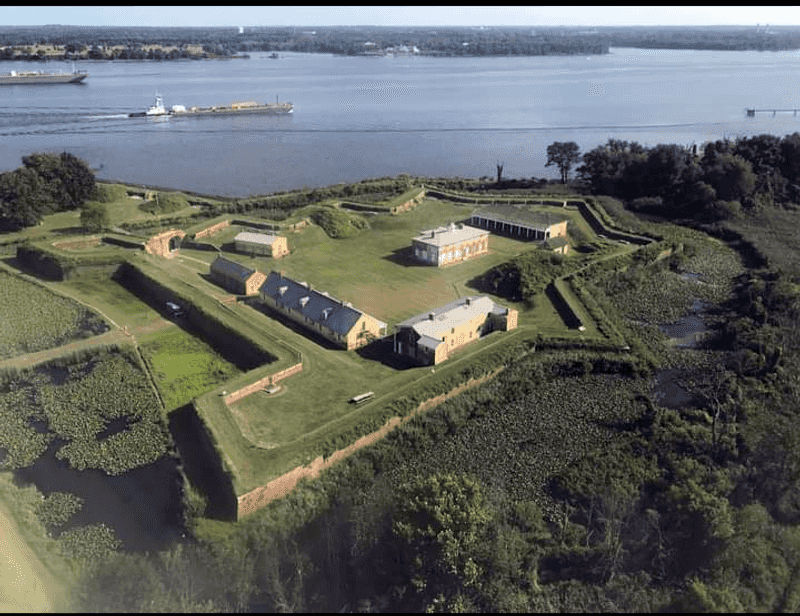
Fort Mifflin is best known for its Revolutionary War role, but its Civil War chapter is equally compelling and far less talked about. After repairs completed in 1863, the fort’s thick casemates were converted into a military prison holding three distinct groups: Confederate prisoners of war, Union soldiers convicted of military offenses, and civilians suspected of disloyalty held without formal charges.
Some of the Confederate prisoners had been captured at Gettysburg, with up to 216 held at peak capacity in Casemate No. 1. Union inmate Private William H.
Howe led an escape attempt and was later executed at the fort in 1864, adding a grim footnote to its wartime record.
As a National Historic Landmark, Fort Mifflin is open to the public from March 1 through December 15, Wednesday through Sunday, from 10 a.m. to 4 p.m. Guided tours and weekend cannon demonstrations are available on-site.
12. Laurel Hill East, Philadelphia, Pennsylvania
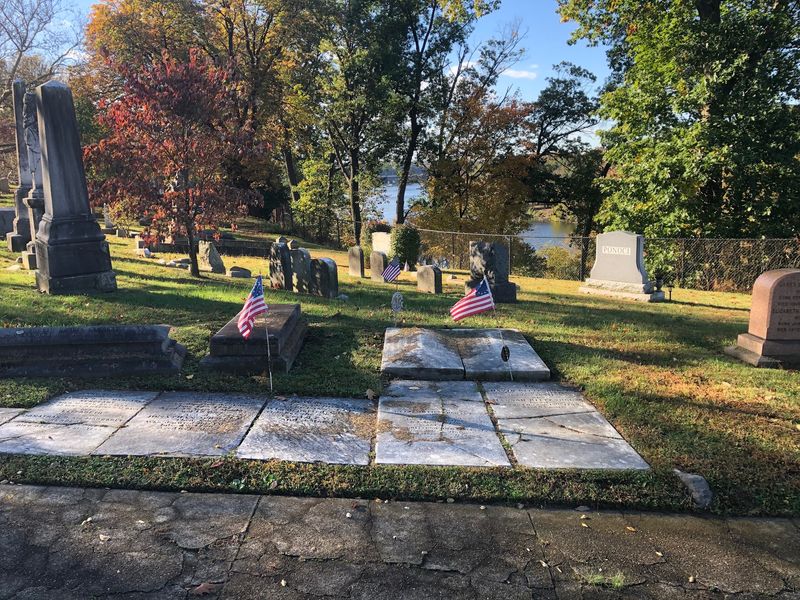
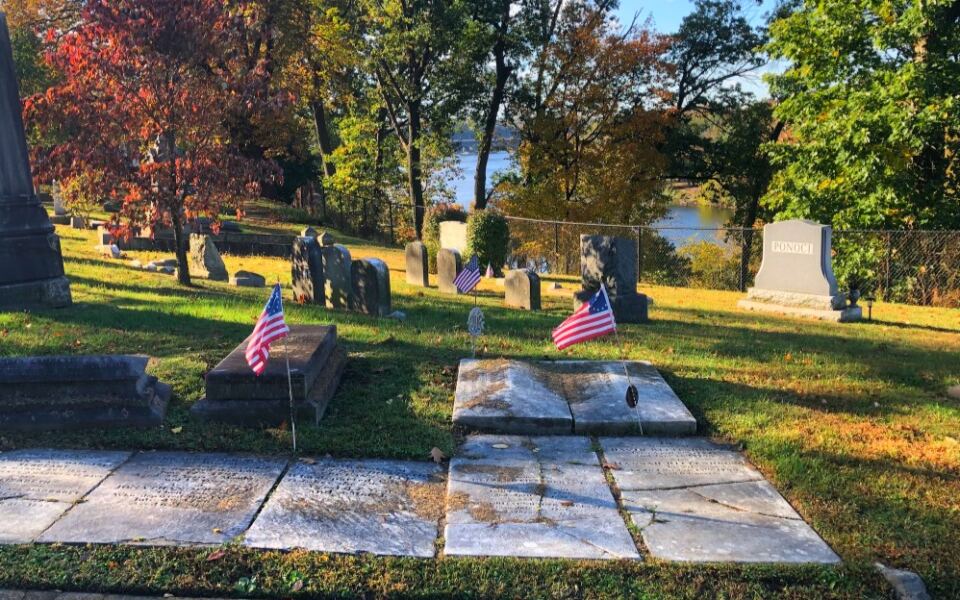
Established in 1836 and designated a National Historic Landmark, Laurel Hill East is one of Philadelphia’s most historically layered landscapes. Its winding paths pass elaborate monuments, old trees, and open views toward the Schuylkill River, and its Civil War connections run remarkably deep beneath the quiet surface.
The most prominent burial here belongs to Union General George Gordon Meade, commander of the Army of the Potomac at Gettysburg, whose modest gravestone rests on a slope above the river. His 1872 funeral drew President Ulysses Grant and several celebrated generals.
Around 40 Union generals are buried within the grounds, along with officers, enlisted men, nurses, surgeons, and civilians connected with the conflict. Confederate General John Pemberton also rests here.
The Friends of Laurel Hill offer guided tours focused on Civil War residents, and self-guided audio tours are available. Admission to the cemetery grounds is generally free for all visitors.
13. Grand Army of the Republic Civil War Museum & Archive, Philadelphia, Pennsylvania
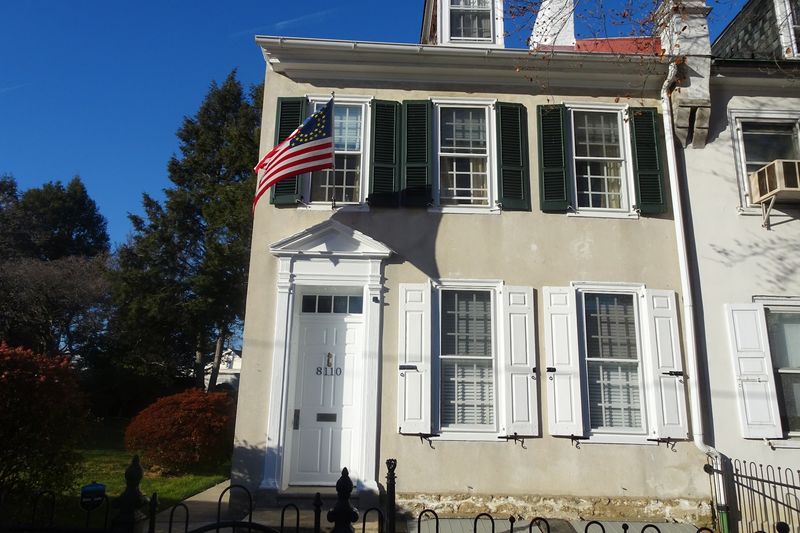
Housed inside the Lewis-Pattison House at 8110 Frankford Avenue, a building dating to 1805, this museum takes a deliberately focused approach to the Civil War. Rather than covering every theater and campaign, it concentrates on the people who lived through the conflict, particularly Union veterans connected with the Grand Army of the Republic and its auxiliary organizations.
Its most talked-about holding is the mounted head of Old Baldy, Major General George Meade’s warhorse, which served in multiple battles and was wounded several times. The museum also displays the handcuffs found in John Wilkes Booth’s trunk and a blood-stained strip from Lincoln’s pillowcase, two objects that tend to stop visitors cold.
Archives holding 19th and 20th-century documents, newspapers, photographs, and GAR post records are accessible to researchers. The museum is open Tuesdays from 11 a.m. to 4 p.m. and by appointment, with no admission fee charged.
Share this story