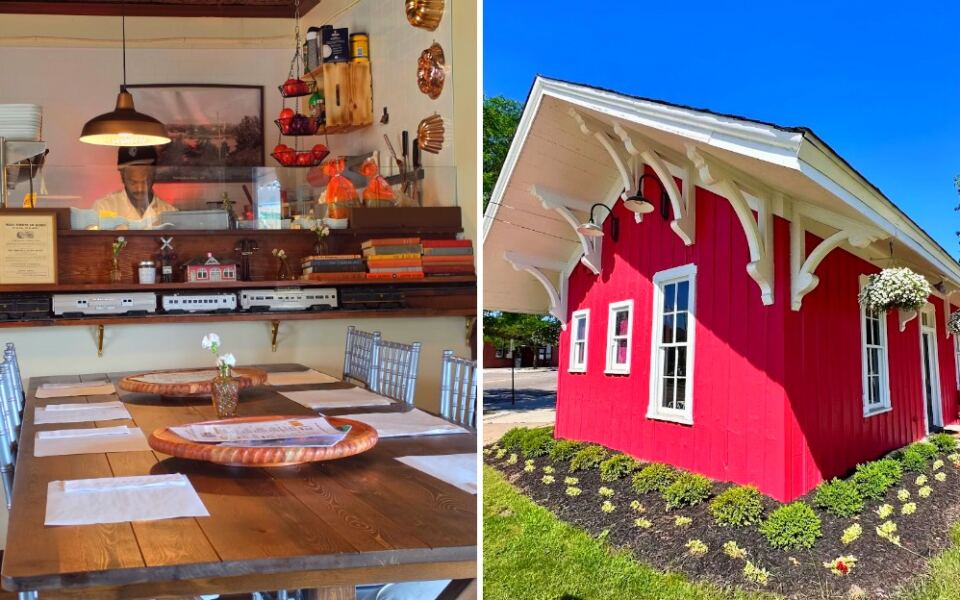
A train depot built in 1872 has survived in downtown Rochester long after the passenger trains and railroad tracks disappeared. Today, the historic building has an entirely different purpose, serving sandwiches, soups, salads, and artisan chocolates.
The Old Rochester Train Depot once served the Detroit and Bay City Railroad and later the Michigan Central Railroad. Passenger service ended in 1960, and the tracks were eventually removed, but the small red depot remained.
Now visitors can step inside the former station for lunch, order sandwiches such as the Purple Pickle and Maggie, and browse handcrafted chocolates. It is an unusual second chapter for a building that helped connect Rochester to the rest of Michigan more than 150 years ago.
A Stop on the Line: The Address and Setting
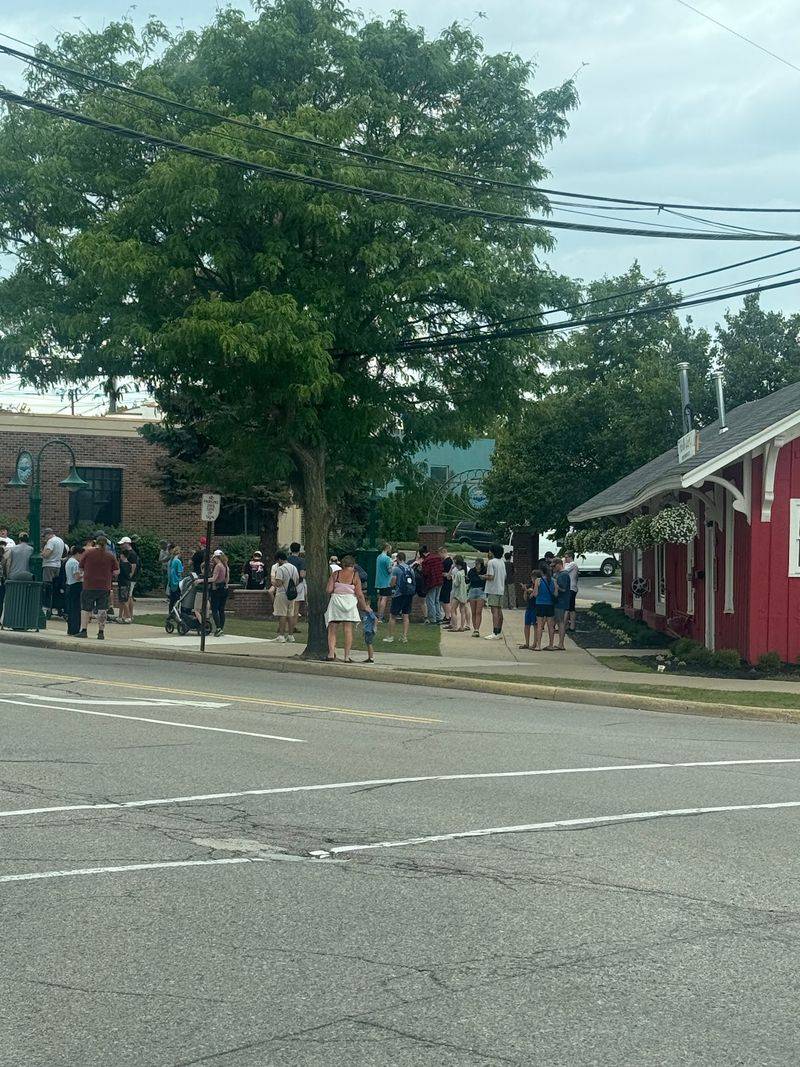
Few buildings in downtown Rochester carry their age quite as visibly or as proudly as this one. The Old Rochester Train Depot sits at 203 E.
University Dr., Rochester, MI 48307, right behind the bustle of Main Street in Oakland County, Michigan.
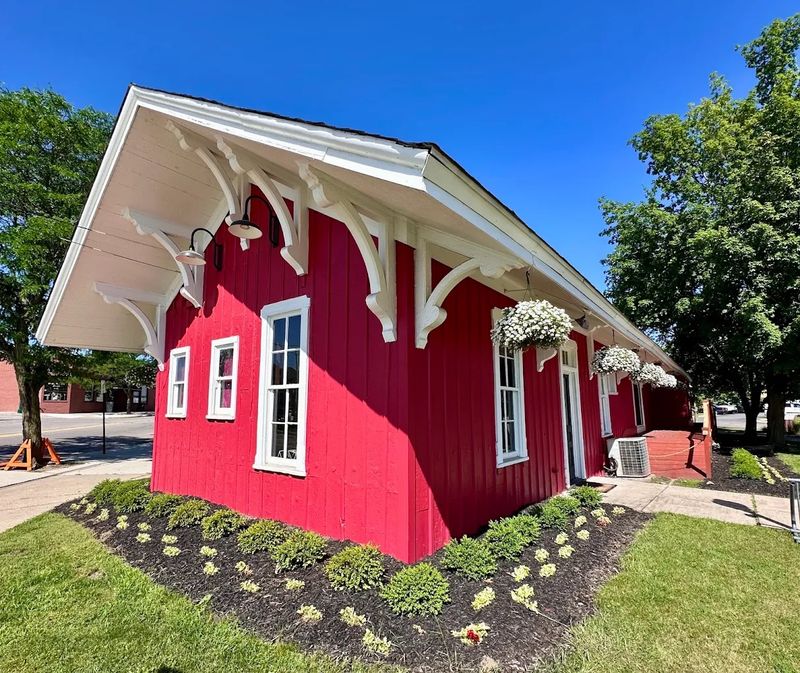
The building is compact and red, with a classic railway station character that stands out against the modern streetscape surrounding it. It does not try to be flashy.
Its modest board-and-batten exterior communicates something more honest than grandeur: this structure was built to work, and it has kept working ever since.
The location is remarkably convenient for anyone already exploring downtown Rochester. Parking is accessible, the trail nearby invites a post-lunch stroll, and the building itself is hard to miss once you know to look for it.
First-time visitors often pause outside for a moment before entering, quietly taking in the contrast between the historic facade and the lively neighborhood around it. That pause is always well earned.
1872 and the Railroad That Changed Everything
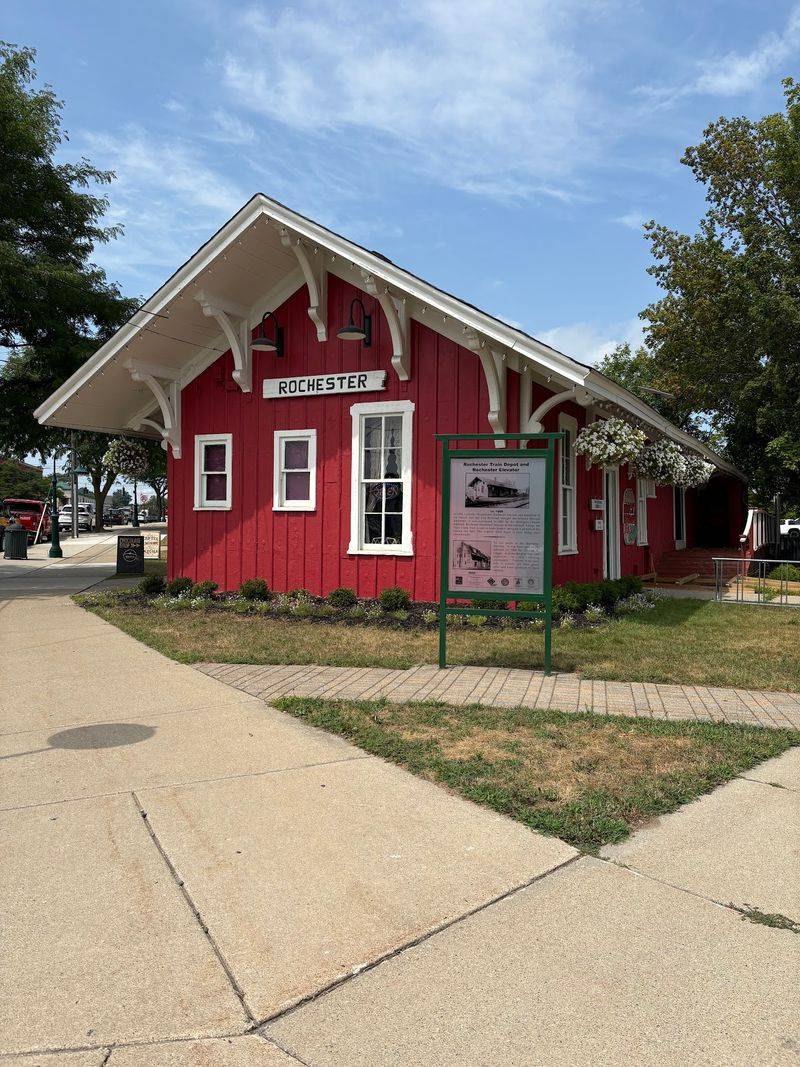
Rochester was a growing but modest settlement before the railroad arrived, relying on slow overland routes to move goods and people across Michigan. That changed decisively in 1872 when the Detroit and Bay City Railroad laid tracks directly through town and constructed the depot that still stands today.
The impact was immediate and sweeping. Farmers could suddenly reach broader markets with their grain, dairy, and produce.
Businesses found it easier to receive materials and ship finished products. New residents arrived, drawn by the economic energy the railroad generated.
The line connected Rochester to a much larger regional network, and by 1881 the Michigan Central Railroad had taken over operations, further expanding the depot’s reach and importance. Within a decade, the line extended all the way to Mackinaw City.
What the railroad really delivered was possibility. It turned a quiet agricultural community into a connected, commercially active town, and the depot was the physical center of that transformation.
The ripple effects shaped Rochester for generations.
Peak Traffic: When Twenty-Five Freight Trains Rolled Through Daily
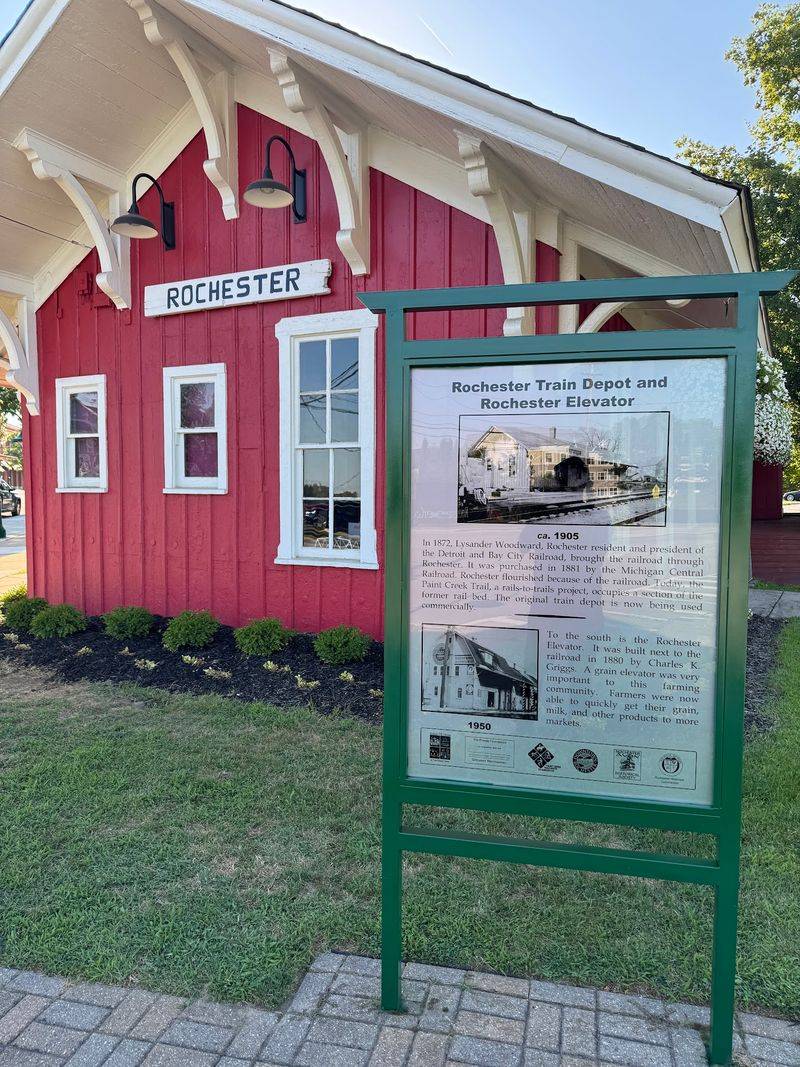
Around the turn of the 20th century, the Rochester depot was operating at a pace that would surprise anyone who sees the quiet building today. Eight passenger trains and twenty-five freight trains moved through these tracks every single day, making it one of the most active small-town depots in the state.
The platform would have been a constant swirl of motion: merchants overseeing deliveries, families reuniting after long trips, and workers managing the steady flow of agricultural goods heading to larger markets. The depot was not just a transit point; it was the economic heartbeat of the community.
That level of activity reflects just how central the railroad was to everyday life in Rochester during this era. Nearly every sector of the local economy touched the depot in some way, from farming to manufacturing to personal travel.
Knowing that this same modest building once managed that volume of daily traffic makes standing inside it feel genuinely different. The calm is earned, and the history underneath it is anything but quiet.
The Depot That Moved Across the Street
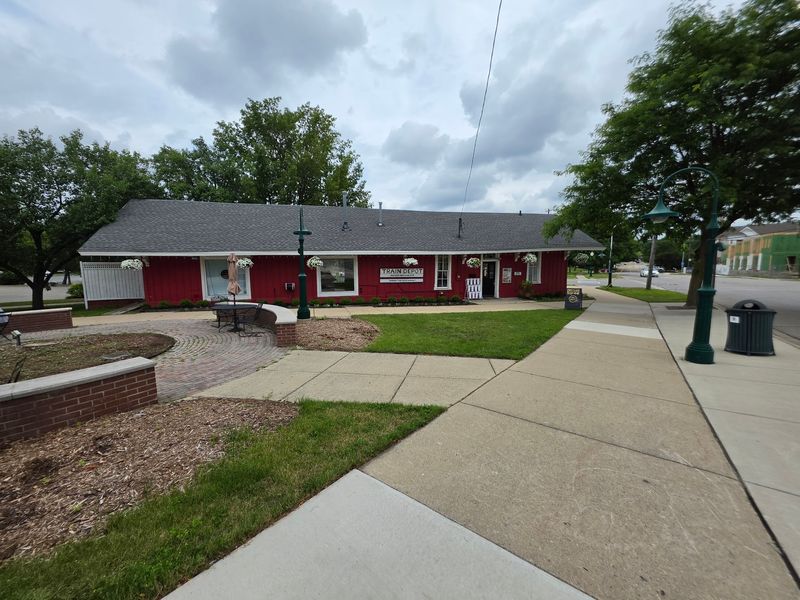
Here is a detail that tends to stop people mid-sentence: the Rochester Train Depot was literally moved. Constructed in late 1872 by the Detroit and Bay City Railway, the building did not stay on its original footprint for long.
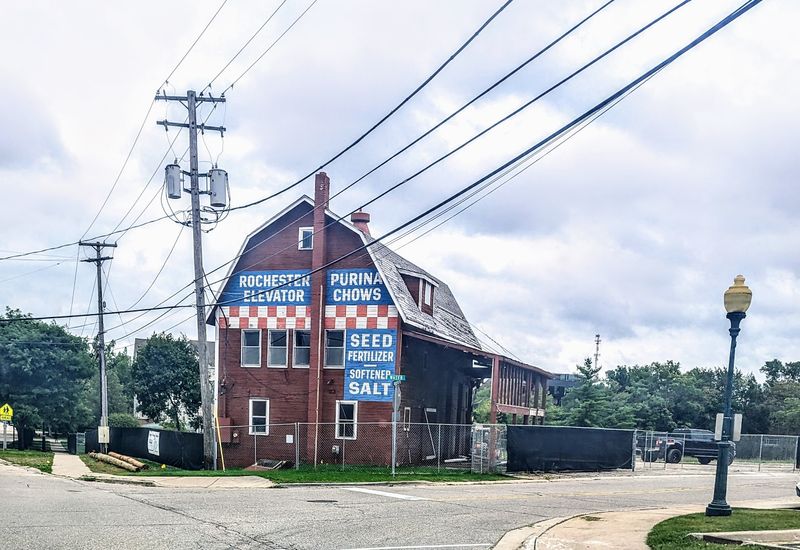
By 1874, just two years after it was built, newspaper accounts confirmed that the station house was relocated across the street to the north and expanded with a new freight house attached. The original site on the south side of Fifth Street, now University Drive, was later sold to Charles K.
Griggs, who built the Rochester Elevator there in 1880.
The logistics of moving a functional train station in the 1870s were no small matter. This was a deliberate decision by the railroad company to optimize operations as Rochester continued to grow rapidly in that period.
Most buildings with this much history stay in one place. The fact that this one was uprooted and repositioned adds another unexpected layer to an already layered story, and the building has not budged since.
The Interurban Rival: Electric Trolleys Enter the Scene
Even at the height of its steam-powered dominance, the Rochester depot faced an unexpected competitor rolling right down Main Street. The Detroit United Railway introduced its Flint Division electric interurban trolley service along Main Street, offering residents a faster and more flexible alternative to the Michigan Central trains.
The interurban lines were a genuinely different product. They ran more frequently, stopped closer to town centers, and connected communities in a way that felt more immediate than the scheduled steam trains.
For short trips to Detroit or nearby towns, many riders preferred the trolley.
This competition marked an early sign that the railroad’s monopoly on regional transit was not permanent. Technology was already beginning to shift the landscape of how people moved through Michigan, even before automobiles became common.
The depot managed to remain relevant during this period, partly because freight traffic was harder to replicate by trolley. Still, the arrival of the interurban was a preview of the challenges that would eventually bring the railroad era in Rochester to a close.
Change was already on the tracks.
The End of the Line: Passenger Service Stops in 1960
Every era eventually reaches its last stop, and for passenger rail service in Rochester, that moment came in 1960. The announcement was not dramatic, but the effect was real.
Platforms that had once been crowded with travelers fell quiet, and the rhythmic schedule of arrivals and departures that had defined the depot for nearly ninety years simply stopped.
The rise of the automobile and the expansion of highway infrastructure had steadily pulled riders away from the trains throughout the 1950s. By the time passenger service ended, the decision felt less like a surprise and more like a conclusion that had been building for years.
Freight traffic lingered for a while longer, but by 1979 the former Michigan Central Railroad tracks running through Rochester were removed entirely. The physical infrastructure of the rail line was gone, leaving behind only the depot building and the memory of what it had once supported.
For the building itself, however, this was not a conclusion. It was simply the end of one chapter and the beginning of a much longer story about reinvention and community resilience.
Rails to Trails: The Paint Creek Path Takes Over
When the tracks came out in 1979, the community did not simply leave the old rail corridor to overgrow. Rochester and the surrounding region embraced a forward-thinking approach, transforming the former rail bed into what is now known as the Paint Creek Trail.
This rails-to-trails conversion is one of the more satisfying outcomes in the area’s history. The trail now serves as a green recreational corridor for walkers, runners, and cyclists, winding through natural scenery that the old freight trains once rolled past at speed.
The connection between the trail and the depot is more than geographical. Both represent the same impulse: take what was built for one purpose and find a way to make it meaningful for a new generation.
The depot became a restaurant and gathering space; the rail bed became a public amenity.
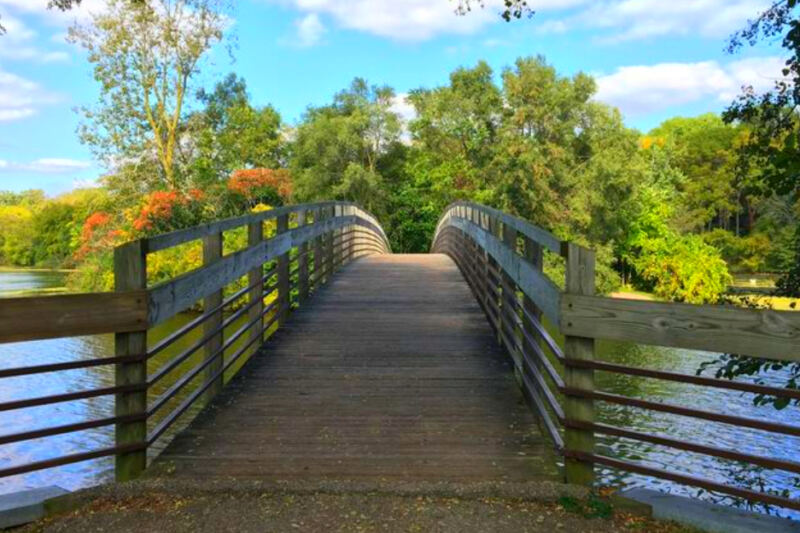
On a clear afternoon, cycling the Paint Creek Trail with the old depot nearby offers a genuinely layered experience. You are moving through history without realizing it, which is often the best way to absorb it.
Local Roots: The Family Behind the Restoration
The current chapter of the Rochester Train Depot’s story is inseparable from the people who chose to write it. Berri and Grant Kosch, along with business partner Charles Scott, are all Rochester natives who grew up in this town, attended its schools, and carry a genuine attachment to its identity.
Their decision to take on this historic space was not driven by trend or opportunity alone. They saw a quiet erosion of what made Rochester feel distinct, and they wanted to do something concrete about it.
The depot offered both a meaningful space and a mission worth committing to.
The Kosch family name carries its own local history. Their background in the deli and catering world, rooted in the Kosch’s Deli and Catering legacy, directly informed the menu they built for the depot.
The food here is not random; it is personal.
Running a business in a historic building comes with real responsibilities, and this team takes those seriously. Their commitment to the space feels less like ownership and more like stewardship of something the whole community shares.
The Menu: Sandwiches With a Story Behind Every Bite

The food at the Rochester Train Depot is not trying to be complicated, and that restraint is exactly what makes it work. The menu focuses on fresh, well-made sandwiches, soups, and salads, all prepared with visible care and served in a setting that makes the meal feel like more than lunch.
The Purple Pickle is a signature worth seeking out: turkey and melted Swiss on an onion roll, layered with dill pickles, tangy purple pickled cabbage, and a house sauce that ties everything together. It is the kind of sandwich that makes you rethink what a simple lunch can be.
The Maggie layers corned beef, Swiss, creamy coleslaw, and red Russian dressing on a toasted onion roll, a direct nod to the Kosch family’s deli heritage. The Depot Dog uses a Dearborn natural casing hot dog with relish, onion, and house-made honey mustard, and it earns its place on the menu without apology.
Meats are cut fresh on-site, and the difference that makes is noticeable from the first bite.
Artisan Chocolate: The Sweet Surprise Inside the Depot

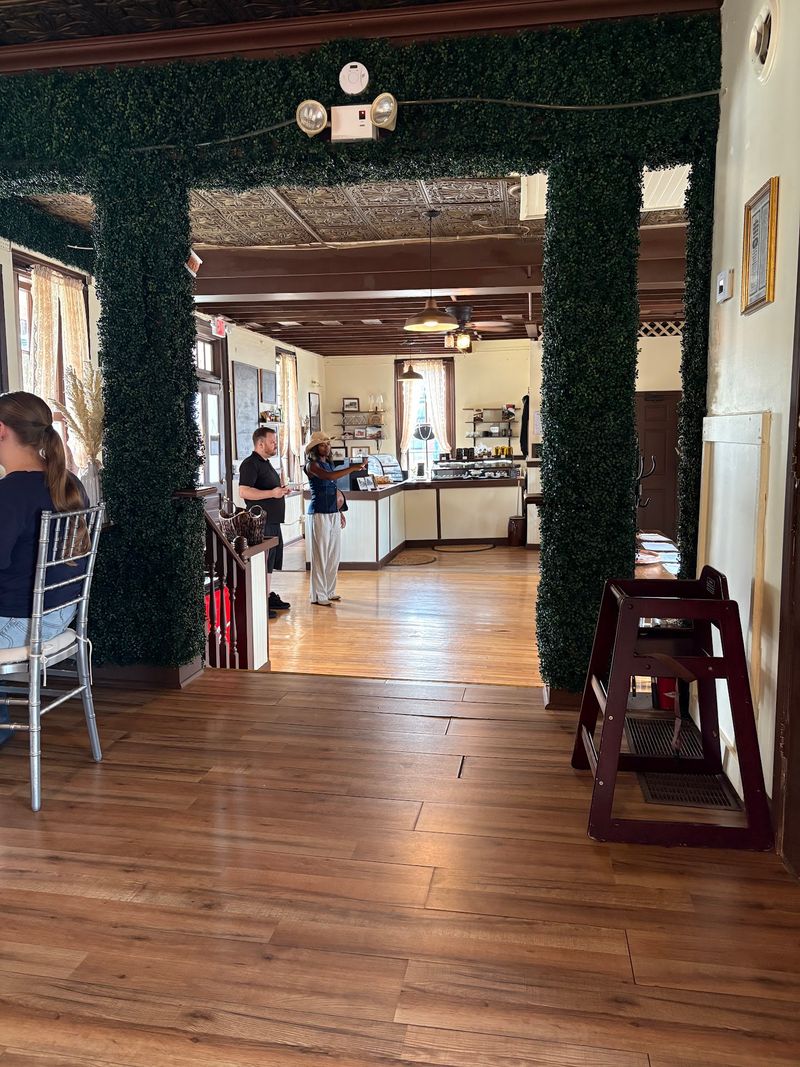
Not every train depot doubles as an artisan chocolate destination, but Rochester’s does, and the chocolate here is genuinely worth the trip on its own. The gourmet selection, featuring hand-crafted truffles and confections from Artemis Chocolate, is the kind of thing that stops people mid-step when they see the display case.
The designs are precise and visually striking, the kind of chocolates that feel almost too considered to eat. Almost.
The quality matches the appearance, which is not always guaranteed with artisan sweets, and the range of flavors gives even experienced chocolate enthusiasts something new to consider.
Watching the chocolates being made, when timing allows, adds another dimension to the visit. It transforms a purchase into a small experience, connecting the product directly to the craft behind it.
Visitors have picked up boxes of truffles for celebrations, gifts, and purely personal indulgence, and the chocolate consistently earns its reputation. The depot offers a full lunch and then sends you home with dessert that you will be thinking about the next day.
Planning Your Visit: Hours, Tips, and What to Expect
A visit to the Rochester Train Depot rewards a little planning, and the details are worth knowing before you arrive. The depot is open Monday through Friday from 10 AM to 6 PM and Saturday from 10 AM to 3:30 PM.
It is closed on Sundays, so weekday lunches are the sweet spot for a relaxed visit.
The space is compact, which contributes to its charm but also means it fills up during peak lunch hours. Arriving closer to opening gives you the best chance of settling in without a wait and enjoying the atmosphere at a comfortable pace.
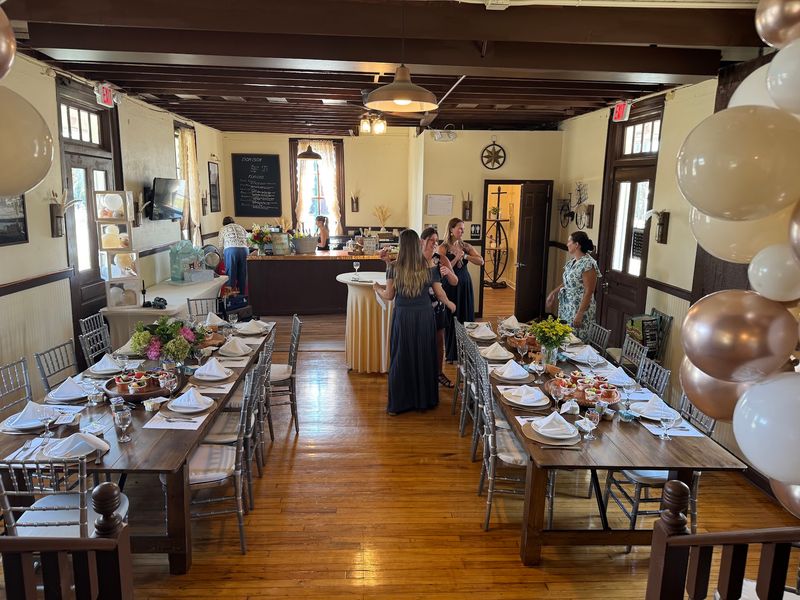
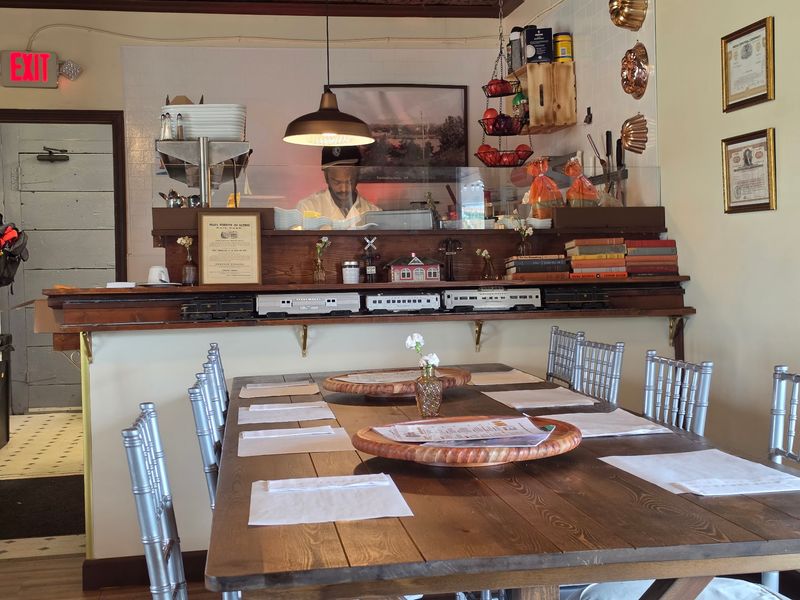
The communal dining setup is an intentional feature, not an oversight. The owners designed the space to encourage conversation and connection among guests, which aligns with the depot’s historic identity as a public gathering hub.
If you prefer a more private setup, booking a private event is always an option.
You can reach the depot at +1 248-274-6728 or visit rochestertraindepot.com for more details. And do not leave without checking the chocolate display near the register.
That part is non-negotiable.
Share this story