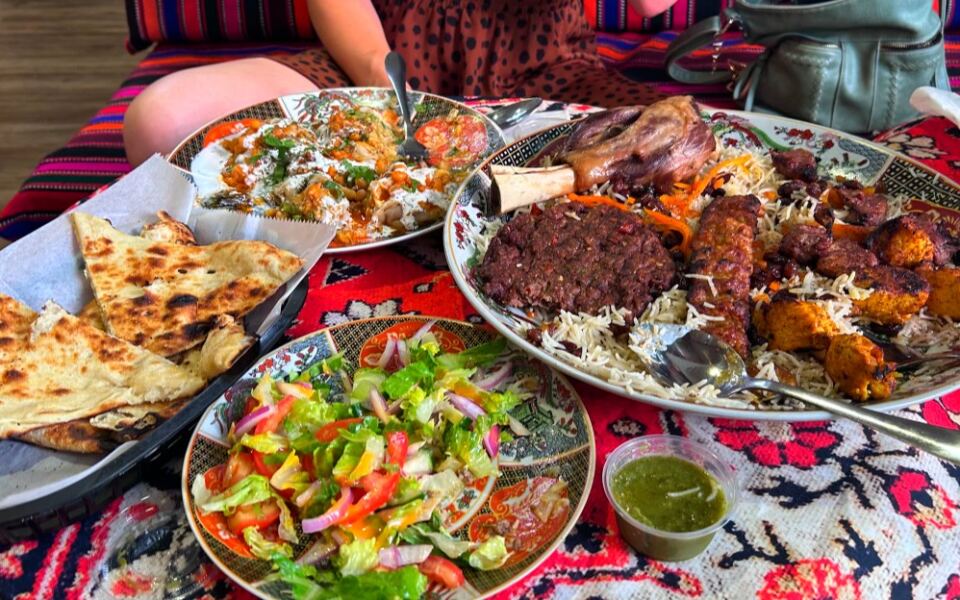
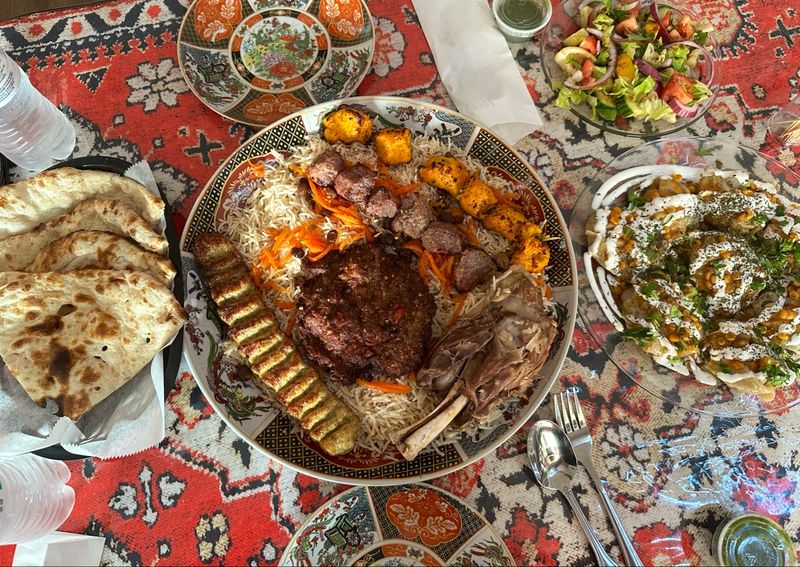
Kabuli Pulao topped with lamb, carrots, raisins, and cashews is one of the dishes bringing Afghan cooking to an unexpected corner of Grand Rapids.
Rumi’s Garden serves a focused menu of Afghan specialties that includes Mantu dumplings, Chapli Kabob, Bolani, Chicken Tikka, and family-style platters designed for sharing. For newcomers, the Kabuli Pulao offers an introduction to one of Afghanistan’s most important dishes.
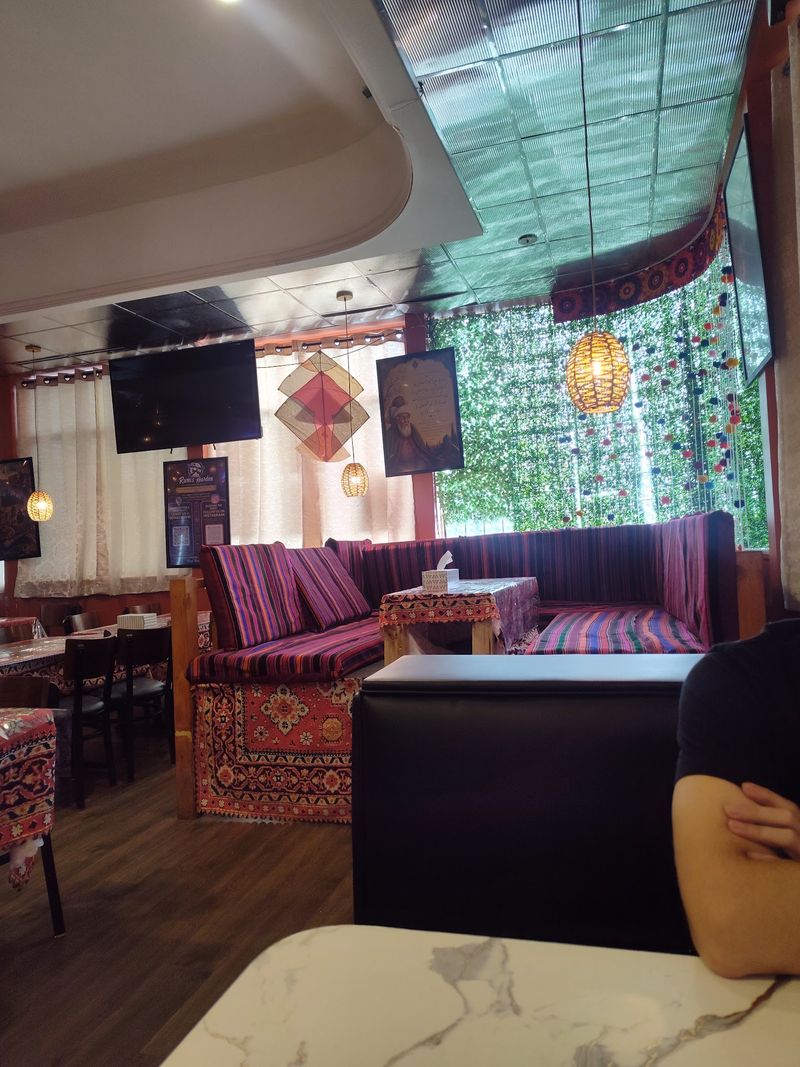
The experience goes beyond the menu. Guests can choose traditional low-table seating with cushions, while standard tables and chairs are also available.
Rumi’s Garden began as a food truck before expanding into a permanent restaurant, giving owner Ali Mohsini more room to introduce West Michigan diners to Afghan food and hospitality. The result is a dining experience that offers something genuinely different from the usual Grand Rapids restaurant stop.
1. Where Exactly You Can Find This Peaceful Spot
Rumi’s Garden sits at 2222 44th Street SE, Grand Rapids, Michigan 49508, just a short drive from the Kentwood border, making it an easy destination for residents across the greater Grand Rapids area.
The neighborhood is unpretentious and easy to miss if you are not looking carefully. The building is modest from the outside, and the signage has been a work in progress as the restaurant settled into its current location, which was previously home to another eatery.
A few cars in the lot and the faint smell of roasting spices are usually the best indicators that something special is happening inside. The restaurant is open Wednesday through Monday from 11:30 a.m. to 9 p.m., and it is closed on Tuesdays.
You can reach them by phone at 616-666-2964. The address places it conveniently close to Kentwood, making it a natural gathering spot for the broader south Grand Rapids community looking for something genuinely different.
2. The Man Behind the Mission: Ali Mohsini’s Story
Ali Mohsini is not just a restaurant owner. He is the kind of person who walks up to every table, introduces himself, and genuinely wants to know if you are enjoying your meal.
He moved to the United States in 2010 with his family and eventually channeled his deep love for Afghan culture into building West Michigan’s first Afghan restaurant. His motivation was never purely commercial.
He wanted to share the food, the hospitality, and the spirit of a culture that many people in the region had never encountered before.
That personal investment shows in every corner of the dining experience. Guests consistently note that Ali’s warmth sets the tone for the entire visit, turning a simple dinner into something that feels more like being welcomed into someone’s home.
His commitment to authenticity, from sourcing traditional ingredients to maintaining generational recipes, is the foundation on which Rumi’s Garden was built. The restaurant is truly an extension of who he is.
3. Why the Name “Rumi’s Garden” Carries Real Weight
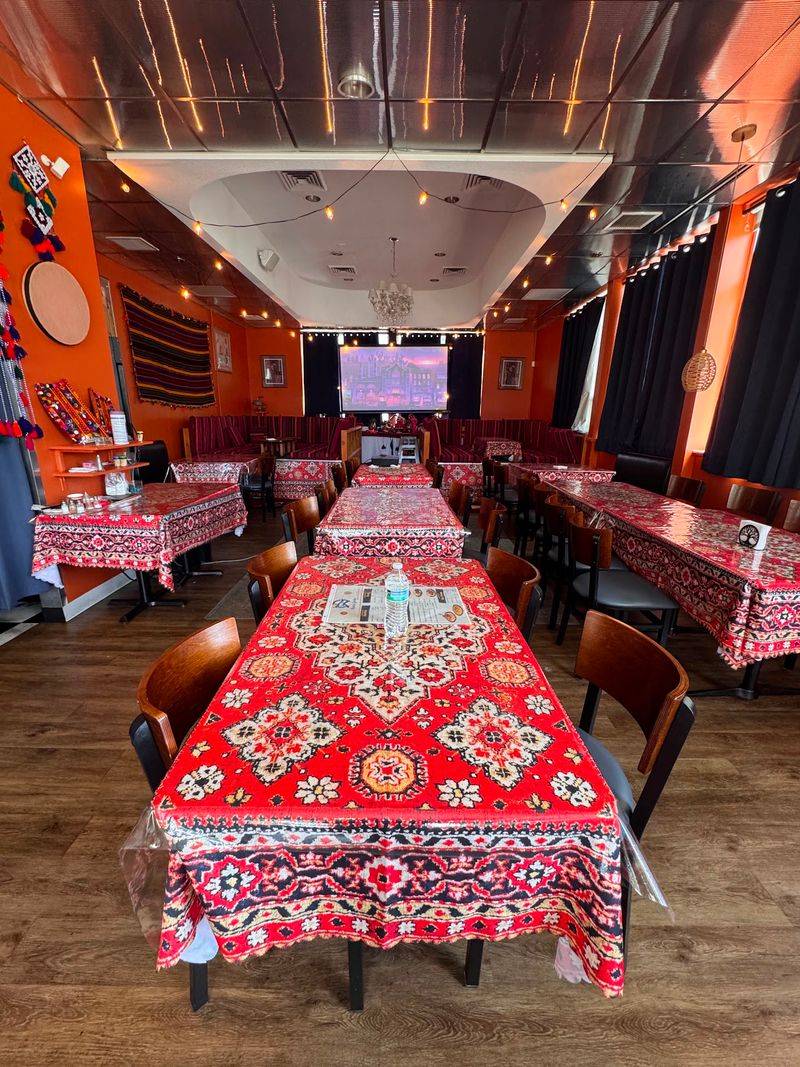
The name is not just poetic decoration. Rumi was a 13th-century Persian poet born in Balkh, in what is now northern Afghanistan, and his philosophy centered on love, human connection, and the opening of the heart.
Choosing his name for a restaurant is a deliberate statement about what the place is meant to be. The “garden” in the title does not refer to an outdoor green space.
It represents a metaphorical place of growth, nourishment, and calm, somewhere you come to be fed in more ways than one.
That philosophy is woven into how the staff interacts with guests, how the food is prepared, and how the space is designed. There is a quiet intentionality to everything here that you begin to notice the longer you stay.
The name promises a certain kind of experience, and the restaurant consistently delivers on that promise. It is one of those rare cases where branding and reality are perfectly aligned, which makes the whole concept feel genuinely meaningful rather than just clever marketing.
4. Traditional Seating That Changes How You Eat
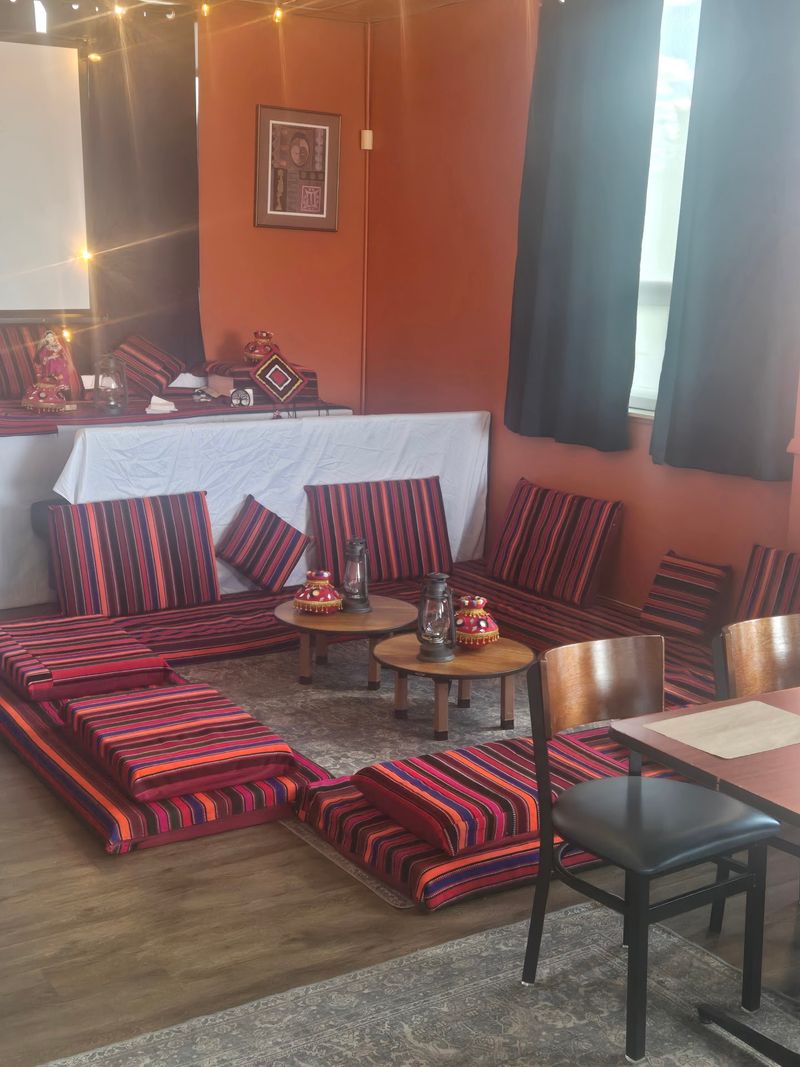
Most restaurants seat you in a chair, hand you a menu, and move on. Rumi’s Garden offers something you genuinely do not expect: a raised platform area with low tables and cushioned seating in the traditional Afghan style.
Guests remove their shoes and settle onto comfortable cushions, which immediately shifts the energy of the meal. You sit lower, you relax more, and the conversation naturally slows to match the pace of the environment.
It is the kind of seating arrangement that turns dinner into an occasion rather than just a meal.
Standard table and chair seating is also available for those who prefer it, and the staff are accommodating no matter where you sit. High chairs are on hand for families with young children, which means the traditional seating area has welcomed everyone from couples on a quiet date night to parents with energetic toddlers.
The physical act of sitting differently seems to signal to your brain that this experience is going to be unlike your usual Tuesday night takeout routine.
5. Kabuli Pulao: The Dish That Earns Its Legendary Status
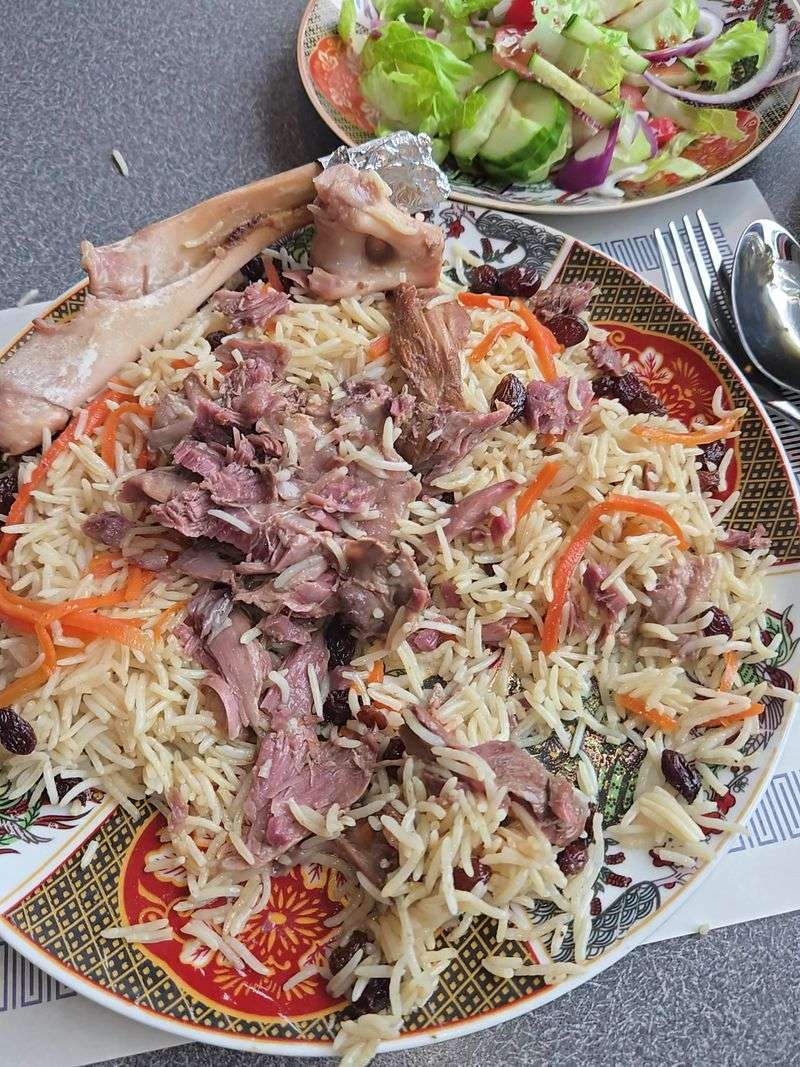
If there is one dish that defines Rumi’s Garden for first-time visitors, it is the Kabuli Pulao, also spelled Qabili Palaw on some menus. This is Afghanistan’s national dish, and the version served here has made more than a few guests forget to take a photo before eating.
Fragrant basmati rice is slow-cooked with tender lamb, sweet shredded carrots, plump raisins, and a scattering of cashews that add a gentle crunch to every forkful. The balance of savory, sweet, and aromatic is unlike anything in the typical American dining rotation.
Multiple guests have reported finishing the entire portion before remembering they meant to save some for later. The rice is cooked to a perfect texture, never mushy, and the lamb is tender enough to fall apart without any effort.
One particularly enthusiastic visitor reportedly borrowed a photo from the restaurant’s own page because they had already cleaned their plate before thinking to document it. That kind of impulsive eating is the highest possible compliment a dish can receive.
6. Mantu Dumplings and the Rest of the Must-Order Menu
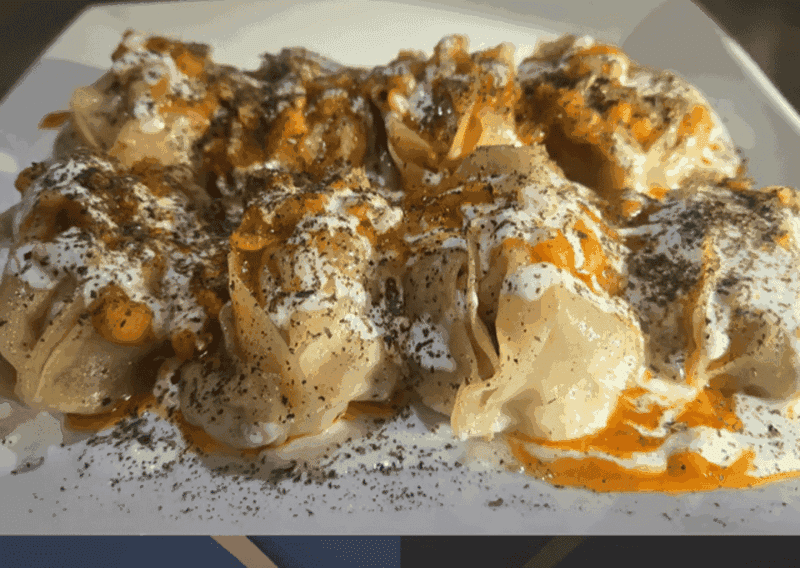
Beyond the Kabuli Pulao, the menu at Rumi’s Garden offers a focused selection of dishes that prioritize quality over quantity. The Mantu dumplings are a crowd favorite and come up in almost every conversation about the restaurant.
These are delicate dough parcels stuffed with spiced lamb and onion, then topped with a creamy yogurt sauce and sometimes a tomato-based layer that adds depth and richness. The texture is soft but structured, and the filling carries a warmth that is deeply satisfying on any day of the week.
Other standout options include Chapli Kabob, Chicken Tikka skewers, Chicken Koobideh, Bolani, Banjan, and the Afghani Wrap. The family platter and the Afghan Duo Platter for two are popular choices for groups who want to sample a range of dishes without committing to a single entree.
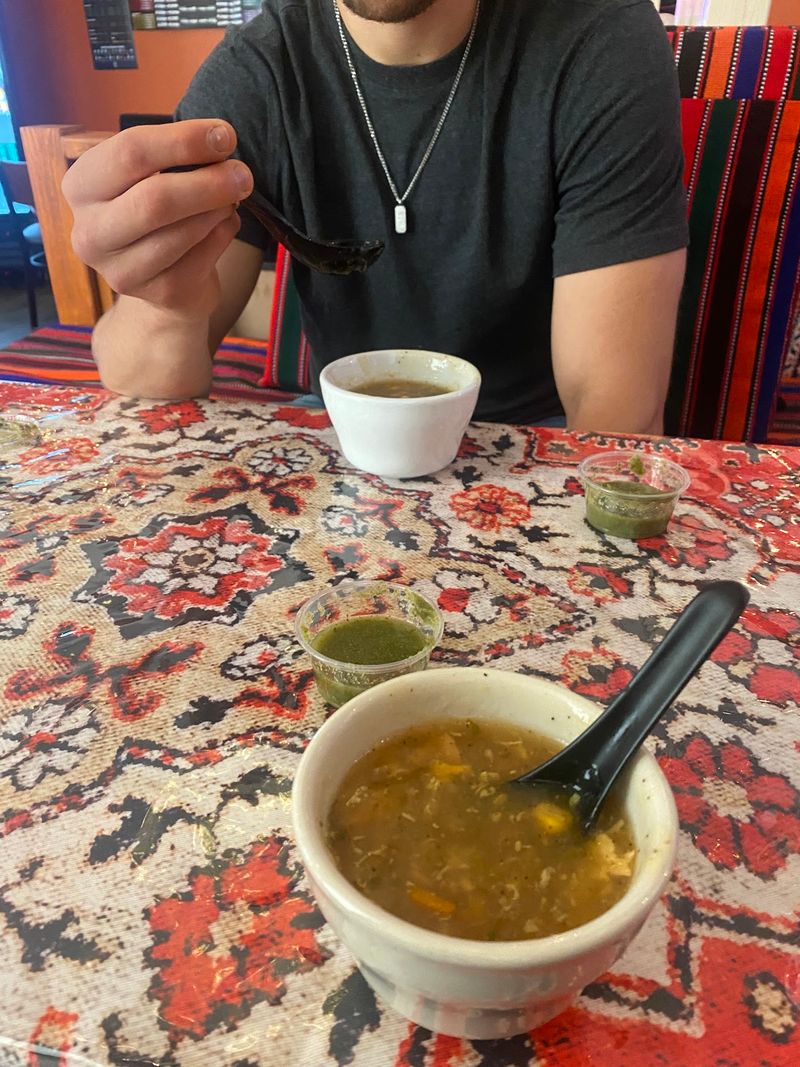
A complimentary cup of chicken soup and a small salad often arrive at the table before the main course, which sets a generous and hospitable tone for the entire meal. And then there is the chicken soup itself, which deserves its own conversation entirely.
7. The Chicken Soup That People Keep Dreaming About
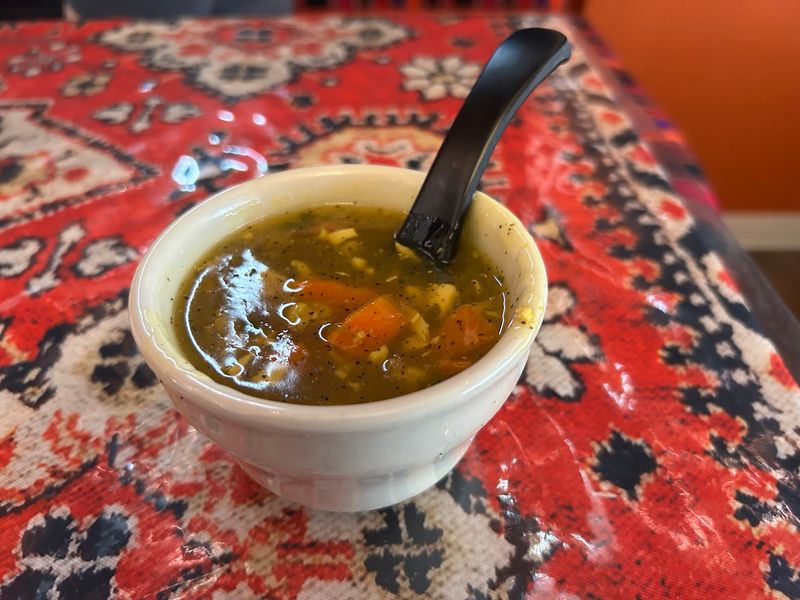
It sounds like a simple thing, a cup of soup brought to the table while you wait for your order. But the chicken soup at Rumi’s Garden has developed a reputation that goes well beyond a polite appetizer.
It is zesty, lightly spiced, and carries a depth of flavor that makes you want to slow down and pay attention. More than one guest has described thinking about it long after the visit was over, which is a remarkable thing to say about what is technically just the opening act of the meal.
The broth is clear but bold, with a savory warmth that feels restorative rather than heavy. It arrives as a small gesture of Afghan hospitality, a preview of the care that goes into every dish on the menu.
If you visit and find a cup of this soup set in front of you before you have even placed your full order, accept it gratefully. It is one of those small details that quietly tells you everything about the spirit of the kitchen behind it.
8. From Food Truck to Brick-and-Mortar: A Community Story
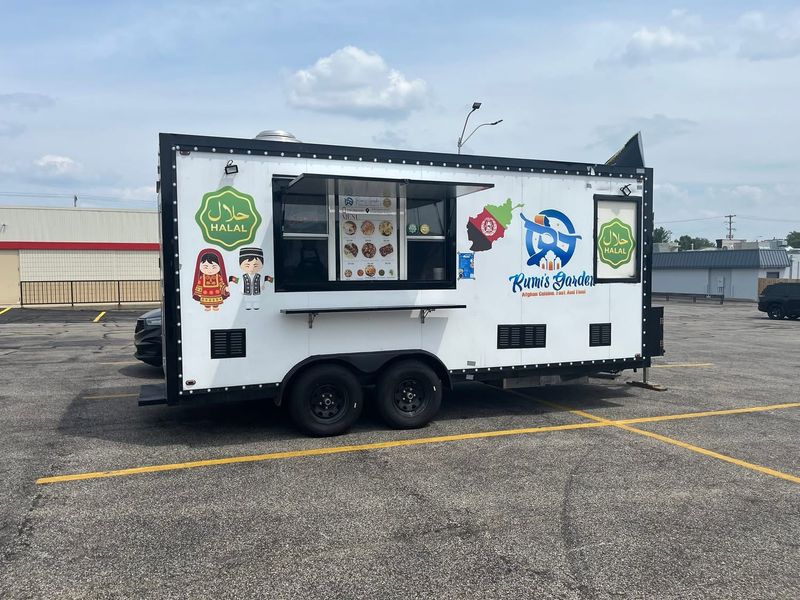
Rumi’s Garden did not begin with a dining room and cushioned booths. The concept started as a food truck, bringing Afghan street food to different corners of Grand Rapids and building a loyal following one order at a time.
The mobile format allowed Ali Mohsini to connect directly with the community, introducing Afghani wraps, kebabs, and traditional breads to people who might never have sought out Afghan food on their own. The food truck still operates and appears at community events and pop-up locations across the area, keeping that grassroots spirit alive.
The transition to a permanent restaurant location gave the concept room to grow, adding the full dining experience, traditional seating, and a more expansive menu. That evolution from wheels to walls reflects how genuinely the community embraced what Rumi’s Garden was offering.
People drove from Lansing. People came back multiple times in a single month.
The restaurant earned a 4.9-star rating on Google across 122 reviews, which is the kind of number that does not happen by accident. It happens because the food and the people behind it are the real thing.
9. Cultural Exchange Beyond the Dinner Table
Rumi’s Garden takes its role as a cultural ambassador seriously, and the work does not stop when the kitchen closes. The restaurant actively partners with local organizations to bring Afghan culture into the broader Grand Rapids community through events and programming.
Cultural cooking classes give participants a hands-on introduction to traditional recipes and techniques, turning curiosity about Afghan food into real knowledge they can bring home. Community events and food donation initiatives round out an approach that treats the restaurant as a community resource rather than just a business.
This outreach reflects a core belief held by Ali Mohsini: that food is one of the most effective tools for building understanding between people from different backgrounds. When you sit down to learn how to make Mantu dumplings alongside a neighbor you have never met, something shifts.
The shared act of cooking and eating creates connection in a way that few other activities can match. Rumi’s Garden has turned that simple truth into an ongoing community project, and the results are visible in the warmth of every interaction inside the restaurant.
10. Catering and Private Events: Bringing the Escape to You
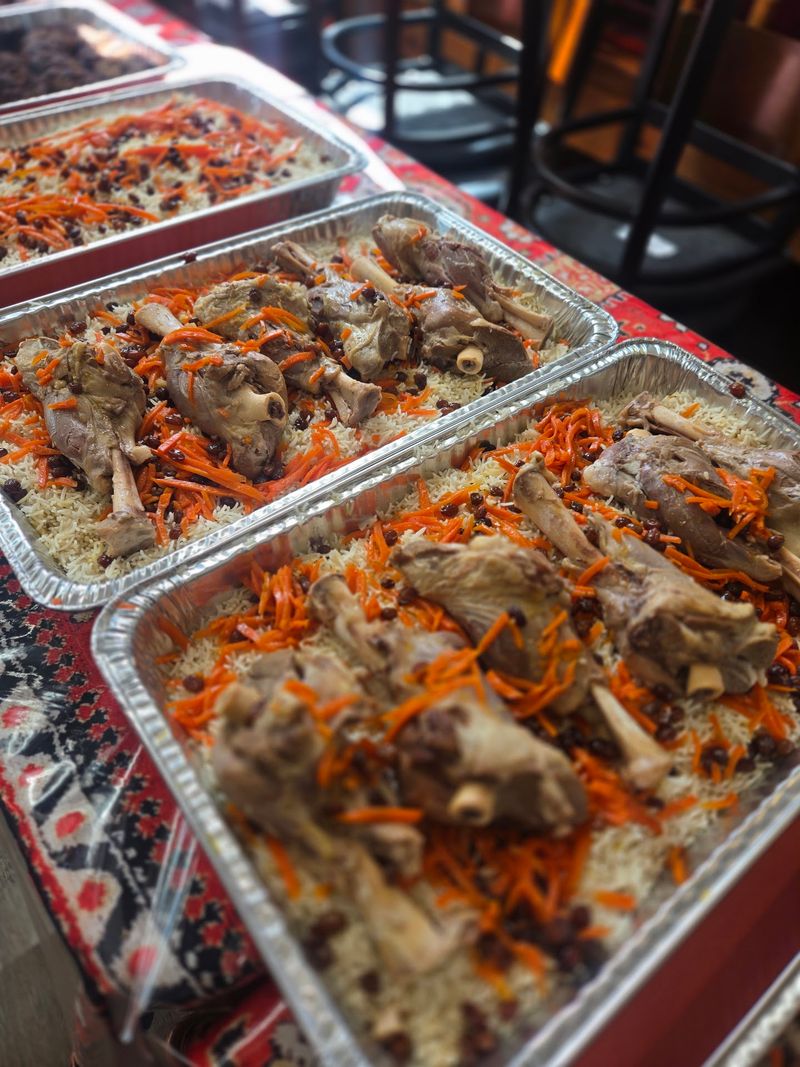
Not everyone can make it to the restaurant on a weeknight, and Rumi’s Garden has a practical answer for that. Their catering service brings the full Afghan dining experience directly to your event, whether you are planning a corporate lunch, a birthday celebration, or a family gathering.
The menu is customizable, with options ranging from signature kebabs and traditional naan to full platters that can feed large groups. Buffet-style arrangements are available, along with delivery and setup services that take the logistical pressure off the host entirely.
Private events can also be hosted at the restaurant itself, with on-site chef services available for a more immersive presentation. The team works through consultations to build a menu that fits the occasion, which means the experience feels tailored rather than generic.
Bringing Rumi’s Garden to your own gathering is a way to share the peaceful, culturally rich atmosphere with people who might not otherwise discover it on their own. It is one of the more creative ways the restaurant extends its reach and its mission beyond its own four walls.
11. Practical Tips for Getting the Most Out of Your Visit
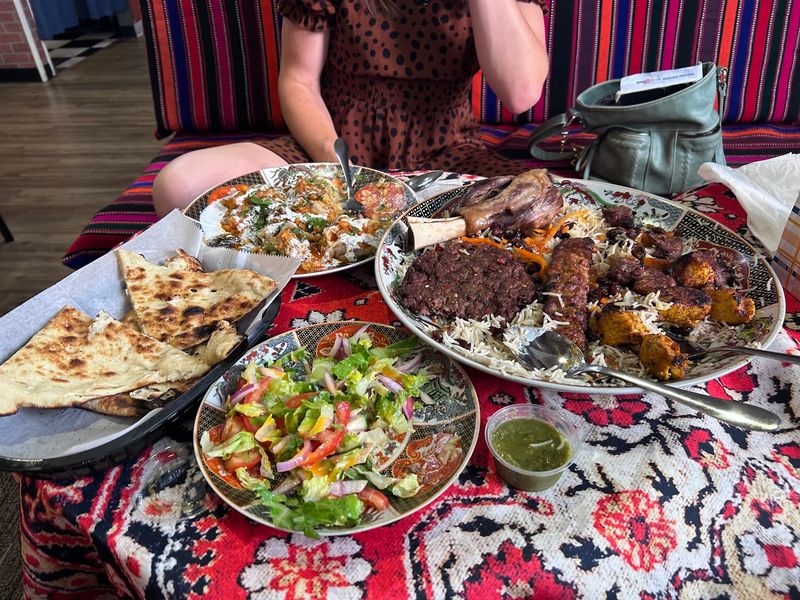
A few small pieces of advance knowledge can make your visit to Rumi’s Garden even better. The restaurant is open Wednesday through Monday from 11:30 a.m. to 9 p.m. and is closed on Tuesdays, so plan accordingly.
Calling ahead at 616-666-2964 or checking their Facebook and Instagram pages is a good way to confirm hours and find out about any daily specials or food truck appearances in the area.
When you arrive, do not skip the complimentary soup and salad that often come with your order. They are not afterthoughts.
First-time visitors are encouraged to try the Afghan Duo Platter or the family platter, both of which offer a wide range of dishes and are generously portioned. The Mantu dumplings, Kabuli Pulao, and Bolani are safe starting points for anyone new to Afghan cuisine.
If the traditional low seating is available, take it. The experience of dining that way adds a layer to the visit that a regular table simply cannot replicate.
Come hungry, come curious, and come ready to linger a little longer than you planned.
Share this story