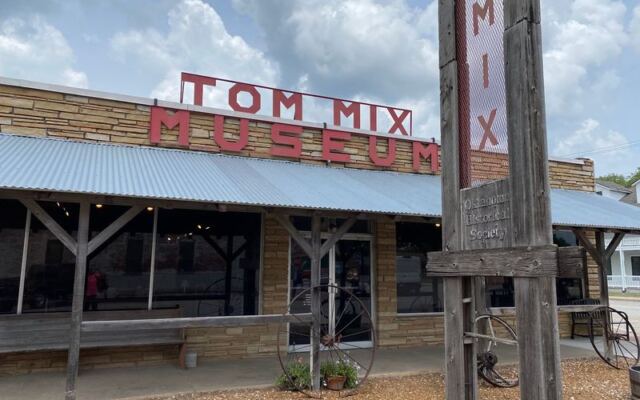
Somewhere in Oklahoma, tucked into a small town that most road-trippers roll past without a second glance, sits a museum so packed with genuine cowboy history that visitors routinely lose track of time. Nobody expects much walking in, but that modest exterior hides one of the most surprisingly rich collections of Western Americana in the region.
From life-size statues to oddball artifacts that raise more questions than they answer, this place has a way of turning a quick stop into a full afternoon. If you have even a passing curiosity about the golden age of Hollywood cowboys, prepare to be genuinely hooked.
A Cowboy Star Most People Have Forgotten
Before John Wayne, before Roy Rogers, there was Tom Mix, and for a generation of moviegoers in the early twentieth century, he was the biggest name in Hollywood. Visitors who arrive at this Dewey museum without knowing much about him tend to leave genuinely surprised by how massive his cultural footprint once was.
Tom Mix appeared in hundreds of films, many of them silent, and helped define the look and feel of what audiences expected from a Western hero. He was flashy, daring, and performed many of his own stunts, which made him a living legend even while he was still working.
His popularity stretched across continents, and his face appeared on everything from cereal boxes to comic books.
The museum does a wonderful job of contextualizing just how big a deal he was. Visitors who arrive skeptical often leave with a new appreciation for how one performer helped shape an entire genre.
Learning about his background, his rise to fame, and his connection to the Dewey area gives the whole visit a satisfying sense of purpose and discovery.
The Dewey Connection and Why Oklahoma Claims Him
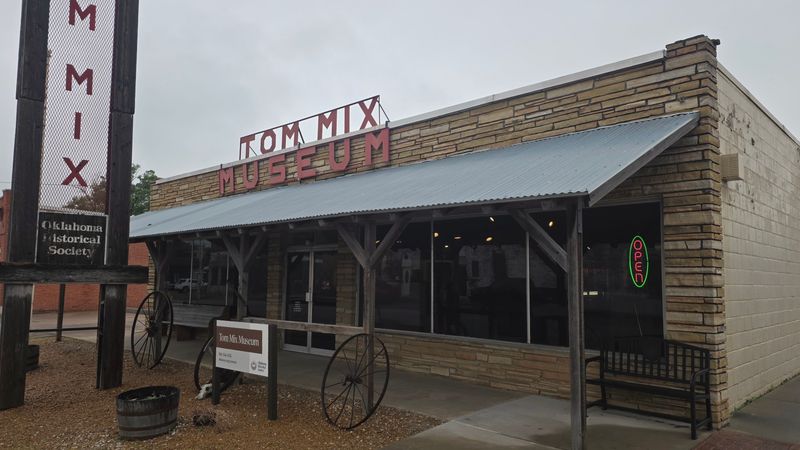
Dewey, Oklahoma is a quiet town that carries a surprisingly big piece of American pop culture history, and the museum makes sure visitors understand exactly why this is the right home for a Tom Mix tribute. His ties to the region run deep, rooted in time he spent in northeastern Oklahoma during the early part of his career.
The area shaped him in ways that later showed up on screen. His horsemanship, his rugged persona, and his genuine connection to ranch life were not invented by Hollywood publicists.
They were real skills built in places like this, which gives the whole collection a grounded, authentic quality that bigger city museums sometimes lack.
Dewey itself adds to the experience. The town has a charming, unhurried character that feels almost like a living backdrop for the exhibit inside.
Visitors mention that the combination of the small-town setting and the richly packed museum creates a time-capsule feeling that is hard to replicate anywhere else. Stopping here feels less like a tourist detour and more like stumbling onto something genuinely worth knowing about Oklahoma’s cultural heritage.
Shelves Loaded with Authentic Memorabilia
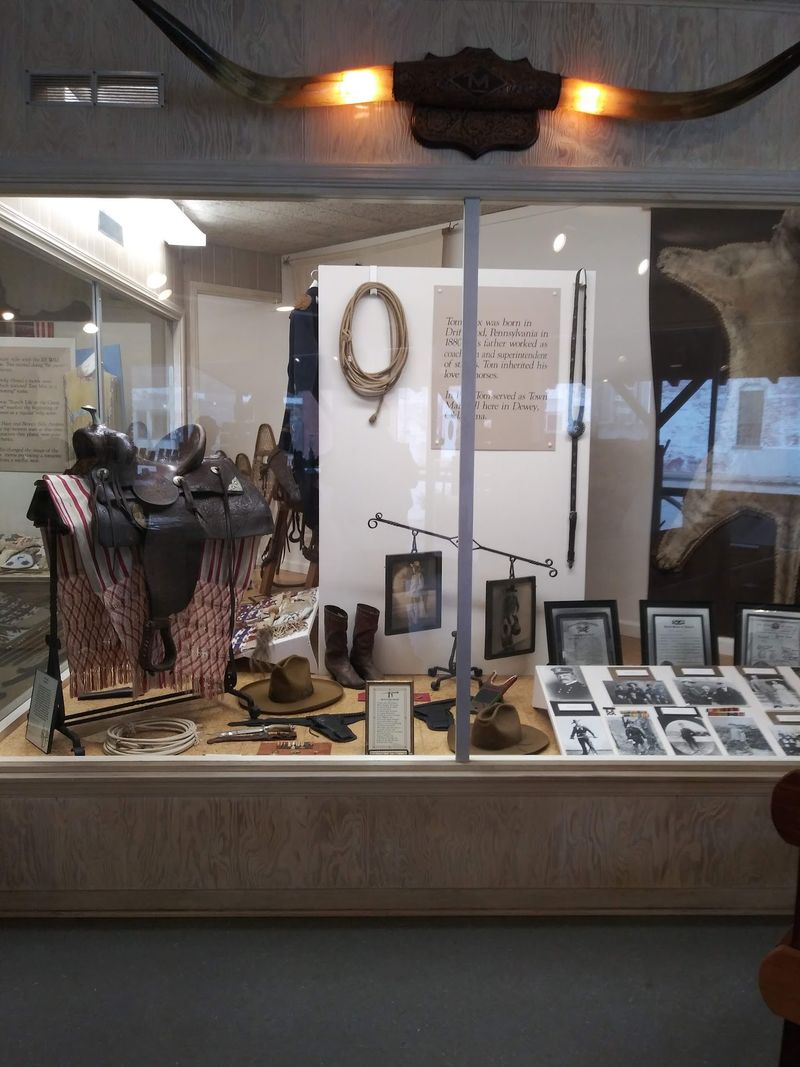
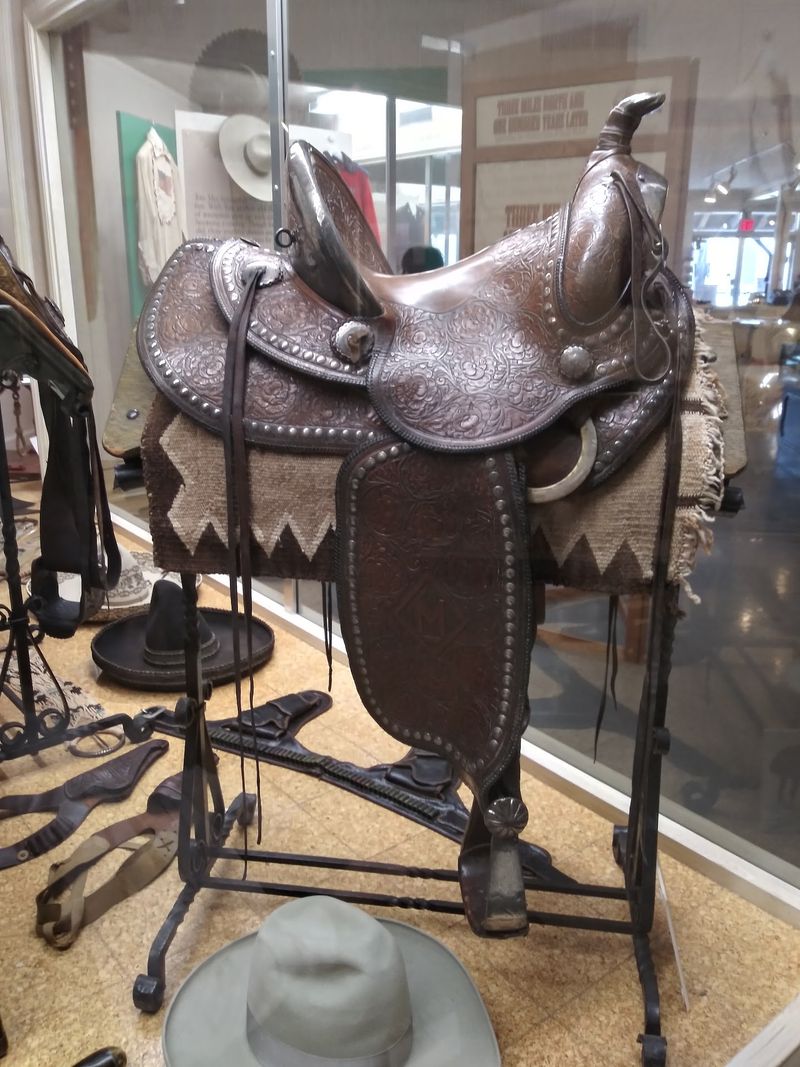
Walk through the front door and the first thing that hits you is the sheer volume of stuff. Every surface seems to hold something worth pausing over, from elaborately tooled saddles to embroidered shirts, from worn leather boots to coiled whips that look like they were pulled straight off a film set.
What makes the collection remarkable is not just the quantity but the authenticity. Many of the items on display actually belonged to Tom Mix, worn or used by the man himself during his career.
That kind of provenance is rare, and it gives the exhibits a tactile realness that reproductions simply cannot match.
Framed photographs line the walls, showing Mix in various stages of his career alongside famous faces from early Hollywood. Promotional items, circus memorabilia, and personal effects fill in the gaps between the larger pieces.
Visitors frequently describe the experience of moving through the room as almost overwhelming in the best possible way, a constant stream of small discoveries that rewards slow, careful looking. Spending less than an hour here genuinely requires some self-discipline.
The Life-Size Statue That Stops Visitors Cold
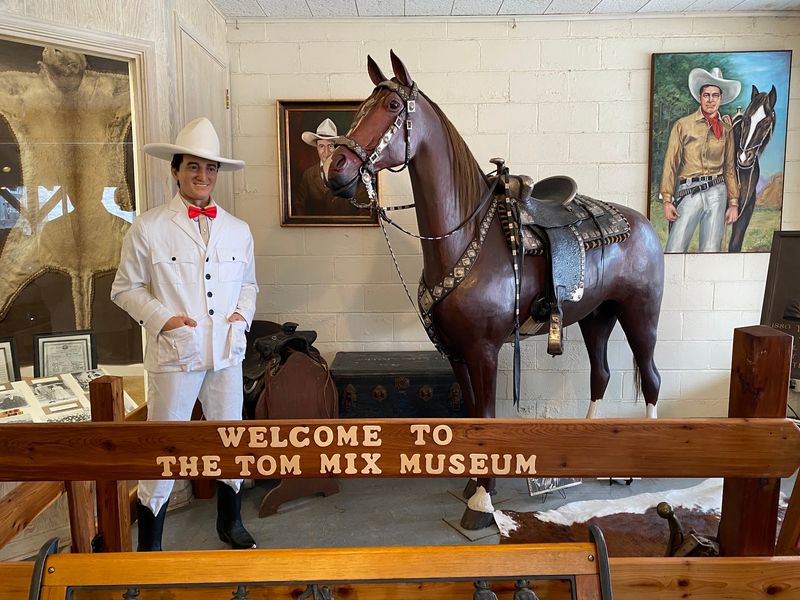
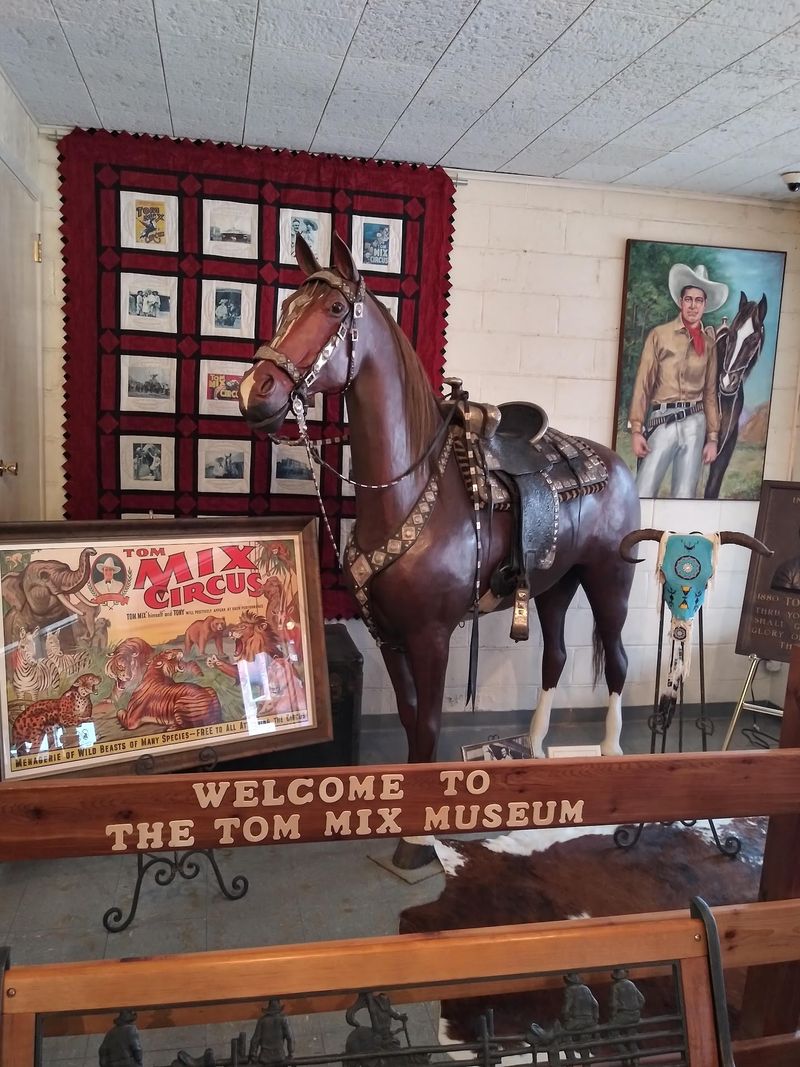
Right near the entrance, before visitors even get deep into the exhibits, there is a full-size statue of Tom Mix posed alongside his famous horse, Tony. It is the kind of display that makes people stop mid-step and reach for their phones before they have even processed what they are looking at.
Tony was not just a prop. The horse was a genuine star in his own right, recognized by audiences worldwide and featured prominently in Mix’s films.
The statue captures the partnership between rider and horse in a way that feels celebratory rather than stiff, and it sets the tone for the rest of the visit beautifully.
Families with kids especially appreciate this piece. Children who might otherwise struggle to connect with early film history immediately respond to the horse, and that initial spark of interest tends to carry them through the rest of the museum with genuine curiosity.
Adults find themselves lingering too, reading the surrounding context panels and realizing the statue is more than decoration. It is a well-considered centerpiece that anchors the whole collection around the human, or in this case human and animal, story at its heart.
The Orientation Film Inside an Old Theater Set
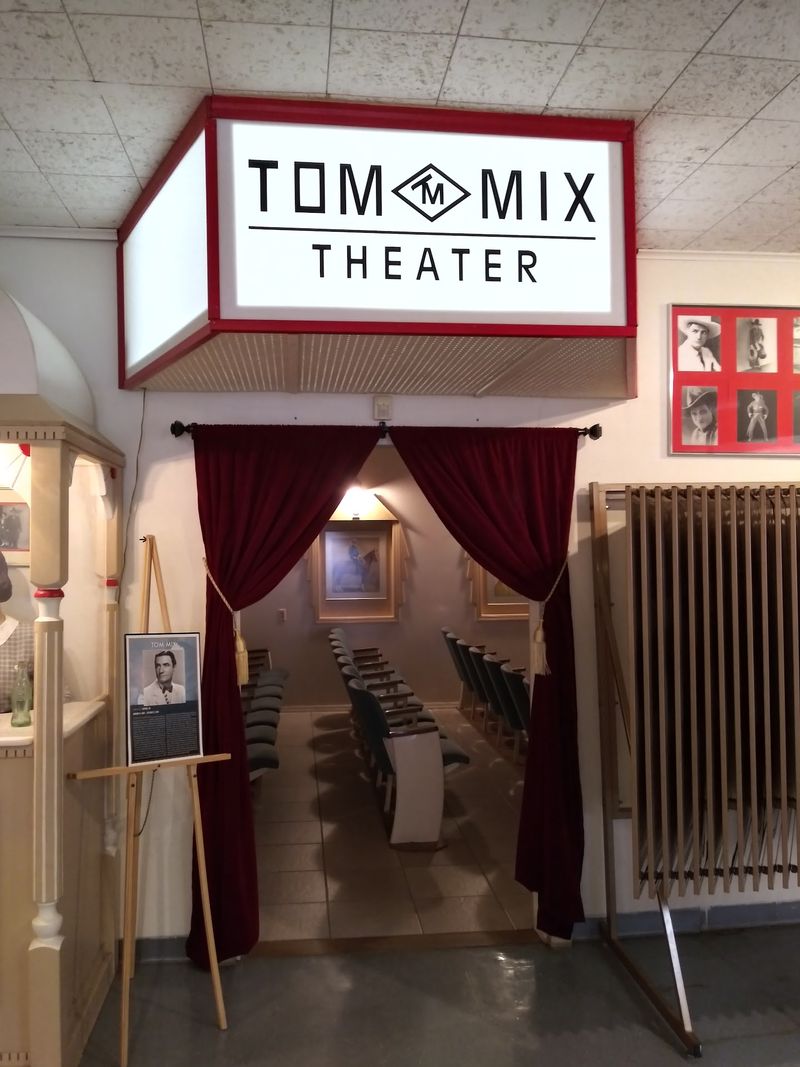
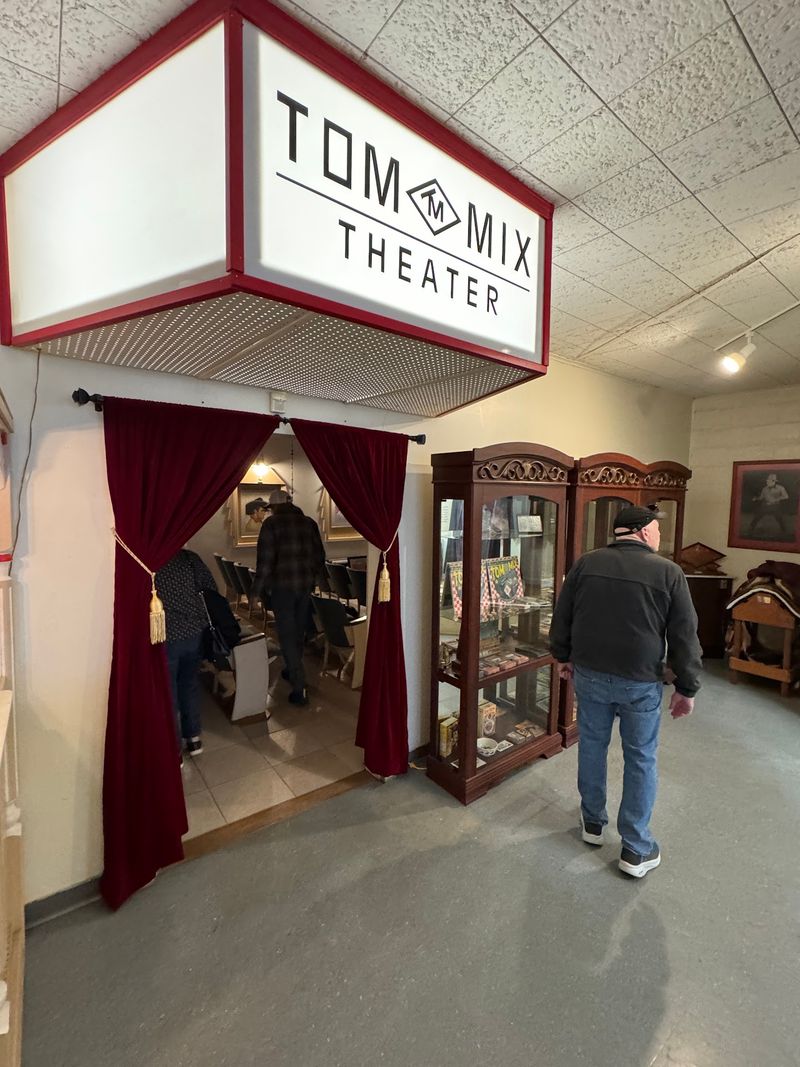
Tucked toward the back of the museum is one of its most unexpectedly charming features: a small theater space styled to evoke the old movie houses where audiences first fell in love with Tom Mix. Settling into a seat here and watching the orientation film is something multiple visitors have described as the moment the whole museum clicked into place for them.
The film covers Mix’s life and career in an accessible, engaging way that does not assume any prior knowledge. First-time visitors who watch it before exploring the exhibits report that everything they see afterward carries more meaning.
The artifacts stop being random old objects and become pieces of a life story they now understand.
Even people who came in already knowing a fair amount about Mix say the film offers details and context they had not encountered before. The theater setting itself adds a layer of atmosphere that a flat-screen in a hallway never could.
Sitting in that little room, watching footage of Mix doing his thing on horseback, creates a sense of connection to the era that feels genuinely transporting. Visitors consistently call it a must-watch, and it is easy to see why once you experience it.
The Suitcase Story That Nobody Forgets
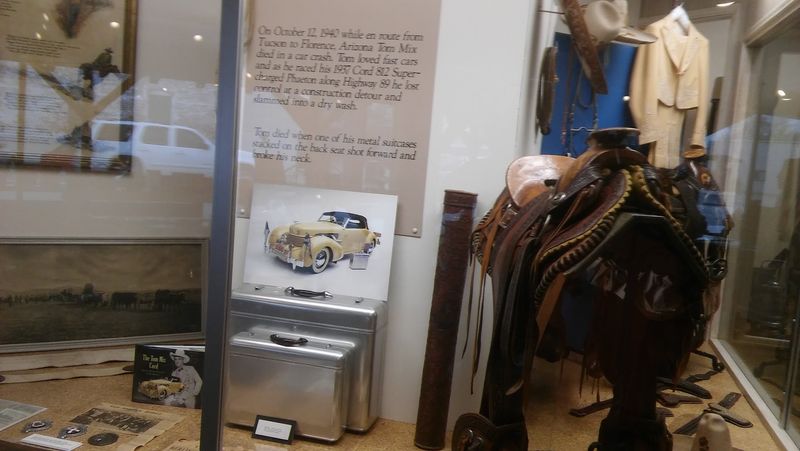
Among all the artifacts crowding the museum shelves, one object tends to generate the most conversation: a suitcase. Not an ornate one, not a particularly dramatic-looking piece, just a travel bag that carries one of the stranger footnotes in Hollywood history.
Tom Mix survived countless dangerous stunts throughout his career, the kind of physical feats that made audiences gasp and competitors shake their heads in disbelief. He rode horses off cliffs, performed vehicle chases before safety equipment was even a concept, and walked away from situations that should have ended very differently.
Then, in 1940, a suitcase ended that remarkable run of luck.
The details of how this ordinary object became part of the story of his passing are explained at the museum, and visitors who learn about it tend to stand quietly for a moment before moving on. The fact that the actual suitcase is on display rather than a replica makes the moment land differently than simply reading about it in a book.
It is the kind of artifact that museum curators dream about acquiring, something ordinary made extraordinary entirely by the story attached to it. Visitors rarely forget it.
Staff Who Know Every Story Behind Every Object
A museum collection is only as good as the people who bring it to life, and by that measure, the Tom Mix Museum punches well above its weight. Visitors consistently single out the staff as a highlight of their visit, and the enthusiasm is clearly not manufactured for the sake of tourism.
One staff member in particular, Fawn, comes up repeatedly in visitor accounts as someone whose passion for the collection is genuinely infectious. She can field questions about nearly any object in the room, connect individual artifacts to broader stories, and share background details that do not appear on any of the placards.
Spending time talking with her is described as one of the more unexpectedly enjoyable parts of the visit.
Beyond Fawn, the general atmosphere created by the staff is warm and personal in a way that larger institutions rarely manage. Visitors do not feel like they are moving through a roped-off space on a timed circuit.
They feel welcomed into a place that people actually care about. That sense of genuine investment in the collection and in the visitors who come to see it makes the experience feel more like a conversation than a tour, which is a rare and pleasant thing.
Gift Shop, Admission, and the Family Factor
Practical details matter when planning a day trip, and the Tom Mix Museum keeps things refreshingly accessible. Admission operates on a donation basis, meaning visitors contribute what they feel the experience is worth.
A common amount mentioned by visitors is around ten dollars per person, though there is no set price enforced at the door.
The gift shop offers a selection of reasonably priced items with a Western and Tom Mix theme, from books and prints to collectible pieces that make for genuinely thoughtful souvenirs. Children who might wander away from the main exhibits tend to gravitate toward the gift shop, and families report that keeping the kids happy there while adults linger over the collection works out nicely for everyone.
Age range is not really a limiting factor here. Visitors from young children to retirees find something to engage with, whether that is the horse statue, the film, the artifacts, or the conversation with staff.
The museum has a relaxed, unhurried pace that suits families looking for a low-pressure cultural stop on a road trip through northeastern Oklahoma. Nothing about the visit feels rushed or transactional, which makes the donation model feel entirely appropriate.
Hours, Location, and Making the Most of Your Visit
Planning ahead makes the visit smoother, since the museum keeps specific hours that are worth knowing before you make the drive. The Tom Mix Museum is open Tuesday through Saturday from 10:30 in the morning until 4:30 in the afternoon.
Sundays and Mondays are closed, so weekend visitors need to aim for Saturday if that is their only window.
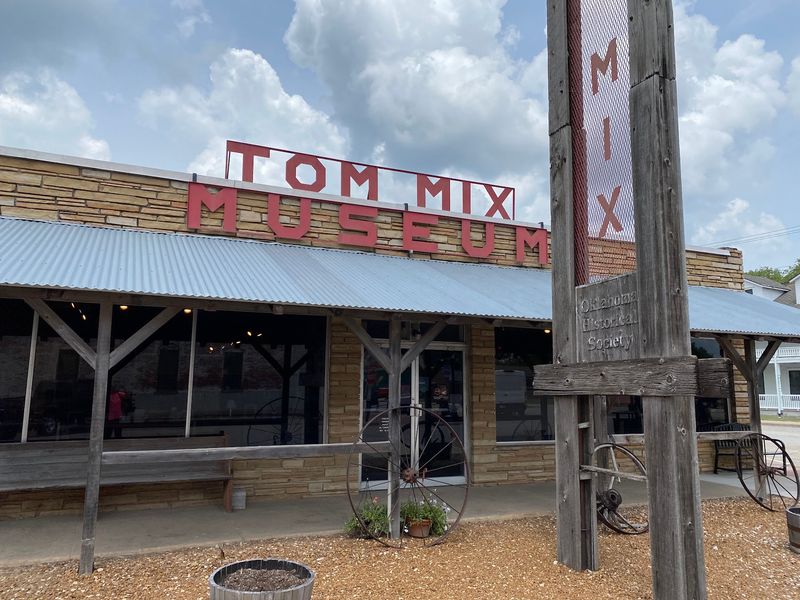
The museum sits at 721 N Delaware St in Dewey, Oklahoma, a straightforward address in a town that is easy to navigate. Dewey itself is located in Washington County in northeastern Oklahoma, putting it within reasonable driving distance of Bartlesville and the broader Tulsa area.
Anyone doing a road trip through that part of the state should pencil this stop in without hesitation.
Visitors consistently recommend watching the orientation film first, then working through the exhibits at a leisurely pace. Plan for at least an hour, though many people find themselves staying longer once the staff starts sharing stories and the displays start pulling them in.
Calling ahead at 918-534-1555 or checking the museum website at tommixmuseum.com before visiting is a smart move, especially if you are traveling a longer distance. The experience rewards a little preparation.
Share this story