Something unexpected happens when you stumble onto a stretch of old Route 66 in Oklahoma and spot a towering neon sign glowing against the sky. What looks like a relic from another era turns out to be one of the most beloved landmarks in the state, drawing road-trippers, photographers, and curious locals by the carload.
The Meadow Gold Sign in Tulsa has become a full-blown destination, and once you see it for yourself, it is easy to understand why crowds keep pouring in for that perfect photo.
Where the Meadow Gold Sign Lives on Route 66
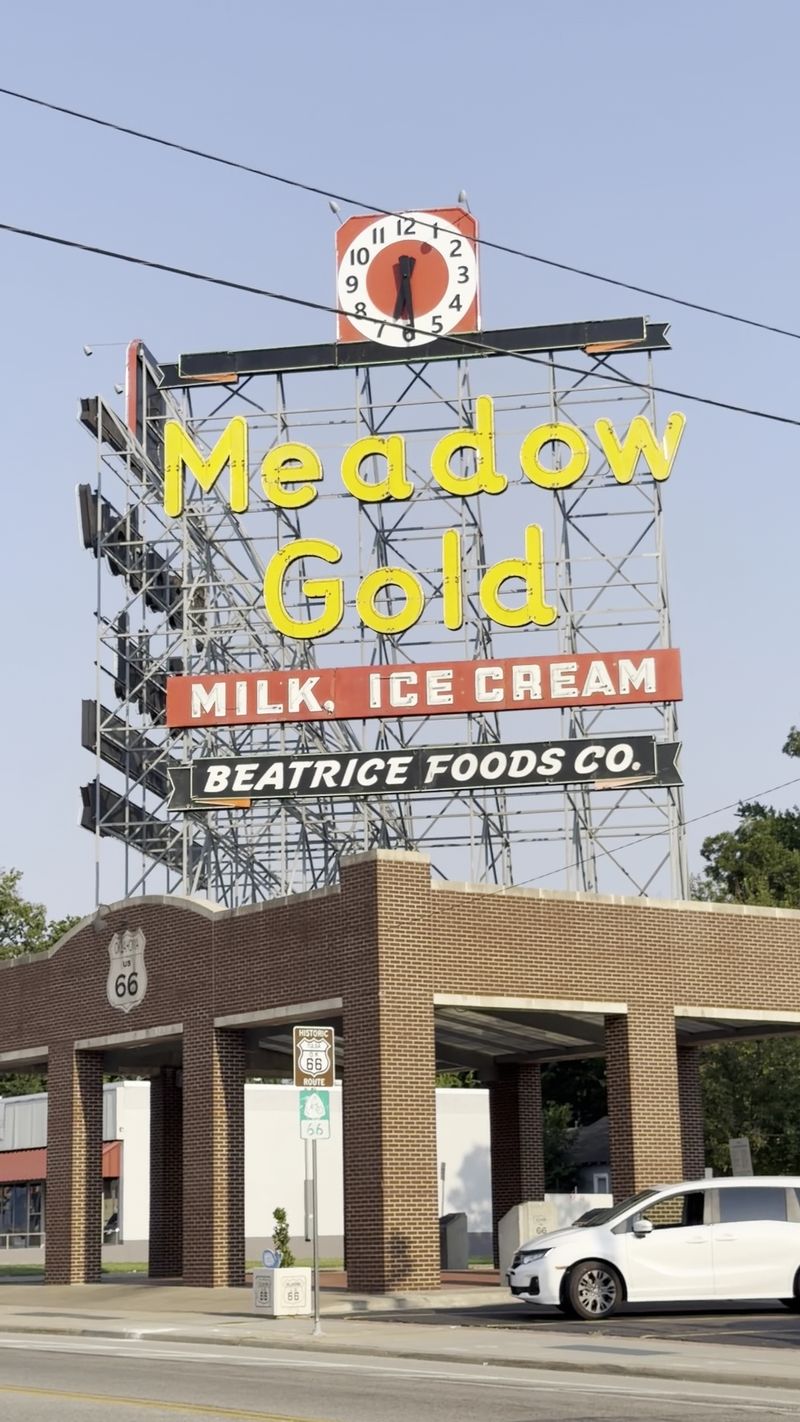
Planted firmly along East 11th Street in Tulsa, Oklahoma, the Meadow Gold Sign stands at one of the most recognizable corners on the entire Mother Road. The address puts it squarely in what locals now call the Meadow Gold District, a stretch that has quietly grown into a beloved neighborhood stop.
Travelers heading west on Route 66 often catch a glimpse of it before they even know what they are looking at.
The sign towers over its surroundings in a way that feels both proud and welcoming. It marks a crossroads where history and everyday Tulsa life overlap naturally.
The area around it has evolved considerably in recent years, with new shops, dining spots, and green spaces filling in the blocks nearby.
For first-time visitors, the location itself is part of the appeal. Parking is accessible, and the whole setup invites you to slow down rather than just drive past.
Whether you are on a dedicated Route 66 road trip or just exploring Tulsa on a weekend afternoon, this corner has a way of making you feel like you landed somewhere genuinely worth stopping for.
A Neon Icon Born in the 1930s
Few roadside signs in Oklahoma carry as much history as this one. The Meadow Gold Sign has been a fixture of Tulsa since the 1930s, which means it has outlasted entire generations of buildings, businesses, and cultural trends that once surrounded it.
That kind of staying power does not happen by accident.
For decades, the sign went through periods of neglect, and at various points it looked like it might not survive at all. Tulsa residents remember watching it slowly deteriorate, with community debates swirling about whether to restore it or remove it entirely.
Thankfully, the preservationists won that argument.
The Tulsa Foundation for Architecture and the Oklahoma Route 66 Association joined forces to bring the sign back to life. What makes the restoration story even more remarkable is that the original builders were reportedly involved in bringing it back, completing a circle that spans nearly a century.
Visitors who grew up in Tulsa often describe the emotional weight of seeing the sign lit up again, finally fulfilling something they had hoped for since childhood. That kind of connection to a place is rare, and it is a big reason why this sign resonates so deeply with so many people.
The Restoration That Brought It Back to Life
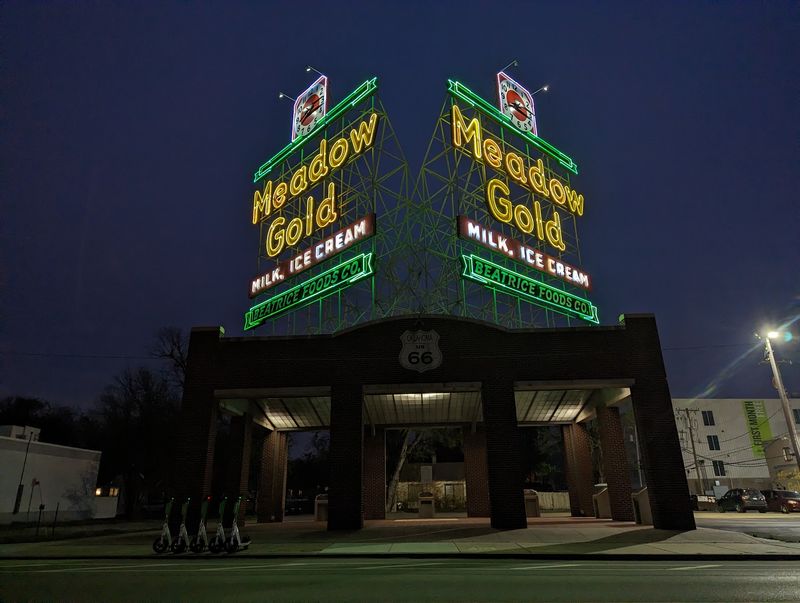
Bringing a nearly century-old neon sign back from the edge of collapse is no small undertaking. The restoration of the Meadow Gold Sign required careful coordination between preservation groups, community advocates, and skilled craftspeople who understood both the historical significance and the technical demands of neon work.
The result is a sign that looks vibrant and purposeful rather than simply patched up.
One of the most talked-about details of the restoration is the involvement of the original builders. Having the people who first constructed the sign participate in its revival adds a layer of authenticity that no modern replica could replicate.
Visitors who learn this detail often pause and let it sink in before snapping their photos.
The project also included the installation of a pavilion near the sign that displays the history of both the sign and neon artistry in Tulsa. Informational storyboards give visitors context they would not otherwise have, turning a quick photo stop into a genuinely educational experience.
For Route 66 travelers who want more than just a snapshot, that extra layer of storytelling makes the Meadow Gold Sign one of the more rewarding stops along the highway through Oklahoma.
The Pavilion and History Storyboards
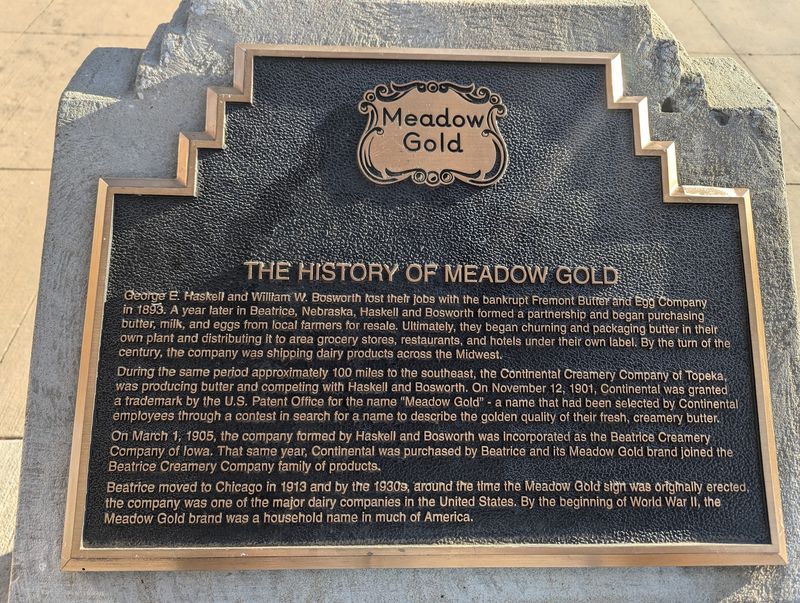
Not every roadside attraction bothers to explain itself, but the Meadow Gold Sign comes with its own built-in classroom. The pavilion installed near the base of the sign features a series of history storyboards that walk visitors through the story of the sign, its origins, and the broader history of neon signage along Route 66.
It is a thoughtful addition that rewards anyone willing to spend a few extra minutes reading.
The storyboards cover topics that go beyond just this one sign. They touch on the culture of neon advertising, the role of Route 66 in American commerce, and how Tulsa has worked to preserve pieces of that legacy.
For families traveling with kids, the panels offer an easy way to turn a roadside stop into a spontaneous history lesson.
Photographers and casual visitors alike tend to appreciate having that context. Knowing the story behind what you are photographing adds meaning to the image in a way that a plain sign simply cannot.
Several visitors have mentioned that the pavilion setup makes this feel like a well-maintained and genuinely cared-for landmark rather than a forgotten relic. The city of Tulsa clearly puts effort into keeping the area clean and welcoming for everyone who shows up.
Neon at Dusk – The Best Time to Visit
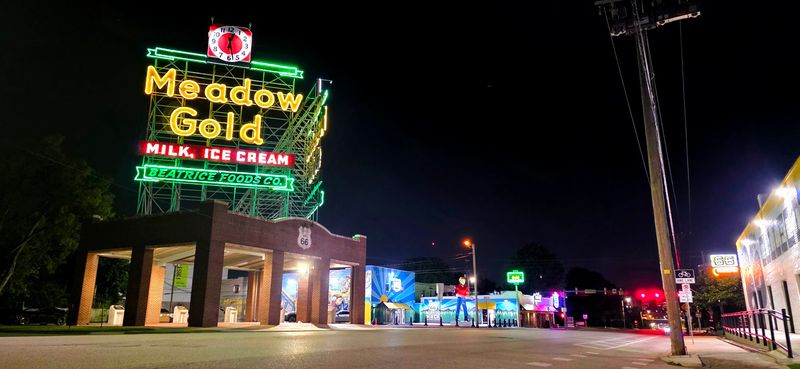
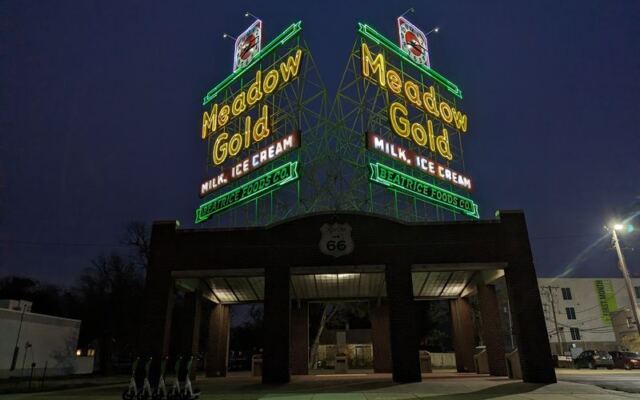
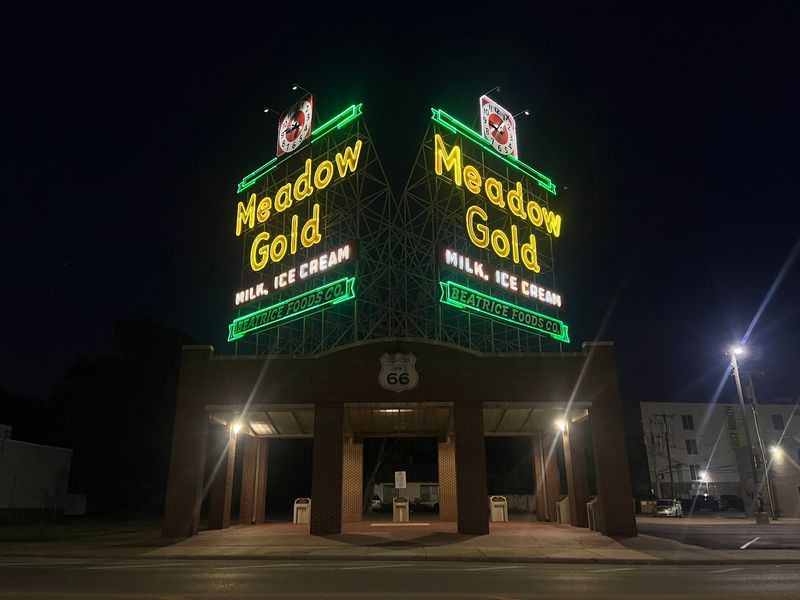
Ask any photographer who has visited the Meadow Gold Sign and they will tell you the same thing: wait for dusk. As the sun drops and the sky shifts to that deep blue-purple tone, the sign’s yellow neon kicks into a whole different level of visual impact.
The contrast between the glowing sign and the evening sky is the kind of shot that makes a road trip feel genuinely cinematic.
Visitors who arrive during daylight still get an impressive view, but the nighttime version of the sign is something else entirely. The vibrant yellow glow feels alive in a way that photographs cannot fully capture until you are standing right in front of it.
More than one visitor has mentioned returning specifically to see the sign lit up after an earlier daytime visit left them wanting more.
Because the area is open 24 hours, there is no rush to catch it before closing time. Evening visits tend to draw a mix of photographers with tripods, couples strolling the district, and road-trippers who timed their arrival deliberately.
The atmosphere around the sign at night carries a kind of nostalgic electricity that is hard to describe but very easy to feel once you are there.
The Meadow Gold District and Neon Quarter
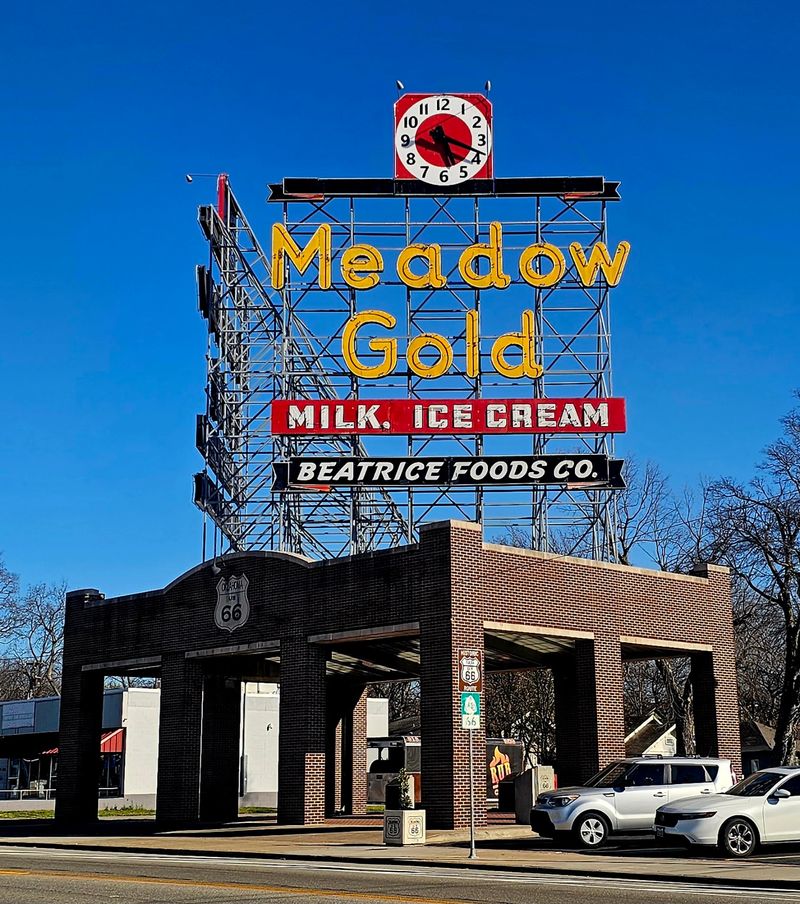
The sign itself is just the centerpiece of a much larger destination. The surrounding Meadow Gold District and Neon Quarter have undergone a serious revitalization in recent years, transforming what was once a quiet stretch of old Route 66 into a lively area worth exploring on foot.
New shops, local eateries, and public spaces have filled in around the historic anchor of the neon sign.
Visitors regularly mention that the whole district has a well-maintained, energetic feel that makes it easy to spend more time there than originally planned. Parks are tucked into the neighborhood, and the overall vibe mixes Route 66 nostalgia with a genuinely current creative energy.
During special events like the Capital Cruise car parade, the area transforms into a full-on street celebration with the Meadow Gold Sign serving as one of the most photographed backdrops of the event.
The shops in the area have drawn plenty of compliments from visitors who came just for the sign and ended up browsing longer than expected. Whether you are looking for a unique souvenir, a snack, or just a reason to wander, the district rewards exploration.
Calling it merely a photo stop would seriously undersell what the whole neighborhood has become.
Giant Statues and Roadside Novelties Nearby
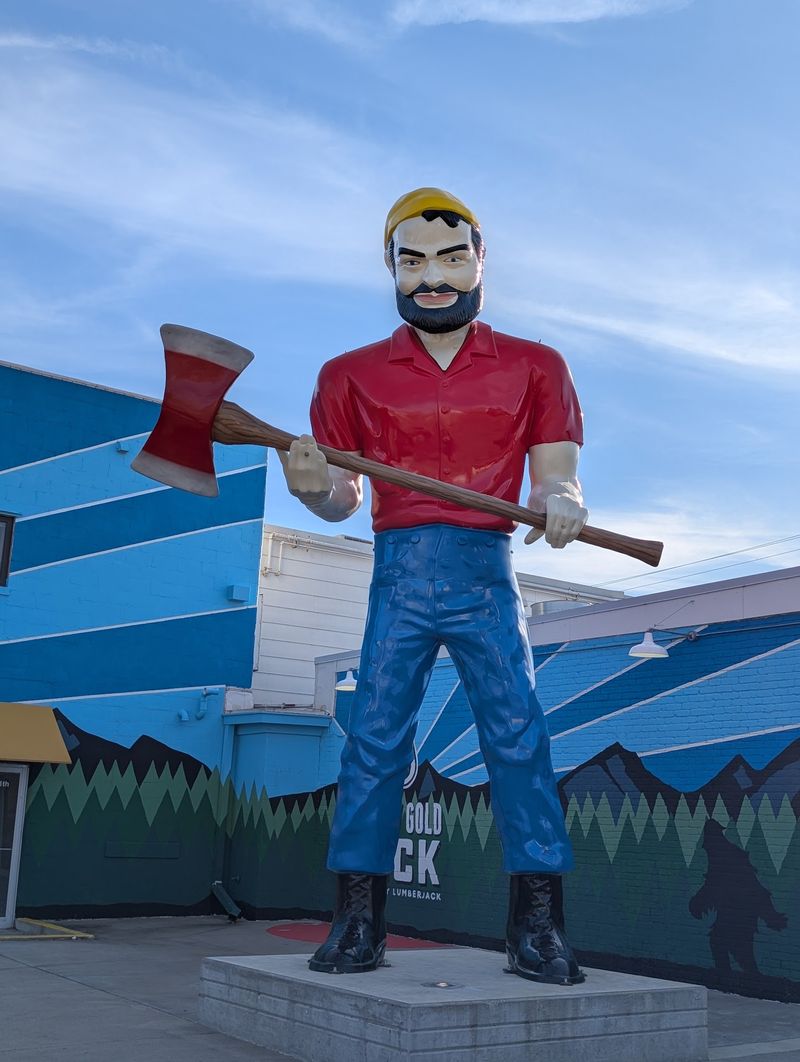
Road-trippers with an appetite for the unexpected will find more than just a neon sign waiting for them in this corner of Tulsa. The area around the Meadow Gold Sign is also home to some oversized novelty statues that have become photo opportunities in their own right.
Visitors have described encountering what they call giants, large-scale figures that fit perfectly into the quirky, larger-than-life spirit of Route 66 culture.
These kinds of roadside novelties are exactly what makes a Route 66 road trip feel different from any other drive. The combination of a historic neon sign, a walkable district full of shops, and giant sculptures scattered around gives the area a layered, almost theme-park quality without any admission gate.
Everything is right there on the street, free to explore and photograph at your own pace.
For families, the statues are an obvious hit with younger travelers who may not yet appreciate the history of the sign but will absolutely want a photo next to something enormous and unexpected. For solo travelers and couples, the whole setup offers plenty of material for a fun afternoon of wandering.
The Meadow Gold area seems designed to reward curiosity, and the novelty statues are a big part of that playful character.
Planning Your Visit – Hours, Access, and Tips
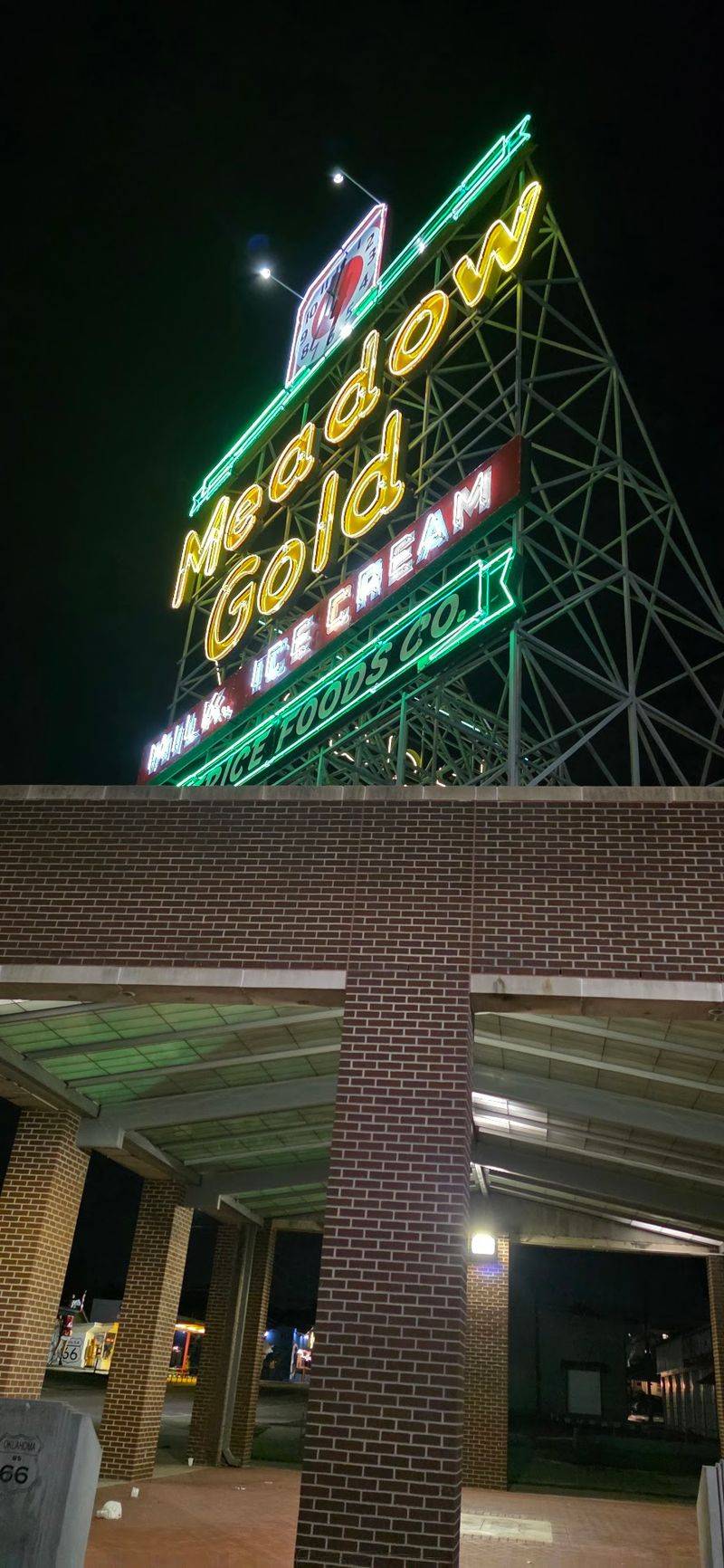
One of the most practical things about the Meadow Gold Sign is that it never closes. The landmark is accessible 24 hours a day, seven days a week, which means you can plan your visit around whatever time works best for you.
Early mornings offer peaceful, uncrowded conditions for photography, while evenings deliver that glowing neon atmosphere that so many visitors specifically seek out.
There is no admission fee to visit the sign or explore the surrounding area. The pavilion with its history storyboards is right there on-site and free to read at any time.
Street parking is available in the neighborhood, and the walkable layout of the district means you can easily combine the sign with a stroll through nearby shops and green spaces in a single outing.
For Route 66 road-trippers, the sign is conveniently located along East 11th Street, which is the historic alignment of the Mother Road through Tulsa. That makes it a natural stop rather than a detour.
Visitors coming from out of state often include it as part of a self-guided Route 66 novelty and history walk through the city. Checking the Route 66 Road Map website ahead of time can help you plan connecting stops and make the most of your time in Tulsa.
Share this story