Oklahoma has a way of surprising you when you least expect it. Tucked behind the bustle of a major city, one historic property quietly holds over a century of territorial history on just ten acres of preserved land.
Walking through it feels less like visiting a museum and more like stepping through a door that someone forgot to close on the past. If you have never heard of this place before, that is exactly what makes finding it so rewarding.
Location and Identity of Harn Homestead
Sitting at 1721 N Lincoln Blvd in Oklahoma City, Harn Homestead occupies one of the most quietly remarkable pieces of land in the entire state. With the Oklahoma State Capitol visible in the background, this ten-acre property manages to feel worlds away from the surrounding city.
Officially classified as a local history museum, the homestead preserves Oklahoma’s territorial era through original structures and guided experiences. Visitors often describe the feeling of stumbling upon it as finding a hidden gem in plain sight.
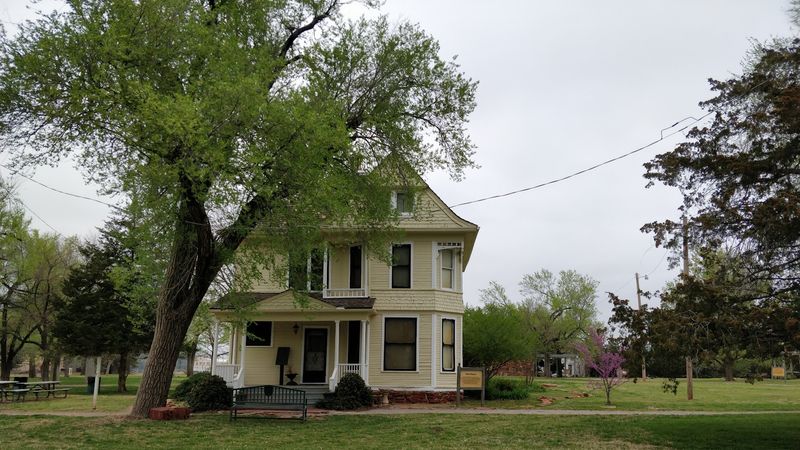
The property includes a restored 1904 Victorian home, a one-room schoolhouse, historic barns, and a collection of outbuildings that paint a vivid picture of early Oklahoma life. For anyone curious about how the state came to be, this is a genuinely grounding place to start.
The Land Run Connection
Few events shaped Oklahoma’s identity as dramatically as the Land Run, and Harn Homestead keeps that story alive in a tangible, walkable way. The property traces its roots directly to the era when settlers staked claims and built lives from the ground up on the Oklahoma frontier.
One of the most remarkable historical footnotes attached to the homestead is that the Harn family donated forty acres of their land so the Oklahoma State Capitol could have a permanent home. That single act of generosity literally shaped the geography of state government.
Visitors who take guided tours learn how families in this era operated under the philosophy of “waste not, want not,” stretching every resource as far as it could go. Field trip groups especially seem to connect with this part of the story, and younger visitors often leave with a completely different understanding of how Oklahoma came to exist as a state.
The 1904 Victorian Home
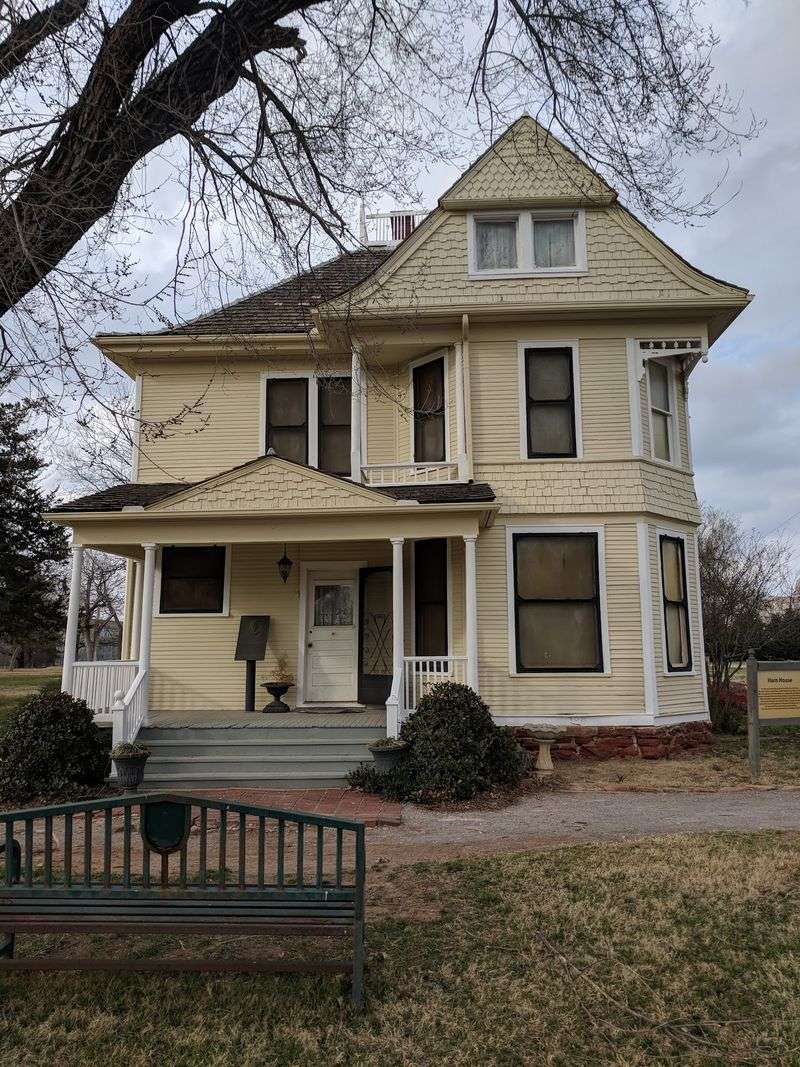
At the heart of the Harn Homestead property stands the main Victorian house, built in 1904 and carefully restored to reflect life at the turn of the twentieth century. What makes this structure particularly interesting is its origin story: it predates the famous Sears catalog kit homes and represents an earlier chapter in prefabricated residential construction.
The restoration work is noticeably thoughtful. Architectural details have been preserved rather than replaced, giving the home an authenticity that newer reconstructions often lack.
Walking through the rooms, it is easy to imagine the Harn family moving through their daily routines in a territory that was still finding its footing.
Visitors with an eye for historic architecture tend to linger here longer than anywhere else on the property. The combination of Victorian craftsmanship and frontier practicality makes for an unusual and genuinely fascinating blend that rewards close attention.
Friendly staff are typically on hand to share context about the home’s history and the family who lived there.
The One-Room Schoolhouse
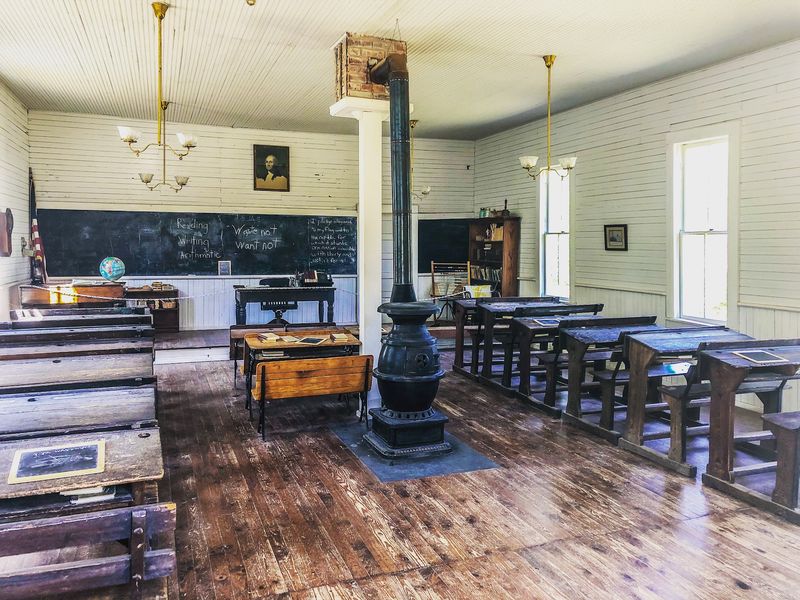
Step through the door of the one-room schoolhouse and time seems to shift immediately. Small wooden desks, a chalkboard, and period-accurate details recreate the learning environment that Oklahoma children experienced during the territorial years, making it one of the most visited and talked-about structures on the property.
School groups regularly use this building as the centerpiece of their field trips, with guides leading students through what a typical school day looked like more than a century ago. The immersive format encourages kids to participate rather than just observe, which tends to make the lessons stick far longer than a textbook would.
Reviewers who have brought children here frequently mention the schoolhouse as a highlight, noting how engaged the younger visitors become once they are seated at those old desks. The balance between education and hands-on experience is something the Harn team clearly works hard to maintain, and it shows in how enthusiastically students respond to the setting.
Historic Barns and Farm Structures
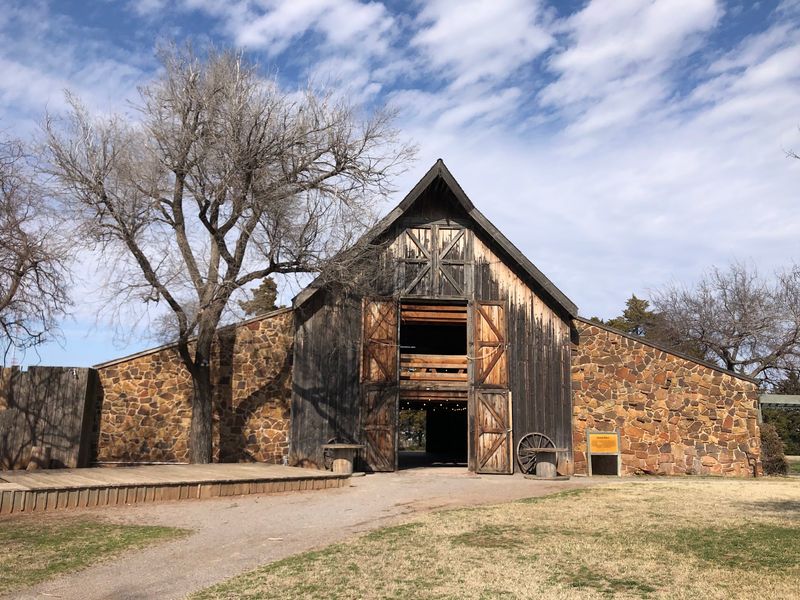
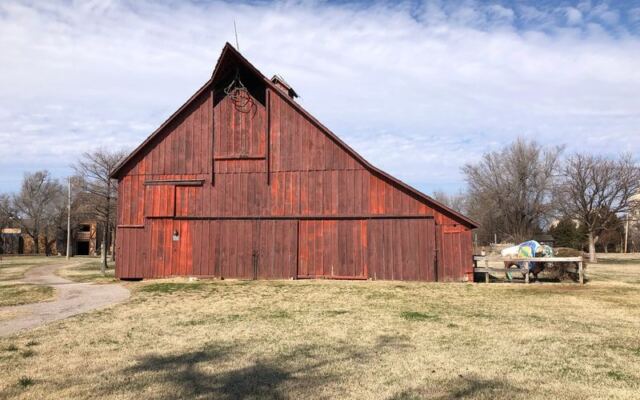
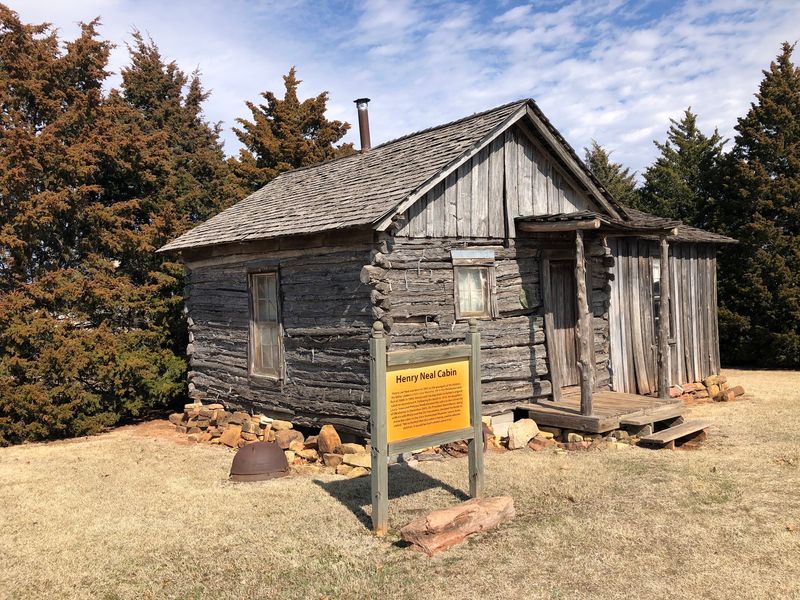
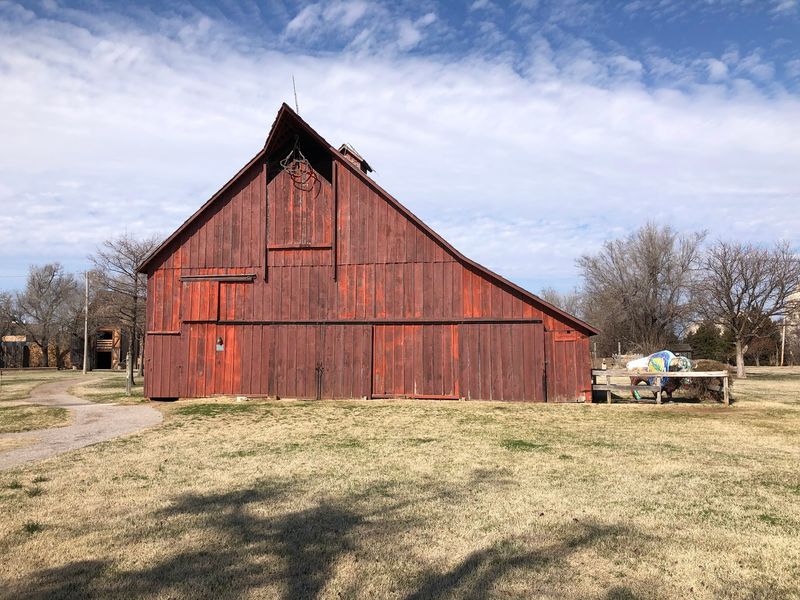
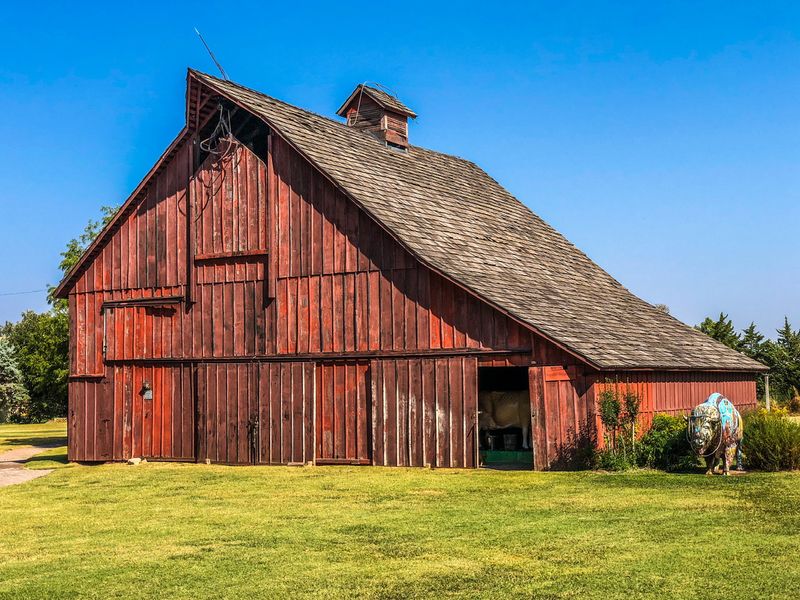
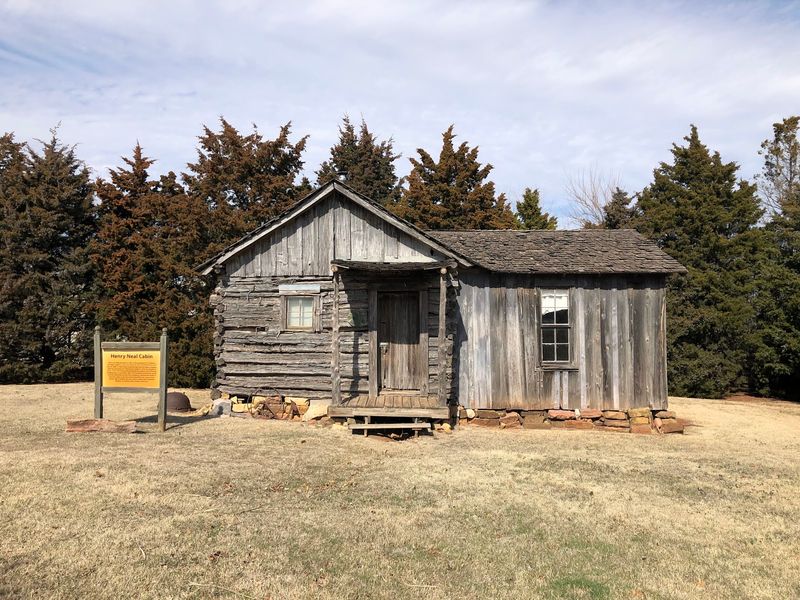
Beyond the main house, the Harn Homestead property unfolds into a collection of barns and outbuildings that speak directly to the agricultural rhythms of frontier life. Old log structures, original farm equipment, and weathered wooden buildings create a landscape that feels genuinely preserved rather than reconstructed for effect.
Visitors on self-guided walks have described the farm equipment as an unexpected highlight, with rusted and worn tools offering a window into the physical labor that defined daily life on the Oklahoma frontier. The buildings are spread across the grounds in a way that rewards slow exploration rather than a quick pass-through.
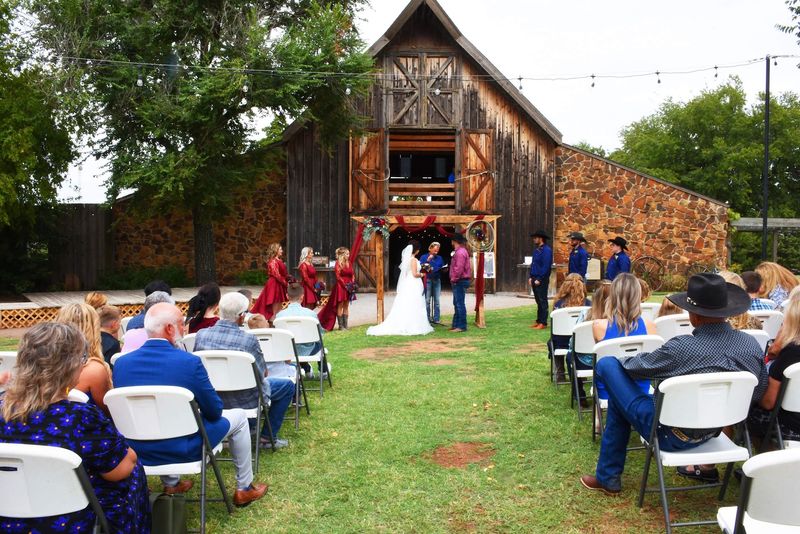
One of the barns also serves as a reception space for events, which gives it a dual role that somehow does not diminish its historic character. The rustic charm that visitors consistently mention in their impressions of the property is most concentrated here, where the raw materials of a working homestead have been allowed to age gracefully rather than be polished away.
Hands-On Pioneer Skills and Demonstrations
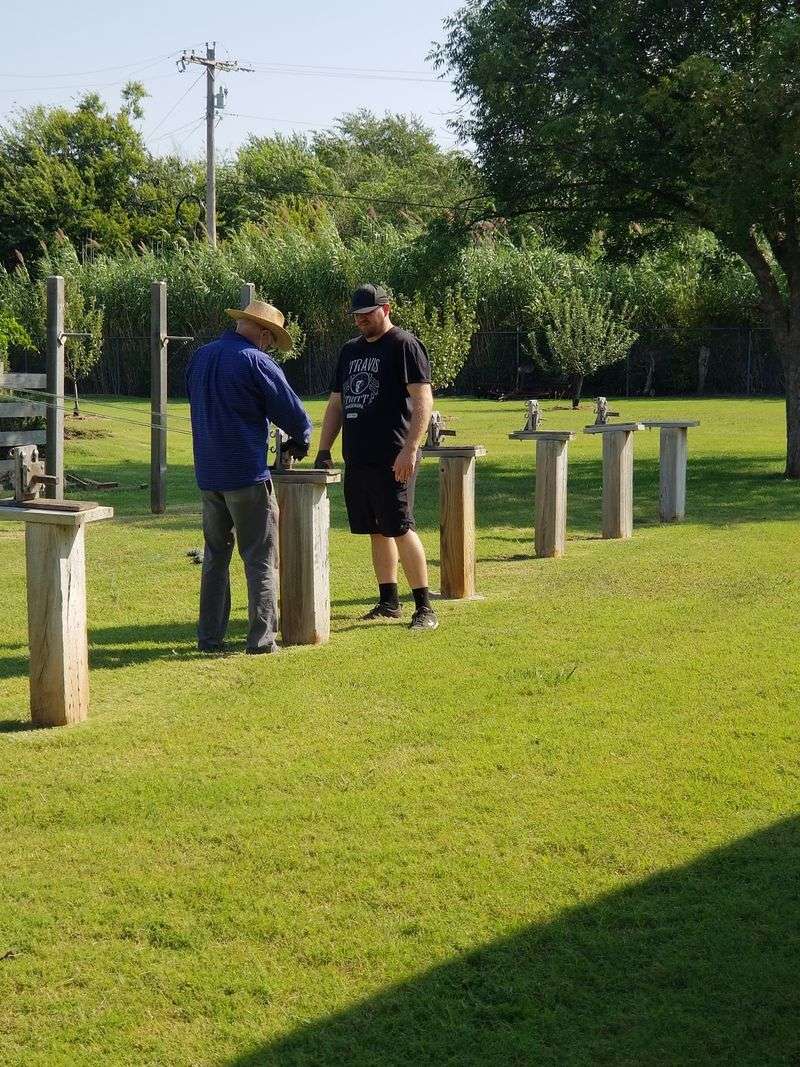
Learning how settlers actually survived on the Oklahoma frontier goes well beyond looking at old furniture. At Harn Homestead, guided tours regularly include demonstrations of practical pioneer skills that visitors can watch and sometimes try for themselves, turning history into something genuinely interactive.
Rope-making and corn grinding are among the activities that have impressed visitors over the years, offering a tactile connection to the ingenuity required for daily frontier survival. Knowing that these skills were not hobbies but necessities gives the demonstrations a weight that purely visual exhibits rarely achieve.
Younger visitors tend to be especially captivated by these moments, partly because the skills feel so foreign to modern life and partly because doing something with your hands creates a memory that sticks. Adults who grew up visiting the homestead as children often return years later with their own kids, describing the experience as one of the most enriching things they did on a school field trip.
That kind of multi-generational pull says a lot about how effectively the demonstrations connect people to the past.
Seasonal Events and Public Programming
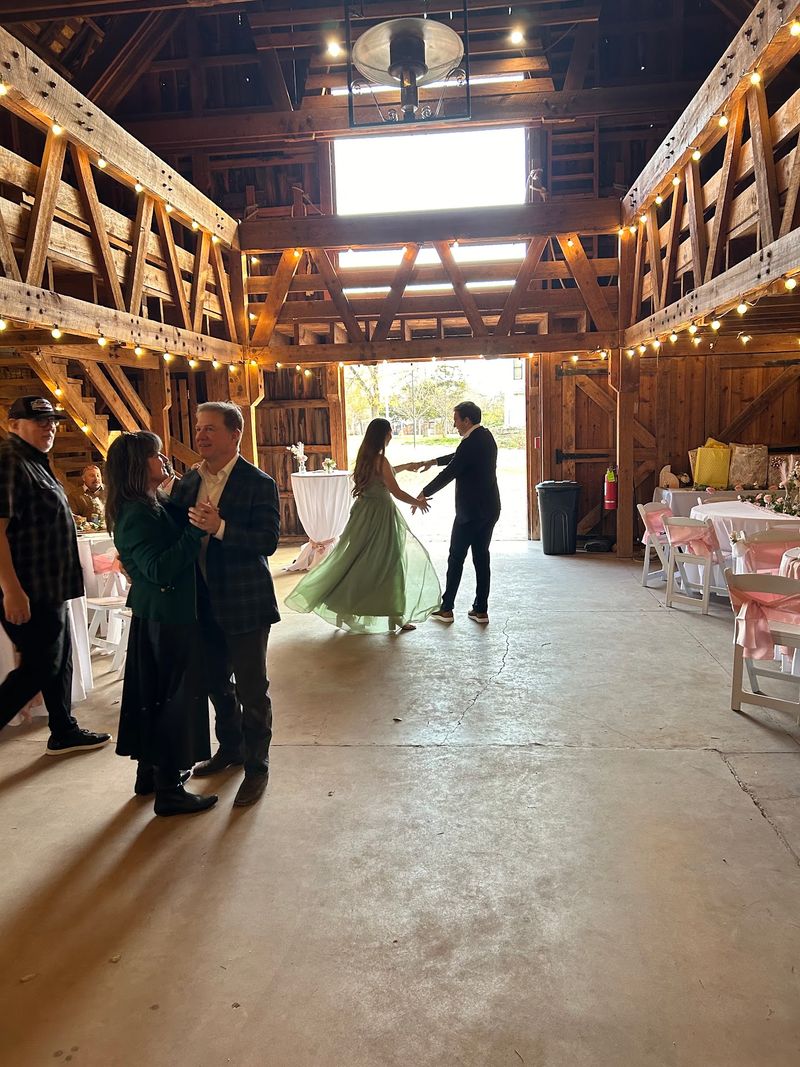
Harn Homestead is not a place that sits quietly between school tours. Throughout the year, the property hosts a rotating calendar of public events that draw families, history enthusiasts, and curious newcomers alike.
Haunt the Harn in October, a Land Run reenactment in April, Picnic on the Prairie, and a Territorial Christmas celebration are among the recurring favorites.
Past programming has also included live theatrical performances, with productions like “A Christmas Carol” staged outdoors and a collaboration with Storyteller Theatre bringing “Little Women” to the property. Audiences have described these productions as surprisingly immersive, with the historic setting amplifying the storytelling in ways a conventional theater simply cannot replicate.
Checking the event calendar before planning a visit is genuinely worthwhile, since the property’s character shifts meaningfully depending on what is happening. A Halloween evening on the grounds feels entirely different from a spring Land Run morning, yet both tap into the same spirit of bringing Oklahoma’s past to life in a way that feels festive rather than solemn.
The Capitol Backdrop and Outdoor Grounds
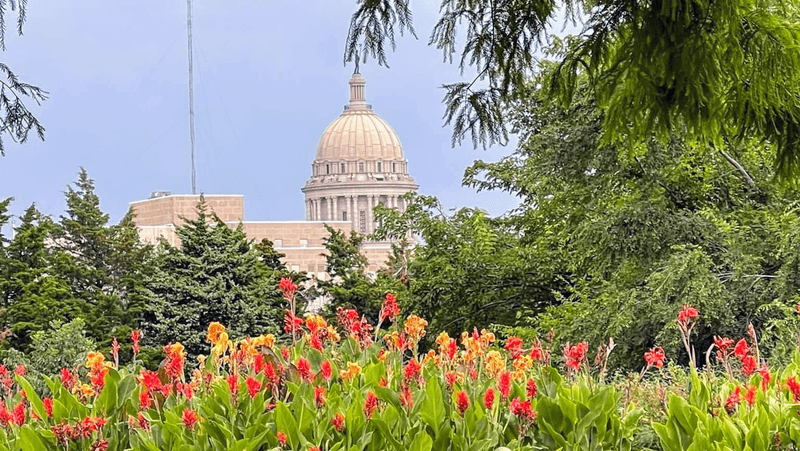
One of the most visually striking aspects of the Harn Homestead experience is something that cannot be fully appreciated from a website photo. Standing on the grounds and looking up to see the Oklahoma State Capitol rising behind the trees creates a genuinely arresting contrast between frontier heritage and governmental permanence.
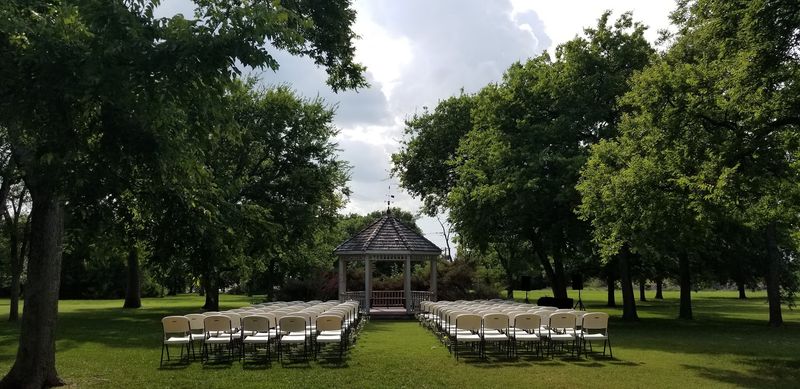
The outdoor space itself is generous and well-maintained, with mature trees providing shade and a sense of enclosure that makes the property feel more secluded than its urban address would suggest. Picnic tables are available for visitors who want to bring a lunch and linger after a tour, turning a museum visit into a relaxed half-day outing.
The grounds have also become a popular spot for photography, with couples, families, and event guests taking advantage of the scenic backdrops. The combination of rustic wooden structures, open lawns, and the Capitol dome creates a layered visual environment that works beautifully in photographs and feels even better in person.
Visitors who arrive expecting a compact indoor museum are frequently surprised by how much open space there is to enjoy.
Harn Homestead as a Wedding and Event Venue
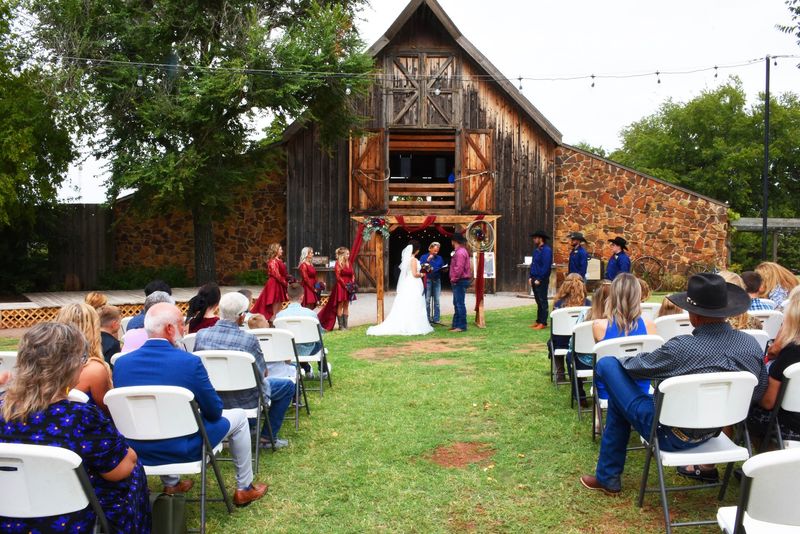
Beyond its role as a history museum, Harn Homestead has built a strong reputation as a wedding and event venue that offers something genuinely different from standard banquet halls. The combination of historic buildings, open grounds, and the Capitol as a backdrop creates an atmosphere that couples consistently describe as unforgettable.
Wedding packages are designed to fit a range of budgets, with amenities like tables, chairs, and ceremony arches included. Couples have the flexibility to marry in multiple locations on the property and use the restored barn for receptions, giving the day a cohesive rustic character without sacrificing comfort.
The staff earns particular praise from event clients, with multiple visitors highlighting the team’s responsiveness, flexibility, and genuine warmth throughout the planning process. Engagement photo sessions on the property are also available, often at no additional cost, which gives couples a chance to get comfortable with the space before their big day.
For anyone searching for a venue that blends Oklahoma history with natural beauty, this property makes a compelling case without trying very hard.
The Knowledgeable and Welcoming Staff
A historic property is only as engaging as the people who bring it to life, and Harn Homestead consistently draws positive attention for its staff. Visitors from school groups, wedding parties, and casual drop-ins all tend to mention the guides and coordinators as a meaningful part of what made their experience worthwhile.
Staff members are described as knowledgeable about the Harn family’s history and the broader territorial period, able to answer questions with genuine depth rather than rehearsed scripts. The warmth they bring to tours appears to be a consistent quality rather than an occasional happy accident.
Named team members like Kelly, Diane, and David have been specifically called out by visitors as particularly joyful to work with, which speaks to a staff culture that clearly values personal connection. For younger visitors on field trips, having a guide who balances historical accuracy with enthusiasm can make the difference between a forgettable outing and one they talk about for years.
At Harn Homestead, that balance seems to be something the team takes seriously and delivers consistently.
Who Will Enjoy Visiting Harn Homestead Most
Harn Homestead casts a wider net than you might expect for a history museum. Families with school-age children are an obvious fit, given the interactive programming and the one-room schoolhouse experience that tends to captivate younger visitors.
But the property also draws adults who simply enjoy stepping away from the noise of modern city life for an hour or two.
History enthusiasts who appreciate territorial-era architecture and authentic restoration work will find plenty to examine here, from the Victorian home’s structural details to the weathered farm equipment scattered across the grounds. Photographers and couples scouting for scenic locations also make up a notable portion of the visitors who discover the property.
Homeschooling families have a particularly strong connection to Harn Homestead, with some visitors recounting memories of bringing their own children after first visiting as homeschooled kids themselves. That kind of generational continuity suggests the property offers something that resonates across age groups and educational backgrounds.
Anyone with even a passing interest in Oklahoma’s story before statehood is likely to leave with more appreciation for the place than they arrived with.
Hours, Admission, and Getting There
Planning a visit to Harn Homestead requires a little advance thought, since the property operates on a specific schedule that not everyone realizes upfront. The museum is open Monday through Friday from 10 AM to 4 PM and is closed on Saturdays and Sundays.
Arriving outside those hours may still allow a walk around the grounds, but guided tours require being there during operating times.
The property is also noted as operating seasonally, so checking the official website at harnhomestead.com before making the trip is genuinely recommended. The site provides current hours, event listings, and contact information for anyone with specific questions.
Reaching the staff directly by phone at 405-235-4058 is another reliable option.
Located at 1721 N Lincoln Blvd in Oklahoma City, the homestead sits close to the State Capitol, making it easy to combine with other nearby attractions. Parking is available on site, and the property involves a fair amount of walking across the grounds, so comfortable footwear is a practical choice.
Bringing a packed lunch to enjoy at the picnic tables after a tour is a small touch that can turn the outing into a genuinely relaxed afternoon.
Practical Tips for Making the Most of Your Visit
A few simple preparations can meaningfully improve a trip to Harn Homestead. Arriving during the week within operating hours ensures access to guided tours, which add a layer of context and storytelling that walking the grounds alone simply cannot match.
The signage around the property is helpful for self-guided visits, but the guided experience is where the real depth lives.
Comfortable walking shoes are worth mentioning more than once, since the property spans ten acres and the best parts of it require moving between buildings across open ground. Spring and summer visits tend to offer the most pleasant outdoor conditions, though the property’s event calendar gives cooler months their own distinct appeal through seasonal programming.
Families planning to bring children might consider checking whether a school programming day or public event aligns with their visit, since those occasions tend to add extra energy and engagement to the experience. Packing a lunch to enjoy at the outdoor picnic tables after the tour is a small but satisfying way to extend the outing.
The property is free to explore casually, and the price for organized tours is described by visitors as very reasonable for what is offered.
Why Harn Homestead Deserves a Place on Your Oklahoma Itinerary
Some places earn their reputation through marketing, and others earn it simply by being genuinely worth the visit. Harn Homestead falls clearly into the second category.
Sitting on ten preserved acres in the middle of a major city, it manages to deliver a meaningful historical experience without the sterile feeling that larger institutions sometimes carry.
The combination of authentic architecture, hands-on programming, a knowledgeable staff, and a rotating calendar of public events gives the property a vitality that keeps visitors coming back across years and even generations. That multi-generational pull is one of the clearest signals that a place is doing something right.
For Oklahoma road-trippers, history buffs, families looking for something educational and genuinely fun, or anyone who simply wants to understand the state a little better, Harn Homestead offers a rare opportunity to connect with the past in a way that feels personal rather than academic. The Capitol dome rising behind the trees while you stand on land that helped put it there is the kind of moment that stays with you long after you have driven away.
Share this story