Some of the best days in Oregon start with no real plan, just a pair of comfy shoes and a hunch. I went looking for a short stroll by the water and ended up spending the whole afternoon chasing barking sounds, giant ships, and the smell of salty air.
The path was flat, free, and far more interesting than I ever expected. If you love finding spots that tourists rush past, this one belongs on your fall list.
A Waterfront Trail at the Mouth of the Columbia
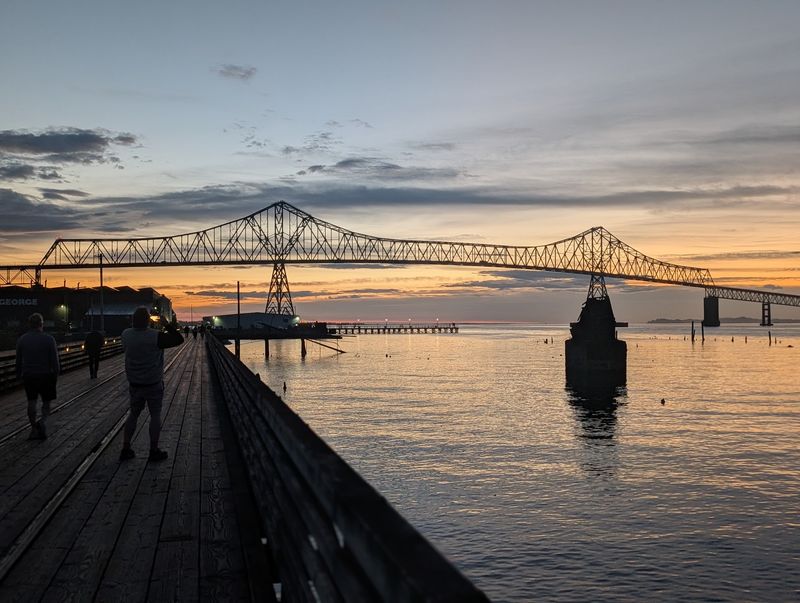
Picture the far northwest corner of Oregon, where the Columbia River widens out before meeting the Pacific. Right along that shoreline in Astoria runs the Astoria Riverwalk, a point-to-point path of roughly 6.5 miles.
One visitor clocked it at 6.4 miles and admitted they had started at both ends but never finished the whole thing in one go. That tells you plenty.
You can treat it as a quick leg-stretcher or turn it into a full-day adventure.
The route hugs the river the entire way, so the water is your constant companion. On one side you get boats, docks, and passing ships.
On the other, you get a working town full of character, old piers, and cozy places to duck in for a warm drink. For a fall outing that asks little and gives a lot, it is hard to beat this stretch of Oregon coast country.
Old Rail Line Roots
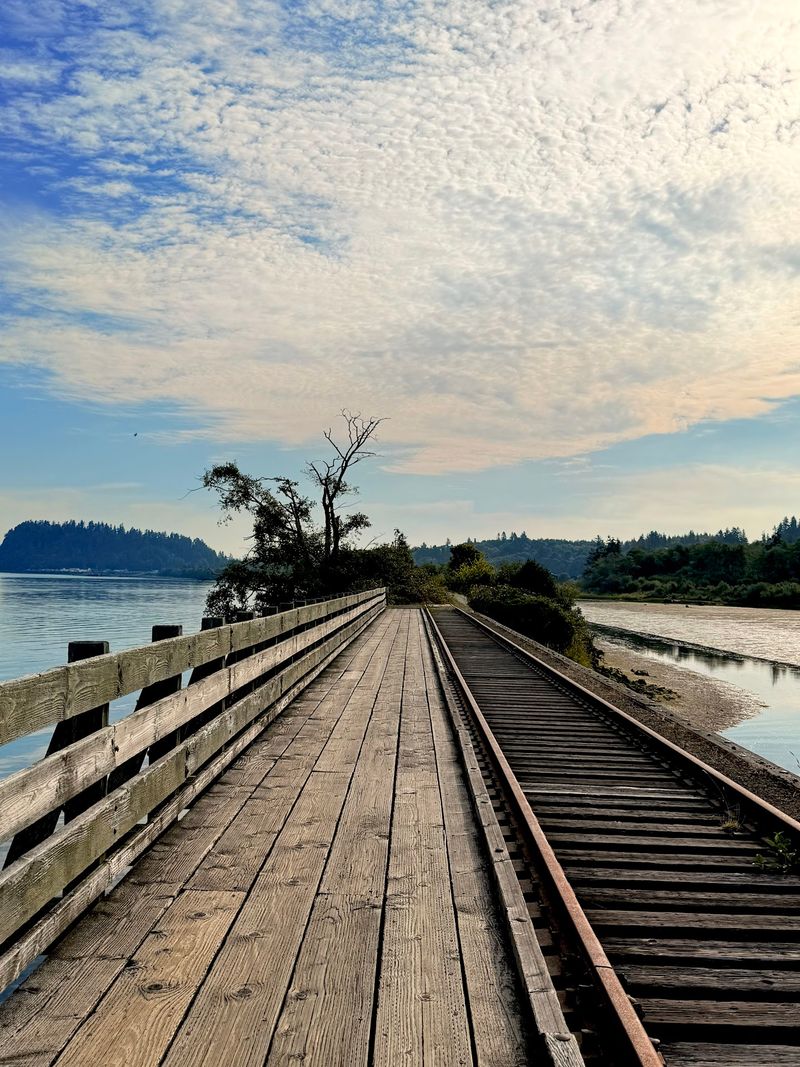
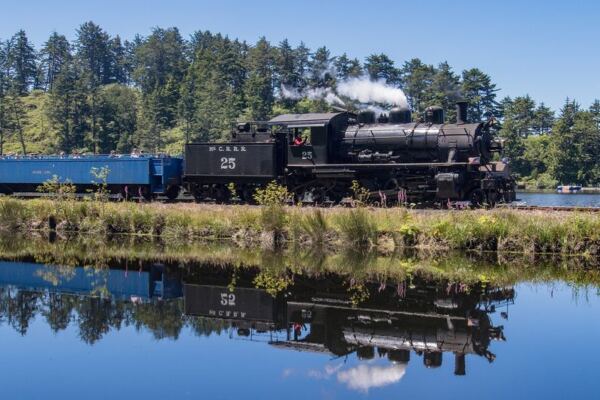
Trains once rolled right along this shoreline. The Riverwalk follows a portion of the old Astoria and Columbia River Railroad, which is a big reason the grade feels so smooth and steady.
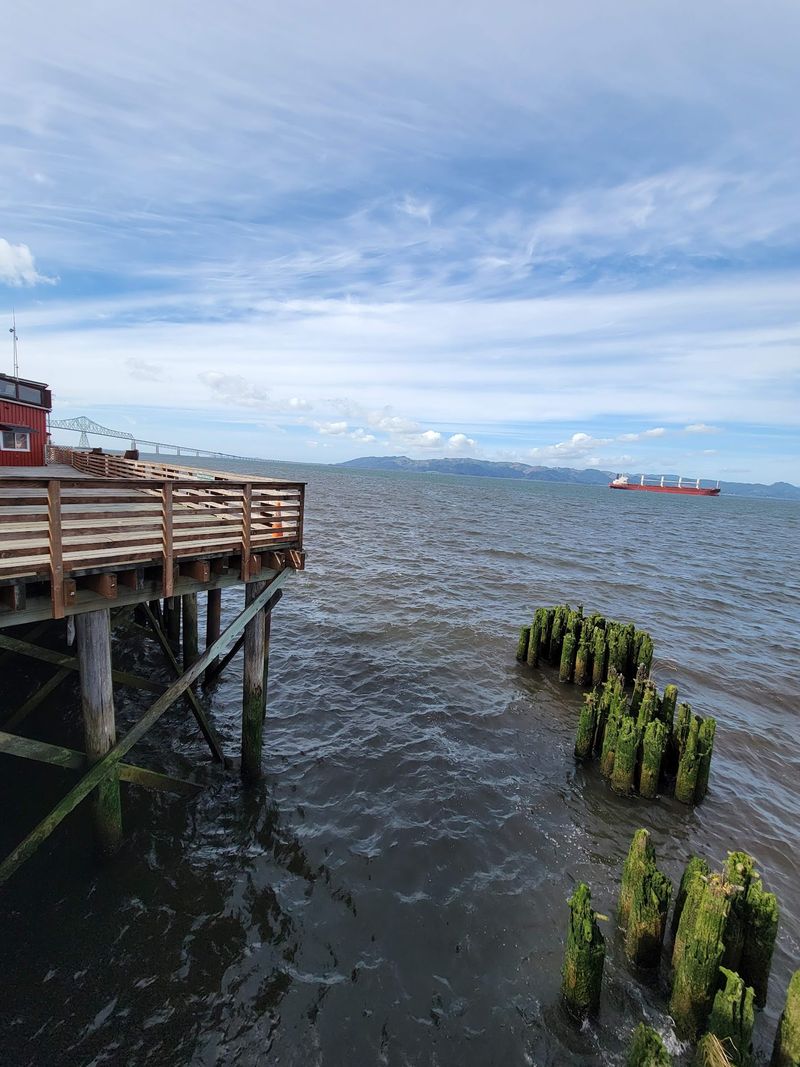
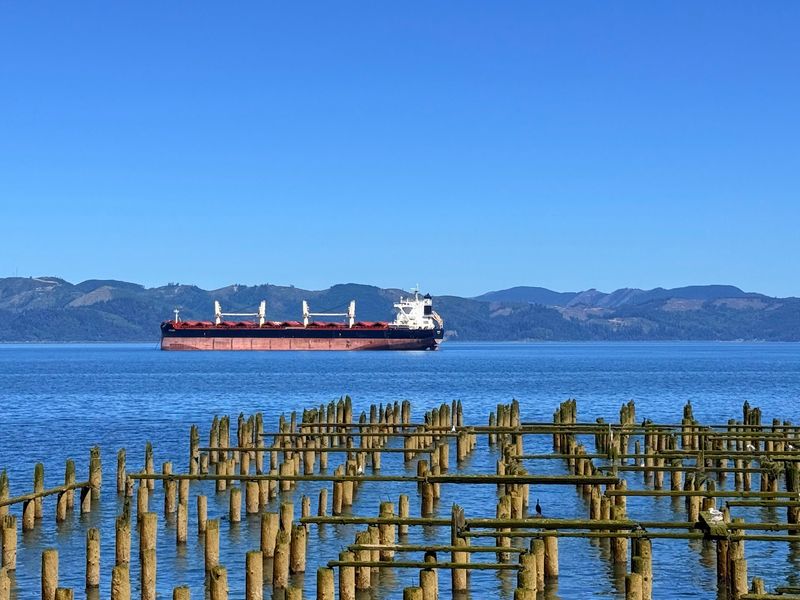
According to visitors who know the history, this was the rail line coming into town. Engineers built rock levees so the train could run straight in, and those levees ended up creating lagoons and leaving behind ancient wooden trestles you can still see today.
Here is a fun detail to share with whoever tags along. Some of the rails are still there, and reviewers mention them as part of the experience, especially for cyclists who need to watch their wheels.
Walking it feels a little like strolling through an outdoor museum. You are moving along the same route that once carried goods and people into one of the oldest towns in the West, only now the pace is entirely up to you.
The Shady Lagoon Road Trailhead
Ask a regular where to begin, and you might hear about a quiet little spot off Lagoon Road. One longtime walker calls it their favorite starting point, and it is easy to see why.
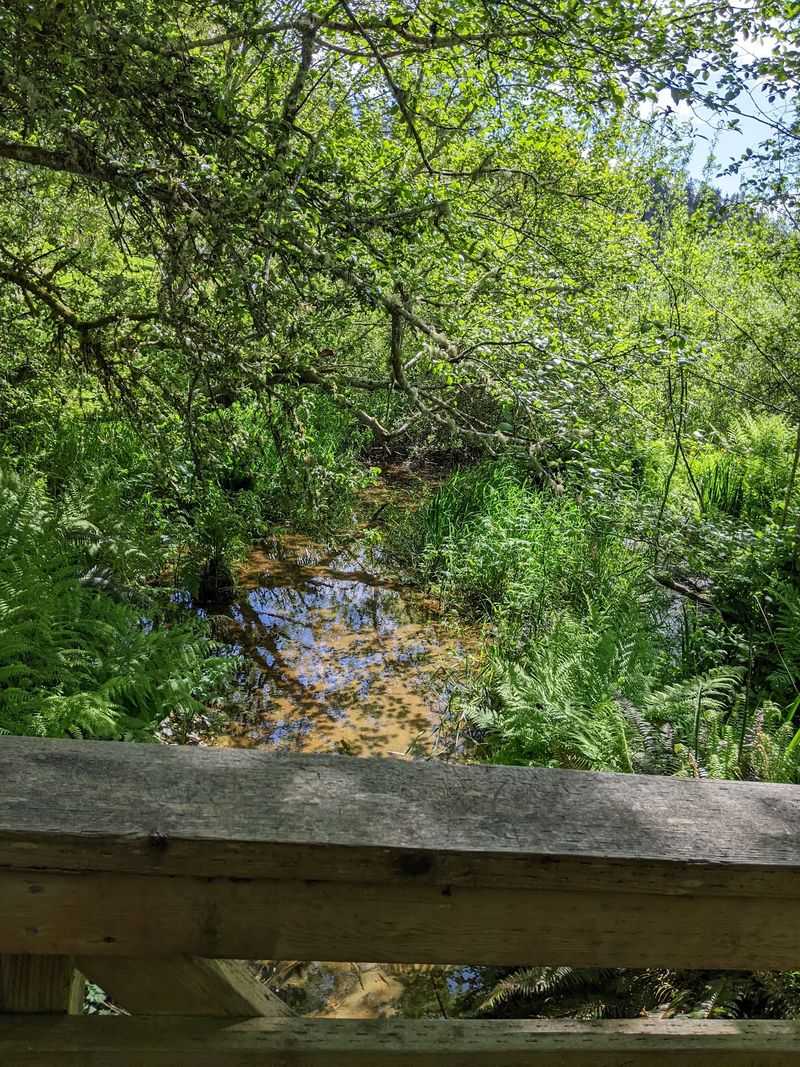
The trailhead is shady and tucked away, with a small wooden bridge crossing a creek. It feels more like a secret garden entrance than the start of a city path.
From there, the trail heads out toward the river, where the scenery opens up fast.
Blackberries grow thick on this end, according to visitors. In late summer and early fall, that makes the first stretch feel like a treasure hunt along the edges.
Starting here also means you ease into the walk with nature first, then roll toward town. It is the kind of beginning locals tend to keep to themselves, and now you are in on it too.
Container Ships Up Close
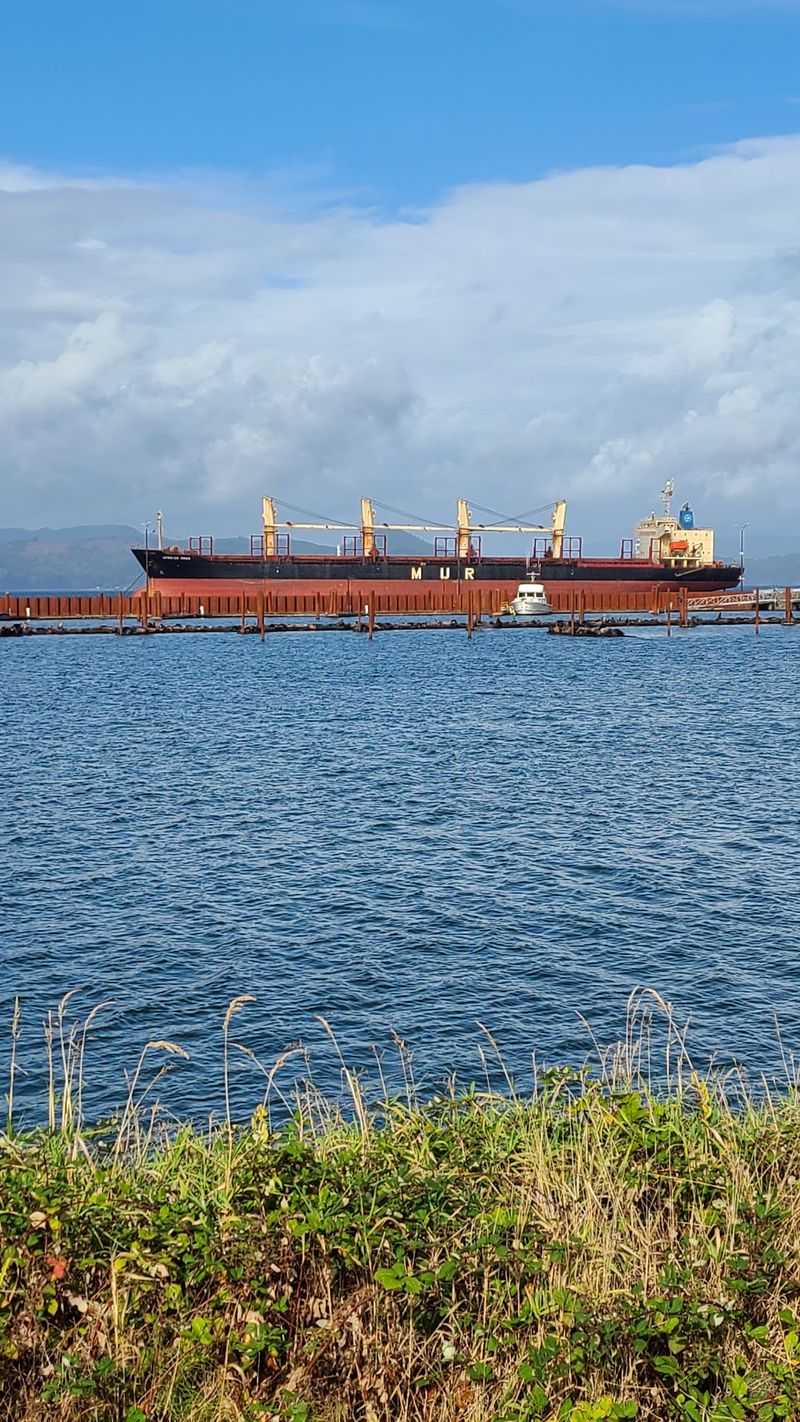
Few things make you stop mid-step like a ship the size of a building sliding past. Along the eastern end of the Riverwalk, visitors describe lovely scenic views and enormous container ships moving up and down the Columbia.
The river here is a busy shipping route, so there is often something big on the move. Watching one of these giants glide by against the gray-blue water is surprisingly calming.
Kids tend to point and stare. Adults usually do the same, just a bit more quietly.
Fall is a fine time to catch them. Cooler air can bring clearer views on some days and dreamy mist on others, and both make the ships look even more dramatic.
Bring a little patience, find a spot along the rail, and let the river put on its show. There is no ticket booth, no schedule posted, just the steady rhythm of a working waterway.
Barking Neighbors on the Docks
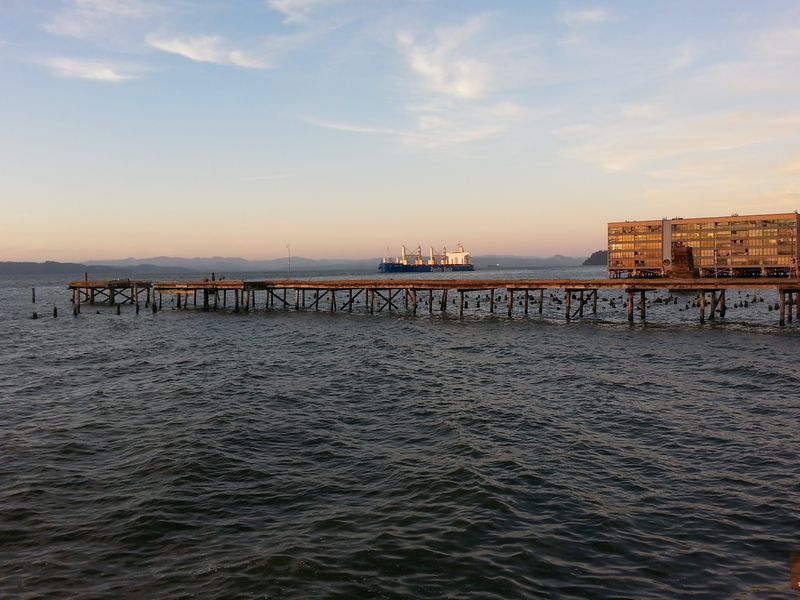
You will probably hear them before you see them. One visitor put it perfectly, advising people to keep an eye and an ear out for sea lions.
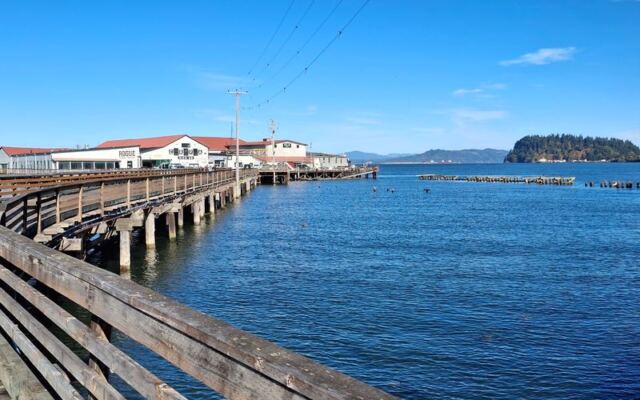
These loud, lovable characters crowd onto old docks that no longer serve boats, turning them into their own lounging spots. Walkers mention seeing them in more than one place along the route, piled together, barking, and generally acting like they own the waterfront.
In a way, they do.
It is one of the most talked-about parts of the walk, and for good reason. Watching sea lions jostle for the sunniest spot is pure entertainment, and it costs nothing.
Give them space and enjoy the show from the path. For families, this might be the moment everyone remembers most.
For grownups, it is a cheerful reminder that the wild coast is never far from town in this part of Oregon.
Glowing Pylons Into Town
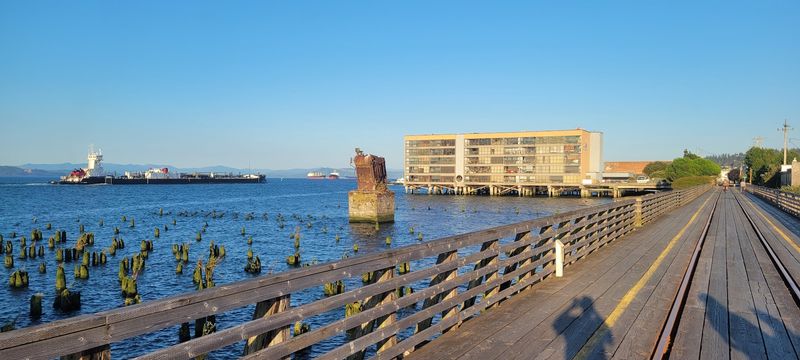
Crossing from the wilder stretch into what one walker playfully called civilization, you will notice a change. Lighted pylons start lining the path and keep going for about four miles into town.
Those lights make the route feel a bit safer as fall days grow shorter. Sunset comes early in autumn, and having a lit path means you do not have to sprint back before dark.
It also gives the evening walk a soft, cozy glow that suits the season.
Along this section, the scenery shifts to famous piers, apartments, and fishing boat launches. You start to feel the pulse of Astoria as a real working river town.
The blend of homes, boats, and water keeps things interesting with every bend. If you only have time for part of the trail, this lit stretch is a smart pick for late afternoon wandering.
Maritime Museum Along the Way
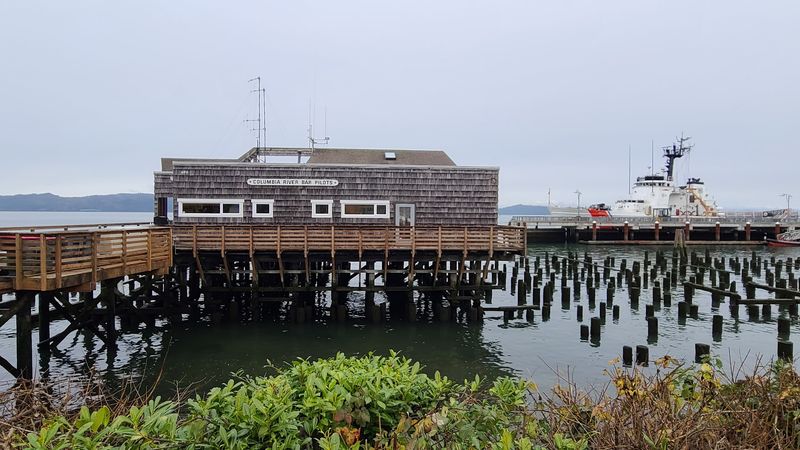
History lovers, take note. The Riverwalk passes right by the Columbia River Maritime Museum, a landmark visitors mention as they make their way toward downtown.
Having it on the route means you can easily mix a walk with a little learning. The museum sits in a spot that fits its subject perfectly, steps from the very river it celebrates.
Even if you do not go inside, it is a handy marker for where you are on the path.
Think of it as a natural pause point. Walkers heading from the east end often find this a good place to catch their breath before continuing into the busier heart of town.
With ships passing outside and sea lions not far off, the setting makes the river feel alive with stories. It is a fitting stop on a trail built on an old rail line that once fed this busy port.
Under the Astoria-Megler Bridge
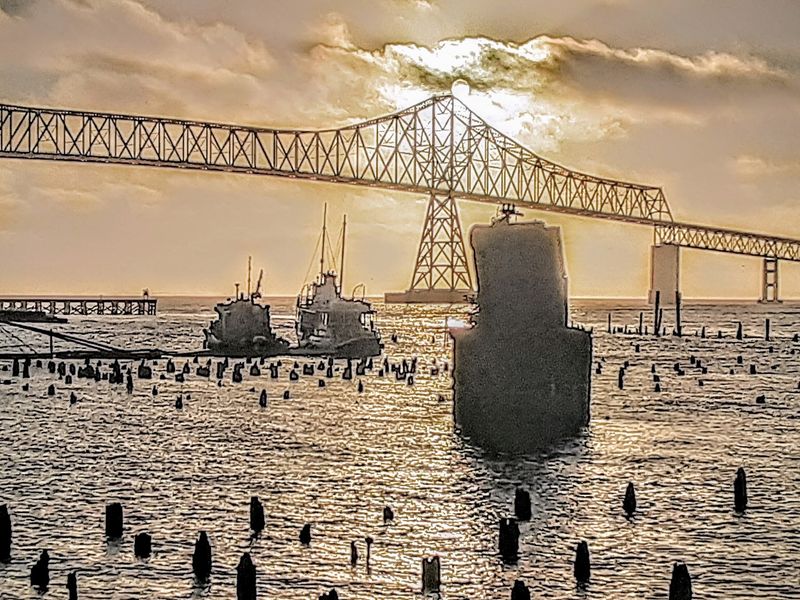
Standing beneath a giant feels humbling, and the Astoria-Megler Bridge is exactly that. The Riverwalk takes you right underneath it, a moment one visitor called remarkable.
The bridge stretches across the Columbia toward Washington, and seeing it from below gives you a sense of its size that no car ride can match. Its long span and steel frame make a striking backdrop for photos, especially when fall clouds roll in low.
Near this part of the walk, you will also pass historic downtown Astoria and a veterans memorial. That combination of grand engineering, local history, and quiet remembrance makes this section feel meaningful.
Slow down here. Look up, look out at the water, and let the scale of it sink in.
It is one of those views that makes you proud to live in a state packed with places like this.
Historic Downtown and Cozy Pit Stops
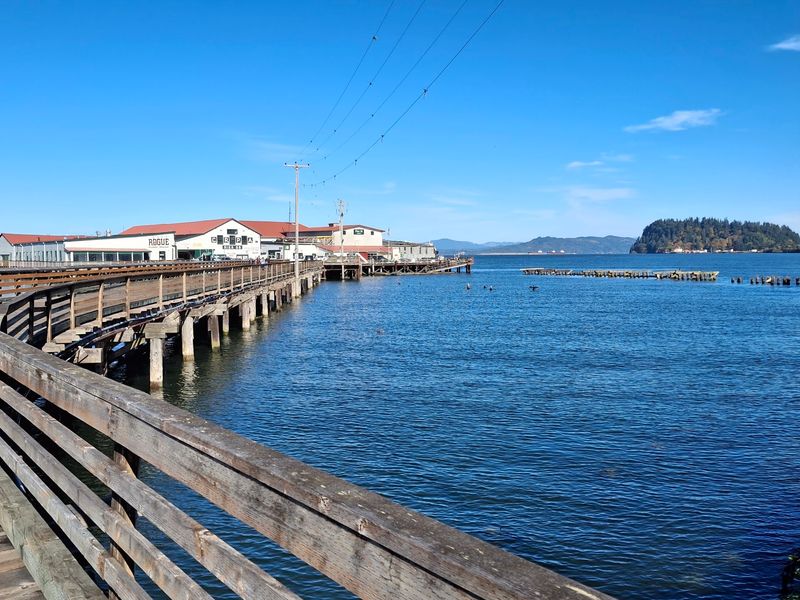
Hungry yet? Right around the middle of the route, the path slides through historic downtown Astoria, where walkers mention charming restaurants and coffee shops close to the water.
That makes planning easy. You can grab a hot drink to warm your hands on a chilly fall morning, or settle in for a long, lazy lunch with a river view.
Visitors also point out that restrooms are available at the restaurants and coffee shops along the walk, which is a real help on a path this long.
Breaking up your miles with a bite to eat turns a simple walk into a full day out. Start early, wander into town by lunchtime, then keep going in the afternoon.
The mix of old buildings, water views, and good places to rest is part of what makes this trail so easy to love.
Marinas, Boatyards, and the Youngs River End
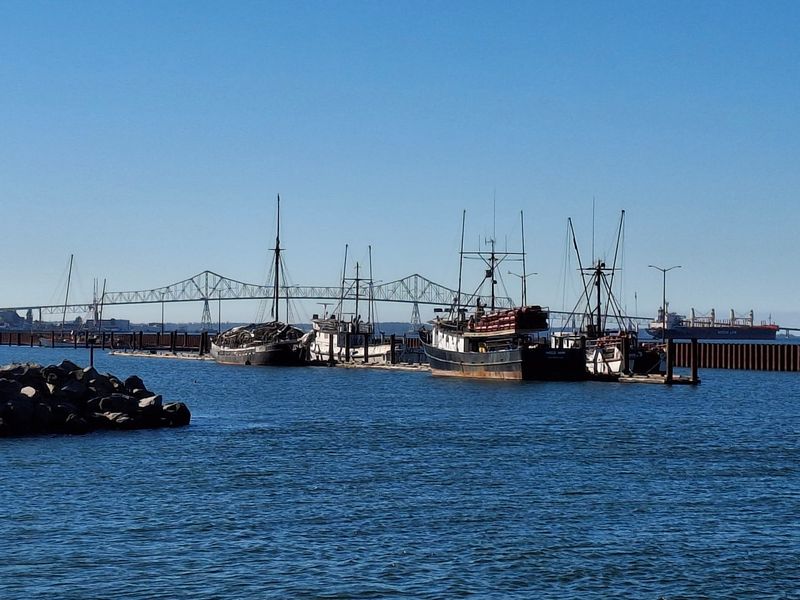
Not every stretch needs to be pretty to be worth walking. Past downtown, the trail heads into what one regular calls the utilitarian side of Astoria.
Here you will find the marina, warehouses, and boatyards, along with more bridges and even more sea lions. It is the gritty, hardworking face of a river town, and honestly, it is fascinating.
Boats in for repair, gear stacked near the docks, and the steady hum of real work all give this section its own charm.
Eventually, you reach the west trailhead, which sits along the Youngs River. Finishing here gives you a satisfying sense of having seen the whole story, from shady creek to busy port to working waterfront.
For anyone who loves seeing how a town actually runs, this end of the walk might be the highlight, even if few visitors make it this far.
Wheels, Paws, and Every Pace
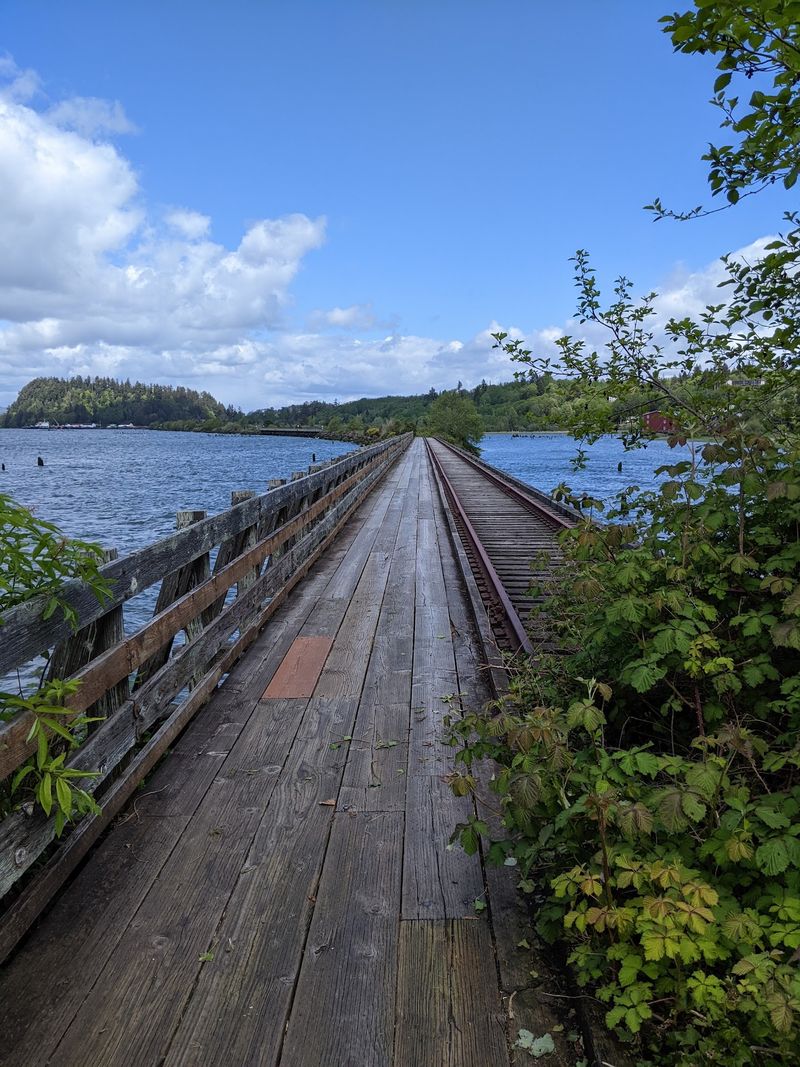
Bikes, skateboards, sneakers, and leashes all share this path. Visitors say walkers, runners, cyclists, and skateboarders will all appreciate it, and dogs on leashes are welcome too.
Cycling is a popular way to cover more ground, though one regular warns it can be a little challenging on the wooden bridges and old railways. Take those spots slow and you will be fine.
Runners love the steady, flat surface, and step counters get a chance to rack up serious numbers.
Not up for the full distance? Another visitor mentions you can also take the trolley, which adds a fun, old-fashioned twist to the day.
With many access points, you can hop on and off wherever it suits you. That flexibility means a family with a dog, a solo jogger, and a couple on bikes can all enjoy the same afternoon in their own way.
Salty Breezes and a Relaxed Mood
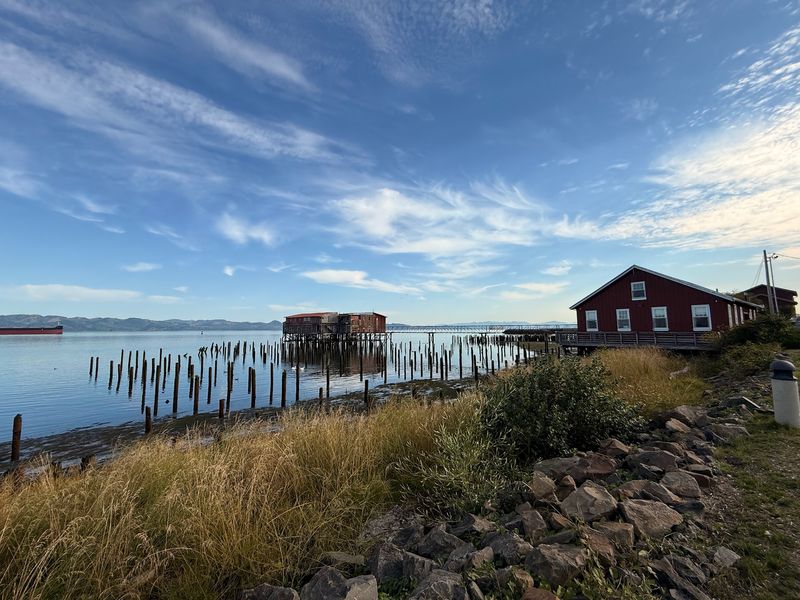
Some places just let your shoulders drop. Visitors keep coming back to words like relaxing, easy, and interesting when they talk about this walk.
One person described a sunny day with a salty sea breeze that felt like a warm welcome. Another simply called it a nice place to get out and stretch their legs.
That easygoing feeling is the heart of the Riverwalk. There is no summit to reach and no pressure to finish.
The easy, flat grade passes many places to stop, so you can linger as long as you like. Fall adds its own magic, with cooler air, softer light, and fewer people than the busy summer months.
Bring a scarf, pause on a bench, and listen to gulls and sea lions trade calls. It is a slow, peaceful kind of fun that suits anyone needing a breather.
Practical Notes Before You Go
Good news first. The Riverwalk is free, and as one visitor joked, free is a very good price.
The path runs about 6.5 miles point to point, so plan your return before you set out. You can walk back, ride the trolley, or arrange a pickup.
With many access points along the way, you can also choose a shorter section and save the rest for another day. The paved walk is described as handicap doable and highly recommended for a wide range of visitors.
Restrooms are available at restaurants and coffee shops along the route rather than at every turn, so time your breaks around town. Leashed dogs are fine.
Cyclists should go carefully on wooden bridges and old rails. The Lagoon Road trailhead on the east and the Youngs River trailhead on the west make good starting points.
Why It Earns a Fall Day
Every Oregonian needs a few easy wins in their back pocket, and this walk is one of the best. It packs ships, sea lions, rail history, a huge bridge, and a charming downtown into one flat, free stretch.
Visitors seem to agree it is worth the trip. People describe it as terrific, interesting, and highly recommended, whether they walked a mile or chased the full length.
That range is the real beauty here. You set the pace and the distance, and the river fills in the rest.
Fall might be the sweetest season to try it. Crowds thin out, the light softens, and a warm drink downtown tastes even better after a breezy stroll.
So pick a trailhead, lace up, and see how far the water pulls you. Chances are, you will be planning your next visit before you even reach the end.
Share this story