Some of the best moments on a road trip happen when you pull over for something you did not plan to see. Across the country, giant statues, buried cars, and strange museums are waiting just off the highway, and most of them take less than an hour to enjoy.
This list covers twenty of them, from Route 66 icons to quirky stops on the Great Plains and the East Coast. Some are free, some offer tours, and a few can be seen in a quick photo break.
Whether you are mapping a cross-country drive or a weekend loop, these stops give you good reasons to slow down, stretch your legs, and take pictures that make friends ask where you were.
Cadillac Ranch, Amarillo, Texas
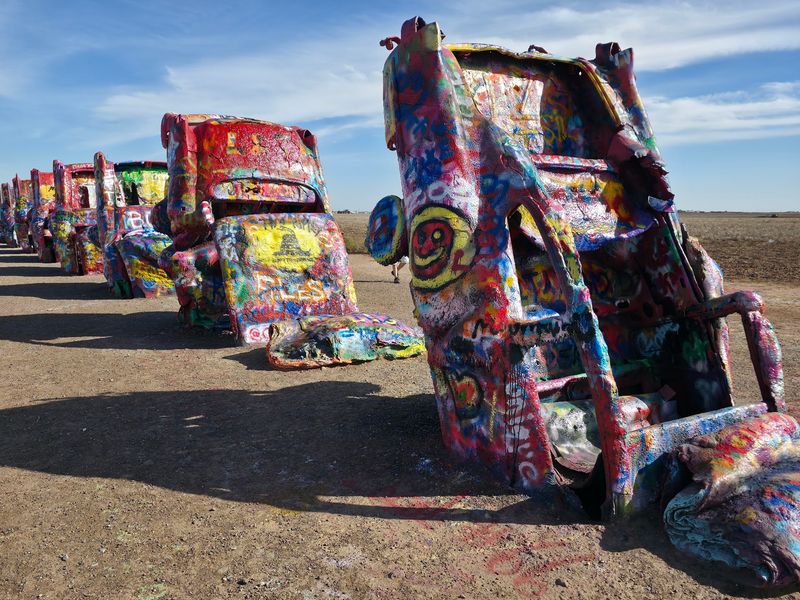
Ten Cadillacs are planted nose-first in a field beside Interstate 40, and every one of them is covered in spray paint. Ant Farm, an art collective, created the installation in 1974, and it remains one of the most recognizable pieces of public art in America.
The cars are never quite the same twice. Visitors layer fresh paint over old colors, so the display changes from one trip to the next.
You are welcome to walk into the field, take photos, and add your own temporary mark to the artwork.
Road trippers will like the practical side as well. Cadillac Ranch is free and open 24 hours a day, 365 days a year, so it fits any schedule.
Bring your own spray paint if you want to leave a mark, and wear shoes that can handle dirt. The ground can be muddy after rain, and old paint cans are scattered around the site.
It is a simple stop that makes Route 66 feel playful.
Carhenge, Alliance, Nebraska
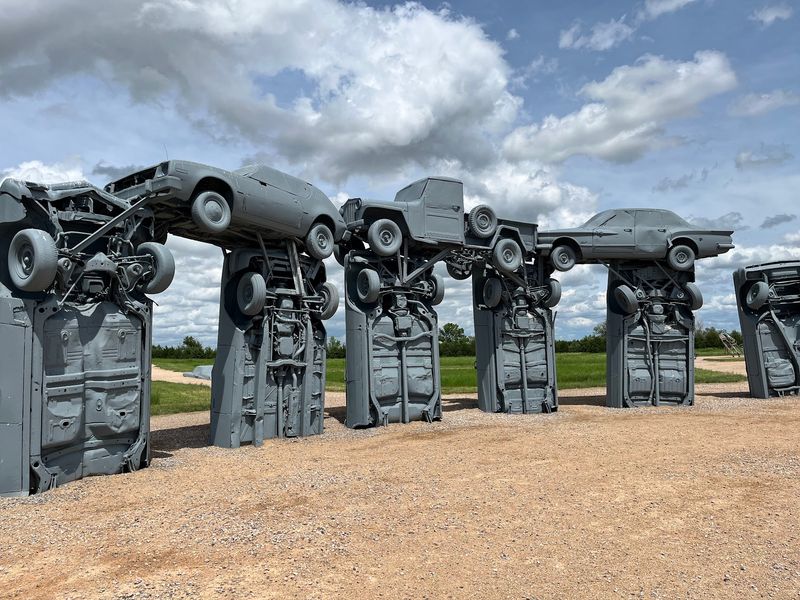
Getting to Stonehenge takes a passport, but Nebraska has a version built from old cars. Jim Reinders created Carhenge as a tribute to his father, and it uses 39 vehicles arranged to resemble the famous monument in England.
Instead of stone, the cars are painted gray to help complete the look. The site has become the signature sightseeing stop in Alliance and one of the best-known oddities in the state.
Visitors can wander around the circle, take photos, and look at the extra car sculptures on the property. Those side pieces are easy to miss if you only stay near the main ring, so give yourself a little time to explore.
Carhenge is free to visit and open every day of the year from dawn until dusk. The gift shop runs on a seasonal schedule, so plan on souvenirs only if you visit in the warmer months.
Blue Whale of Catoosa, Catoosa, Oklahoma
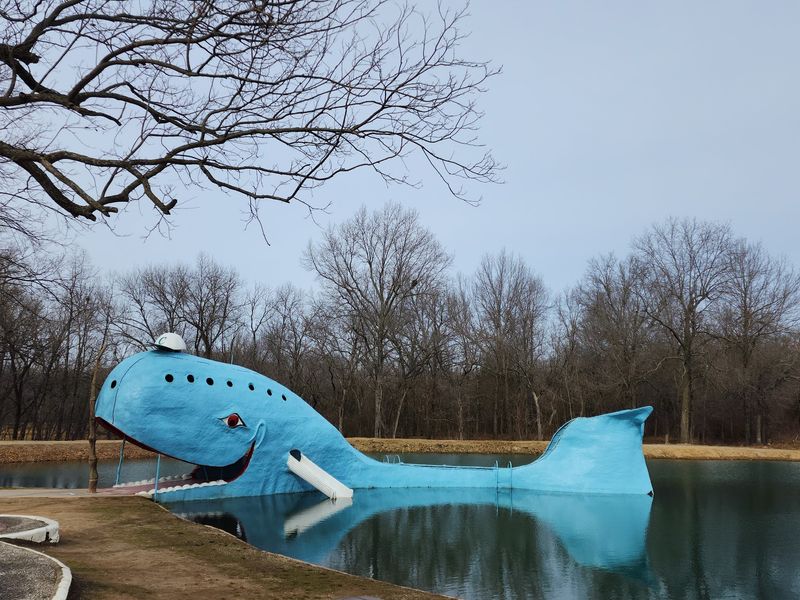
A smiling blue whale rising from a small pond is one of the friendliest sights on Oklahoma’s stretch of Route 66. It began as part of a family recreation area and grew into an unmistakable symbol of Mother Road travel.
Visitors can walk inside the enormous whale, explore the grounds around the pond, and photograph one of the route’s quirkiest survivors. The setting makes for easy pictures, especially if you want the whale and the water in the same frame.
The City of Catoosa maintains the attraction, and admission is free. Current visitor information lists regular operating hours through the week, so this is no abandoned relic from the past.
If you are following the historic highway across northeastern Oklahoma, this is an easy stop that fits into a short break. It delivers exactly the kind of eccentric Americana the route is known for, and kids tend to love going inside.
Cabazon Dinosaurs, Cabazon, California
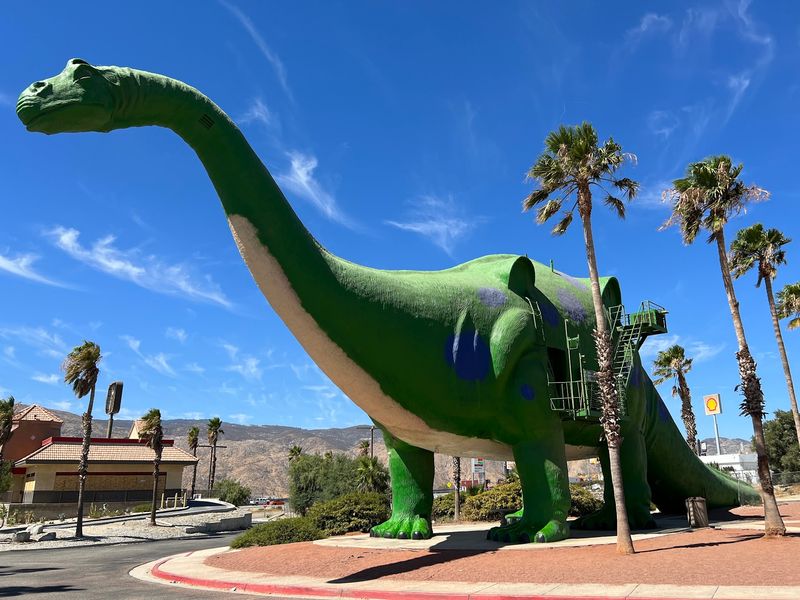
Drivers heading toward Palm Springs on Interstate 10 will have a hard time missing the two enormous dinosaurs beside the road. Dinny is a roughly 150-foot-long Apatosaurus, and Mr. Rex stands 65 feet tall.
Both became pop-culture icons after showing up in movies, including Pee-wee’s Big Adventure. That film fame helped turn a highway curiosity into a household name.
Today they anchor a larger attraction with dozens of additional prehistoric creatures, a dinosaur walk, fossil and gemstone activities, and gift shops. Paid admission opens the full grounds.
If you only want the classic roadside photo, the major dinosaurs can be seen from outside. Families with curious kids may want to go in and spend more time.
Cabazon Dinosaurs remains open to the public with regular operating hours, so check the schedule before you pull off the freeway.
Lucy the Elephant, Margate, New Jersey
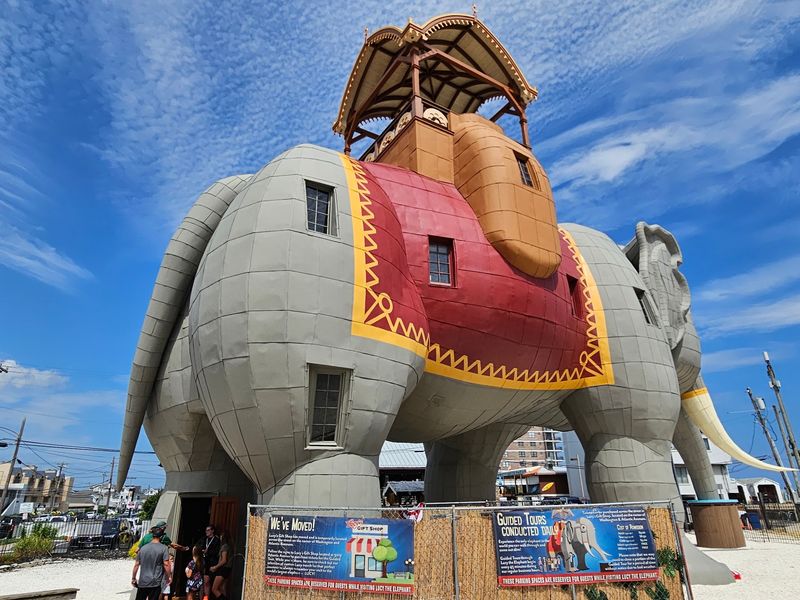
Lucy stands six stories tall near the Jersey Shore, and she is far older than your average roadside novelty. She was built in 1881, and the elephant-shaped structure has outlasted changing resorts, storms, and redevelopment.
That history makes her one of the most important examples of novelty architecture in America. You can admire her from the grounds for free, but a guided tour lets you step inside and climb through the interior.
The Save Lucy Committee actively operates the attraction. Current schedules show tours running throughout the week, generally every 45 minutes during operating hours.
Plan a little extra time in case a tour is full. The mix of strange architecture, Victorian history, and a seaside setting makes Lucy one of the most unusual stops on the East Coast, and it pairs well with a beach day nearby.
Wall Drug, Wall, South Dakota
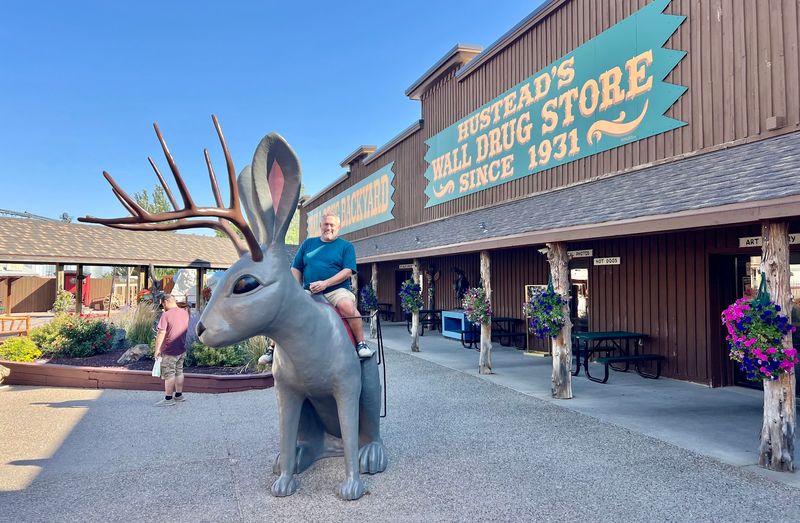
Billboards start announcing Wall Drug long before travelers reach the town of Wall. The strategy goes back to 1931, when a small pharmacy began advertising free ice water to people crossing the hot prairie.
It worked spectacularly. Today the stop is a sprawling destination with restaurants, Western-themed shops, souvenirs, historic displays, and family attractions.
Yes, the free ice water tradition continues. Grab a cup and wander through the maze of rooms, because the building keeps going farther than it looks from the street.
Wall Drug reports drawing more than two million visitors each year and is open seven days a week. It also sits close to Badlands National Park, so it makes a convenient meal or souvenir stop before or after a day of scenery in western South Dakota.
Mitchell Corn Palace, Mitchell, South Dakota
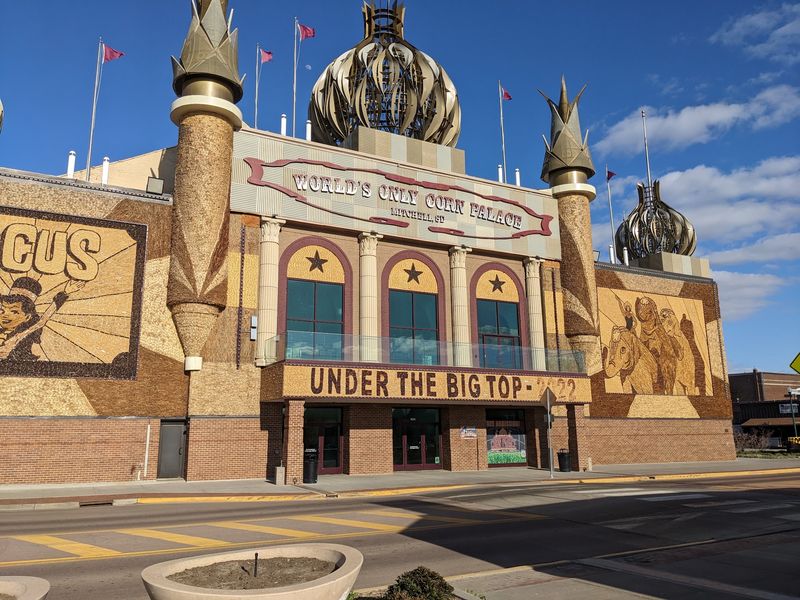
Describing the Corn Palace without making it sound invented is tough, but this South Dakota landmark is very real. The outside of the building is covered in murals made from corn, grains, and grasses.
New designs and themes are created regularly, so returning travelers can see something different. That alone gives you a reason to stop again on a later trip.
The tradition dates back to 1892, when communities across the Midwest built elaborate agricultural palaces to promote their regions. Mitchell’s version survived while most of the others disappeared.
It still works as an event venue as well as a tourist attraction. The Corn Palace is open throughout the year with seasonal hours, and general admission and parking are free, which makes it an easy add-on to a drive along Interstate 90.
World’s Largest Ball of Twine, Cawker City, Kansas
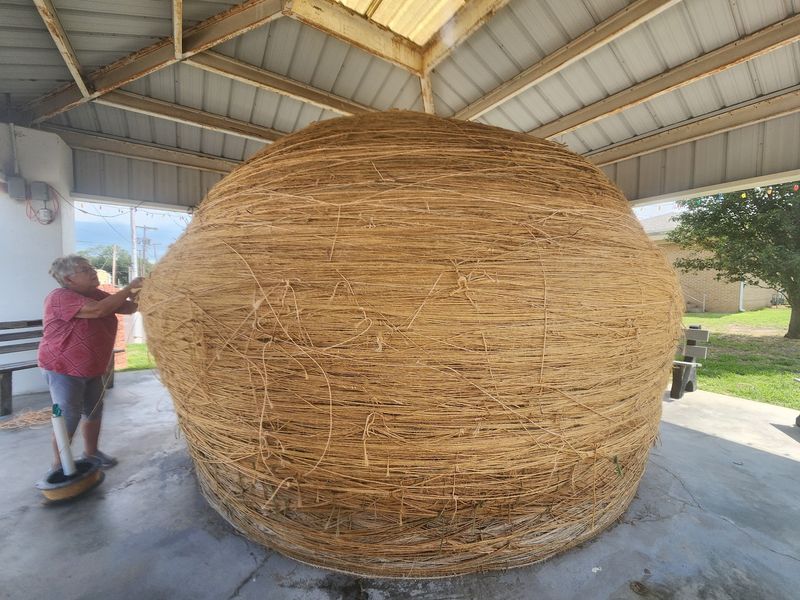
Plenty of giant twine balls are scattered around America, but the one in Cawker City has become a classic of the genre. It keeps growing because visitors and community members add more twine during special events.
Kansas Tourism lists it at more than 17,000 pounds, with a circumference of roughly 40 feet and millions of feet of sisal twine. Those numbers are hard to picture until you stand next to it.
The ball sits in a small pavilion in town, which turns a quiet drive across north-central Kansas into a fun photo break. It is the sort of stop that takes ten minutes and gives you a story for the rest of the trip.
Other attractions on this list are more elaborate, but few capture the wonderfully unnecessary spirit of roadside sightseeing quite like this one.
Enchanted Highway, Regent, North Dakota
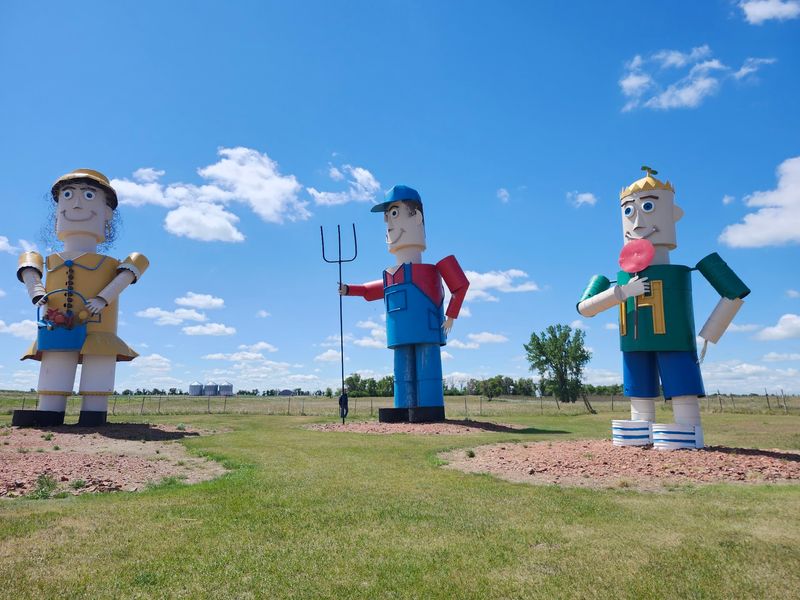
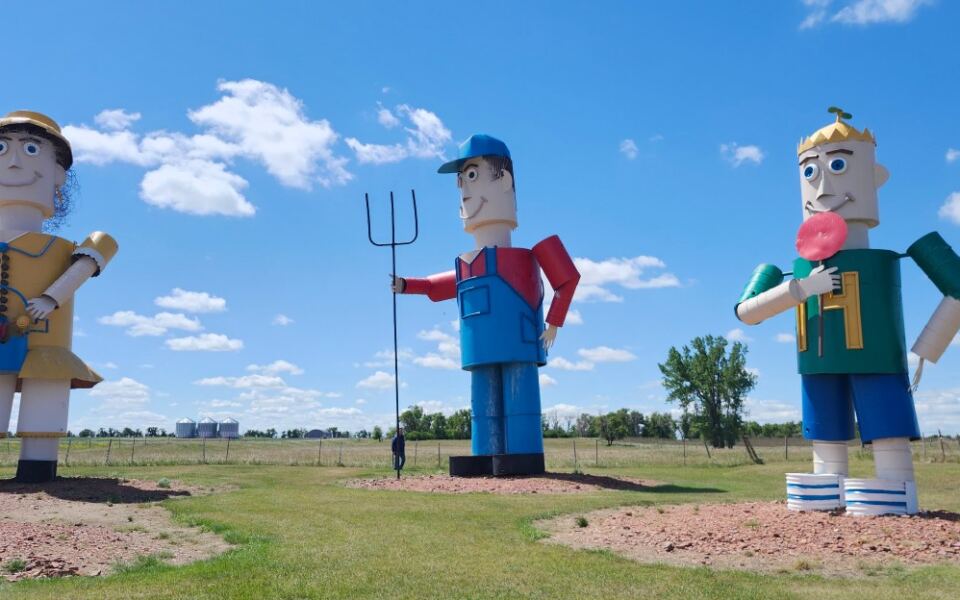
Most roadside attractions give you one giant object to photograph. North Dakota’s Enchanted Highway gives you an entire road full of them.
The route begins near Interstate 94 and continues roughly 32 miles toward Regent. Along the way are enormous scrap-metal sculptures created by artist Gary Greff.
Stops include Geese in Flight, Deer Crossing, Grasshoppers in the Field, Fisherman’s Dream, Pheasants on the Prairie, Theodore Roosevelt Rides Again, and the World’s Largest Tin Family.
Parking areas beside most installations make it possible to explore safely instead of slowing down on the shoulder. North Dakota Tourism lists the Enchanted Highway as open year-round and free to visit.
Pack snacks and a full tank, because the countryside is wide open and services are spread out.
World’s Largest Pistachio, Alamogordo, New Mexico
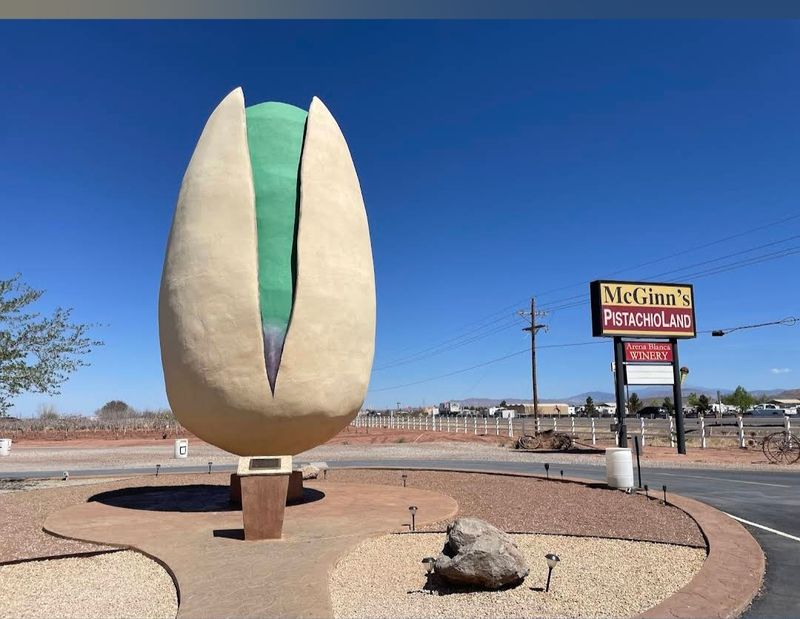
A 30-foot-tall pistachio is not what most people expect to see on U.S. Highway 54 in the desert.
The giant nut stands at PistachioLand, home of McGinn’s Pistachio Tree Ranch near Alamogordo.
It was created as a tribute to founder Tom McGinn and has become one of southern New Mexico’s best-known roadside photo stops.
The attraction goes beyond the oversized nut. Visitors can shop for locally grown pistachios and other products, and scheduled tours take guests around the orchard and vineyard.
New Mexico Tourism continues to promote the stop, and PistachioLand currently runs farm tours on most days throughout the year. Call ahead or check the website for tour times, then pick up a bag of nuts for the road.
The Thing, Benson, Arizona
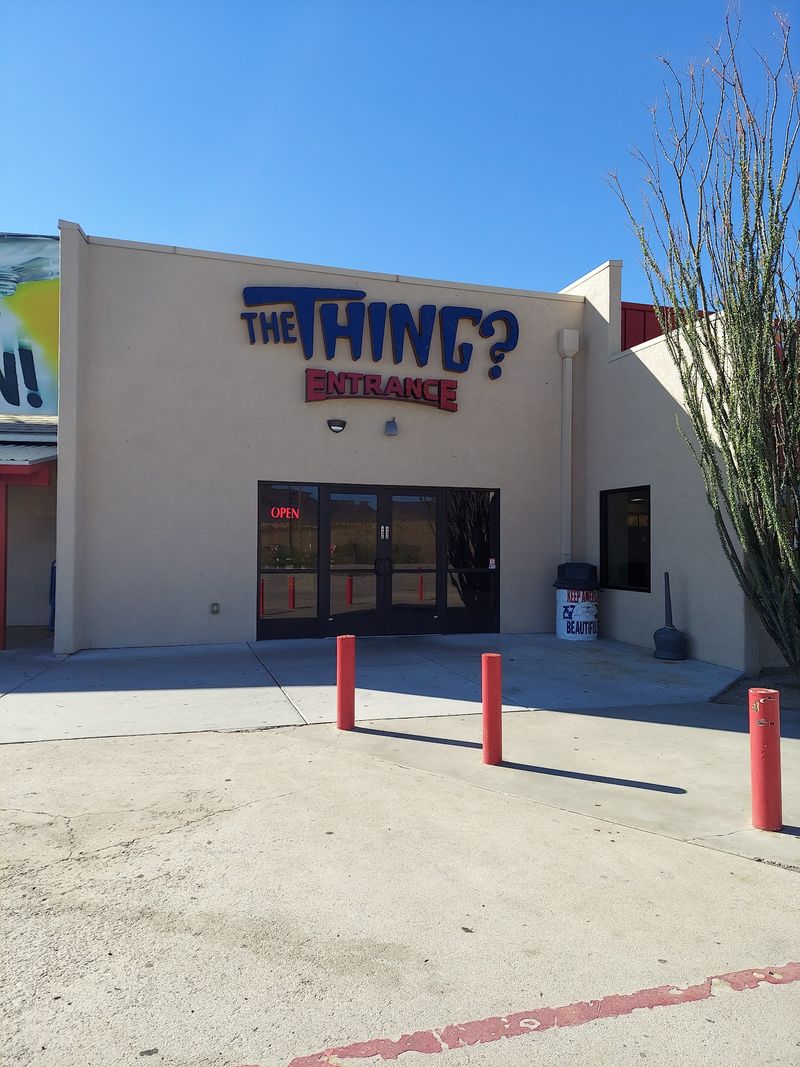
“What is The Thing?” Billboards along Interstate 10 have been asking drivers that question for generations. The answer waits at a travel center in Texas Canyon, east of Tucson.
Giving away exactly what you will find would spoil part of the fun. The attraction mixes a strange museum, unusual displays, and the mysterious object that inspired decades of highway advertising.
The original tourist stop has been updated significantly over the years. Its current museum opened after a major expansion in 2018, and the property also includes a travel center, Dairy Queen, and fuel.
The Thing is open seven days a week, which makes it a handy excuse to break up a long desert drive between Arizona and New Mexico. Fill the tank, grab a snack, and satisfy your curiosity all at once.
Grotto of the Redemption, West Bend, Iowa
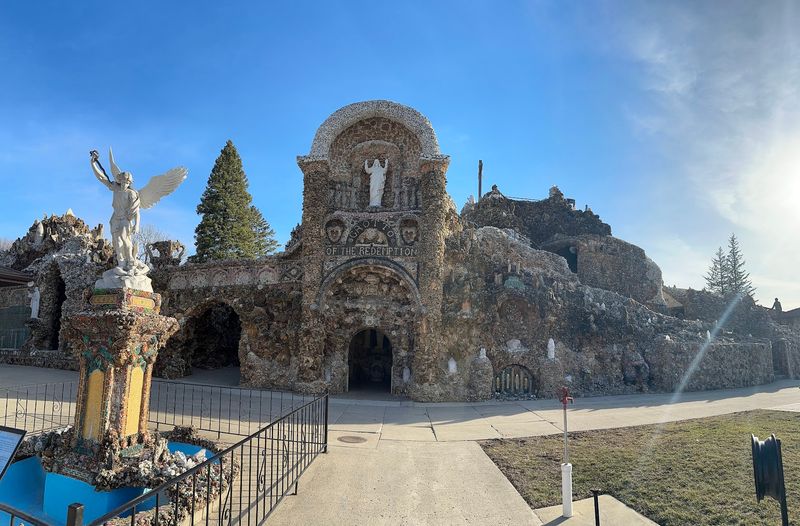
This is much more elaborate than a typical roadside curiosity. In the small Iowa town of West Bend, the religious complex holds nine grottos that show scenes from the life of Christ.
Their surfaces are covered with an extraordinary collection of rocks, minerals, crystals, shells, and precious stones. Up close, the detail is the main draw.
Father Paul Matthias Dobberstein began the project after recovering from a serious illness and spent decades developing the shrine.
Visitors can walk through the grounds, explore the museum, and join seasonal guided tours. The shrine is open 24 hours a day, seven days a week, and admission is not charged, although donations are encouraged.
Plan on a slower pace here, since there is a lot to read and look at.
Rock City Gardens, Lookout Mountain, Georgia
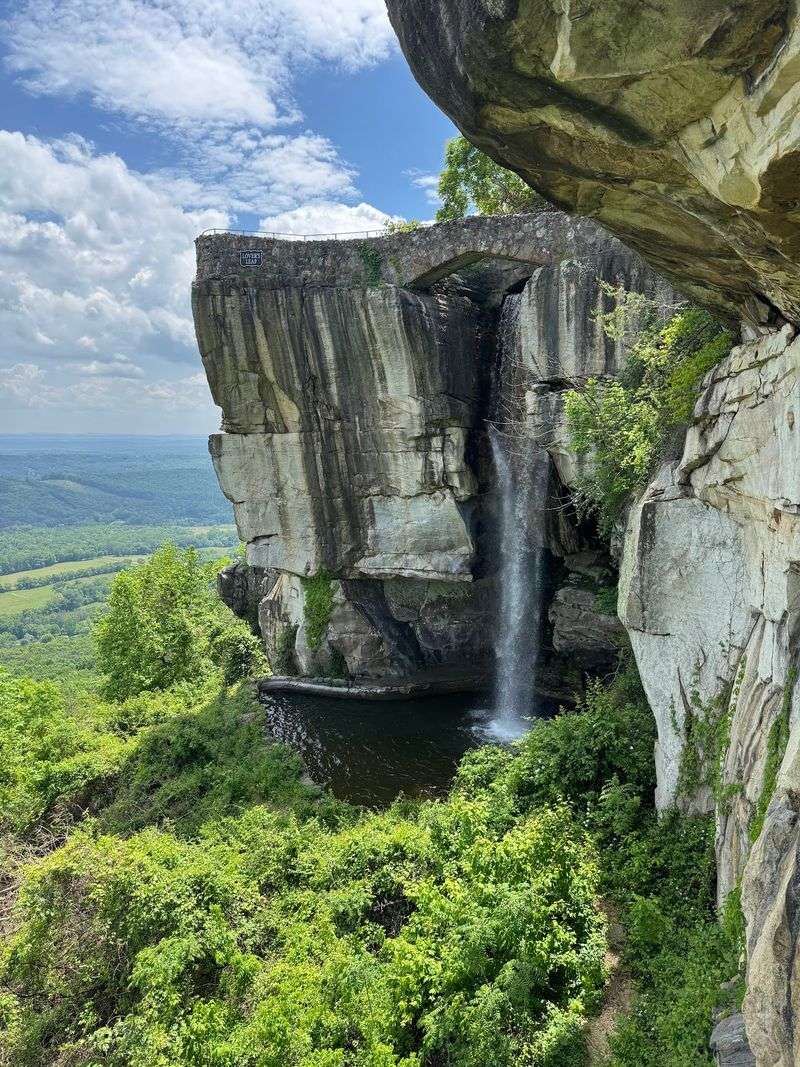
Barns painted with the words “See Rock City” across the South helped turn this Lookout Mountain stop into a road-trip institution. The attraction itself matches the hype.
Rock City Gardens combines unusual rock formations with narrow passages, gardens, overlooks, and a 4,100-foot walking trail. Visitors can cross the Swing-A-Long Bridge, explore Fairyland Caverns, and reach the dramatic overlook at Lover’s Leap.
Some roadside attractions only need a quick photo. Rock City can easily fill several hours, so build that into your schedule.
Georgia’s official tourism site lists the attraction as open year-round, with restaurants, shopping, and timed admission. It sits a short drive from Chattanooga, so it fits neatly into a Tennessee or Georgia trip.
South of the Border, Hamer, South Carolina
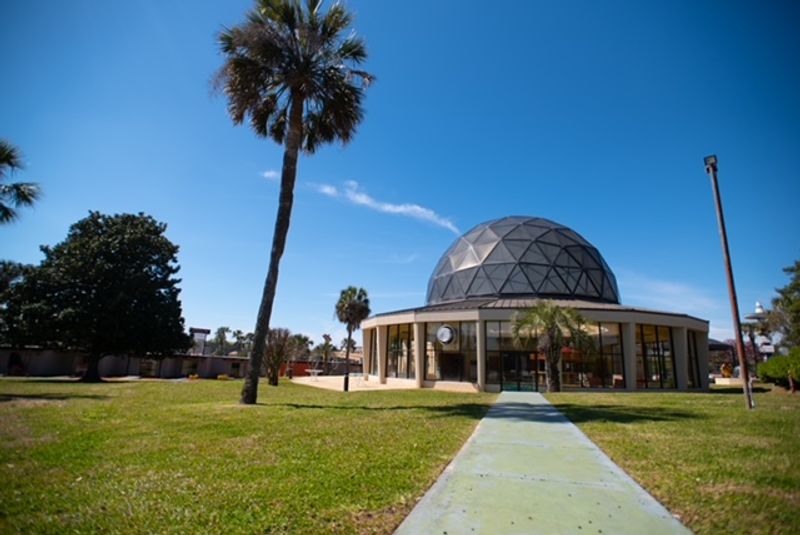
Anyone who has driven Interstate 95 through the Carolinas has likely seen the billboards long before reaching this place. Their steady countdown is half the fun.
The huge highway complex began as a simple roadside stop and grew into a collection of bright signs, shops, restaurants, lodging, and attractions beneath an enormous sombrero tower.
The retro look is a big part of the appeal. It is classic mid-century roadside tourism on a scale few places have kept.
The official website remains active and promotes shopping, dining, accommodations, a campground, and attractions, including the Reptile Lagoon. Nearly 70 years after opening, it still welcomes travelers passing through the Southeast, so it works as a meal break, a leg stretch, or an overnight stop.
Hole N” The Rock, Moab, Utah
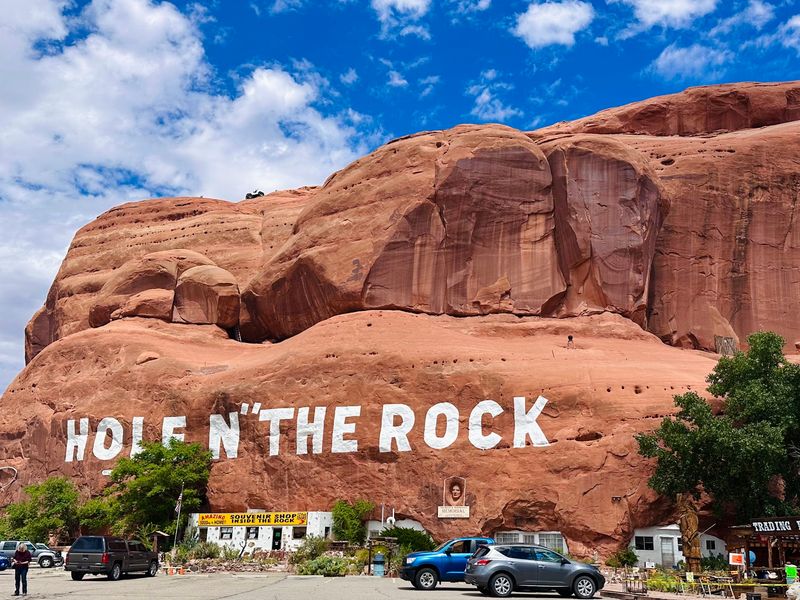
About 12 miles south of Moab on U.S. Highway 191, a home has been carved straight into a massive sandstone rock.
It covers about 5,000 square feet and has become one of Utah’s classic highway attractions.
Guided tours take visitors through the historic residence and explain the story behind its creation.
The surrounding complex has grown over time. It now includes metal sculptures, vintage signs, souvenir shops, a trading post, and an exotic-animal zoo.
The location is handy if you are exploring the landscapes around Moab, Canyonlands, and Arches. Hole N” The Rock currently operates seven days a week and describes the property as open throughout the year, so it can fill a gap between hikes or a break from desert heat.
World’s Largest Catsup Bottle, Collinsville, Illinois
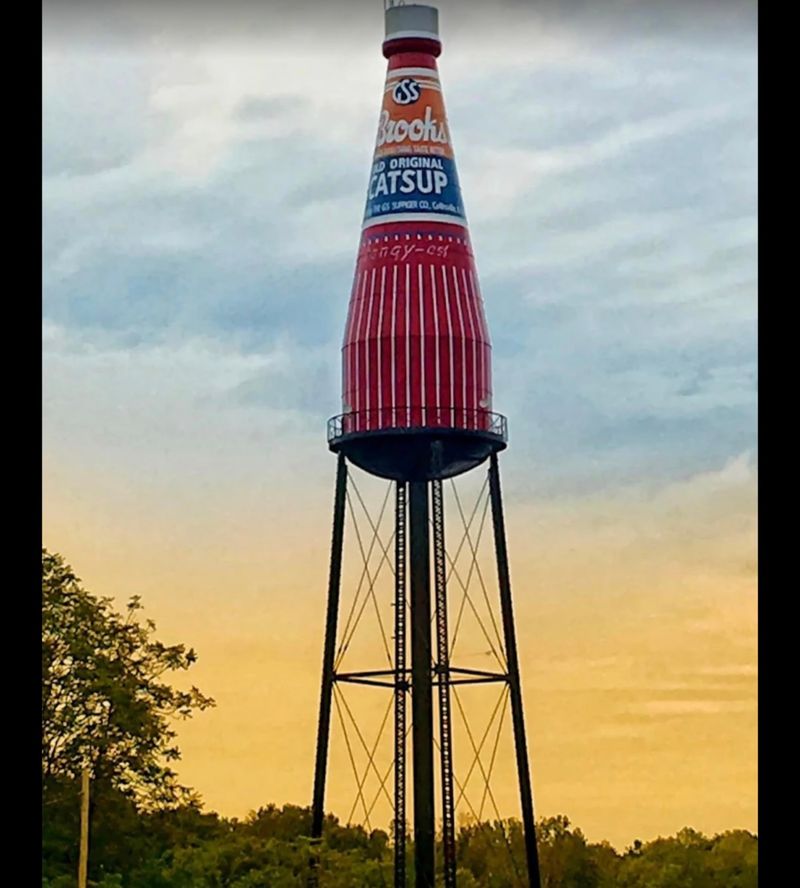
A 170-foot ketchup bottle towering over an Illinois roadside is exactly what fans of oddities hope to find. It is also a clever bit of history.
The bottle began life in 1949 as a water tower for the G.S. Suppiger Company’s Brooks catsup plant in Collinsville.
Instead of building an ordinary tower, the company made something motorists would never forget.
Preservation efforts saved the landmark from demolition in the 1990s, and it was later added to the National Register of Historic Places.
The bottle still stands beside Route 159, and the organization behind it remains active in 2026, including hosting its annual Catsup Bottle Festival. Time your trip with the festival if you want more than a photo.
Jolly Green Giant, Blue Earth, Minnesota
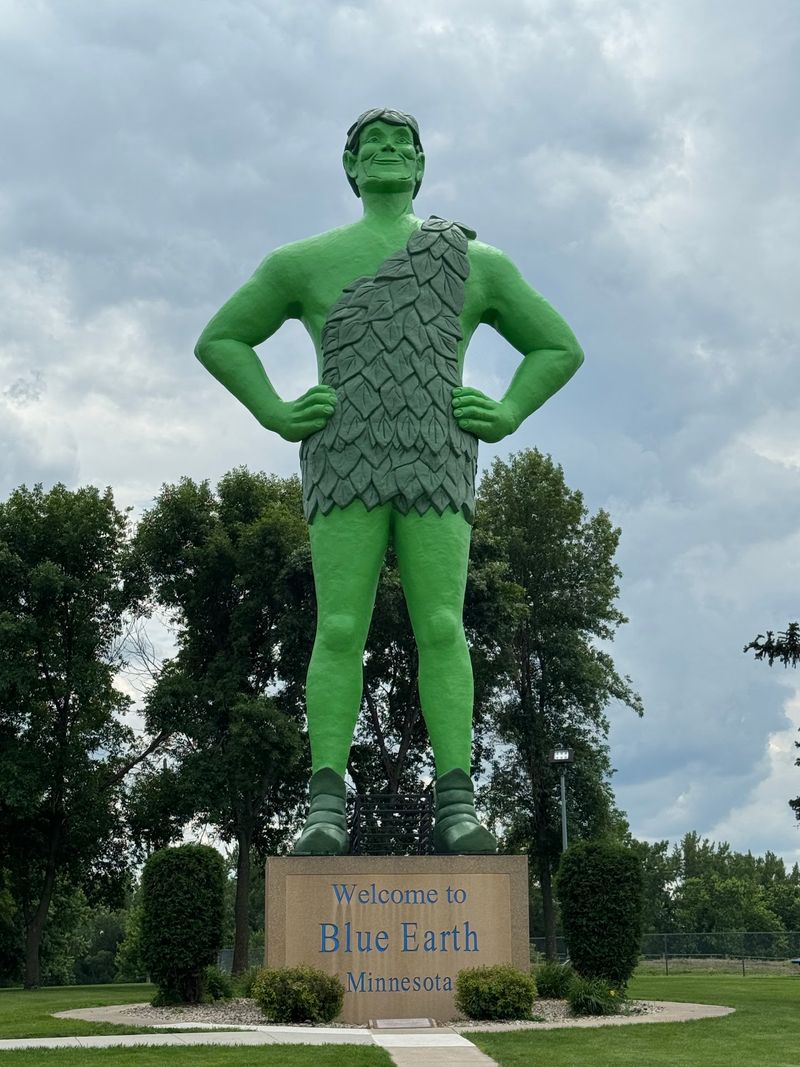
The vegetables in your freezer probably are not 55 feet tall, but their famous mascot is. Blue Earth’s Jolly Green Giant has welcomed motorists since 1979 and is among the most recognizable roadside statues in Minnesota.
He stands just south of Interstate 90 in Giant Park, which makes the stop especially easy for cross-country travelers.
Visitors can pose at the statue’s enormous feet before exploring the nearby Giant Museum and Welcome Center. Smaller, creatively painted Sprout statues are scattered around town, so keep an eye out as you drive.
Minnesota’s official tourism office continues to list the Green Giant among the state’s best roadside attractions, and Blue Earth is holding events at the statue during 2026.
World’s Largest Buffalo, Jamestown, North Dakota
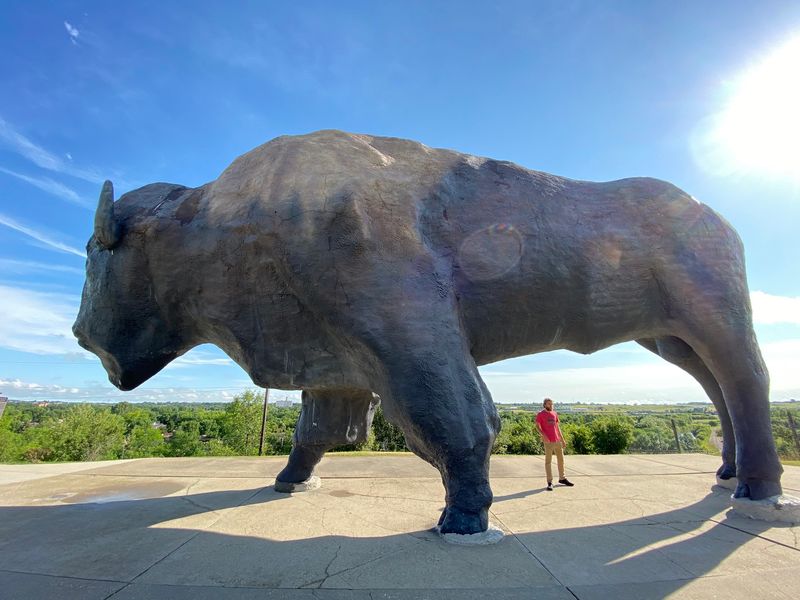
High on a hill above Jamestown stands Dakota Thunder, a 26-foot-tall concrete bison that weighs roughly 60 tons.
Sculptor Elmer Petersen created it in 1959. It became one of North Dakota’s signature roadside landmarks and received its official nickname in 2010.
The statue is only part of the visit. The surrounding complex also includes Frontier Village and the North American Bison Discovery Center, where travelers can learn more about the animal that once dominated the Great Plains.
North Dakota Tourism lists the monument as open year-round with free admission. That makes it one of the easiest large-scale attractions to add to an Interstate 94 road trip, and the hilltop spot gives you a good angle for photos.
The Big Texan Steak Ranch, Amarillo, Texas
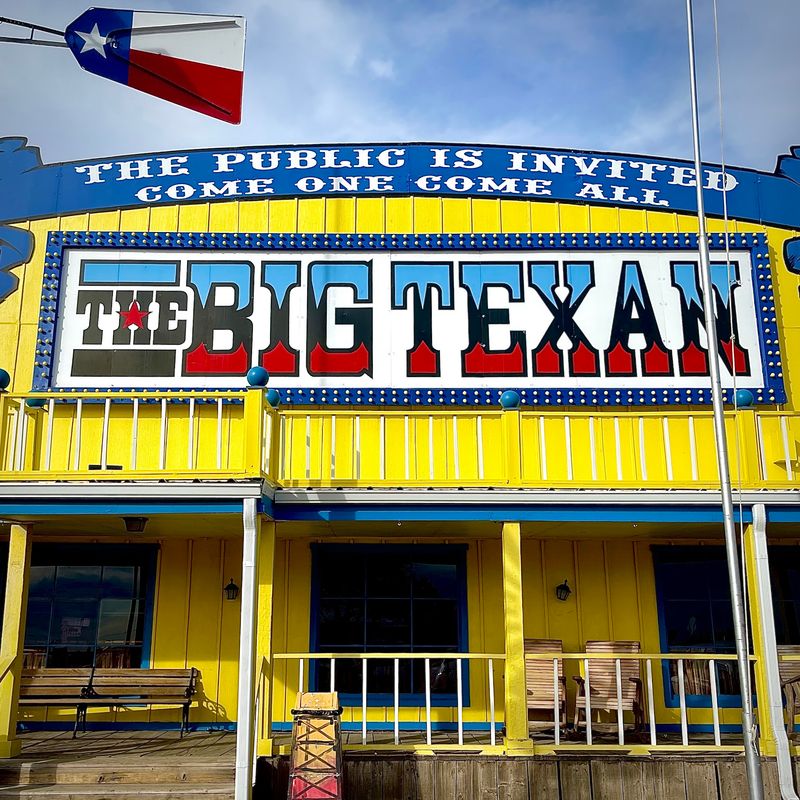
Since 1960, The Big Texan has been tempting hungry travelers. It is part restaurant, part spectacle, and part Route 66-era roadside institution.
Its biggest claim to fame is the 72-ounce steak challenge. Contestants try to finish the enormous steak and its sides within an hour, which turns dinner into entertainment for everyone watching.
Even if you have no plan to tackle several pounds of beef, the brightly decorated Western-style property is worth a look for the setting alone.
The Big Texan is a family-run Amarillo institution and is open daily. It sits directly along Interstate 40, so it combines easily with nearby Cadillac Ranch on a Texas Panhandle road trip.
Eat here after your photo stop in the field and you have a full Amarillo afternoon.
The Mystery Spot, Santa Cruz, California
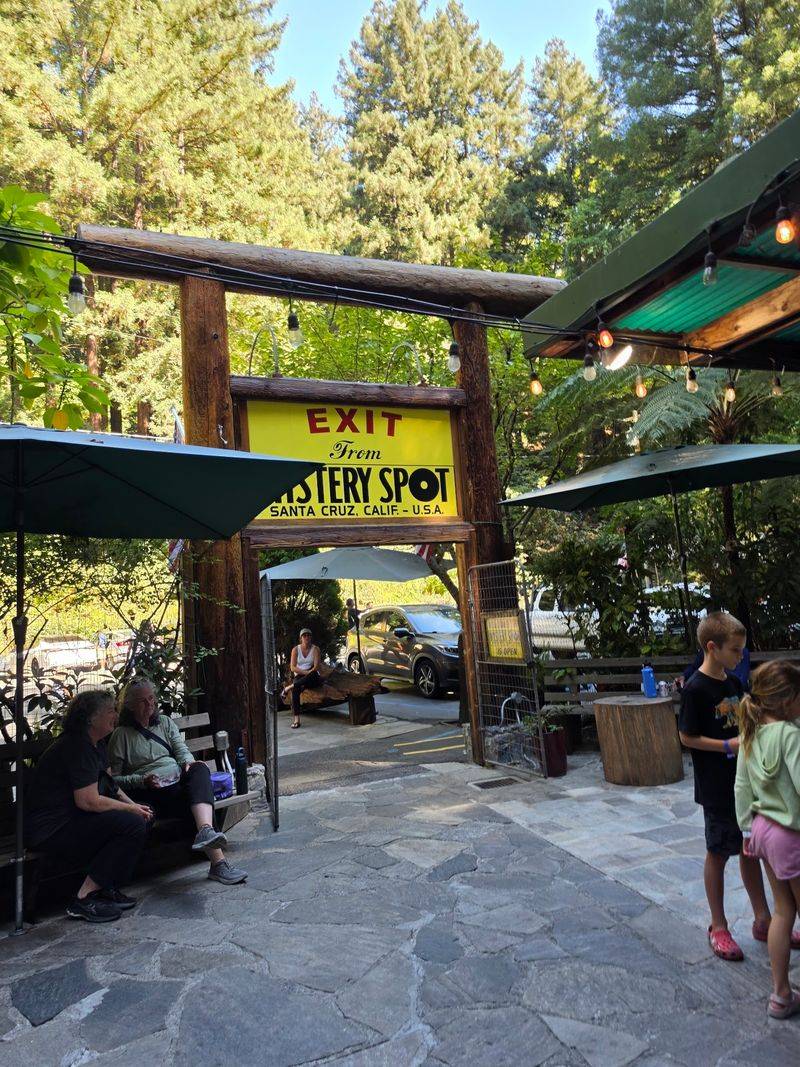
Among the redwoods outside Santa Cruz, visitors appear to lean at impossible angles while objects seem to ignore normal rules of gravity. That is the pitch at this classic roadside stop.
The Mystery Spot opened in the 1940s and built its reputation through roadside signs, word of mouth, and curiosity, the same ingredients behind many of America’s great highway attractions.
Guided tours take visitors across the hillside property and into its famously tilted cabin. Guides demonstrate visual effects that have puzzled and entertained generations of travelers.
Whatever explanation you decide to believe, the experience remains popular. The Mystery Spot is currently open 365 days a year, with tours running throughout the day, so it is easy to fit in on a California coast drive.
Share this story