When the weather turns chilly or the day has been long, a warm bowl of Korean food can feel like a hug. Korean cooking has many stews, soups, noodles, and rice dishes made for just this kind of evening.
Most are simple to find at Korean restaurants or to make at home with a few key ingredients. Here are eleven comforting favorites to consider for your next night in.
1. Kimchi Jjigae (Kimchi Stew)
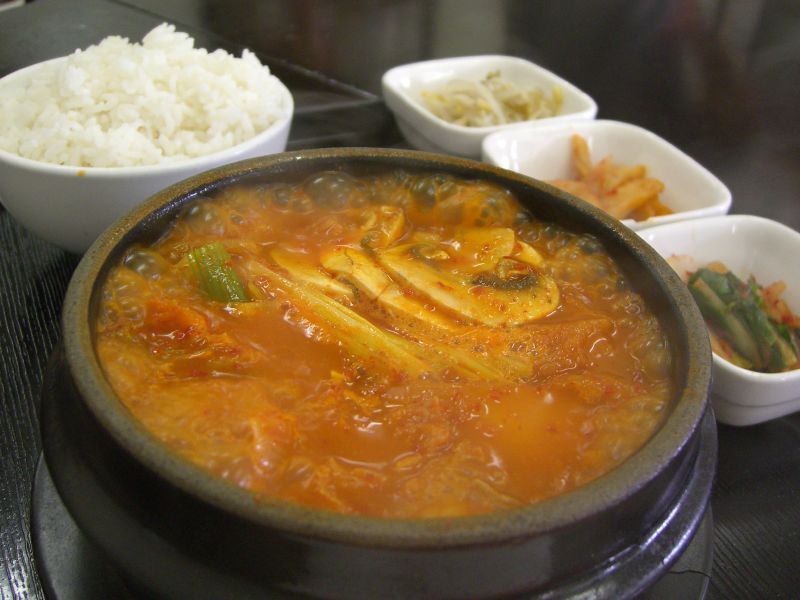
Ask a Korean home cook what to make on a rainy night, and many will say kimchi jjigae. It is the kind of dish that tastes best when the kimchi is old, sour, and a little funky.
The stew starts by sauteing aged kimchi with pork belly or pork shoulder. Water or broth goes in next, along with a spoonful of gochugaru for extra heat and some tofu cubes.
After about twenty minutes, the broth turns deep red and tangy.
Spoon it over warm white rice and the flavors mellow into something cozy and balanced. Tuna can replace pork for a quicker, budget-friendly version.
Fun fact: Kimchi that is too sour to eat fresh is often saved for stews like this one, so nothing goes to waste. Leftovers taste even better the next day, once the flavors have had time to settle together.
2. Sundubu Jjigae (Spicy Soft Tofu Stew)
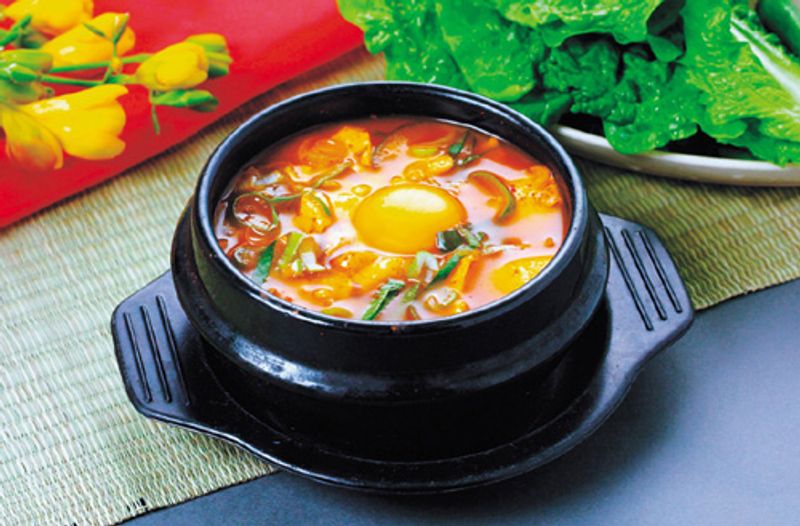
Picture a bowl that is still bubbling when it reaches your table, with a raw egg waiting to be cracked into the broth. That is sundubu jjigae, and the sound alone makes people hungry.
The star is extra-soft, uncurdled tofu that breaks into silky clouds as you stir. The broth usually combines chili flakes, garlic, and seafood such as clams or shrimp, though beef and pork versions are common too.
Because the tofu is so delicate, the stew cooks quickly. Most restaurants let you choose your spice level, from mild to very hot.
At home, look for tubes of soft tofu in the refrigerated aisle of Asian grocery stores. Serve the stew with rice and a few small side dishes, and you have a full meal in under thirty minutes.
3. Tteokbokki (Spicy Rice Cakes)
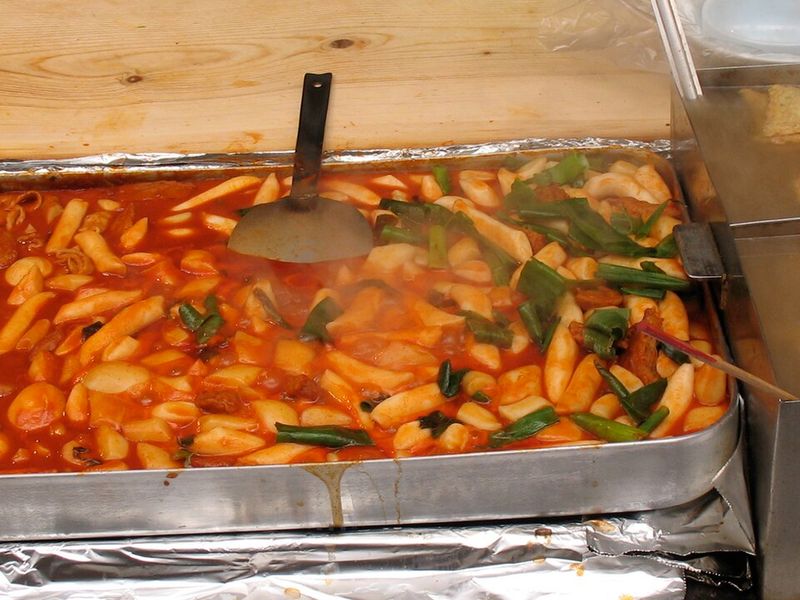
Few snacks are as loved on Korean street corners as tteokbokki. Chewy rice cakes simmer in a sweet and spicy sauce until every piece is coated and glossy.
The sauce is built from gochujang, which is a fermented red chili paste, along with gochugaru, sugar, and a light anchovy broth. Fish cakes, boiled eggs, and scallions are common add-ins.
Texture is the big draw here. The rice cakes are soft yet springy, which makes each bite satisfying.
For a cozy night in, try adding a slice of cheese on top. It melts into the sauce and calms the heat in a pleasant way.
If your rice cakes are frozen, soak them in warm water for ten minutes before cooking so they soften evenly.
4. Budae Jjigae (Korean Army Stew)
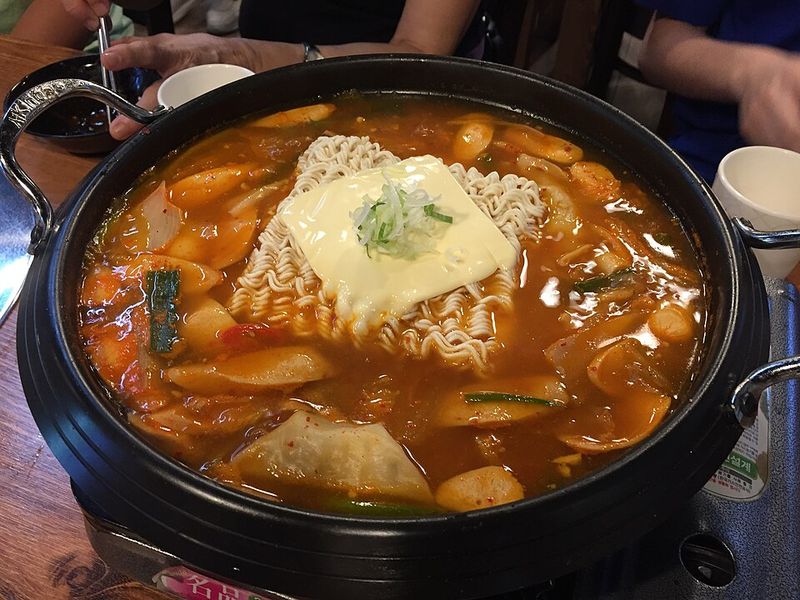
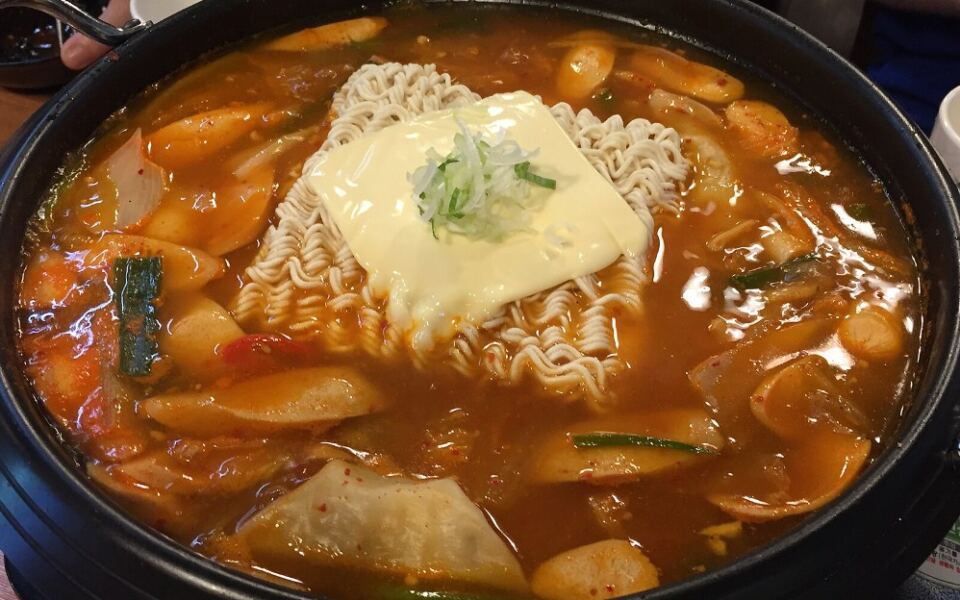
Some dishes are born from hard times, and budae jjigae is one of them. After the Korean War, food was scarce, so people combined surplus items from nearby US military bases with local flavors.
That is why the pot often holds Spam, hot dogs, baked beans, and instant ramen next to kimchi, tofu, and rice cakes. The broth is spicy, savory, and slightly smoky.
Today the stew is a social favorite. It usually arrives at the table in a wide pot over a small burner, and everyone picks what they want as it cooks.
If you make it at home, add the noodles last so they stay chewy. A slice of American cheese on top is a classic finishing touch that gives the broth a creamy edge.
5. Dakbokkeumtang (Spicy Braised Chicken)
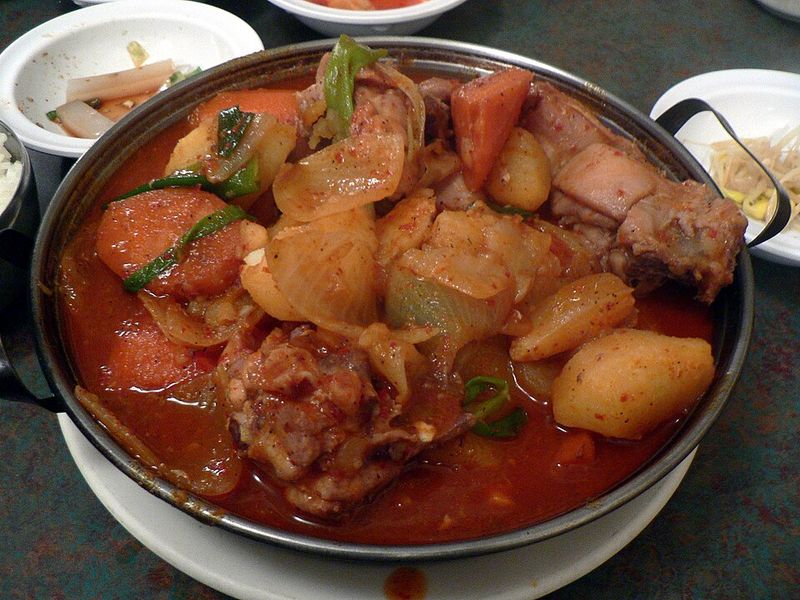
Hearty, saucy, and a little fiery, dakbokkeumtang is the sort of meal that fills the whole kitchen with a great smell. It is also known as dakdoritang, and it is a family-table staple in Korea.
Bone-in chicken pieces are simmered with potatoes, carrots, and onions in a sauce made from gochujang, gochugaru, soy sauce, garlic, and a touch of sugar. The potatoes soak up the sauce and turn soft and savory.
Cooking time is about forty minutes, mostly hands-off. The chicken becomes tender, and the sauce thickens into a rich glaze.
Serve it with steamed rice, which helps balance the heat. Many people also stir leftover rice into the last bit of sauce in the pan for a second, equally tasty course.
6. Jjajangmyeon (Black Bean Noodles)
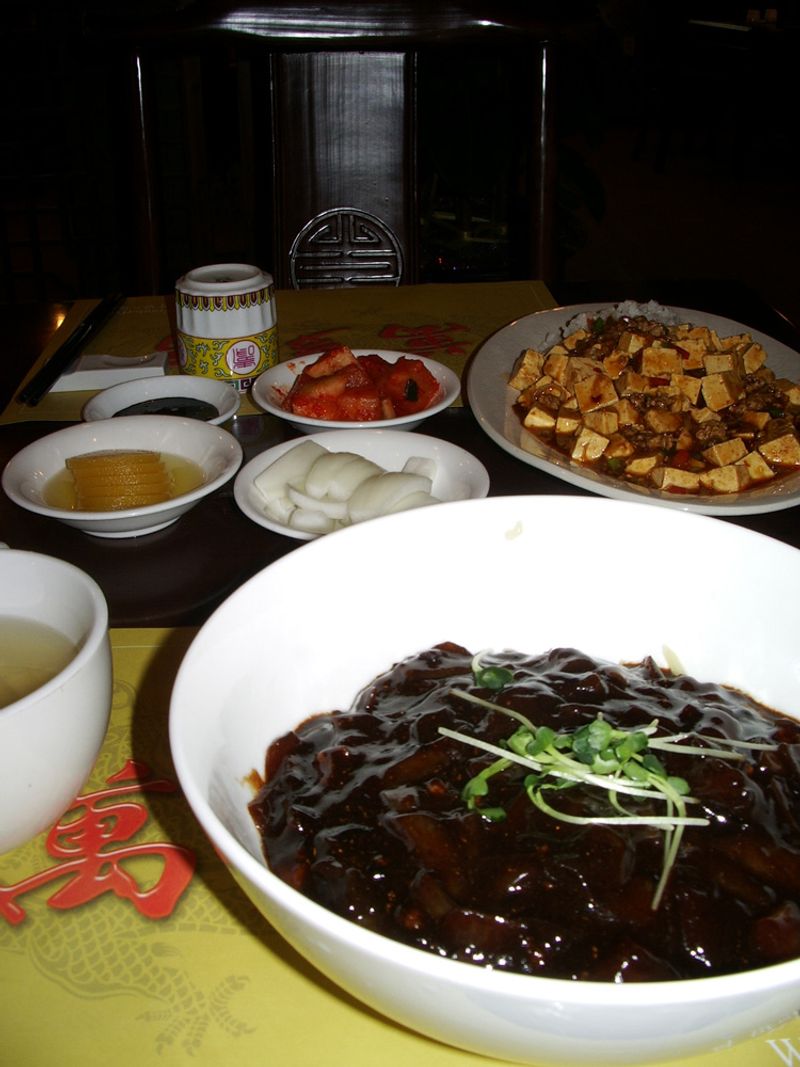
Move over pizza, because in Korea, jjajangmyeon is a classic delivery favorite. Thick, chewy noodles are topped with a dark, glossy sauce that tastes savory and slightly sweet.
The sauce comes from chunjang, a fermented black bean paste, cooked with diced pork, onions, zucchini, and potatoes. A little starch thickens it so it clings to every strand.
The dish traces back to Chinese immigrants who settled in the port city of Incheon in the late 1800s. Over time, Korean cooks shaped it into its own comfort food.
Mix everything well before eating so the noodles turn evenly dark. A few cucumber slices on top add a fresh crunch, and a side of pickled yellow radish is the traditional partner.
7. Kalguksu (Knife-Cut Noodle Soup)
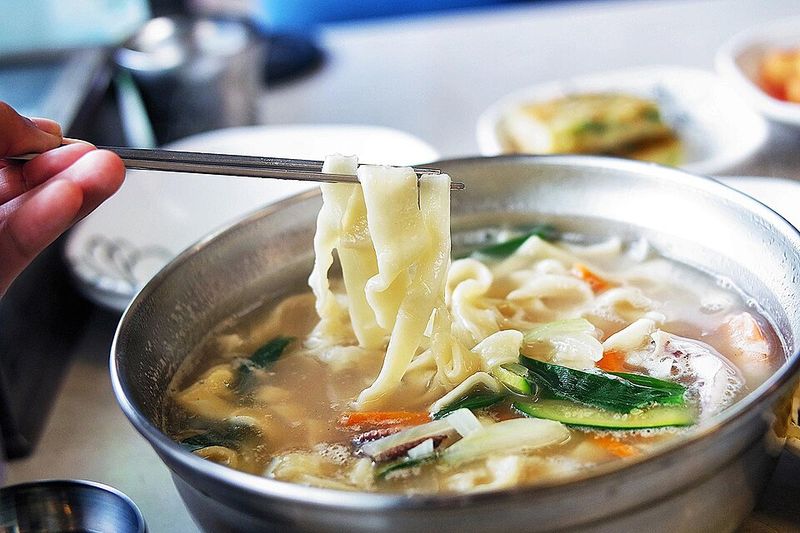
Soft, slippery noodles in a warm broth make kalguksu feel like a quiet evening in a bowl. The name means knife noodles, because the dough is rolled flat and cut by hand.
Broth choices vary. Anchovy and kelp make a light seafood base, while chicken or clam broth gives a slightly richer taste.
Zucchini, potatoes, and green onions are common additions.
Because the noodles are not rinsed, their starch thickens the soup a little as it simmers. That gives the broth a gentle, comforting body.
Many cooks serve it with a spoonful of seasoned soy-chili sauce on the side, so each person can adjust the flavor. It is mild enough for kids, and it is quick to prepare when you use store-bought fresh noodles.
8. Samgyetang (Ginseng Chicken Soup)
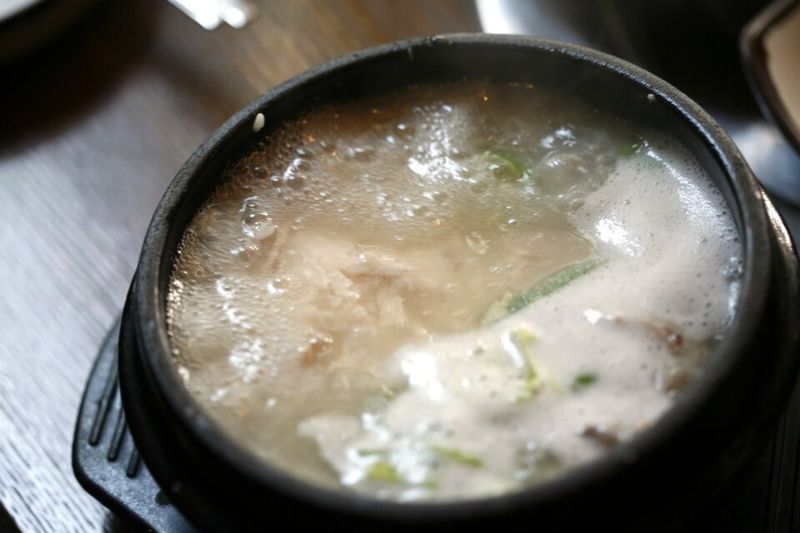
On the hottest days of summer, many Koreans line up for a steaming bowl of soup. It sounds odd, but the idea is to fight heat with heat, and samgyetang is the star of that tradition.
A small whole chicken is stuffed with glutinous rice, garlic, jujubes, and ginseng, then simmered until the meat falls off the bone. The broth turns milky, mild, and slightly earthy.
Season it at the table with salt and black pepper, since the soup is cooked without much seasoning. Some people dip the meat into a little salt as they go.
It is also a wonderful pick when you feel run down or catch a cold. Gentle, nourishing, and filling, it is a calm bowl for a quiet night.
9. Kimchi Bokkeumbap (Kimchi Fried Rice)
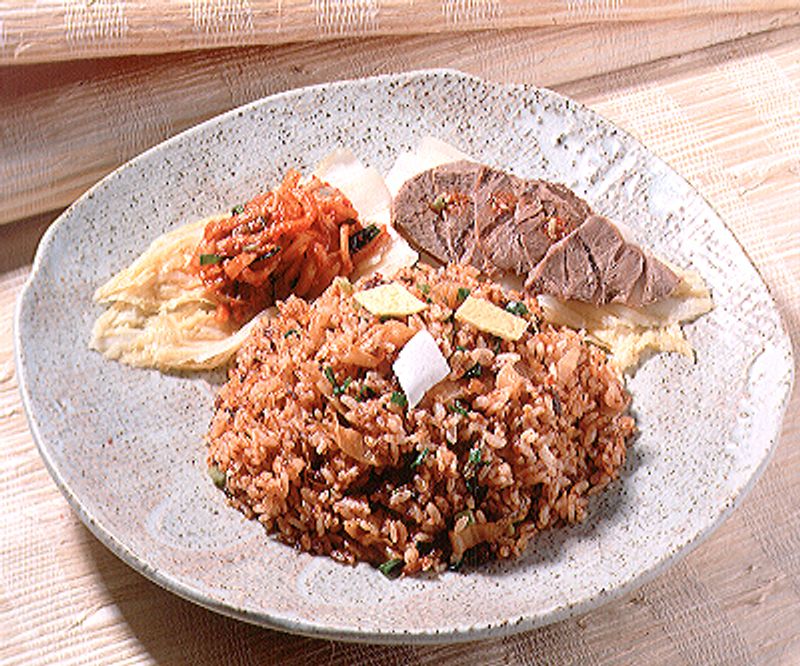
Got leftover rice and a jar of kimchi? Then dinner is almost done.
Kimchi bokkeumbap is the ultimate fridge-clearing meal, ready in about fifteen minutes.
Start by frying chopped kimchi in a little oil, with diced ham, bacon, or Spam if you like. Add cold cooked rice, a spoonful of gochujang, and a splash of the kimchi juice.
Toss until the grains are lightly toasted and coated in red.
Day-old rice works best because it is drier and fries up fluffy rather than mushy.
Top the pan with a fried egg and let the yolk run into the rice. A sprinkle of sesame oil, sesame seeds, and crumbled seaweed finishes the dish with a nutty, savory kick.
10. Mandu-guk (Dumpling Soup)
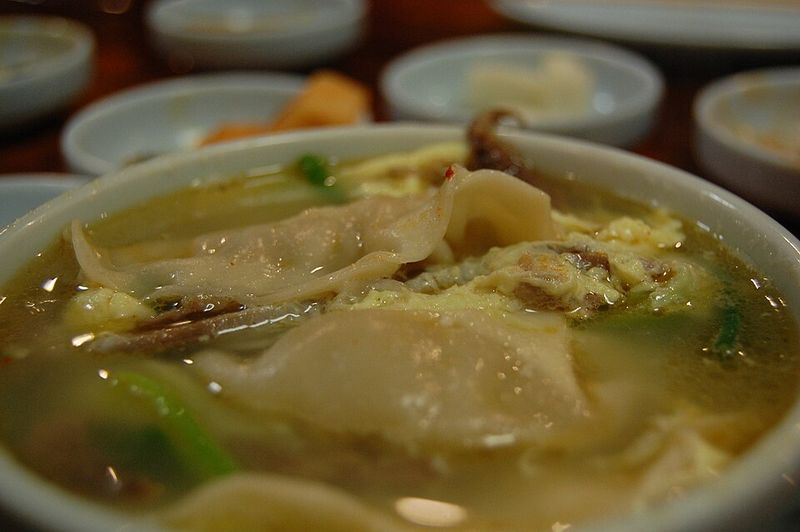
Dumplings and soup are a lovely pair, and Korea has a dish that brings them together. Mandu-guk features plump dumplings floating in a clean, savory broth, often with strips of egg and seaweed on top.
Fillings usually include pork, tofu, and vegetables, and kimchi versions add a tangy kick. Beef or anchovy broth gives the soup its depth.
The dish is closely linked with Lunar New Year. Families often make dumplings together, and eating a bowl is a way to welcome a fresh start.
Store-bought frozen dumplings make this an easy weeknight meal. Drop them into simmering broth for a few minutes, slide in a beaten egg, and finish with a drizzle of sesame oil.
Dinner is ready quickly and tastes homemade.
11. Galbitang (Beef Short Rib Soup)
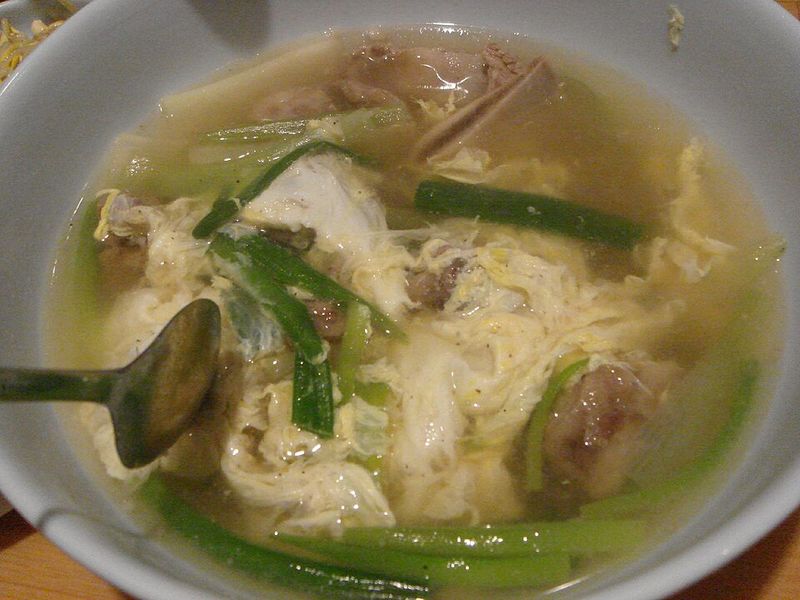
Slow cooking turns humble short ribs into something truly special in galbitang. The beef simmers for hours until the meat is tender and the broth turns rich yet clear.
Korean radish, glass noodles, and sometimes jujubes or chestnuts join the pot. Cooks often soak the ribs in cold water first, which draws out blood and keeps the broth clean.
Traditionally, galbitang is served at celebrations and special family gatherings, so it feels a bit like a treat. It is gentle on the palate, with a deep beefy sweetness rather than heat.
Season it at the table with salt, pepper, and chopped scallions. Plan ahead, since it takes time, but a big pot makes plenty of leftovers and tastes even better the following day.
Share this story