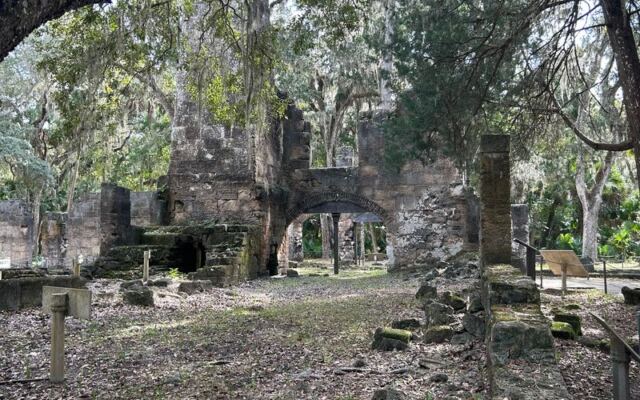
I turned off a quiet Florida highway expecting a quick stretch of the legs and found a whole forgotten world waiting at the end of a dusty road. Giant stone walls rise out of the palmettos, wrapped in shade and silence, telling a story most passing drivers never hear.
It costs less than a fast food lunch to get in, yet it left me hungry for more history than I could take in during one afternoon. If you love finding places that even your neighbors have never heard of, this one deserves a spot on your list.
A Coquina Landmark Tucked Into Flagler County
Picture a stretch of Northeast Florida woods so thick that the sky peeks through only in patches. Somewhere inside sits Bulow Plantation Ruins Historic State Park, a quiet state park at 3501 Old Kings Rd in Flagler Beach.
It protects the remains of an 1800s sugar and cotton plantation set in a lush coastal hammock.
Most people know Flagler County for its beaches and its relaxed little coastal towns. Far fewer realize that a short drive inland leads to crumbling stone walls that once powered one of the busiest farms in the region.
Visitors often admit they only stopped because they spotted a road sign while staying nearby, and then left amazed at how much history they never knew existed.
The park blends two very different experiences. On one side you get the ruins, plaques, and exhibits that explain what happened here.
On the other, you get trails, a creek, a boat ramp, and a kayak launch for anyone who simply wants to be outside.
Keep in mind that this is not a big tourist stop with gift shops and crowds. Guests describe it as calm and uncrowded, which is exactly the charm.
For Floridians who enjoy finding an Old Florida spot before everyone else does, few places fit the bill quite so neatly.
The Bulow Family’s Ambitious Plantation
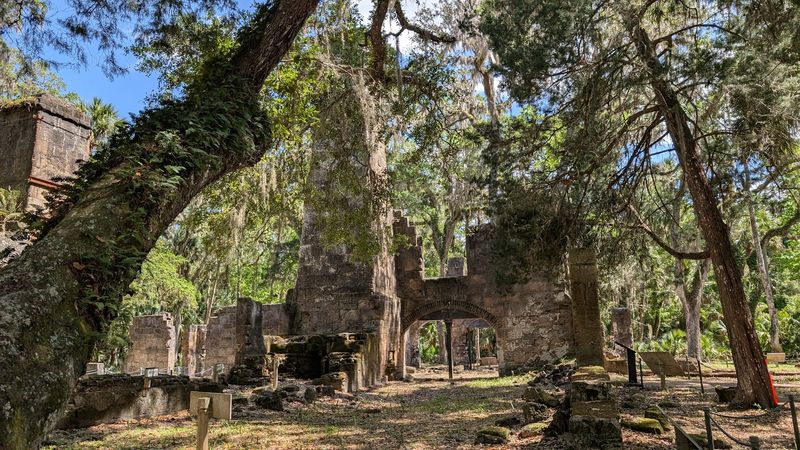
Ambition built this place. The Bulow family turned this patch of Florida into a working plantation where they grew sugar cane, cotton, rice, and indigo.
By its peak, it became the largest plantation in East Florida.
Sugar was the star crop, and it demanded a serious operation. Cane had to be cut, crushed, and boiled down, all in steamy Florida heat.
That meant a large mill, a steady water route for shipping, and a huge amount of human labor.
Here is where the story turns heavy. The plantation relied on enslaved people to do that grueling work, and the park does not hide that fact.
Signs and exhibits speak plainly about it, and many visitors say the visit left them with a deeper respect for the people whose effort made this place run.
One guest summed up the history lesson nicely by describing it as a clash between private business, government, and the Seminole people who already called this land home. Those tensions shaped everything that followed.
Understanding them makes the ruins feel less like scenery and more like a chapter of Florida you can actually walk through.
So before you even see the walls, it helps to picture the scale. Fields stretched across the property, crops moved down to the creek, and the mill hummed through the busy season.
1836 and the Turn of the Seminole Conflict
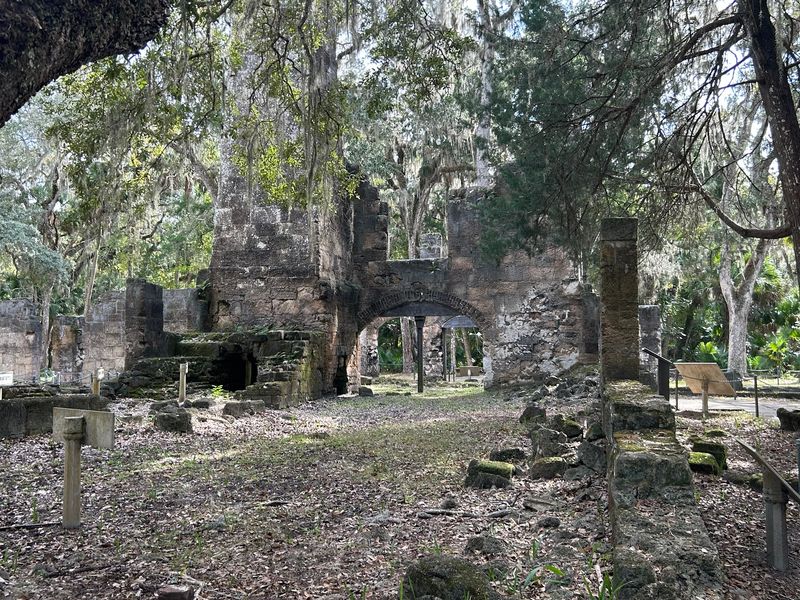
Everything changed in 1836. During the Second Seminole War, the plantation was burned and left in ruins, and it never returned to its former glory.
What you see today is what survived that moment.
Walking the grounds, it is easy to imagine the shift from bustling enterprise to sudden silence. The main house is gone, with only an outline of its foundation remaining.
The sugar mill fared better, which is why its stone walls still stand tall enough to impress.
History buffs appreciate that the park tells this part of the story with context rather than drama. Exhibits explain how the plantation fit into the larger struggle over Florida, involving settlers, the government, and the Seminole Tribe.
You come away seeing the ruins as evidence of a bigger turning point in state history.
Several visitors mention leaving with more questions than answers, which is a pretty good sign. One said they planned to research the topic further once they got home.
Another described the setting as almost meant to stay in ruin, wrapped in palmettos and quiet.
It is not all pleasant history, and that is the point. The park offers a thoughtful look at Florida’s antebellum sugar economy and how quickly it all came apart.
Old Kings Road and the Long Dirt Laneway
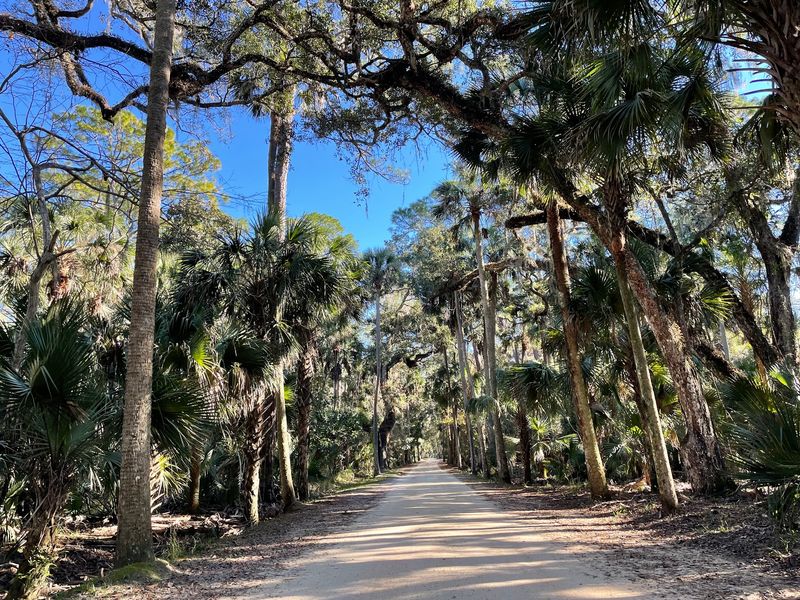
Slow down. The adventure starts before you ever reach the ruins, on a long, narrow dirt road that winds through the trees toward the park entrance.
That road is no ordinary driveway. It follows the original long laneway of the plantation, so you are literally rolling along the same path that once led to the estate.
Guests call it one of the best parts of the trip and describe it as Old Florida through and through.
Expect a bumpy, unhurried drive with branches arching overhead. It is the kind of road that makes you lower the radio and roll down the windows.
Many visitors say the place feels miles away from everything, even though it sits close to Flagler Beach, Ormond Beach, and the scenic route known as The Loop.
A little practical advice helps here. Take your time, watch for other cars, and enjoy the scenery rather than rushing it.
Low-slung vehicles should go easy, since the surface is dirt rather than pavement.
By the time you pull into the parking area, the modern world feels far behind. That sense of distance sets the mood perfectly for what comes next.
Honestly, the road alone might be worth the trip for anyone who misses the Florida of decades past.
Towering Walls of the Sugar Mill
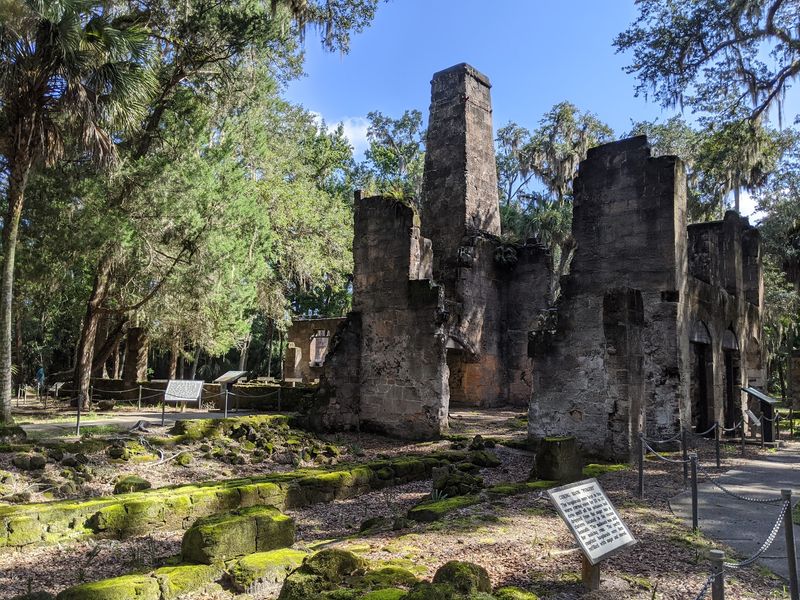
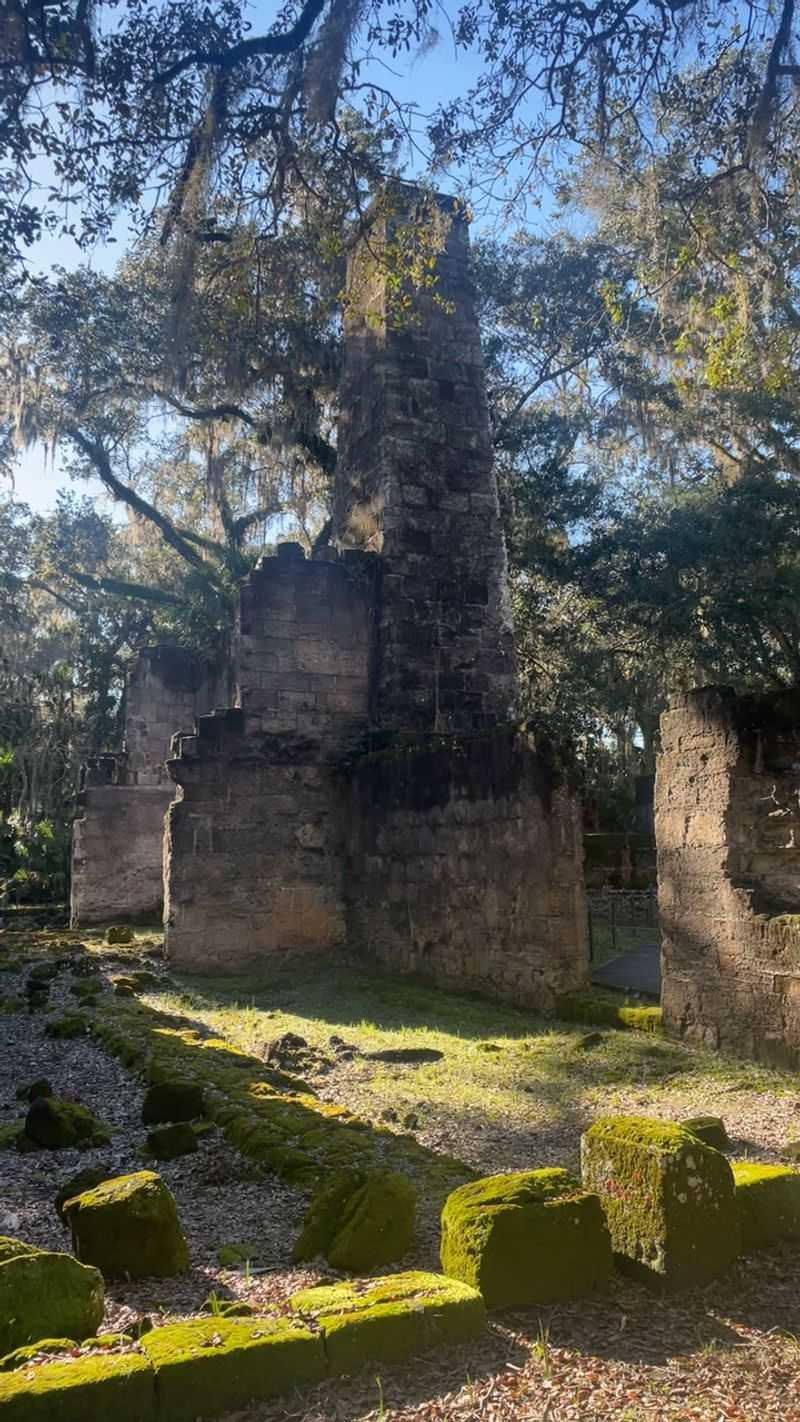
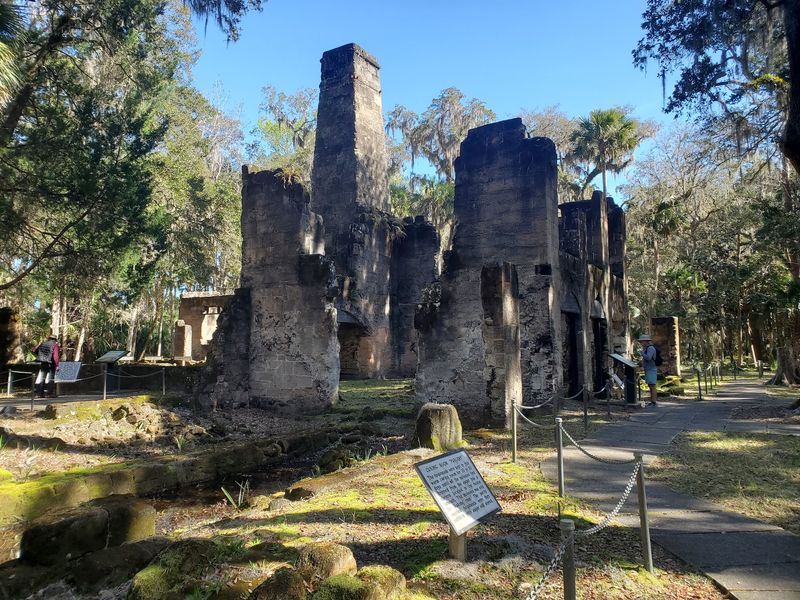
Stand at the base of these walls and look up. The coquina sugar mill is the crown jewel of the park, and it still towers over the forest floor nearly two centuries after its working days ended.
Coquina is a natural Florida stone made of tiny shells pressed together over time. Up close, you can see the bits of shell packed into the blocks, which gives the ruins a rough, almost sparkly texture.
It is a building material you rarely see outside this part of the state.
Visitors describe the mill as the main event, with one calling it the high point of the whole park. While the plantation house is reduced to a foundation outline, the mill remains standing well enough to show its shape.
Guests say it really tells the story of how the operation looked and worked before the fire.
Getting there is easy. A short walk from the parking area brings you right to the ruins, and you can also drive closer if walking is a challenge.
One visitor suggested parking at the trail lot and strolling about 0.3 miles through lovely woods to arrive.
Bring a camera and some patience. Light shifts through the trees constantly, and every angle reveals a new arch, gap, or shadow worth capturing.
Plaques That Explain the Sugar-Making Process
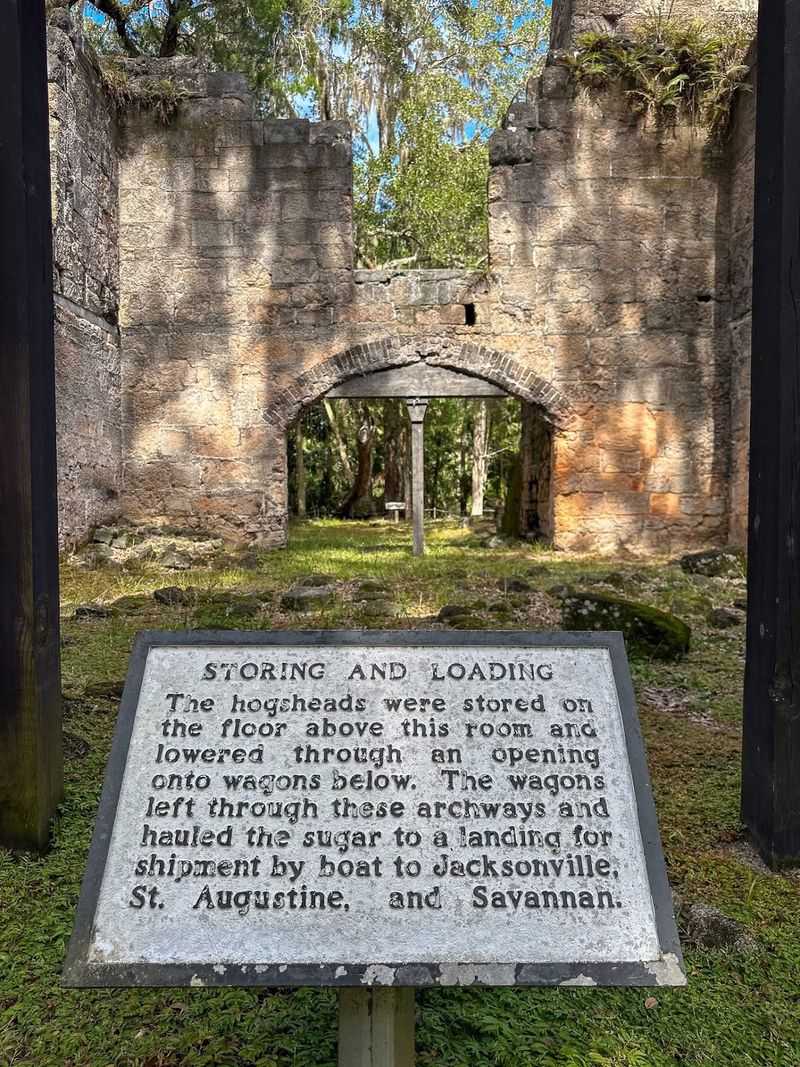
Ever wondered how raw cane turned into sugar before modern factories? The informational plaques scattered around the ruins answer that question in a clear, step-by-step way.
Visitors regularly point to these signs as a highlight. One guest said they were impressed by how well the plaques explain the sugar-making process and how difficult the work must have been in the hot Florida climate.
Reading them while standing beside the actual stone makes the lesson stick.
The signs connect each section of the ruins to its purpose. Instead of seeing random walls, you start to understand where cane was processed and how the operation flowed.
It turns a pretty scene into a working puzzle you can mentally piece back together.
Families find this especially helpful. Kids can follow along, and adults pick up details they never learned in school.
Many people describe the park as very educational without feeling like a stuffy museum.
One honest note from past visitors is that parts of the interpretive display could use updating. Even so, the overall message comes through strongly.
Plan to slow your pace and read as you go, because skipping the plaques means missing half the story.
Tabby Cabin Remains Along a Hidden Path
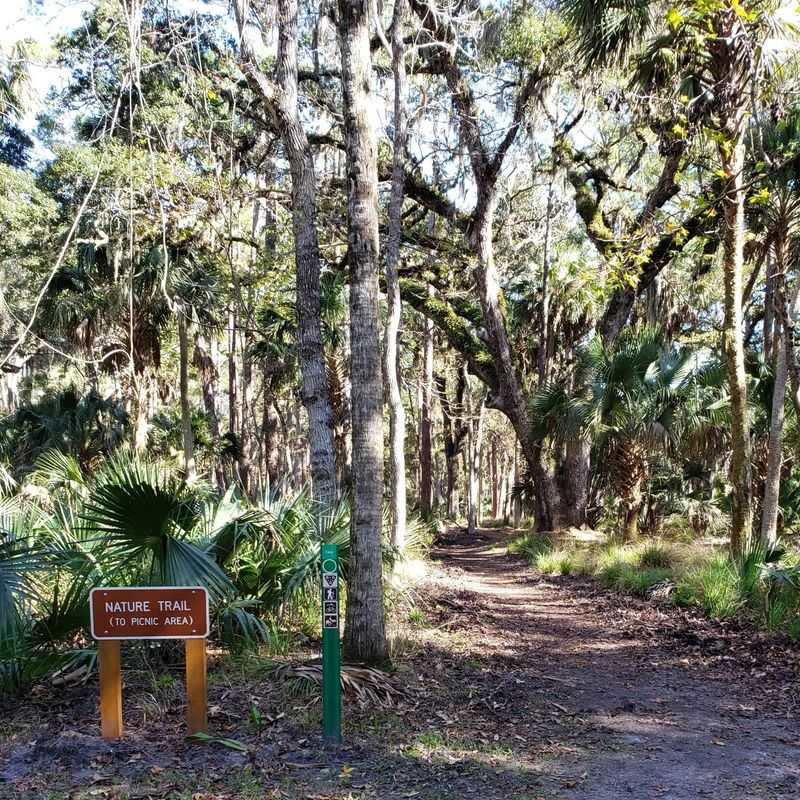
Tucked away behind the picnic area, a small trail leads to something many visitors almost miss. At the end sit the remains of the tabby cabins where enslaved workers once lived.
Tabby is a mix of lime, shell, sand, and water, a material used often in early coastal building. The cabin remains are low and humble compared with the grand mill walls.
Their quiet presence carries a weight that many guests say they did not expect.
Past visitors specifically recommend seeking out this path. One described it as tucked away in the back but absolutely worth finding.
It adds a necessary and personal layer to the plantation story.
Seeing these foundations helps balance the picture. The mill shows the wealth the plantation produced, while the cabins remind you who carried the load.
Several guests mention that the visit felt a little sad, history-wise, yet meaningful.
Take a moment here. It is a peaceful spot, shaded and still, and it invites reflection rather than snapshots.
For anyone hoping to understand the full history of the place, this short detour belongs at the top of the plan.
Old Tools and Household Pieces on Display
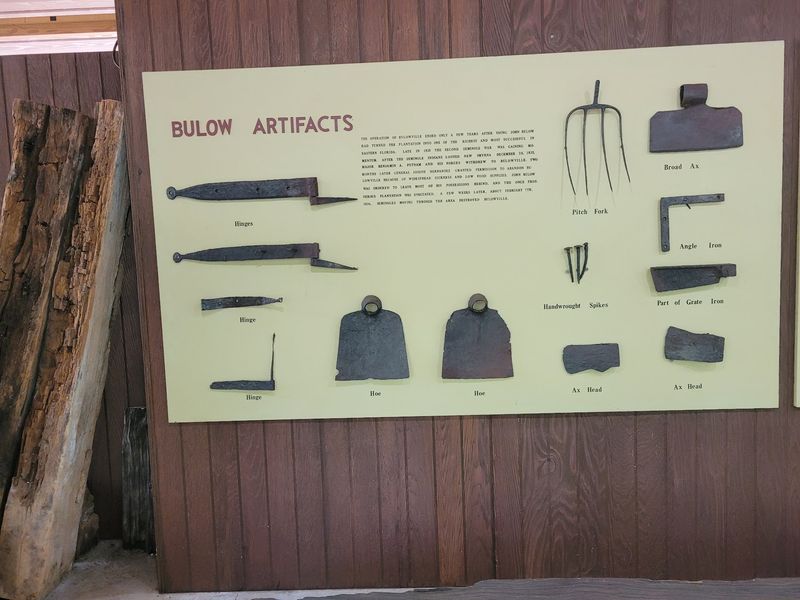
Small objects often tell the biggest stories. Near the ruins, an exhibit area shows off old tools and household items connected to plantation life.
Visitors praise how well these artifacts are cared for. Items are housed behind glass, keeping them safe while still letting you get a close look.
One guest said they loved the care taken in displaying both the artifacts and the ruins.
These pieces bring everyday life into focus. A worn tool or a simple dish makes it easier to imagine real people cooking, working, and living here.
That human scale balances the drama of the giant mill walls.
The exhibit sits close to restrooms and the main ruins area, so it is easy to fit into any visit. Families with kids especially enjoy it, since the loop walk includes these educational displays along the way.
It is short enough to keep young attention spans engaged.
If a ranger tour-talk is offered during your visit, consider joining. One guest said the ranger really breaks the history down and makes it super educational.
Pairing that talk with the artifacts gives you a much richer understanding than wandering solo.
Miles of Trail From the Live Oak to Cedar Creek
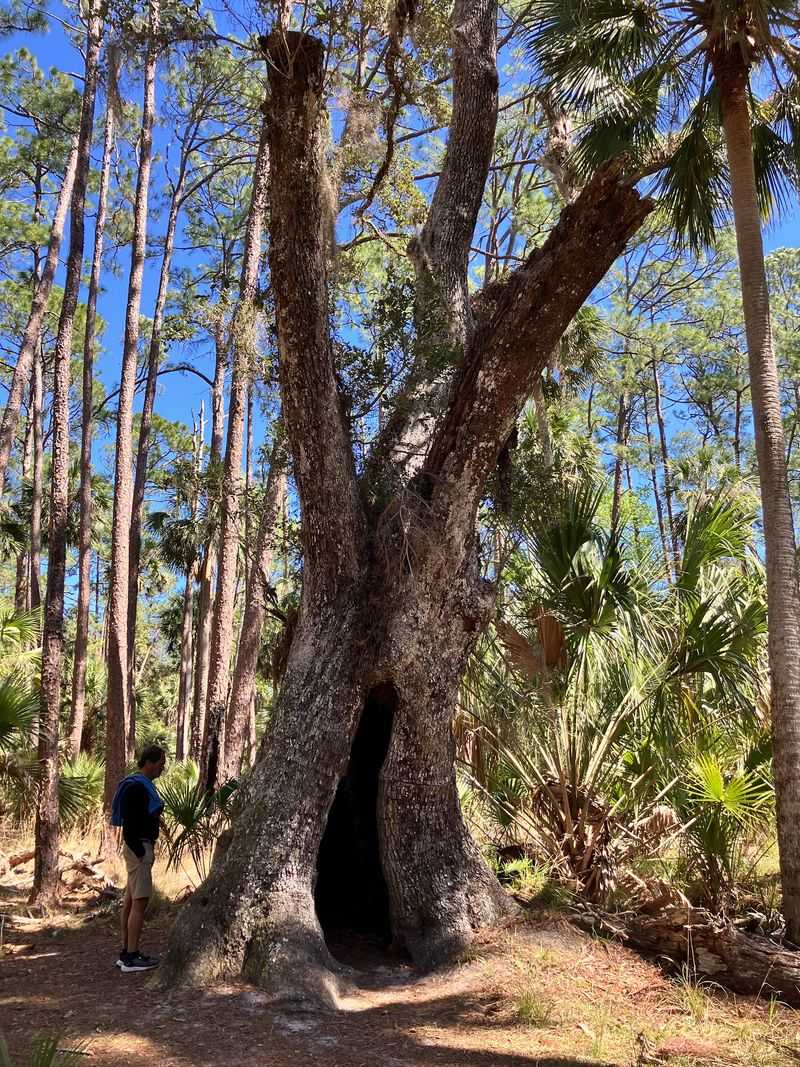
Hikers, lace up. Trails are the most talked-about feature of this park after the ruins, and there is plenty of ground to cover.
The big one is a roughly 6.8-mile trail that starts near a grand old live oak at the southern parking area. Along the way, you pass through oak hammocks, hardwood swamps, and saltmarsh creek habitat.
One visitor who did not plan to hike left eager to come back just for this path.
Not up for the full distance? A shorter loop also starts from the southern lot.
Another favorite option is the short walk from the northern picnic area to the sugar mill ruins.
One group shared that they set out with big plans, then the sun and humidity kicked in. They made it as far as Cedar Creek and were thrilled they did.
The view from the little footbridge there was described as amazing.
Some practical tips help a lot. Bring water, start early, and dress for Florida heat.
Storms have closed trail entrances in the past, so check ahead. Visitors also mention a trail you can walk outside the gate even after hours, which is a nice bonus for early birds.
Bulow Creek for Paddlers and Boaters
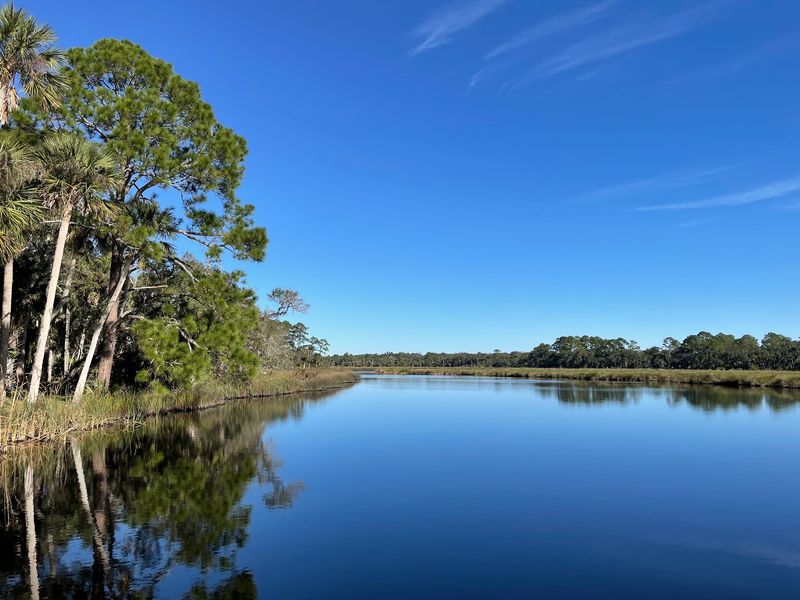
Water lovers get their own reward here. Bulow Creek runs alongside the park, and it once served as a route for the plantation itself.
Today the creek is all about recreation. The park offers a roomy kayak launch, a boat ramp, and canoe rentals, along with a canoe trail on the creek.
Visitors describe the waterfront as serene, with seating where you can simply sit and watch the water.
Boaters will appreciate the practical setup. One guest noted the boat ramp is easy to access and includes some parking for a truck and trailer.
That makes it handy for anyone hauling their own vessel.
Fishing fans are in luck too. People have been spotted casting a line from a small dock near the water.
It is a relaxed scene, the kind where nobody seems in a hurry.
Paddling here offers a fresh angle on the property. Gliding past marsh and trees, you can picture how goods once moved from the plantation down the creek.
Pair a morning paddle with an afternoon at the ruins, and you have a full day without spending much at all.
Shady Picnic Spots Under Big Trees
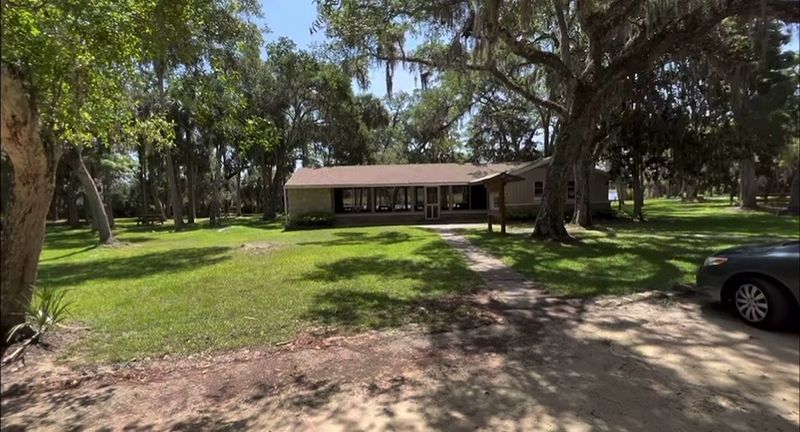
Pack a sandwich. Shady picnic areas are scattered around the park, and they make a perfect pause between exploring ruins and walking trails.
Guests rave about the big trees and generous shade, which matters in Florida. Picnic tables and benches sit near the northern area and the southern parking lot.
Clean restrooms are available as well, according to visitors.
The southern lot has an extra treat in the form of a gorgeous old live oak. Its wide branches create a natural ceiling over the area.
Sitting beneath it with lunch feels like stepping back a century or two.
Families find these spots easy and comfortable. Kids can stretch out while adults rest after a hike.
Dog owners also mention the park welcomes their four-legged companions, which makes a picnic outing even more relaxed.
Picnicking here keeps the trip wallet-friendly. With a small entrance fee and food from home, a full day out barely dents the budget.
That kind of value is hard to find in a state full of pricey attractions.
A Wistful Mood for History Fans, Families, and Dogs
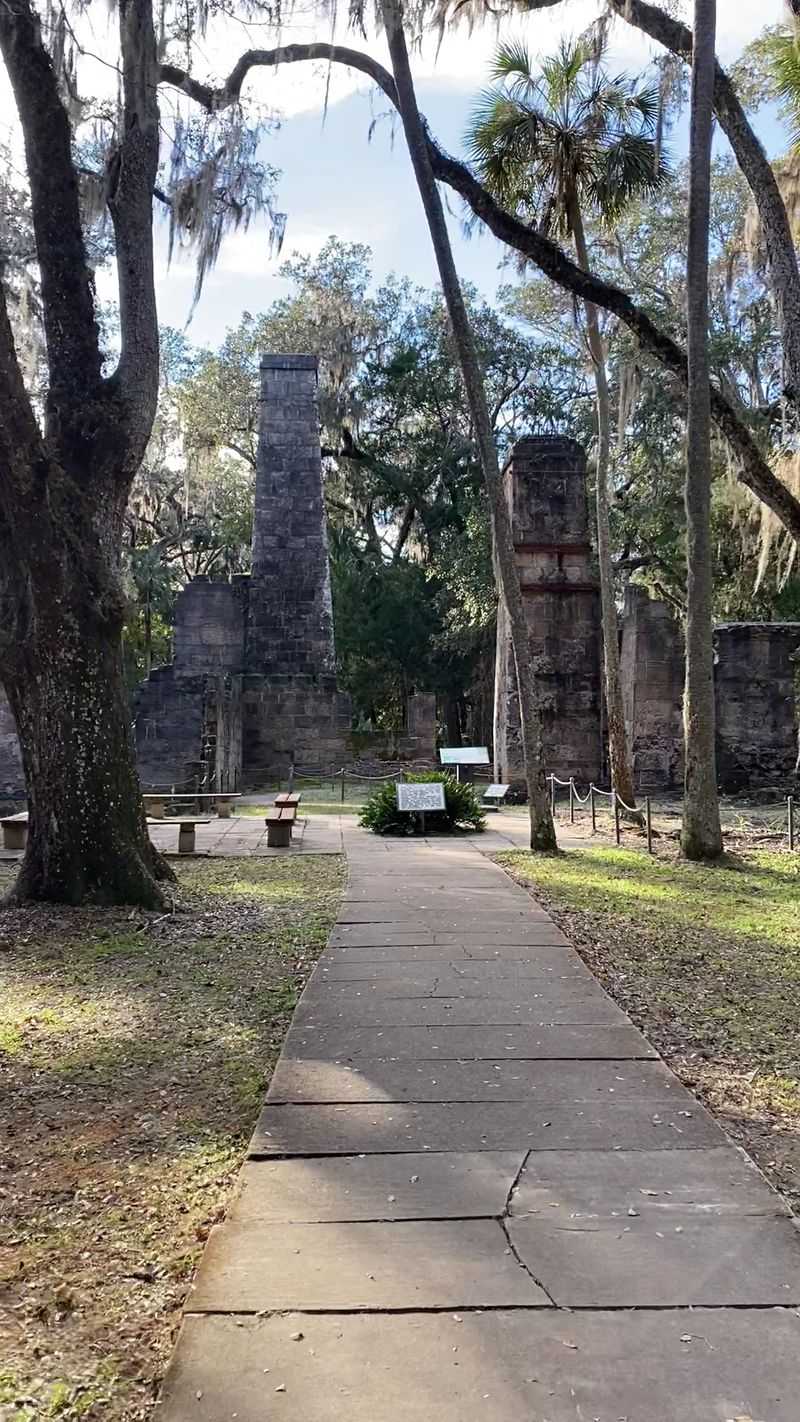
Some places feel cheerful, and some feel reflective. Visitors often describe this park as beautiful but a little wistful, a place that makes you stop and think.
One guest said walking here felt like a quiet stroll through the Florida jungle, with the ruins hidden back in the saw palmetto. Others simply call it a great place to walk and relax.
Both moods fit, depending on how you approach it.
So who will love it most? History enthusiasts top the list, along with nature lovers who enjoy shaded trails.
Families appreciate the kid-friendly loop with exhibits, and dog owners note the park is pet friendly.
Retirees and snowbirds looking for a low-cost outing will find plenty to enjoy. The walk to the ruins is short, and you can drive closer if needed.
A chilly day with a breeze was described by one visitor as perfect timing, especially after Thanksgiving.
Thrill seekers wanting rides or big crowds should look elsewhere. Guests appreciate that it is definitely not a big tourist area.
That calm, unhurried feel is exactly what makes it memorable.
Hours, Fees, and Getting There
Planning ahead saves headaches. The park is open Thursday through Monday from 9 AM to 5 PM, and it is closed on Tuesdays and Wednesdays.
Admission is refreshingly cheap. Visitors report a $4 vehicle fee collected through an honor box, where you place cash in an envelope and get a tag for parking.
Some guests mention a QR code option for card payment, while others say cards are not accepted, so bringing exact cash is the safest move.
Walkers and cyclists have a separate fee option at the box as well. Parking near the ruins is limited, so arriving earlier in the day can help.
Restrooms are available near the main areas.
The address is 3501 Old Kings Rd, Flagler Beach, FL 32136. Expect to finish the trip on a long, narrow dirt road leading to the entrance.
The park sits close to Flagler Beach, Ormond Beach, and The Loop, so it pairs well with a coastal day.
For current conditions, call the park at 386-517-2084 or check the Florida State Parks website. Trail closures after storms have happened before, so a quick check is smart.
Why the Dirt Road Is Worth It
Four dollars rarely buys this much. Between the towering mill walls, the hidden cabin remains, the shady trails, and the peaceful creek, the park packs a surprising amount into one quiet corner of Flagler County.
Visitors keep using the same kind of praise. Beautiful, well maintained, educational, and special come up again and again.
One guest simply wished they had found the place sooner.
What makes it stick is the mix. You can learn hard truths about Florida’s past in the morning and paddle a calm creek in the afternoon.
Few spots manage to be both thoughtful and relaxing at once.
It also rewards repeat visits. Many people leave planning to return for the long trail, a ranger talk, or a kayak trip they did not have time for.
That pull to come back says a lot.
If you enjoy Old Florida character, small budgets, and places the crowds overlook, this park deserves a weekend slot. Bring cash, water, and curiosity.
Then take that winding dirt road slowly and let the woods reveal their story one stone at a time.
Share this story