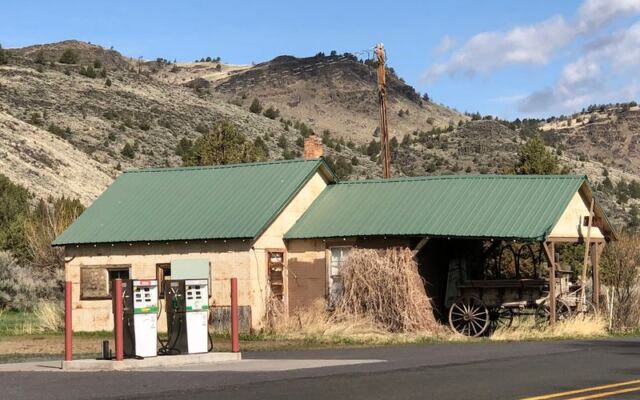
You can drive a long gravel road across Oregon’s high desert and suddenly spot a weathered barn standing against the sage and sky. It looks quiet, almost ordinary, until you learn what it once belonged to.
These buildings are leftovers from a huge cattle outfit that shaped the Harney Basin. Each one holds a piece of a story that is bigger, messier, and more interesting than a simple cowboy tale.
How Large Was the French-Glenn Outfit?
The French-Glenn Livestock Company was run by Peter French, who managed it for California rancher Hugh Glenn. French showed up in Oregon in 1872, according to the Oregon Encyclopedia, with about 1,200 cattle, a half-dozen vaqueros, and a cook.
From that small start, the outfit grew fast. Oregon State Parks says the ranch reached 70,000 acres and 45,000 cattle by the mid-1880s.
The Oregon Encyclopedia gives a later range of 150,000 to 200,000 acres, with about 30,000 cattle and 6,000 horses and mules. Those numbers come from different sources and dates, so they should not be added together.
The U.S. Fish and Wildlife Service calls French-Glenn, at its peak, the largest cattle ranch on privately owned land in the United States.
That is a narrow claim, but it is enough to justify the words cattle empire.
One Ranch, Several Separate Sites
Picture the Harney Basin as a big, flat stage with the ranch’s pieces scattered far apart. Nothing here is a single abandoned compound waiting to be wandered through.
The landmarks sit at different places, and each one served a different purpose.
P Ranch and Sod House Ranch are both inside Malheur National Wildlife Refuge, as the refuge’s cultural heritage page explains.
The surviving round barn is somewhere else entirely. The Peter French Round Barn stands at the separate Barton Lake site, not on refuge ranch grounds.
Keeping those three places straight makes any trip easier to plan.
At P Ranch, the Long Barn Tells the Workday Story
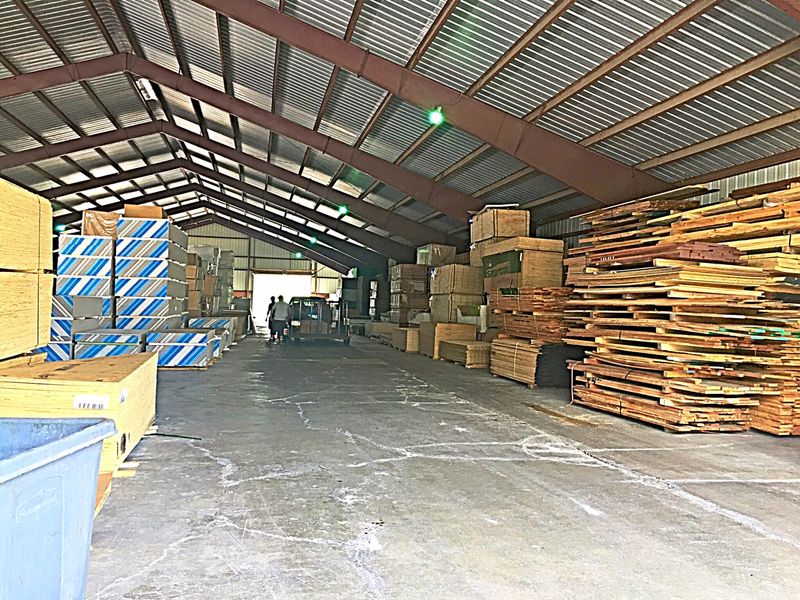
Hay was the quiet engine behind a cattle operation, and P Ranch shows it. The ranch became the outfit’s headquarters in the Blitzen Valley, the center of daily business for French-Glenn.
According to the refuge’s cultural heritage page, visitors can see the surviving long barn along with ranch equipment tied to hay handling. Think of it as the working side of the story, with feed stored and moved so animals could get through hard seasons.
One clear warning applies here. P Ranch once had a round barn, but it is gone.
The round barn that still stands is at Barton Lake, so do not look for it at P Ranch.
What Remains at Sod House Ranch?
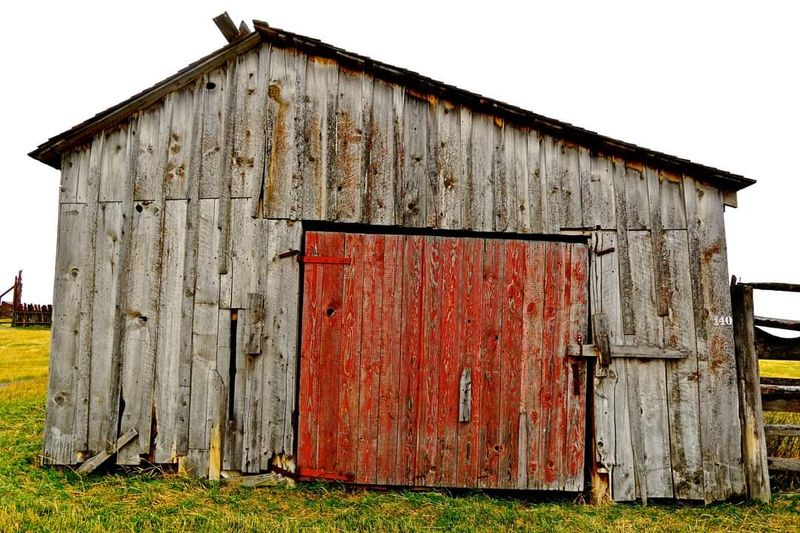
Up north, near Malheur Lake, Sod House Ranch served a different job. It supported the outfit’s northern holdings and summer grazing, working as an outpost rather than a headquarters.
Historic buildings do remain there, according to the refuge. Giving an exact number would be risky, though.
The Oregon Encyclopedia says twelve original structures remain, while the refuge describes only some buildings, and the two sources may reflect different inventories or dates.
Access is seasonal. The refuge lists Sod House Ranch as open August 15 to October 1, partly to protect nesting birds.
Check current access and conditions before heading out.
Barton Lake Holds the Surviving Round Barn
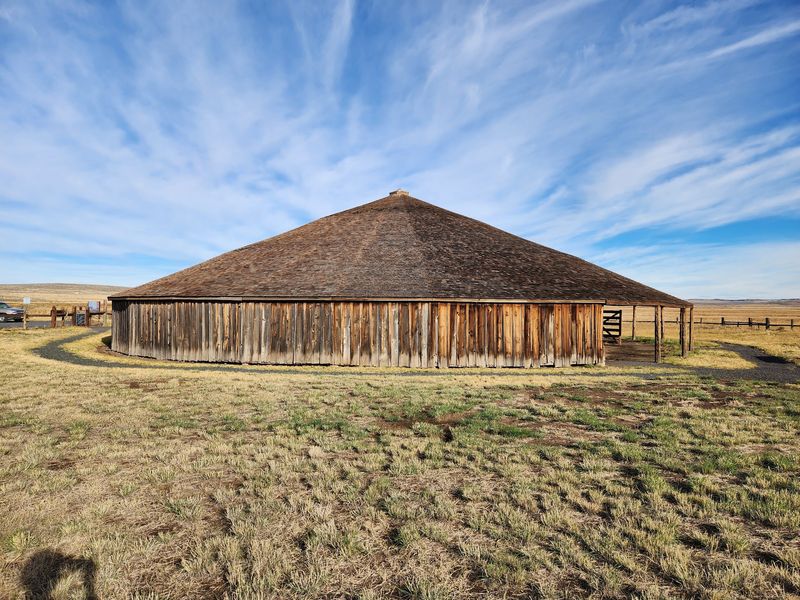
Here is the one that gets the photographs. The Peter French Round Barn stands at Barton Lake, a separate site from P Ranch, and it is the round barn that survives.
It was built around 1883 to 1884, according to the Oregon Encyclopedia. Its job was practical: an enclosed corral where horses could be trained and exercised through winter weather.
The building is roughly 100 feet across, and Oregon State Parks administers it as a State Heritage Site. That makes it the easiest piece of the ranch to place on a map, as long as you remember it belongs to the story, not the whole thing.
The Ranching Story Began on Paiute Homelands
Long before any cattle arrived, the Harney Basin was Northern Paiute homeland. The ranching era grew out of a period of federal displacement, and land later opened to settlement.
As the Oregon Encyclopedia’s refuge entry shows, the area’s history reaches well beyond one ranch.
Claims to land and water were contested, and big herds put heavy pressure on the range. Overgrazing left its mark on the landscape, so the empire’s scale came with real costs.
French-Glenn also was not alone. The refuge’s conservation plan names other major operations in the region, including Todhunter and Devine, Riley and Hardin, and Miller and Lux.
The buildings tell one chapter of a much broader high-desert story.
Plan for Gravel Roads and Seasonal Access
Good planning matters more here than at a paved roadside stop. The refuge lists P Ranch as open year-round, but its listed window for Sod House Ranch is August 15 to October 1.
As of October 10, 2026, that season has ended.
A listed window is not a promise of access. Confirm current conditions and any closures before you travel.
Roads on the refuge are gravel and can be rough. The refuge’s visitor page advises checking road conditions, bringing drinking water, and making sure your vehicle has good tires and a full tank.
Stay on trails and leave historic objects exactly where you find them.
The Buildings Offer a Fragment, Not the Whole Story
Spread across the basin, the barns and outposts hint at how a huge outfit moved hay, horses, and herds across big distances, as the refuge’s heritage page outlines.
Yet wood and stone can only speak for the people who built them. The wider record, including the refuge’s longer history, keeps the rest of the basin in view.
A barn can stand for a century and still leave most of the story outside its walls.
Share this story