Some of the best finds in Florida are the ones you almost walk right past. I went looking for a snack and a shady bench, and instead I found a tiny wooden building that seemed to whisper stories from long ago.
It was small, quiet, and easy to miss, yet it stayed in my head for days. If you are curious about how kids learned centuries ago, this little spot might surprise you too.
A Tiny Wooden Landmark on a Busy Pedestrian Street
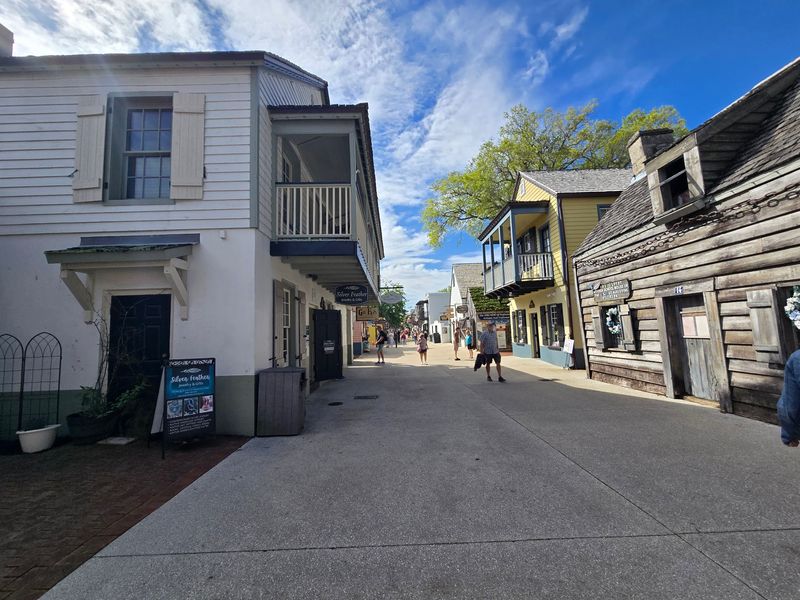
Tucked between shops and cafes at 20-30 St George St, the Oldest Wooden Schoolhouse is easy to overlook. One visitor admitted you will miss it if you are not looking, and that feels about right.
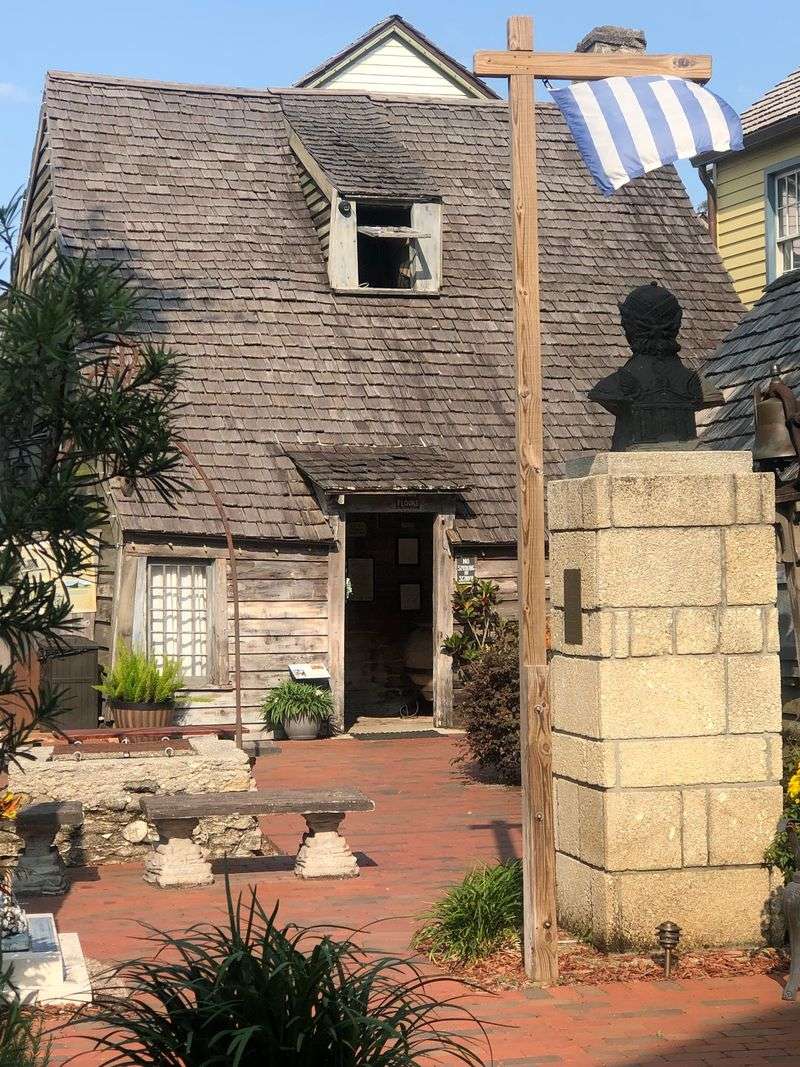
The building is modest, low, and made of dark, aged wood.
St. George Street is the walking heart of historic St. Augustine, the city often called the oldest in the country. The schoolhouse sits as a historical place within that lively stretch, close to the city gate and the fort.
That location makes it a natural stop during a downtown stroll.
Many guests describe it as the oldest wooden schoolhouse in Florida, and some go further and call it the oldest in the nation. Either way, the fact that a wooden building has lasted so long in a warm, humid climate impresses almost everyone.
People often say they were genuinely surprised it is still standing.
Behind the front gate, there is more than just a single room. A courtyard, a garden, and a few old outdoor features round out the property.
Think of it as a small museum campus that packs a lot of character into a little space.
Centuries of Lessons Behind Old Timber Walls
Few buildings get to tell a story just by standing still. Visitors often say walking in feels like stepping straight back into the 1700s.
The original frame is still here, carefully preserved for modern eyes.
Guests praise how well the structure has been maintained over the years. Several mention that the care put into the site is easy to see, from the beams to the rooms inside.
It stands out sharply against the more modern buildings around it.
What makes it meaningful is the subject it honors: education. One guest called it a monument to learning through time, and that fits nicely.
You get a sense of how children once sat, studied, and behaved in a very different era.
History lovers tend to linger on the architecture itself. The worn wood, the simple layout, and the old-fashioned craftsmanship all hint at a slower, more hands-on way of building.
It is a rare reminder of early Florida life that you can actually touch with your eyes.
Original Desks and Handwritten Lessons
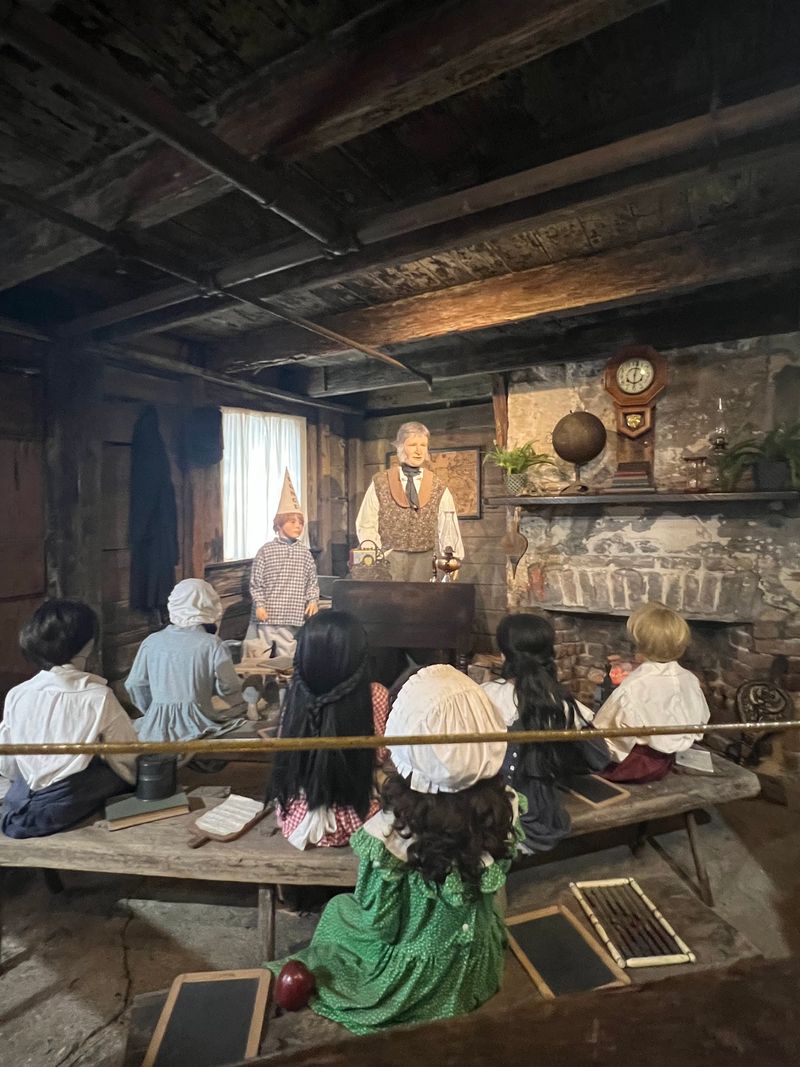
Step through the doorway and the classroom does most of the talking. Visitors point out original-style desks and handwritten lessons displayed on the walls.
It is a clear look at what a school day once involved.
Antique displays add to the scene. Old desks and other artifacts help you understand the tools children used before notebooks and screens.
Kids often find it hard to believe how simple everything was.
The rooms are small, so you can take it all in without feeling rushed. One guest noticed a front room whose purpose staff were not quite sure about, which adds a little mystery.
History does not always come with every answer.
A quick reminder for camera fans: guests mention that photos are allowed, but video is not. So snap away, just keep the recording off.
Those still shots of the old classroom make great keepsakes.
Animatronic Teacher and a Dunce-Cap Student
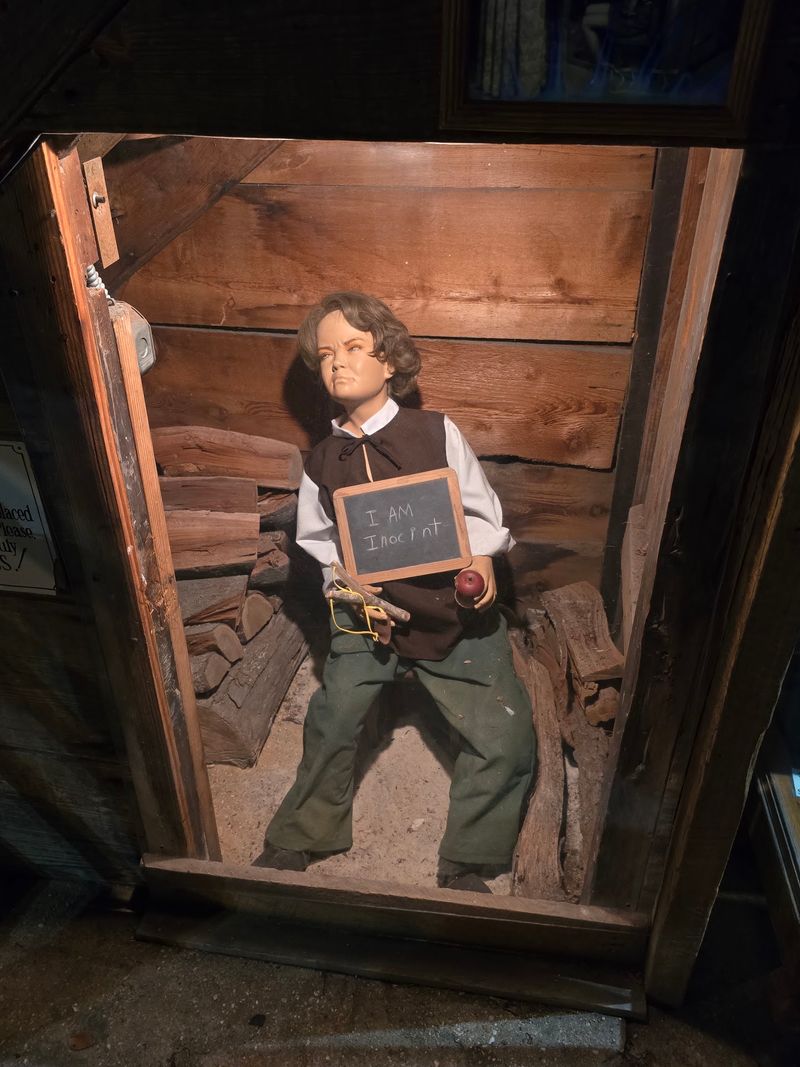
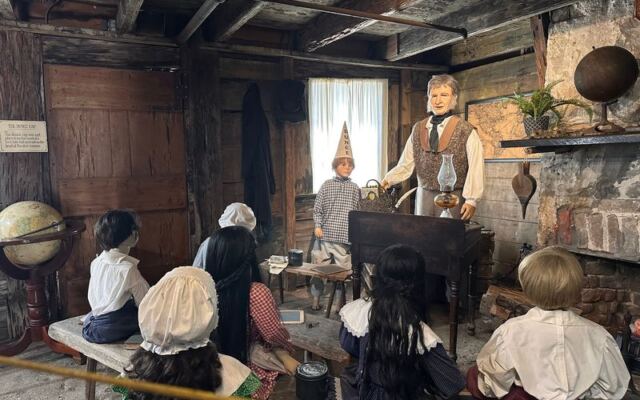
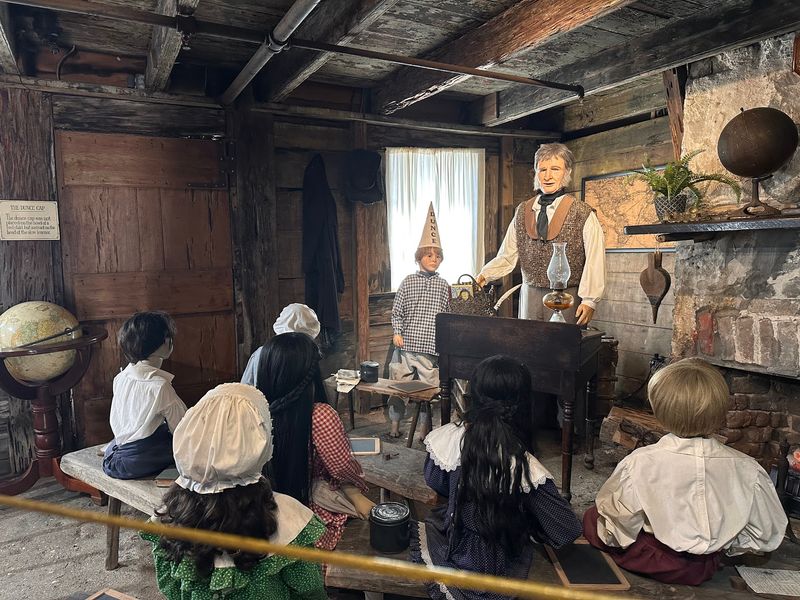
Here is where things get delightfully quirky. Inside the main building, you push a button and an animatronic teacher and student come to life.
The student even wears a classic dunce cap.
Together, the two figures explain how school worked back then, from rules to lessons. Visitors call the presentation fun, informative, and sometimes downright hilarious.
It turns a history lesson into a little show.
A short self-guided audio element also helps explain colonial-era teaching. Guests say it is brief but packed with interesting details.
You can learn quite a bit in just a few minutes.
Families especially enjoy this part. Children tend to giggle at the dunce cap while quietly absorbing the facts.
It is learning sneaked in through a chuckle, which might be the best kind.
Garden Paths, a Ringing Bell, and the Famous Outhouse
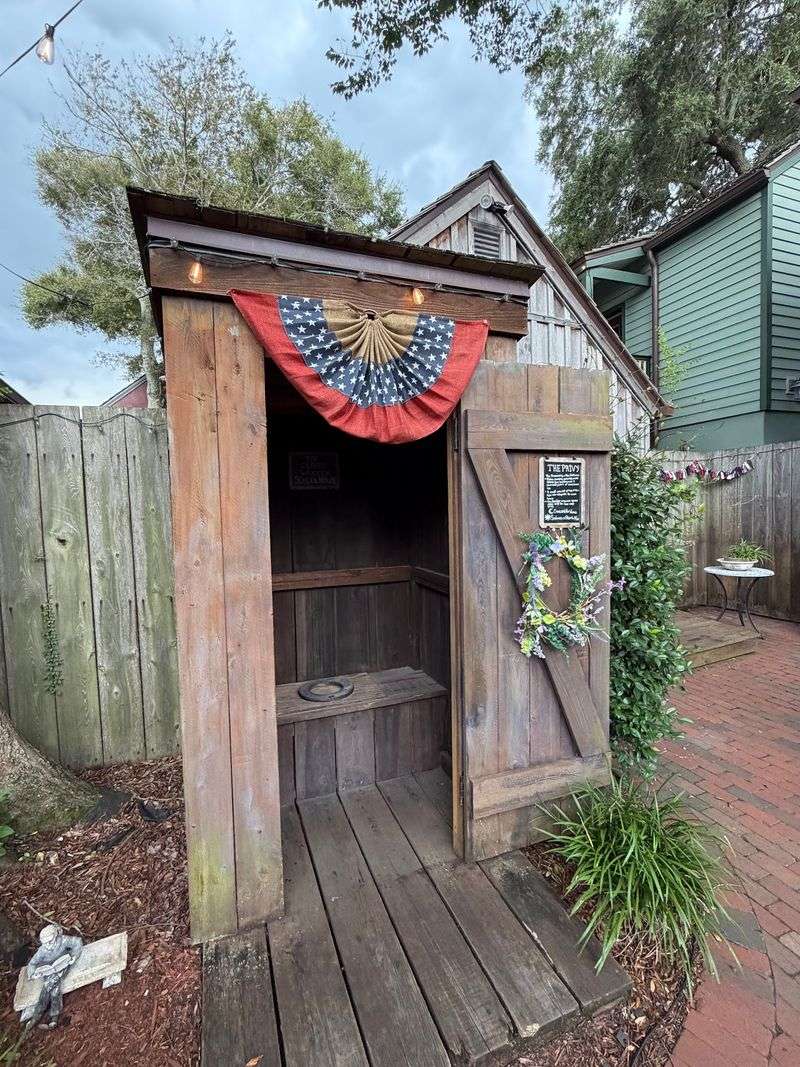
Outside, the visit keeps going in a leafy, relaxing way. The courtyard garden earns lots of praise for being pretty and peaceful.
Many guests say it is a nice place to slow down after busy St. George Street.
There is a working bell you can ring, which kids rarely skip. An old well adds another touch of times past.
Both make the yard feel like a living piece of history.
Then there is the outhouse. Yes, really.
Visitors say it makes for some funny photos, and it quietly teaches how different daily life used to be.
The garden also works as a lovely photo backdrop. Soft greenery and old wood make a charming combination.
Take a minute here before heading back out into the crowd.
A Diploma to Take Home
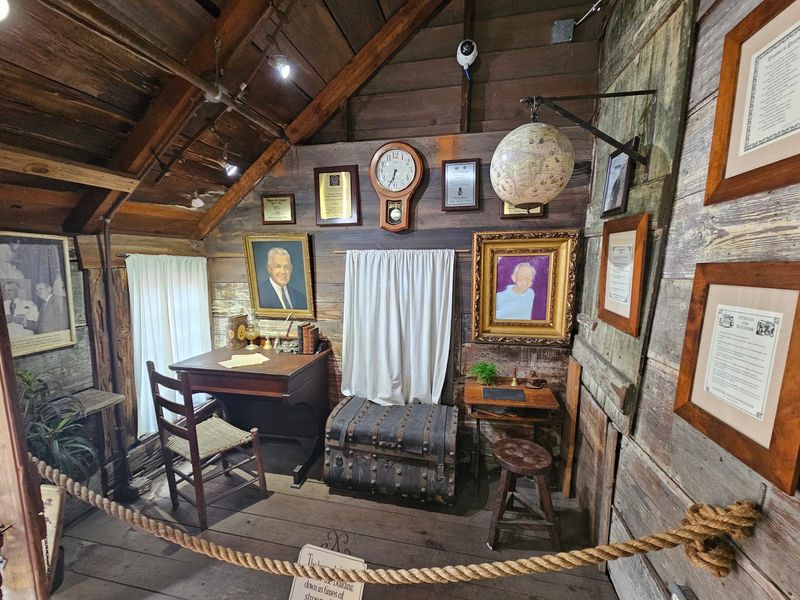
Graduation day comes faster than expected here. At the end of your visit, guests receive a little diploma.
It is a sweet, playful way to wrap things up.
Adults seem to love it just as much as kids. Several visitors mention that getting the diploma was one of their favorite parts.
It turns a short tour into a memory you can tuck into a scrapbook.
A gift shop sits near the gate as well. It is a handy spot to browse for small souvenirs before you leave.
Pair that with your diploma, and you have a fun keepsake set.
Friendly staff also come up often in visitor comments. Many describe them as welcoming and happy to answer questions.
That warm touch helps a small attraction feel personal.
Who Will Love a Quick Trip Into Colonial School Days
Families are the obvious match. Guests say it is educational and fun, especially for kids curious about how children learned long ago.
One chaperone even recommended it for a fourth-grade field trip.
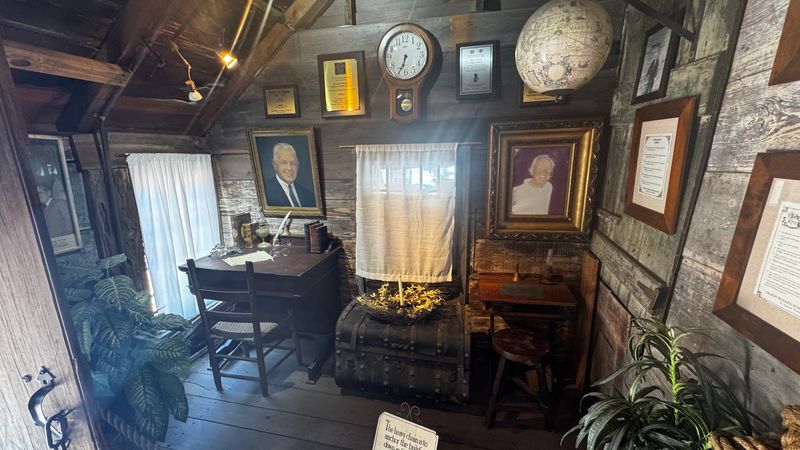
History fans and anyone who loves old buildings will feel right at home too. The preserved structure and antique displays reward careful looking.
Teachers and education lovers may find it especially touching.
Short on time? Good news.
Most visitors say the whole experience takes about half an hour or less, making it easy to slot between bigger attractions.
It is not a huge museum, and a few guests note there is not a lot to see. That is part of its charm, though.
Think of it as a cozy appetizer for a full day of exploring historic St. Augustine.
Hours, Admission, and a Gentle Final Word
Planning ahead is simple. The schoolhouse opens at 10 am every day, closing at 6 pm Sunday through Thursday.
On Friday and Saturday, hours stretch until 8 pm.
Visitors mention a small admission fee and say it feels worth the price. For current costs, check the official website at oldestwoodenschoolhouse.com or call +1 904-824-0192.
Prices can change, so a quick check saves surprises.
Getting there means heading to 20-30 St George St in downtown St. Augustine. The street is best enjoyed on foot, and the fort and city gate are close by.
Combine them for an easy history-packed morning.
So, is it worth stopping? For a low-cost, half-hour peek into Old Florida schooldays, it seems hard to beat.
Ring the bell, grab your diploma, and enjoy one of the state’s smallest big surprises.
Share this story