A wealthy New York lawyer once hired an architect to build him a Persian-style paradise garden on the Hudson River. Today, volunteers and gardeners are still bringing it back from decades of neglect.
That story is only one of many. Novelist Edith Wharton planned her own sunken garden behind stone walls in Massachusetts.
A Goodyear Tire founder named his Ohio estate after an Old English phrase for stone quarry.
Walled gardens have a simple purpose. Walls block wind, hold heat, and create private outdoor rooms where plants can grow in neat, protected spaces.
For the people who built them, a wall also meant quiet and a sense of escape.
I like that these gardens make you walk through a gate before you see anything. Some sit beside famous mansions.
Others belong to families you may never have heard of. Which one would you open first?
1. Untermyer Gardens
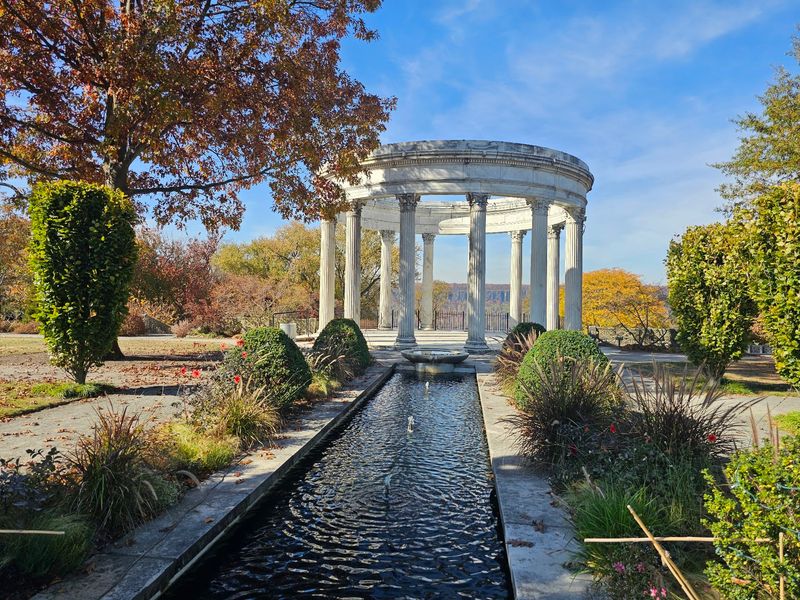
Samuel Untermyer was a powerful New York lawyer with a serious love of plants. In the 1910s, he hired architect William Welles Bosworth to design a walled garden inspired by ancient Persian paradise gardens.
The layout follows an old Indo-Persian idea of four sections divided by water channels. Stone walls frame the space, and towers stand at the corners like small lookout posts.
At one end sits the Temple of Love, a small structure perched on rocks above a series of pools. Nearby, an amphitheater area gives the garden a theatrical feel that suits its dramatic history.
After Untermyer passed away in 1940, the estate slipped into decline for decades. The Untermyer Gardens Conservancy formed in 2011 and has been restoring the walled garden and surrounding grounds ever since.
You’ll also want to look past the walls toward the Hudson River and the Palisades beyond. The views help explain why Untermyer chose this hillside in the first place.
Check the conservancy’s schedule before you go, since hours change with the seasons. Guided tours are a smart choice if you want the backstory behind each restored corner.
Address: 945 N Broadway, Yonkers, NY 10701
2. The Met Cloisters
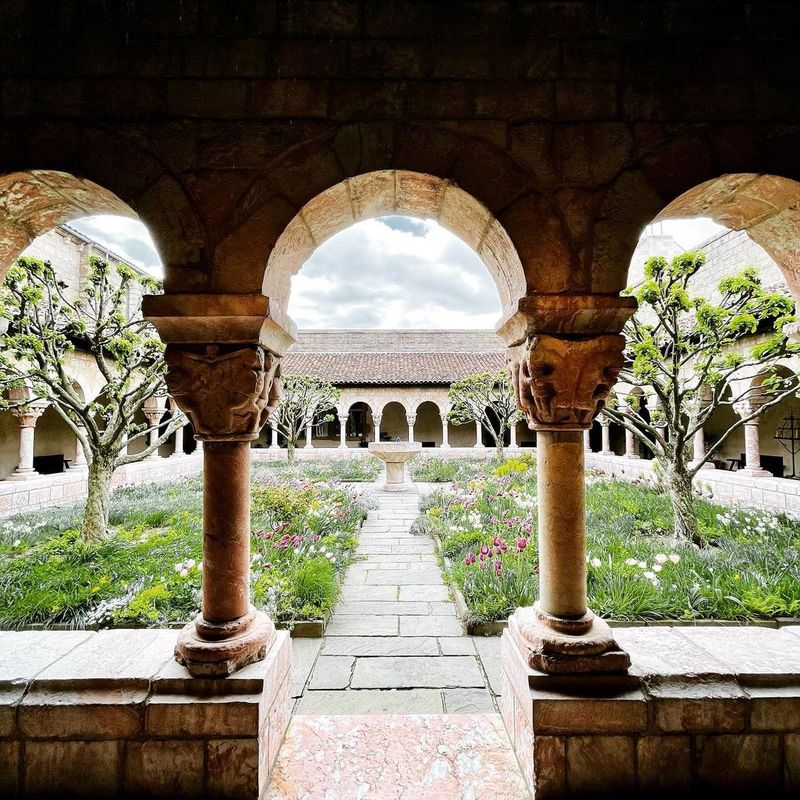
Medieval monks would probably recognize the herb beds at the northern tip of Manhattan. The Met Cloisters grows plants that people actually used in the Middle Ages, for cooking, medicine, crafts, and even magic beliefs.
The museum opened in 1938 with major support from John D. Rockefeller Jr. Parts of real medieval European cloisters were brought over and rebuilt here, stone by stone.
The Bonnefont Cloister garden is the one plant lovers talk about first. Raised beds hold hundreds of plant species, and labels explain how each plant was used centuries ago.
Over in the Cuxa Cloister, stone arcades surround a garden with paths that meet at a central fountain. The Trie Cloister garden takes its plant ideas from details in medieval artworks, including famous unicorn tapestries.
Here’s a fun detail: the museum sits inside Fort Tryon Park, which itself was a Rockefeller gift to the city. So you get a park walk and a medieval garden on the same outing.
Garden areas change with the seasons, and some beds look sparse in winter. Late spring through early fall gives you the fullest view of what monks once grew.
Address: 99 Margaret Corbin Dr, New York, NY 10040
3. The Mount
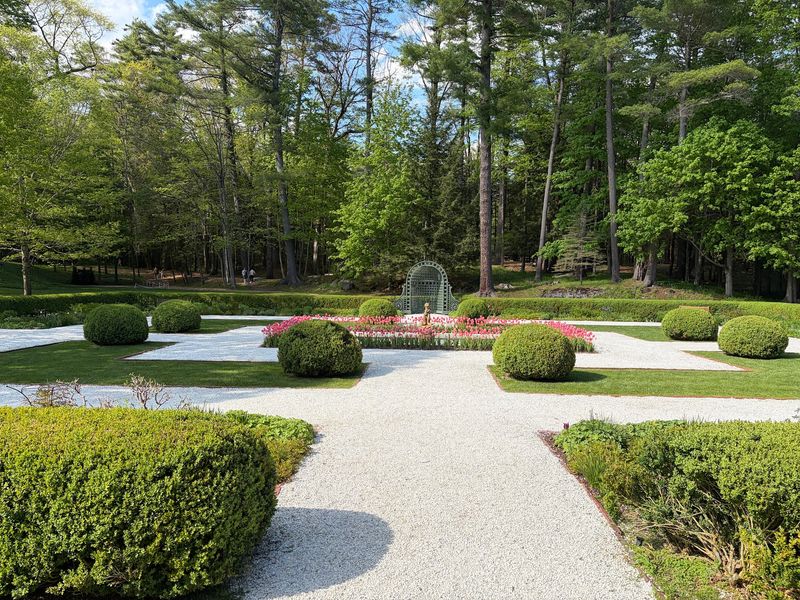
Edith Wharton wrote about houses and gardens before she became famous for novels. Her 1897 book, The Decoration of Houses, laid out ideas she later put into practice at her own Berkshires home.
Wharton built The Mount in Lenox, Massachusetts, in 1902. She was closely involved in planning the grounds, which reflect her love of Italian and French garden design.
The Italian Walled Garden is a sunken space enclosed by stone walls. It was meant to feel like a private outdoor room, set apart from the open lawns around the house.
Across the grounds sits the French Flower Garden, and a linden walk connects the two. Wharton liked gardens that worked like a series of rooms, each with its own purpose.
Restoration work over the years has brought these spaces closer to how Wharton knew them. It’s a rare chance to see a writer’s design opinions turned into real stone and soil.
Plan to tour the house too, since the gardens make more sense once you see the views from inside. Wharton designed both to work together, and it shows.
Address: 2 Plunkett St, Lenox, MA 01240
4. Hill-Stead Museum
How many early 1900s houses were designed by a young woman who later became a licensed architect? Theodate Pope Riddle planned Hill-Stead for her father, Alfred Pope, and it remains one of her best-known works.
The Popes filled the house with Impressionist paintings, including works by Monet and Degas. Many visitors come for the art and end up lingering outside.
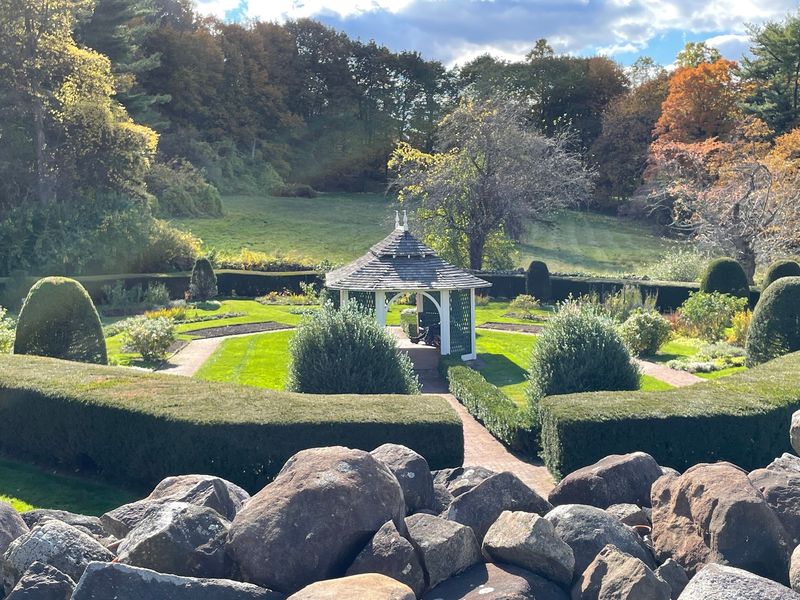
Behind old stone walls sits the Sunken Garden, an octagon of flower beds around a small summerhouse. Famed landscape designer Beatrix Farrand created the plan around 1920.
Over time, the garden faded and was later restored using Farrand’s design as a guide. The beds now hold a mix of perennials arranged in soft color patterns.
The garden also has a literary side. Hill-Stead hosts the Sunken Garden Poetry Festival, which has brought poets to this walled space for decades.
The property includes walking trails across meadows and woods in Farmington, Connecticut. Pair a garden stroll with a museum tour for the full picture of how the Pope family lived.
Address: 35 Mountain Rd, Farmington, CT 06032
5. Stan Hywet Hall and Gardens
The name sounds mysterious, but the meaning is simple. Stan Hywet comes from Old English and roughly translates to stone quarry, a nod to the old quarry on the property.
F.A. Seiberling, co-founder of the Goodyear Tire and Rubber Company, built this Tudor Revival estate in Akron, Ohio.
The family moved in during 1915.
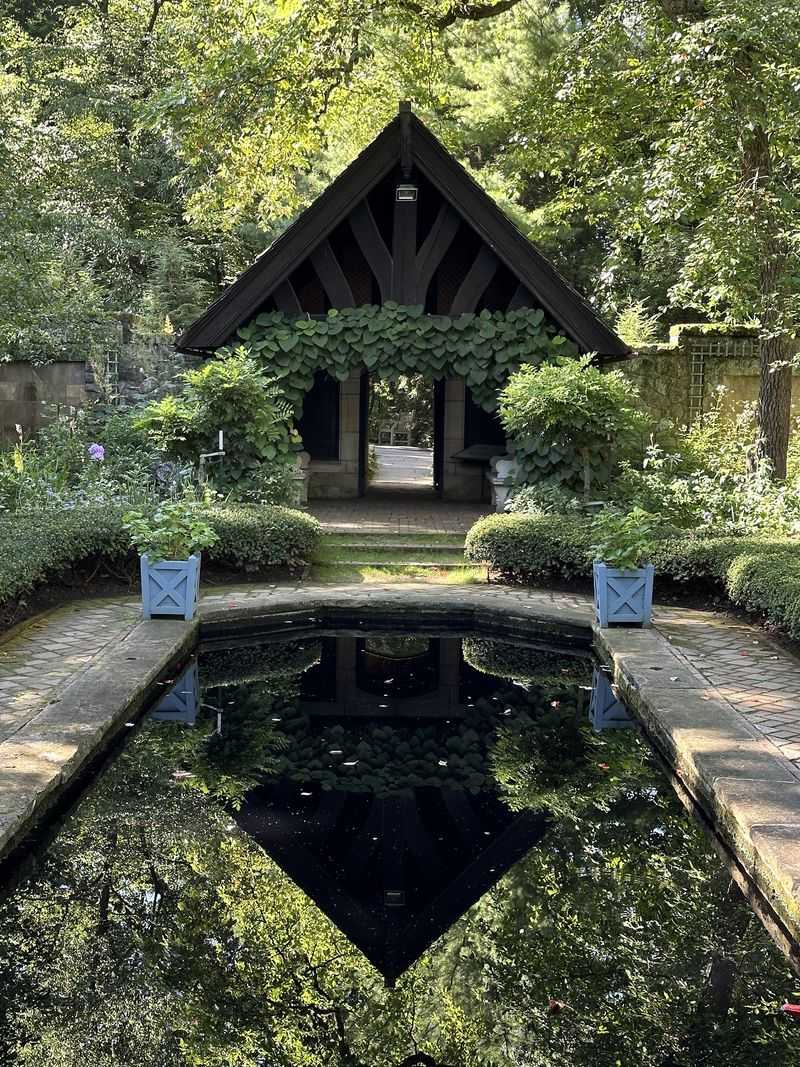
The English Garden is the walled treasure here. Landscape architect Warren Manning first laid it out, and Ellen Biddle Shipman redesigned it in the late 1920s.
Shipman was one of the leading garden designers of her time. Her plan featured layered flower borders and a small reflecting pool inside the stone walls.
The garden was later restored based on Shipman’s original drawings. That careful work lets you see a design almost a century old in nearly its intended form.
Elsewhere on the grounds, you can explore the Japanese Garden, a long birch allée, and views over the old quarry lagoons. Give yourself a few hours, because the estate covers far more ground than the walled garden alone.
Address: 714 N Portage Path, Akron, OH 44303
6. Biltmore Walled Garden
Frederick Law Olmsted, the designer behind New York’s Central Park, also planned a garden for George Vanderbilt in the North Carolina mountains. The Walled Garden at Biltmore covers about four acres.
Olmsted designed it in the English style of an ornamental kitchen garden. Over time, flowers took over the spotlight from vegetables.
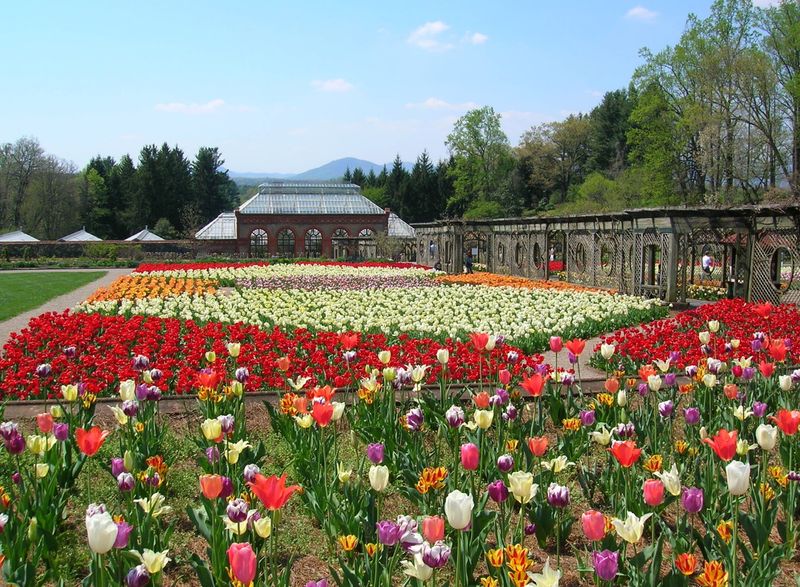
Walls enclose the space and help protect plants from mountain wind. Inside, a long arbor and geometric beds create a tidy, organized layout.
At the lower end stands the Conservatory, designed by Richard Morris Hunt, the architect of Biltmore House itself. Inside the glass, you can see tropical plants and orchids year-round.
Spring brings large tulip displays to the Walled Garden. Summer and fall swap in roses, annuals, and seasonal plantings, so the look changes throughout the year.
The garden is part of the estate, so it requires estate admission. Many guests visit it after touring the house, but going first can be a nice change of pace on busy days.
Address: 1 Lodge St, Asheville, NC 28803
7. Old Westbury Gardens
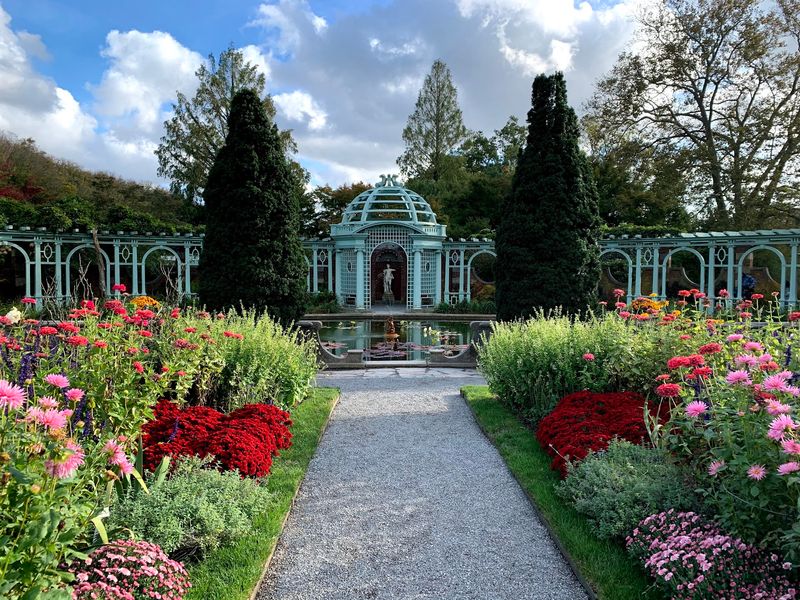
Long Island’s Gold Coast era left behind mansions, and a few of them still have their gardens intact. Old Westbury Gardens was the home of John S.
Phipps and his family, completed in 1906.
The estate was built in the style of an English country house. Its grounds were planned to match, with formal gardens close to the house and woodlands farther out.
The Walled Garden is the showpiece, covering about two acres. Long borders, a pergola, and a lily pond give it a classic English feel.
Gardeners plant the beds in seasonal waves. Spring bulbs give way to summer perennials and annuals, then fall colors close out the year.
The estate also has a rose garden, a boxwood garden, and lakes surrounded by trees. You could spend a full afternoon here without seeing the same view twice.
Fun fact: the mansion has appeared in several movies thanks to its English look. Check the official calendar for open days, since the estate runs on a seasonal schedule.
Address: 71 Old Westbury Rd, Old Westbury, NY 11568
8. George Washington’s Mount Vernon
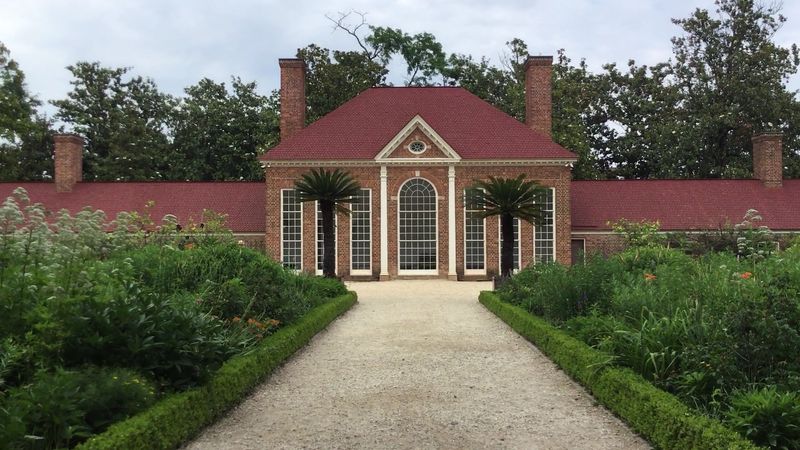
George Washington cared about gardens as much as he cared about farming. At Mount Vernon in Virginia, he personally redesigned the layout of his grounds in the 1780s.
Two walled gardens sit on either side of the bowling green. The Upper Garden held flowers and vegetables, while the Lower Garden served as the main kitchen garden.
The walls had a practical job. They kept out animals and helped protect plants from cold winds.
The Lower Garden today grows vegetables and herbs typical of the 1700s. Gardeners use historical methods and varieties so you can see what fed the household.
In the Upper Garden, flower beds reflect plants known from Washington’s time. Researchers have used archaeology and old records to guide restoration work there.
Look for the small seed house and other garden structures as you walk the paths. If you’re interested in how a colonial estate fed its people, these walled spaces tell that story better than any exhibit case.
Address: 3200 Mount Vernon Memorial Hwy, Mount Vernon, VA 22121
9. Hollister House Garden
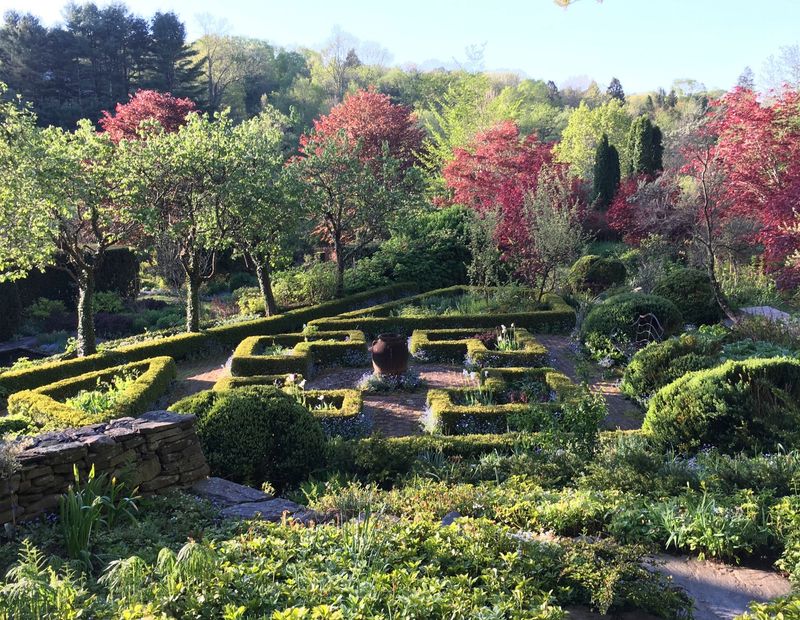
One man, an old farmhouse, and decades of digging created this Connecticut garden. George Schoellkopf began shaping the grounds around his 18th-century house in 1979.
He took inspiration from famous English gardens like Sissinghurst and Great Dixter. The result is a series of garden rooms divided by walls and hedges.
Old stone walls give structure to the layout. Within them, plants spill over paths in a relaxed, generous style.
The garden is a preservation project of the Garden Conservancy. That partnership helps protect it for future visitors after its creator’s years of work.
Because it’s a private-style garden that opens to the public, the schedule is seasonal. Check open days before you drive out to the rural town of Washington.
Hollister House also hosts a garden study weekend with talks and plant sales. If you garden at home, the plant combinations here could give you plenty of ideas for your own beds.
Address: 300 Nettleton Hollow Rd, Washington, CT 06793
10. Kykuit, the Rockefeller Estate
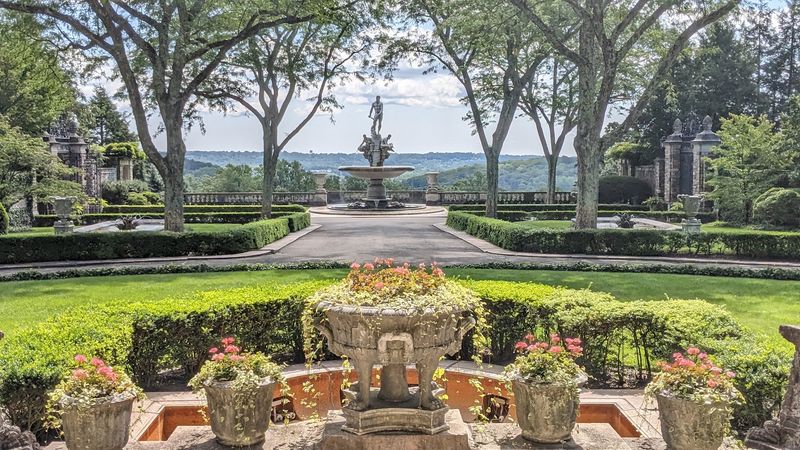
Four generations of the Rockefeller family lived at Kykuit, starting with oil tycoon John D. Rockefeller.
The name comes from a Dutch word for lookout, which fits its hilltop view of the Hudson.
Architect William Welles Bosworth designed the gardens in the early 1900s. He’s the same designer behind the Untermyer walled garden down the river in Yonkers.
The terraced gardens use stone walls, steps, and fountains to step down the hillside. Classical statues sit among the formal beds.
Later, Governor Nelson Rockefeller added a big twist. He placed modern sculptures throughout the grounds, including works by Henry Moore and Alexander Calder.
The mix of old-style gardens and 20th-century art makes for an unusual walk. You’ll go from a classical fountain to an abstract sculpture in just a few steps.
Visits run as guided tours through Historic Hudson Valley during the open season. Tours typically depart from the visitor center at nearby Philipsburg Manor, so check details before you arrive.
Address: 381 N Broadway, Sleepy Hollow, NY 10591
11. The Fells Historic Estate and Gardens
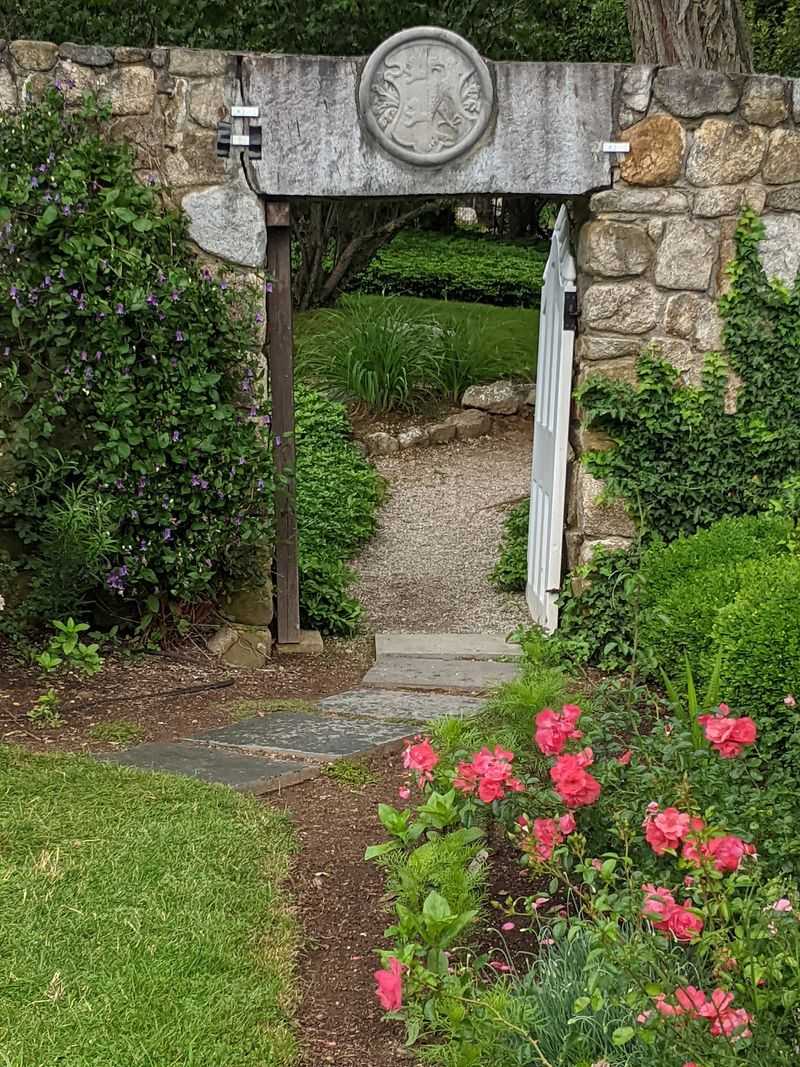
Abraham Lincoln’s private secretary owned this lakeside retreat. John Hay later served as Secretary of State, and he built The Fells as a summer home on Lake Sunapee in New Hampshire.
His son, Clarence Hay, turned the grounds into a serious garden project. He spent years building terraces, walls, and planting beds.
Stone walls frame the Old Garden and the Rose Terrace. New Hampshire has no shortage of rocks, and the Hays put plenty of them to good use.
Clarence also created a rock garden on the hillside, filled with alpine plants and ferns. It feels wilder than the walled sections, which makes the contrast fun to explore.
The property is now protected land with trails through forest down toward the lake. A short hike adds a nice outdoor bonus to your garden visit.
Gardens are at their peak during the warm months, while trails stay open more of the year. Check the estate’s current hours, since main house tours follow a seasonal schedule.
Address: 456 NH-103A, Newbury, NH 03255
12. Filoli
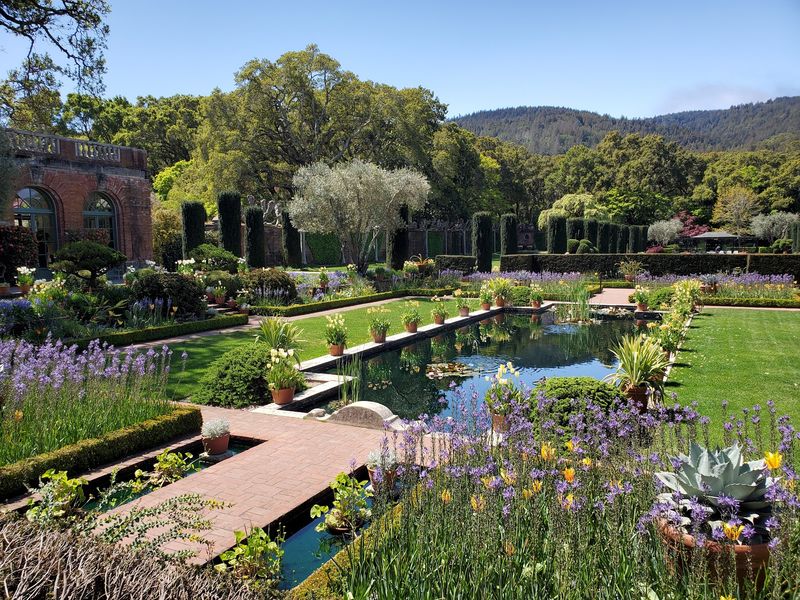
The name Filoli is actually a mashup of a personal motto. Owner William Bourn took letters from Fight, Love, and Live to create it.
Bourn built the estate south of San Francisco in the 1910s. Garden designer Bruce Porter helped shape the layout, and Isabella Worn guided the plantings for years.
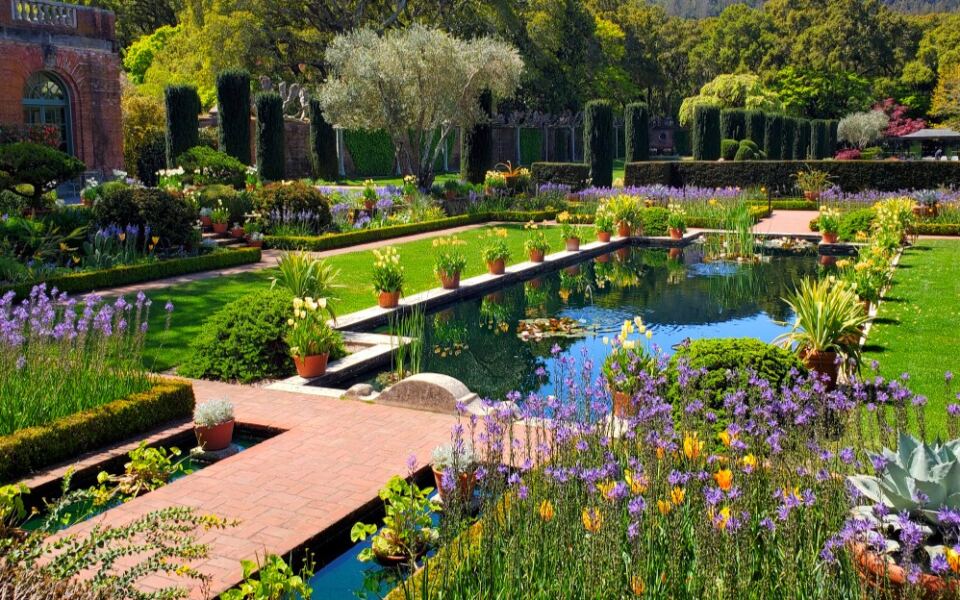
The Walled Garden is a group of garden rooms inside the larger formal grounds. Walls and hedges divide it into spaces with different plantings and moods.
California’s mild weather means something is often blooming here. Spring brings big displays of bulbs and flowering trees, while summer leans into roses and perennials.
Filoli has also appeared on screen, including in the TV series Dynasty. Many people recognize the house before they ever learn its name.
Beyond the formal areas, the estate includes nature trails through oak woodlands. Plan for timed entry if needed, and give yourself time to explore both the walled rooms and the wilder edges.
Address: 86 Cañada Rd, Woodside, CA 94062
13. Dumbarton Oaks
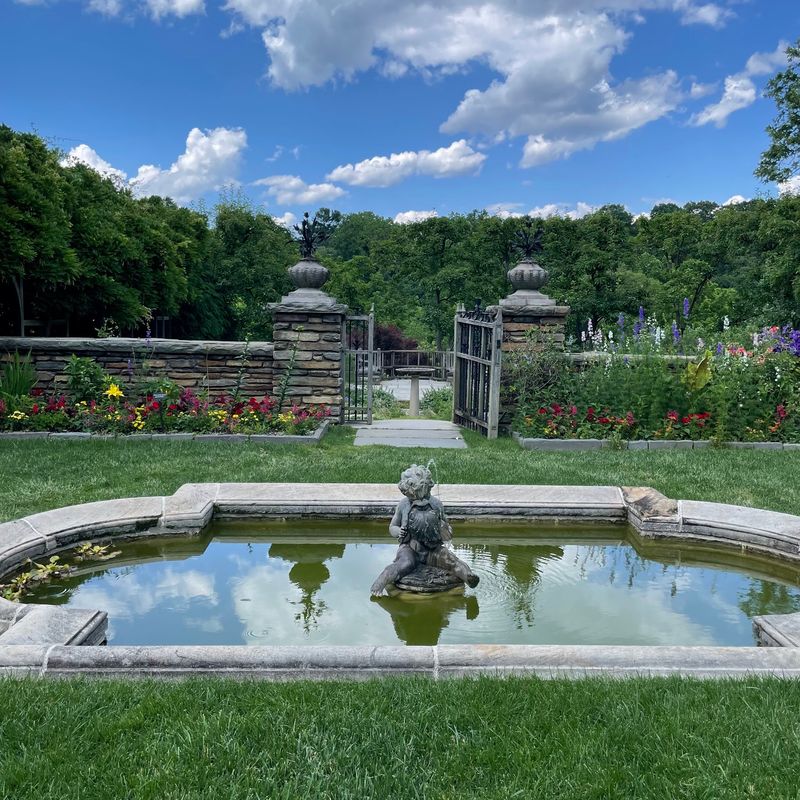
Mildred Bliss and Beatrix Farrand worked together on this garden for more than two decades. Their partnership began in 1921 and shaped one of the capital’s most admired landscapes.
Dumbarton Oaks sits in the Georgetown neighborhood of Washington, DC. Robert and Mildred Bliss later gave the property to Harvard University.
The garden steps down a hillside in a series of terraces. Walls and stone steps separate each level, creating outdoor rooms with their own personalities.
Look for the Pebble Garden, where small stones form a large decorative pattern on the ground. Water can be added over it, giving the design a different look.
The Rose Garden, the Ellipse, and the Fountain Terrace are other well-known spots. Farther down, the plantings loosen up and blend into a more natural landscape.
The garden entrance is at the corner of 31st and R Streets, not at the museum door. Check seasonal hours, because the garden and museum keep separate schedules.
Address: 1703 32nd St NW, Washington, DC 20007
14. Vanderbilt Mansion National Historic Site
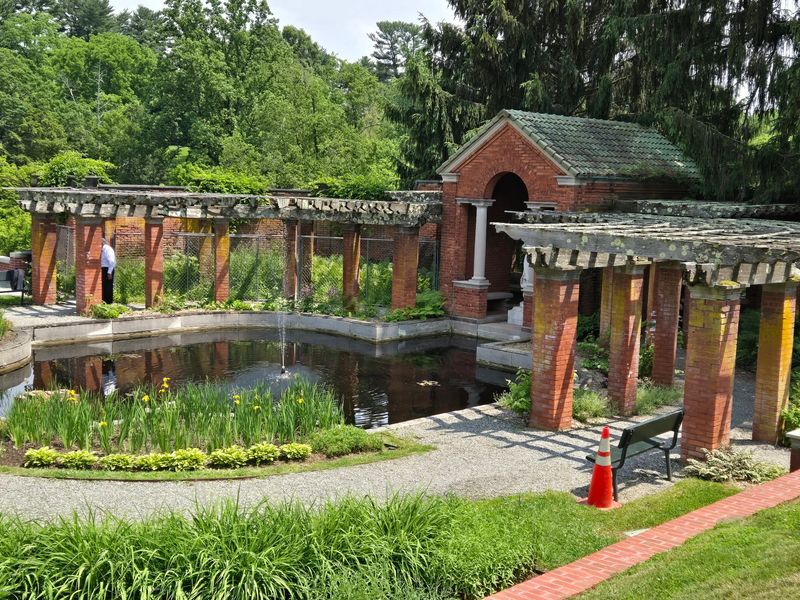
Volunteers keep this Gilded Age garden in bloom. The Frederick W.
Vanderbilt Garden Association works with the National Park Service to restore and maintain the Italian Gardens.
Frederick Vanderbilt, a grandson of shipping and railroad magnate Cornelius Vanderbilt, built his Hyde Park mansion in the 1890s. The gardens were laid out on terraces below the house.
Stone walls and stairs connect the different levels. Formal beds, a pergola, and a reflecting pool give the space a classic Italian layout.
The rose garden is a highlight during summer months. Restoration has relied on old photos and records to bring plantings closer to their original look.
You can walk the grounds even without touring the mansion. The site also offers wide views of the Hudson River from the main lawn.
Since this is a national park site, the grounds are easy to pair with other Hyde Park stops. The Franklin D.
Roosevelt home is just a short drive away along the same road.
Address: 119 Vanderbilt Park Rd, Hyde Park, NY 12538
15. Cranbrook House and Gardens
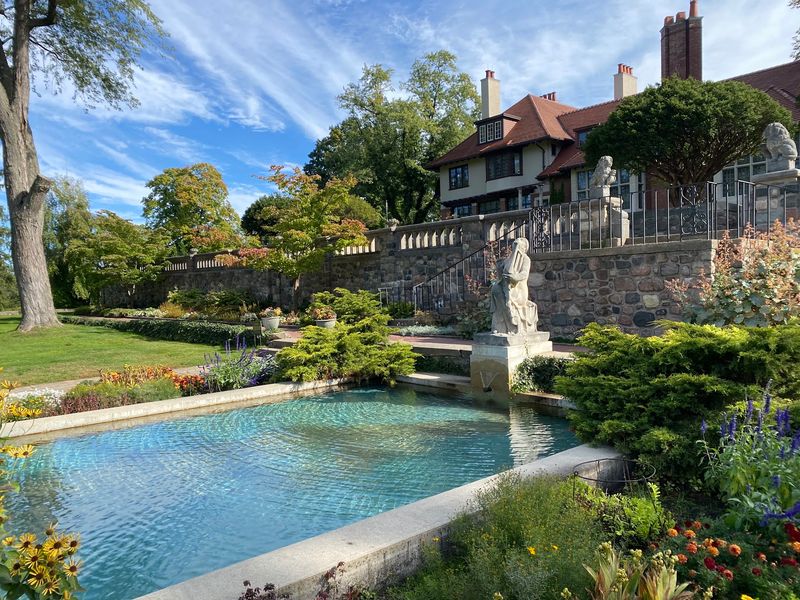
Albert Kahn, the architect known for Detroit’s auto factories, also designed a family home with gardens to match. Cranbrook House was built in 1908 for newspaper publisher George Booth and his wife, Ellen.
The Booths later founded the Cranbrook educational community around their estate. Today, the house is considered among the oldest surviving manor homes in metro Detroit.
The gardens cover roughly 40 acres. Stone walls, terraces, and steps divide the grounds into different areas.
The Sunken Garden is a favorite stop, set below the surrounding grounds with flower beds inside its walls. Nearby, you’ll see a bog garden, a herb garden, and woodland paths.
A volunteer group, the Cranbrook House and Gardens Auxiliary, helps maintain the plantings. Their work keeps the gardens looking cared for across the growing season.
The gardens typically open from spring into fall. If you enjoy architecture, Cranbrook’s campus nearby adds art and design museums to your Michigan day trip.
Address: 380 Lone Pine Rd, Bloomfield Hills, MI 48304
Share this story