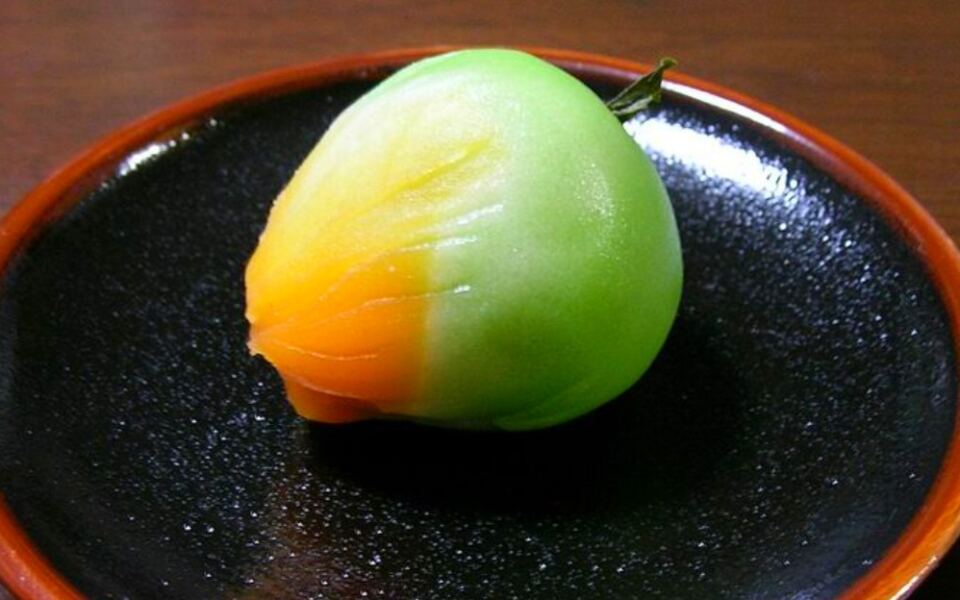
Across Asia, many desserts are made to delight the eyes as much as the taste buds. Some look like tiny fruits, fish, or flowers, while others hide sweet surprises inside.
Each one reflects local traditions, holidays, and ingredients. Here are twelve treats worth knowing about, from street snacks to festival favorites.
1. Taiyaki – Japan
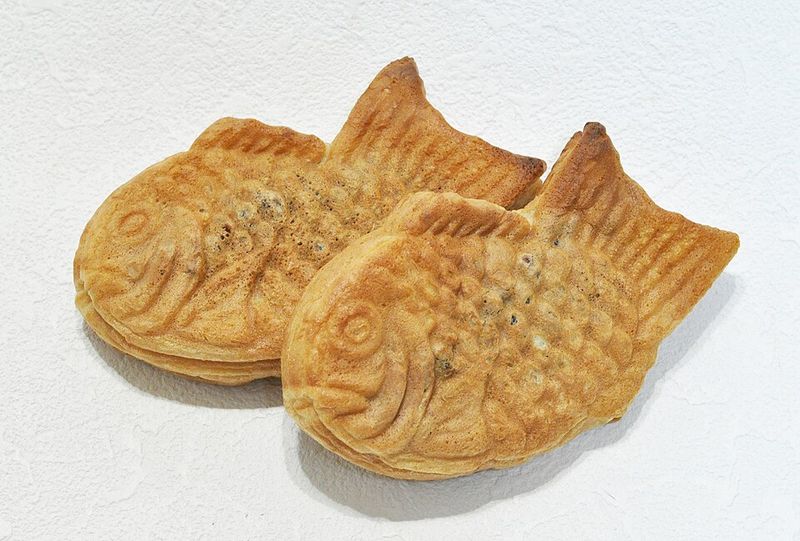
Picture a warm, golden fish cake fresh off the griddle, and you have taiyaki. The name means baked sea bream, a fish linked to good luck in Japan.
The batter is similar to a pancake. It is poured into a fish-shaped mold, filled, and cooked until the outside turns crisp and the inside stays soft.
Red bean paste is the classic filling, made from sweetened azuki beans. Many shops now also offer custard, chocolate, and sweet potato versions, so there is a flavor for almost everyone.
Taiyaki is best eaten right away while the edges are still crunchy. Some people start at the head and others start at the tail, and friends often argue about which is right.
Look for it at festivals, shopping streets, and small stands all over Japan, where the smell of baking batter draws a crowd.
2. Ichigo Daifuku – Japan
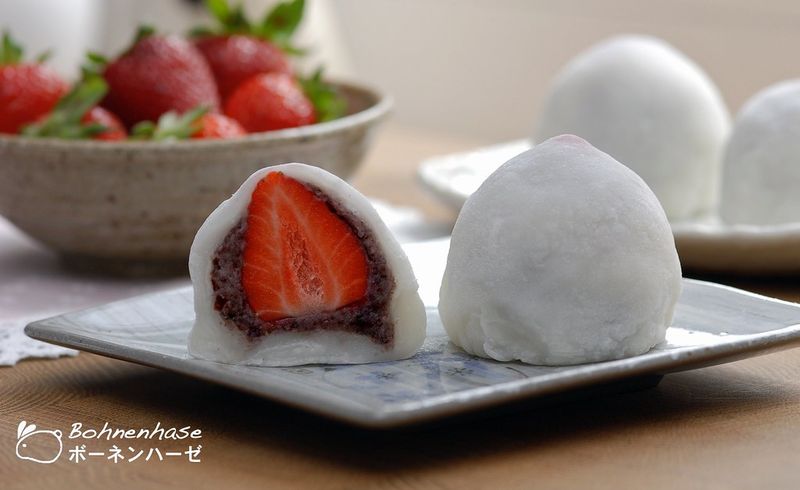
Cut one open and you will see a neat red heart inside a snowy white cloud. Ichigo daifuku is a soft mochi that wraps around a whole strawberry.
Many versions add a thin layer of sweet bean paste between the fruit and the rice cake. The sweet paste and the tart berry balance each other well.
Mochi is made from pounded glutinous rice, which gives it a stretchy, tender bite. Strawberry season in Japan runs from winter into spring, and that is when this treat is most popular.
Pastry shops often make them fresh each day, since the fruit juices can soften the rice cake over time. If you buy one, eat it soon for the best texture.
A cup of green tea makes a nice partner.
3. Songpyeon – South Korea
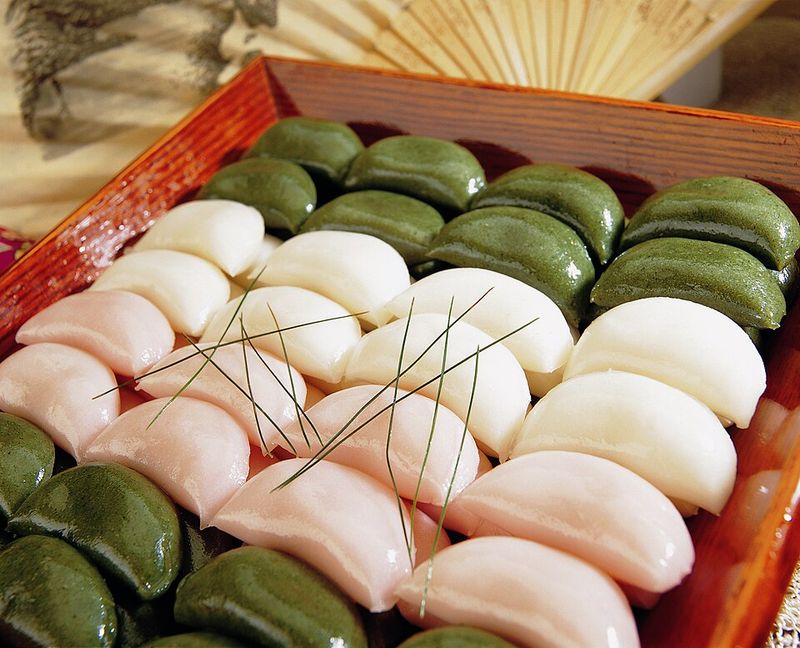
Families in Korea often gather around a table at harvest time to shape songpyeon together. It is a Chuseok tradition, and shaping the cakes is part of the fun.
The dough is made from rice flour and tinted with natural colors, which gives soft shades of green, pink, and yellow. Each piece is folded into a small half-moon and filled with sesame seeds, beans, or chestnuts.
The cakes are steamed over a bed of pine needles. This leaves a light, fresh scent and keeps them from sticking.
An old saying claims that a girl who shapes pretty songpyeon will have a beautiful daughter someday. Whether or not that is true, the tradition shows how much care goes into every piece.
4. Luk Chup – Thailand
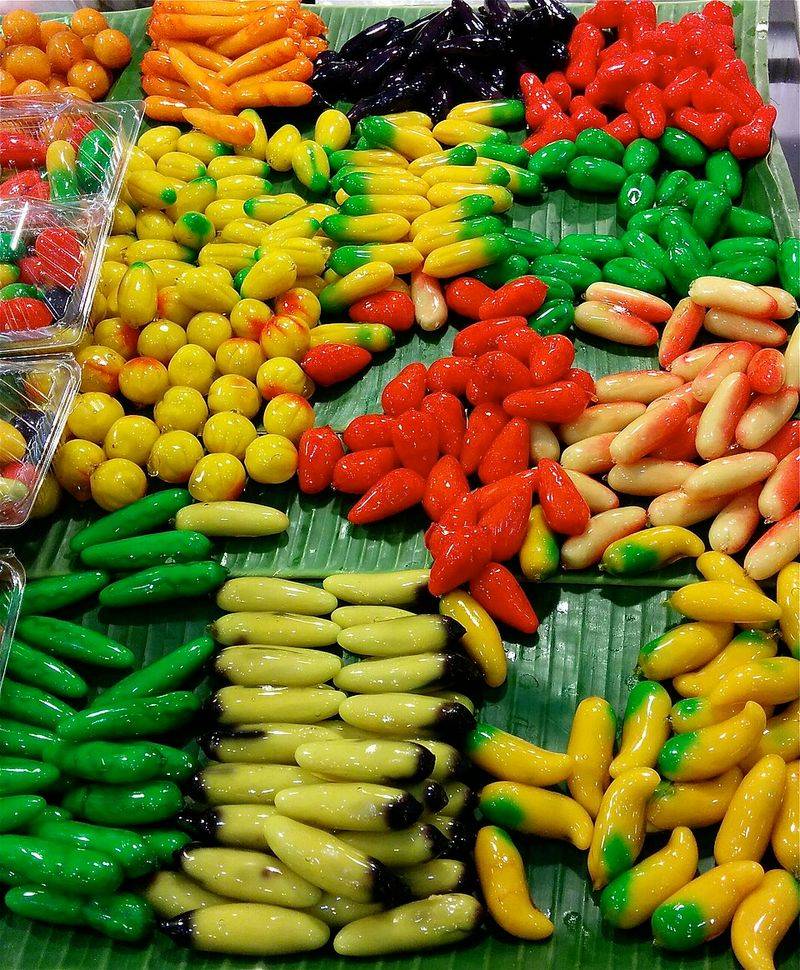
At first glance, a tray of luk chup looks like a tiny fruit stand. Look closer and you will find that every mango, chili, and apple is really a candy.
The base is sweetened mung bean paste, often blended with coconut milk. Cooks shape it by hand and paint on small details with food coloring.
Each piece is dipped in agar, a jelly made from seaweed. This makes the surface glossy and helps keep the treat fresh.
The dessert has roots in the royal kitchens of Thailand, and it was once made for the palace. Today it is sold in markets and given as gifts.
Making it takes patience and a steady hand, so the best pieces are real works of art.
5. Nerikiri – Japan
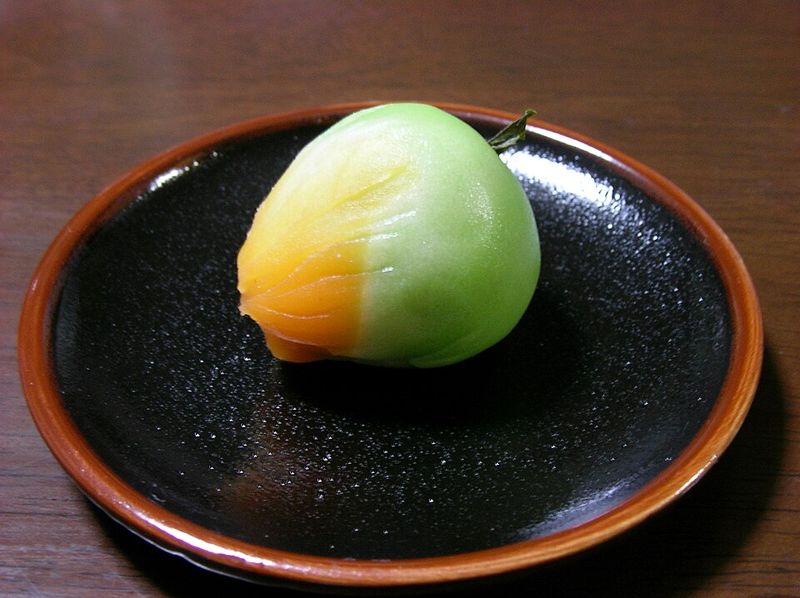
Some sweets are made to be admired before they are eaten. Nerikiri belongs to that group, and tea masters have served it for generations.
The sweet is built from white bean paste mixed with a soft dough. Makers color it and shape it with small tools, sometimes using just their fingers and a bit of cloth.
Designs follow the seasons. Spring may bring cherry blossoms, summer may bring bright leaves, and autumn often brings chrysanthemums or maple.
Nerikiri is mild and only lightly sweet, so it pairs well with bitter matcha. The sweetness prepares your mouth for the tea.
Visit a traditional wagashi shop in Kyoto or Tokyo, and you can watch artists turn plain paste into tiny gardens.
6. Tanghulu – China
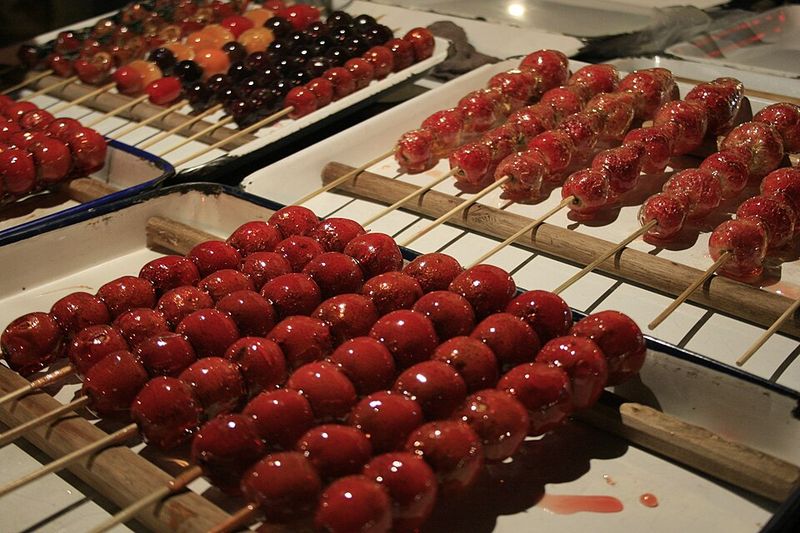
Crack! That is the sound of the thin sugar shell on tanghulu breaking with the first bite.
Few snacks are as bright or as noisy.
The classic version uses hawthorn berries, which are tart and a little tangy. Vendors thread them on a bamboo stick and dip them in hot sugar syrup that hardens within seconds.
Today you can find strawberries, grapes, tangerine slices, and even cherry tomatoes. The tart fruit and the sweet glass-like coating work well together.
Tanghulu has been a winter street snack in northern China for hundreds of years. If you try making it at home, be careful with the hot syrup and let adults handle the stove.
Eat the skewers soon after they cool, since humidity can make the sugar sticky.
7. Pineapple Cakes – Taiwan
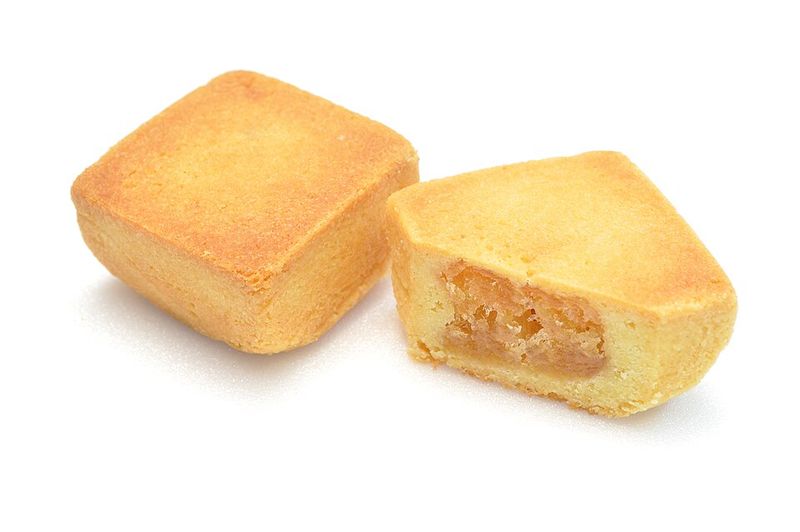
Walk through any airport in Taiwan and you will spot boxes of pineapple cakes stacked near the exit. Visitors often take them home as gifts.
Each small pastry has a crumbly, buttery shell around a thick, jammy center. The filling is slow-cooked until it turns sticky and golden.
Some bakers use winter melon along with pineapple, which gives a milder and softer flavor. Pure pineapple versions taste brighter and a bit tangy.
The word for pineapple in Taiwanese sounds like a phrase meaning good fortune arriving, so the cakes are popular at weddings and holidays. Pair one with black tea or oolong to balance the sweetness.
Many shops offer free samples, which makes choosing a favorite much easier.
8. Bánh Da Lợn – Vietnam
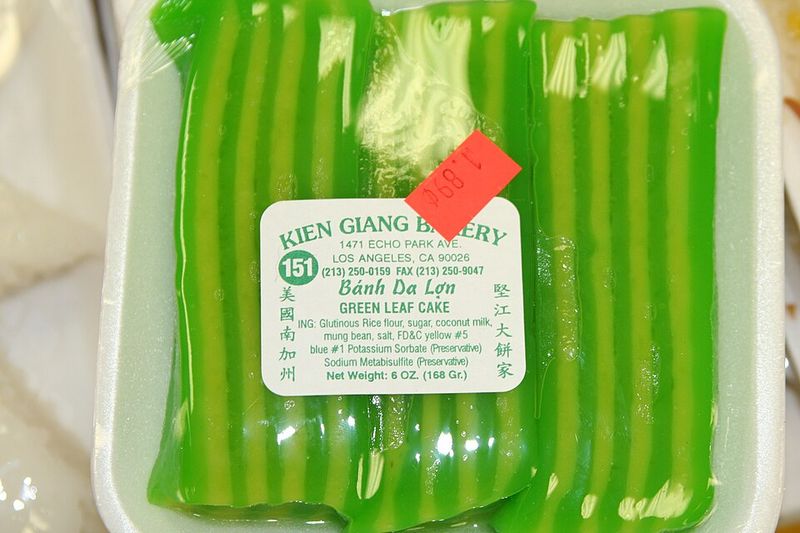
Stripes of green and yellow make this Vietnamese cake easy to spot. Its name means pig skin cake, but the name refers to the layered look, not the taste.
Cooks steam thin layers one at a time. Pandan leaf gives the green color and a grassy, vanilla-like scent, while mung bean makes the yellow layers.
Coconut milk adds a gentle sweetness. The finished cake is soft, chewy, and a little bouncy.
Making it takes time because each layer must set before the next goes on. Sellers cut it into neat squares and often sell it at markets in the morning.
It is a good snack to share, and the layers make every slice look like a small piece of art.
9. Bungeoppang – South Korea
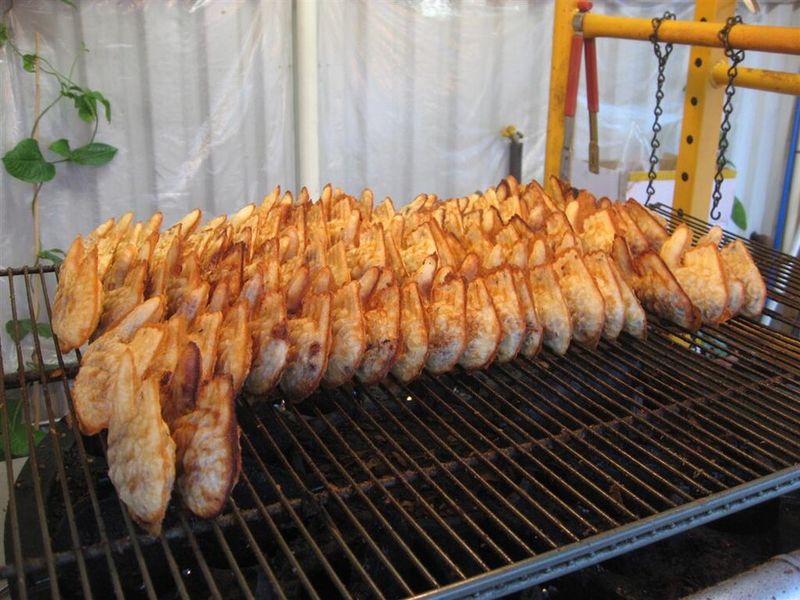
On a cold Seoul evening, a paper bag of warm bungeoppang can feel like a pocket-sized heater. The snack is a staple of Korean winter street food.
Its shape matches Japan’s taiyaki, and the two treats are closely related. The Korean version often has a slightly thinner, crispier shell.
Red bean paste is the traditional filling. Custard, cream cheese, and sweet potato are common alternatives, and some shops make a mini version for easy snacking.
Vendors often sell three or four for a small price, so sharing is easy. There is also an ice cream version, where the fish is stuffed with soft serve.
Whichever type you pick, eat it hot for the crunchiest bite.
10. Puto – Philippines
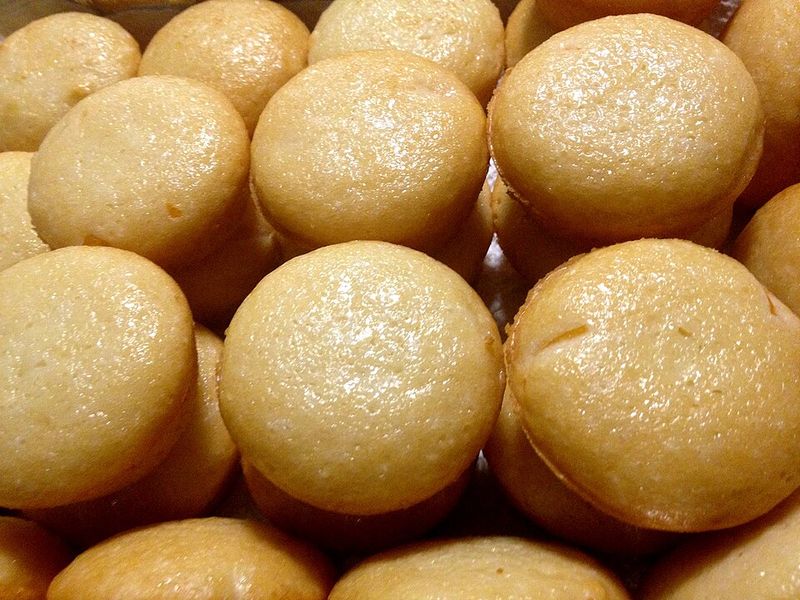
No Filipino party feels complete without a plate of puto. These small steamed cakes appear at birthdays, holidays, and family gatherings.
The batter uses rice flour, sugar, and often a little yeast, which makes the cakes light and airy. They are steamed in small molds and come out round and smooth.
Toppings change the flavor. A slice of cheese adds saltiness, salted egg gives a rich bite, and fresh coconut brings a mild, nutty taste.
Some versions are tinted white, pink, or purple.
Puto is often served with savory dishes like dinuguan, a pairing that surprises many first-time visitors. It is simple, fluffy, and easy to eat in just two bites, so it disappears fast from the snack table.
11. Klepon – Indonesia
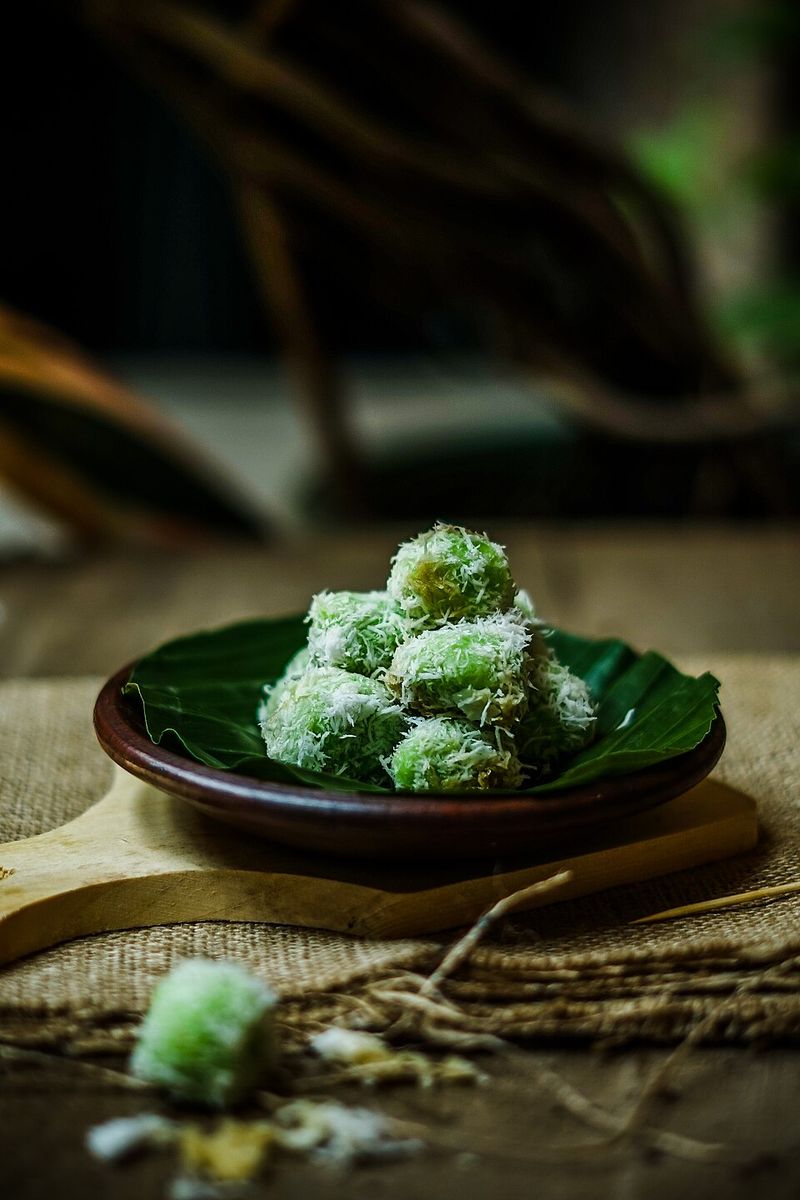
Bite into a klepon and a burst of warm palm sugar syrup fills your mouth. Surprise is the best part of this Indonesian snack.
The green balls are made from glutinous rice flour, colored and flavored with pandan. A small piece of palm sugar sits in the center of each one.
The balls are boiled until they float, which tells the cook they are ready. Then they are rolled in fresh grated coconut, which adds a light salty touch.
Klepon is sold in traditional markets, usually piled in a bamboo basket. Eat one in a single bite so the syrup does not drip.
The soft, chewy skin and the sweet center make it a favorite across Java and beyond.
12. Modak – India
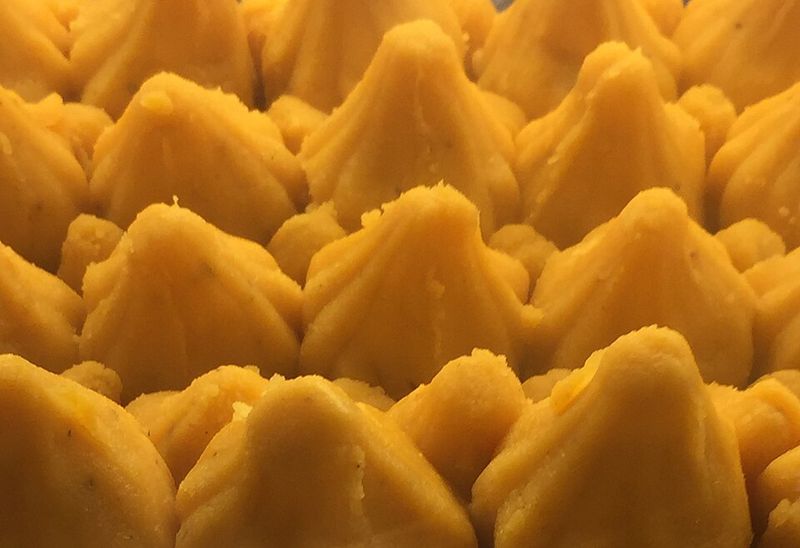
According to Hindu tradition, modak is the favorite sweet of Lord Ganesha. That is why it takes center stage at Ganesh Chaturthi each year.
The dumpling has a smooth rice-flour shell with pleats gathered at the top, shaped like a small flower bud. Cooks often use five to twenty-one pleats, and making them evenly takes practice.
Inside is a mixture of fresh coconut and jaggery, a type of unrefined cane sugar. Cardamom is sometimes added for a warm, fragrant note.
Steamed modak is often served with a drizzle of ghee. Fried versions also exist and have a crisp shell.
Families in Maharashtra often make dozens at home during the festival and offer them to the deity before eating.
Share this story