At one Pittsburgh sandwich shop, French fries don’t come on the side. They’re piled right between thick slices of Italian bread with meat, cheese, vinegar-based coleslaw, and tomato.
It’s a combination that has become one of the city’s most recognizable foods.
Primanti Bros. started in Pittsburgh’s Strip District in 1933, serving truck drivers and workers who needed a filling meal on the go. According to the restaurant’s history, the unusual sandwich came about after a delivery of potatoes inspired cooks to add fries directly to the bread.
The original location still stands at 46 18th Street, where visitors can try the sandwich that helped turn a working-class lunch spot into a Pittsburgh institution.
A Strip District Corner With Serious Sandwich History
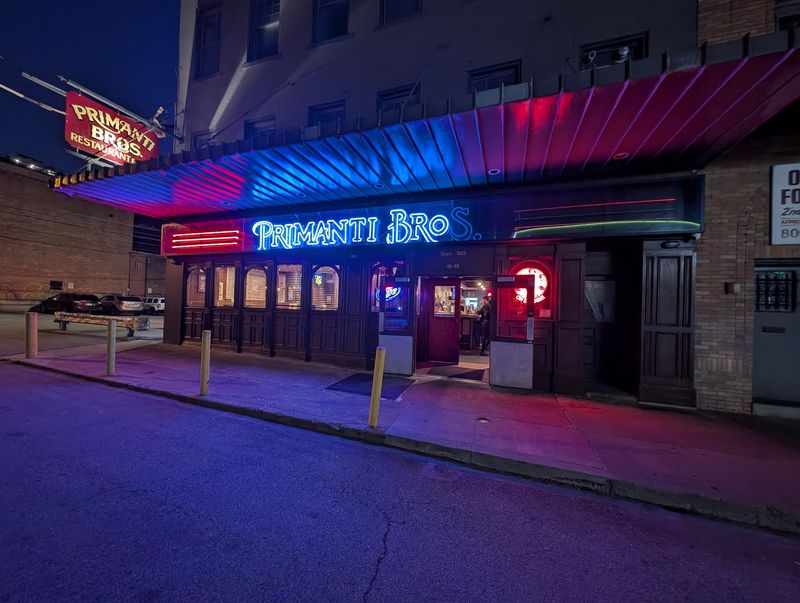
Pittsburgh has plenty of famous foods, but few carry the fame of the sandwich served at Primanti Bros. Restaurant and Bar.
The original location sits at 46 18th St, Pittsburgh, PA 15222, in the busy Strip District neighborhood of Pennsylvania.
The Strip District has long been a market area full of produce sellers, warehouses, and food shops. Primanti Bros. fit right into that working world.
The restaurant traces its roots back to the 1930s, when the Primanti family started selling sandwiches to truck drivers and workers in the area.
Today, this spot is known as the original location of a chain that has grown well beyond Pittsburgh. Still, many fans make a point of visiting this exact corner.
Eating where the tradition began feels different from grabbing a sandwich at a newer branch.
I like that the building still feels connected to the neighborhood around it. It is not a polished tourist attraction.
It is a working restaurant that happens to hold a big piece of city history.
So what exactly made a simple sandwich shop so famous? The answer starts with what goes inside the bread.
Fries Inside the Bread, Not Beside It
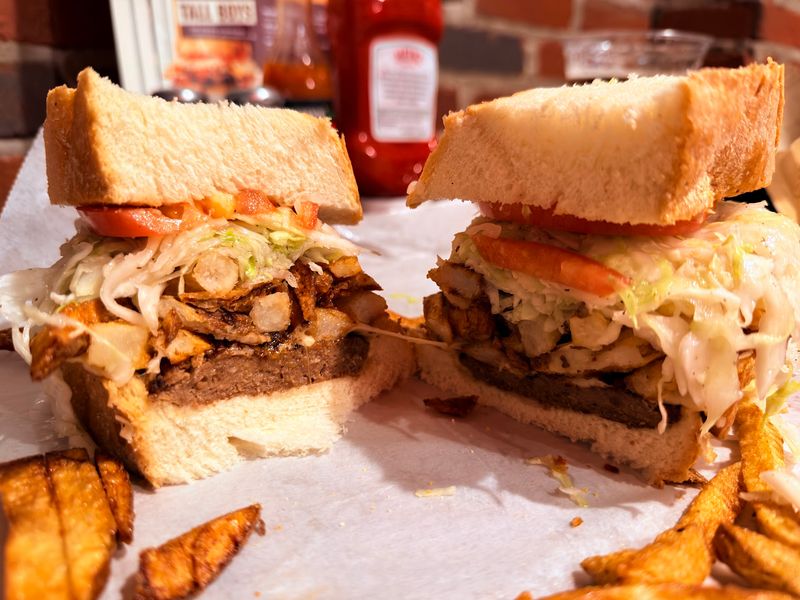
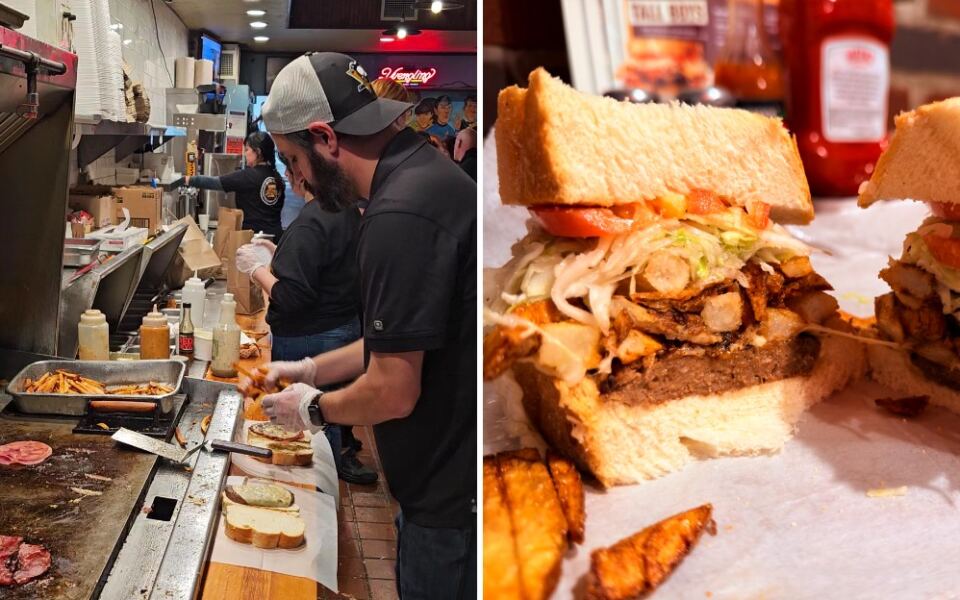
Most diners put fries in a basket. Here, the fries get tucked right into the sandwich, piled on top of the meat and cheese.
Then comes a layer of coleslaw and slices of tomato, all pressed between two thick slices of Italian bread.
The coleslaw is vinegar-based, not creamy. That matters, because it adds a tangy bite instead of making everything heavy.
The fresh-cut fries add a salty crunch, and the tomato brings a little freshness to the stack.
Why would anyone build a sandwich like this? The story goes that workers needed a full meal they could eat with one hand.
Putting the side dishes inside the bread solved that problem in a smart, simple way.
The first time people see it, many think it sounds strange. I understand that reaction.
Fries and slaw on a sandwich seem like too much at first.
But the idea makes more sense once you think about who it was made for. A hungry driver with a short break did not have time for three plates.
One sandwich holding everything was the whole lunch, ready to go.
Built for Truckers and Night Shift Workers
Back in the early days, the Strip District was a hub for trucks carrying fresh produce into the city. Drivers often arrived at odd hours, and they needed food fast.
The Primanti family saw that need and started serving sandwiches from a small spot in the area.
According to the restaurant’s own story, a driver once brought in a load of potatoes. The cooks fried some up and added them to sandwiches.
That small moment helped create the signature style that people still order today.
Workers would often take their sandwiches wrapped in paper back to the job. That habit still shows up in how the food is served, which I find to be a fun detail.
The long hours still fit that history, too. Current Google listings show the location opening at 8 AM every day.
It stays open until midnight most nights and until 2 AM on Fridays and Saturdays.
Those late hours make sense for a place that grew up feeding people on unusual schedules. Next, it helps to know what kinds of meat end up inside the bread.
Pastrami, Capicola, and the Pitts-Burger
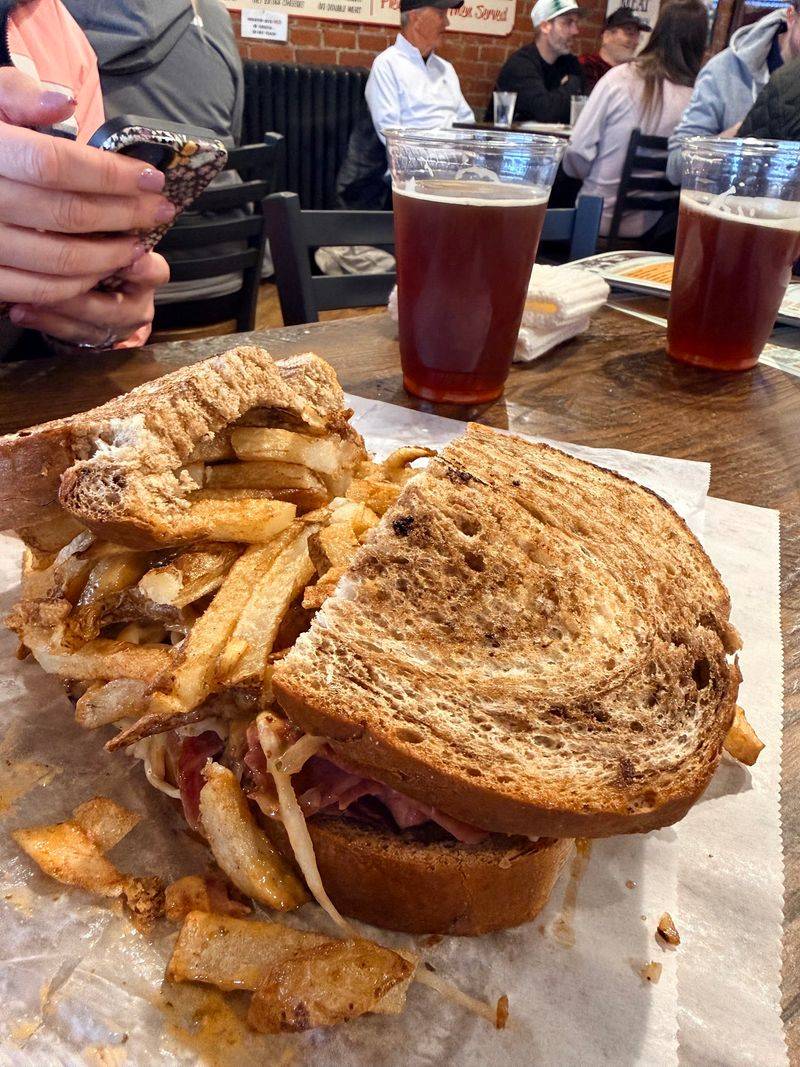
Picking a sandwich can be the hardest part of the visit. The menu offers many meat choices, and each one gets the same signature toppings of fries, slaw, and tomato.
Pastrami is one of the most talked-about options at this location. Capicola and cheese is another classic choice with deep Pittsburgh roots.
Both are traditional picks for anyone trying the sandwich for the first time.
The Pitts-Burger is a bit different. It uses a beef patty instead of sliced deli meat, but it still comes topped with the famous stack of fries and coleslaw.
It is made to order, so it may take a few extra minutes.
Other choices include a Reuben-style sandwich, corned beef, and chicken options like Cajun chicken. Some menus also offer a fish sandwich, which is a nice choice for people who skip red meat.
If I were going for the first time, I would start with pastrami or capicola. Those feel closest to the original tradition.
Once you know the classic, you can branch out on your next visit.
Some guests even order double meat for a bigger stack.
Paper Wrapping and Paper Towels
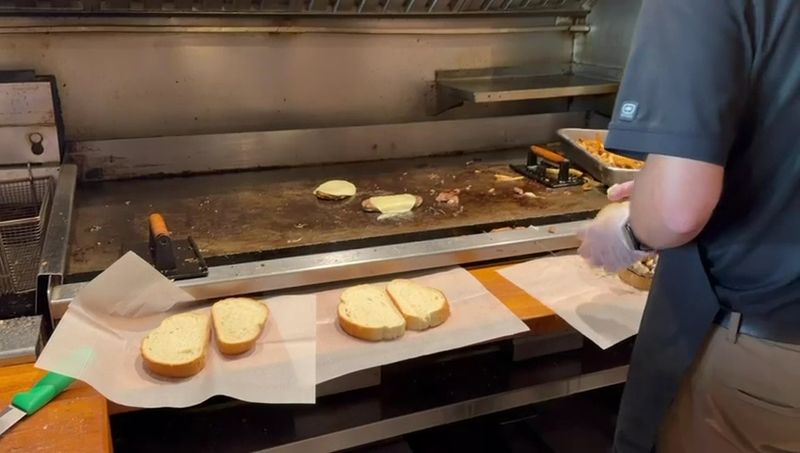
Fancy plates are not part of the plan here. Sandwiches arrive wrapped in deli paper, just like they did for workers years ago.
That simple style is a big part of the fun. It reminds you that this food was made to be practical first.
You unwrap it, grab it with both hands, and get started.
Paper towels often do the job of napkins at the table. That is a smart choice, honestly.
A sandwich stacked with slaw, tomatoes, and fries can get messy fast, and thin napkins would not stand a chance.
My advice is simple. Do not wear your nicest white shirt.
Lean over the table a little, and keep those paper towels close by.
Some people like to eat half the sandwich at the restaurant and save the rest. The portions are generous, and many diners struggle to finish a whole one.
Since the bread is soft and airy, it is easier to bite through than it looks.
This no-fuss approach keeps the focus where it belongs. It is all about the sandwich, not the setting around it.
Watching the Grill Up Close
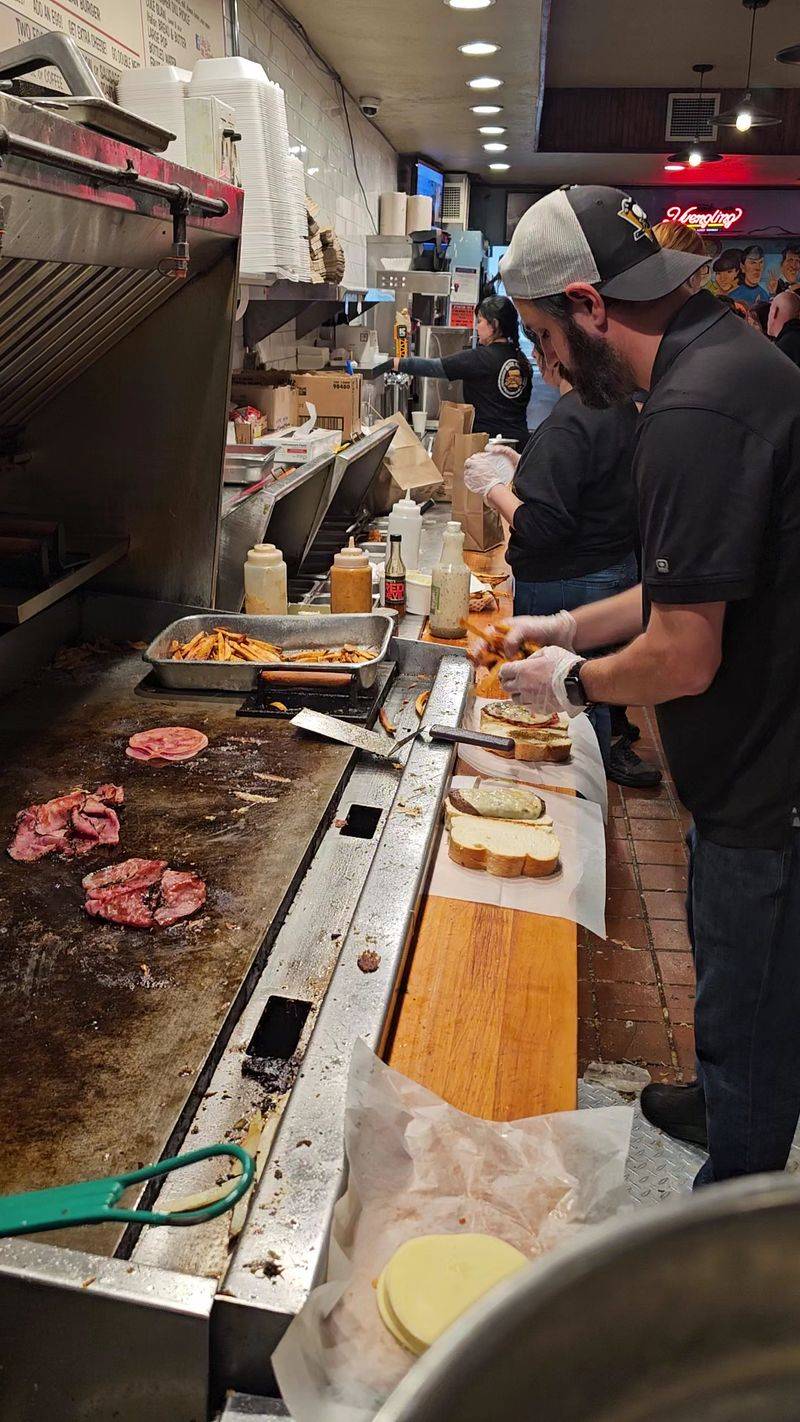
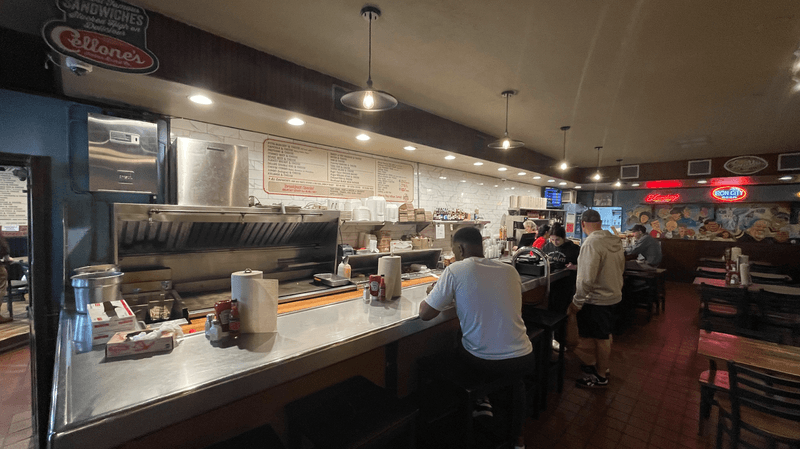
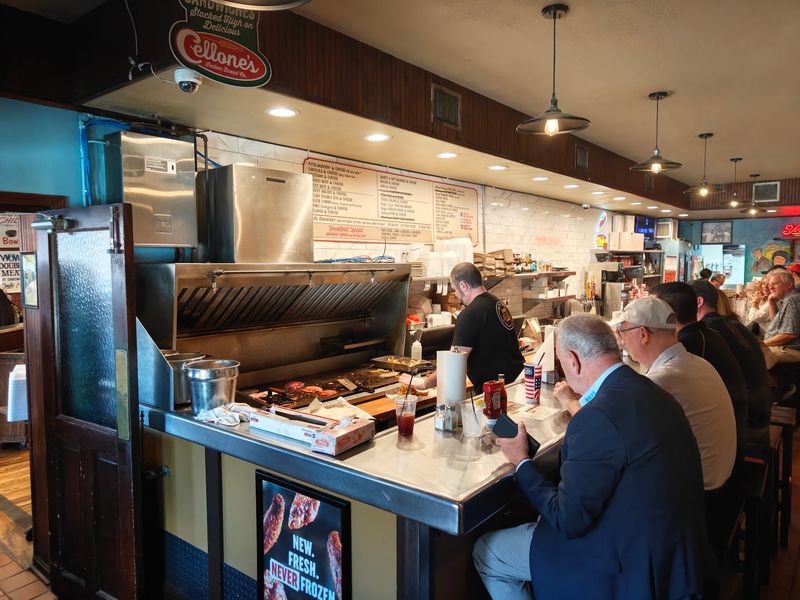
Some of the best seats in the house face the kitchen. At this location, part of the dining room sits near where cooks prepare the food, so you can watch sandwiches come together.
Watching the process is surprisingly fun. A cook grills the meat, adds cheese, piles on a handful of fries, then scoops slaw and tomatoes on top.
The bread closes the whole tower, and it gets wrapped in paper.
Counter seating is also available along with regular tables. If you are eating alone or with one friend, the counter can be a quick and lively choice.
I like the idea of seeing my lunch being built from start to finish. It adds a little show to a simple meal.
Kids often enjoy watching the giant stacks grow, too.
The restaurant has a casual, energetic feel. It is not quiet or formal, and that matches its working-class roots.
Sitting near the grill also gives you a better sense of how busy the kitchen gets. That busy pace connects to something every visitor should plan for: the line out front.
Plan Ahead for the Lunch Line
Lines are common at this original spot, especially around lunchtime and before big games. The good news is that tables tend to turn over fairly quickly.
Timing makes a big difference. Since the restaurant opens at 8 AM, a late breakfast or mid-morning visit can be a smart way to beat the rush.
Late evenings are another option, since the doors stay open past midnight on weekends.
Street parking is available in the area, but the Strip District gets crowded. Weekends bring shoppers to nearby markets and stores, so parking may take a little patience.
Online ordering for pickup is another choice. It works well on a packed day, though the sandwiches taste best when they are fresh and warm.
Fries inside bread do not stay crisp forever.
One more tip: restrooms here are down a steep set of stairs. Take your time going down, especially if you are carrying anything.
Planning around these small details can make the visit much smoother. Once you are seated, a few side orders are worth a look before the sandwich arrives.
Sides That Hold Their Own
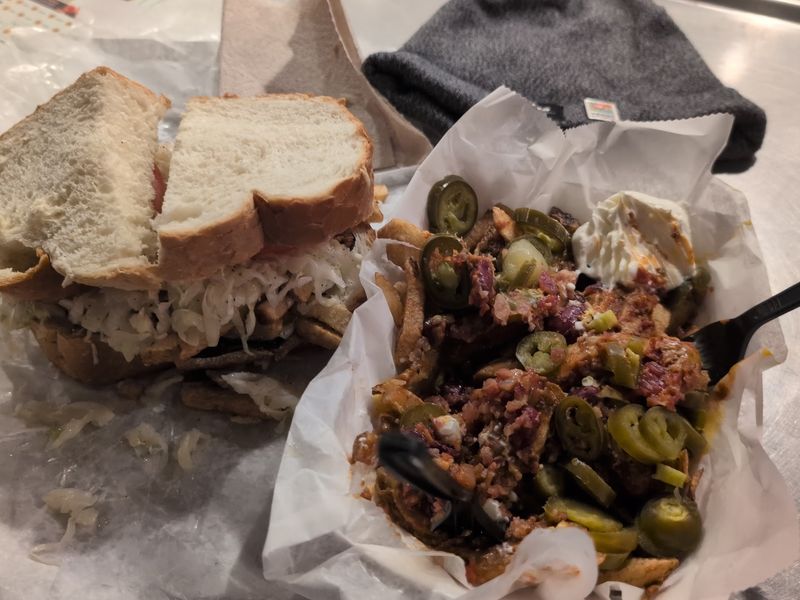
Ordering extra fries at a place that puts fries in every sandwich might sound silly. Still, the side menu has some fun choices beyond the main event.
Smallman Street fries are a popular pick. The name comes from Smallman Street, a major road in the Strip District.
It is a nice nod to the neighborhood where the restaurant began.
Fried pickles are another tasty starter. Kosher pickles also show up on the table, giving a sour, crunchy break between bites of the big sandwich.
Boneless wings come with sauce choices like honey buffalo. These can be a good option for a group that wants to share something while waiting.
My suggestion is to go easy on sides if it is your first visit. The sandwiches are large, and you do not want to be full before the main course arrives.
Sharing is the smart move here. Order one appetizer for the table, then let everyone focus on their own sandwich.
That way you get a taste of the extras without missing what made the restaurant famous.
Walls Covered in Pittsburgh Pride
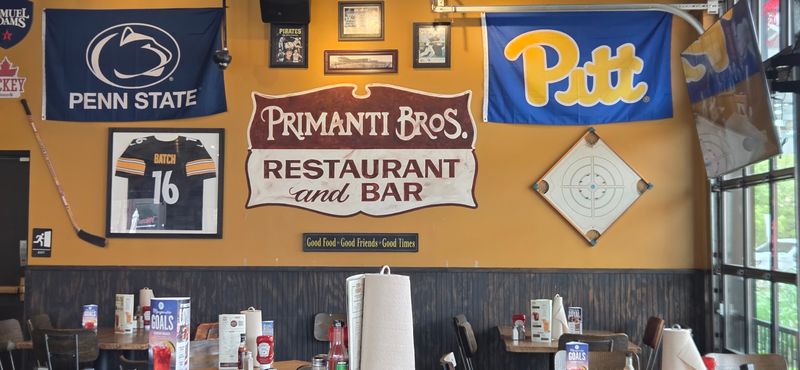
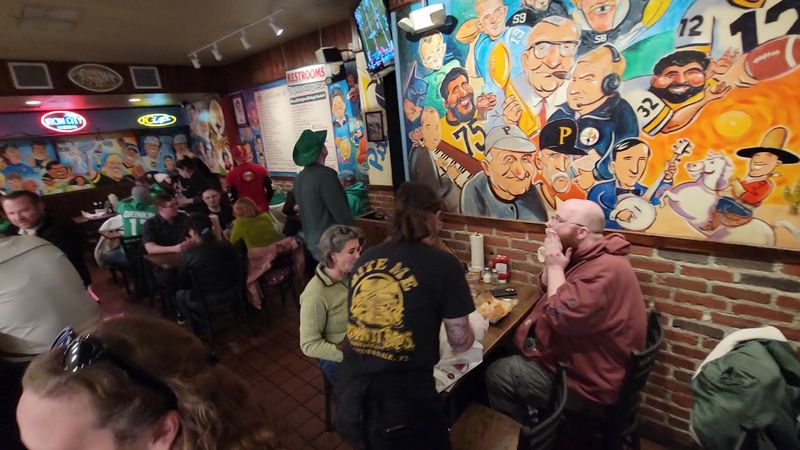
Look up from your sandwich for a moment, and you will see plenty of local spirit. A mural featuring Pittsburgh legends decorates the wall inside this location.
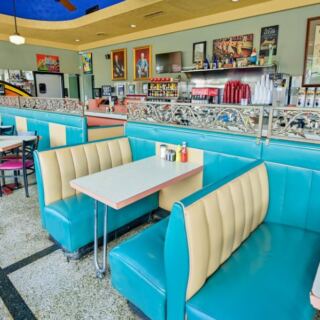
The space has an older, lived-in look that fits its long history. Many people describe the room as nostalgic and full of character.
It feels like a neighborhood hangout more than a polished chain restaurant.
Pittsburgh is a big sports town, and that shows here. Many guests stop in before heading to a Pirates game or other events in the city.
Black and gold colors, tied to local teams, often feel right at home in this crowd.
I find the decor adds a lot to the meal. You are not just eating a famous sandwich.
You are sitting in a room that celebrates the city that created it.
The walls give first-time visitors a quick lesson in local pride. Take a few minutes to look around while you wait for your order.
That sense of place is also why this sandwich has become so tied to Pittsburgh’s identity, which is worth exploring a bit more.
A Rite of Passage for Steel City Visitors
Ask someone what to eat in Pittsburgh, and there is a good chance they will mention this sandwich. It has become one of the city’s best-known foods.
Food television has helped spread the word over the years. Many visitors say they first heard about the restaurant on TV and wanted to see the original for themselves.
The Google listing shows a 4.5-star rating from more than 7,700 reviews. That is a lot of people taking the time to share their thoughts about one sandwich shop.
For many travelers, eating here feels like checking off a Pittsburgh tradition. People who grew up in the area also return after years away to show family members where it all began.
I like that the sandwich connects to the city’s working history. It started as fuel for drivers and laborers, and now it is a symbol of the place they helped build.
Whether you love it or simply enjoy the story, trying one at this corner gives you a real taste of Pittsburgh. Just remember to grab extra paper towels on your way to the table.
Share this story