Most people walk into a jewelry store to look at rings, not ceilings. That habit can make you miss some of the best history in small-town America.
Across the country, a handful of family jewelers still work beneath tin ceilings from the 1870s, beside oak cases from 1901, and next to bank vaults that once guarded cash instead of diamonds. One shop keeps a brass cash register in the exact spot it sat in a 1913 photo.
Another runs its business out of a former public library that later became a planetarium. These stores did not stay old by accident.
Owners peeled back drop ceilings, pulled up carpet, and found red pine floors and Art Deco mirrors hiding underneath. In the list ahead, you will meet twelve shops in nine states, learn who founded them, and find out which original details are still there today.
You will also pick up tips on what to look for when you visit, so your next trip downtown might include a little time travel along with your window shopping. Keep reading, because a few of these stories are stranger than any ring box.
1. Carbaugh Jewelers, Auburn, Indiana
Four owners in more than 120 years is a pretty impressive track record for any business. Edward O.
Little opened the shop in 1901, and it settled at 108 East Seventh Street in downtown Auburn in 1917.
Current owner Mike Littlejohn still works at the original bench Little used. That means repairs happen at the same spot where watches were fixed before cars were common on Auburn streets.
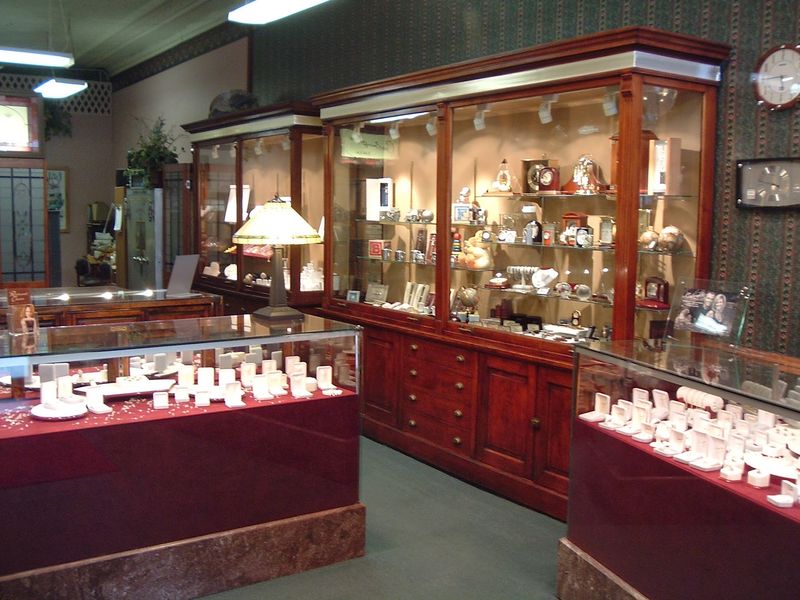
Look around and you will spot original oak woodwork and display cases dating to the founding year. Tin ceiling tiles stretch overhead, and old Victrola players sit among the jewelry.
An ornate wall clock has chimed on the quarter hour for over a century. So if you lose track of time while browsing, the store will politely remind you.
Historical photos and memorabilia cover the walls, and some pieces were returned by loyal customers who wanted them back home. Before you leave, step outside and look up at the stained-glass awning, installed between 1920 and 1925 and barely changed since.
2. Walton’s Jewelry, Franklin, Tennessee
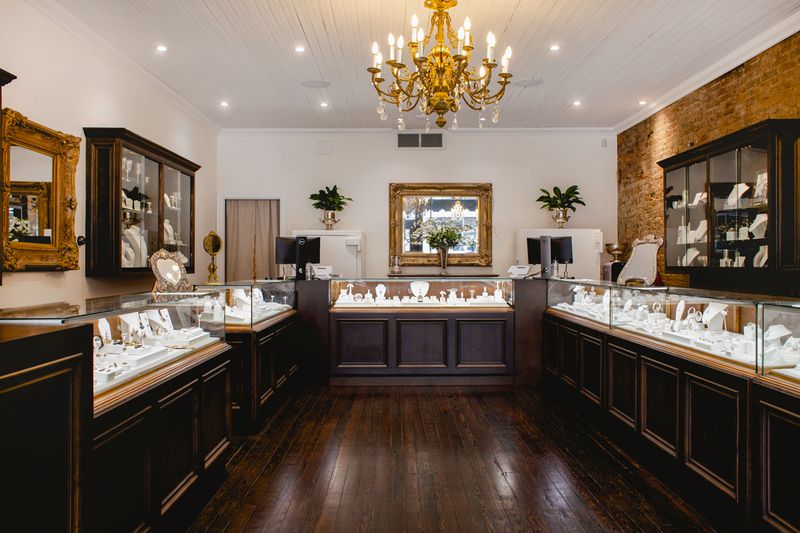
Melba Walton started her business in 1974 by selling antique jewelry from the hood of her car. Talk about a humble showroom.
By 1982 she had bought the 1888 building at 410 Main Street in Franklin. Decades later, a 2021 restoration turned into a treasure hunt of its own.
Crews removed newer finishes and found original red pine floors, a beadboard ceiling, and an interior brick wall. Experts estimate those features date to around 1913.
The timing could not be better for the inventory. Walton’s focuses on jewelry made before the 1940s, including Victorian, Edwardian, and Art Deco pieces.
That means a ring from 1910 can sit in a room that looks much the way it did when the ring was new. Few shops can match their merchandise to their floorboards so neatly.
Today, Melba’s granddaughter Julie Walton Garland leads the third-generation business. Visitors who love antiques should ask the staff about a piece’s era, since they enjoy sharing the history behind each item.
3. Sather Jewelry, Spooner, Wisconsin
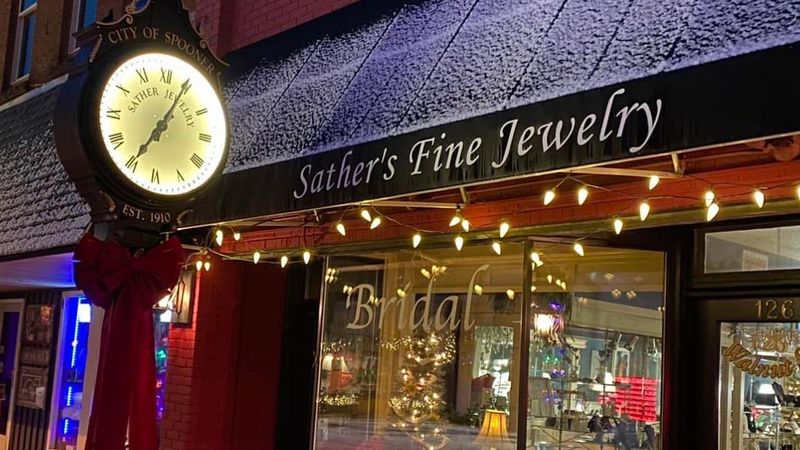
Here is a fun question for shoppers: where else can you buy earrings next to a real bank vault? At 126 Walnut Street in Spooner, the answer is simple.
The building once held the Spooner State Bank, and it is known as the second brick building constructed in town. Watchmaker Arthur “Art” Sather founded his jewelry business in 1910 and moved in six years later.
Much of the banking-era interior survived. Visitors will find the original tin ceiling, the original tile floor, and solid oak cabinets.
The walk-in vault remains a standout feature. It is a handy reminder that this room has protected valuables for a very long time.
Then there is the brass National Cash Register, built in 1906. It sits in the same spot it occupied in a photograph taken in 1913.
History fans should ask to compare the old photo with the current room. Spotting what has changed, and what has not, makes a quick stop in northern Wisconsin far more memorable.
4. Simmons & Clark Jewelers, Detroit, Michigan
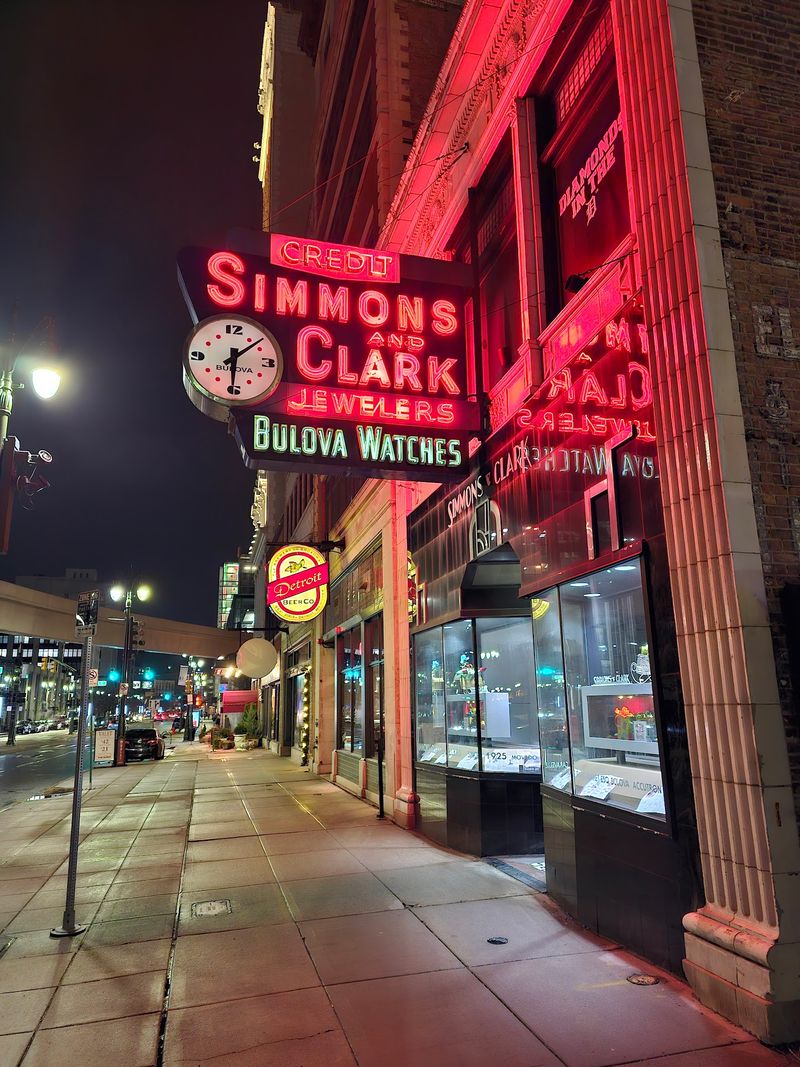
A simple remodel in 2017 ended up rewriting the plans for an entire showroom. Behind newer walls at 1535 Broadway, workers found original 1930s display cases, detailed woodwork, and Art Deco mirrors.
Better still, the pieces were in remarkably good shape. The store’s decorator rebuilt the whole design around them.
Simmons & Clark has been part of downtown Detroit since 1925. It sits right across from the Detroit Opera House, which makes it an easy stop before a show.
Do not skip the outside. In 1935 the storefront was redone in a bold Art Deco style using black structural glass, aluminum accents, and moderne lettering.
Inside, three modern chandeliers carry old Simmons & Clark advertisements from the 1930s through the 1950s. Reading those vintage ads is a quick lesson in how jewelers once talked to customers.
The shop offers a peek at the busy shopping district that grew during the city’s car-making boom. For architecture lovers, it is one of Detroit’s best-kept retail time capsules.
5. Snider’s Leading Jewelers, Goshen, Indiana
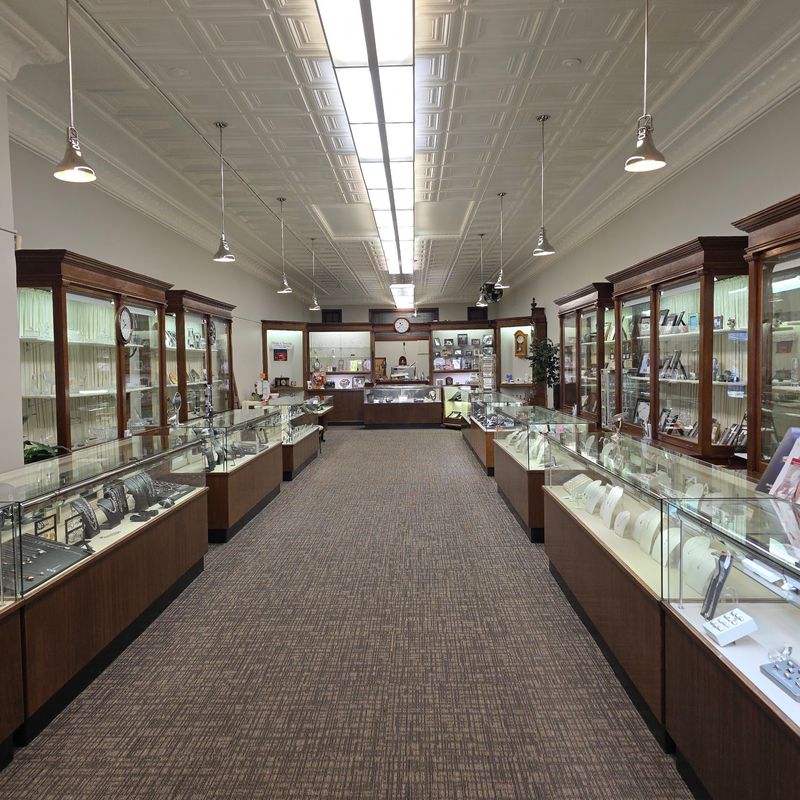
Abraham Lincoln had just taken office when this jewelry tradition began in 1861. Few businesses in Goshen can claim a longer run.
Snider’s Leading Jewelers sits at 128 South Main Street, right in the heart of downtown. It ranks among the city’s oldest continuously operating businesses.
The interior keeps a classic Main Street look. A restored tin ceiling stretches across the room, giving shoppers a good reason to glance upward.
Vintage wall display cases line the sides of the showroom. They have held merchandise through many changes in retail style, from catalog shopping to online stores.
Of course, a store this old is not just a museum. Snider’s sells jewelry and gifts and handles repairs for jewelry, watches, and clocks.
That last service is worth remembering. If a family clock has stopped ticking, a shop with this much history is a fitting place to bring it.
Pair your visit with a walk along Main Street to see other historic buildings nearby. Goshen rewards slow, curious strolling.
6. Robbins Brothers Fine Jewelers, Pasadena, California
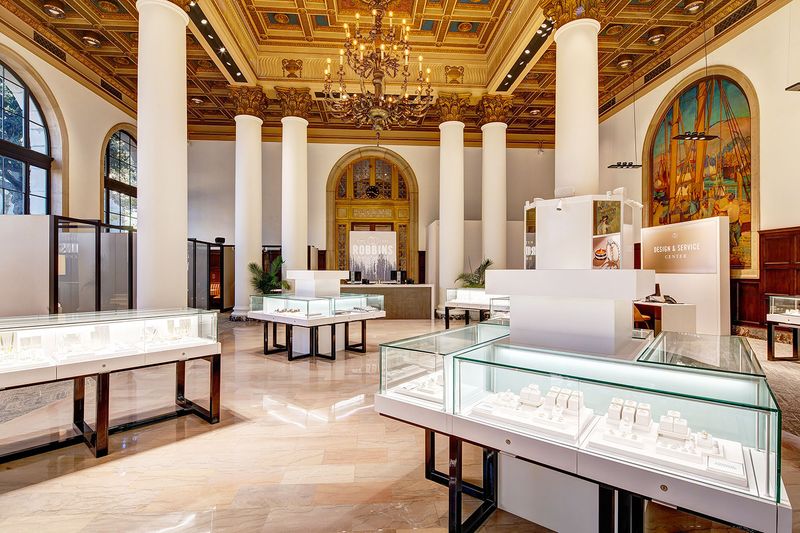
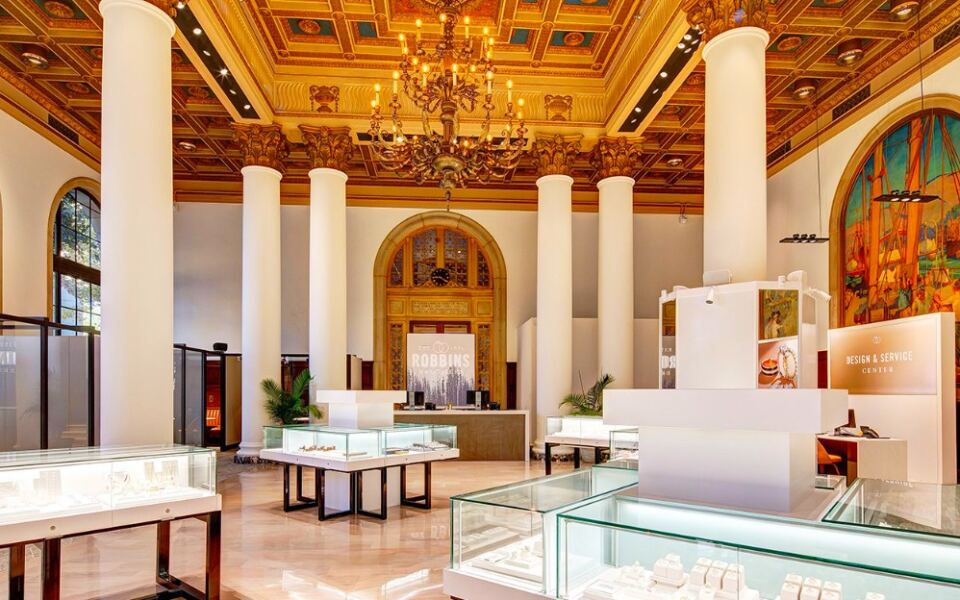
Ring shopping takes on a new scale under 28-foot coffered ceilings. Robbins Brothers opened its Pasadena flagship in November 2025 inside a 1927 Renaissance Revival bank building at 587 East Colorado Boulevard.
The building is listed on the National Register of Historic Places. It anchors the city’s Playhouse District, a lively area for theater and dining.
Inside, grand chandeliers hang from the high ceilings. Original murals by Impressionist painter Alson S.
Clark decorate the space, adding real art to the shopping trip.
Arched windows and marble details make it feel more like a classic bank lobby than a typical jewelry store. Even the old vault survived.
Located in the basement, that vault is now used for events and special activations. Ask staff whether anything is scheduled during your visit.
The jewelry cases are set up so customers and staff can stand side by side. The building also serves as the company’s new headquarters, so this is clearly more than a weekend makeover.
7. O.C. Tanner Jewelers, Salt Lake City, Utah
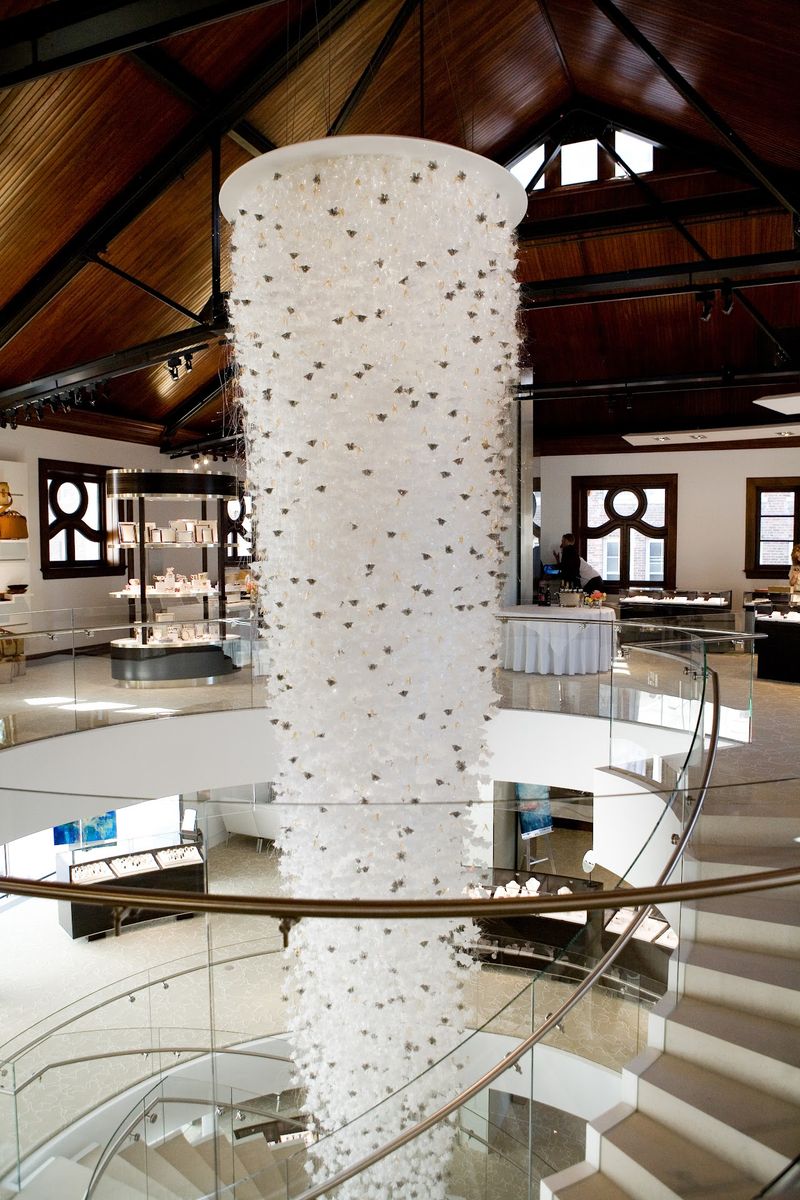
Library, planetarium, jewelry store: this building has had quite the career. It opened in 1905 as the Salt Lake City public library at 15 South State Street.
From the late 1960s until 2003, it housed the Hansen Planetarium. The O.C.
Tanner Company bought the empty Beaux-Arts landmark in 2006.
A two-year, $24 million restoration wrapped up in 2009. Crews removed later additions and even lowered the foundation by three feet to gain usable space.
Original windows and high ceilings stayed in place. New features include a spiral staircase with white limestone treads and curved glass risers, plus a two-story glass wall.
A glass chandelier by a British artist spans two floors. It is hard to miss, so plan on pausing at the staircase.
Check the east side of the building before leaving. Etched dolomite sandstone panels show the old library, founder Obert C.
Tanner, and a spiral galaxy that honors the planetarium years.
It may be the only jewelry store where astronomy is part of the decor.
8. Lambert Jewelers, Marysville, Ohio
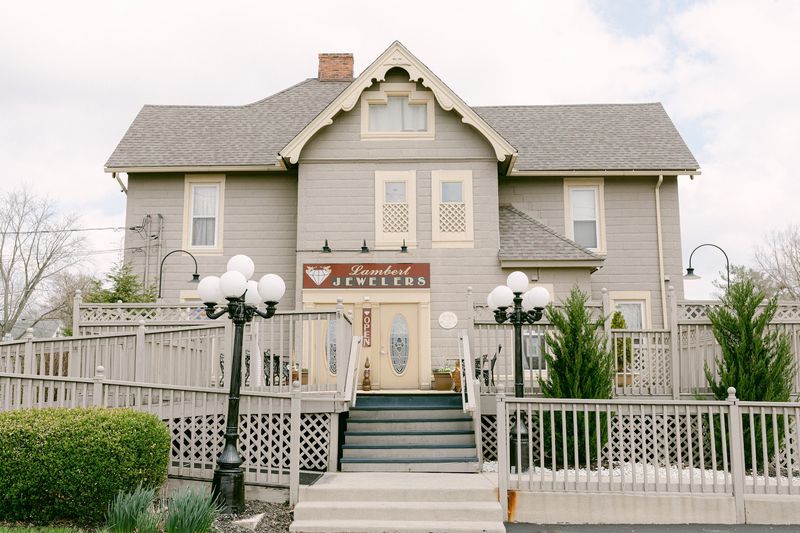
Some shoppers do a double take when they find the address, because it looks like someone’s home. That is exactly the point at 327 East Fifth Street.
Lambert Jewelers started in 1999 and moved into this Victorian house in 2007. Owners Keith and Jaynie Lambert kept the original woodwork and fireplaces.
Instead of one big sales floor, the store spreads across separate rooms. Each room has its own jewelry displays and chandeliers.
This layout changes how people shop. Couples looking at engagement rings can settle into one room while someone else browses estate pieces in another.
The house is not only for show. Lambert offers custom design, on-site goldsmithing, and appraisals, so a lot of real work happens under this roof.
Here is a practical tip: book an appointment for custom work. A quieter room makes it easier to sketch ideas and talk through budgets without feeling rushed.
Marysville may be small, but this shop proves that a front porch can lead to some serious sparkle.
9. Nan Lee Jewelry, McKinney, Texas
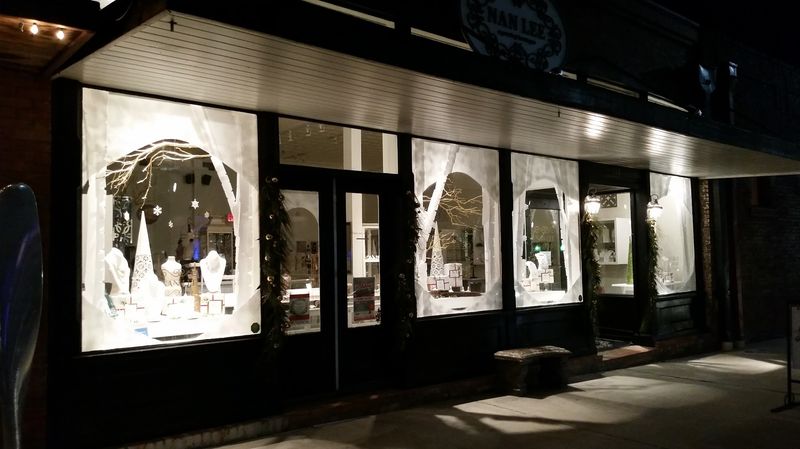
Old ceiling, new designs, and a lot of personality fill this corner of Historic Downtown McKinney. Nan Lee Jewelry occupies a nineteenth-century commercial building at 201 West Virginia Street, close to the city’s busy square.
The business was founded in 2008 and moved here in 2020. The building itself had been restored in 2011.
That restoration kept the original tin ceiling and wooden floors. Both remain the main historic features of the space today.
The modern cases create a sharp contrast with the older surroundings. Clean lines below and decorative patterns above give the boutique a look all its own.
Nan Lee focuses on custom work, bridal pieces, and heirloom redesigns. If you have Grandma’s ring sitting in a drawer, this is a smart place to ask about giving it a fresh setting.
Bring the piece and any photos of styles you like. A clear starting point makes the design chat easier.
Afterward, take a lap around the square, where many other historic storefronts await.
10. ShayLuLa Jewelry & Gifts, Tarrytown, New York
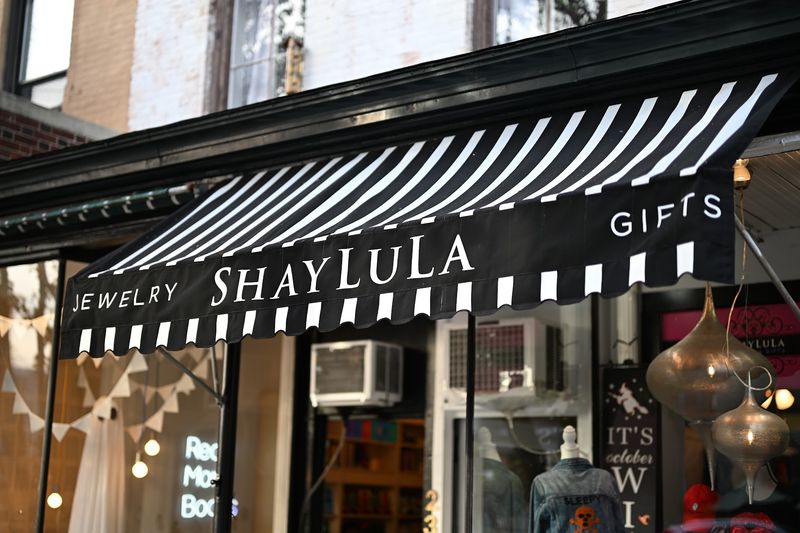
Colleen Goudie got a bonus when she opened her shop in 2011. Renovations at 23 Main Street revealed an original tin ceiling and hardwood floors that earlier finishes had covered up.
Those details now frame a bright, modern boutique in the Hudson Valley village of Tarrytown. The mix of old and new is a big part of the appeal.
ShayLuLa carries handcrafted jewelry, designer accessories, and gifts. Many collections come from women designers who make their pieces in the United States.
That makes it a good stop for buyers who like to know where things are made. Staff can often share a little background on the artists.
The shop also offers custom design services. Customers can rework old or inherited pieces into something they will actually wear.
Tarrytown’s Main Street is easy to explore on foot. Plan to wander, since the walk between shops shows off plenty of historic buildings.
One tip: look up once you are inside. Many visitors focus on the cases and miss the ceiling entirely.
11. T. Foster & Co. Fine Jewelers, Yardley, Pennsylvania
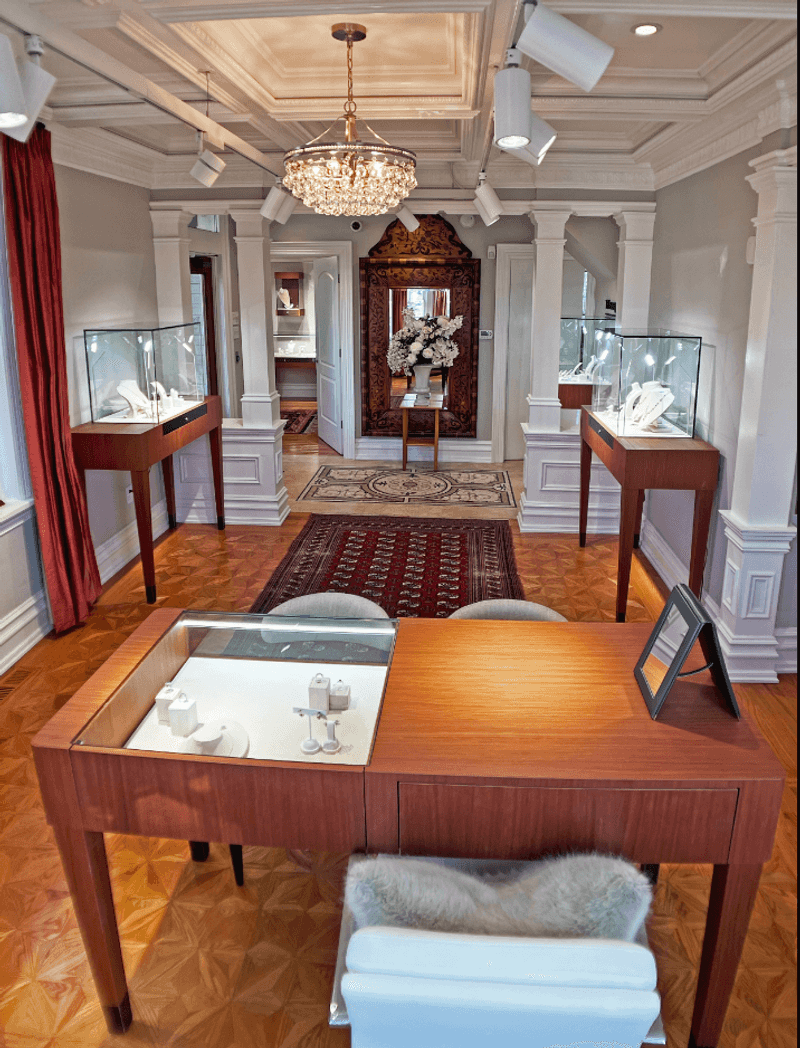
Built in 1872, the Victorian townhouse at 7 West Afton Avenue has seen Yardley grow up around it. Since 2018, it has been home to T.
Foster & Co. Fine Jewelers.
The business itself dates to 1982. Owners Tim and Suzanne Foster are award-winning designers and certified gemologists.
The showroom leans into the building’s past. Rich wood finishes and traditional architectural details set a cozy, personal mood.
The star of the room is a large original structural beam. Extra decorative beams were added to match it, so the whole ceiling carries a consistent old-fashioned look.
Big front windows look out onto the village. Shoppers can watch life on the street while comparing stones.
Custom high jewelry is a specialty here, and the owners oversee the work themselves. That is useful if you want a one-of-a-kind piece and prefer talking directly with the designer.
Bring questions about gem quality. Having two gemologists on hand means you can learn a lot in a single visit.
12. Cravens & Lewis Jewelers, Georgetown, Kentucky
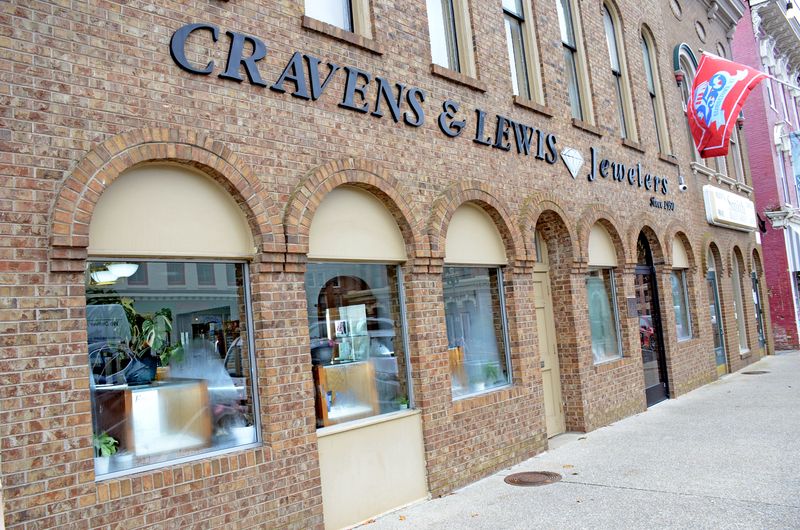
The ceiling here is older than the business by roughly 80 years. Cravens & Lewis opened in Georgetown in 1950, but the decorative tin overhead dates to the 1870s.
Many American shops lost ceilings like this during twentieth-century updates. This one stayed put.
The family business moved to 136 East Main Street in 1960. A 1987 remodel expanded the showroom and helped bring fresh attention to the ceiling.
Now a third generation is involved in running the store. Customers often appreciate that kind of continuity when shopping for meaningful pieces.
The shop sells gold, silver, diamond, and colored gemstone jewelry, along with giftware. Repair services are offered too, which is handy for a broken clasp or loose stone.
When you visit, take a moment to study the tin patterns. Craftsmen pressed those designs long before electric lights were standard in small towns.
It is a fitting final stop on this list. The jewelry is new, the ceiling is old, and both get plenty of admiring looks.
Share this story