Cambodia holds far more than the famous towers of Angkor Wat. Across the country, stone temples rise from thick forest, giant tree roots grip old walls, and remote mountains hide lost cities.
Some places are carefully restored, while others feel close to how explorers first found them. Come along and meet 15 spots where history and jungle live side by side.
Ta Prohm
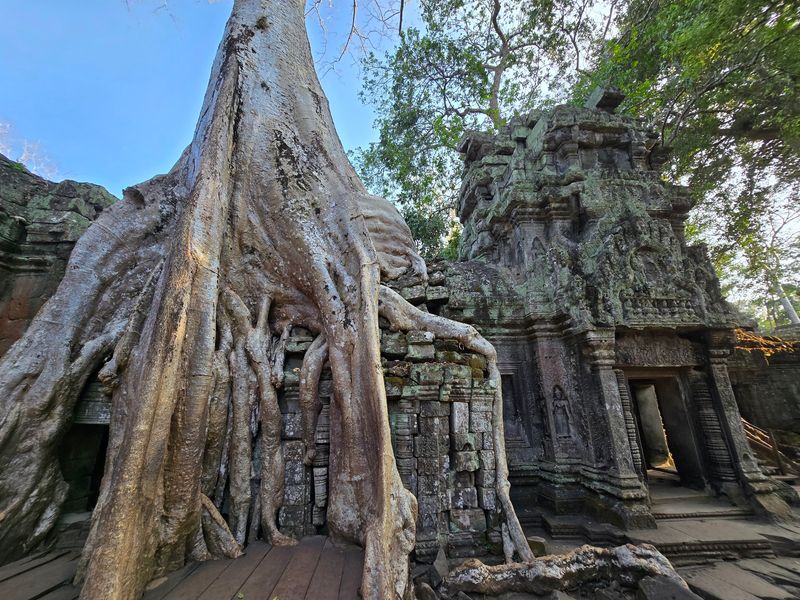
Picture a tree with roots like melted candle wax pouring over a stone doorway. That is Ta Prohm, the place that made the world fall in love with jungle ruins.
Built under Jayavarman VII and dedicated in 1186, it was first called Rajavihara, which means royal monastery.
Instead of clearing every plant away, conservators kept much of the dramatic bond between trees and stone. They only steadied the shakiest walls so the site stays safe to explore.
The result feels wild, but it is planned with care.
Timing matters here. Arrive soon after opening and the tour groups have not yet filled the passages.
Shadows stretch across the galleries, birds call from the canopy, and the ruins seem far from busy Siem Reap.
Wear shoes with good grip, because the stones can be uneven and slippery. Bring a bottle of water, too, since the forest air gets sticky fast.
Take your time at each doorway, because the best photos often hide in quiet corners that most visitors walk right past.
Beng Mealea
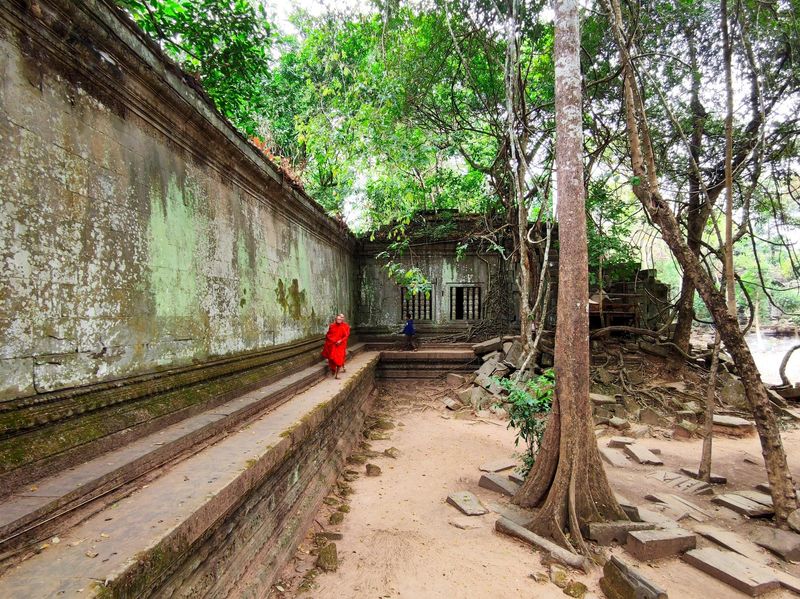
Hardhat not included, but you might wish for one. Beng Mealea is a tumbled maze of fallen towers, mossy blocks and tangled vines.
Built in the 12th century, its plan echoes Angkor Wat, yet nature has rearranged almost everything.
Trees sprout straight from the walls, and roots lace through gaps between stones. APSARA National Authority describes the monument as wrapped in luxuriant jungle.
Much of it keeps the romantic look of early archaeological expeditions.
Wooden walkways now guide visitors across the most delicate parts, so you can wander without trampling history. Still, the place feels far less polished than many big Angkor sites.
Climbing over some stone piles and ducking under branches is part of the fun.
Plan for a bit of a drive, since the temple sits well east of the main Angkor area. Pack insect repellent and sturdy shoes.
Visit in the morning for cooler air and a calmer, more mysterious mood among the ruins.
Koh Ker
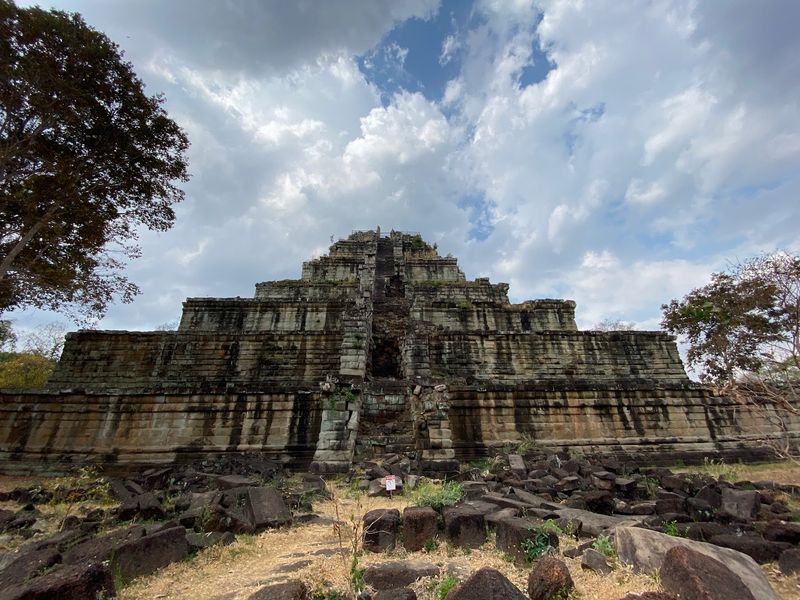
Seven steep steps climb toward the sky at Prasat Prang, and the forest simply stretches out below. Koh Ker was briefly the capital of the Khmer Empire in the 10th century.
Today it rewards those who travel far into northern Cambodia.
The wider landscape holds 169 known ancient sites, including 76 temples, plus reservoirs, roads and settlement remains. UNESCO named it a World Heritage Site in 2023.
Even so, the remote location keeps crowds thin.
Many sanctuaries pop up beside forest roads, so you might spot a lonely tower between the trees. Exploring feels less like visiting one complex and more like tracing a vanished city.
Local guides can point out smaller ruins you might otherwise miss.
Start early, because the day can heat up quickly. Carry plenty of water and snacks, since food stops are limited.
Check the pyramid steps and any access rules before climbing, as conditions can change.
Sambor Prei Kuk
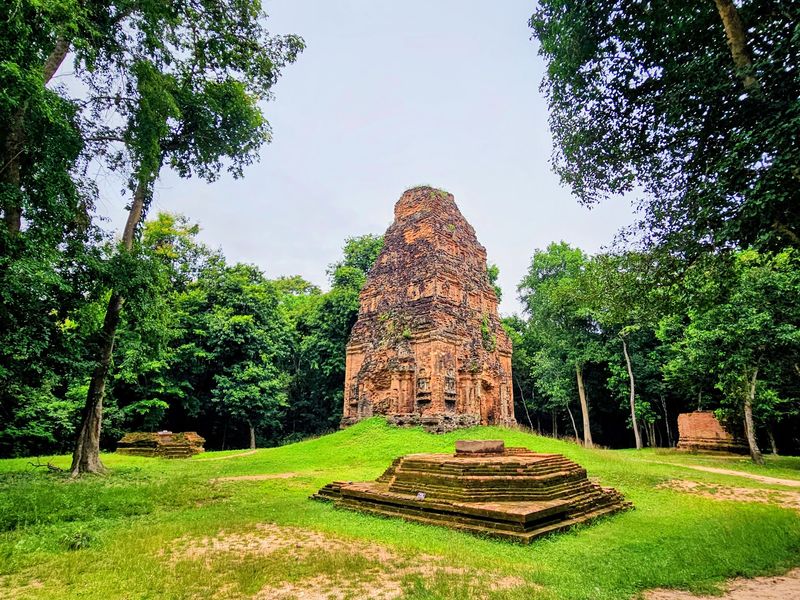
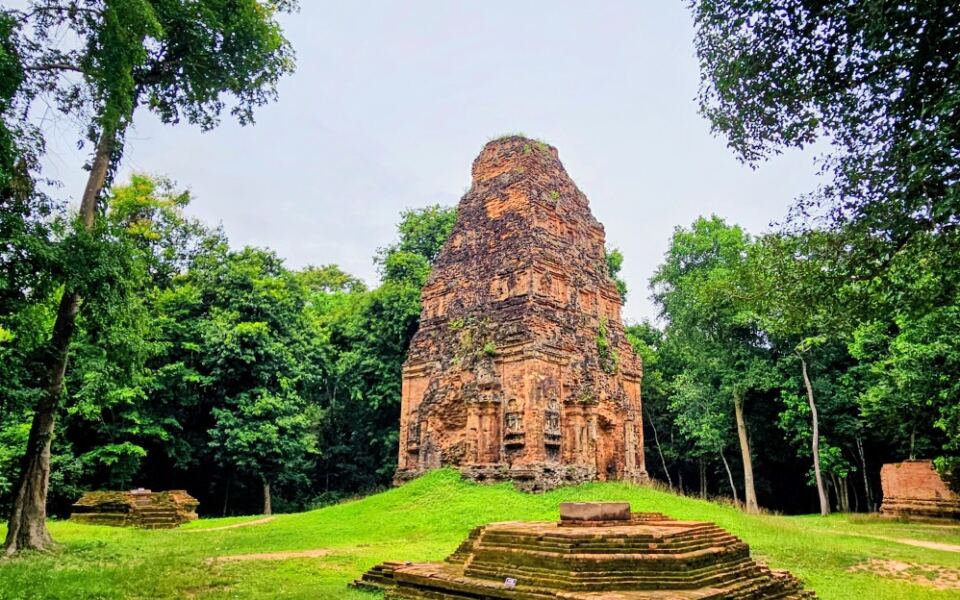
Long before Angkor Wat existed, bricklayers were already building masterpieces here. Sambor Prei Kuk is the ancient city of Ishanapura, a capital of the Chenla Empire in the late sixth and early seventh centuries.
UNESCO notes more than 100 temples in the zone. Some are rare octagonal towers, a shape almost unseen elsewhere in Southeast Asia.
Red brick shrines stand quietly among tall trees, and a few are hugged tightly by roots.
The designs developed here helped shape later Khmer styles. That makes the site a key chapter between early kingdoms and the great Angkor age.
Walking the shady forest paths feels calm, with birdsong instead of crowds.
Base yourself in Kampong Thom town and go early to beat the heat. Bring a hat and good walking shoes.
A local guide can explain carvings and symbols that are easy to overlook when you are simply admiring the brickwork.
Phnom Kulen and Mahendraparvata
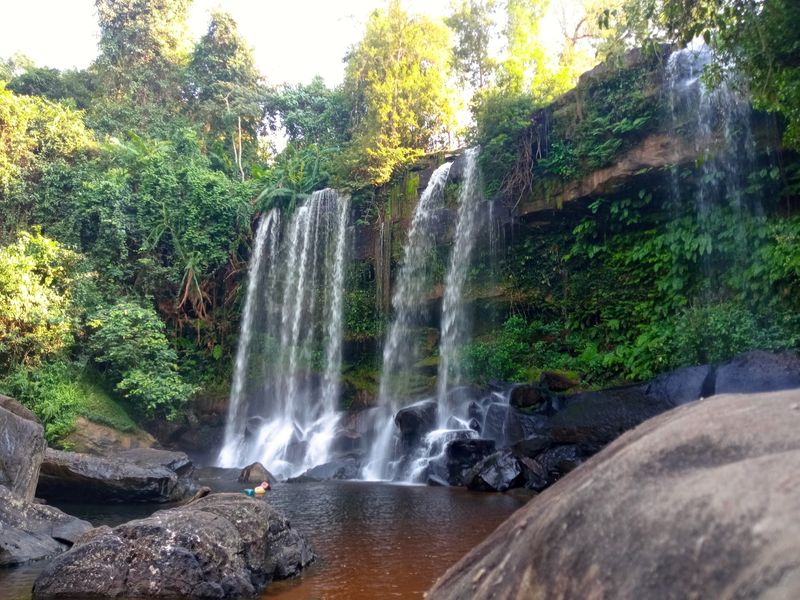
Most people come to Phnom Kulen for the waterfall, then discover a lost city under their feet. Beneath the forest lies Mahendraparvata, founded in the late eighth and early ninth centuries.
UNESCO documentation lists about 40 brick temples, an early pyramid temple, reservoirs, channels, ponds and platforms spread across the plateau. The mountain is tied to Jayavarman II and the start of the Angkorian Empire.
That gives every trail a touch of origin-story magic.
Forest covers much of the old settlement, so ruins show up beside waterfalls and sacred sites rather than in a neat temple park. You may spot a brick tower after a short walk, then cool off at a stream a few minutes later.
Go on a dry day, as mountain tracks can turn muddy. Bring a swimsuit if you like waterfalls, and dress modestly at religious spots.
Hiring a local guide helps you find lesser-known remains.
Kbal Spean
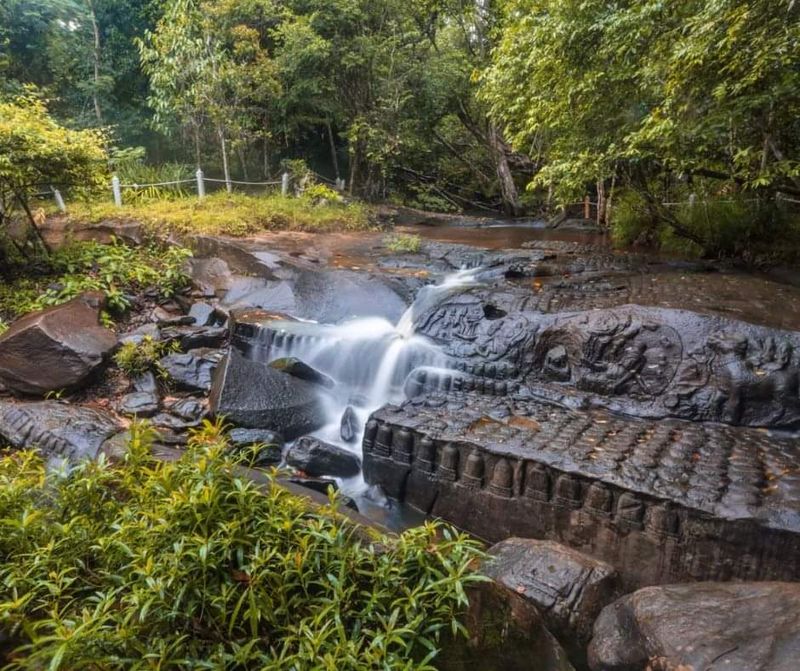
Ever seen a river that doubles as a holy carving gallery? Kbal Spean is known as the River of 1,000 Lingas, with Hindu symbols carved into stone beneath a forest stream.
As the water runs across the carvings, it symbolically blends masculine and feminine sacred forms before flowing downstream. Angkor Enterprise explains this idea, which turned the whole landscape into a place of ritual.
Getting there takes a hike through the forest. The climb is not extreme, but it does make the reveal feel earned.
Carvings appear gradually under clear water, and the effect is quiet rather than grand.
Wear shoes with strong grip, since the path and rocks can be slick. Bring water and a rain layer in wet season.
Visit earlier in the day to enjoy cooler air and softer light on the stream. Many travelers pair this stop with Banteay Srei, since the two sit in the same direction from Siem Reap.
Preah Vihear Temple
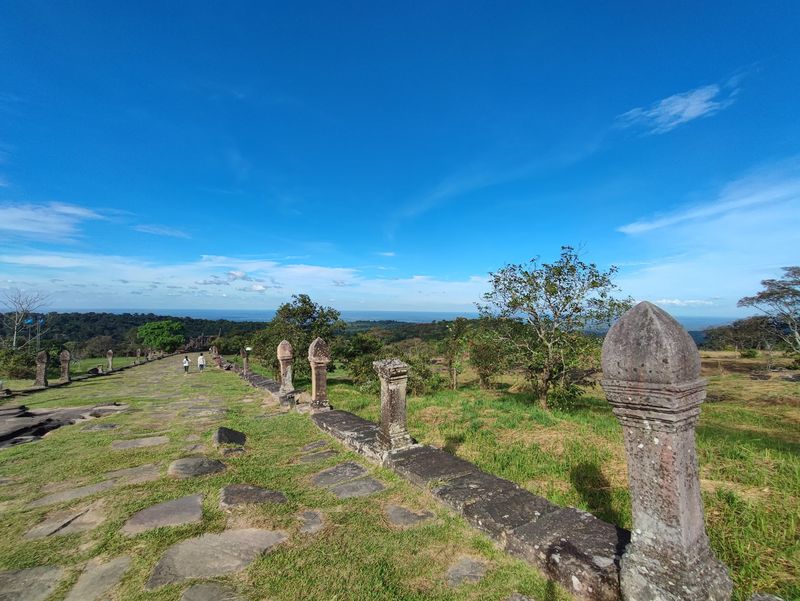
Few temples have a front-row seat like this one. Preah Vihear stretches about 800 meters along a mountain axis near the edge of the Dangrek escarpment, high above the Cambodian plain.
Its story reaches back to the ninth century, although most of the surviving sanctuary dates from the first half of the 11th century. UNESCO highlights the amazing match between the architecture and its natural setting.
Long stairways and a series of gateways lead upward step by step. Every level reveals more forest, more cliff and wider views.
The builders clearly wanted visitors to feel they were moving from the human world toward the sacred heavens.
Check local travel conditions before you go, since the area is remote and access can change. Bring a hat, sunscreen and lots of water, as shade is limited on the climb.
Go early for clearer views over the plain below.
Banteay Chhmar
Out in the northwest, a giant temple waits for travelers willing to go the extra miles. Banteay Chhmar once stood at the center of a planned settlement with a huge reservoir and a clever water system.
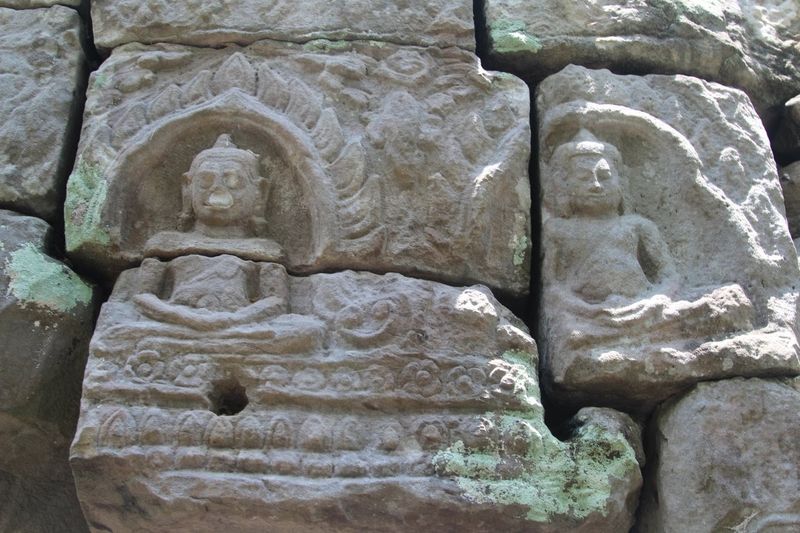
The main temple measures about 770 by 690 meters. Its reliefs show battles, royal ceremonies and multi-armed forms of Avalokitesvara.
The detail is stunning, and you can study it up close.
Much of the complex collapsed and lay hidden by plants for generations. Many parts still feel lightly restored and adventurous, with fallen stones and tangled branches beside the galleries.
Because it is far from Siem Reap, you often share the ruins with very few people. Plan a full day trip or stay overnight in the area, where community homestays help local families.
Bring a flashlight for dim corners and wear shoes you do not mind getting dusty.
Preah Khan of Kompong Svay
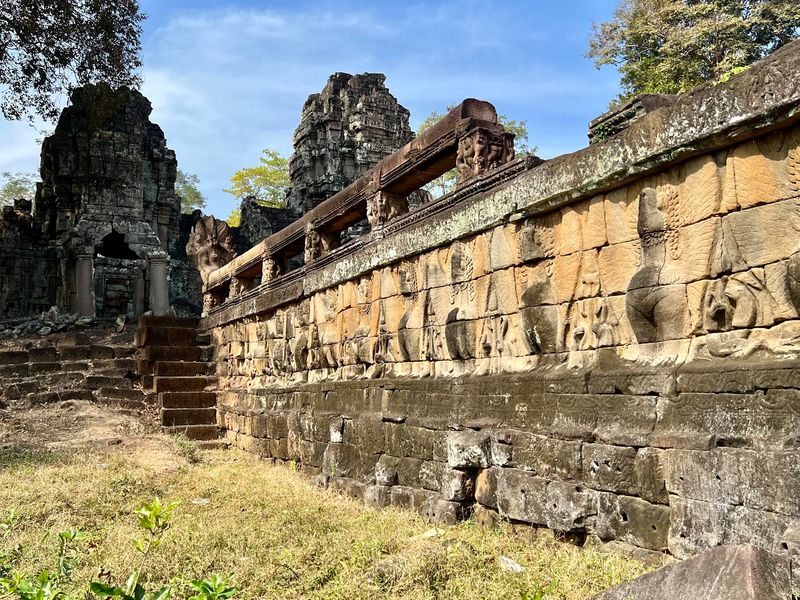
Here is a giant that many travelers have never heard of. Preah Khan of Kompong Svay lies about 105 kilometers east of Angkor and once served as an important provincial city on the Khmer royal road network.
UNESCO documentation describes four major enclosure walls, a huge reservoir and signs of iron mining and production nearby. That means people did more here than pray.
They worked, traded and built a busy community.
Temples across the site include four-faced towers and monuments decorated with elephants and mythical creatures. Trees and roots press in around many of them, so the forest and archaeology seem tightly woven together.
The distance from major tourist centers gives the ruins a deep sense of isolation. Hire a local driver or guide, carry snacks and water, and allow plenty of time for the journey.
Roads can be rough, so dry season is the easiest choice for most visitors.
Ta Som
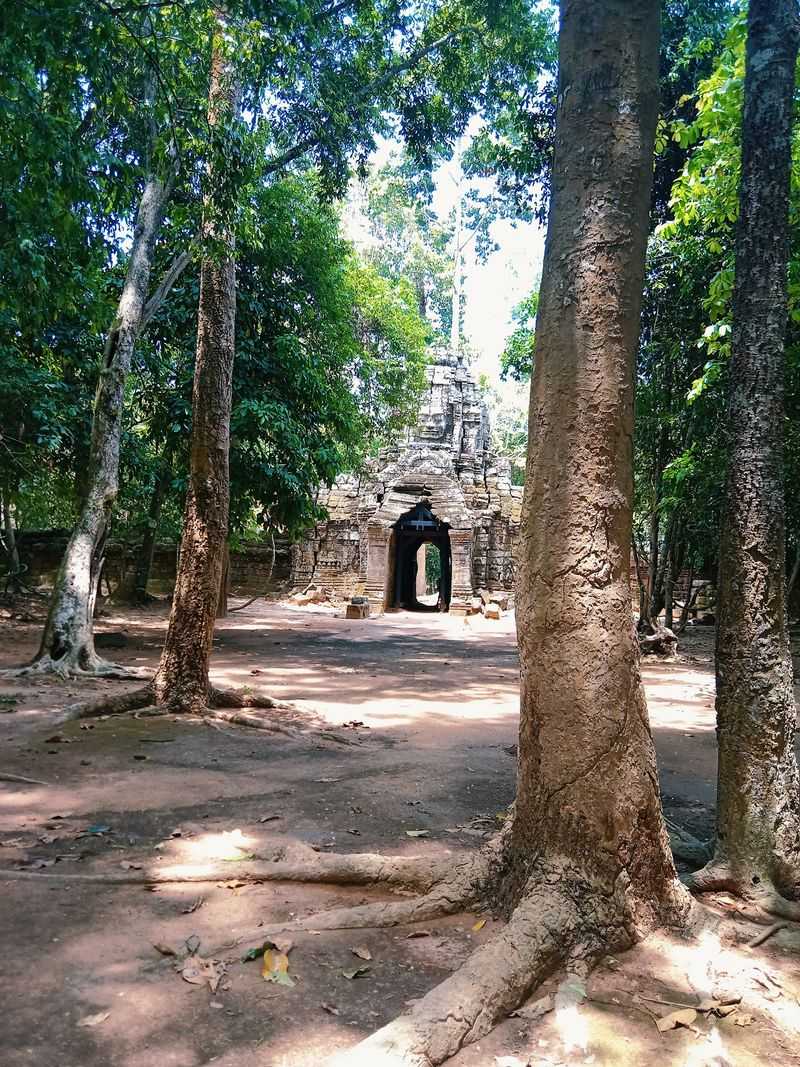
One doorway has become a star all on its own. At Ta Som, a large tree sends its roots over the eastern gateway like a leafy crown on a stone head.
This small Buddhist shrine was built in the late 12th century under Jayavarman VII. Gateways here carry large faces and fine carvings.
APSARA National Authority calls the site a strong example of harmony between old architecture and the natural world.
Since Ta Som gets fewer visitors than Angkor Wat or Ta Prohm, you can pause without feeling rushed. Morning and late afternoon light make the stone glow softly, and the quiet adds to the mood.
It sits near Neak Pean and Preah Khan, so it fits neatly into a longer temple day by tuk-tuk. Bring a small flashlight if you like peeking into dark passages.
Walk slowly and look up often, because many of the best details sit above eye level.
Banteay Srei
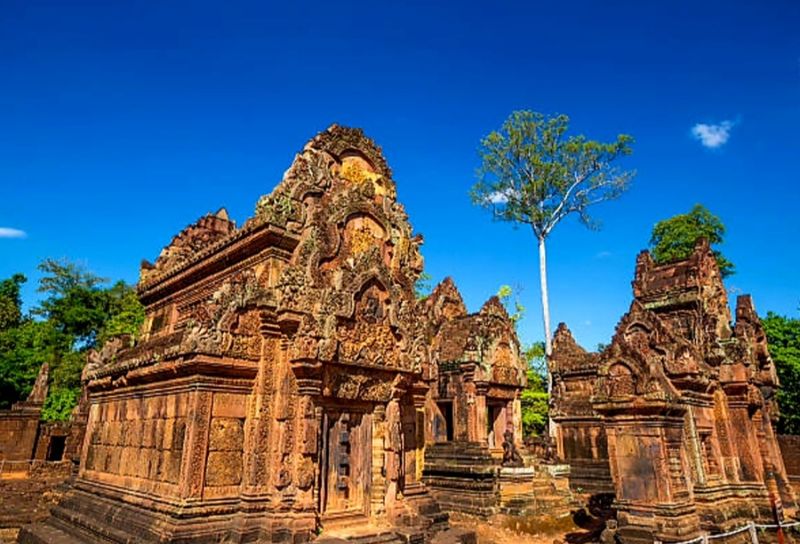
Small can still be spectacular. Banteay Srei was dedicated in 967 and built from warm pink sandstone that seems to glow in the sun.
Its fame comes from carvings so fine that they cover doorways, lintels and pediments like stone lacework. APSARA National Authority notes that its sculpture has few equivalents among other Khmer temples.
Scenes from myth are cut with surprising precision.
Forest and landscaped grounds surround the compact complex. Because it lies away from central Angkor, the trip has a gentler, rural feel, with village life along the road.
You might spend several minutes on a single doorway and still spot something new.
Arrive early or late in the day to enjoy softer light on the pink stone and fewer tour buses. Bring a camera with a zoom lens if you have one, since the best details are tiny.
It feels like finding a stone jewelry box hidden in the countryside.
Angkor Thom and Bayon
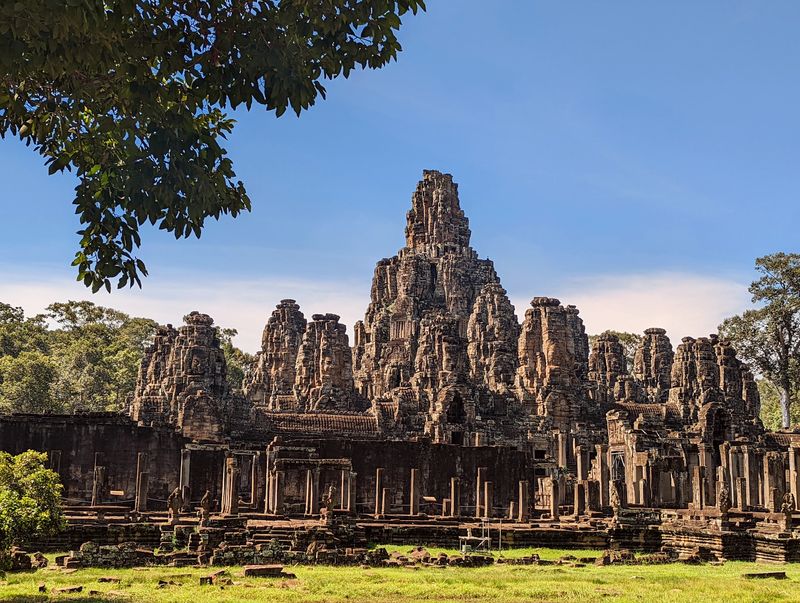
Smiling stone faces watch every step you take. Angkor Thom was an enormous fortified city at the heart of the Khmer Empire, not just a single temple.
Roads pass beneath grand gates topped with carved faces, then slip into forest that hides terraces, shrines and old foundations. At the center stands Bayon, with its many massive faces and detailed reliefs showing wars, markets and everyday life.
The wider Angkor Archaeological Park covers about 400 square kilometers. It holds temples, reservoirs, roads, canals and remains of several Khmer capitals.
Walking through Angkor Thom shows how jungle slowly swallowed a busy imperial city.
Visit Bayon early for softer light on the faces. Take time with the outer gallery reliefs, where tiny scenes of fishing, cooking and street life reward close looking.
Hire a guide if you want help decoding the stories. Keep a hat and water handy, since open stretches between monuments can be hot.
Angkor Borei and Phnom Da
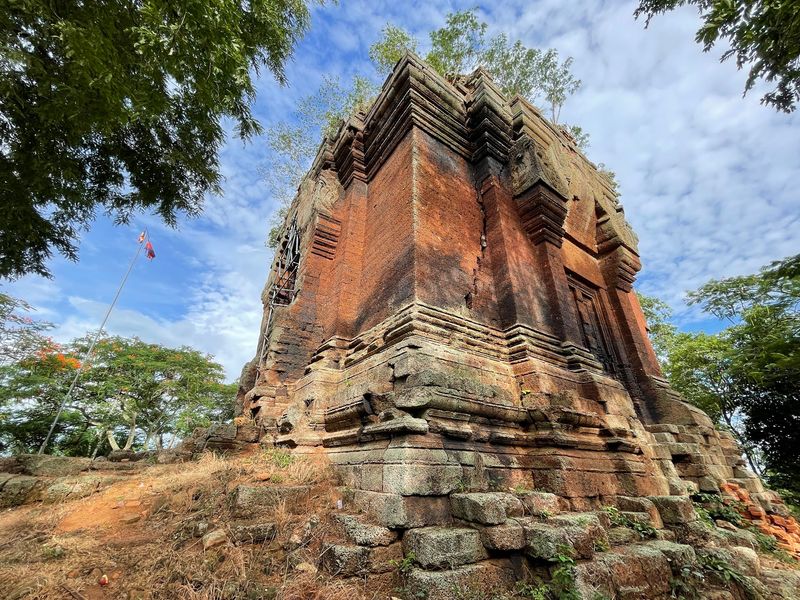
Cambodia’s story goes back much further than Angkor Wat, and Angkor Borei proves it. UNESCO documentation calls it one of Southeast Asia’s earliest complex political centers, linked with Funan and early Khmer civilization.
The archaeological zone includes ancient walls, moats, water systems and settlement remains. Nearby Phnom Da preserves temples and caves on a hill rising from the plains.
Some sculptures found here show the earliest recognizable Khmer art.
Do not expect towering monuments. The scenery is gentler, with rice fields, canals and small villages, yet the historical weight is huge.
You are standing at the roots of later Khmer cities, religion and architecture.
Takeo Province is an easy day trip from Phnom Penh or a stop on the way to the south coast. Ask locally about boat options, as water travel can be part of the journey in some seasons.
Bring sun protection and curiosity, then look closely at small details.
Banteay Kdei
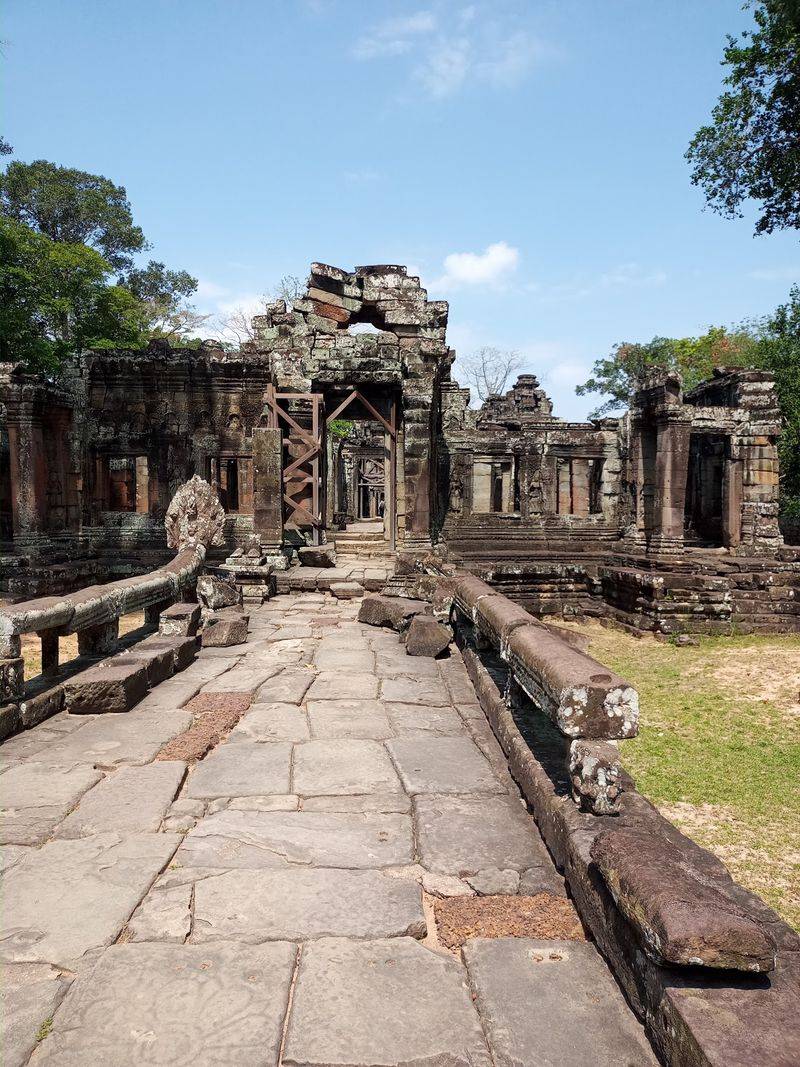
Quiet corridors, soft moss and hardly a crowd: Banteay Kdei is a gift for slow travelers. It sits opposite the ancient reservoir of Srah Srang and gets far less attention than nearby Ta Prohm.
Built in the late 12th and early 13th centuries under Jayavarman VII, the complex has long galleries, towers, courtyards and Buddhist imagery. APSARA National Authority notes that its lower popularity makes it ideal for lingering.
Trees and plants soften the partly collapsed stonework. The maze-like layout invites you to wander, turn corners and discover little courtyards.
Ruined passages seem to fade into the forest.
After exploring, walk across to Srah Srang and watch the light change on the water. Sunrise there is lovely and often calmer than at bigger sites.
Bring a light scarf or hat for sun, and let yourself get a little lost. That is half the charm of this peaceful place.
Angkor Wat
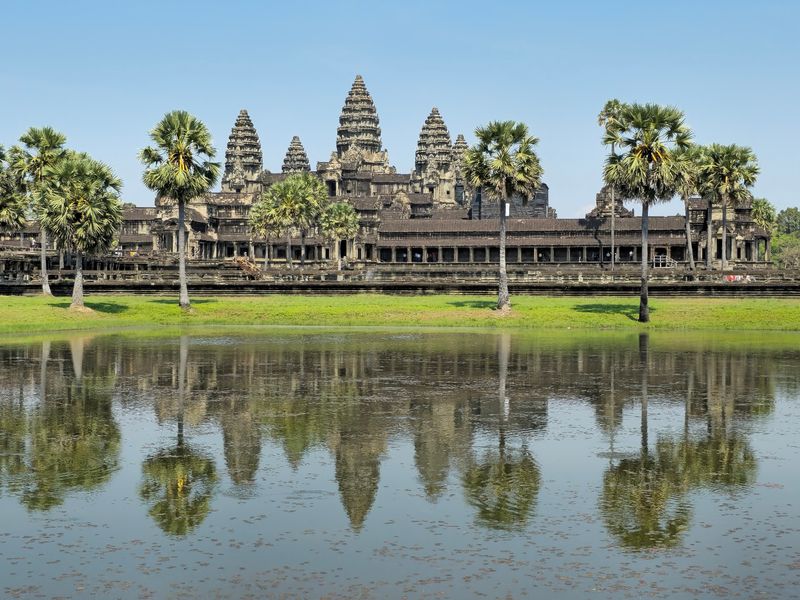
Yes, it is famous, but Angkor Wat still has surprises. It stands inside the much larger Angkor landscape, which spreads across about 400 square kilometers.
That area holds reservoirs, canals, roads and the remains of several Khmer capitals. Beyond the iconic central towers, visitors find long narrative reliefs, hidden courtyards, causeways and huge water features that show how advanced the civilization was.
Forest now fills much of the space between monuments, so even this world-famous temple belongs to a far bigger archaeological puzzle. Researchers are still studying it today.
To beat the crowds, try arriving before sunrise or visiting later in the afternoon. Wear clothes that cover shoulders and knees, as the temple expects respectful dress.
Spend extra time in the gallery reliefs, where battles, gods and daily scenes unfold along the walls. Then walk a bit farther out and enjoy the quieter edges.
Share this story