Guyana is home to some of the tallest and most striking waterfalls in the world, set deep inside rainforests and open savannas. Many of them are far less crowded than famous sites like Niagara or Victoria Falls.
Each one offers a different view of the country’s wild interior, from huge single drops to wide curtains of tea-colored water. Here are ten falls worth knowing about.
1. Kaieteur Falls
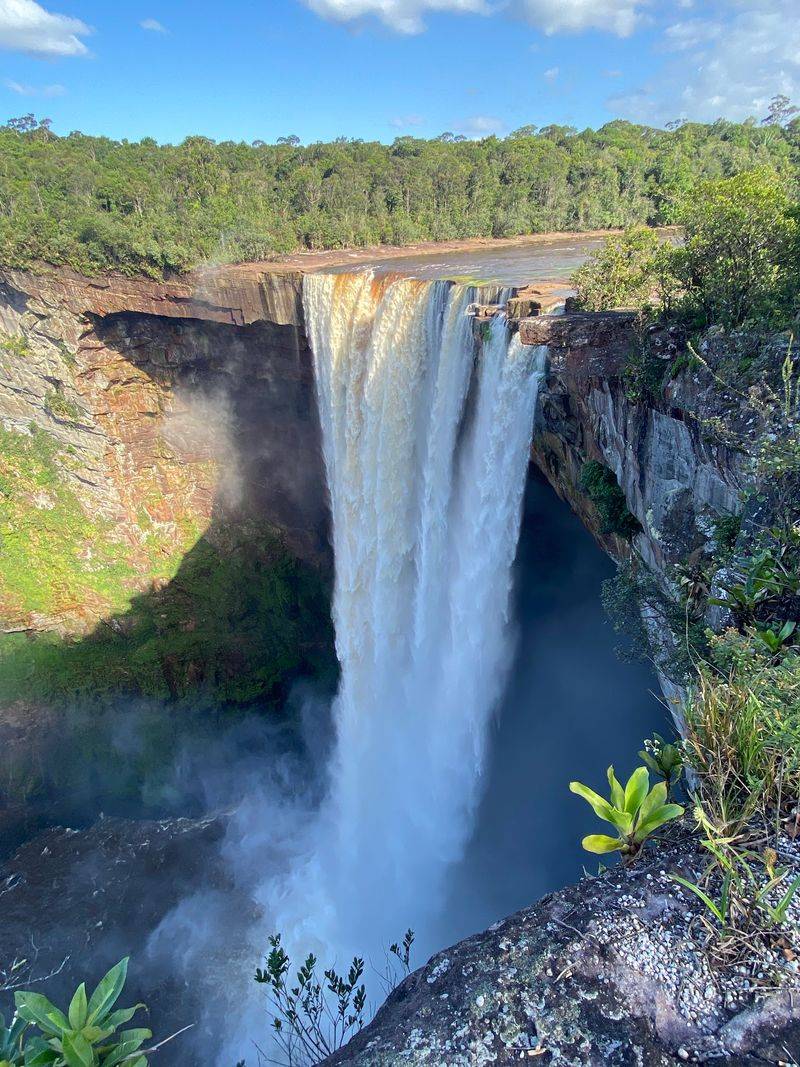
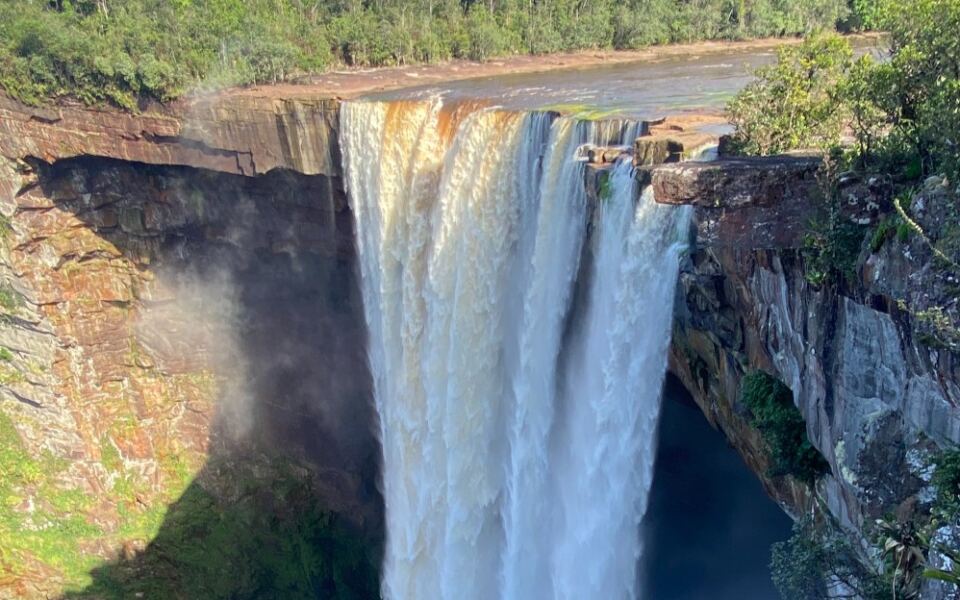
Picture a river stepping off a cliff and falling nearly 226 meters in a single drop. That is Kaieteur Falls on the Potaro River, and it is often called one of the most powerful single-drop waterfalls on Earth.
Its height is about four times that of Niagara Falls.
Most visitors arrive by small plane from Georgetown, since the trek overland takes days. The flight itself shows off miles of unbroken forest.
Once on the ground, short trails lead to viewpoints right at the cliff edge.
Keep an eye out for the golden frog, a tiny orange creature that lives inside giant tank bromeliads nearby. Swifts also dart behind the falling water at dusk to reach their nests.
Bring a rain jacket, because the spray reaches the viewing areas, and wear shoes with good grip for the wet rock.
2. Orinduik Falls
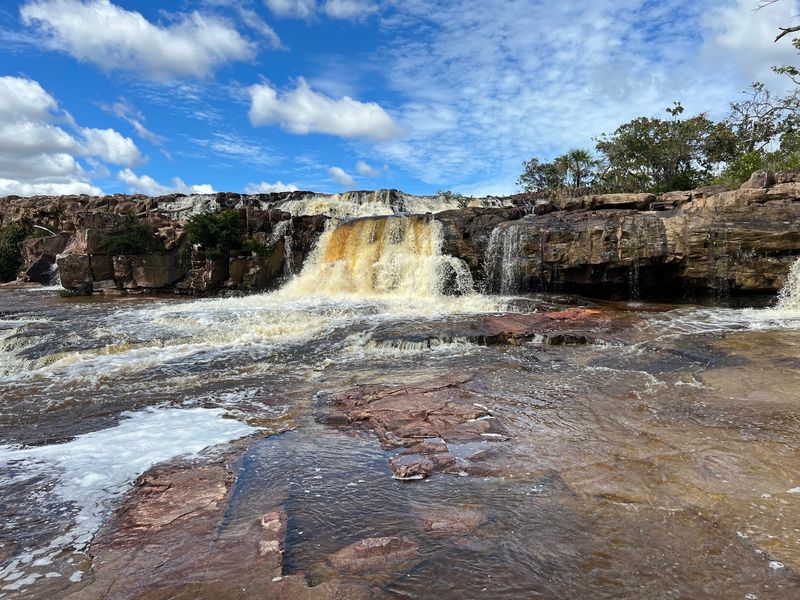
Most waterfalls make you stand back, but Orinduik invites you to wade right in. Located on the Ireng River near the Brazilian border, it spreads across wide steps of red jasper rock.
The water tumbles over many small ledges instead of one big drop.
Natural pools form between the steps, and they are warm enough for a relaxed swim. Visitors often combine a trip here with a stop at Kaieteur, since small planes can land on a nearby airstrip.
The open savanna around the falls feels very different from the thick rainforest elsewhere.
Fun fact: the Ireng River marks part of the border between Guyana and Brazil, so you can look across to another country while you soak. Pack water shoes, because the rock can be slick.
3. King George VI Falls
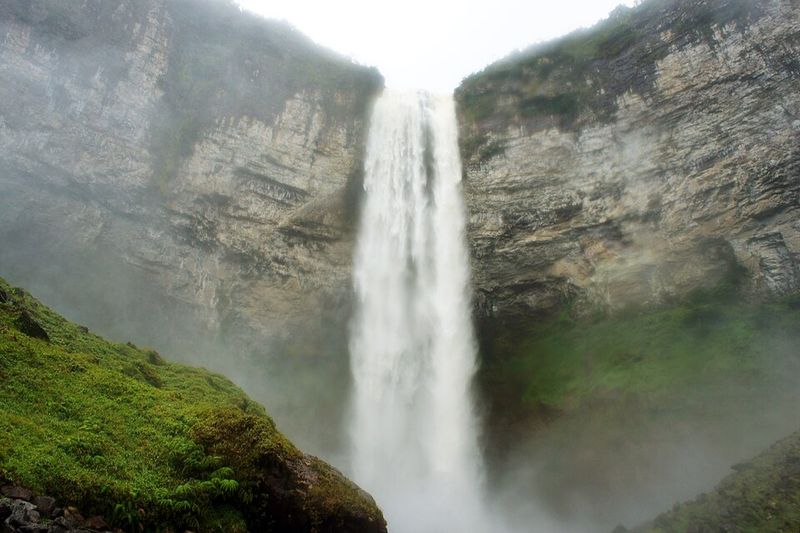
Here is a number to remember: about 488 meters. That is the approximate height of King George VI Falls, which makes it one of the tallest waterfalls in the world.
It spills from the edge of the Ayanganna Plateau in the Pakaraima Mountains.
The falls are remote, and reaching them takes serious planning. Expeditions usually involve long river travel and hiking, so most people see them with experienced local guides.
The reward is a view of a thin ribbon of water falling from a high tabletop mountain.
The falls were named after the British king who reigned from 1936 to 1952. Rain feeds them well, so the best flow usually comes during wetter months.
Anyone going should prepare for humid weather and unpredictable showers.
4. Kumerau Falls
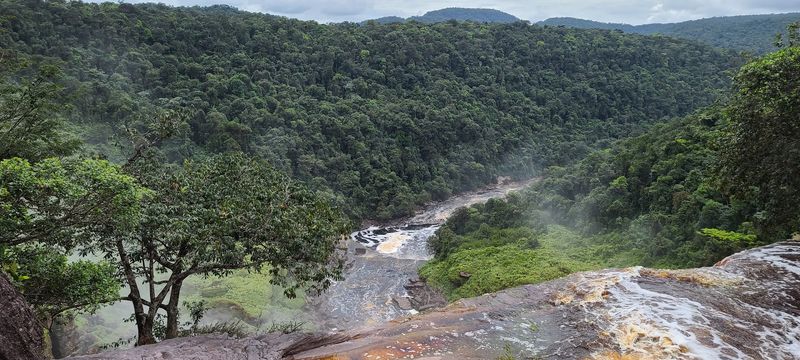
Near the old mining region of the Mazaruni River, Kumerau Falls shows a different side of Guyana’s waterways. Rather than one tall plunge, the river here rushes over rocks in a series of strong, noisy drops.
The sound carries well into the forest.
The Mazaruni basin is known for diamonds, gold, and rich Indigenous history. Boats are the usual way to move through the area, and trips often pass small villages along the banks.
Water levels change a lot with the seasons, so the falls look quite different from month to month.
Travelers should go with a local operator who knows the river well. Life jackets are a smart choice even for confident swimmers, since currents near rapids can be strong.
Bring a camera in a dry bag.
5. Kamarang Great Falls
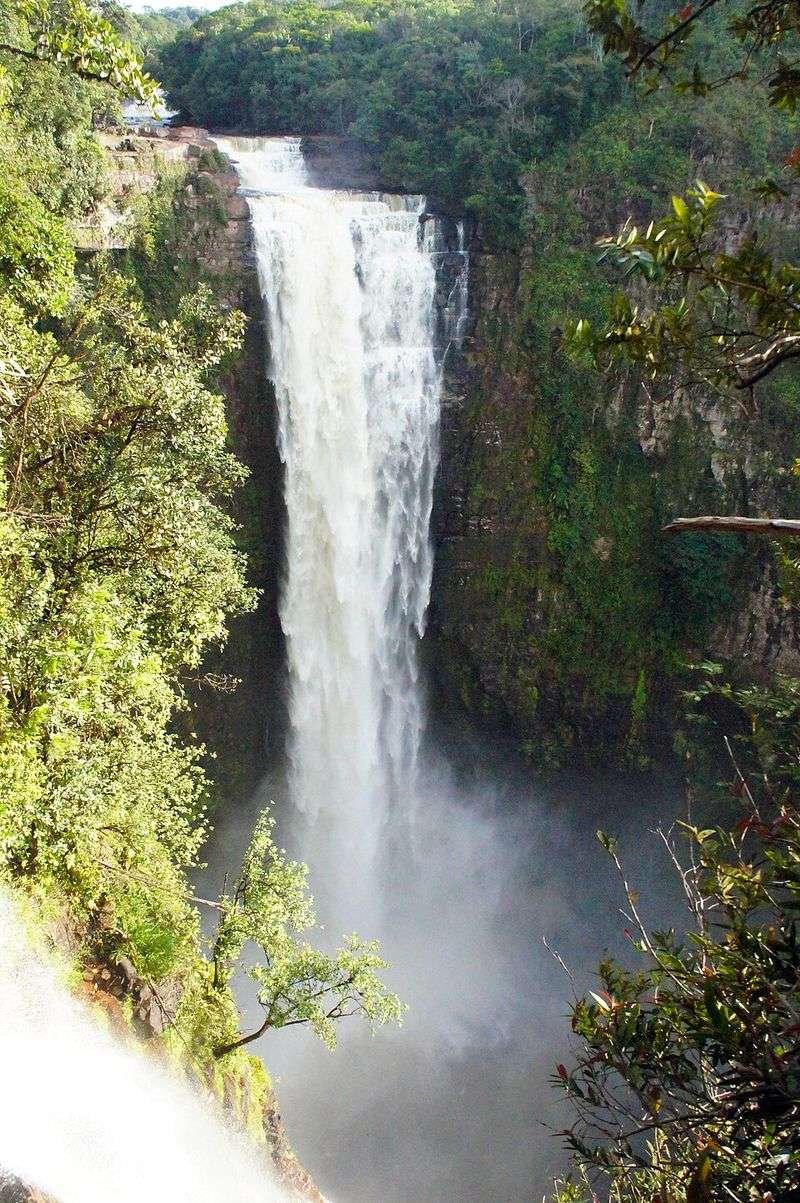
The Kamarang River winds through Pakaraima country, and along its path the Great Falls make a dramatic stop. Water gathers speed over broad rocky ledges before dropping into churning pools below.
The surrounding hills are covered in thick green forest.
Kamarang is also a small community and an important airstrip for the region. Many visitors fly in on light aircraft, then continue by boat or on foot.
The people who live nearby, mostly of the Akawaio and Arecuna nations, have long known these waters.
Respect for local customs matters here. Ask permission before taking photos of people, and hire guides from nearby villages when possible.
That helps the community and gives you stories you will not find in any guidebook.
6. Tumatumari Falls
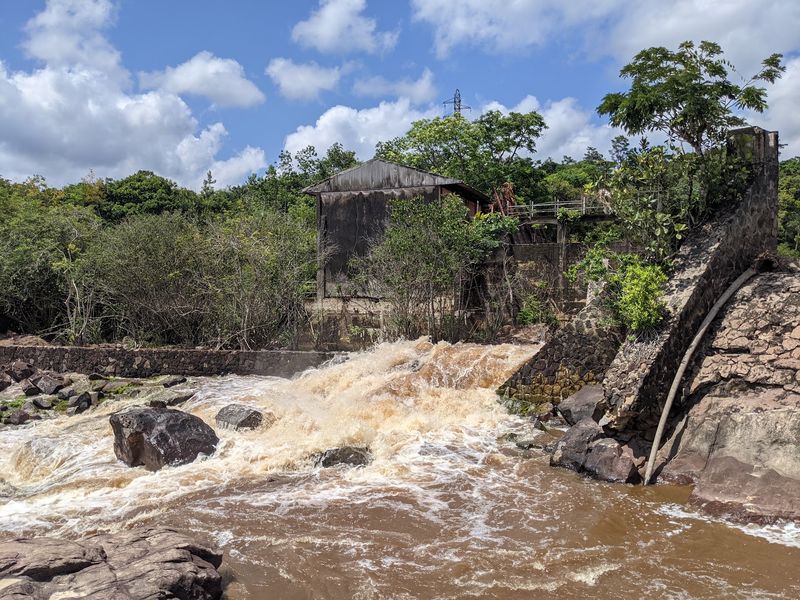
Long before Kaieteur became famous, travelers on the Potaro River had to cross Tumatumari. The falls stretch across the river in a broad series of rapids and low drops, roughly a kilometer wide in places.
They once blocked boat traffic completely.
In the early 1900s, a railway portage helped move people and supplies around the rocks. Later, a small hydroelectric station was built nearby to serve local needs.
Traces of that history are still part of the story of the place.
Visitors can explore the rocks when the water is lower, though footing needs care. The area is a good stop on the way toward Kaieteur or other Potaro sites.
Bring snacks, a hat, and sun protection for the open riverside.
7. Amatuk Falls
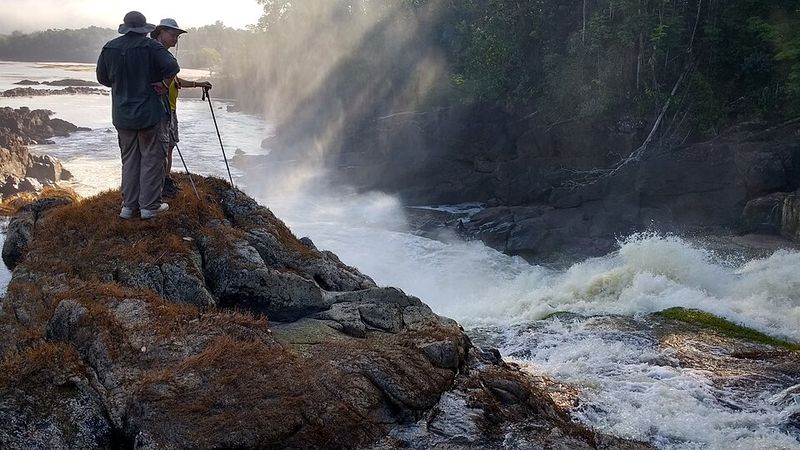
Along the road to Kaieteur, travelers pass Amatuk Falls, a cascade of about 55 meters on the Potaro River. Spray hangs in the air, and the rocks glisten dark and wet.
It is one of the prettier waysides on the long trip inland.
The falls were a natural barrier that early boatmen had to carry their goods around. Today, the area works as a rest point for tour groups heading deeper into the Potaro region.
Short walks offer different angles for photographs.
Birdwatchers will enjoy the nearby trees, where toucans and parrots often pass through in the morning. Because the stop is not as famous as its big neighbor, you may have it nearly to yourself.
Wear insect repellent, especially near dusk.
8. Wonotobo Falls
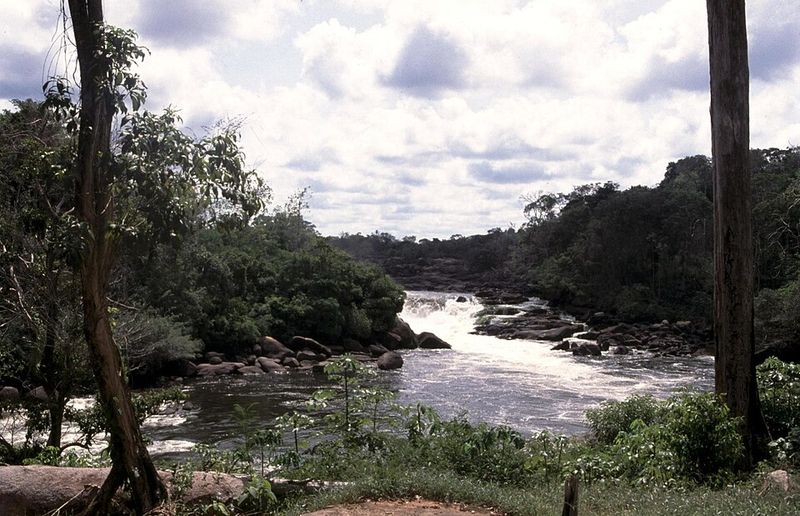
On the Corentyne River, which forms the border with Suriname, Wonotobo Falls tell a story of a river that refuses to be tamed. Rather than one large plunge, the water splits around rocky islands and forms many channels.
After heavy rain, the whole scene becomes a roaring white mass.
The falls lie in a remote part of southeastern Guyana, and reaching them takes time and local help. Travel often involves river boats, which makes the journey part of the adventure.
The surrounding forest is home to monkeys, river otters, and many bird species.
Conditions change quickly, so ask guides about water levels before you go. Pack dry clothes, since boat rides can get splashy.
A quiet visit here feels like stepping into a part of South America few people ever see.
9. Moco Moco Falls
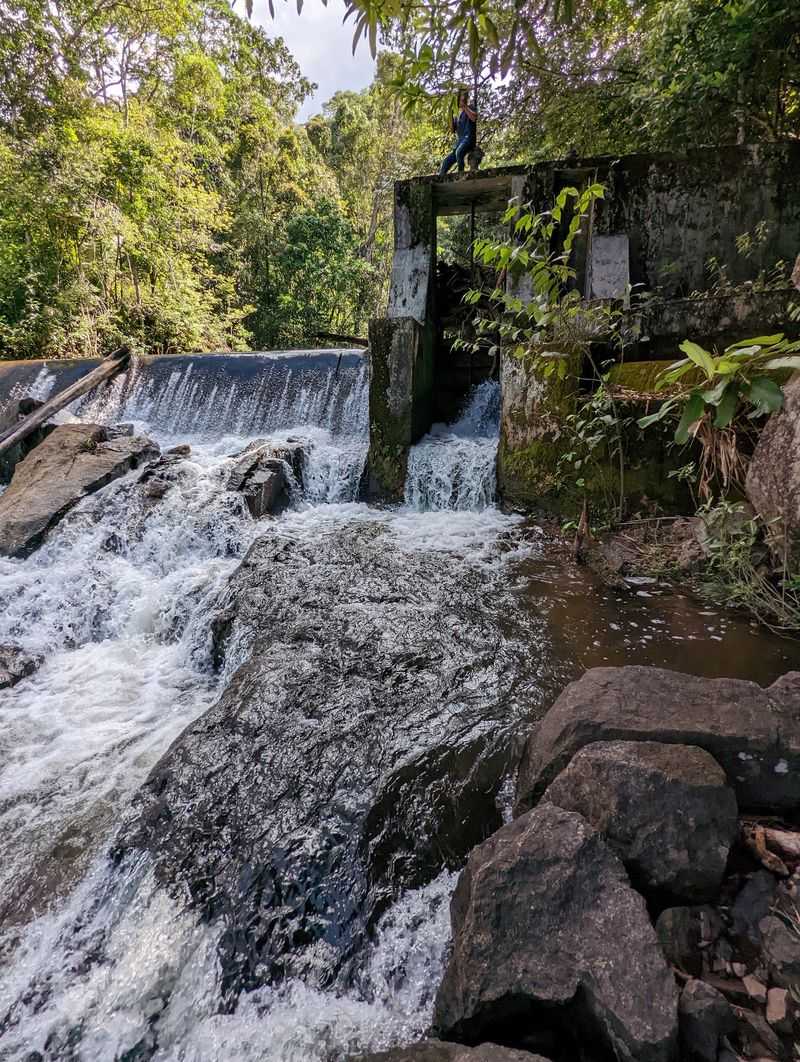
If you want a waterfall with an easy walk and a cool swim, Moco Moco is a friendly choice. It sits in the Upper Takutu-Upper Essequibo region, not far from the town of Lethem.
A short trail through the forest leads to the falls.
The water spills over rocks into a clear pool where families often stop to rest. Around it, the Rupununi landscape of open grassland and low hills stretches for miles.
The contrast with Guyana’s thick rainforest is striking.
Try visiting in the morning, when the air is cooler and the light filters nicely through the trees. Bring a towel, a refillable bottle, and shoes that can get wet.
Local guides in Lethem can arrange transport and share stories of the savanna.
10. Marshall Falls
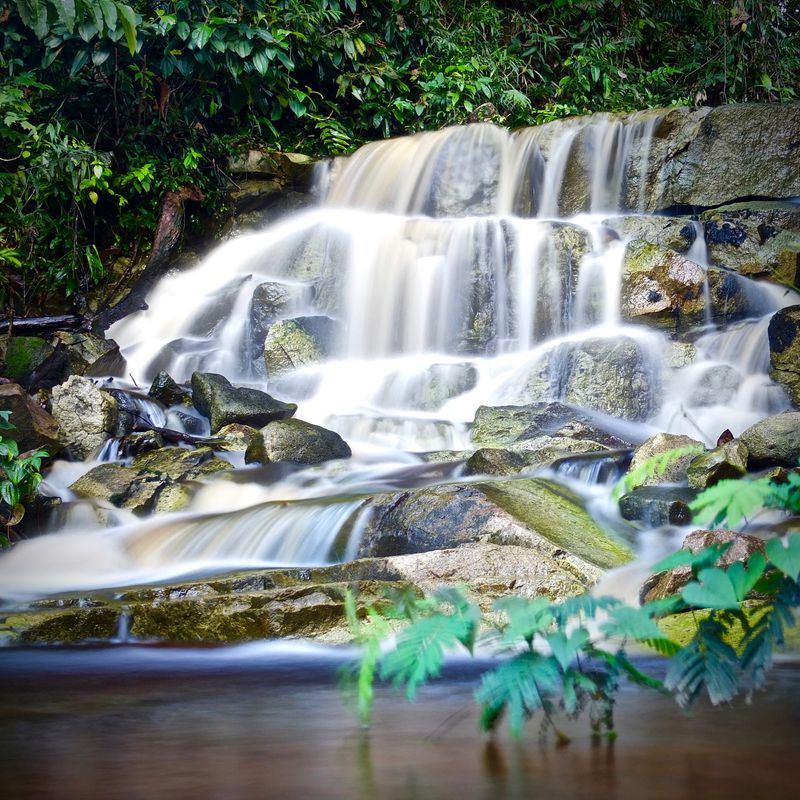
Anyone who likes rivers with some muscle will enjoy Marshall Falls on the Mazaruni. Water pours over big boulders and through narrow channels, creating a lively mix of rapids and small drops.
Sandy banks and shady trees make it a good place to pause.
The falls are within reach of Bartica, a river town often called the gateway to the interior. From there, boat trips head up the Mazaruni past islands and rocky shorelines.
Day trips are possible with a local operator.
Swimming near the rapids can be risky, so stick to calmer spots and follow guide advice. Early mornings often bring wildlife sightings along the banks, including herons and kingfishers.
Pack sun protection and a waterproof bag for your phone.
Share this story