A blacksmith with 40 years of experience runs evening classes where first-timers hammer glowing steel into tools they carry home. The fun part is that he’s also an actor, so the safety briefing comes with jokes.
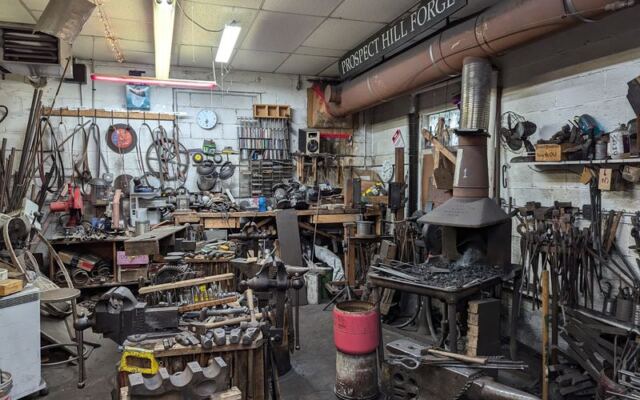
Most of the tools in the shop were handmade by the owner and his crew. Even the beginner class ends with something useful in your hands, like a twisted hook or a bottle opener.
I love the idea of trading a cold Massachusetts night for the heat of a glowing forge. I believe there’s no better winter cure than swinging a hammer beside a fire and shaping metal yourself.
The catch is that seats here go fast, and some people wait through several notification cycles for a spot. So what would you forge first if you got in?
A Small Waltham Shop Where Beginners Get Their Hands Hot
Prospect Hill Forge is a blacksmithing school in Waltham, Massachusetts, and it’s built for people who have never touched an anvil. The whole point is to put real hot metal in front of ordinary folks.
Classes here cover the full range, from short introductions to multi-week courses. You can start with a single evening and keep going for months if the hammer bug bites.
Officially, it’s listed as an educational institution. That label feels a little too tidy for a place where students pound glowing iron into shape and leave with soot on their aprons.
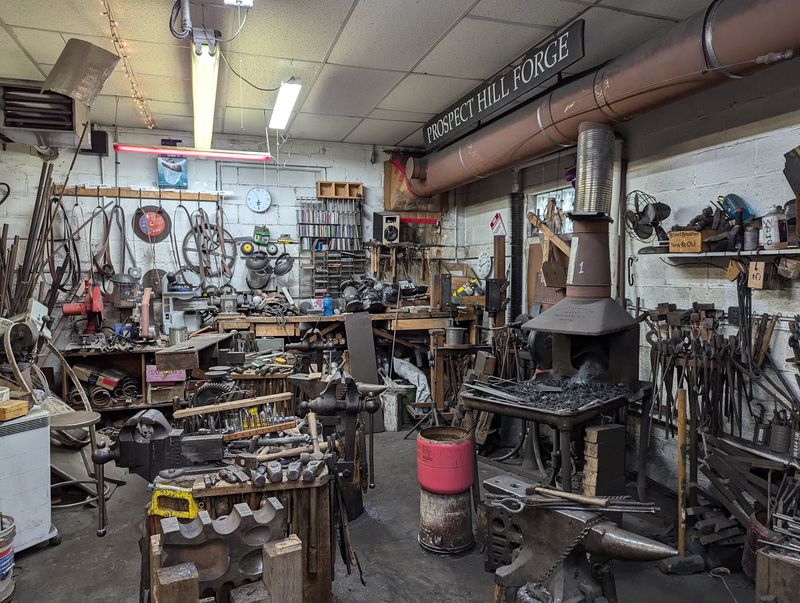
The shop is described as cool and intimate rather than sprawling. A smaller space means instructors can actually watch your swing and correct it before bad habits form.
Beginner projects range from hooks to bottle openers, and the advanced options go much further. Twisting, tapering, and shaping a handle are the same moves behind a classic fire poker, so the skills transfer straight to your hearth.
Think of it as a winter outing with a souvenir you made yourself. Few nights out end with you holding a tool that was a plain bar of steel a few hours earlier.
The Actor-Artist Who Runs the Anvils
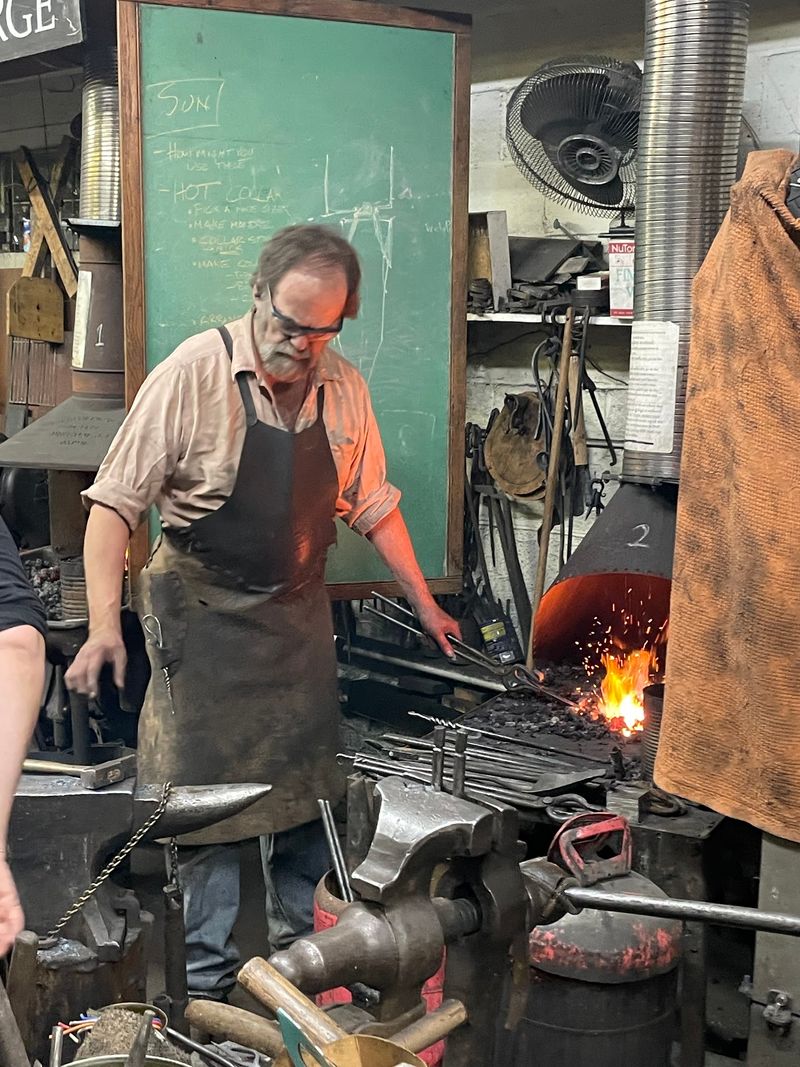
Carl West, the owner, brings roughly 40 years of experience as an artist and teacher. He’s worked with materials beyond steel, including glass and other metals.
He’s also an actor. That background explains why his classes feel part workshop, part one-man show, with stories and jokes woven between demonstrations.
Plenty of skilled smiths struggle to explain what their hands already know. Carl’s strength seems to be thinking ahead about what a student would want to ask or see.
Here’s a fun bit of history. During the pandemic, he ran Forge-to-Go sessions, hauling forges and anvils to students so they could learn outdoors and distanced.
That kind of stubborn creativity says a lot about the place. When indoor classes paused, the forge simply rolled out to meet people where they were.
Even many of the tools in the shop were handmade by Carl and his crew. So the tongs you grip may have started life on the same anvils you’re using.
He has a reputation for not rushing anyone out the door, either. And yes, there’s a recurring rumor that he’ll teach you a few dance steps if you linger after class.
Your First Taste of Blacksmithing Starts With an Apron
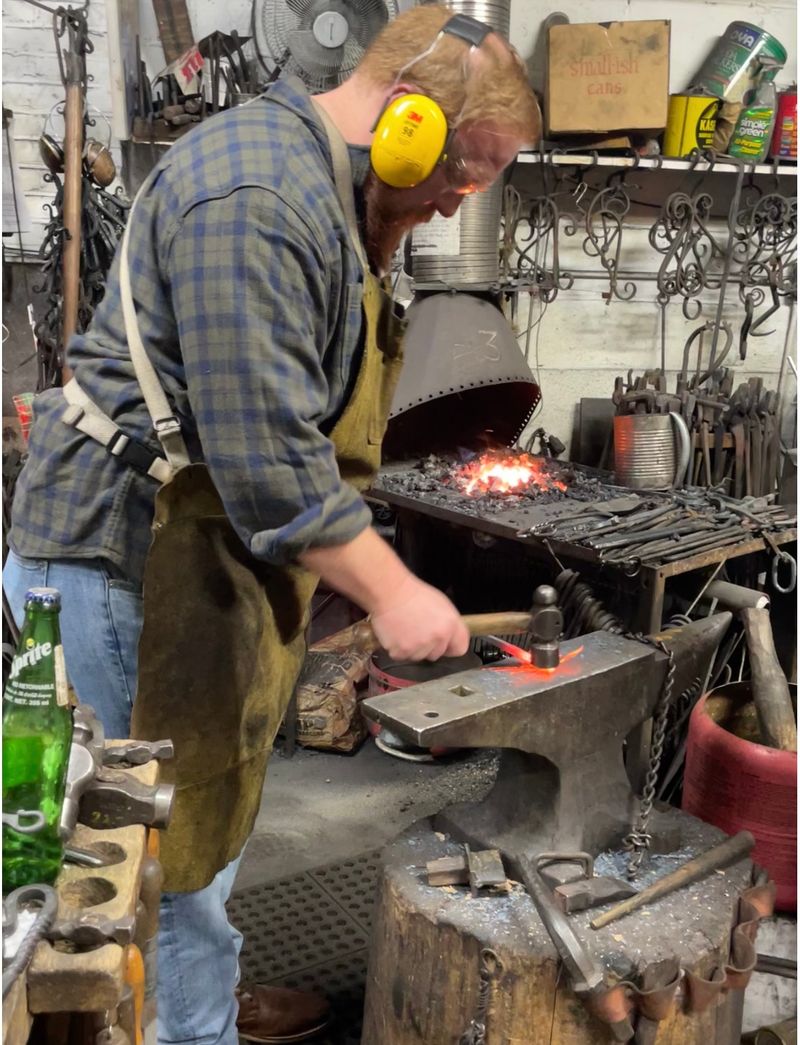
Nervous about fire and hammers? The Taste of Blacksmithing class is designed exactly for you, and it begins gently with introductions and gear.
Students collect their protective equipment and suit up in aprons first. Then comes a thorough safety briefing, peppered with enough humor to calm the jitters.
After that, you’re paired with a partner and sent to a forge. Each step gets broken into small pieces, explained, and demonstrated before anyone picks up a hammer.
The class covers various ways to hammer and twist hot metal. Many first-timers walk out with a hook, and they’re often already plotting where it will hang at home.
Budget more time than the schedule suggests. Sessions have run closer to four hours, which feels like a bonus when you’re finally getting the hang of the hammer.
That extra time matters for skill, too. Twisting a bar evenly takes practice, and it’s the same decorative move you’d want on a handsome fireplace poker someday.
The intro class price is considered pretty affordable for what you get. That makes it a solid winter treat that won’t wreck the budget.
Hooks, Twists, and the Road to a Homemade Fire Poker
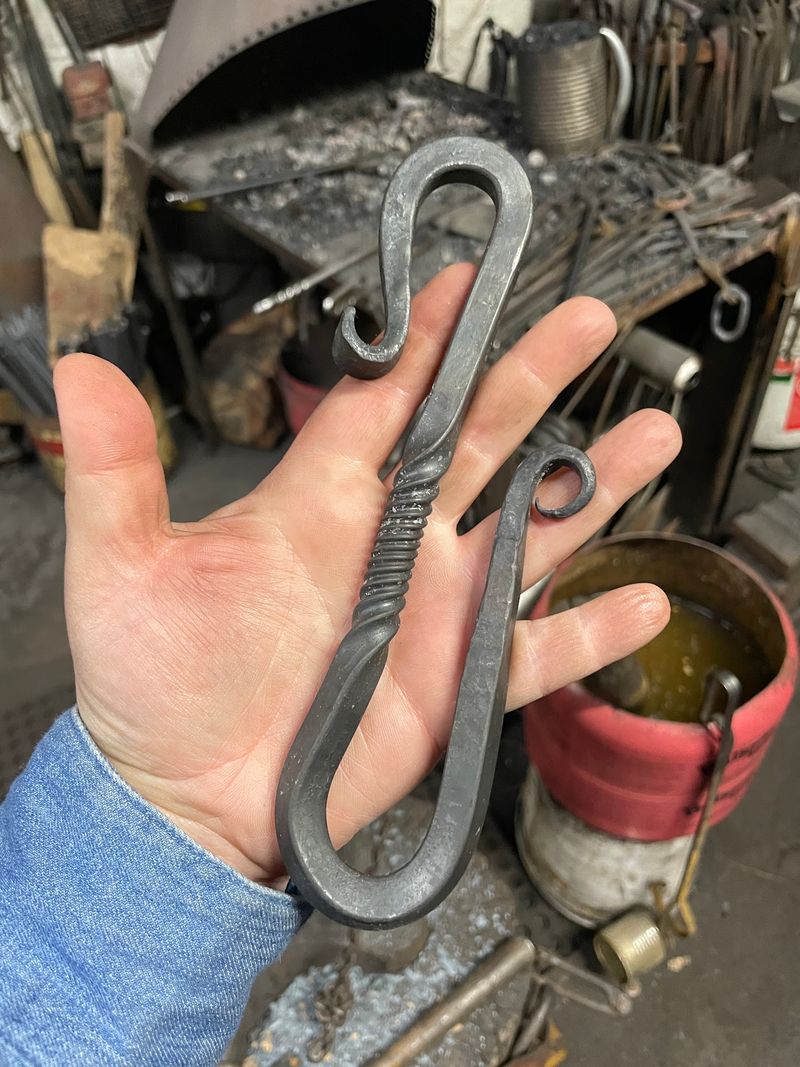
Steel bends surprisingly politely once it’s glowing orange. That simple fact powers the most popular beginner project here, the bottle opener class.
It’s a short, focused session that ends with a tool you’ll actually use. Classmates often produce wildly different versions, since everyone twists and shapes in their own style.
Why does this matter for a fire poker? Because the core techniques overlap almost perfectly.
A poker is really a long tapered bar, a twisted section for grip and style, and a hooked tip. Hooks and twists are exactly what the intro classes drill into your arms.
Once you’ve learned to control heat and hammer angle, a poker becomes a natural next goal. Students who gain confidence can move on to their own projects, both decorative and practical.
There’s something poetic about forging the tool you’ll use to tend a fire. On a frosty Massachusetts evening, it’s hard to imagine a more fitting project.
Ask about the current class lineup before you set your heart on a specific item. Offerings rotate, but the foundation skills stay the same, and they all point toward your fireplace.
Rudiments Course Means Making the Tools That Make Tools
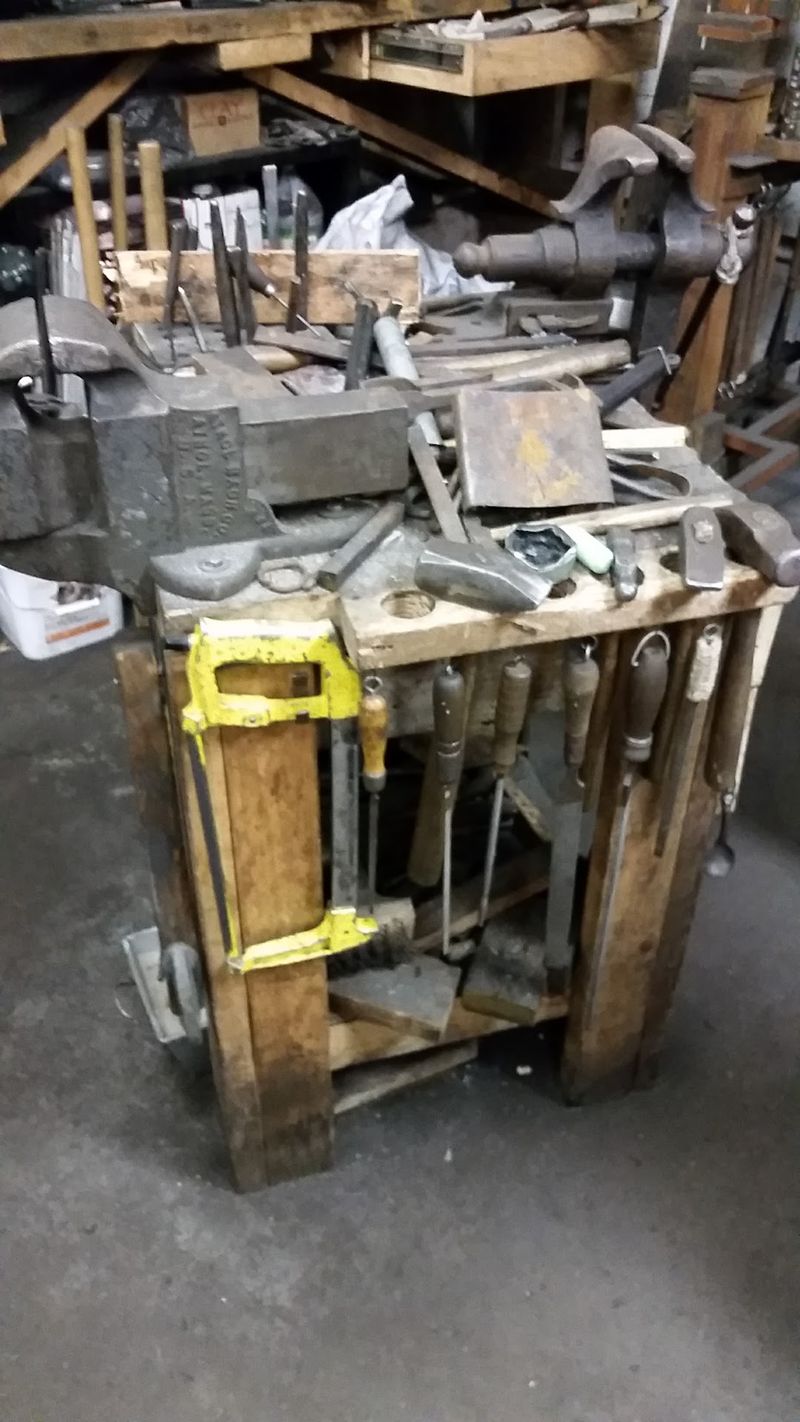
Forging your own hammer sounds like a far-off dream for a beginner. In the multi-week Rudiments of Blacksmithing course, it’s the grand finale.
Students build handmade tongs and a punch from scratch. Then they use those very tools to create a handmade hammer, which is a wonderfully satisfying loop.
Willow Zeitman teaches this course, and she’s known for keeping classes fun yet constantly challenging. Technique, precision, and safety stay front and center the whole way.
Picture the progression as a ladder. Each week adds a skill, and each skill becomes a tool you’ll keep using long after the course ends.
For anyone who caught the bug at an intro night, Rudiments is the logical next step. It turns a fun evening into a genuine foundation in the craft.
Winter is a smart time to commit to something like this. Weekly sessions give cold months a warm rhythm, and the forge does the heating for you.
By the end, your fire poker plans will feel modest. You’ll have the know-how to tackle it, plus the homemade tools to hold it steady.
Knives, Copper Flowers, and Open Smithy Time
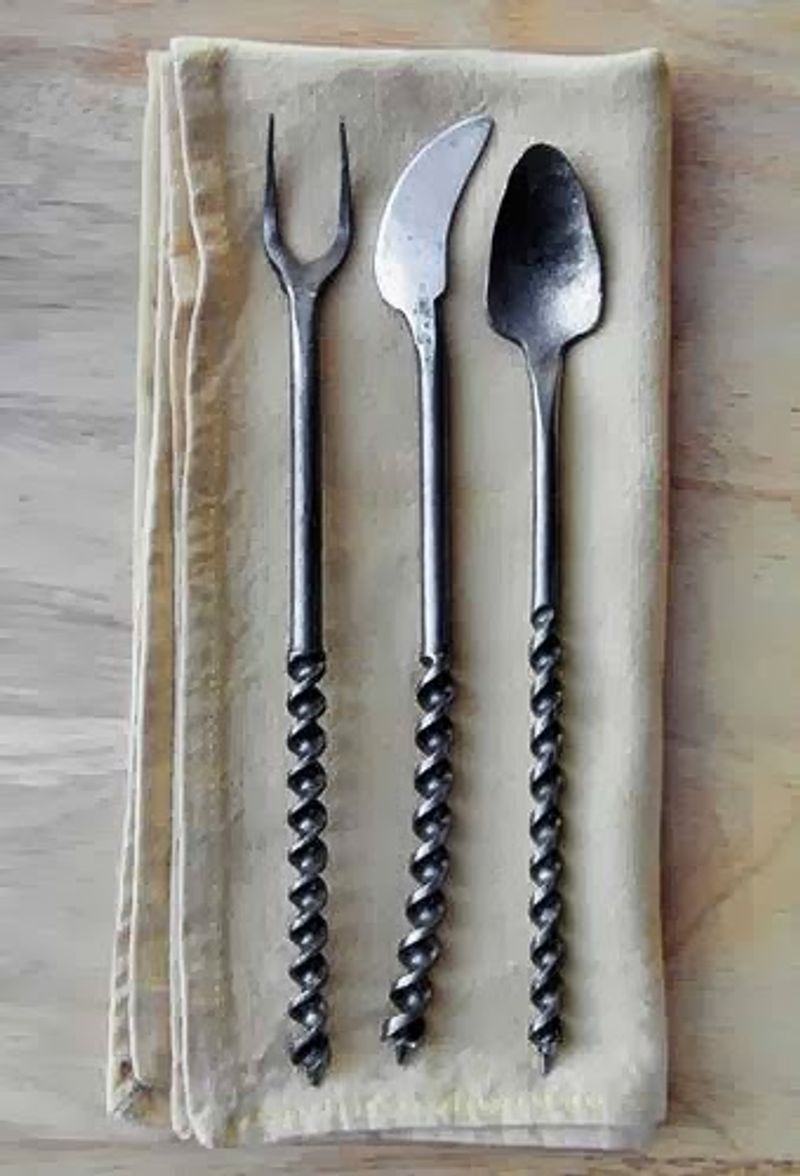
Copper flowers might be the last thing you’d expect from a blacksmith shop. Yet artistic pieces like these sit right alongside everyday tools on the menu of possibilities.
A dedicated knives course with Carl takes things up a notch. It’s a popular next stop for students who finish the multi-week Rudiments class and want more.
There are also sessions focused purely on fundamentals, like fire management and hammer form. Those sound humble, but they’re the secret to every clean twist and taper.
Good fire control means steel heats evenly instead of burning or cooling too fast. Better hammer form means less fatigue and more accurate blows.
For independent tinkering, Prospect Hill Forge offers Open Smithy hours. The schedule lives on the forge’s online calendar, so check there before planning a solo session.
Open time is perfect for finishing a project or practicing a skill that didn’t quite stick. It’s also how a hook-maker slowly turns into a poker-maker.
Both Carl and Willow are known as innovative smiths who clearly love their work. That enthusiasm tends to rub off on students quickly.
Warm, Loud, and Wonderfully Welcoming
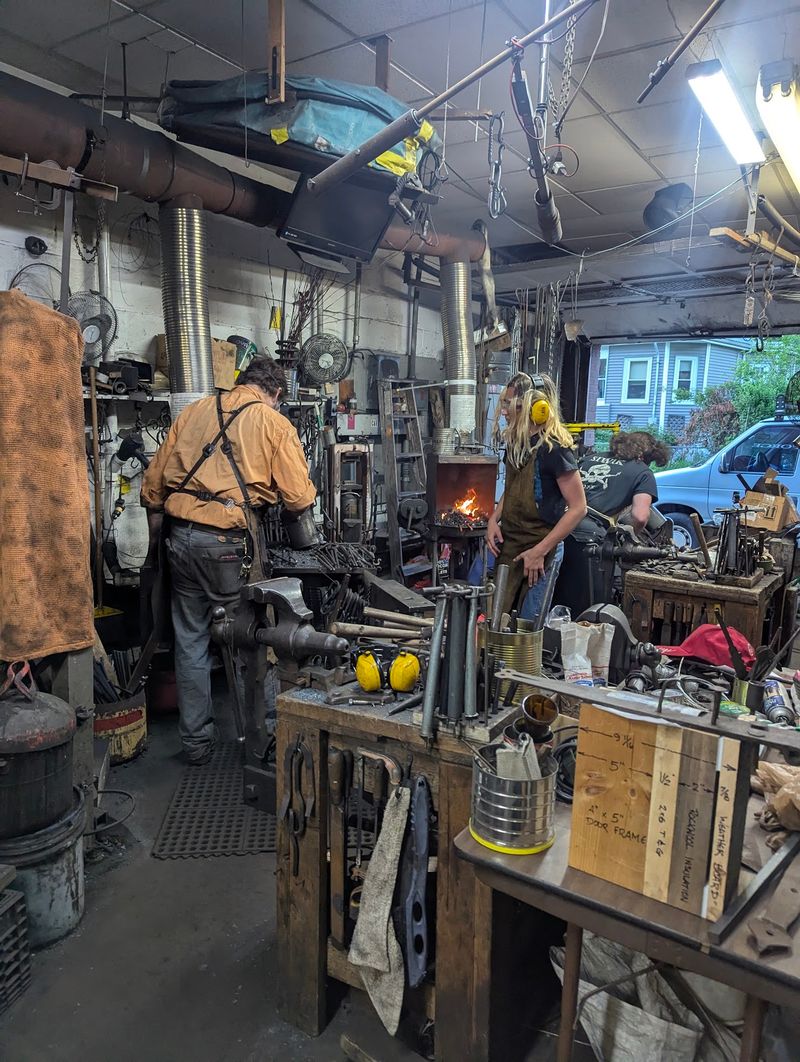
Clang, laugh, repeat. The soundtrack of a class is a chorus of students pounding iron, broken up by bursts of laughter.
The space is small, which keeps the mood personal. Instructors can give individual coaching, and nobody gets lost at the back of a crowded room.
Patience is a big part of the teaching style here. Steps arrive in manageable chunks, which helps anyone who struggles to remember long instructions.
Confident or timid, you’ll likely find your footing. The approach blends history, hands-on skill, and a social vibe that feels more like hanging out than sitting through a lecture.
Couples seem especially drawn to it. Intro classes are a popular birthday gift, and pairing up at the forge makes for a memorable shared night.
Friends looking for something new will fit right in, too. It’s the rare outing where everyone leaves with bragging rights and a handmade object to prove them.
Many students describe a strong “I can do that too” feeling afterward. That spark is why so many return for a second class, then a third.
Getting a Spot Takes a Little Planning
Popularity has its downside. Classes at Prospect Hill Forge can be tough to book, and some hopefuls wait through several rounds on the notification list.
So join that list early, especially if you’re eyeing a winter date. Flexibility on nights helps a lot when openings pop up.
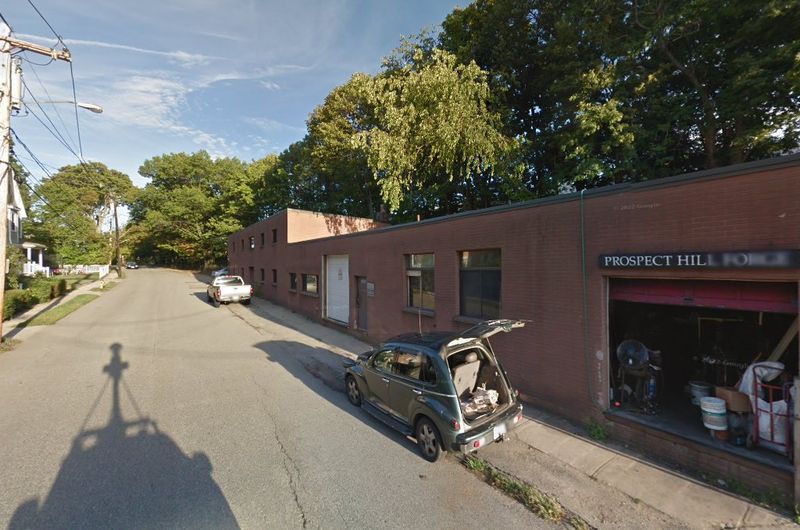
You’ll find the shop at 38 Guinan St, Waltham, MA 02451. That puts it within easy reach for much of the Boston area and greater eastern Massachusetts.
Evening sessions have included Sunday nights, which suits anyone juggling a weekday job. The current schedule and Open Smithy hours appear on the forge’s online calendar.
Plan for the class to run longer than listed. Instructors don’t hurry anyone out, and an intro session has stretched toward four hours.
Dress for heat, even if it’s freezing outside. Layers you can peel off make sense, since aprons and protective gear go on over your clothes.
Gift-givers, take note. A class booking makes a great surprise, though you’ll want to check availability before promising a specific date.
Worth Every Spark on a Cold Winter Night
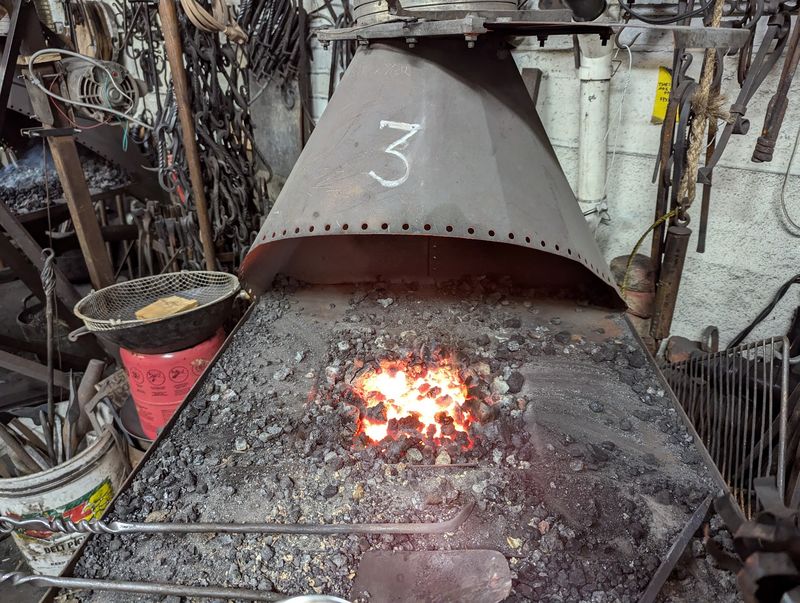
Few winter plans leave you warmer than you arrived. A night at Prospect Hill Forge manages it, both from the fire and from the satisfaction of making something real.
The teaching is the heart of it all. Skilled, funny instructors turn an ancient craft into something approachable for nervous first-timers.
The value stands out as well. An affordable intro class, a long and generous session, and a finished tool make the math feel easy.
And then there’s that fire poker dream. Every hook you bend and bar you twist moves you closer to forging one for your own hearth.
For Massachusetts locals, this is the kind of discovery worth sharing with exactly the right friends. It’s close, it’s unusual, and it beats another night of scrolling on the couch.
Just be ready for the bug to bite. Plenty of people come for one evening and end up signing up for course after course.
Grab a spot on the list, pick a cold night, and let the anvil do the talking. Your fireplace will thank you later.
Share this story