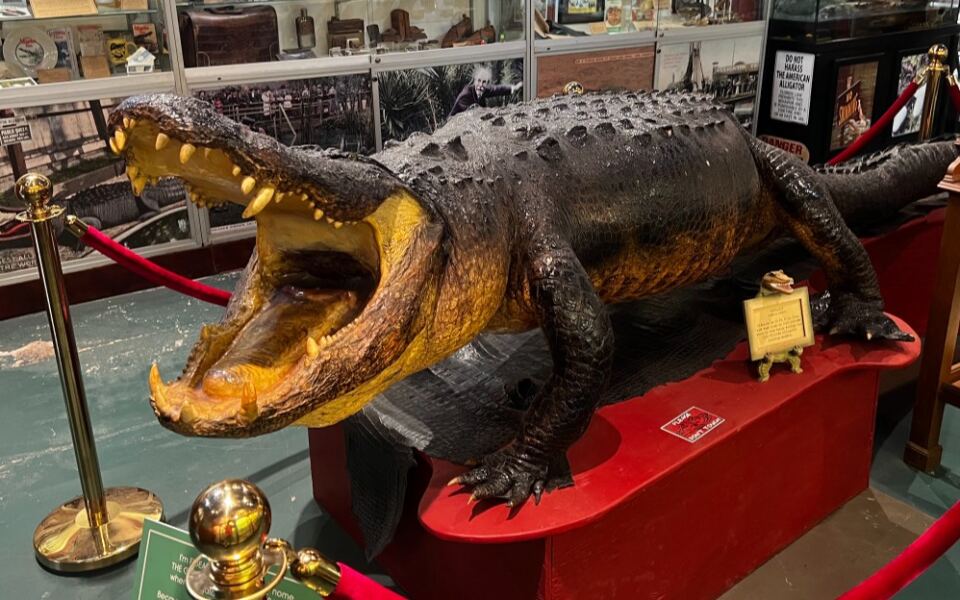
A giant alligator greets you in the first room, and it costs nothing to say hello. The museum behind that gator is free to enter in Louisiana, with donations welcome.
I love that the collection goes far beyond one big reptile. Fossils, folk art, taxidermy, and pop culture treasures all share the space.
A gift shop sits up front, and the exhibits wait in the back. I can’t imagine a better excuse to wander off the usual path.
Who knew a gator could steal the whole show?
A Giant Gator Says Hello First
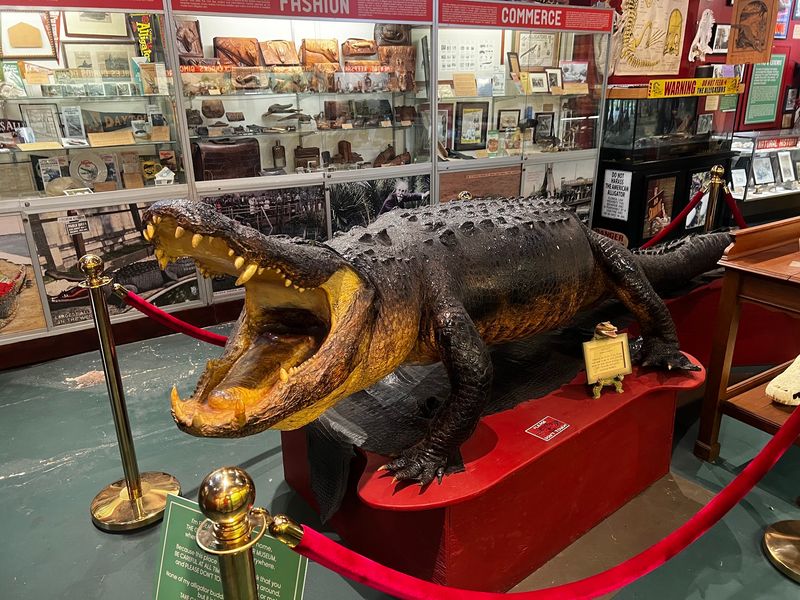
Some museums make you wait for the big moment. The Great American Alligator Museum doesn’t bother, because a huge gator is right there in the first room.
Guests can take a close look at it, though touching is a no-go.
Photos are part of the fun, and asking first is the polite move. That small courtesy keeps the staff happy and the gator undisturbed.
It also gives you a great souvenir shot without any awkward moments.
The big reptile sets the mood for everything else. The Great American Alligator Museum in Louisiana is small, but it plays big from the start.
You get a sense of how large these animals can grow, and that alone sparks questions.
Plan to slow down here before moving on. Kids tend to love sizing themselves up next to a creature like this, and adults can’t help doing the same.
Look closely at the scales, the teeth, and the shape of the head. Details like these are easy to miss when you rush, and this museum rewards a patient eye.
Once you have your fill, the other rooms are waiting with plenty more to discover.
Free Entry, Friendly Donation Box
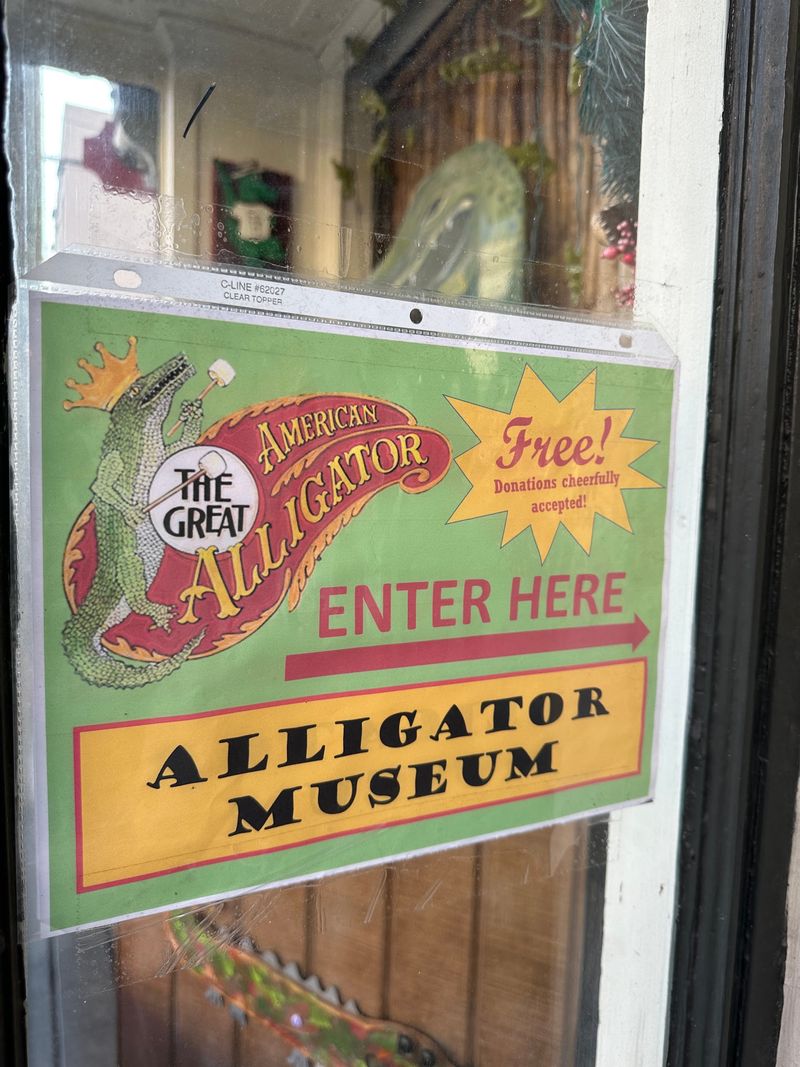
Free admission is the headline here, and it’s real. The museum runs on a donation basis, with no set amount asked at the door.
Give what feels right, or simply enjoy the visit.
That relaxed approach makes the place easy to try. You don’t have to plan a budget or commit a big chunk of your day.
Walking in on a whim is perfectly welcome.
Donations help support the museum, so a few dollars go a long way for a small spot like this. Many people like to chip in after seeing the collection.
It feels good to back something so lovingly put together.
The address is 2051 Magazine St, New Orleans, LA 70130. That puts it right on one of the city’s best-known shopping streets, so it fits easily into a stroll.
Hours run most days from 10 AM to 6 PM, with Sunday starting at 11 AM. Since schedules can change, a quick check before heading over is smart.
Showing up during open hours means you won’t miss the gator who’s waiting inside.
Fossils That Reach Back In Time
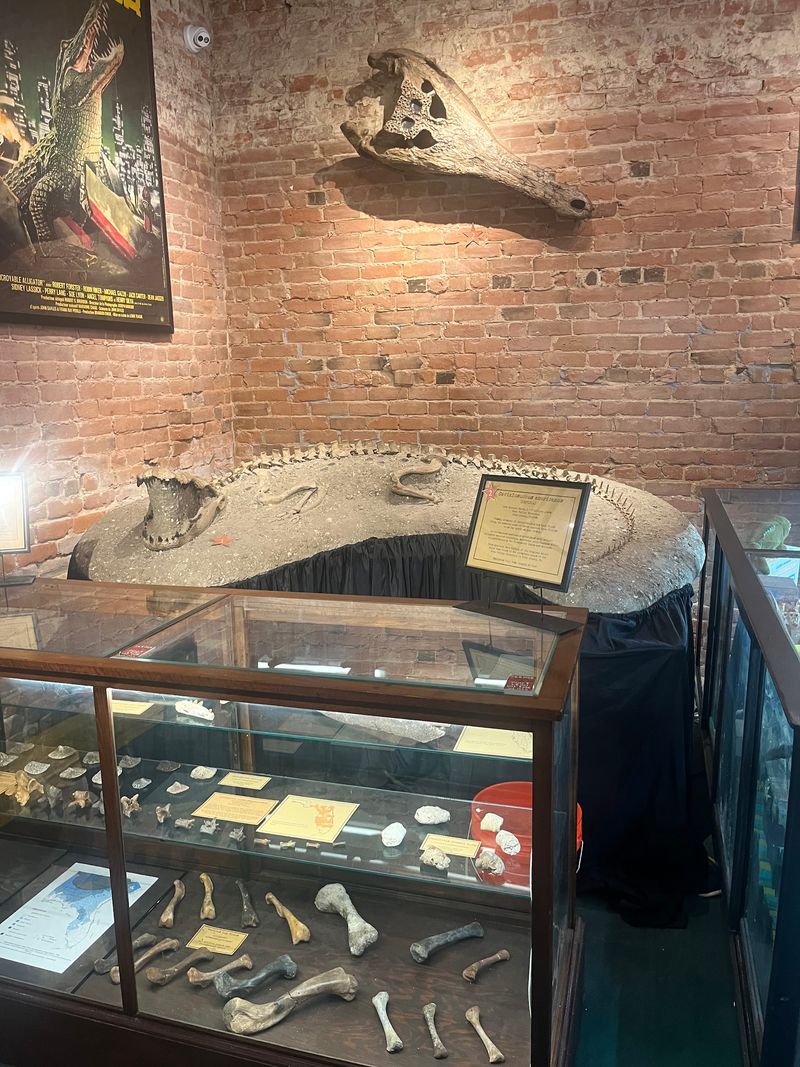
Prehistoric fossils turn this little museum into a time machine. Bones and specimens show how long alligators and their relatives have been around.
It’s science, but the kind you can actually see up close.
The fossil displays sit alongside the playful items, and that mix works well. One moment you’re admiring ancient remains, and the next you’re grinning at a gator-themed collectible.
The contrast keeps the visit lively.
Take your time with the labels and displays. Reading a few of them can teach you something new about how these animals are built.
Even a short look can spark a good conversation with whoever came along.
Fossils are a big reason the museum feels like more than a novelty. The Great American Alligator Museum covers biology, history, and culture in a small footprint.
That variety means curious kids and grown-up history fans can both find something to love. It’s a smart little stop for anyone who likes a side of science with their sightseeing.
Folk Art That Steals The Spotlight
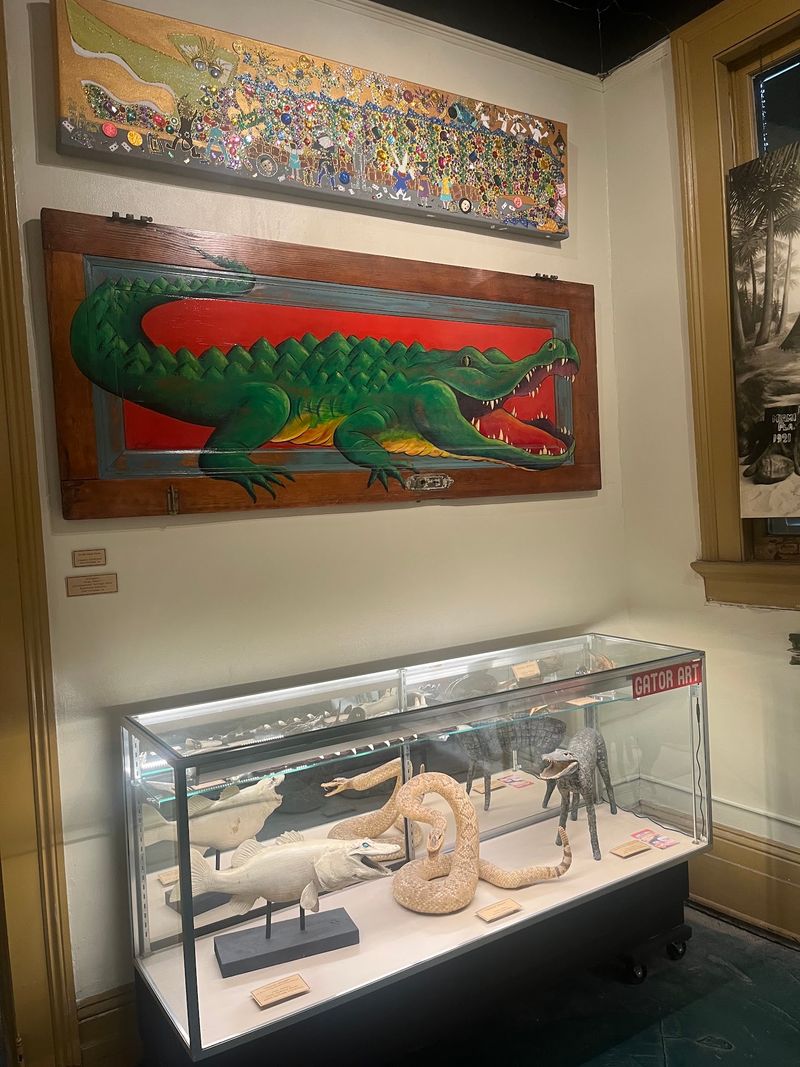
Art lovers, take note. Folk art is a standout in these rooms, and it adds real color to the whole experience.
Local creativity shows up in surprising ways.
One piece is a door painted with alligator artwork by a local artist. It carries a connection to the city’s history, which gives it extra meaning.
Art and memory meet on one wooden panel.
The museum treats gators as more than animals. They’re also symbols, stories, and inspiration for makers.
That perspective makes each artwork feel like part of a bigger conversation.
Look up as well as around. Ceiling details can be easy to overlook, and a second glance may reveal something new.
The rooms are compact, so a slow lap lets you notice more than a quick walk-through would.
Folk art also pairs nicely with the quirky collectibles nearby. Together they show how deeply alligators have woven themselves into Louisiana’s imagination.
It’s a cheerful reminder that a small museum can hold plenty of heart.
Gator Memorabilia By The Shelf-Load
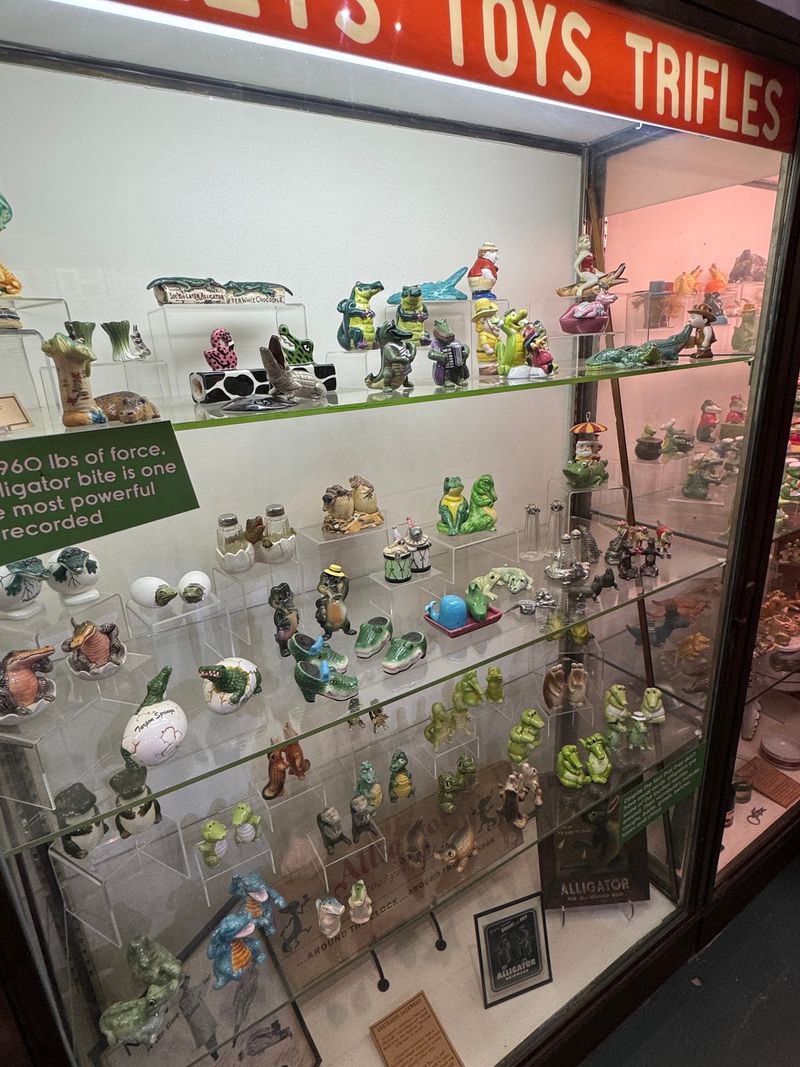
Cookie jars, toys, purses, and even a gator guitar all have a place here. The collection is organized by type, so you can browse like a treasure hunter with a map.
Variety is the name of the game.
Alligator salt and pepper shakers might make you want to start a collection of your own. Small objects like these tell big stories about how people have celebrated the animal.
Each one reflects a different era and style.
Pop culture gets its moment too. Alligators have starred in music, memorabilia, and everyday household items.
Spotting familiar shapes in unexpected forms is half the fun.
Take a slow walk and let your eyes jump around. Every shelf offers another surprise, and it’s easy to pick favorites.
Younger visitors often enjoy a game of finding the silliest piece.
The Great American Alligator Museum rewards curiosity with plenty to see in a small space. That density is part of the charm.
You leave with a head full of gator trivia and a smile you can’t quite explain.
A Rescue Gator Lives In The Back
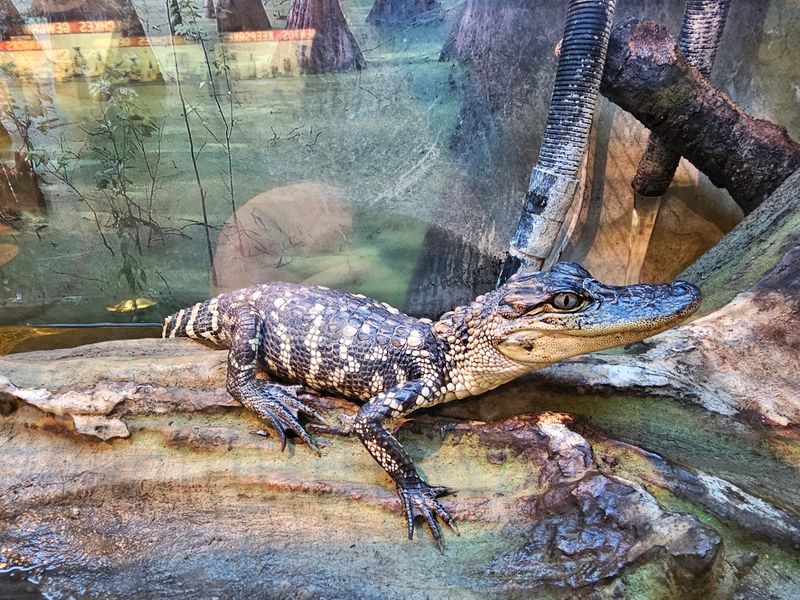
A real baby alligator calls the museum home for now. The plan is to release the young gator back into the wild once it grows large enough.
That goal gives the visit a hopeful, caring note.
Seeing a living gator adds a different energy compared with taxidermy and fossils. It connects the history on display to a creature that’s alive today.
Kids especially tend to light up at this part.
Alligators outgrow small spaces quickly, which is why release is the plan. It’s a good reminder that these animals belong in the wild.
The museum’s approach shows respect for the species.
Staff are passionate about alligators and reptiles, and that enthusiasm comes through in conversation. If you have questions, they’re happy to chat.
Asking about the gator’s story is a great way to learn more.
Residents can change over time, so what you see may differ from visit to visit. That’s one more reason a return trip can feel fresh.
Check in with the team when you arrive.
The Gift Shop Out Front
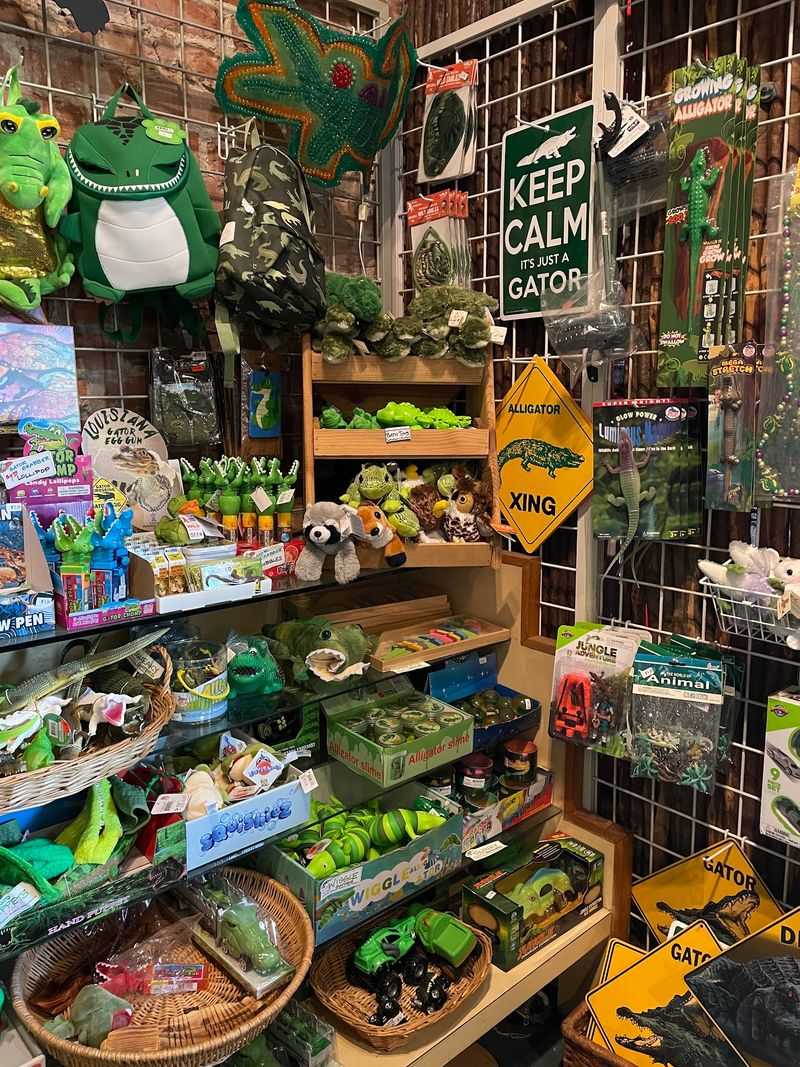
Browsing starts before the museum does. The gift shop sits at the front, packed with gator-themed goodies.
It’s easy to lose a few minutes just looking around.
Souvenirs range from toys to trinkets to apparel, including glow-in-the-dark alligator t-shirts. Shoppers who love quirky keepsakes will feel right at home.
There’s something small for nearly every taste.
Buying a keepsake is also another way to support the museum. Pairing a donation with a souvenir feels like a fair trade for a free visit.
You walk out with a memory in hand.
Fans of local art may enjoy checking for handmade pieces among the shelves. The mix leans playful, with plenty to please younger travelers.
Gifts for friends back home are simple to find.
Give yourself time to browse before or after the exhibits. The Great American Alligator Museum makes shopping part of the adventure.
Just try to leave with only one gator, if you can manage it.
Staff Who Love Their Gators
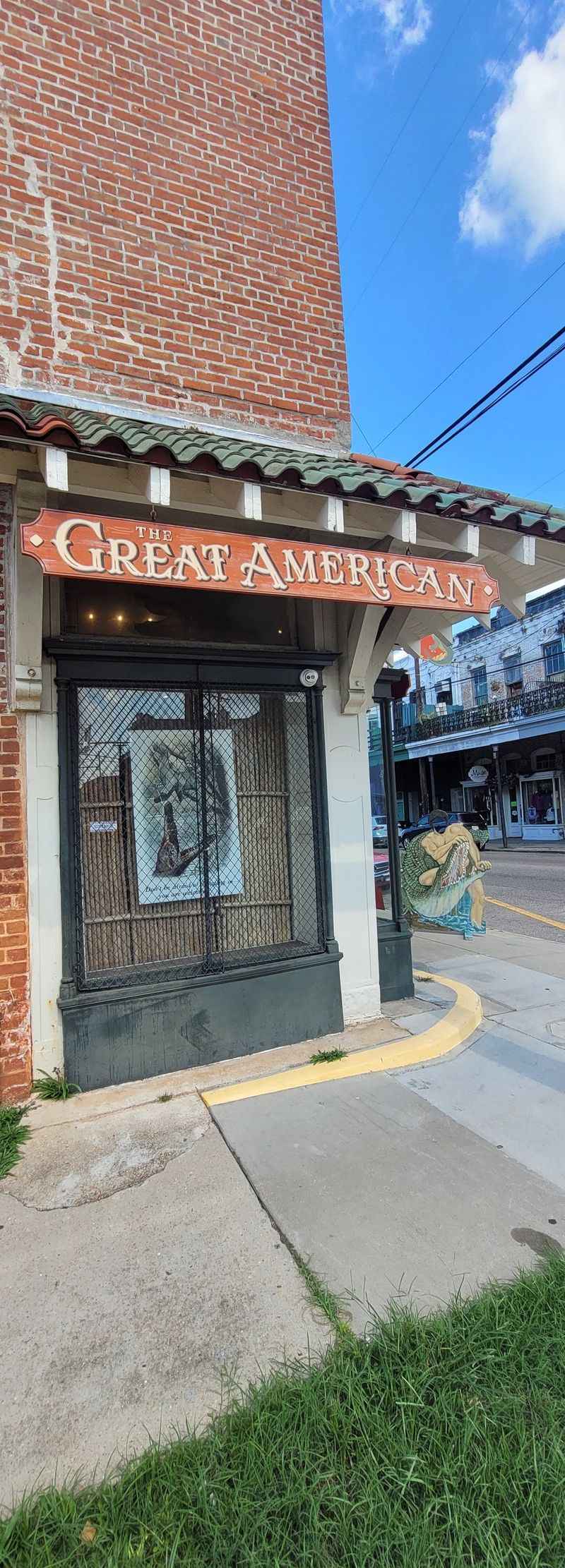
Friendly faces make a small museum feel even bigger. The team here is known for being welcoming and knowledgeable about alligators.
Questions are encouraged, so don’t be shy.
A quick chat can unlock extra stories about the collection. Staff can point out pieces you might otherwise walk past.
That personal touch turns a quick look into a real conversation.
Passion for the subject is easy to spot. The museum feels like a labor of love, built around the animal at its heart.
That energy rubs off on visitors of every age.
Families with older kids can ask about the fossils, the rescue gator, or the folk art. Each answer adds a layer to what you see.
Curious teens often enjoy the back-and-forth.
Treat the staff kindly, and ask before taking photos with the big gator. Good manners go a long way in a place like this.
A smile and a thank-you finish the visit nicely.
Plan A Magazine Street Stop
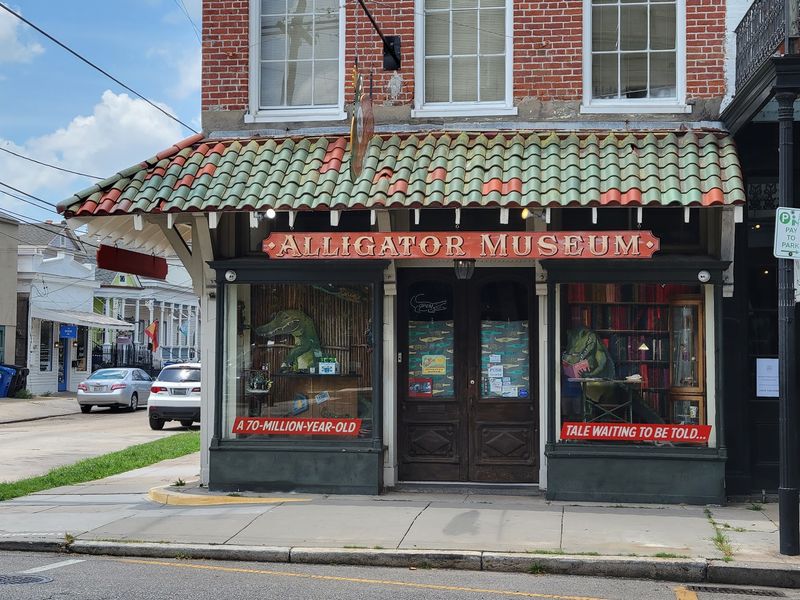
Magazine Street is made for wandering, and this museum fits right in. It’s close to the Garden District, so it pairs well with a stroll through nearby shops and streets.
You can see it all without rushing.
Most visits take a short amount of time because the space is compact. Plan on roughly fifteen minutes to an hour, depending on how closely you look.
That makes it an easy add-on to a bigger day out.
Hours generally run from 10 AM to 6 PM, with Sunday opening at 11 AM. Schedules can shift, so a quick check ahead is wise.
Arriving during open hours saves you a disappointing walk.
The Great American Alligator Museum offers five rooms of surprises in New Orleans, Louisiana. Bring friends, family, or a curious mind, and you’ll leave happy.
It’s a charming place to meet a giant gator and learn something new along the way.
Share this story