Half a million bats leave one spot every evening, and they eat billions of insects before morning. That number sounds made up.
It isn’t.
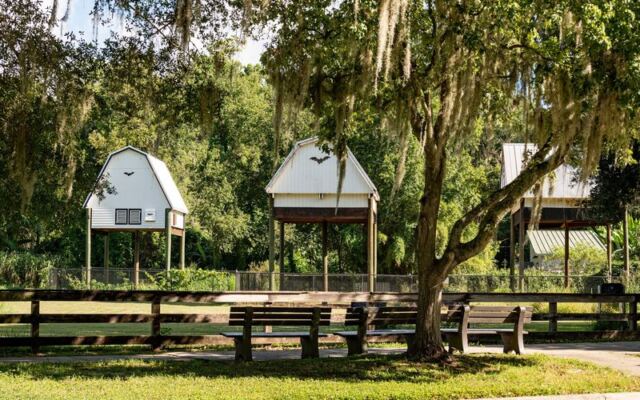
They live inside tall wooden houses built just for them, right on a busy college campus in Florida. People gather on benches and sidewalks as the sky turns orange.
Then everyone goes quiet and waits.
I love that the show costs nothing and needs no ticket. You just show up, look up, and let nature handle the rest.
The crowd is a mix of students, families, and curious travelers who heard a wild rumor.
I can’t think of many free evenings that feel this thrilling. The bats leave in a dark ribbon that stretches toward the horizon.
So where exactly does this happen, and how do you catch it at the right moment?
Giant Wooden Homes Built for a Flying Neighborhood
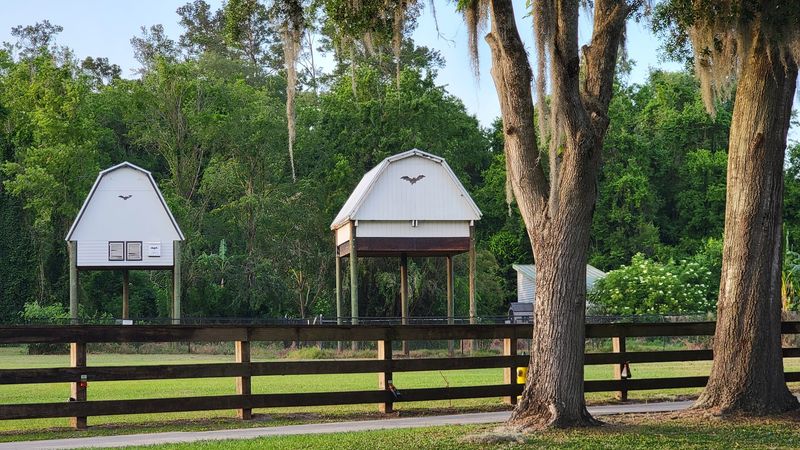
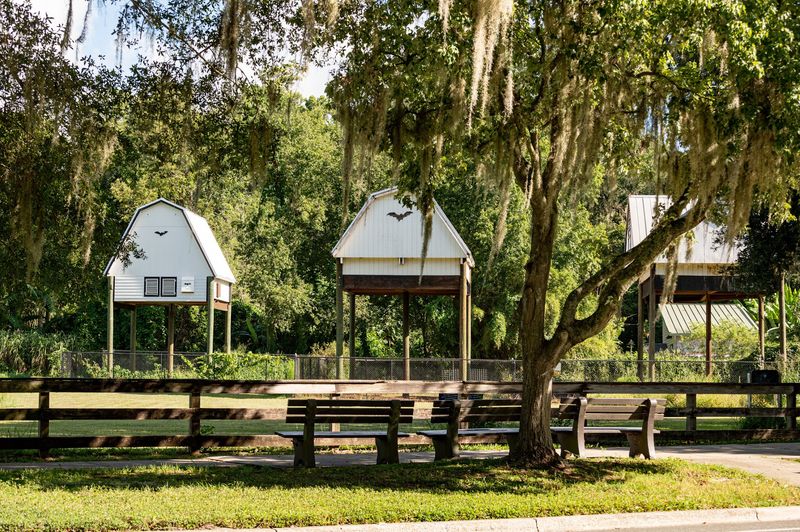
Raised high on sturdy posts, the UF Bat Houses look a bit like oversized wooden cabins floating above the grass. They sit on the University of Florida campus in Gainesville, close to scenic Lake Alice.
These structures aren’t decoration. They’re full-time homes for hundreds of thousands of bats, making them some of the most crowded addresses in Florida.
The site works like a small wildlife refuge in the middle of a busy university. Students rush to class nearby, while a massive colony naps quietly overhead during the day.
That contrast makes the place feel delightfully strange.
Here’s a fun detail for curious listeners. If you walk close and stay quiet during daylight, you can sometimes hear the bats chattering inside.
It’s a little like eavesdropping on a packed apartment building.
The colony includes more than one species, with three kinds of bats sharing the space. Brazilian free-tailed bats make up the famous swarm, while southeastern bats also call it home.
Many of the residents are mothers, since the colony serves as a maternity group.
All of that activity builds toward one daily moment. When the sun drops, the whole neighborhood heads out for dinner at once.
How a Campus Ended Up With Bat Barns
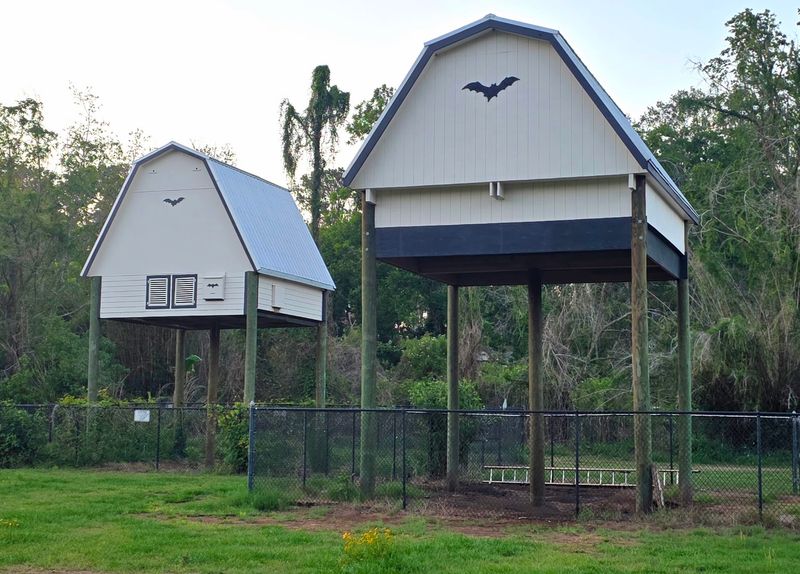
Curiosity pays off at this spot. The story of how the bat house and bat barns came to exist adds real depth to the evening show.
The University of Florida keeps an official site dedicated to the colony. It’s a smart stop before your visit, since a little background makes the flight even more meaningful.
Bats normally live deep in caves, far from human eyes. Giving them a purpose-built home on open ground changes everything.
Suddenly, anyone can witness something usually hidden underground.
That’s a big reason the site feels scientifically special. You’re watching a natural event in a calm, respectful setting.
Nothing is staged, and the bats follow their own schedule.
The structures also keep a large colony living close to people without causing trouble. Bats fly over heads during the evening rush, yet they don’t bother anyone below.
Peaceful coexistence never looked so busy.
Gainesville has plenty of campus landmarks, from stately buildings to lovely gardens. Few of them, though, come with a nightly population boom of winged residents.
Reading up on the history first turns a fun outing into a genuinely fascinating lesson in Florida wildlife.
The Sunset Swarm That Turns Into a River in the Sky
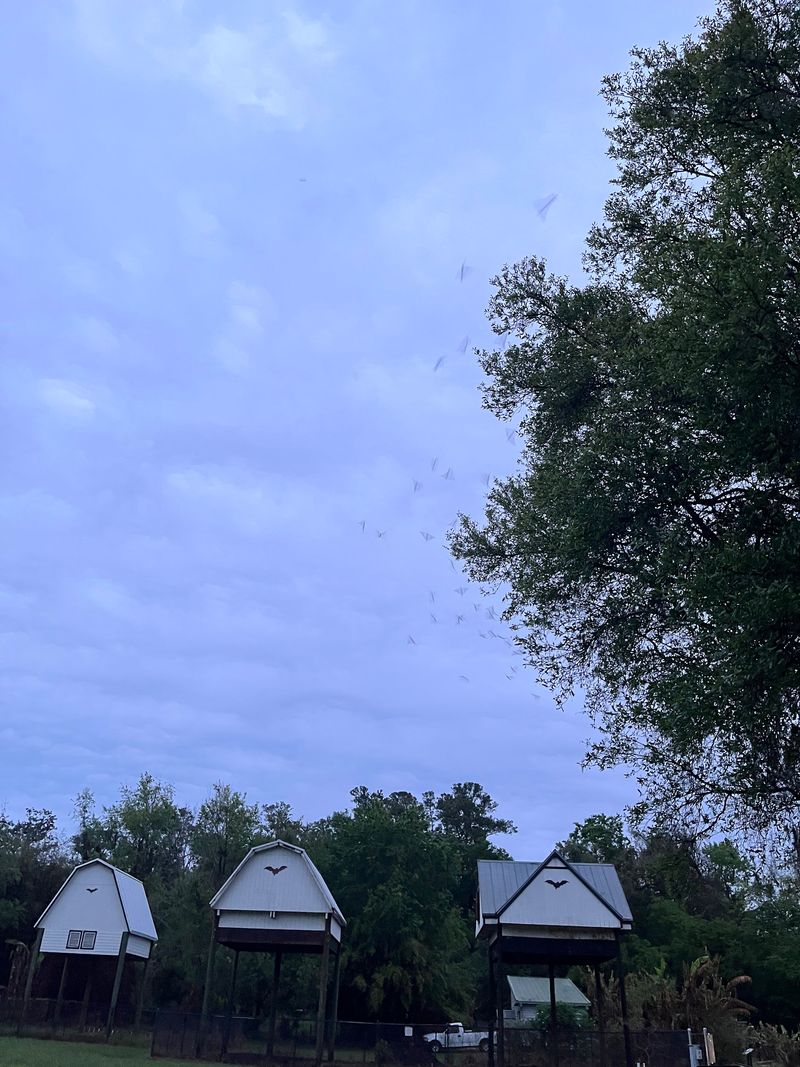
A trickle comes first. A few southeastern bats slip out quietly, almost like scouts checking the weather.
Then the Brazilian free-tailed bats burst out together. Thousands become hundreds of thousands, pouring from the houses in a dark, swirling stream.
That stream is why people call it a river of bats. Their feeding grounds sit miles away, so they fly off in one long ribbon.
You can follow it with your eyes until it fades into the distance.
The main event usually lasts just a few minutes. Blink, scroll your phone, or wander off for a snack, and you might miss the best part.
Stay focused once the first bats appear.
The appetite behind this flight is staggering. Estimates suggest the colony eats billions of insects each night, adding up to around 2,500 pounds of bugs.
Gainesville’s gardens and farms probably appreciate the free pest control.
The sounds and smells add to the drama, too. Wings flutter, the air shifts, and the sky darkens above the crowd.
Few free shows in Florida pack this much energy into such a short window.
Hawks on Patrol and Gators Nearby
Bats aren’t the only wildlife stars here. Hawks often perch nearby, waiting patiently for the evening flight to begin.
Hawk watching has become part of the experience for many visitors. These sharp-eyed hunters know the schedule as well as anyone, and they sometimes snag a quick meal mid-air.
It’s nature at its most honest. The food chain plays out right overhead, which can spark great conversations with older kids.
Younger children may need a heads-up before the show starts.
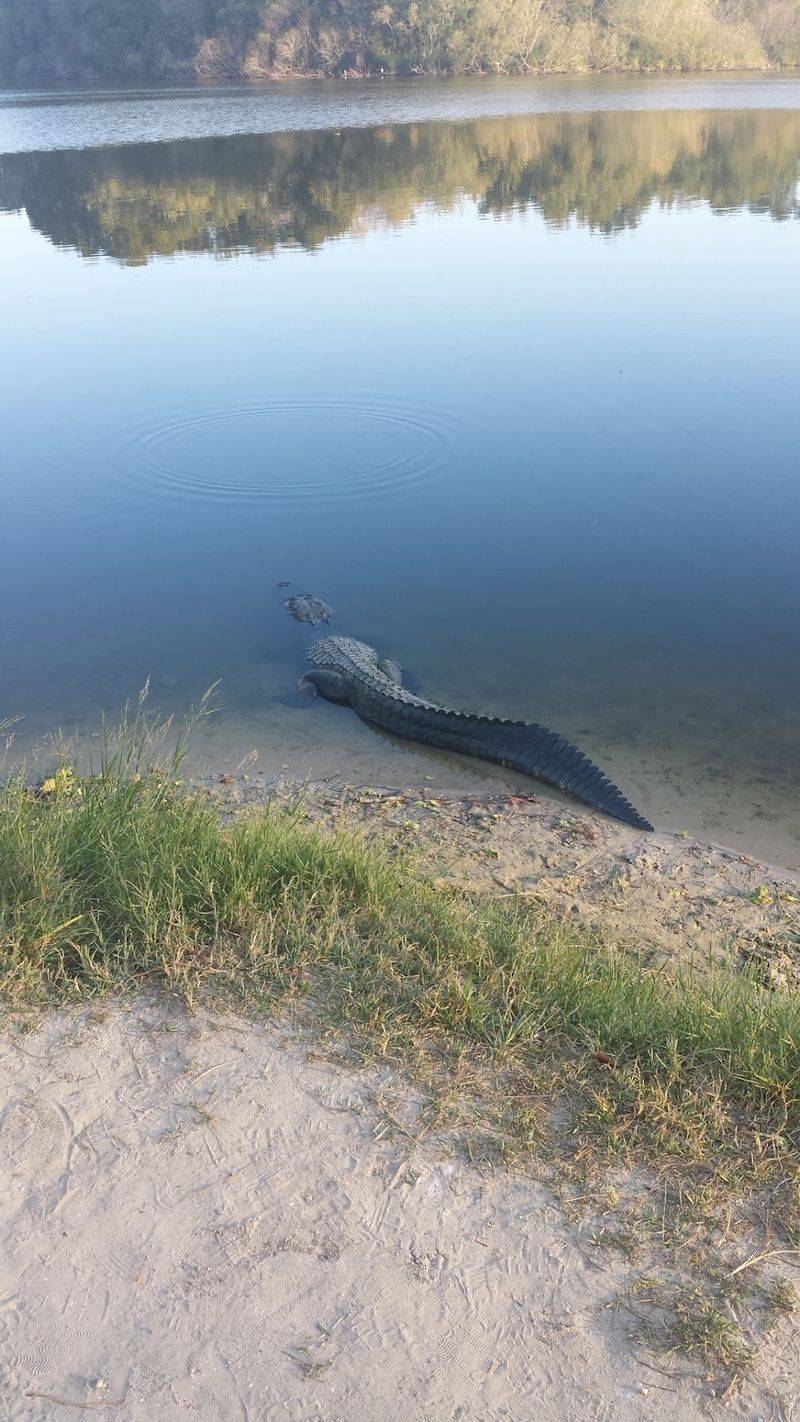
Across the road, Lake Alice brings even more creatures into view. Alligators are a familiar sight in this part of Florida, and the lake area is known for them.
Keep a respectful distance from the water’s edge, especially with little ones.
Birds, reptiles, and mammals all sharing one small stretch of campus feels like a bonus feature. You come for a single spectacle and end up seeing a whole ecosystem at work.
Binoculars can help if you want to study the hawks before sunset. They’re also handy for tracking that long ribbon of bats as it heads toward the horizon.
Gardens, Lake Breezes, and a Pre-Show Stroll
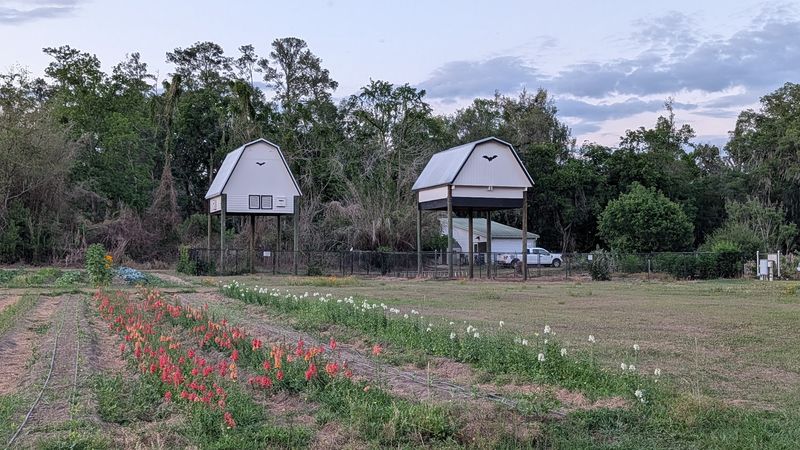
Arriving early has perks beyond grabbing a good seat. The grounds around the bat houses include gardens and blooming flowers that look lovely in evening light.
Lake Alice sits just across the street, calm and wide. A gentle breeze often drifts off the water, making the wait feel relaxed instead of tedious.
Some people pack food and turn the outing into a long evening picnic. Others snap photos among the flowers before the main event.
Either way, the setting rewards anyone who shows up ahead of schedule.
The wider University of Florida campus adds even more scenery. Pretty landscaping, a beautiful church nearby, and tree-lined paths make a short walk worthwhile.
That’s especially handy on cooler nights. Bats tend to stay inside when temperatures dip, so a chilly evening might not deliver a swarm.
A lakeside stroll and garden views help soften the letdown.
Think of the surroundings as the opening act. They set a peaceful mood, then step aside when the headliners take the sky.
It’s a charming way to spend a Gainesville evening without spending a dime.
A Free Night Out for Families, Couples, and Nature Fans
Cheapest date night in town? Plenty of people would argue yes.
Watching the bats costs nothing, yet it feels like a real event.
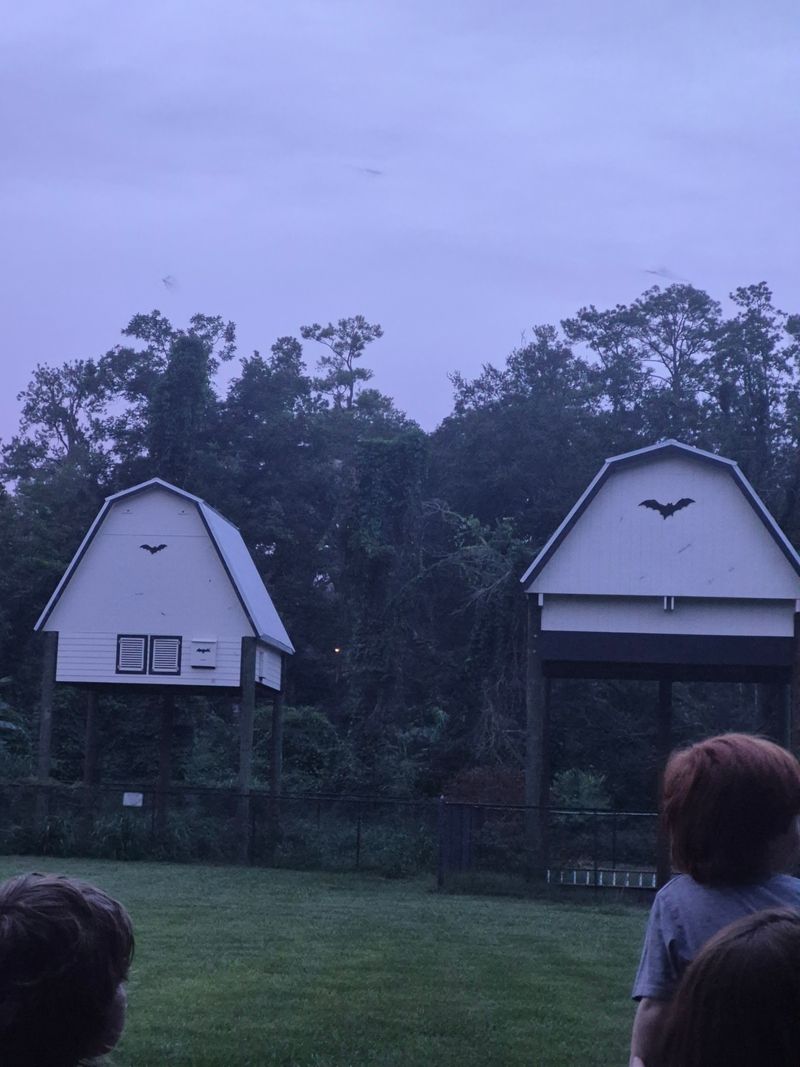
The crowd tends to build as dusk arrives. Excitement hangs in the air, and strangers chat while scanning the sky.
That shared anticipation gives the UF Bat Houses a friendly, communal vibe.
Kids usually love it. Thousands of bats zip overhead, close enough to thrill, yet they don’t bother anyone below.
It’s an easy way to spark curiosity about science and wildlife.
Couples get a sunset, a lakeside breeze, and a jaw-dropping finale. Nature fans get a rare look at cave-dwelling animals in the open.
Students get a break from studying that beats another night staring at a screen.
Retirees and visitors exploring Florida on a budget will appreciate the price tag, which is zero. No reservations or tickets are involved, either.
The appeal really is broad. Anyone with an hour to spare and a little patience can enjoy it.
It’s one of the few outings where almost every age group leaves equally impressed.
Timing, Parking, and What to Pack
Timing is everything. The bats usually emerge about 10 to 20 minutes after sunset, so aim to arrive 15 to 20 minutes before the sun drops.
The viewing area lists hours from 6 to 9 PM every day of the week. The site sits on Museum Rd, Gainesville, FL 32611, right on the University of Florida campus.
Parking is available just west of the bat houses. Spots can fill up, so arriving early helps.
From the lot, walk toward the benches along the sidewalk that face the houses.
Watch your speed on campus roads. The limit is 20 miles per hour, and it’s taken seriously.
Benches are limited, so bring folding chairs if you want a comfortable perch. Bug spray is a smart addition, since gnats can get pesky near dusk.
Face the bat houses rather than the lake for the best view. The bats don’t swoop over the water in front of you.
They rise from the houses and stream overhead.
Warm evenings bring the strongest flights. Cool nights and some fall evenings may show smaller numbers.
Why This Sunset Show Belongs on Your Florida List
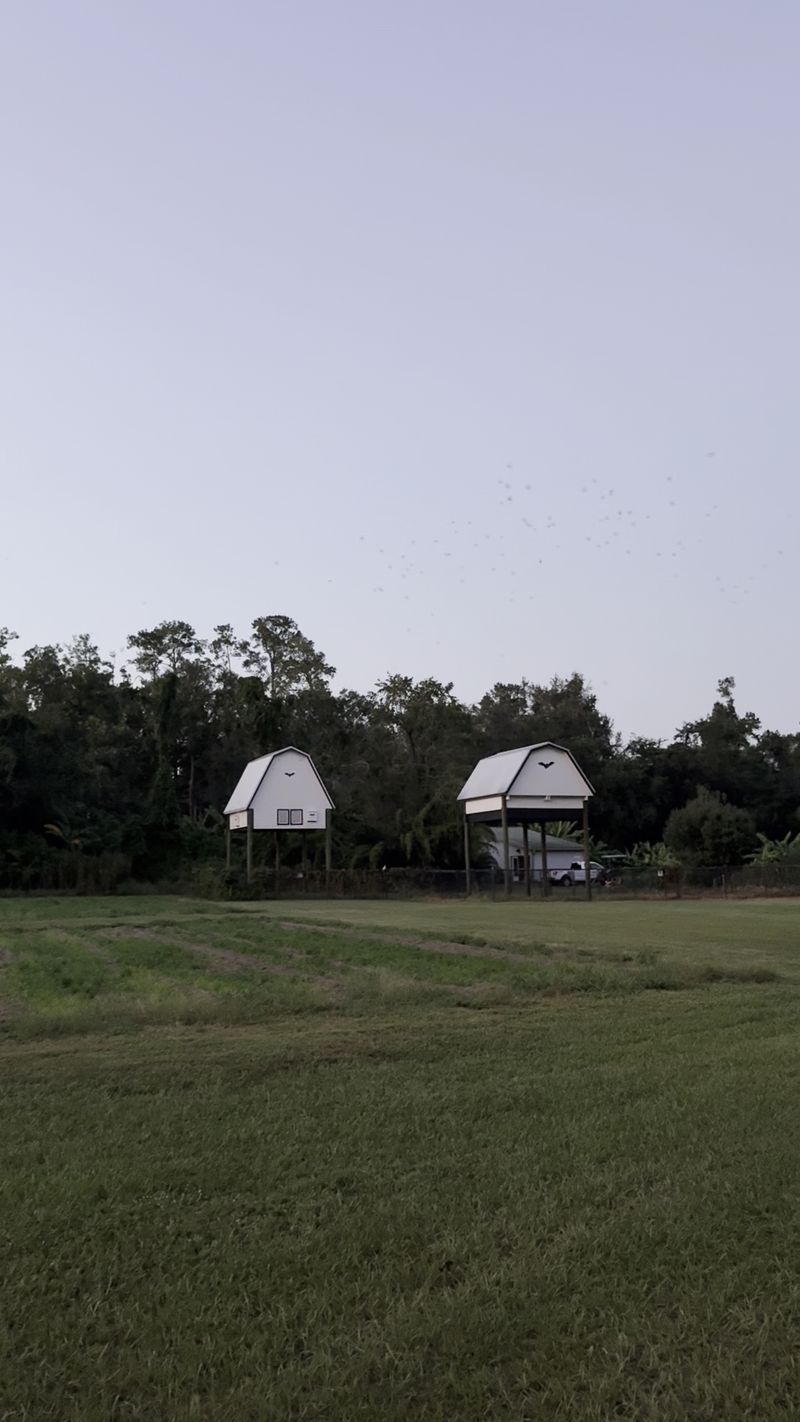
Some free attractions feel like filler. The UF Bat Houses feel more like a secret the whole state should be in on.
Few places anywhere let you watch half a million wild animals take flight on a regular schedule. Even fewer offer it without a ticket, a tour guide, or a long hike.
The magic lies in the simplicity. You find a spot, watch the sky shift colors, and wait.
Then the river of bats appears, and everyone around you reacts at once.
Results do vary with the weather. Warm nights deliver the biggest swarms, while chilly evenings may keep the colony home.
Plan for spring through early fall if you want the best odds.
Even a quieter night offers gardens, Lake Alice, and a pleasant campus stroll. That backup plan makes the trip low-risk and high-reward.
For anyone exploring north central Florida, this is a stop worth building an evening around. Grab a chair, pack the bug spray, and arrive before sunset.
The bats have dinner plans, and they won’t wait for latecomers.
Share this story