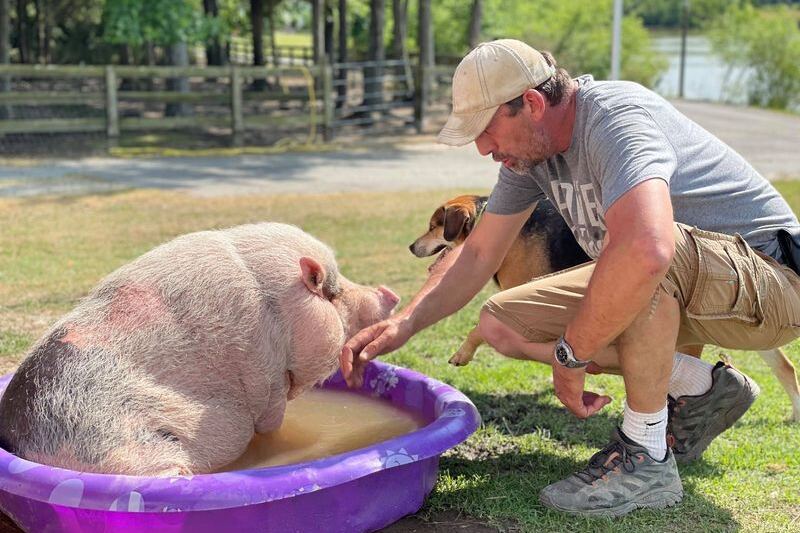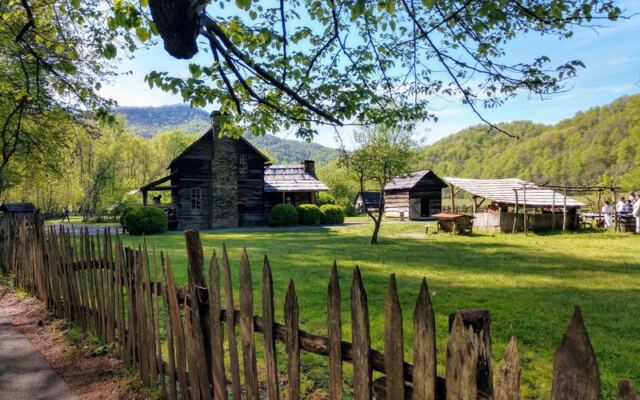
I pulled off the road expecting a quick stretch and a bathroom break, maybe a snack from the car. What I found was a whole mountain farm tucked beside a river, with log cabins, a giant old barn, curious pigs, and elk grazing in the field like they owned the place.
It costs nothing to walk through, yet it ended up being the part of my North Carolina mountain trip I talked about the most. If you have ever wondered how families in the Smokies cooked, worked, and lived more than a century ago, this little farmstead tells that story better than any textbook.
A Farm Tucked Behind the Oconaluftee Visitor Center
Picture a grassy field at the edge of Great Smoky Mountains National Park, with forested ridges rising on every side. That is where the Mountain Farm Museum sits, right behind the Oconaluftee Visitor Center near Cherokee, North Carolina.
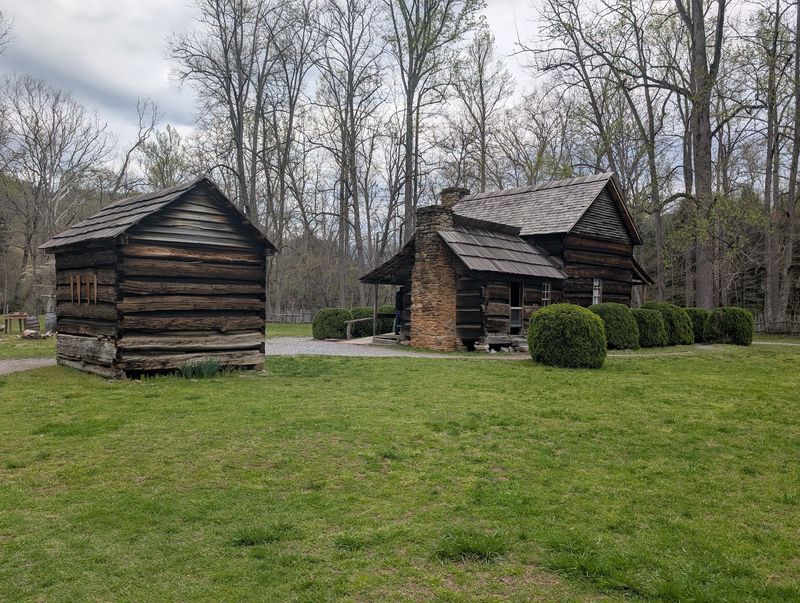
Run by the National Park Service, the site is an open-air museum made up of historic log farm buildings. Instead of glass cases and velvet ropes, you get a working-style farmstead you can stroll through at your own pace.
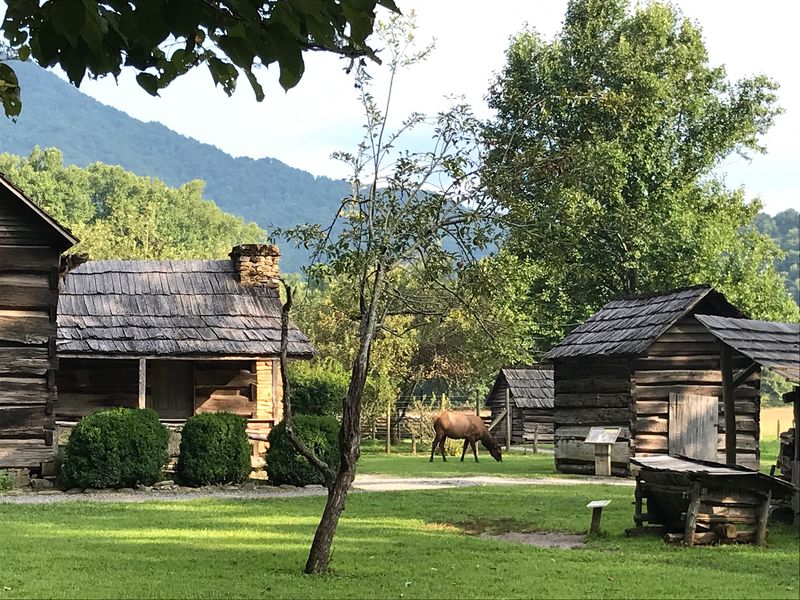
Cabins, a barn, a smokehouse, and other outbuildings are spread across the property, each one a chapter in the story of mountain living.
Visitors often say they planned only a short stop and stayed much longer. With the river flowing nearby and mountains framing every view, it is easy to see why.
The setting alone makes this one of the most peaceful history lessons in the state, and it sits right off the main route through the park.
Cabins Moved Log by Log in the 1950s
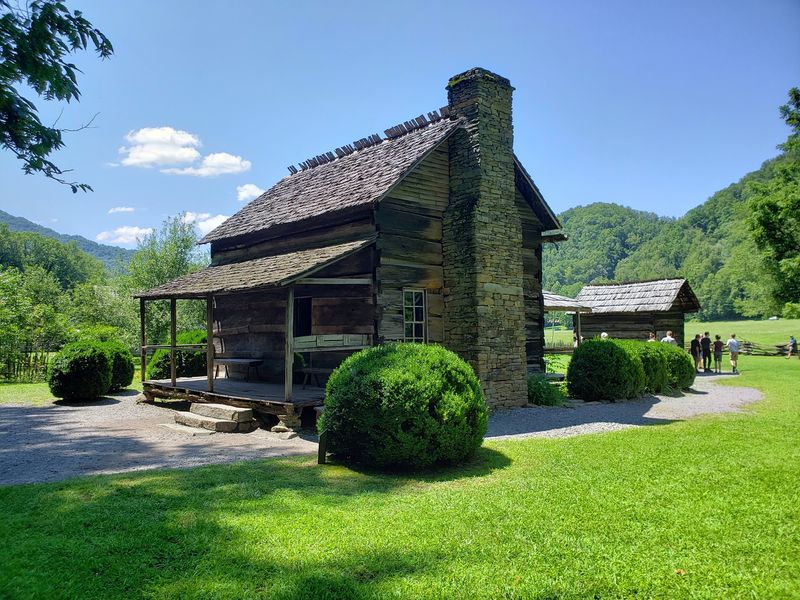
Here is a fun twist most people miss. None of these buildings started out on this exact spot.
Back in the 1950s, historic log farm structures were gathered from around the Smokies and moved here to save the region’s history. Rather than letting old cabins and barns crumble in remote hollows, preservationists brought them together into one complete farmstead.
The result is a full picture of what a mountain homeplace looked like in the late 1800s and early 1900s.
Walking among them, you can spot the craftsmanship right away. Visitors often remark on how well houses were built back then, with sturdy notched logs and careful joinery that has lasted generations.
One building after another shows how families made the most of the timber growing all around them.
Knowing the backstory makes the visit richer. Every cabin wall you touch once stood somewhere else in these mountains, sheltering real people through real winters.
Inside the Farmhouse Walls
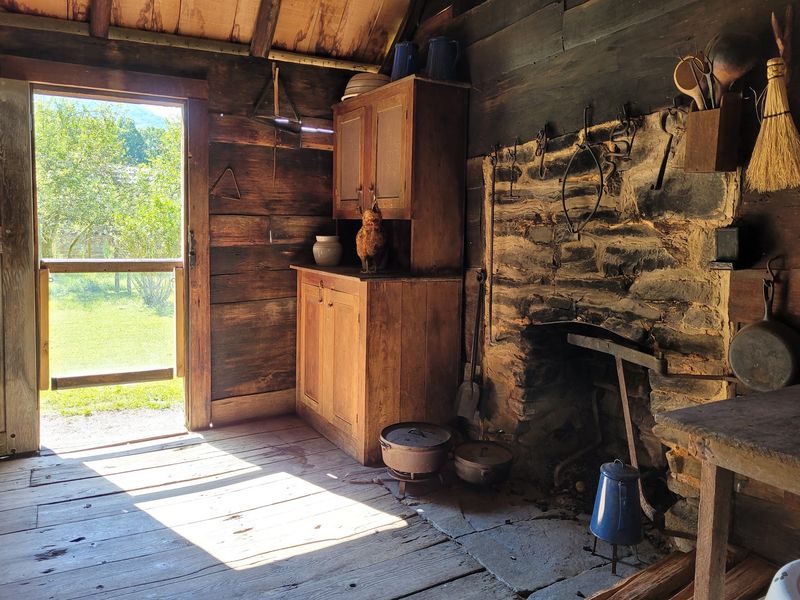
Step through the farmhouse door and the modern world goes quiet. Plain wooden rooms, period furniture, and simple household utensils show exactly how a farm family arranged their days.
Nothing here is fancy, and that is the point. Visitors describe the rooms as cozy and honest, the kind of space where every object had a job.
A chair was for sitting after hard work, a pot was for feeding a crowd, and the fireplace kept everyone warm and fed.
Kids especially tend to get quiet in here, trying to imagine life without electricity or running water. Parents often find themselves explaining how meals were cooked and how families squeezed into small spaces together.
Take your time inside. Notice the thickness of the walls, the size of the windows, and how little decoration there is.
Those small details tell a bigger story about mountain thrift and resourcefulness around 1900.
The Century-Old Barn
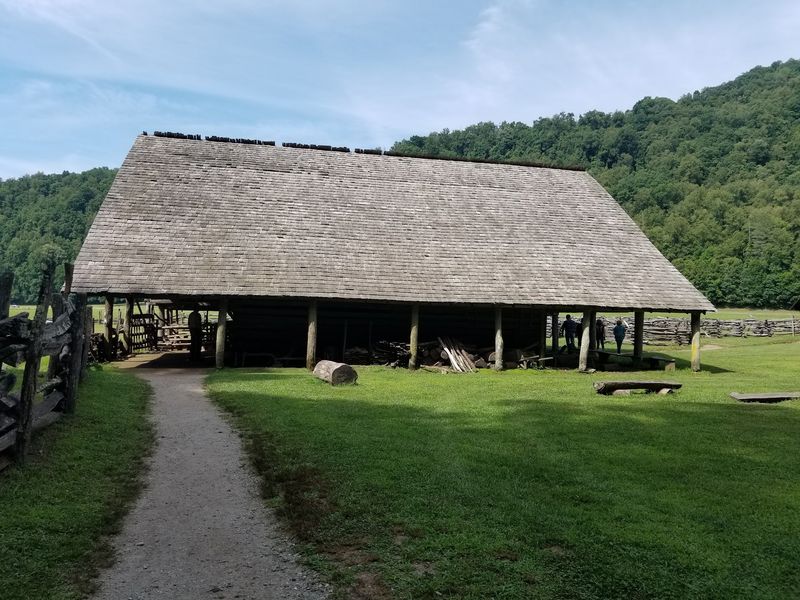
You will spot it before you reach it. The barn is the giant of the farmstead, and visitors mention it more than almost any other building on site.
Some say this structure is over 100 years old, which makes standing beneath its weathered beams feel a little like time travel. Barns were the heart of any mountain farm.
Livestock sheltered here, hay was stored overhead, and tools stayed out of the rain.
Look up when you walk inside. The size of the timbers shows how much muscle and teamwork it took to raise a building like this without modern machines.
Neighbors often pitched in on big projects, so a barn was as much a community effort as a family one.
Photographers love it too. The rough wood glows warmly in late afternoon light, and with mountains behind it, the barn makes one of the best snapshots of the whole trip.
Smokehouse, Corn Crib, and Chicken Coop
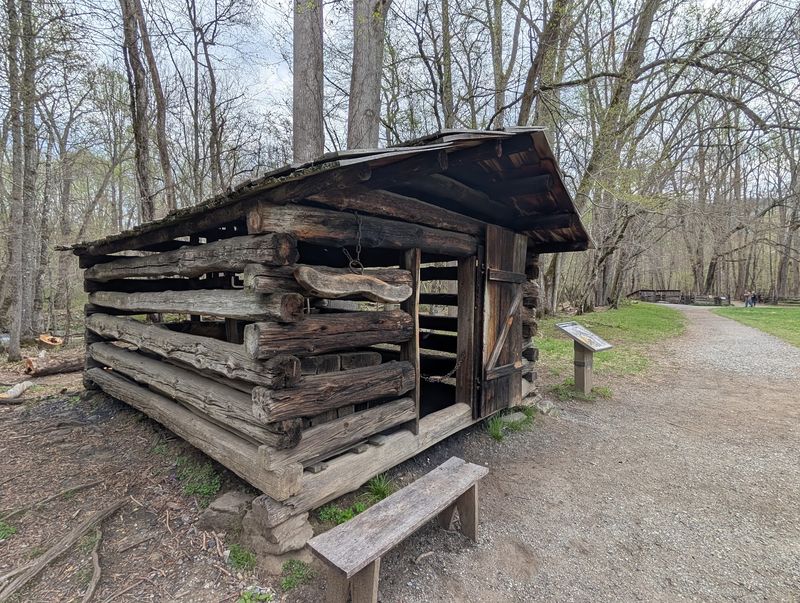
Ever wonder how a family stored food all winter without a refrigerator? The answer is scattered across this farm in a handful of small, clever buildings.
The smokehouse preserved meat so it would last through the cold months. The corn crib, with its slatted walls, let air flow through the harvest so it stayed dry.
Nearby, the chicken house and its enclosed coop show the daily chores that kept eggs on the table.
There is also a building where game was prepared, complete with tools hunters and farm families once used. Visitors describe it as a respectful glimpse into the survival skills mountain people relied on.
Together, these outbuildings work like a puzzle. Each solved one problem, whether it was keeping food fresh, protecting animals, or saving seed corn for spring.
Walking from one to the next, you start to understand how carefully a 1900 homestead had to plan for every season.
Blacksmith’s Corner and Practical Ingenuity
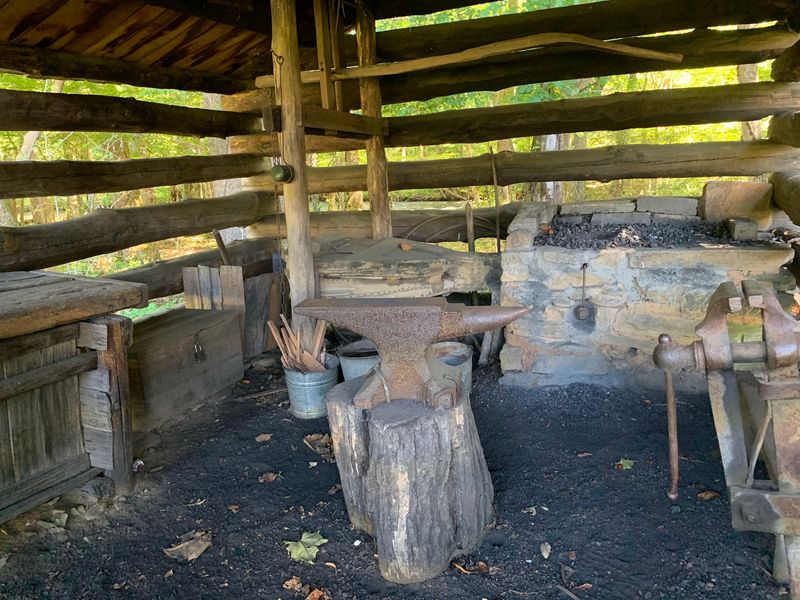
Hammers, tongs, and an anvil tell a story of their own. The forge area is where iron tools and farm hardware were made and repaired, and many visitors call it their favorite spot.
On a mountain farm around 1900, you could not just drive to a store when a hinge snapped or a plow blade bent. Families fixed things themselves, and a blacksmith shop made that possible.
Nails, hooks, and tool parts all came from fire, metal, and skill.
Visitors describe this corner as full of practical ingenuity. Looking at the tools, you can almost hear the ring of hammer on metal echoing across the field.
Tool sheds nearby round out the picture, showing the equipment needed to clear land, plant crops, and keep the whole operation running. For anyone who likes to tinker or build, this part of the farm feels especially relatable and inspiring.
Elk in the Fields
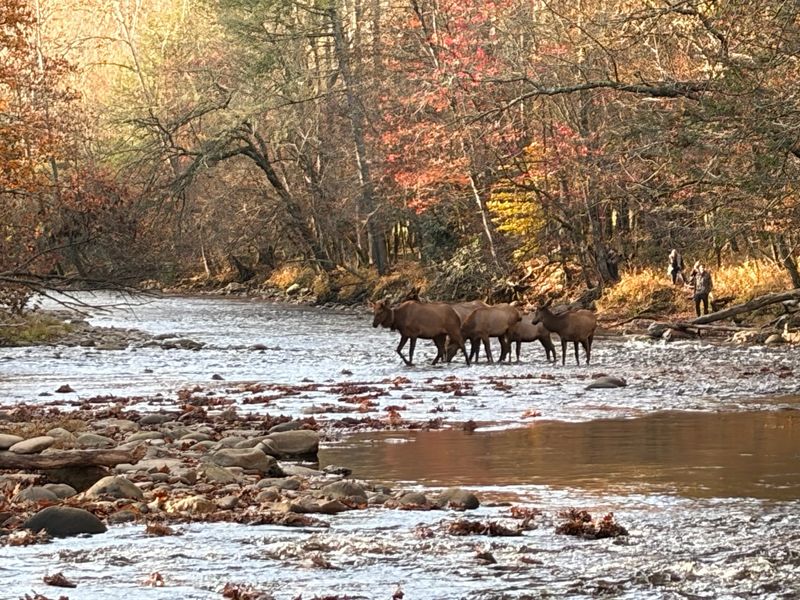
Here is the surprise that steals the show. Wild elk regularly wander into the fields around the farm, and it is the most talked-about thing visitors bring up.
Many people say it is a pretty good bet you will see some. Guests have watched whole herds with babies, and one family even spotted a mama elk and her calf standing in the river.
Others caught sight of elk on the drive in before reaching the farm.
Timing helps. Visitors suggest coming around sunset for the best chance, and fall brings the bonus of colorful leaves behind the herd.
One guest noted elk were everywhere during a mid-March visit too.
A friendly reminder: these are wild animals, and nothing is fenced. Keep your distance, use a zoom lens, and let them go about their grazing.
Signs also mention bears may be around, so stay alert and enjoy the show from afar.
Riverside Trails and a Peaceful Creek
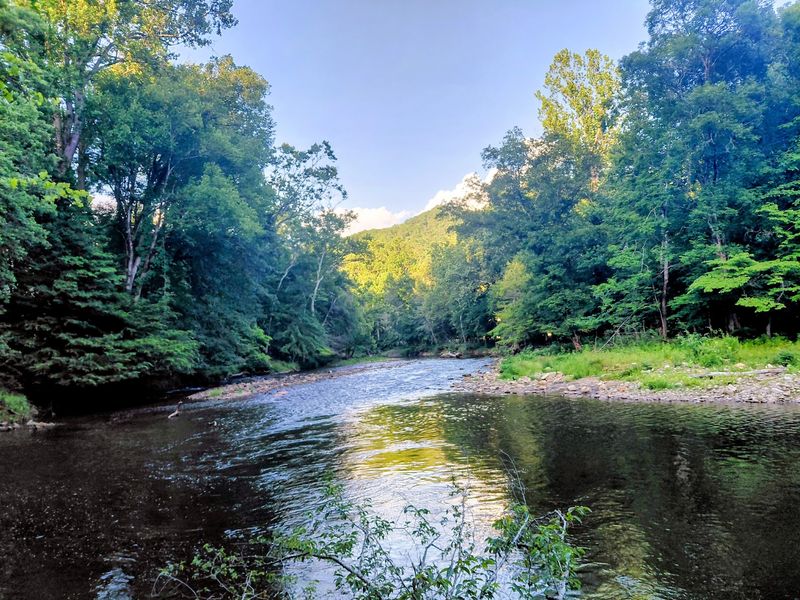
After the cabins, follow the sound of moving water. A gentle walking trail winds through the farm and along the river, and it might become your favorite part of the day.
Visitors describe the path as easy and well maintained, and it is dog friendly, so your four-legged travel buddy can come along. Summer brings plenty of life here.
Guests have seen people tubing, fishing, and splashing in the water, while others simply rest on a big boulder and soak up the scenery.
One family who returned years later with their kids said the peaceful creek was a highlight all over again. That kind of memory is what makes this stop feel special.
Bring comfortable shoes and maybe a picnic-friendly snack for later. The trail is short enough for little legs yet pretty enough that even seasoned hikers enjoy slowing down for a while.
Rangers, Volunteers, and the Visitor Center
Got questions? You are in luck.
Knowledgeable staff, park rangers, and friendly volunteers are often on site, happy to explain how the farm worked.
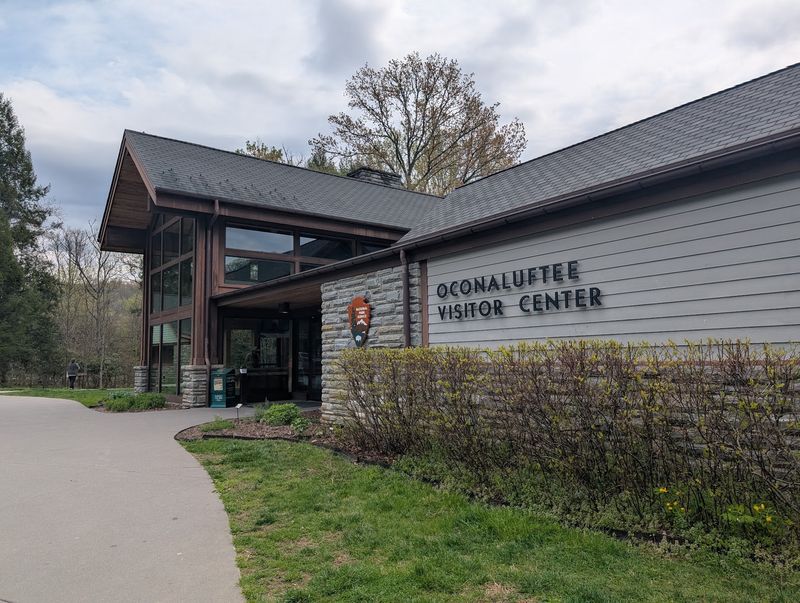
The Oconaluftee Visitor Center next door adds even more. Inside you will find informative displays about settler life in the area, plus an interactive exhibit for anyone wanting to dig deeper into historic farming.
Information plaques around the farm also help you understand each building as you go.
Practical perks matter too. There are restrooms, a large parking area, and a National Parks gift shop where you can grab a postcard or souvenir.
Visitors often mention how clean and well kept the whole facility feels.
Living history demonstrations sometimes bring the farm to life as well. Chatting with a ranger can turn a quick walk into a real conversation about mountain traditions, and kids usually leave with a head full of new facts.
Free Admission, Hours, and Getting There
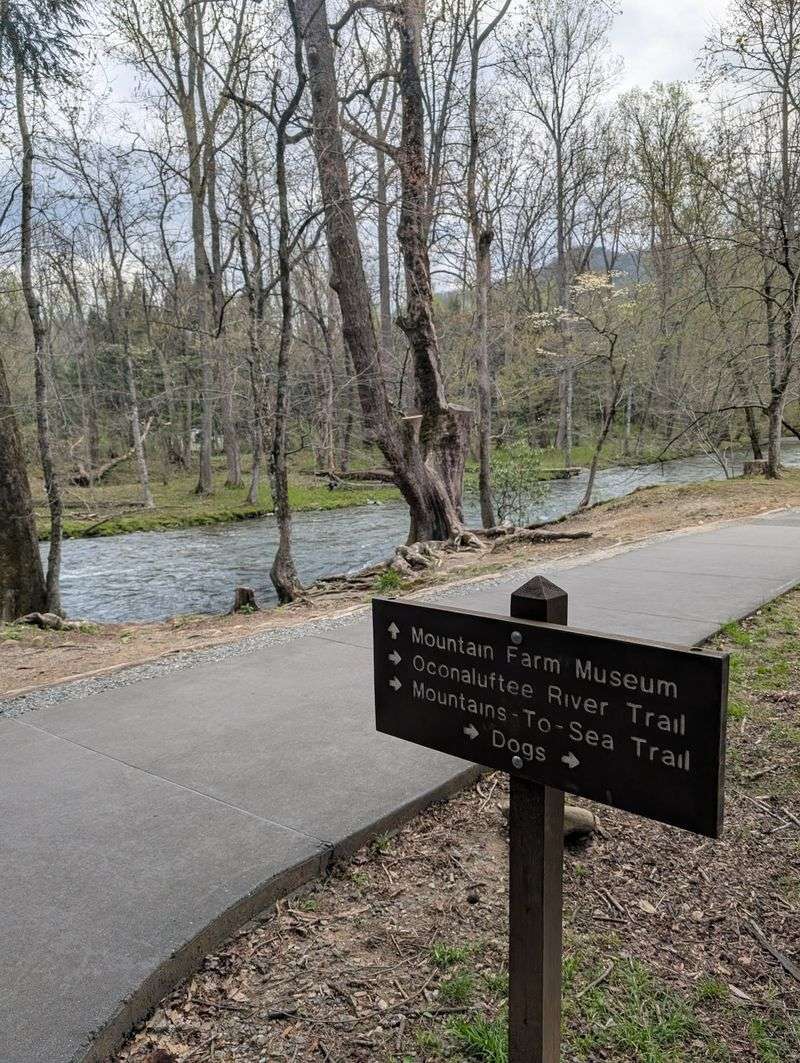
Good news for budget travelers: there are no tickets needed to explore the farm, and the museum itself is free. That makes it one of the best low-cost outings in the North Carolina mountains.
One visitor mentioned paying $5 for a day pass, which likely refers to parking requirements in the park, so it is smart to check the National Park Service website before you go. The site is listed as open 24 hours, though visitor center services keep their own schedule.
Finding it is simple. Head toward the Cherokee entrance of Great Smoky Mountains National Park and look for the Oconaluftee Visitor Center.
The farm sits in the field right behind it, with plenty of parking.
For questions, call 828-497-1904. Many travelers stop here on the way to Gatlinburg, and nearby Mingus Mill and Smokemont church make easy add-ons for a full day of history.
Why This Little Farmstead Lingers in Memory
Some places shout for attention. The Mountain Farm Museum just quietly waits, and somehow that makes it hit harder.
Families, history buffs, dog owners, wildlife lovers, and road trippers all seem to find something here. You get sturdy log cabins, a towering old barn, pigs, a blacksmith corner, riverside trails, and a solid chance of spotting elk.
All of it comes wrapped in mountain views and costs little or nothing.
Visitors often call it a pleasant surprise, a quick step back in time that turned into a highlight. Returning guests say it feels just as special the second time around.
If you are passing through Cherokee, give it at least an hour, more if the elk show up. Come in fall for color, summer for river fun, or spring for fresh green fields.
Whenever you arrive, you will likely leave with a deeper respect for mountain families of 1900.
Share this story