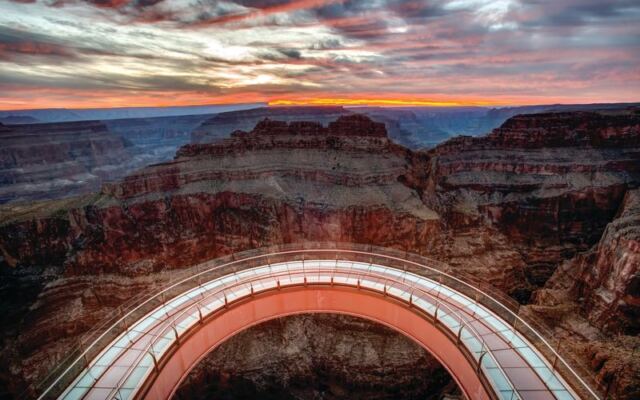
Some people get nervous on a step stool. Out in northwest Arizona, there is a bridge that asks you to stand on glass with roughly 4,000 feet of open air between your shoes and the canyon floor.
It bends out over the rim in the shape of a horseshoe, and it pulls in crowds from Las Vegas and beyond every single day. Getting onto it involves shuttle buses, lockers, fabric booties, and a few photo stops you might not expect.
Once you are out there, the Grand Canyon stretches wide in every direction. Keep reading to learn what the walk is really like, which nearby viewpoint might steal the show, how to dodge the crowds, and what to pack (and leave behind) before you go.
A Glass Bridge on the West Rim
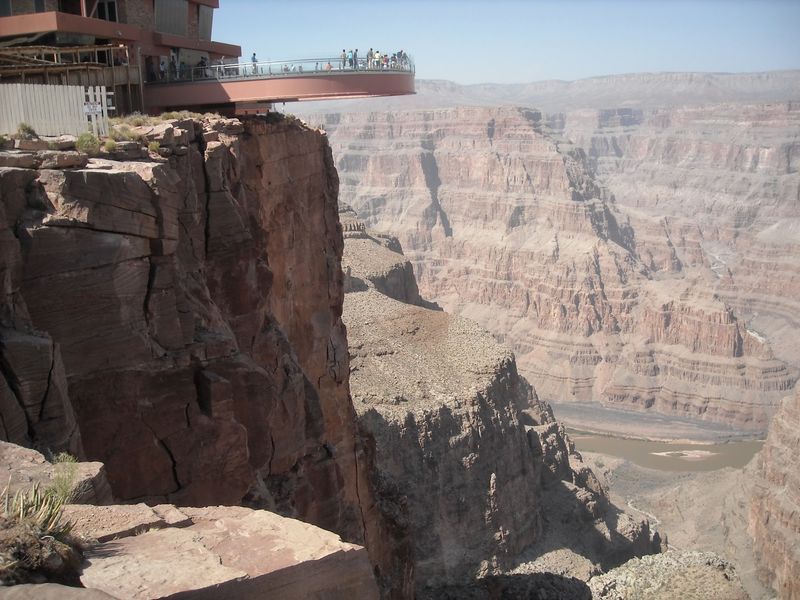
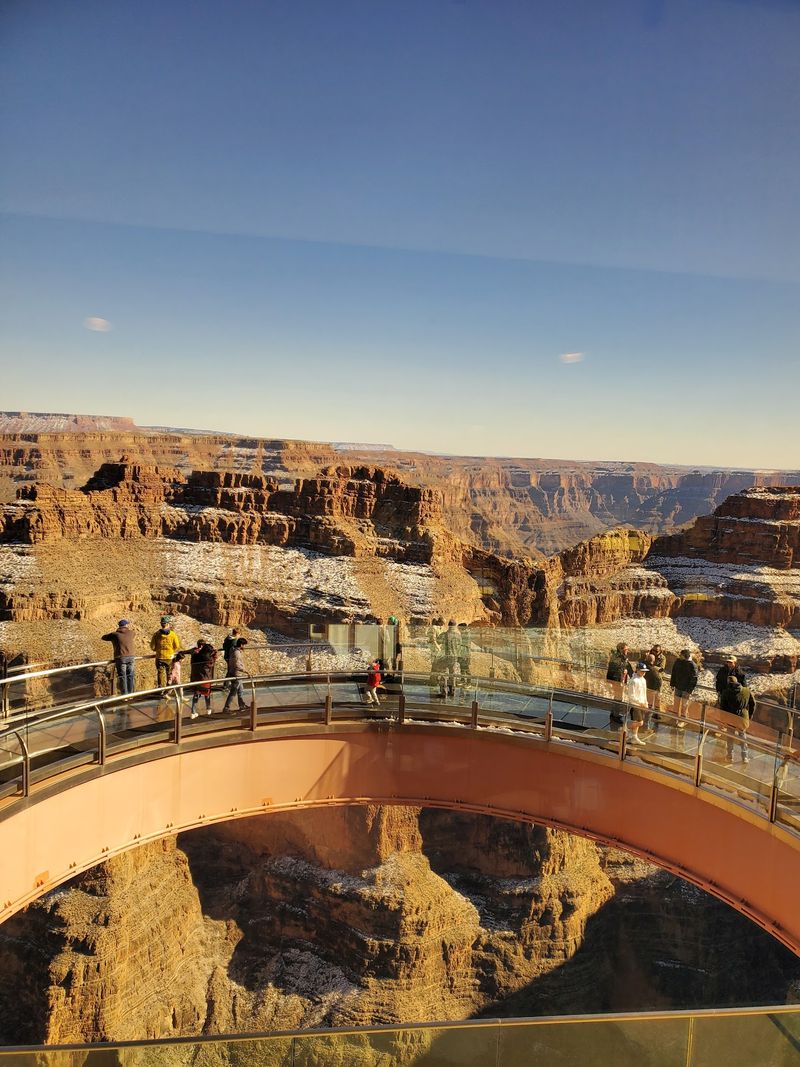
Grand Canyon West Skywalk sits at 808 Eagle Point Rd, Peach Springs, AZ 86434, in the United States. It is a horseshoe-shaped pedestrian bridge made of glass that juts out past the edge of the canyon.
The big number gets attention fast. Out on the glass, you are about 4,000 feet above the canyon floor, and some put the figure closer to 4,200 feet.
That is nearly a mile of air below a sheet of glass. It sounds wild, yet the structure is built for dozens of people to stand on it at the same time.
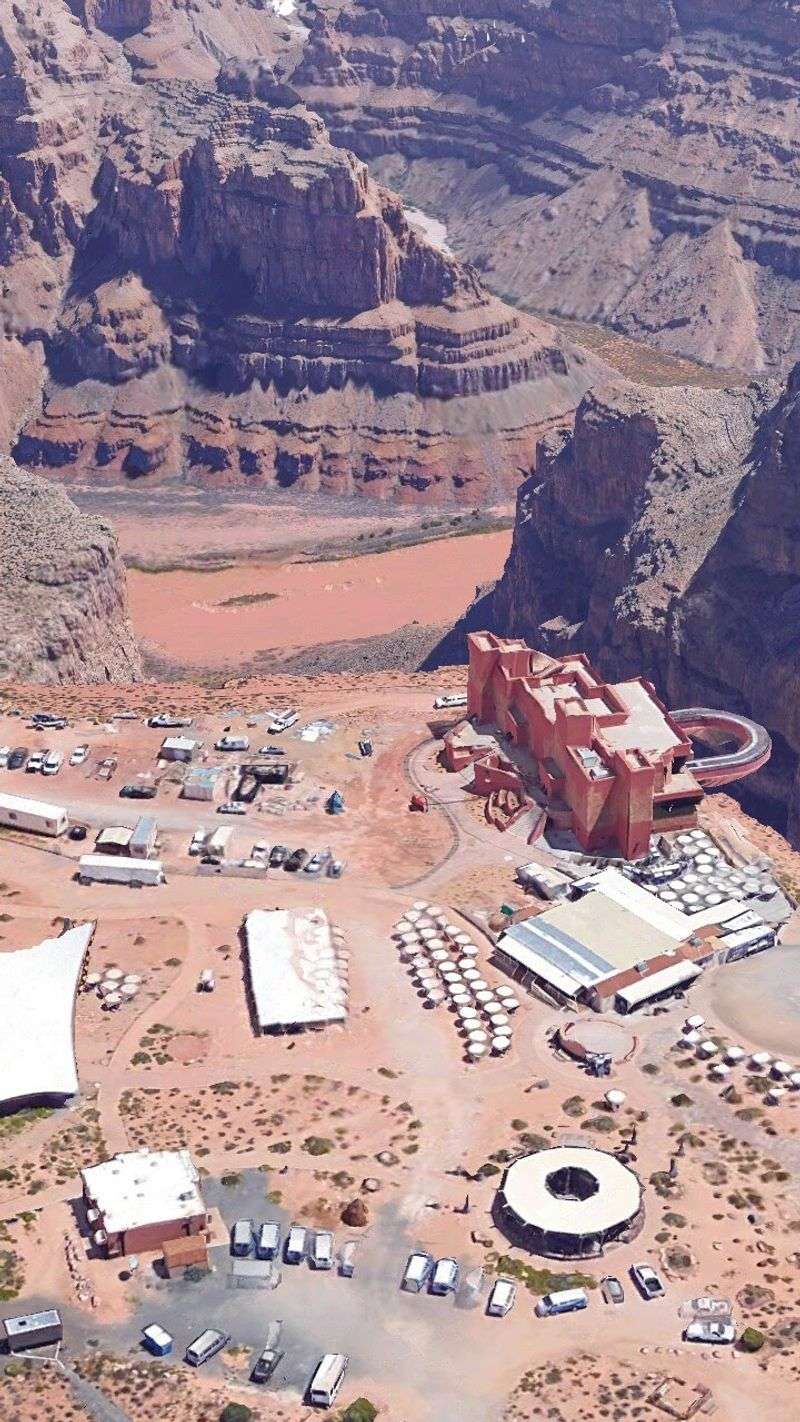
The bridge is the main draw of the West side of the Grand Canyon. It shares the area with viewpoints, a restaurant, a cafe, gift shops, and a souvenir store.
Plenty of people call it a once-in-a-lifetime walk. Others plan to come back for seconds, which says a lot about a bridge that technically goes nowhere.
Run by the Hualapai Nation
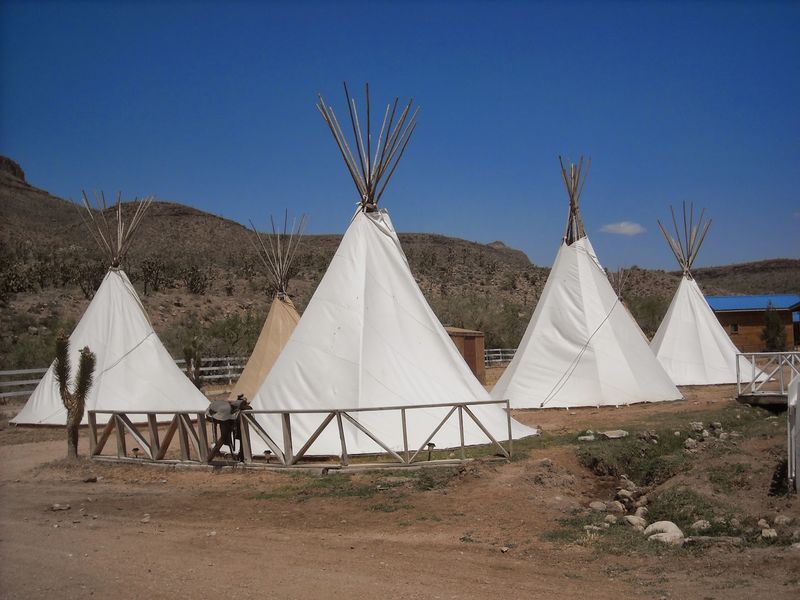
Here is a detail many first-timers miss. The West side of the Grand Canyon is managed by different people than the more famous South Rim.
The staff at the Skywalk are Hualapai Nation residents. That connection shapes the whole experience, from the welcome desk to the shops near the rim.
Gift shop prices run on the high side. Still, many shoppers feel good knowing their purchases support a worthy cause, and that thought often ends up guiding what they buy.
Staff members get frequent praise for being kind, courteous, and helpful. Families mention a well-organized operation that keeps people moving without much fuss.
Friendly and welcoming are words that pop up again and again. For a site handling huge daily crowds, that steady warmth makes a real difference.
So when you hand over a ticket here, you are visiting more than a viewpoint. You are a guest on land with its own story and its own caretakers.
Not Your Typical South Rim Stop
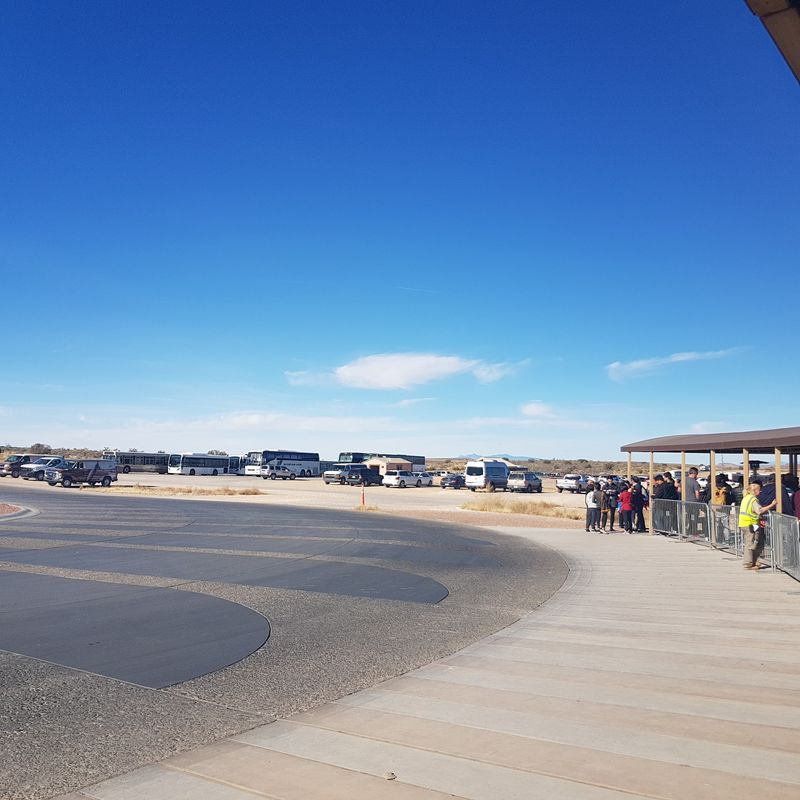
Anyone expecting to park and stroll to a railing should adjust the plan. Grand Canyon West works differently from the South Rim.
You park, walk to the main building, and buy your ticket. Then you head outside to the far left, get the ticket scanned, and wait for a shuttle bus.
Waits can stretch up to 15 minutes, since buses come about every 15 minutes. The first ride takes around seven or eight minutes to reach Eagle Point, home of the Skywalk.
After that, the bus continues to a second stop at Guano Point. Once you finish there, it brings you back to where you started.
Some travelers prefer the come-and-go freedom of the South Rim. Others like that the buses handle the logistics for them.
Either way, the views at both rims are spectacular. Knowing the routine ahead of time simply keeps the surprises limited to the scenery.
Eagle Point and Its Famous Rock
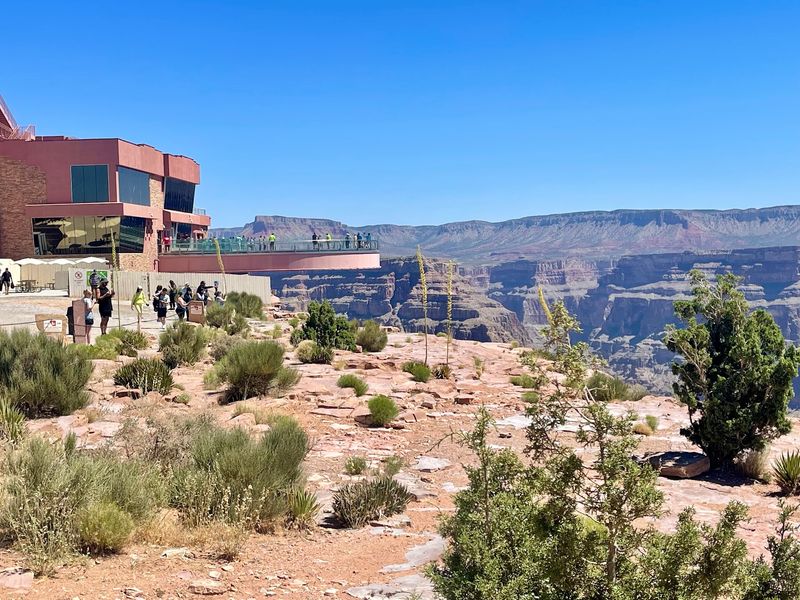
The first shuttle stop does double duty. Eagle Point is where you find the Skywalk, and it is also a scenic area worth exploring on its own.
The whole Eagle Point area earns high marks for being beautiful. Families enjoy wandering around it, snapping group photos, and taking a breather before or after the glass walk.
One clever tip stands out. Skip trying to photograph Eagle Point from the Skywalk itself.
Walk right up to it instead. The angle is much better, and the shot comes out far stronger than anything you will grab from out on the bridge.
Covered picnic tables nearby give you a spot to rest. A small cafe sits close by as well, handy when you need a pause.
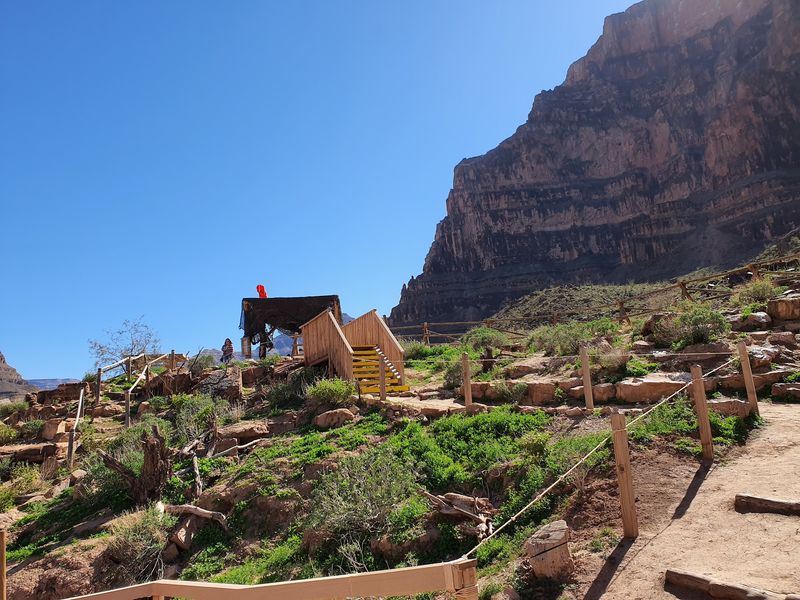
Sturdy walking shoes help a lot here, because the ground is uneven. Your ankles will thank you long before your camera roll does.
What the Glass Walk Is Really Like
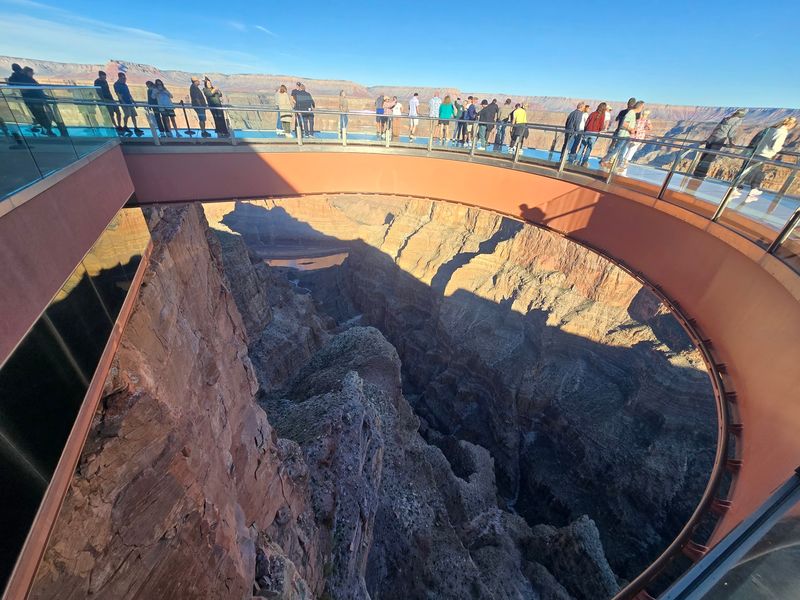
Feet first, nerves second. The moment you step onto the horseshoe, the canyon floor is visible straight down through the glass.
Many call it thrilling and a little discombobulating. Others who dislike heights find they are less scared than expected, mostly because the views keep them busy.
Here is a handy trick for the jittery. Stick to the sides and hold the rails if heights make you uneasy.
Want to face your fears head on? Walk down the middle, where the glass is all you have below.
The bridge feels safe, and the glass is super thick. Engineering fans tend to admire the design as much as the drop.
A few people wish it stretched farther out past the rim. It can feel shorter than expected, so set your hopes on the view rather than the length of the stroll.
Booties, Lockers, and Metal Detectors
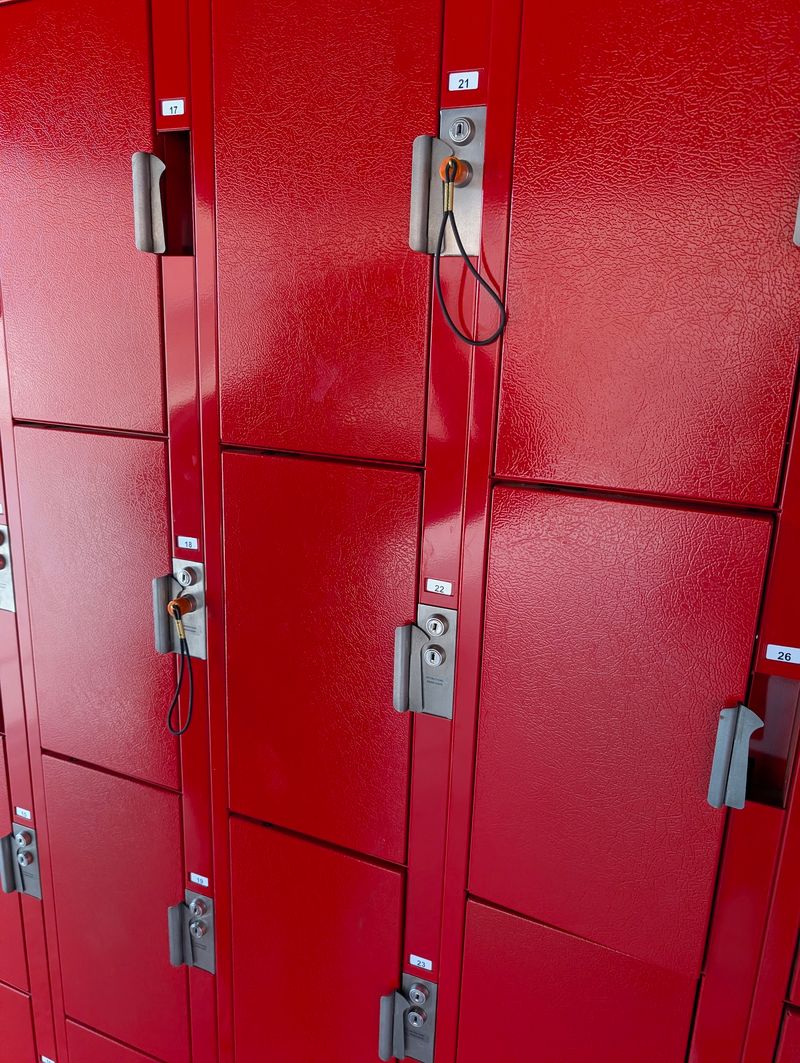
Pack light, or plan to unpack. The Skywalk has strict rules about what can come along.
Coins, purses, backpacks, and basically anything you could toss are not allowed. Cameras, monopods, and camera accessories stay behind too.
Free lockers are available for everything else. Lockers come up constantly in conversations about this place, so expect to use one.
You also pass through a metal detector that checks for items like knives. Once inside the building, your ticket gets scanned again.
Then come the booties. Everyone slips little fabric covers over their shoes so the glass below does not get scratched.
Some rules have shifted over time, especially around phones and booties. Checking the current policy before your trip saves a lot of head-scratching at the door.
The Phone Rule and the Camera Puzzle
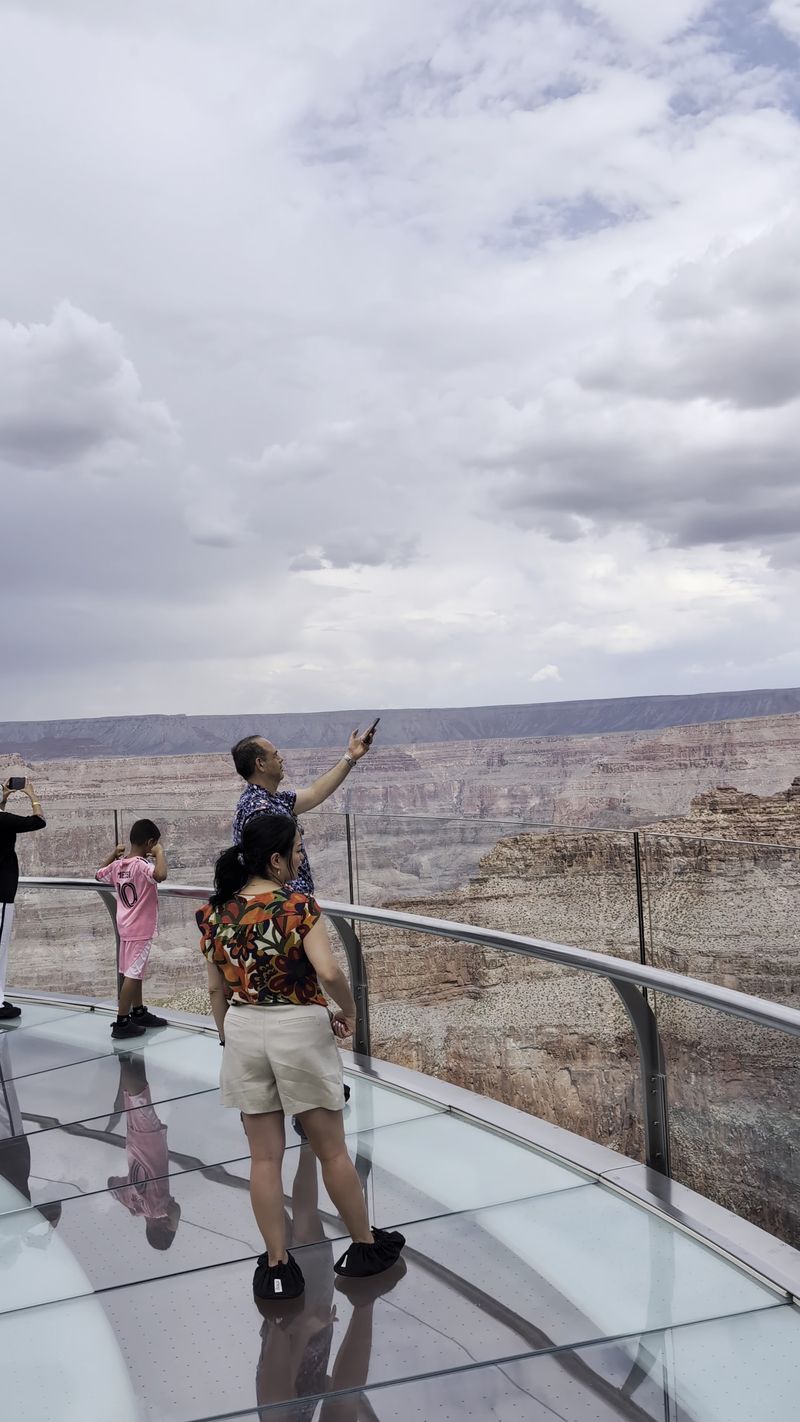
Good news for selfie lovers: phones are now allowed on the Skywalk. That was not always the case, and returning guests are thrilled to finally grab their own shots.
Generally, your phone and wallet are the only things you can bring inside. Everything else goes into a locker.
The camera policy does puzzle some folks. A small handheld camera with a secure wrist strap may be turned away while a phone with no strap at all is fine.
The logic is hard to follow, but the rule is the rule. Leave dedicated cameras and gear behind so the entry line moves smoothly.
On the bright side, a phone does plenty out there. Plenty of people skip the paid photos completely and walk away with great selfies.
So charge that battery before you leave the parking lot. You will want every percent once the canyon opens up below.
Say Cheese, Three Times
Smile, then smile again, then once more. Before and during the Skywalk, staff photographers take roughly three rounds of photos, including one on a green screen.
Photographers are stationed right on the bridge too. Afterward, you can buy the pictures at a self-serve kiosk.
Expect to pay about $30, plus a $4 service fee. Some find the repeated photo stops tiresome, especially after already paying for admission.
Here is the funny part. Plenty of people swear they will not buy the photos, then see how good they look and buy them anyway.
You can also simply walk past and keep going. Nobody forces a purchase, and the pitch is easy to decline politely.
Beyond the paid shots, there are endless spots around the rim for free photos. Your wallet gets a vote, and so does your phone.
Guano Point Steals the Spotlight
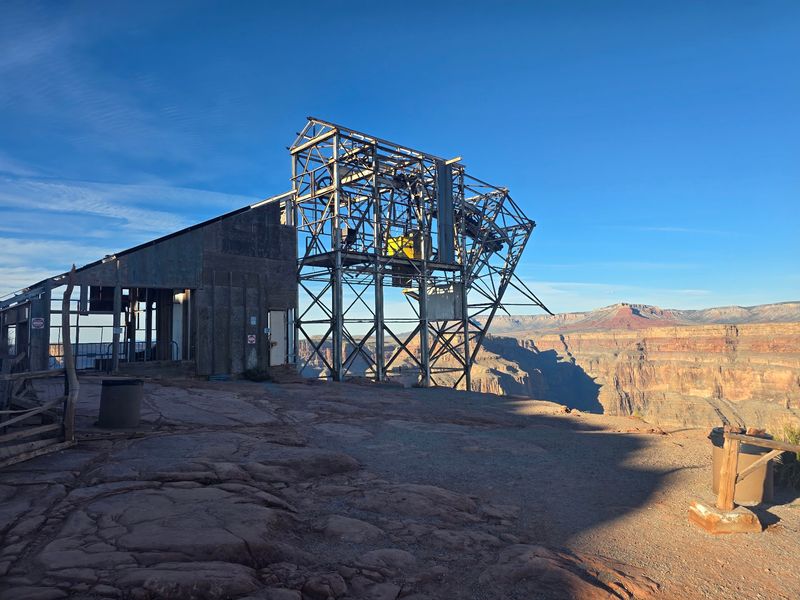
Plot twist: the second shuttle stop might win the day. Guano Point comes up often as having an even better view than the Skywalk.
The panorama here is wide and dramatic. Small hills give you high spots for photos that capture the canyon in a big way.
Sunset at Guano Point earns special praise. If timing allows, ending your visit there is a smart move.
Hiking is another option. Some visitors head out on foot after the Skywalk to explore more of the area.
A dining spot at Guano Point gets good marks as well, which makes lingering easy.
One caution matters a lot. Stay back from the cliff edge and keep kids close, since there is no reason to test gravity for a photo.
Budget hunters, take note: skipping the Skywalk and only visiting Guano Point can save around $40.
Zip Lines, Choppers, and Extra Thrills
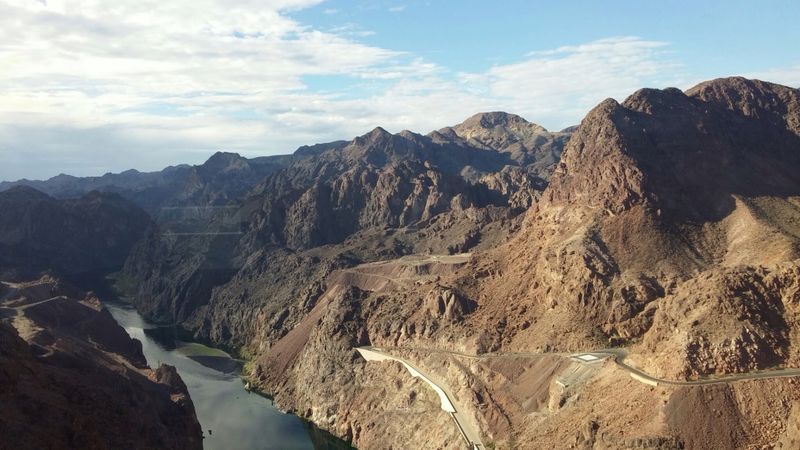
For some, one glass bridge is not quite enough adrenaline. Grand Canyon West offers more ways to get your heart racing.
A zip line operates from a third stop, reached on a different bus. It costs extra, and families with teens describe it as an absolute blast.
Helicopter rides are also a popular topic around this area. They are a common add-on for people who want an aerial angle on the canyon.
Not everyone has the stamina for it all. After the Skywalk and Guano Point, some are happy to call it a day and hit the road.
That is perfectly fine. The core experience delivers plenty without the extras.
Still, if your group thrives on thrills, plan the budget and time for these upgrades in advance. Deciding at the counter is how afternoons, and wallets, disappear fast.
Who Will Love the Walk
Families top the list of happy guests. Parents report that even their teenagers had a good time, which is no small feat.
Las Vegas travelers are another big group. Many fold this into a Vegas vacation and count it among the highlights of the whole trip.
Engineering buffs get extra enjoyment from the structure itself. Standing on glass over a natural wonder is a design story worth seeing up close.
People with a serious fear of heights should be honest with themselves. If you can push through, the payoff is huge, and if not, the rim views still deliver.
Repeat guests exist too. Some come back specifically because photo rules changed and they could finally capture their own memories.
Photos online rarely capture the size of the canyon. That gap between screen and reality is exactly why so many decide it is worth the trip.
Hours, Tickets, and the Real Cost
Mark your calendar for an easy schedule. The Skywalk is open daily from 8 AM to 5 PM, Monday through Sunday.
Tickets are not cheap. One recent price for the Skywalk came in around $114 per person.
Add photo purchases, gift shop stops, food, and extras like the zip line, and costs climb quickly. Go in prepared rather than surprised.
Seasonal deals can help. A summer promo made the experience feel very reasonable for at least one family of four.
Remember the Guano Point-only option, too. Skipping the glass can trim about $40 from the bill.
Time-wise, the main loop takes about an hour or so. It is not necessarily an all-day stop unless you want to hike, linger, or sit down for a meal with a view.
Prices change, so check the official website before you go.
The Drive and the 3 PM Trick
Cows. Yes, really.
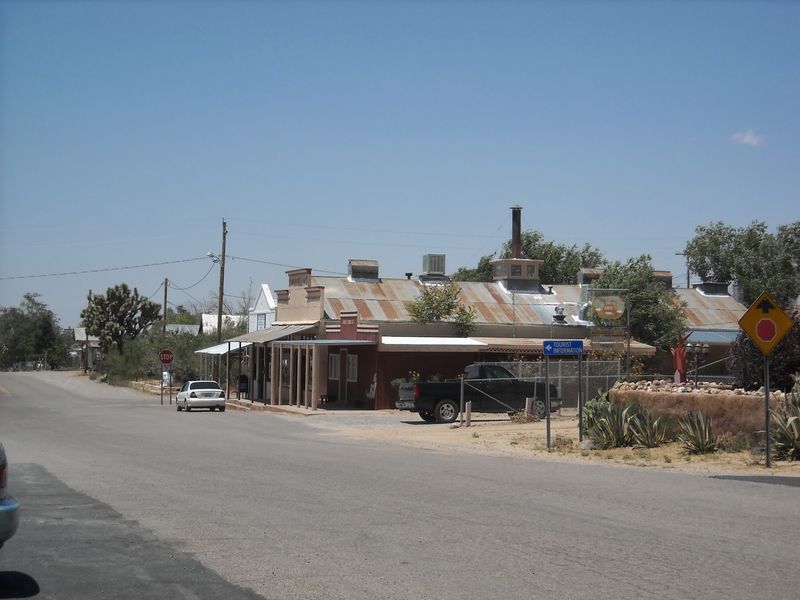
The road out to Grand Canyon West runs through open range, and cattle wander onto the pavement.
Drive carefully and stay alert, especially in the desert stretches. It is the kind of hazard many drivers never expect.
From Las Vegas, the trip takes roughly two hours. That makes it a manageable day outing from the city.
Now for a smart timing tip. Arriving around 3 PM, even on a Saturday, can mean almost no lines.
By then, the big tour buses are packing up and heading out. That can translate to zero wait for shuttles and zero wait for the Skywalk.
Just keep the 5 PM closing time in mind. A late arrival works best when you know exactly what you want to see, so you are not racing the clock.
Worth the Leap of Faith
So, is it worth it? For most people, the answer lands on yes, with a few footnotes.
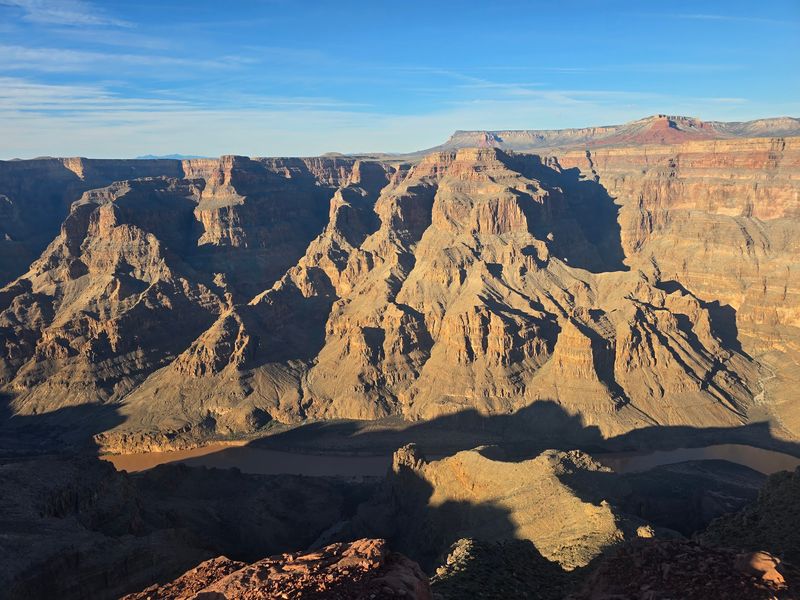
The views are the undisputed star. The canyon scale, the rock layers, and the winding Colorado River below leave many struggling to find words.
The footnotes are about money and rules. Tickets, photo pitches, and locker routines can test patience.
Go in knowing all of that, and the experience shines brighter. Pack light, charge your phone, and save energy for Guano Point.
Consider a later arrival to beat the crowds. Watch the road for wandering cattle on the way in.
Out on that glass horseshoe, about 4,000 feet up, the fine print fades fast. What remains is a rare chance to stand where the ground simply stops, and that alone keeps people talking long after they drive home.
Share this story