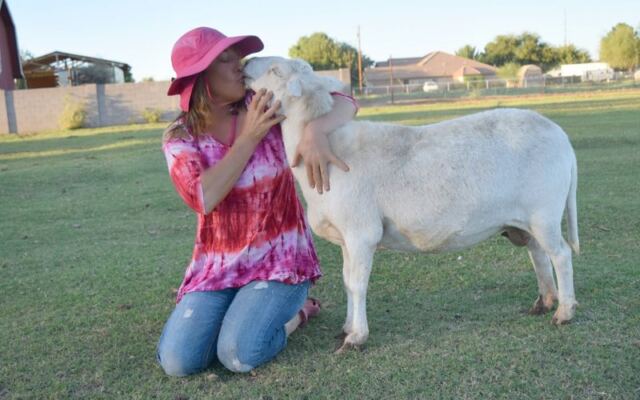
Some cows in San Tan Valley will rest their heads in a stranger’s lap and fall asleep. That is not a farm trick, and nobody trained them to do it.
They are rescued animals who now live safe, slow lives on a small sanctuary in the Arizona desert, and you can book a private visit to meet them. Each animal has a past, and the woman who saved them knows every chapter.
Some came from neglect, some have disabilities, and all of them now have names like Moona Lisa and Hannibal Pecter. Keep reading to learn where this place is, what happens on a tour, how cow cuddling works, and why so many guests come back as volunteers.
The hours are short, so the planning tips near the end matter.
A Quiet Address in San Tan Valley
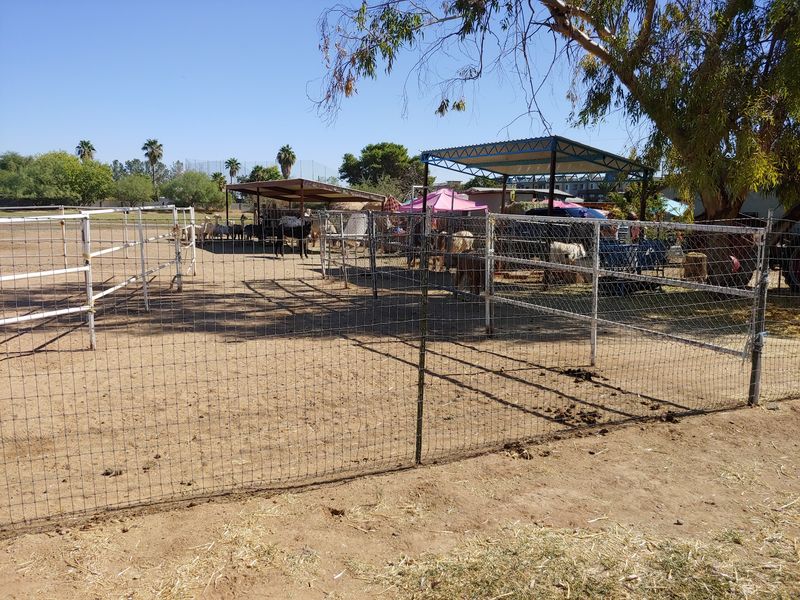
Tucked into a residential corner of Pinal County, a modest property hides a surprisingly big mission.
Aimees Farm Animal Sanctuary sits at 980 W Lenora Way, San Tan Valley, AZ 85140, in the southeastern stretch of the Phoenix metro area. It is listed as an animal rescue service, but calling it that only covers part of the story.
The sanctuary is home to farm animals that were once neglected, abandoned, or simply unwanted. Many have special needs.
Instead of being put to work or sold, they now spend their days safe and cared for.
Guests do not wander in on a whim, though. Visits happen through booked tours, which keeps the setting calm for the residents.
The place has earned a 4.9-star average from more than 200 people, a number that hints at how deeply it connects with those who make the drive.
So who is behind all of this? Her name is right on the sign.
The Woman Behind the Barn
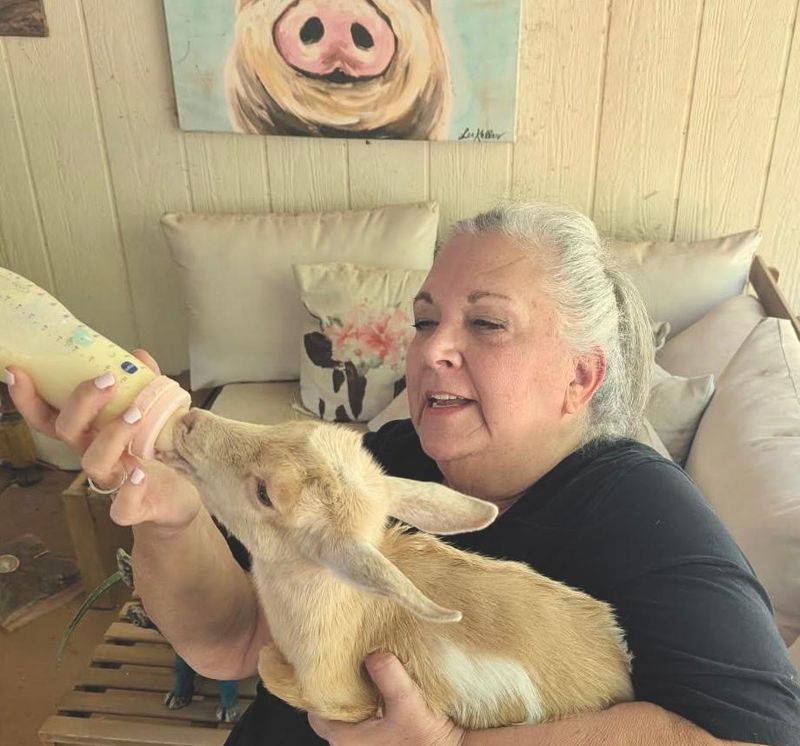
Animals here turn their heads when one particular voice drifts across the paddocks.
That voice belongs to Aimee, the founder who gave the sanctuary its name. Guests often notice that the residents look in her direction the moment she speaks, a small detail that says plenty about trust.
She is known for running much of the operation herself, with help from a loyal team of volunteers. Her knowledge of each animal goes deep, from medical history to personality quirks.
Before a visit, she answers emails quickly and thoroughly, even when guests send long lists of questions. That kind of care starts well before anyone arrives at the gate.
Her work focuses on giving farm animals a second chance, especially those with disabilities that other places might overlook.
People leave talking about her as much as the animals. Still, the residents are the real stars, and their backstories are where tours get personal.
Stories That Come With Every Stall
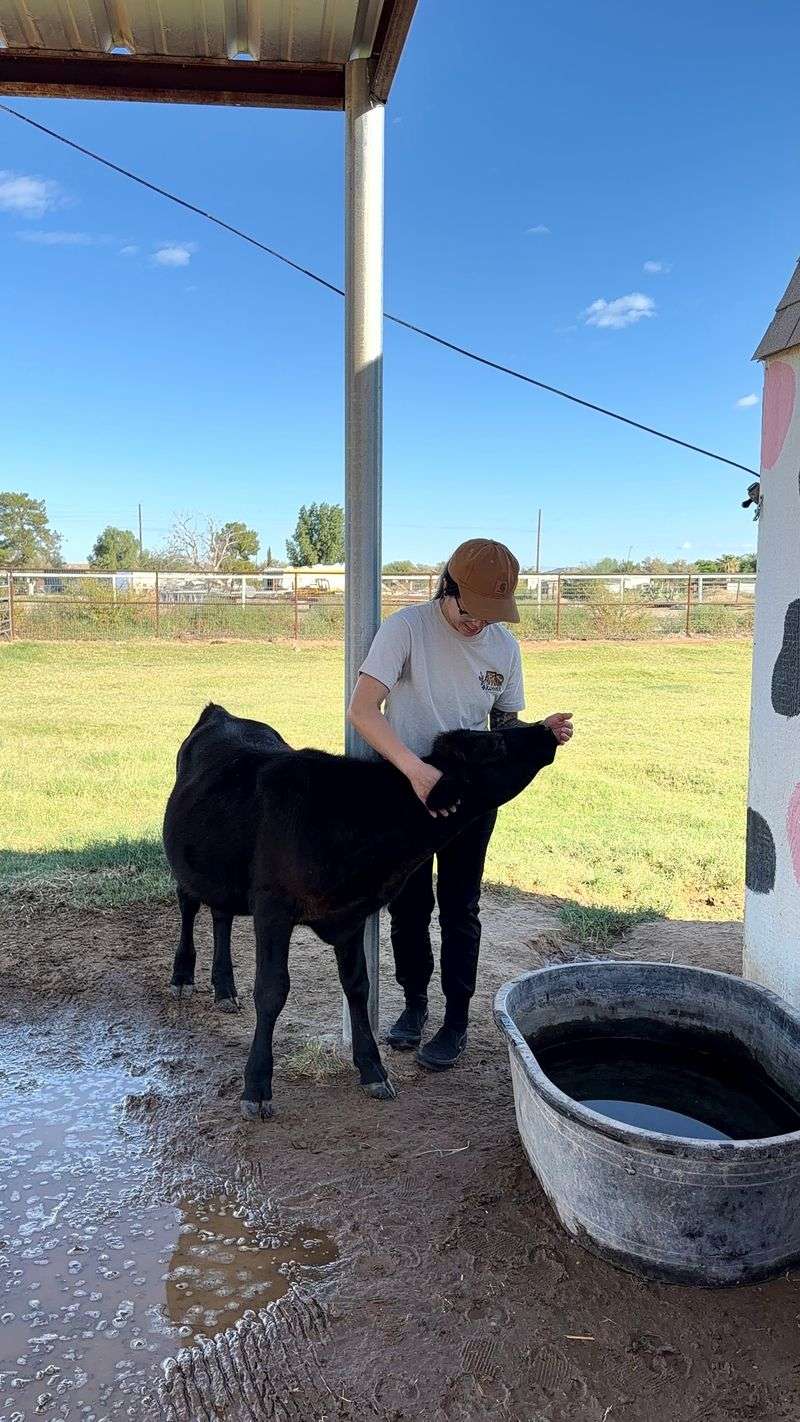
Every resident arrives with a history, and on a tour, nobody is introduced without one.
Aimee walks guests around personally and explains where each animal came from and what it went through before the rescue. Some stories are hard to hear.
Others end with a surprising twist of good luck.
Guests often describe feeling both heartbroken and uplifted in the same hour. The contrast between an animal’s rough start and its peaceful present is a big part of the experience.
The tours are described as informative, educational, and eye opening. People come away understanding farm animals in a new way.
Families find the stories useful for teaching children about empathy and responsible animal care. It is a lesson delivered gently, one pen at a time.
Of course, stories are only half the fun. The other half involves a cow who seems to enjoy a good hug.
Cow Cuddling, Explained
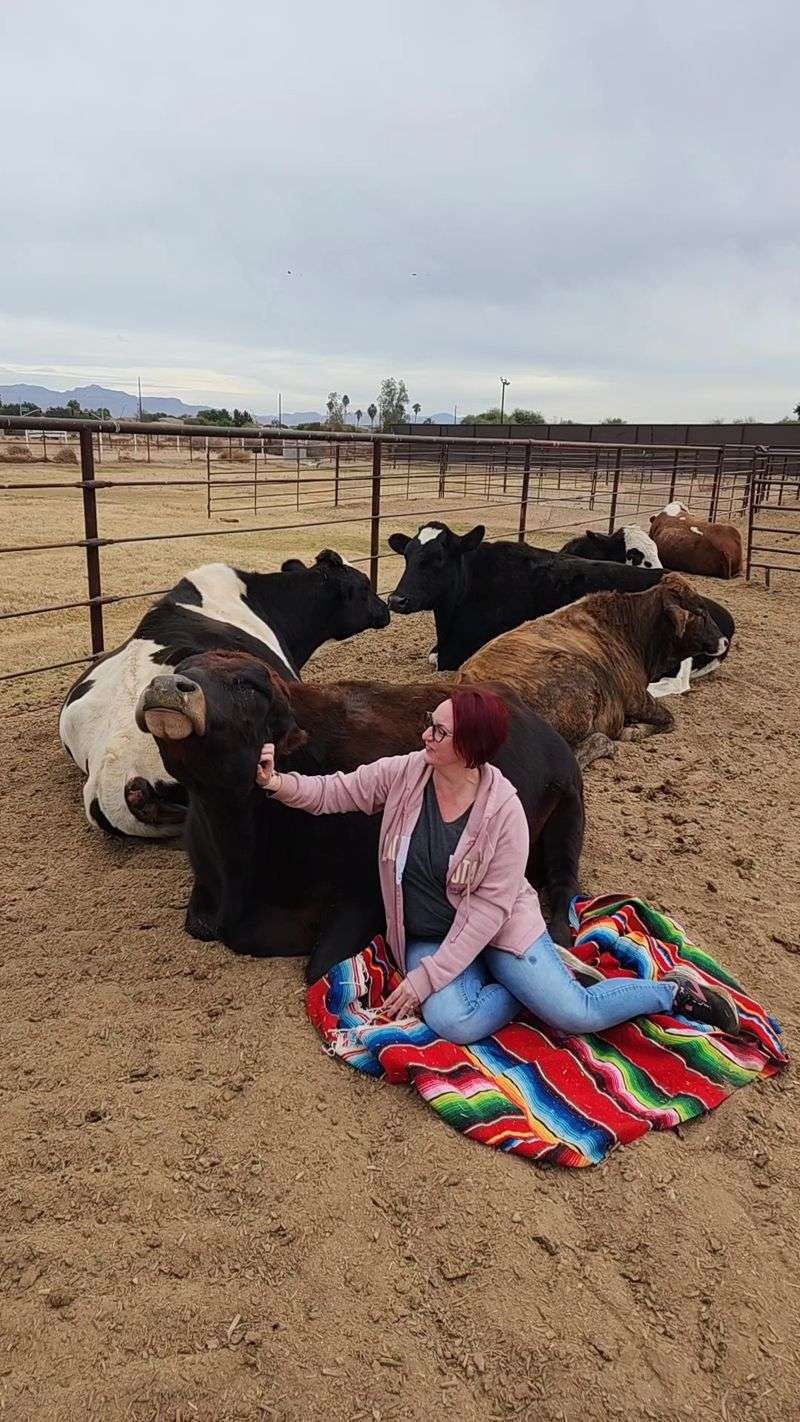
Yes, cow cuddling is a real activity here, and it is exactly what it sounds like.
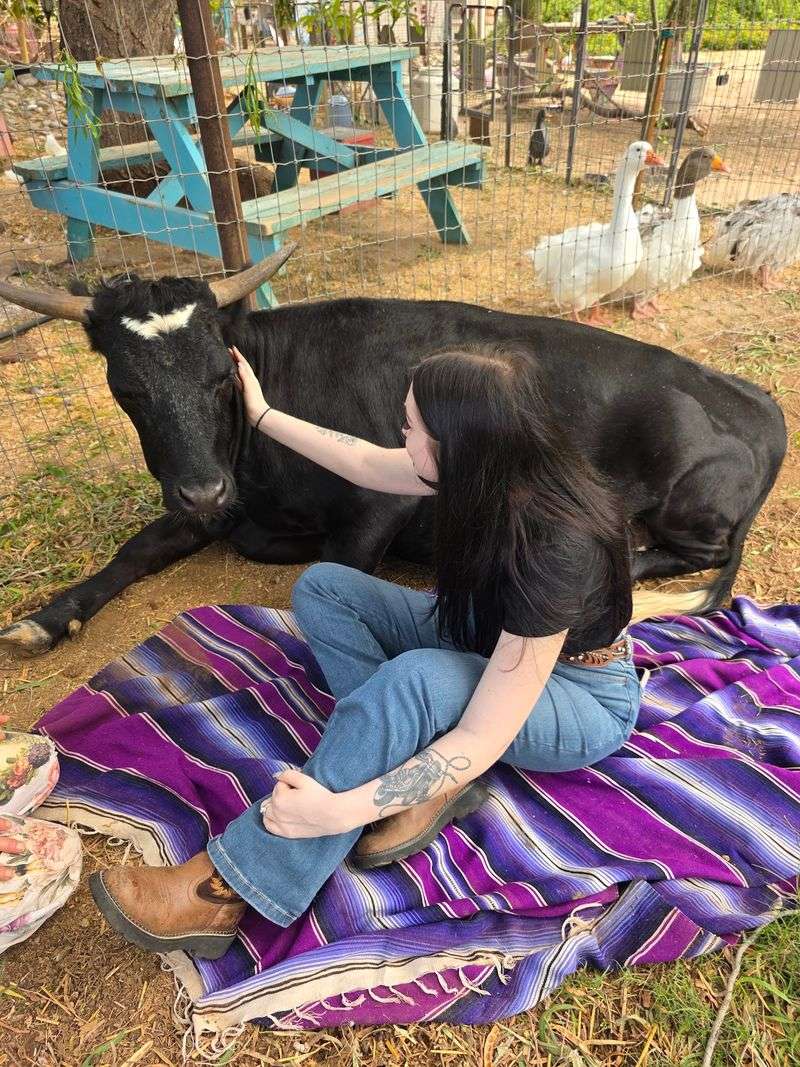
Guests can sit in the cow pen and spend quiet time with the herd. Some cows walk right up and settle in.
One famously rested its head in a guest’s lap and dozed off, much like a family dog would.
Moona Lisa is a crowd favorite. She has been known to make contented sounds while being cuddled, and guests find themselves sighing right along with her.
The pace is relaxed and set by the animals. No cow is pushed into contact, and the ones who prefer space get it.
Many people call the time in the pen calming and even healing. It is a chance to slow down in a way few outings allow.
Big cows get the headlines, but the sanctuary’s roster runs much wider than the herd.
A Barnyard Roll Call
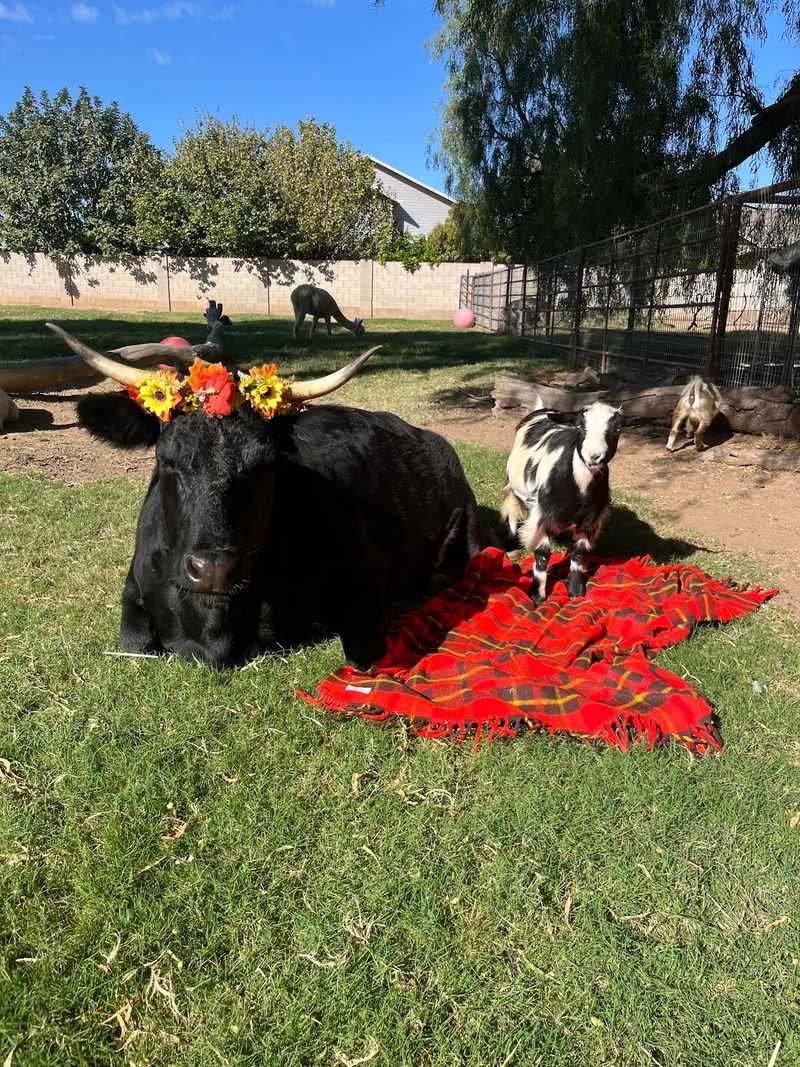
Keeping count of the residents is harder than keeping count of the puns their names inspire.
Alongside the cows, the sanctuary houses pigs, goats, sheep, pigeons, chickens, horses, a mini pony, an alpaca, donkeys, geese, and ducks. Guests regularly admit they forgot to photograph half of them.
There is a rooster named Hannibal Pecter, which is perhaps the best name in all of Pinal County. There has also been a pig weighing around 600 pounds, plus more chicken breeds than most people knew existed.
Many animals are friendly enough to form a small entourage that follows guests around the paddocks. A few prefer their personal space, and that is respected.
Volunteers sometimes hand out snacks for guests to offer the animals, which tends to make new friends fast.
Some of the most memorable residents, though, live in a special section built around their needs.
Where Special Needs Come First
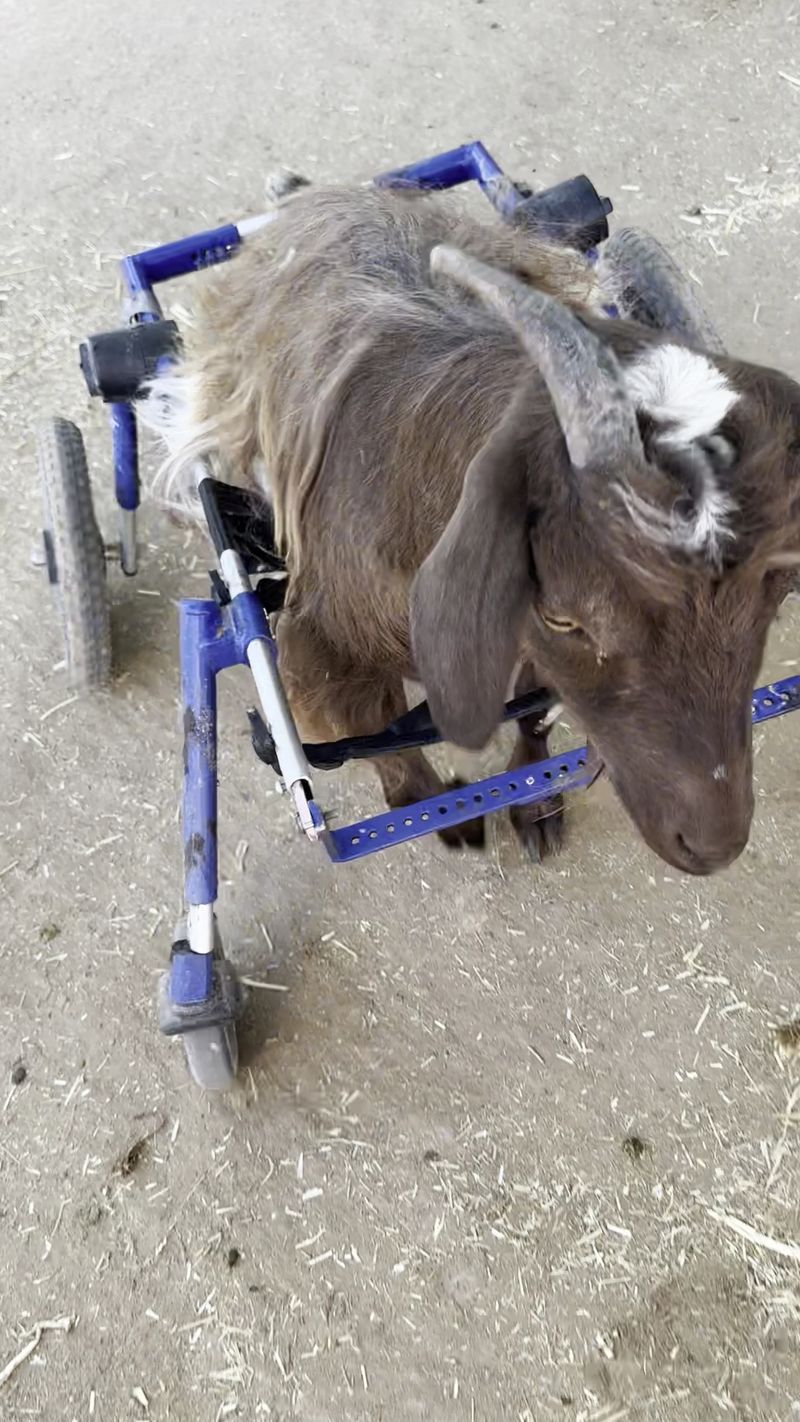
One photo from the sanctuary shows a handicapped calf snuggling a handicapped chicken, and the chicken snuggling back.
That image sums up the special needs pen well. Many residents live with disabilities, some severe, and others are still recovering from past hardship.
Here they get the care they need without being judged for being different. Guests often say the animals in this area are among the sweetest on the property.
The pen teaches a quiet lesson about love that goes beyond surface flaws. Parents find it a meaningful stop for kids.
Aimee has also been accommodating about letting guests spend extra time with certain animals, which matters most in this section.
Healthy, recovering, and differently abled residents all share the same goal here: simply living a good life.
All that care takes many hands, which is why so many guests end up returning with work gloves.
Volunteers Who Keep Coming Back
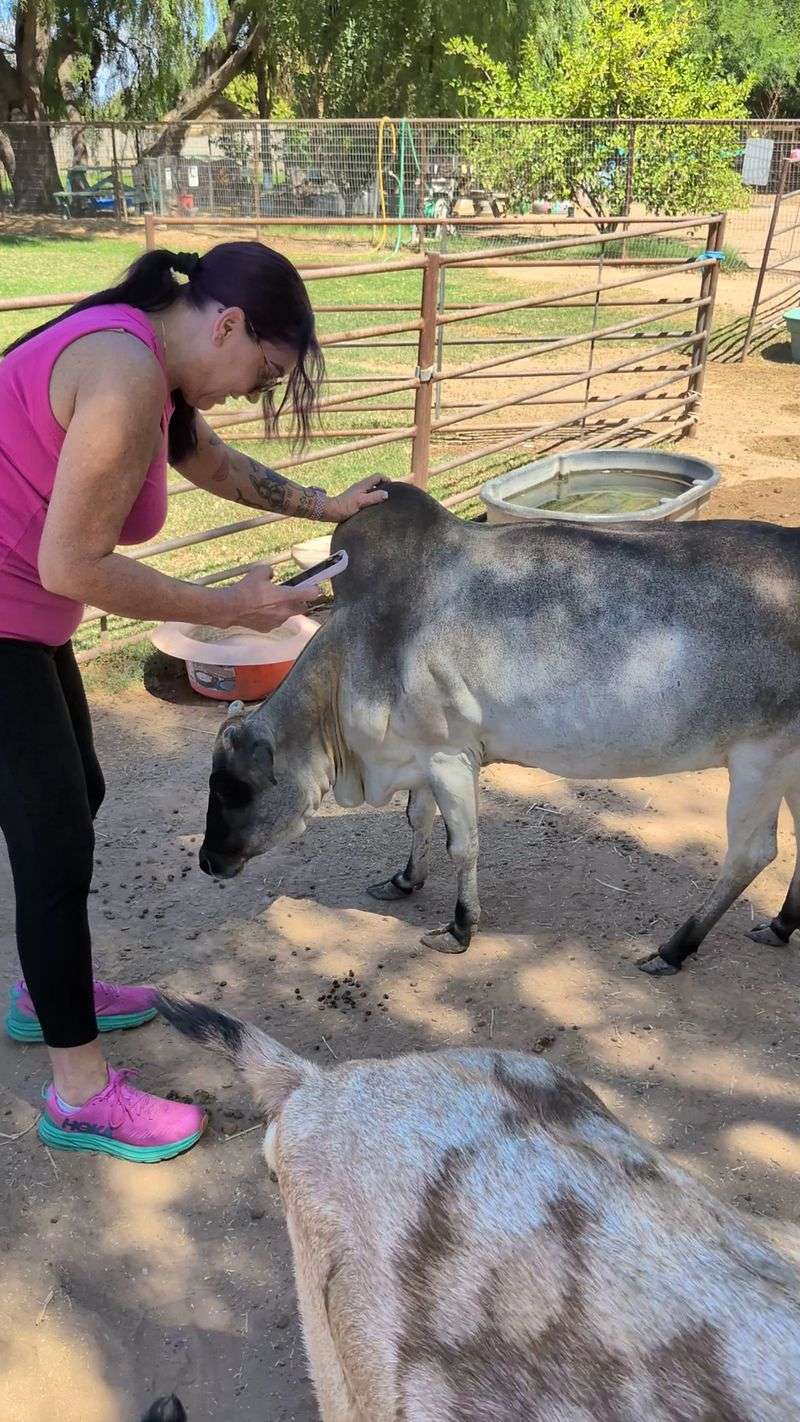
Volunteering is the single most talked-about topic tied to this sanctuary, and that says a lot.
Many guests arrive for a tour and leave planning to help. Past visitors have become regular volunteers, giving hours of their time to the animals.
The volunteer team is described as friendly, welcoming, and devoted. Some also lead tours, introducing guests to the residents and sharing their stories.
People who help out often describe the time as healing. Spending a morning with animals that once had nothing seems to give something back.
Information about volunteering is shared during visits, so curious guests can ask questions on the spot.
Not everyone can do physical work, and that is fine. Supporters also help by donating, spreading the word, or becoming monthly donors.
For those who would rather just enjoy a visit, the experience works beautifully for many kinds of groups.
Who Should Book a Tour
Birthdays seem to be a favorite excuse for a visit, and for good reason.
Plenty of guests have celebrated milestones here, from a 46th birthday with family to a girlfriend’s birthday surprise. Some families have even spent Thanksgiving at the sanctuary.
The private tours suit couples, friends, families, and small groups, including coworkers. A one-year-old grandson has visited along with his parents, so young children are part of the mix.
The mood is peaceful, but laughter happens too. A rooster named after a movie villain will do that.
Animal lovers of all kinds tend to leave inspired. Some say they would rather visit this place several times than go to a zoo.
Anyone looking for a fun outing on a nice day will find one. Those wanting something deeper often get that as well.
Getting in, however, requires a bit of planning ahead.
Hours, Booking, and a Soft Verdict
Short hours make timing everything for this trip.
The sanctuary operates Tuesday through Saturday from 10 AM to 1 PM. It is closed on Sundays and Mondays.
Visits are booked as tours, and demand can be high. One guest who read about it in the newspaper had to book more than four months out, so reserving early is wise.
Details are on the sanctuary’s website.
Tours are tied to supporting the rescue, and guests consistently say the cost is worth it. Many donate extra after seeing the work firsthand.
Cooler months are popular with people eager to return, since Arizona heat can be intense.
So is it worth the drive to San Tan Valley? For anyone curious about farm animals, the answer leans strongly toward yes.
Come for the cow cuddles, stay for the stories, and expect to leave thinking about Moona Lisa for a long while.
Share this story