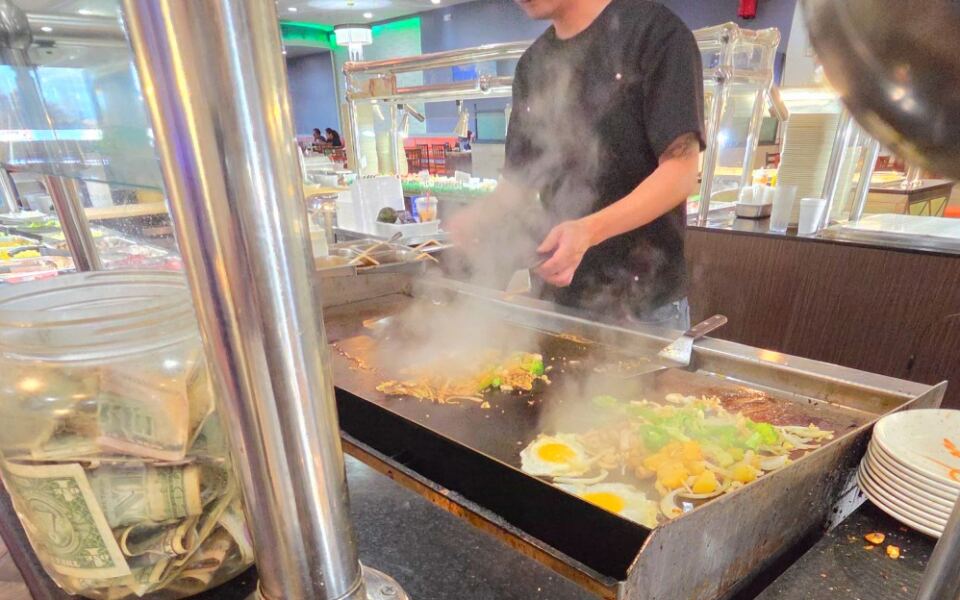
A hibachi cook will grill your own plate of hand-picked ingredients right in front of you, and it comes included with the buffet price. That alone made me curious about this spot in northern Michigan.
The menu goes well past the usual sweet and sour chicken. Sushi, a salad bar, Cajun-style crawfish, and baked cheese mussels all show up in the conversation about this place.
I like the idea of building a lunch that wanders from egg drop soup to a fresh sushi roll without ever ordering twice. Variety is the whole point here, and Michigan diners clearly notice.
There’s also a small mystery for first-timers. The building sits in a large shopping plaza where the sign can be easy to miss, so finding the front door is the first step in the adventure.
Meet the Buffet Behind the Big Plaza Sign
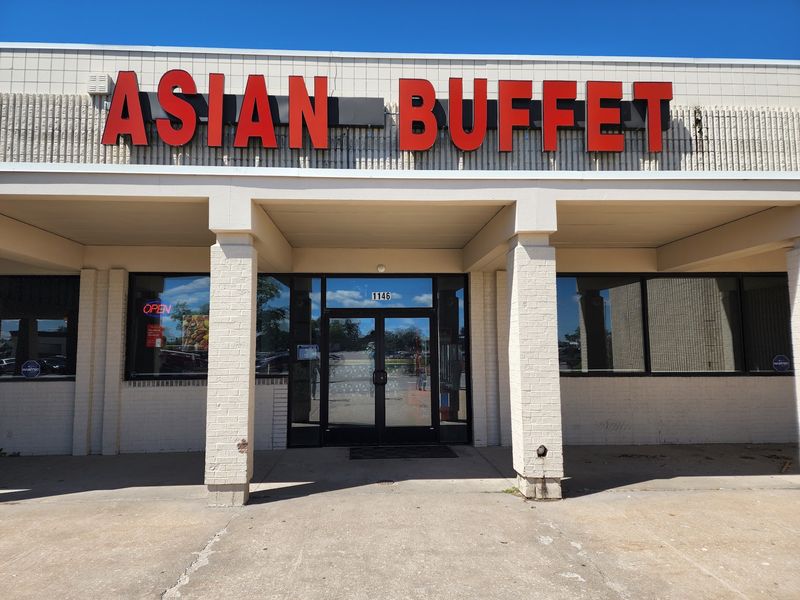
The official name is simple: Asian Buffet. You’ll find it at 1146 W South Airport Rd in Traverse City, Michigan 49686, inside a large shopping plaza on the south side of town.
Google describes it as an all-you-can-eat Pan-Asian spot with sushi, a salad bar, and a hibachi section. That combination covers a lot of ground for one meal.
First-time visitors should know one practical detail. The plaza is big, and the restaurant sign can be hard to spot from certain angles, so take a slow lap of the lot if your GPS says you’ve arrived.
Parking is plentiful, which is a relief in a tourist town like Traverse City. Summer crowds can make downtown parking tricky, but this lot has room to spare.
I find the setting interesting because it sits away from the busy waterfront. It works well as a stop for travelers heading in or out along South Airport Road.
The outside of the plaza looks plain, and it doesn’t say much about what waits inside. The interior tells a different story, and the dining room is where the real picture of this buffet starts to form.
A Renovated Dining Room With Space to Move
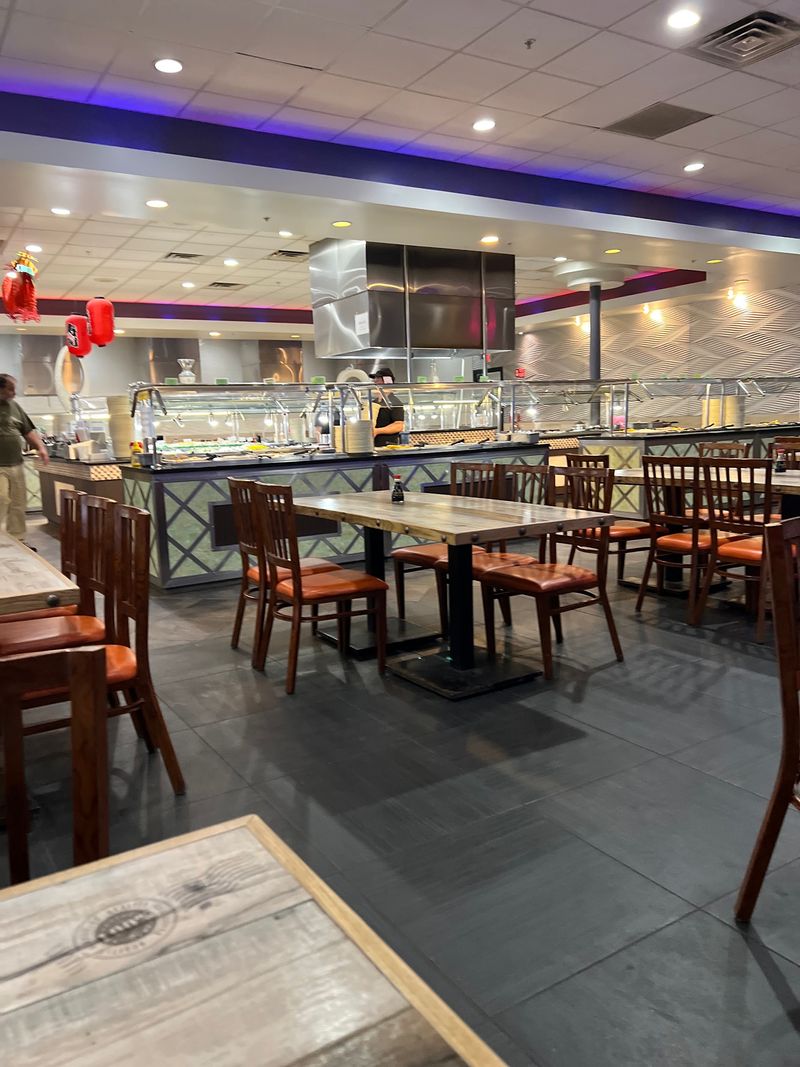
Renovation changed the inside of this restaurant in a big way. The dining room is spacious and modern, with tables spaced out so diners can walk to the food islands without squeezing past chairs.
That layout matters at a buffet. You’ll make several trips, and nobody wants to balance a full plate while dodging elbows.
The lighting leans low and moody. Some diners enjoy the relaxed feel, while others wish it were a bit brighter, so expect a calm evening glow rather than bright cafeteria lights.
Music plays in the background, and televisions are mounted in parts of the room. Solo diners may want to politely ask for a smaller table if one is open.
Staff seat guests rather than letting them pick a spot. Hosts usually move fairly fast, and on quieter days you may be seated almost right away.
Cleanliness comes up often when people describe the room. I’d still give the space a quick look around on arrival, since a tidy dining area usually hints at how the food stations are managed.
Those stations happen to be arranged as islands, and the layout is worth understanding before you grab a plate.
Your Plate, Grilled to Order at the Hibachi Station
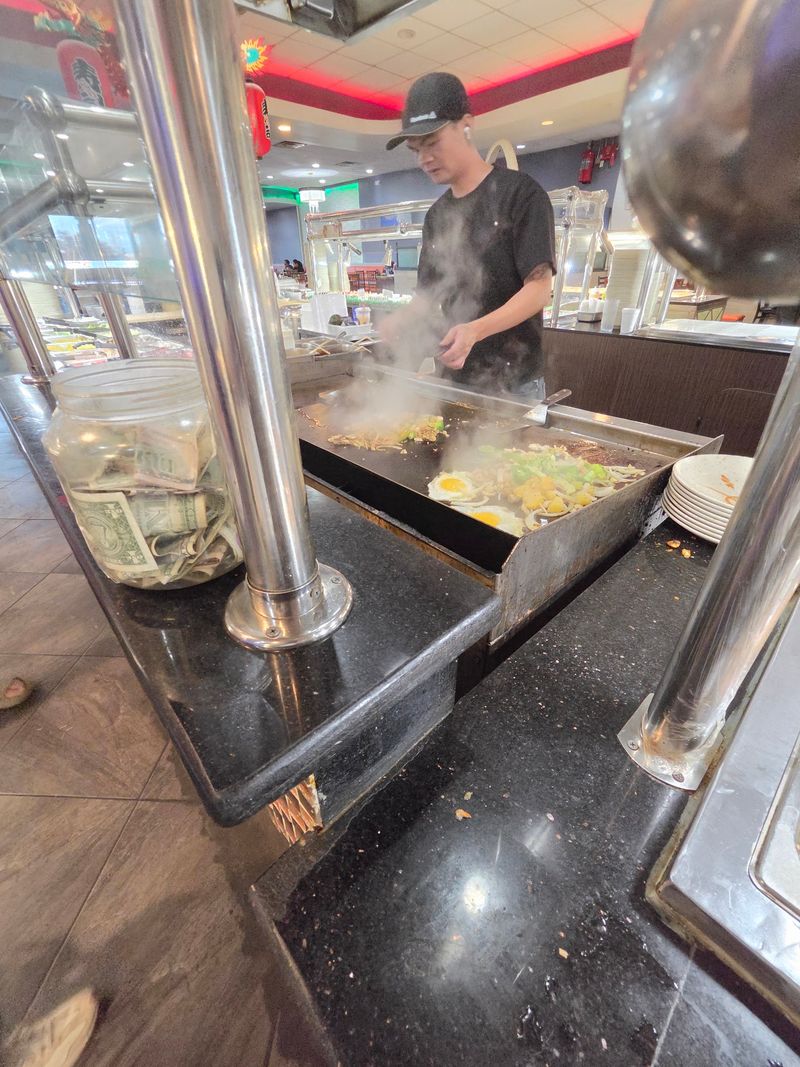
Here’s how it works. You pick raw ingredients from the hibachi bar, add a sauce, and hand the plate to the cook, who grills everything on the flat top while you wait.
The best news is the price. Hibachi comes included with the buffet, so there’s no extra charge for this custom stir-fry.
Several sauces sit at the station, which lets you control flavor and spice. I’d start with a modest plate the first time, then go back once you know which sauce you like.
Some people call this setup Mongolian barbecue, and the idea is similar. You build the bowl, and someone else handles the heat.
A fresh-cooked plate also solves a common buffet complaint. Food on steam tables can cool off over time, but your hibachi plate comes straight from the grill.
This station is easily the most talked-about part of the restaurant. It gives picky eaters total control and lets adventurous ones experiment.
Kids often enjoy watching their own food sizzle, too, which turns dinner into a small show. From the grill, the next logical stop for many guests is the cold side of the room, where the sushi waits.
Rolls and Bites at the Sushi Bar
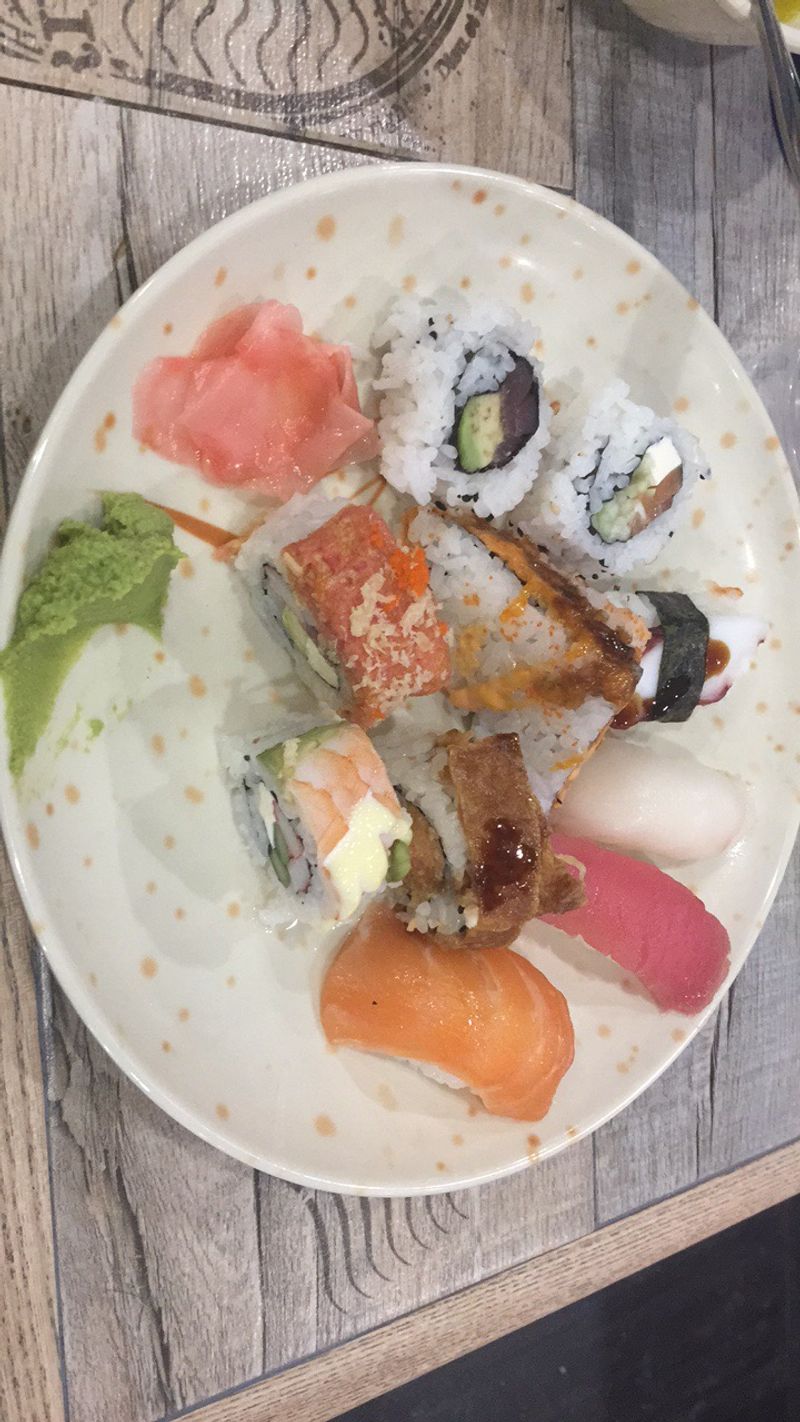
Sushi gets mentioned more than anything else when people discuss this buffet. A sushi bar sits within the spread, and a crew prepares rolls in small, bite-size pieces.
Bite-size matters on an all-you-can-eat plate. You can try several kinds of rolls without filling up on just one.
The selection is described as decent rather than massive, so think variety over endless options. I’d grab two or three pieces of each roll that looks interesting, then come back for favorites.
Lemon wedges sit nearby for anyone who likes a squeeze of citrus on fish. It’s a small touch, but it helps.
Some guests skip the hot food entirely and make a whole meal from sushi. That’s a smart move for diners watching sodium or simply craving something lighter.
Sushi at a buffet works best when it’s fresh, so timing helps. Visiting near the start of lunch or dinner service often means newer trays on the bar.
Keep in mind that sushi lovers who want specialty, made-to-order rolls may find a dedicated sushi restaurant fits better. Here, the appeal is pairing a few rolls with everything else on offer, including some surprising seafood.
Crawfish and Cheesy Mussels in Northern Michigan
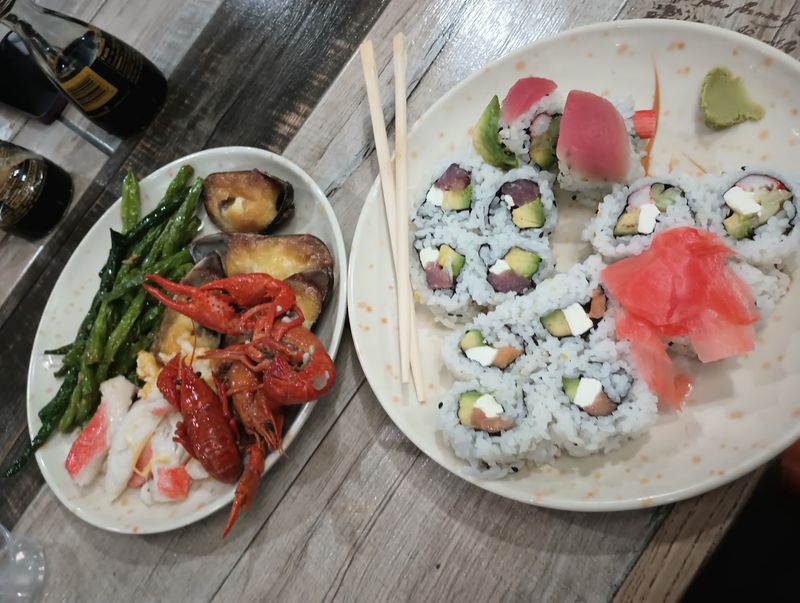
Cajun-style crawfish is not something most people expect near Grand Traverse Bay. Yet it appears on this buffet, and one diner compared it to crawfish from Louisiana.
Baked cheese mussels show up here too. They’re served on the half shell with a melted cheesy topping, and they’re a popular pick at many Asian buffets across the country.
Shrimp dishes and calamari round out the seafood options. Dinner service is mentioned as a good time for shrimp lovers.
I can understand the appeal of seafood at a buffet. Ordering crawfish, mussels, and shrimp separately at a sit-down restaurant would add up quickly.
A practical tip: crawfish take time to peel. Grab a few napkins and maybe a small extra plate for shells, so your table doesn’t turn into a mess.
Selection can shift from day to day, which is normal for a buffet. If seafood is your main goal, dinner is a sensible time to aim for, since evening spreads tend to carry more of it.
After all that shellfish, plenty of people want something familiar. The classic Chinese dishes are next, and they hold their own.
Comfort Classics Like Sesame Chicken and Hong Kong Beef
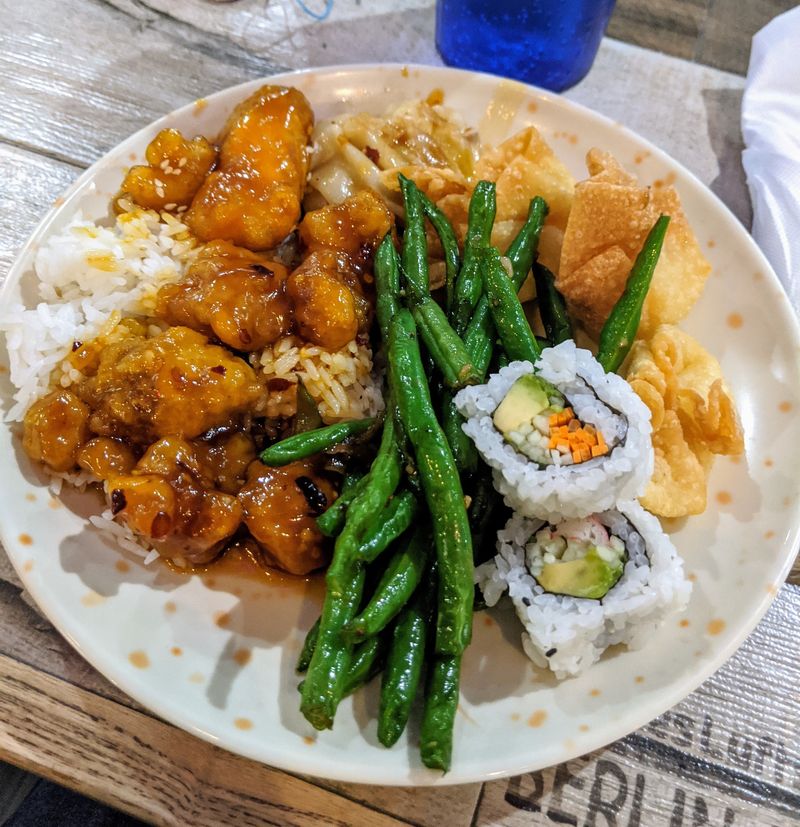
Sometimes the craving is simple. You want sesame chicken, a scoop of fried rice, and maybe something with a sticky glaze.
The hot food islands at Asian Buffet cover that territory. Sesame chicken and Hong Kong beef both come up among the dishes people talk about.
Hong Kong beef is usually crispy strips of beef tossed in a sweet, savory sauce. It’s a familiar name on many Midwest Chinese buffet lines.
A chicken katsu also appears on the line, served with a peanut-style sauce. That pairing may surprise some diners, so try a small piece first.
My strategy at any big buffet is a tasting plate. Take one spoonful of several dishes, then return for seconds of the winners.
Temperature is one thing to watch. Some guests have found certain trays a little cool, so dishes that look freshly refilled are a good bet.
Servers bring fresh trays out during service, so it can pay to wait a minute if a pan looks low. Before loading up on these heavier dishes, though, many people like to start lighter, and a famous bowl of soup is a great place to begin.
A Bowl of Egg Drop Soup to Start
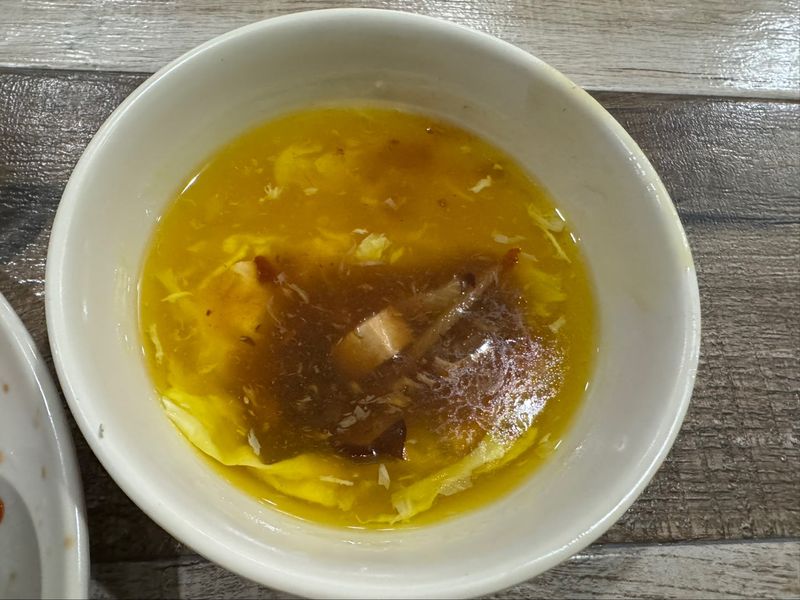
One diner who felt lukewarm about most of the meal still called the egg drop soup fantastic. That’s a strong endorsement for a humble bowl of broth.
Egg drop soup is made by drizzling beaten egg into hot broth. The egg forms thin, silky ribbons as it cooks.
At a buffet, soup is a smart opener. It warms you up without filling your plate, leaving room for hibachi and sushi later.
Northern Michigan winters are long and chilly. I’d happily start a January lunch in Traverse City with a hot bowl of soup before anything else.
The soup station usually sits with the hot food islands. Grab a small bowl rather than a big one, since you’ll want room for everything else.
Kids who are cautious about new foods often like egg drop soup. It’s mild, simple, and easy to recognize.
It’s also a good test of a buffet kitchen. A well-made basic soup often suggests care elsewhere on the line, and this one has earned praise even from tougher critics.
Once the soup is done, some diners balance things out with a trip to the salad bar and fruit.
Greens and Fruit for a Lighter Plate
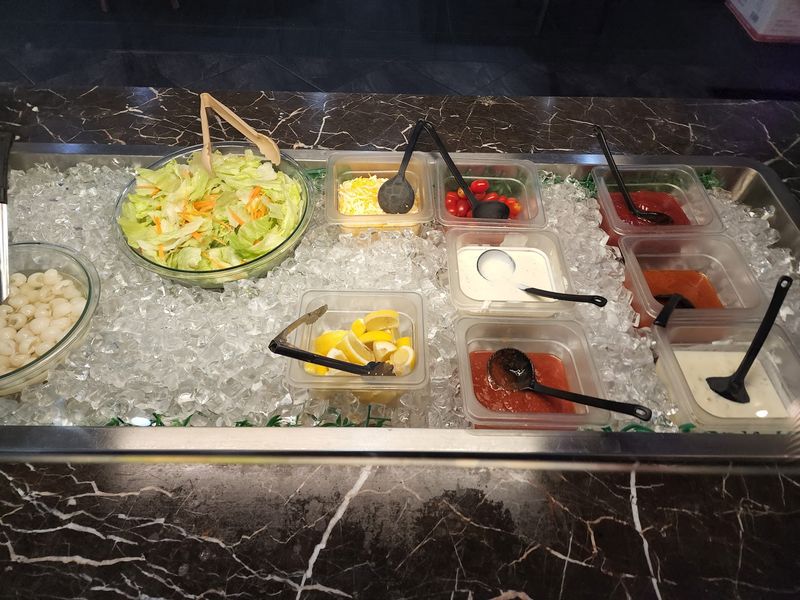
Not every buffet trip has to end in a nap. The salad bar and fresh fruit at Asian Buffet give diners a lighter option between heavier plates.
The salad bar is listed as one of the restaurant’s main features. Fruit sits alongside the dessert area.
Honest expectations help here. Some diners wish there were more fresh vegetables and fruit, so think of this as a side section rather than a full salad restaurant.
Still, a few greens can reset your appetite. I like the idea of a small salad after a fried plate, before heading back for sushi.
Families may find this section handy too. Kids who want something plain, like fruit, can fill a plate without fuss.
The hibachi bar also counts as a vegetable source. You can load up on raw veggies there and have them cooked fresh, which is a clever workaround if the salad bar looks thin.
Balancing your plates makes a long buffet meal more comfortable. It also leaves just enough room for the final stop on the tour, the dessert table, which comes with one small detail worth knowing ahead of time.
Sweet Endings and the Ice Cream Question
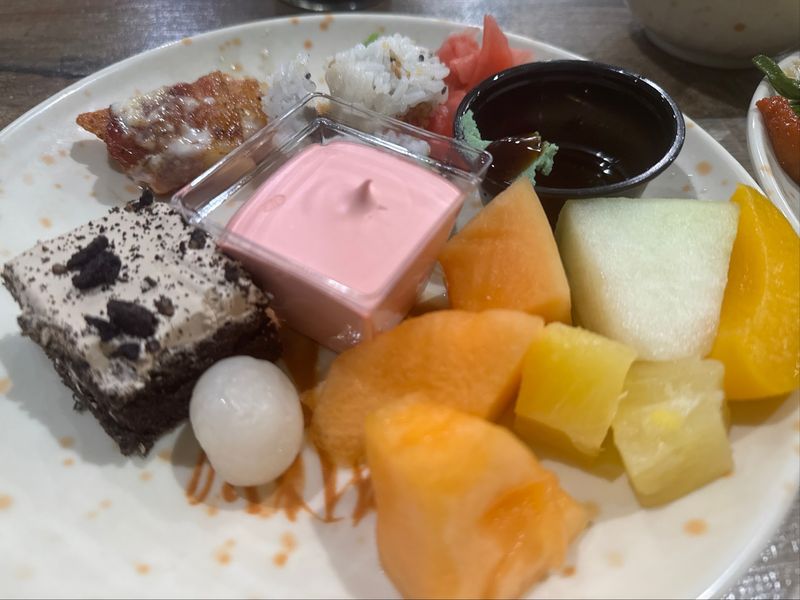
Ice cream lovers, take note. This buffet doesn’t offer a soft serve machine, and prepackaged ice cream may cost extra.
That surprises some first-timers, since soft serve is common at many big buffets. Knowing ahead of time saves a little disappointment.
The dessert area offers fruit and assorted sweets. Selection can vary depending on the time of day.
Servers sometimes bring a cookie with the check. It’s a small sweet note to end the meal.
I’d suggest saving dessert room carefully. After hibachi, sushi, and seafood, a couple of small bites may be all you need anyway.
Drinks follow a similar no-surprises rule. The restaurant serves Pepsi products, so fans of other soda brands should plan accordingly.
Servers tend to keep water glasses filled and clear empty plates quickly. That attentive service helps a long buffet meal feel relaxed rather than messy.
Little details like these shape the overall visit. They also tie into practical matters such as timing, pricing, and tipping, which can make a real difference in how you plan your stop.
Smart Timing for a Better Buffet Visit
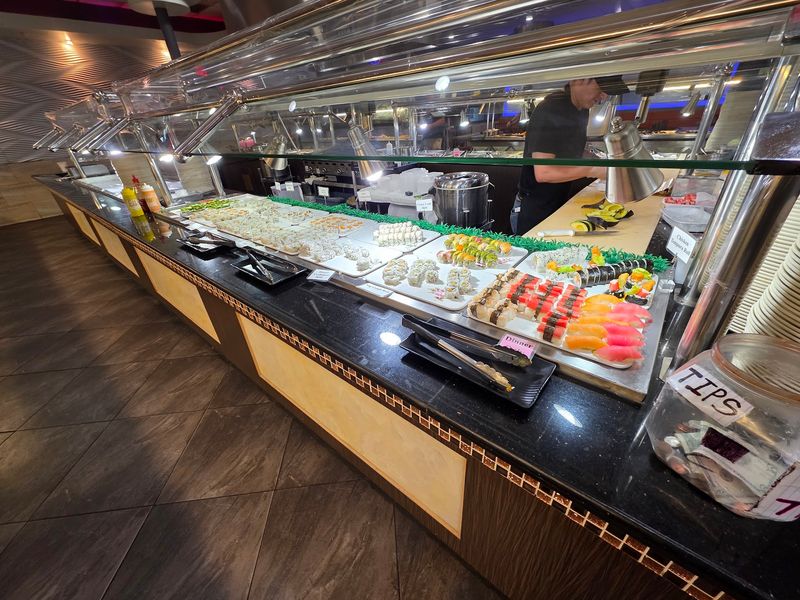
Asian Buffet keeps steady hours, opening at 11 a.m. and closing at 9 p.m. every day of the week. That consistency makes planning easy for both locals and travelers.
Lunch and dinner are priced differently, with dinner costing more. Check the official website before you go, since prices can change.
Tax gets added to the final bill. A suggested tip may also appear, so budget a little beyond the listed buffet price.
Timing affects freshness. Arriving near the start of a meal service often means newly filled trays and warmer hot food.
Dinner brings more seafood, including shrimp selections. Lunch can be a good value for diners who mostly want hibachi and sushi.
The restaurant sits close to Munson-area errands and shopping along South Airport Road. That makes it an easy stop between appointments or on the way out of town.
I’d plan for a relaxed pace rather than a quick bite. A buffet with a hibachi grill, sushi, and seafood rewards a little patience, and arriving hungry at the right hour is the simplest way to get the most out of every plate.
Share this story