Baltimore has a way of keeping its best secrets behind quiet brick facades, and few secrets are as rewarding as the one tucked inside a stately 19th-century building on Mount Vernon Place. A library that has stood for well over a century now ranks among the most architecturally celebrated reading rooms anywhere in the world, drawing researchers, architecture enthusiasts, and curious travelers alike.
The collection inside holds more than 300,000 volumes, most of them from the 18th and 19th centuries, covering everything from archaeology to classical literature. What makes this place truly remarkable is that it was built not for profit or prestige alone, but as a gift to the public, a place where knowledge would always stay put and people would have to come to it.
The Man Behind the Books
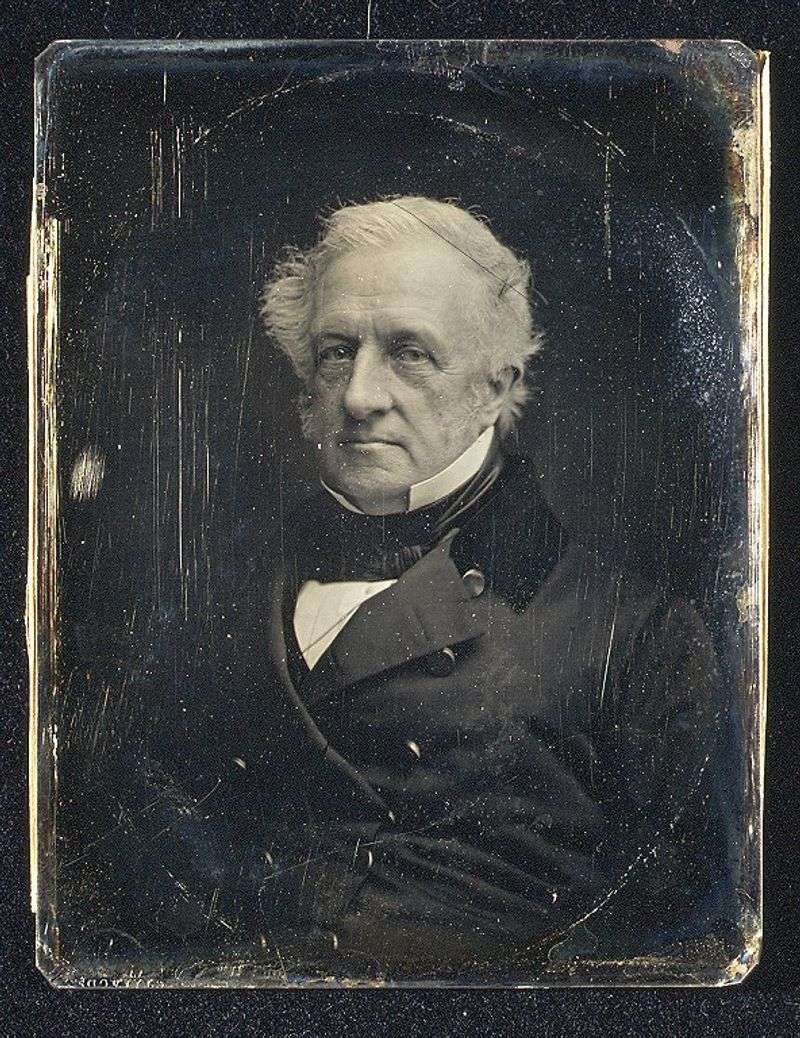
George Peabody was not a Baltimore native, but he left a mark on the city that has outlasted most of his contemporaries. Born in Massachusetts in 1795, he became one of the most successful merchants and bankers of his era, building his fortune largely in London before turning his attention to philanthropy on a scale rarely seen at the time.
In 1857, Peabody founded the institute that would carry his name, endowing it with funds to establish a library, a music conservatory, a lecture series, and an art gallery. His vision was straightforward: the people of Baltimore deserved access to knowledge and culture regardless of their social standing.
A small exhibit space just before the entrance to the main library hall tells Peabody’s story in detail. Most people who stop to read it come away with a stronger appreciation for what the room they are about to enter actually represents, and why it still matters today.
Five Tiers of Cast Iron That Changed Everything
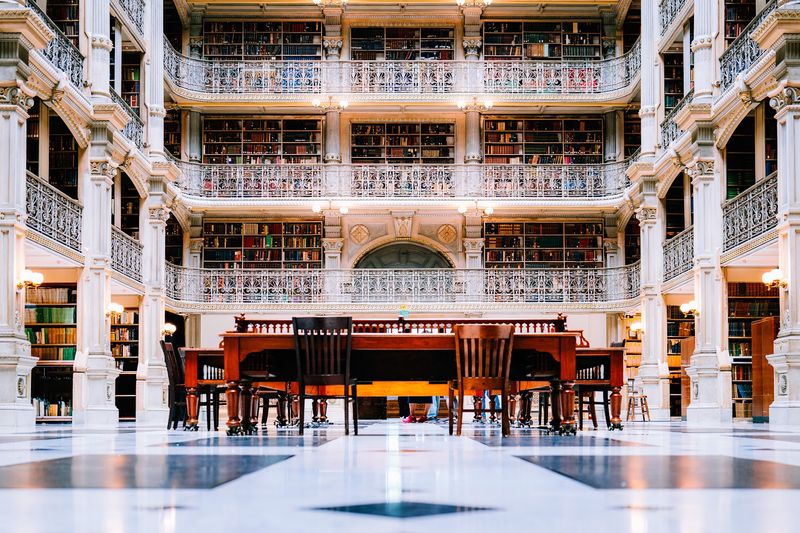
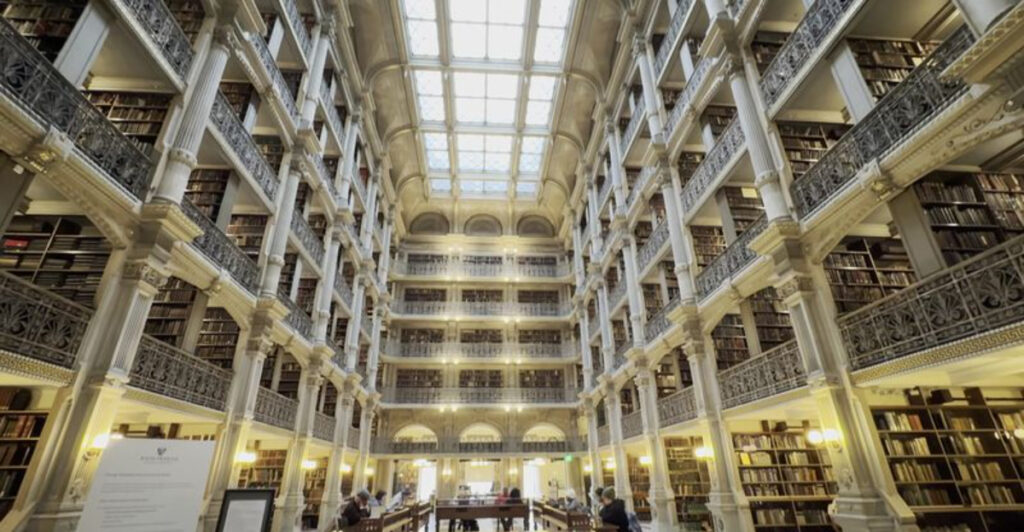
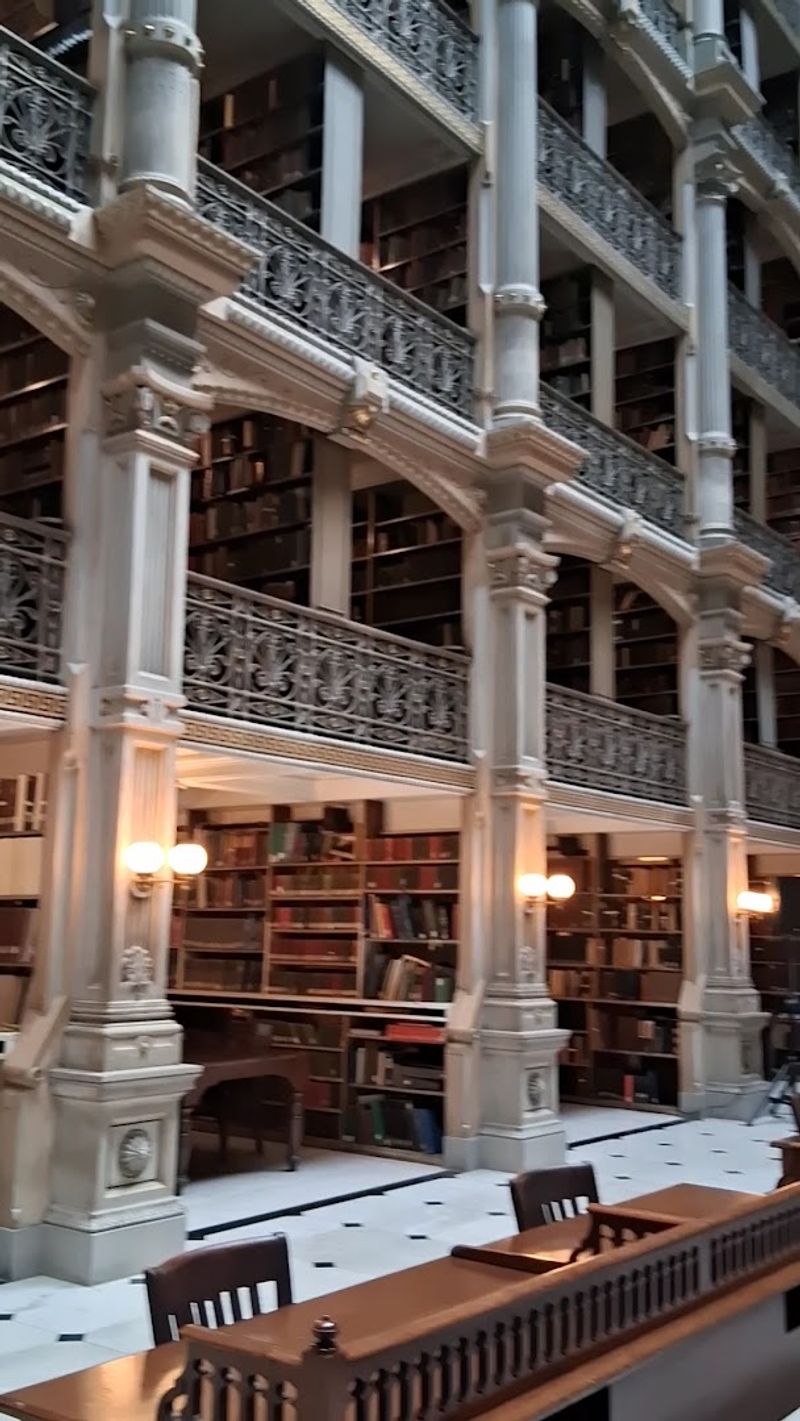
The moment the main library hall comes into view, the scale of the design makes an immediate impression. Five tiers of ornate cast iron balconies rise from the marble floor toward a massive skylight overhead, each level lined with the spines of thousands of old volumes.
The cast iron railings repeat in symmetrical patterns as they climb upward, creating a grid of delicate metalwork that feels both industrial and refined. The black and white marble floor below adds a geometric contrast that grounds the vertical drama of the space.
Architect Edmund G. Lind designed the interior, which opened in 1878, and the result has been described by architectural historians as one of the finest examples of 19th-century library design in the United States.
The skylight floods the room with natural light, which shifts throughout the day and changes how the entire space reads. No photograph fully captures the proportion of the room until you are actually standing beneath it.
A Collection Built for Serious Research
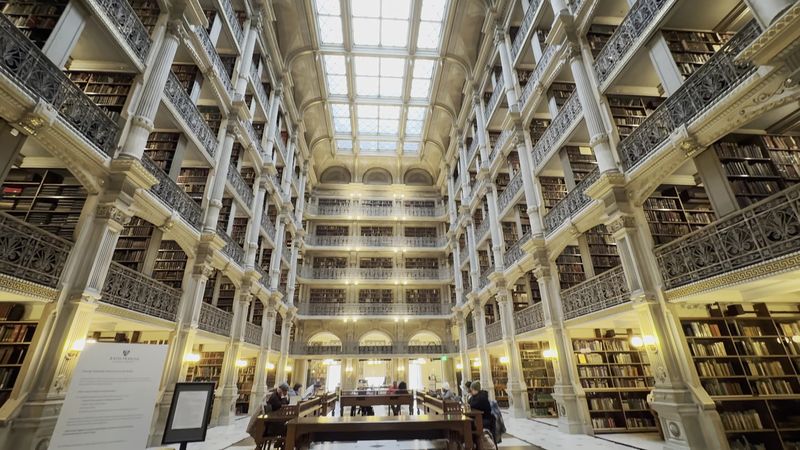
The collection at the George Peabody Library is not a general-purpose lending library. With more than 300,000 volumes focused primarily on the 18th and 19th centuries, the holdings are specialized and deliberately curated for research purposes.
Notable strengths include archaeology, British art and architecture, English and American literature, Romance languages, Greek and Latin classics, history of science, geography, and exploration and travel. These subject areas reflect the intellectual priorities of the Victorian era, when the library was assembled, and they make it a genuinely useful resource for scholars working in those fields.
The library is a non-circulating collection, which means the books do not leave the building. Readers and researchers are welcome to use the materials on-site, and librarians are available to assist with accessing specific volumes.
The collection is part of the Special Collections Department of the Sheridan Libraries of Johns Hopkins University, which helps maintain and preserve these materials for future generations of researchers and curious minds.
The Ground Floor Rule and Why It Actually Works
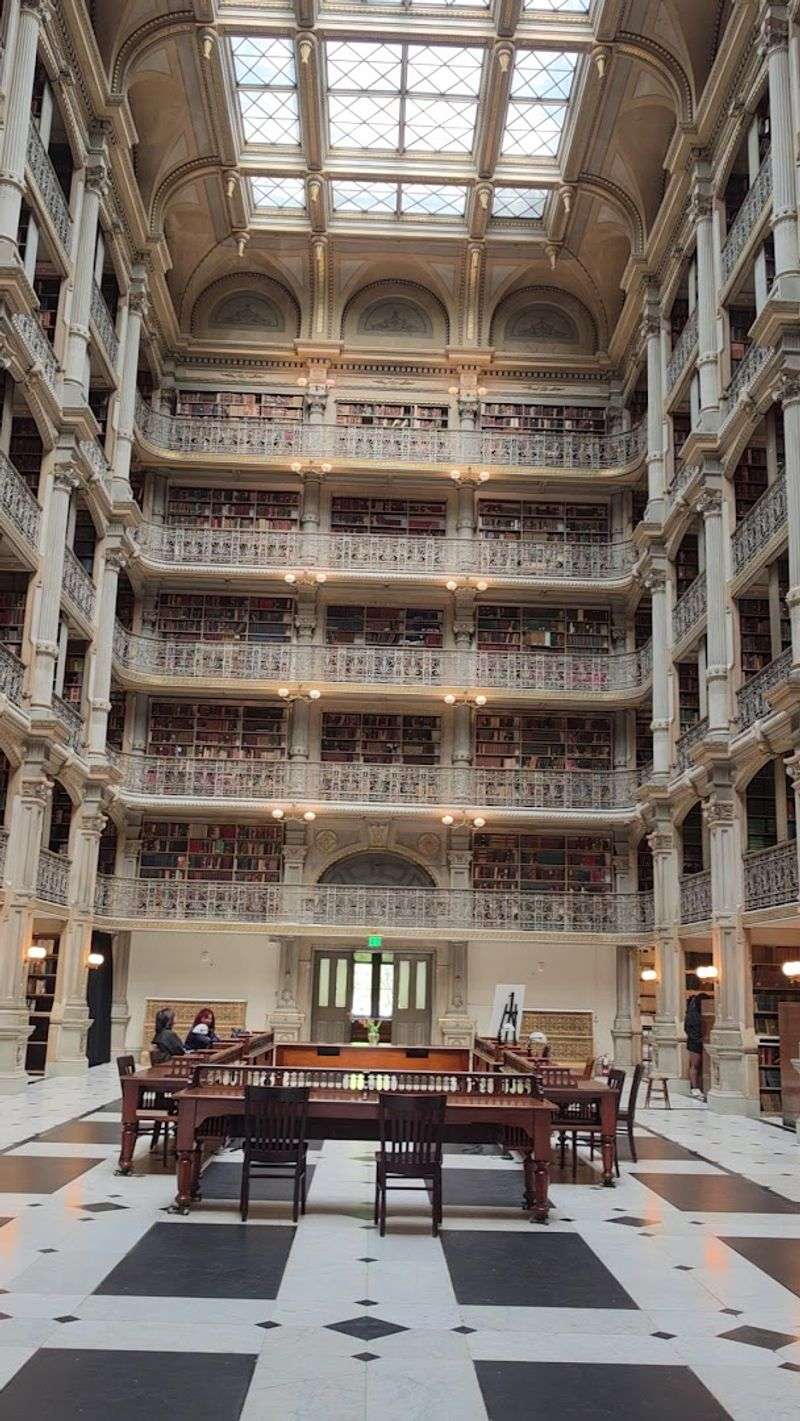
Public access to the George Peabody Library is limited to the ground floor, a detail that surprises some first-time visitors who arrive hoping to wander freely through every tier. The upper levels are reserved for researchers and Johns Hopkins University students who have specific access privileges.
At first, this restriction might seem like a missed opportunity. But the ground floor view looking upward through five stories of cast iron balconies and shelved books is genuinely complete as a visual experience.
The full architectural composition reveals itself from below, and the skylight above frames everything in natural light.
Wooden reading tables are arranged across the marble floor, and side alcoves along the perimeter offer quieter study nooks with seating and electrical outlets. The space functions as an active library, so maintaining a low noise level is expected and appreciated by those who come to work.
The ground floor, as it turns out, is more than enough to understand why this room has earned its reputation.
A Working Library, Not Just a Photo Backdrop
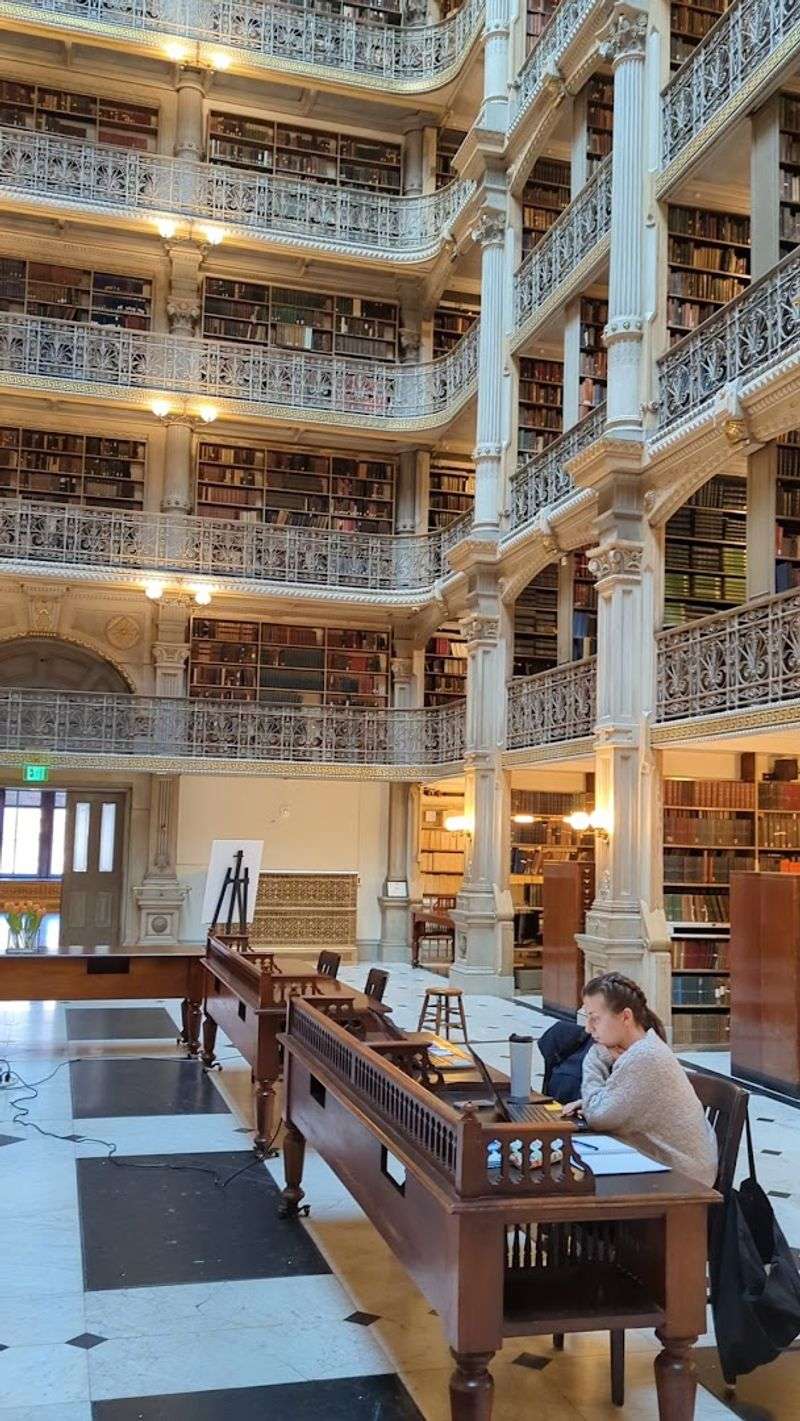
There is a real tension inside the George Peabody Library between its identity as an architectural landmark and its function as an active place of study. Both things are happening at the same time, and somehow the coexistence works.
Architecture enthusiasts arrive with cameras, taking in the vertical drama of the stacked balconies. Students arrive with laptops and notebooks, settling into the study nooks with the focused energy of people who have deadlines.
The reading tables at the center of the hall accommodate both groups, and the shared understanding of quiet makes the space feel respectful rather than restrictive.
For anyone who prefers a serious working environment over the background noise of a coffee shop, the library delivers something genuinely rare: a historic, beautiful, and functional workspace that costs nothing to use. The study nooks along the perimeter are particularly well-suited for extended sessions, with good lighting and outlets available in each alcove.
The library rewards those who stay long enough to settle in.
Hours, Access, and Planning Your Visit
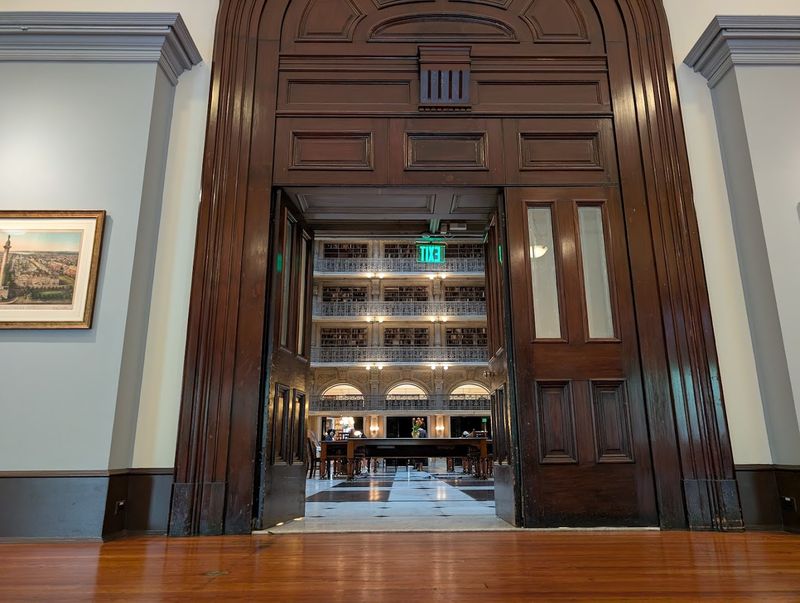
Planning a visit to the George Peabody Library requires some attention to the schedule, because the hours are more limited than many people expect. The library is open Monday through Thursday from 10 AM to 5 PM and on Sunday from 11 AM to 5 PM.
It is closed on Fridays and Saturdays.
Occasional closures for private events, including concerts and receptions, can happen without prominent advance notice online, so checking the official website at library.jhu.edu before making a special trip is a practical step worth taking. The library has been used as a private event venue, and some visitors have arrived to find it unavailable on otherwise open days.
Admission to the library for general visitors is free, which makes it one of the more accessible cultural experiences in Baltimore. Street parking is available nearby, and the Mount Vernon neighborhood offers plenty of other attractions within walking distance, making it easy to build a half-day itinerary around a visit to the library.
The Skylight That Defines the Room
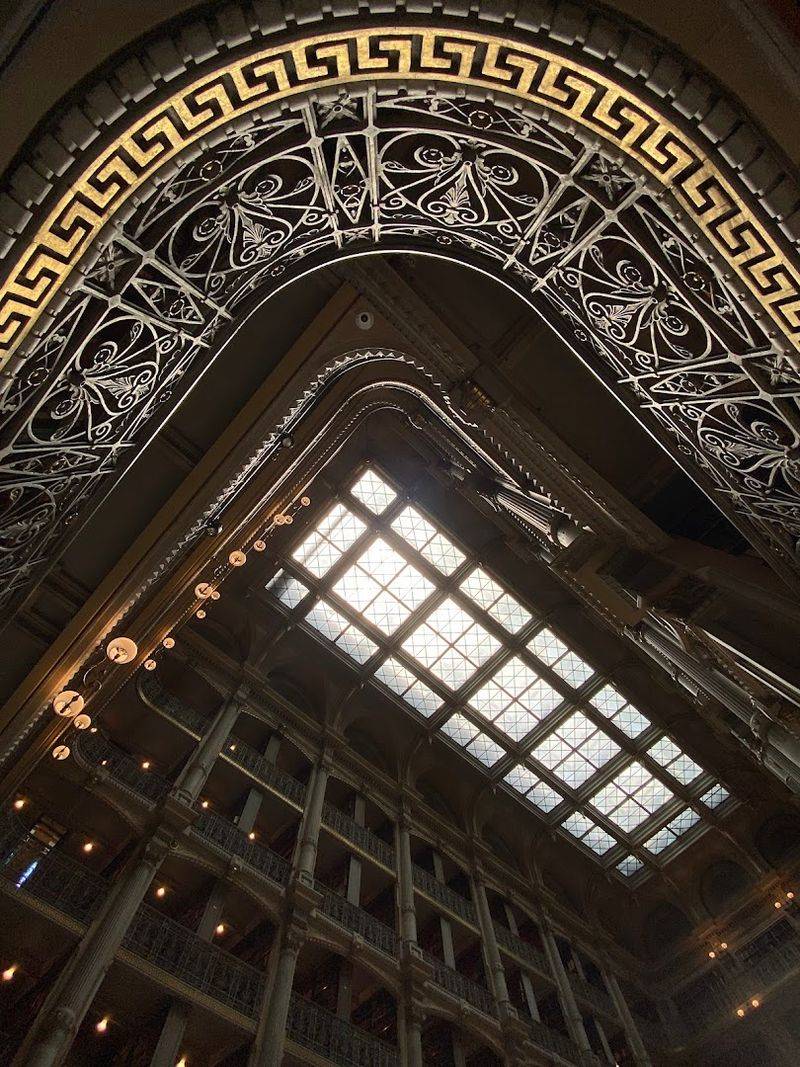
At the very top of the library hall, a large glass skylight spans the ceiling and serves as the primary light source for the entire vertical space below. The design decision to crown the room with glass rather than a solid roof was deliberate and transformative.
Natural light travels down through five stories of open space, reaching the marble floor and wooden reading tables below. The quality of that light shifts depending on the time of day and the season, which means the room never looks exactly the same twice.
Morning visits and midday visits produce noticeably different atmospheres within the same architectural frame.
The skylight also creates a visual anchor when you stand on the ground floor and look straight up. The cast iron balconies frame the view in a series of receding rectangles, each one pulling the eye upward toward the glass above.
This upward perspective is one of the most photographed views in Baltimore and remains genuinely striking even after repeated visits.
An Exhibit Space That Sets the Stage
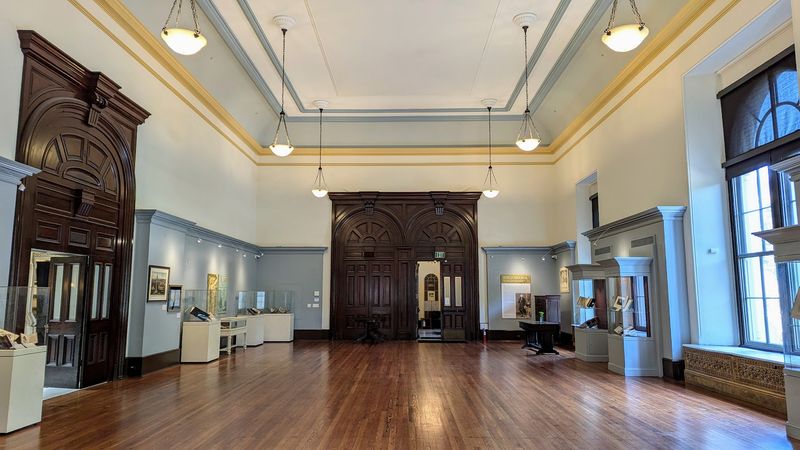
Before entering the main library hall, visitors pass through a small exhibit space that documents the history of George Peabody and the institution he founded. The room functions as a kind of orientation, offering context that makes the library itself more meaningful once you step inside.
Photographs, historical documents, and informational panels trace Peabody’s life and philanthropic legacy, including his relationships with other major figures of the 19th century. The exhibit also covers the founding of the Peabody Institute in 1857 and the construction of the library building, which opened its doors in 1878 after years of planning and development.
Most visitors who spend a few minutes in this space before entering the main hall report that it changes how they experience the room. Understanding that the library was conceived as a public gift, not a private collection, reframes the architecture as an act of civic generosity rather than personal display.
The exhibit is small but well worth the time it takes to walk through.
Weddings, Events, and the Library After Hours
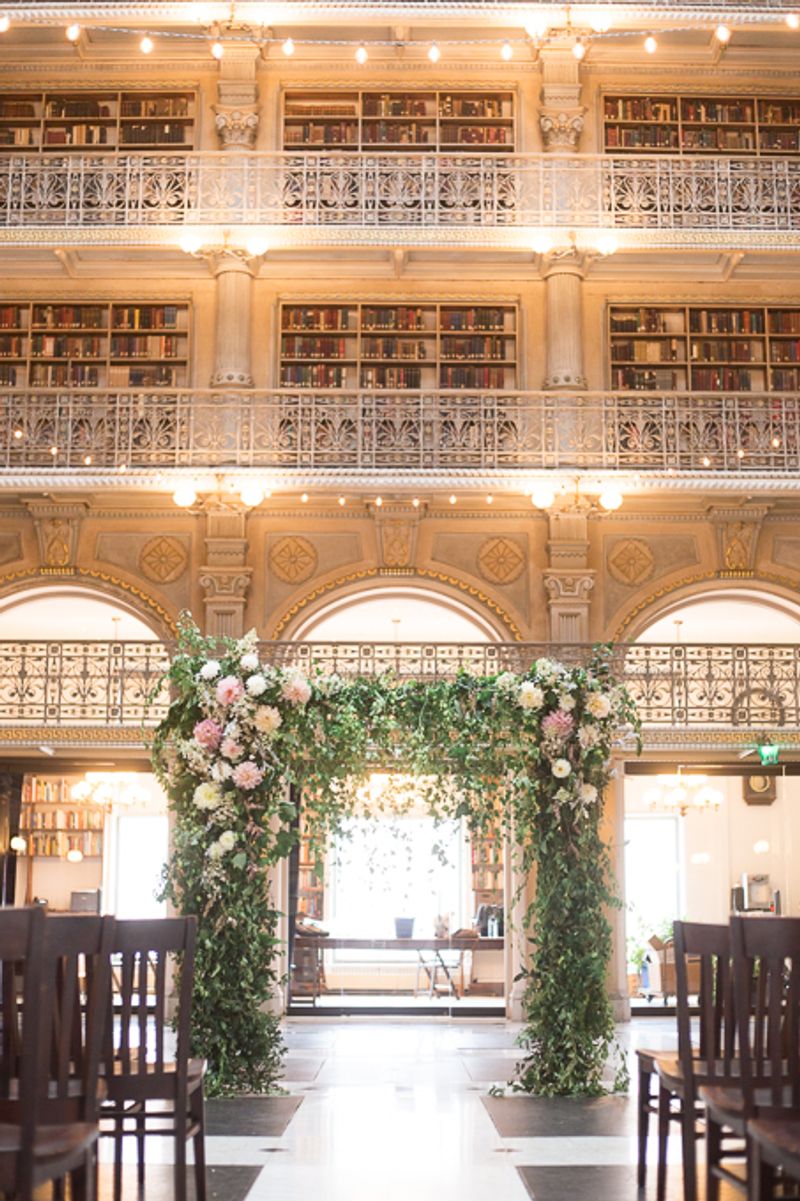
The George Peabody Library has become one of the most sought-after private event venues in Baltimore, particularly for weddings. The combination of the ornate cast iron balconies, the marble floor, and the natural light from the skylight creates a setting that requires very little additional decoration to feel special.
Wedding ceremonies and receptions held in the main hall benefit from the vertical drama of the space, with the stacked tiers of books providing a backdrop that no florist or lighting designer could fully replicate. The library’s location steps from Mount Vernon Place also means that portrait sessions can extend into the surrounding neighborhood, adding more variety to the visual record of the day.
Private events do occasionally result in the library being closed to the general public during normal operating hours, which is the main reason the official website recommends checking ahead before visiting. For couples planning a ceremony or reception, the library’s events team handles bookings through Johns Hopkins University’s Peabody Institute.
The Mount Vernon Neighborhood Around It
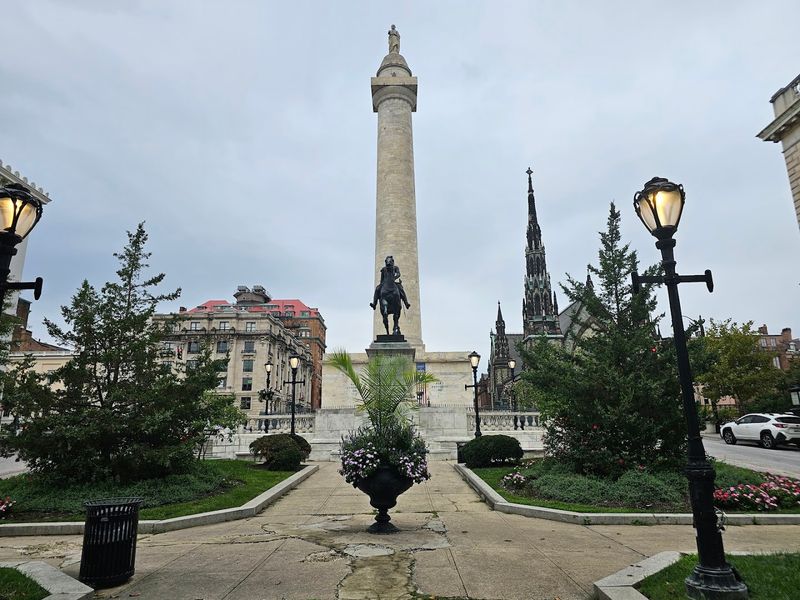
The George Peabody Library does not exist in isolation. It sits within one of Baltimore’s most historically layered neighborhoods, and the streets around it reward exploration before or after a visit to the library itself.
Mount Vernon Place is centered on Baltimore’s Washington Monument, a marble column completed in 1829 that predates the more famous version in Washington, D.C. The surrounding square is lined with 19th-century architecture, including rowhouses, churches, and cultural institutions that reflect the neighborhood’s long history as Baltimore’s most formal civic district.
Cafes, galleries, and other attractions are within easy walking distance, making it straightforward to spend a few hours in the area without running out of things to see. The Peabody Institute conservatory building connects directly to the library, and the broader arts district nearby adds a contemporary layer to a neighborhood that could otherwise feel frozen in the 19th century.
The contrast between old and active makes Mount Vernon genuinely interesting to move through.
Why This Library Still Matters Today
Libraries of this scale and ambition were built during a specific window of American history when certain individuals believed that public access to knowledge was worth funding at extraordinary expense. The George Peabody Library is one of the surviving examples of that belief, and it has remained functional and open to the public for nearly 150 years.
The collection continues to serve researchers working in fields that align with its 18th and 19th-century holdings. At the same time, the building itself has become a cultural landmark that draws people who have no specific research agenda but simply want to be in the presence of something built to last.
Both uses are legitimate, and the library accommodates them without apology. The fact that it remains free to enter, still functions as a working library, and still looks the way it did when it opened in 1878 is a kind of quiet achievement that Baltimore does not always receive credit for.
This is a room that was built for permanence, and permanence is exactly what it has delivered.
Where to Find This Architectural Marvel
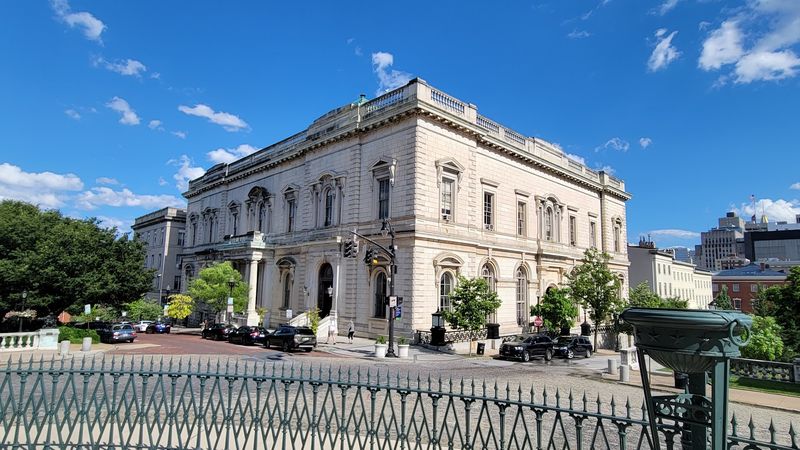
The George Peabody Library sits at 17 E Mt Vernon Pl, Baltimore, MD 21202, right in the heart of the Mount Vernon neighborhood, just north of downtown Baltimore. The building is part of the Peabody Institute, which now operates as a conservatory of music under Johns Hopkins University.
From the street, the structure offers little hint of what waits inside. The red brick exterior is measured and restrained, blending into the historic architecture of the surrounding square without any dramatic flourish.
Mount Vernon Place itself is worth a slow walk before heading inside. A cobblestone square anchors the neighborhood, and the Washington Monument in Baltimore stands nearby, making this corner of the city feel like a preserved pocket of 19th-century urban planning.
Paid street parking is generally available nearby, and the library is a short walk from cafes, galleries, and other cultural landmarks that make the surrounding district worth exploring.
Share this story