 Unearth The Voyage
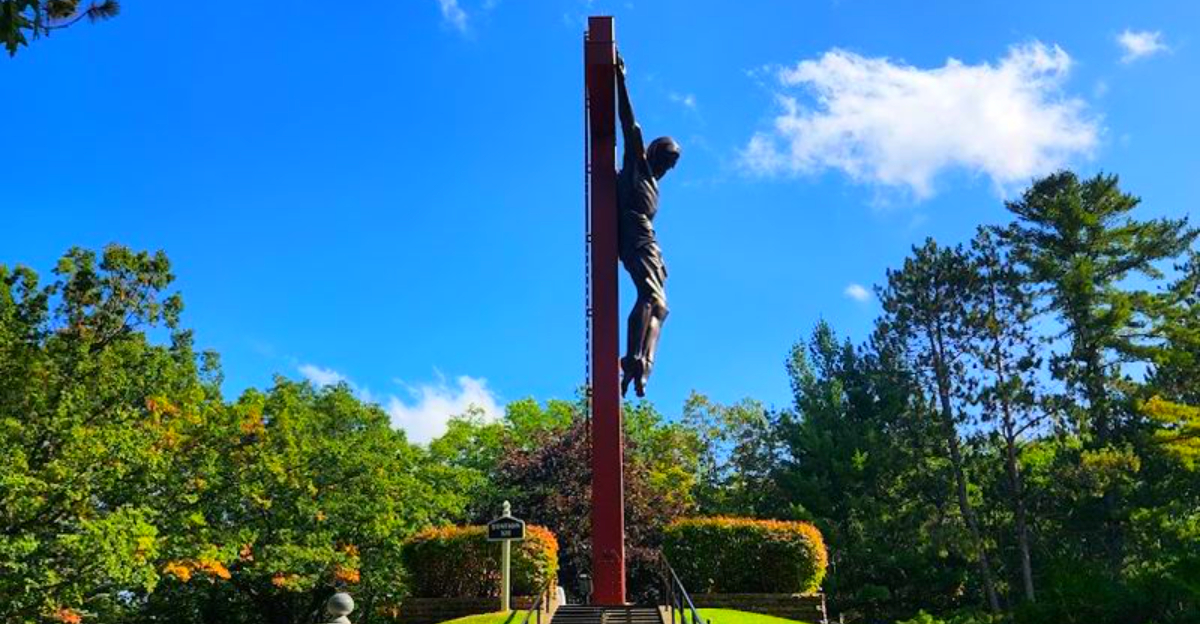
Somewhere in the northern woods of Michigan, a 55-foot-tall bronze figure of Christ rises above the treetops, visible long before you reach the base of the cross. I had driven past the highway signs for years without stopping, always telling myself I would visit “next time.” The day I finally pulled off M-68 in Indian River, I understood immediately why hundreds of thousands of people make the trip every year.
This is not just a roadside curiosity. Cross in the Woods is a nationally recognized Catholic shrine with a history rooted in faith, extraordinary artistry, and a quiet kind of power that surprises even visitors who arrive with no religious connection at all.
Whether you are a devoted pilgrim or simply someone who appreciates monumental art set against a backdrop of Michigan pines, this place has a way of stopping you in your tracks and making you want to stay longer than you planned.
Where It All Begins: Address, Location, and First Impressions
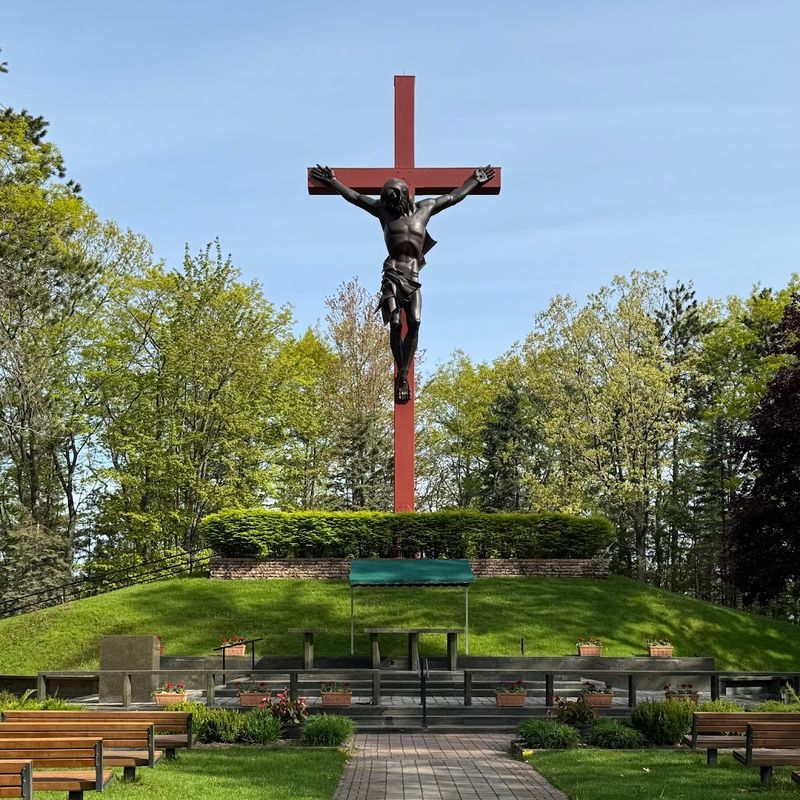
The Cross in the Woods Catholic Shrine sits at 7078 M-68, Indian River, Michigan 49749, tucked into the forested landscape of northern Michigan’s Cheboygan County. Indian River is a small town, the kind where you notice the quiet before you notice anything else.
The drive up M-68 feels almost ordinary until the highway signs start pointing you toward something that clearly draws crowds from far away.
Free parking greets you right away, including an overflow lot across the street with spaces for tour buses. That detail alone tells you something about the scale of what you are about to see.
The main building complex sits close to the road, but the real destination lies just behind it, down a gentle slope through the trees.
My first glimpse of the crucifix came through a gap in the pines, and I genuinely stopped walking for a moment. Nothing about the approach fully prepares you for the size of it.
The whole arrival sequence feels almost theatrical in the best possible way.
The Crucifix Itself: Scale, Bronze, and the Work of Marshall Fredericks
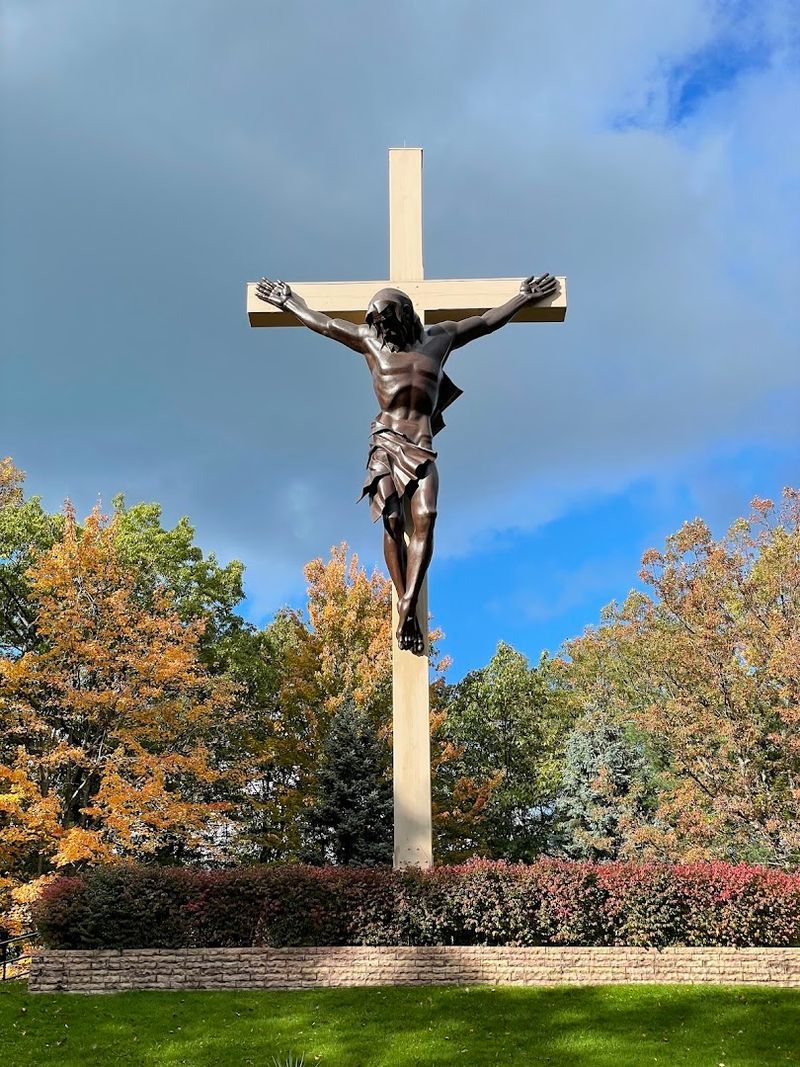
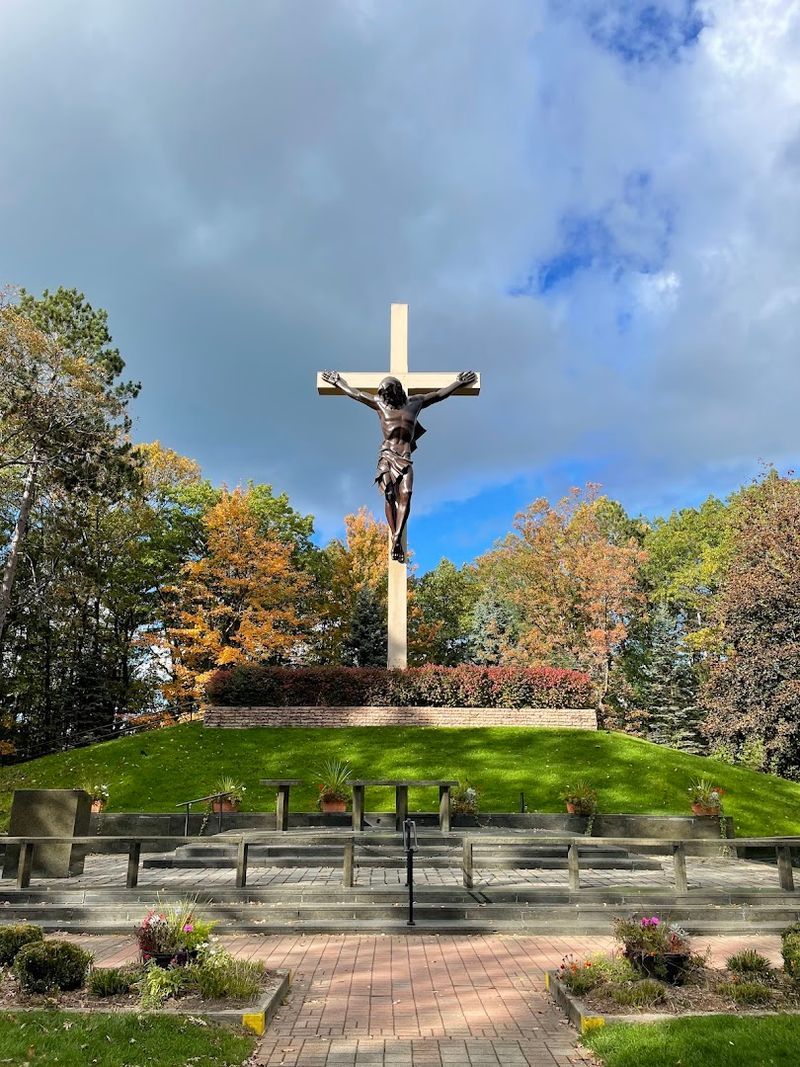
The numbers are worth stating plainly: the cross stands 55 feet tall and supports a bronze figure of Christ that measures roughly 28 feet from head to feet. The combined structure makes it one of the largest crucifixes in the world, and seeing it in person confirms that no photograph quite does it justice.
The bronze corpus was sculpted by Marshall Fredericks, a Michigan-based artist whose work also includes major public sculptures across the United States and Europe. Fredericks spent about a year creating the figure, and the craftsmanship is visible up close.
The surface detail in the face and hands is quietly extraordinary for a piece designed to be viewed from a distance.
The wooden cross itself is made from a single redwood log, which adds a warmth and organic quality that pure metal construction would not have achieved. Standing at the base and looking up, the combination of wood and bronze against the Michigan sky feels genuinely monumental, not just large.
A National Shrine: The Story Behind the Recognition
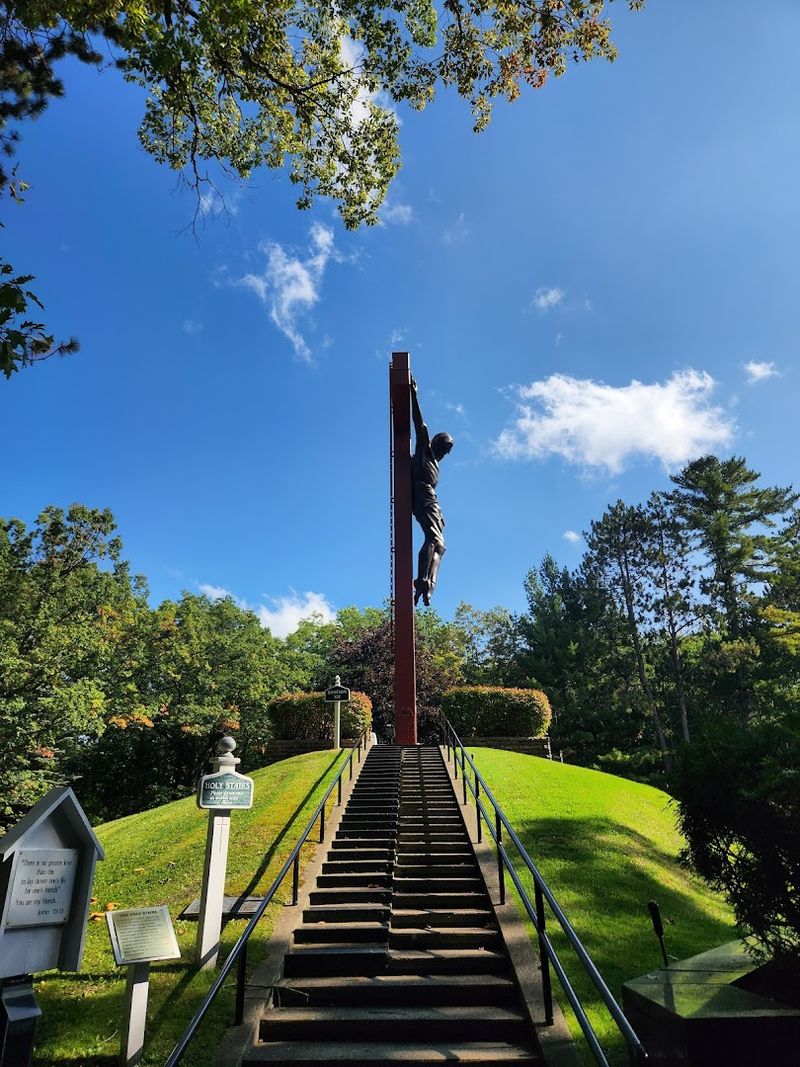
Not every religious site in the United States earns national designation, so the fact that the United States Conference of Catholic Bishops officially declared Cross in the Woods a national shrine in 2006 carries real weight. That recognition places it in the same category as some of the most significant Catholic pilgrimage destinations in the country.
The shrine’s origins trace back to the early 1950s, when the Diocese of Gaylord developed the site as a place of public devotion. The surrounding forest was always part of the vision, creating a natural cathedral that reinforces the spiritual atmosphere without any architectural help.
Over the decades, the shrine grew steadily, adding chapels, the Stations of the Cross path, and additional saint shrines across the grounds. The national designation in 2006 formalized what devoted visitors had already known for years.
Few spots in Michigan carry this level of institutional recognition alongside such a genuinely moving physical presence, and the combination keeps drawing people back season after season.
Daily Mass and Religious Services: An Active Place of Worship
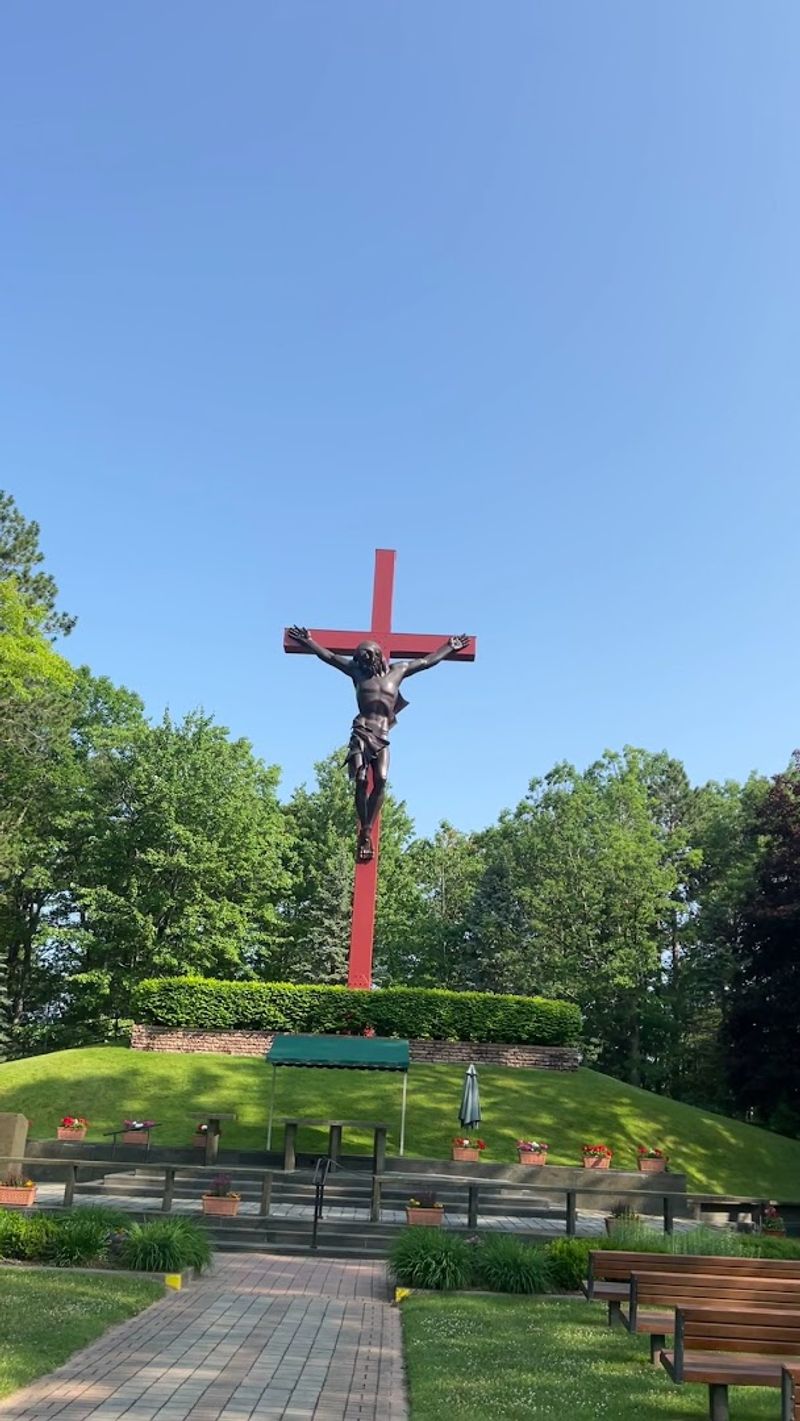
Cross in the Woods is not a museum or a static monument. Daily Mass is offered throughout the week, and the schedule includes both indoor and outdoor services depending on the season and weather.
The outdoor Mass platform sits directly in front of the crucifix, giving the congregation a view that no indoor church could replicate.
The shrine is open from 7 AM to 7 PM every day of the week, which makes it accessible for early morning visits before the main crowds arrive. That early morning window is genuinely special.
The light through the pine trees at 7 AM hits the bronze figure at an angle that changes the whole mood of the space.
Multiple chapels are scattered across the grounds, each dedicated to a different devotion, including Divine Mercy and St. Peregrine. These smaller spaces offer a more intimate setting for prayer within the larger shrine complex.
Attending even a brief outdoor service here is the kind of experience that tends to stay with you well after you have driven back down M-68.
The Grounds and Gardens: A Walk Through Something Genuinely Peaceful
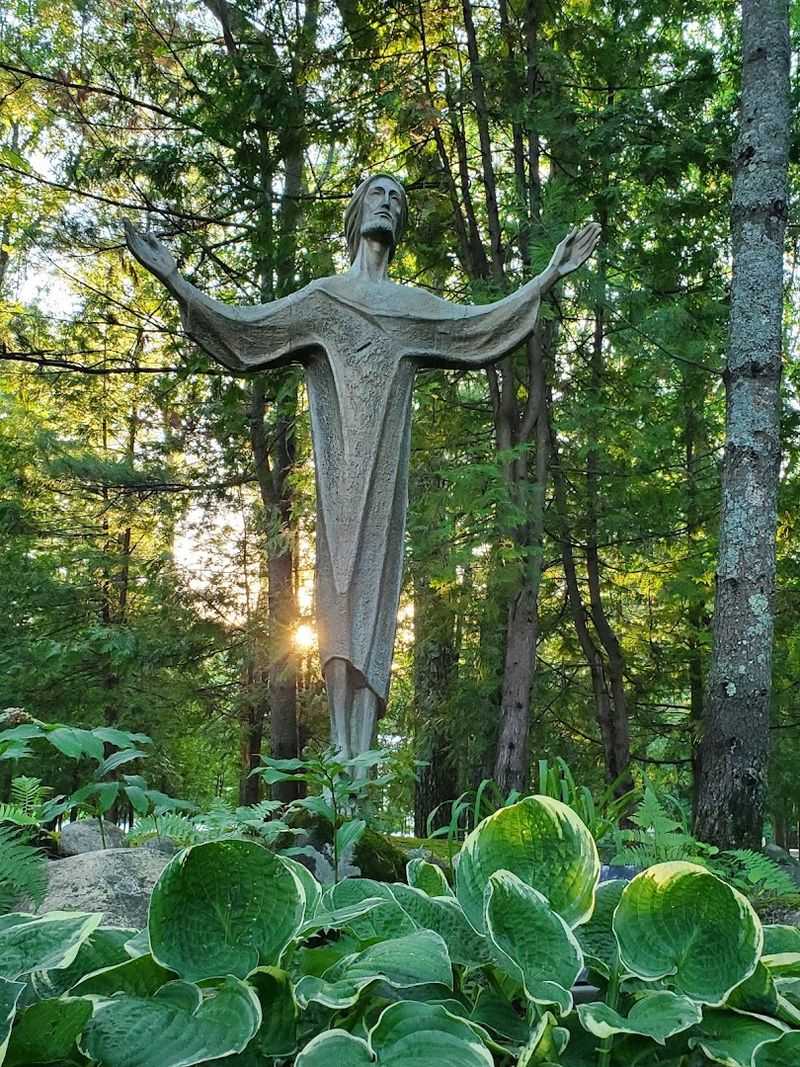
The grounds at Cross in the Woods are maintained with obvious care. Paved paths wind through the trees, connecting the main crucifix area to the Stations of the Cross trail, the individual saint shrines, and the indoor chapels.
Squirrels and chipmunks move through the undergrowth without much concern for the humans nearby, which adds a genuinely relaxed quality to any walk around the property.
The Stations of the Cross path deserves its own unhurried hour. Each station is marked with sculpture and framing that encourages you to slow down rather than rush through.
The tree canopy overhead creates natural shade that makes the walk comfortable even on warm Michigan afternoons.
Flower plantings near the main shrine area add color without overwhelming the natural forest character of the site. The groundskeeping is thorough throughout, and the cleanliness of the entire property is one of the first things most visitors notice.
It is the kind of place where the physical environment actively supports whatever internal experience you bring to it, and that is no small achievement.
The Hall of Nuns: The Museum That Nobody Expects
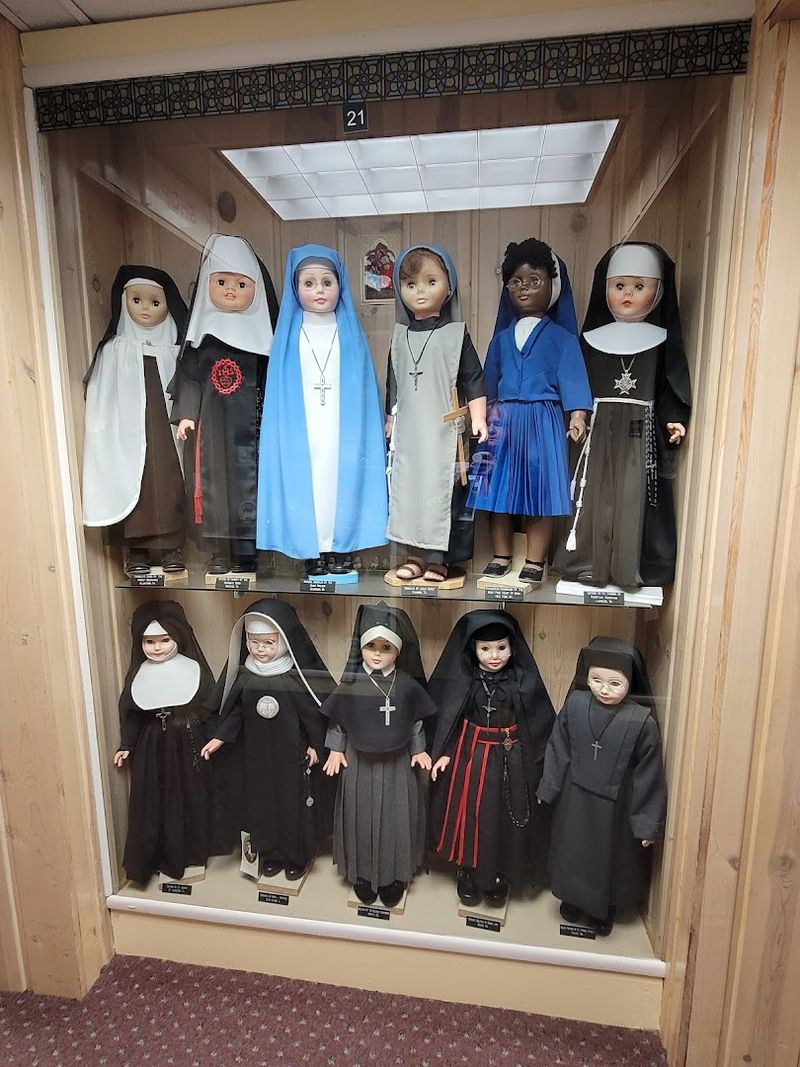
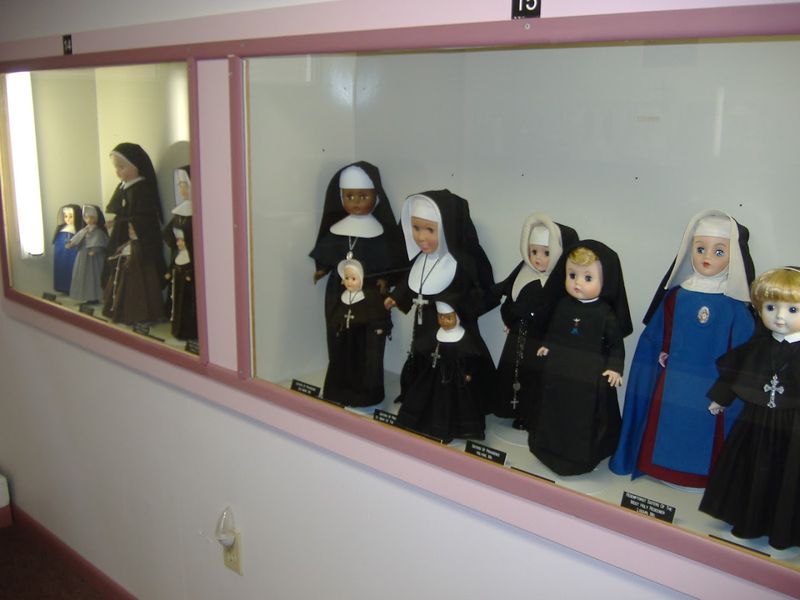
Nobody warns you about the Hall of Nuns, and that is part of what makes it so memorable. Tucked between the church and the gift shop, this corridor museum displays dozens of dolls, figurines, and life-sized mannequins, each dressed in the habit of a different Catholic religious order.
The collection represents orders from Michigan, across the United States, and from around the world.
The overall atmosphere leans strongly toward the 1970s, which is exactly when much of the collection was assembled. The carpeting and display cases carry that era’s aesthetic unapologetically.
What saves it from feeling dated is the genuine historical and cultural information attached to each figure, showing just how varied the visual traditions of different religious orders actually are.
The museum connects physically to the church interior, which means you can move from the doll displays directly into the sanctuary without going back outside. Reportedly, the collection is the largest of its kind in the United States.
Hidden among the religious figures are mannequins representing famous individuals, which turns the walk-through into something of a quiet treasure hunt.
Inside the Church: Quiet Beauty and a View Worth Seeking
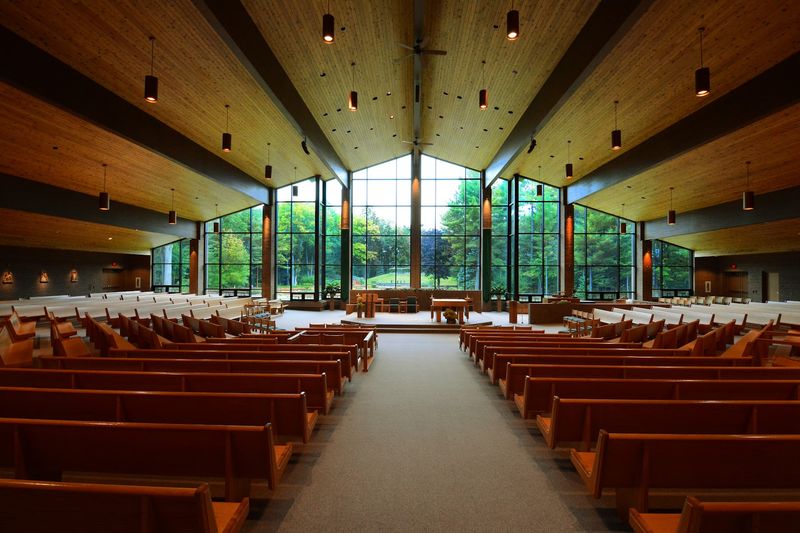
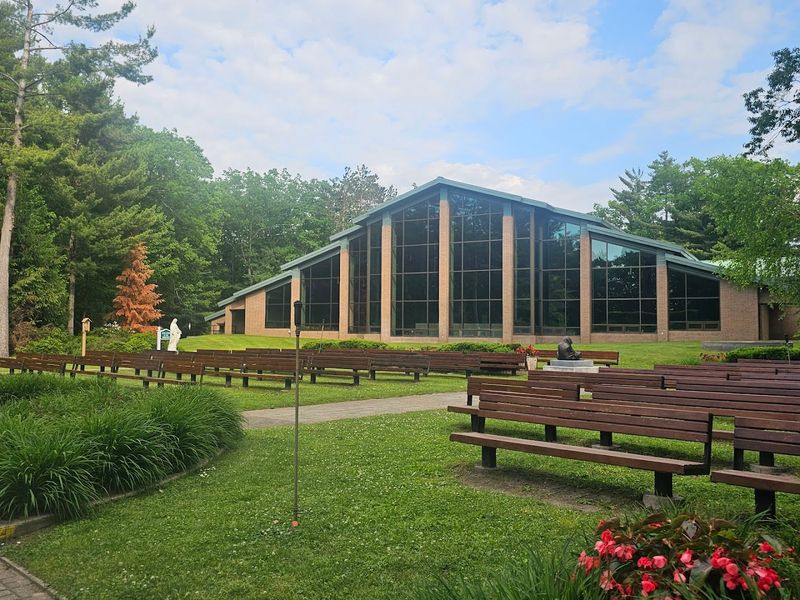
The church building itself tends to get overshadowed by the giant crucifix outside, which is understandable but a little unfair. The interior is genuinely lovely, with a calm, unhurried atmosphere that invites you to sit down and simply be still for a few minutes.
Several windows offer direct sightlines to the crucifix in the woods, so the connection between inside and outside never fully disappears.
The sanctuary is open for personal reflection outside of scheduled Mass times, which means you can visit quietly without joining a formal service. That accessibility matters for visitors who are not Catholic but still want to experience the interior space.
The church feels actively welcoming rather than exclusive.
From certain seats inside, the view of the crucifix framed by the surrounding trees is arguably the best angle you will find on the entire property. It has the quality of a carefully composed photograph that happens to be real life.
Spending even fifteen minutes inside the church before or after walking the grounds adds a meaningful layer to the whole visit.
Accessibility and Practical Details: What to Know Before You Go
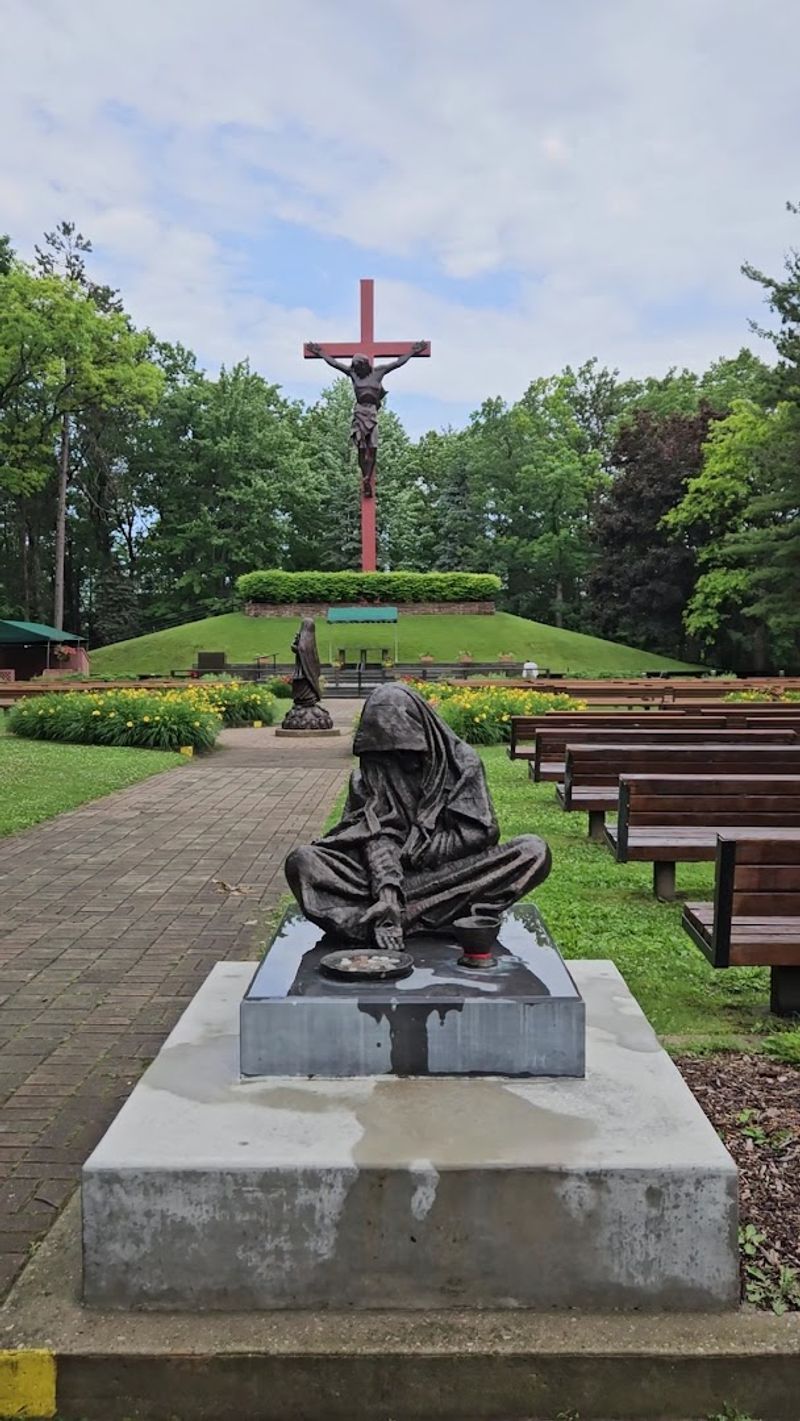
Cross in the Woods takes accessibility seriously, and it shows throughout the property. Paved paths connect the parking area to the main crucifix, the outdoor seating, the church, and the gift shop.
Visitors using wheelchairs can navigate most of the property without significant difficulty, which is meaningful for a site that involves a hillside terrain.
The gift shop has a side entrance for wheelchair users, and an elevator provides access to the Hall of Nuns museum level. The main entrance to the museum does involve some navigation, so it is worth asking staff at the gift shop for the most direct accessible route when you arrive.
The staff are consistently described as warm and helpful, and that reputation holds up in person.
Parking is free, the grounds are free to visit, and there is no admission charge for the museum or the church. The shrine operates on donations and gift shop revenue.
Arriving early on weekdays gives you the quietest experience, while summer weekends bring the largest crowds and the most active outdoor Mass schedule.
The Gift Shop: More Than You Might Expect
The gift shop at Cross in the Woods is one of the more comprehensive Catholic retail spaces I have encountered outside of a major city. The selection covers rosaries, prayer cards, statues, small replica crosses, books, and devotional items across a wide range of price points.
It is not the kind of place where everything costs a fortune, which makes browsing genuinely enjoyable rather than stressful.
Mini replicas of the famous crucifix are among the most popular items, and they make logical sense as souvenirs. They are well-made and available in several sizes, so you can find something appropriate whether you want a small keepsake or a more substantial piece for a home altar or display.
The staff in the shop have a reputation for being funny and kind, and that reputation is earned. My visit involved a brief but genuinely entertaining conversation about the best time of year to see the grounds covered in snow.
Items for both Catholic and Protestant visitors are stocked, which reflects the shrine’s broader appeal beyond any single denomination.
Visiting in Every Season: Why Winter Has Its Own Magic
Most people visit Cross in the Woods during the warmer months, especially summer when the outdoor Mass schedule is at its fullest and the gardens are in bloom. But the shrine in winter carries a completely different kind of atmosphere that is worth planning a trip around if northern Michigan winters do not deter you.
Snow on the crucifix and the surrounding pines transforms the visual character of the entire site. The bronze figure against a white background and grey winter sky has a starkness that is quietly powerful.
Light snowfall during a visit makes the grounds feel almost impossibly still, the kind of quiet that is hard to find anywhere else.
The shrine remains open year-round, seven days a week from 7 AM to 7 PM, so winter visits are fully supported. The indoor chapels and church provide warm spaces to retreat to between outdoor walks.
Crowds are thinner in the colder months, which means you often have long stretches of the grounds almost entirely to yourself, a genuinely rare experience at a site this significant.
Why This Place Stays With You Long After You Leave
There is something about Cross in the Woods that resists easy categorization. It is a Catholic shrine, yes, but it functions as public art, as a nature walk, as a community gathering space, and as a genuinely unusual roadside destination all at the same time.
Very few places manage to hold that many identities without feeling incoherent.
The combination of monumental sculpture, carefully maintained natural landscape, living faith community, and quirky museum under one roof creates an experience that gives different visitors completely different takeaways. Someone on a religious pilgrimage and someone who stopped purely out of curiosity can leave the same grounds equally moved, just for different reasons.
I drove away from Indian River thinking about the scale of the bronze figure, the stillness of the Stations of the Cross path, and an unexpectedly funny exchange in the gift shop. Cross in the Woods earns its visitor numbers honestly, not through marketing but through the simple fact that it delivers something real.
That is rarer than it sounds, and it is exactly why people keep coming back.



