There is a stretch of the southern Oregon coast where the highway hugs towering cliffs and the Pacific Ocean crashes against rocks draped in sea mist. Most drivers pass right by a small, unmarked dirt pullout without a second glance.
Those who stop, however, find a narrow forest trail that winds downhill through dense coastal trees before suddenly opening up to one of the most breathtaking beaches in the entire state. Black sand, dramatic sea stacks, hidden coves, and the occasional chorus of barking seals wait at the bottom of that short but steep descent.
This is the kind of place that makes you feel like you discovered something the rest of the world forgot to put on the map, and honestly, that feeling never gets old.
Where Exactly Secret Beach Sits on the Oregon Coast
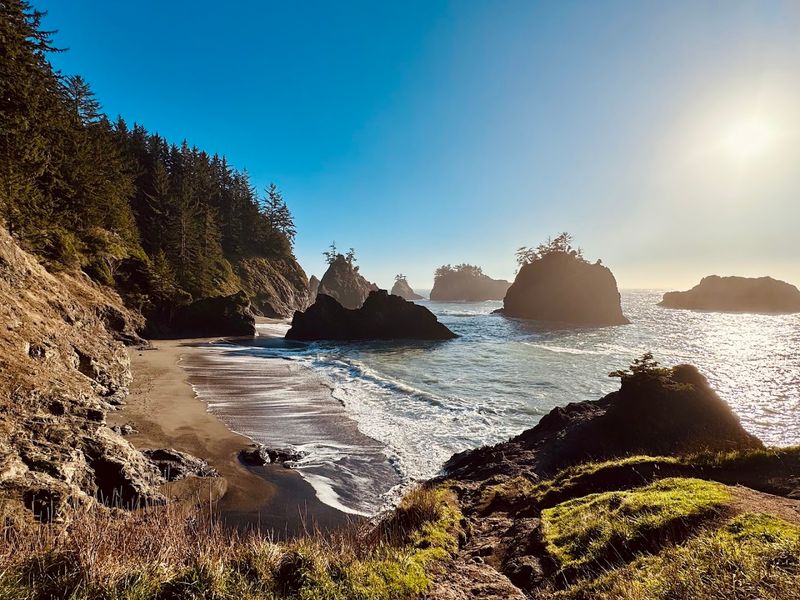
Few beaches on the West Coast manage to feel both completely wild and surprisingly reachable at the same time, but Secret Beach pulls it off with ease.
The beach sits within the Samuel H. Boardman Scenic Corridor, just north of Brookings, Oregon 97415, along US Highway 101.
Its GPS coordinates place it at approximately 42.1949799 latitude and -124.3718869 longitude, which is the most reliable way to find it since there are no official signs marking the trailhead.
Brookings itself is a small coastal town in Curry County, close to the California border in the southwestern corner of Oregon. The surrounding corridor stretches for about 12 miles and contains some of the most dramatic coastal scenery in the Pacific Northwest.
Secret Beach is not an officially designated public beach, so you will not find a formal parking lot or ranger station nearby. A small, unpaved dirt pullout right along the highway serves as the starting point for your adventure.
Despite the lack of signage, Google Maps navigates you there reliably. The remoteness is part of what makes this spot so rewarding the moment you finally arrive.
The Forest Trail Down to the Beach
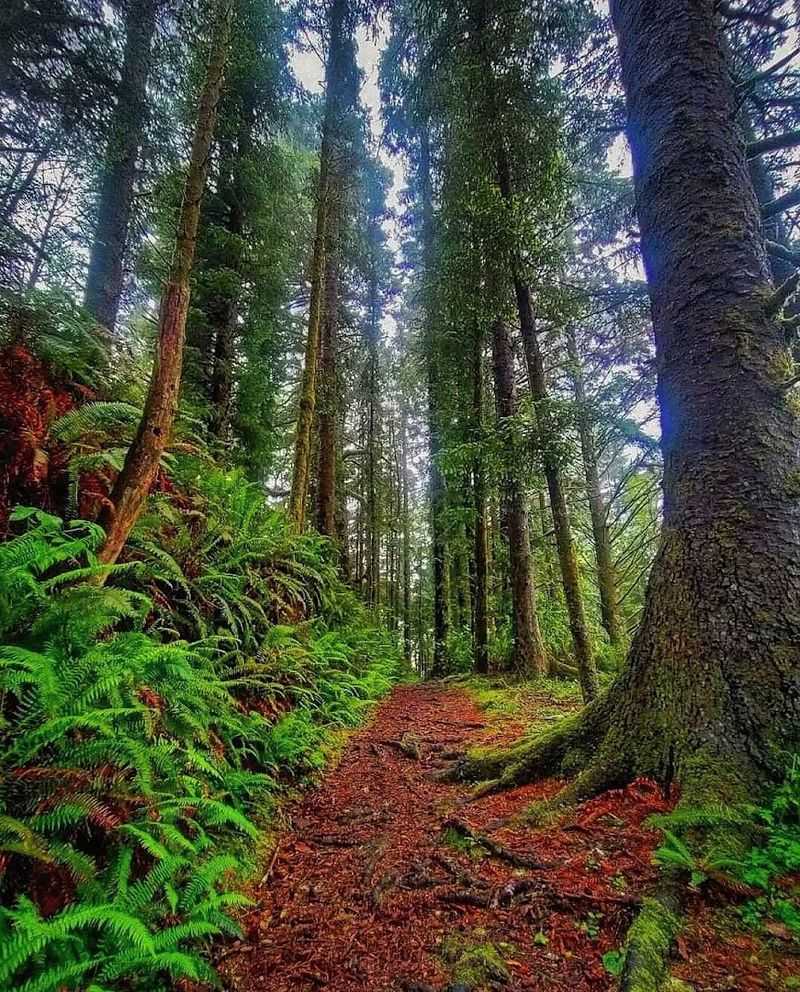
The trail begins quietly, almost modestly, as a narrow dirt path slipping into a thick canopy of coastal conifers. Within a few steps, the highway noise fades and the only sounds are wind in the branches and your own footsteps on the soft earth.
Two main trail options exist from the parking area. Most visitors take the trail on the right side of the pullout, which is generally considered less steep and slightly more manageable, especially for families with younger children.
The descent takes roughly five to ten minutes at an easy pace. The trail is short by most hiking standards, but certain sections are genuinely steep and can become slippery when wet, so footwear with solid grip is a smart choice year-round on the Oregon coast.
A four-year-old can handle it on a dry day, and plenty of families with kids have made it down and back without any trouble. That said, the trail is not suitable for anyone with significant mobility limitations, and the return climb uphill will definitely get your heart rate up.
Once you catch your first glimpse of the ocean through the trees, every careful step feels completely worth the effort.
The Black Sand and the Dramatic Scenery Below
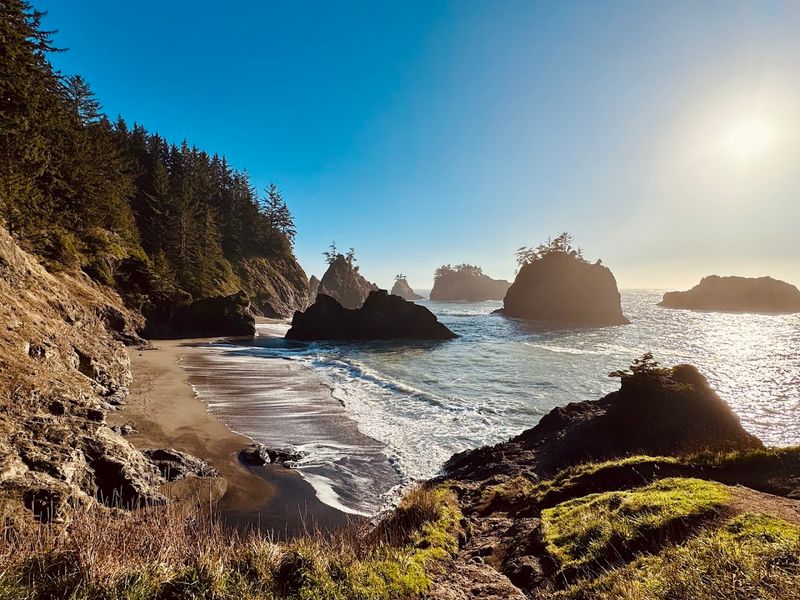
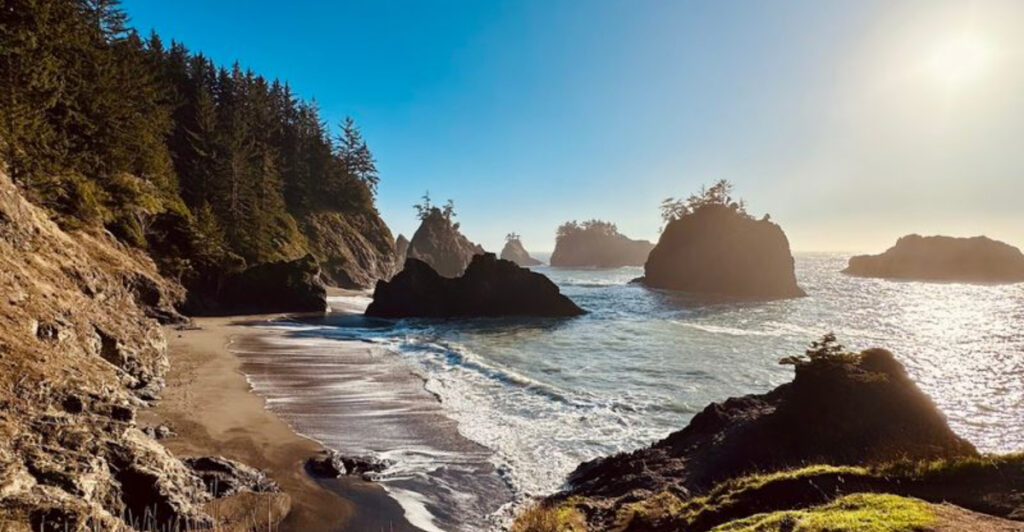
Nothing quite prepares you for the view that opens up once you clear the tree line and get your first full look at the beach below. The sand here has a distinctly dark, almost charcoal tone, which sets it apart from the pale golden beaches most people picture when they think of the Pacific coast.
The color comes from the volcanic and sedimentary rock that makes up much of the southern Oregon coastline. Over centuries, wave action has broken those rocks down into fine, dark particles that give the beach its moody, cinematic quality.
Massive sea stacks rise directly from the water just offshore, some of them so tall and heavily forested at the top that they look like miniature floating islands. The combination of dark sand, jagged rock formations, crashing waves, and dense green trees creates a visual contrast that feels almost surreal.
A small waterfall trickles down the cliffside at one end of the beach, adding yet another layer of unexpected beauty to the scene. The beach itself is relatively compact, but exploring both the left and right sections reveals hidden coves and quieter corners tucked behind the rocks.
Getting Down to the Water Itself
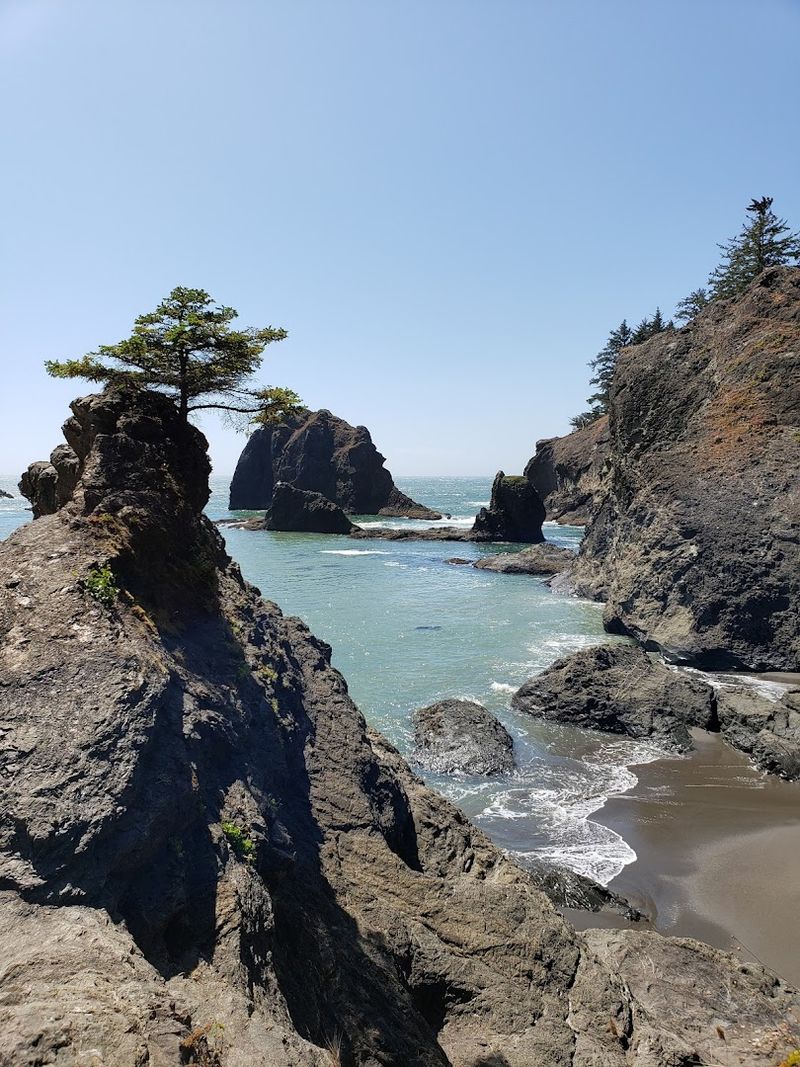
Reaching the top of the beach overlook is one thing, but actually getting your feet on the sand requires one more short challenge. A rocky face, roughly 20 feet high, stands between the trail’s end and the beach below, and you will need to scramble down it using your hands and feet.
It is not a technical climb by any stretch, but it does demand confidence, decent balance, and shoes with real traction. The rock becomes noticeably slippery when wet or covered in sea spray, so extra caution is warranted on overcast or rainy days.
Some visitors choose to stay at the overlook level rather than making the final descent, and honestly, the views from up there are still spectacular. You lose nothing in terms of scenery by watching from above.
For those who do make it all the way down, the payoff is immediate. The scale of everything changes once you are standing at sea level, surrounded by towering cliffs and sea stacks that seemed manageable from above but are absolutely enormous up close.
Always check the tide schedule before attempting the full descent, because high tide can cut off sections of the beach and make the return scramble much more difficult.
Why Tide Timing Makes All the Difference
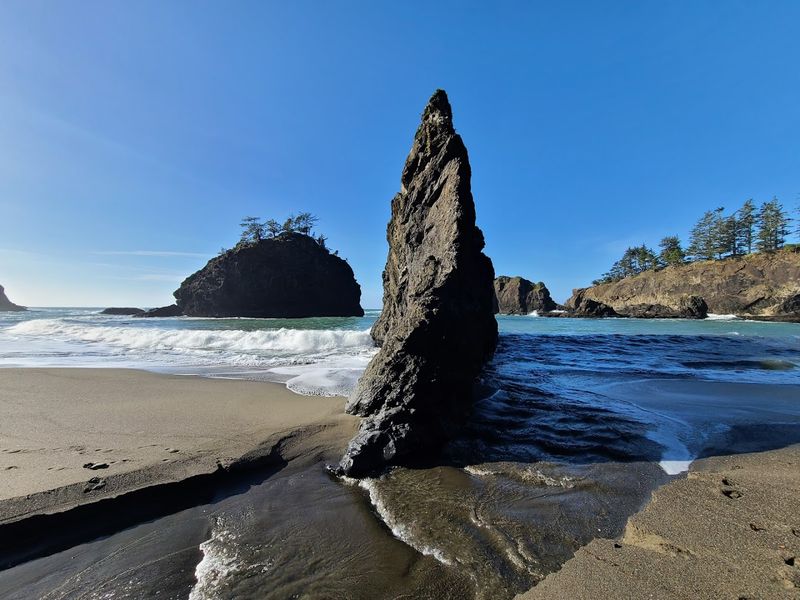
Timing your visit around the tides is probably the single most important piece of planning advice for Secret Beach, and it is one that experienced visitors repeat consistently.
At low tide, the beach opens up considerably, exposing wide stretches of dark sand, shallow tide pools, and passages between the sea stacks that are completely underwater at other times. The difference between a low tide visit and a high tide visit can feel like two entirely different beaches.
High tide pushes the water up against the cliffs and rocks, leaving very little sand to walk on and making the scramble down the rocky face much riskier. Certain sections of the beach can become completely inaccessible, and the wave energy near the base of the cliffs increases significantly.
King tides, which occur during certain times of year when the moon is at its closest point to Earth, raise the water level even higher than a standard high tide. During king tides, staying on the overlook rather than descending to the beach is the safest approach.
Free tide chart apps and websites make it easy to check conditions before you leave home, and that five-minute check can completely transform your experience at the beach.
The Wildlife You Might Spot Along the Way
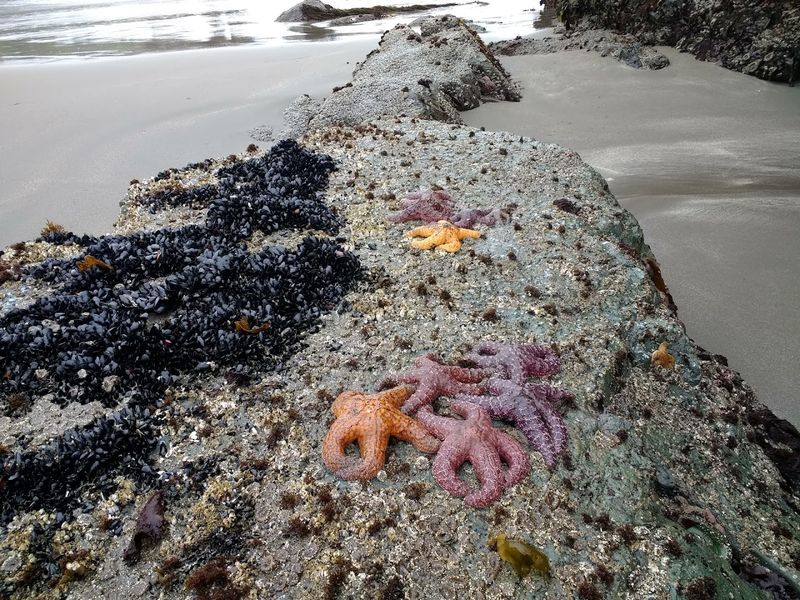
Secret Beach has a reputation among wildlife watchers that rivals its reputation for scenery, and for good reason. The waters just offshore and the rocky outcroppings near the beach host a surprisingly active community of marine animals.
Seals and sea lions are the most commonly spotted residents, often seen lounging on the rocks or bobbing curiously in the surf just beyond the breakers. On one memorable visit, someone counted over 50 sea lions and otters combined before simply losing track of the numbers.
Sea otters occasionally make appearances as well, floating on their backs in the kelp beds offshore in that effortlessly relaxed way they have. For anyone who has never seen a wild sea otter up close, the sight is genuinely charming.
Shorebirds work the tide line constantly, and the cliffs above the beach provide nesting habitat for several seabird species that wheel and call overhead throughout the day. The natural soundtrack of the place, between the waves, the wind, and the wildlife, adds a layer of atmosphere that no photo can fully capture.
Climbing slightly higher on the right side of the trail reportedly leads to a second hidden beach where seal activity is especially concentrated, making the extra scramble well worth the effort for wildlife enthusiasts.
The Best Time of Year to Visit
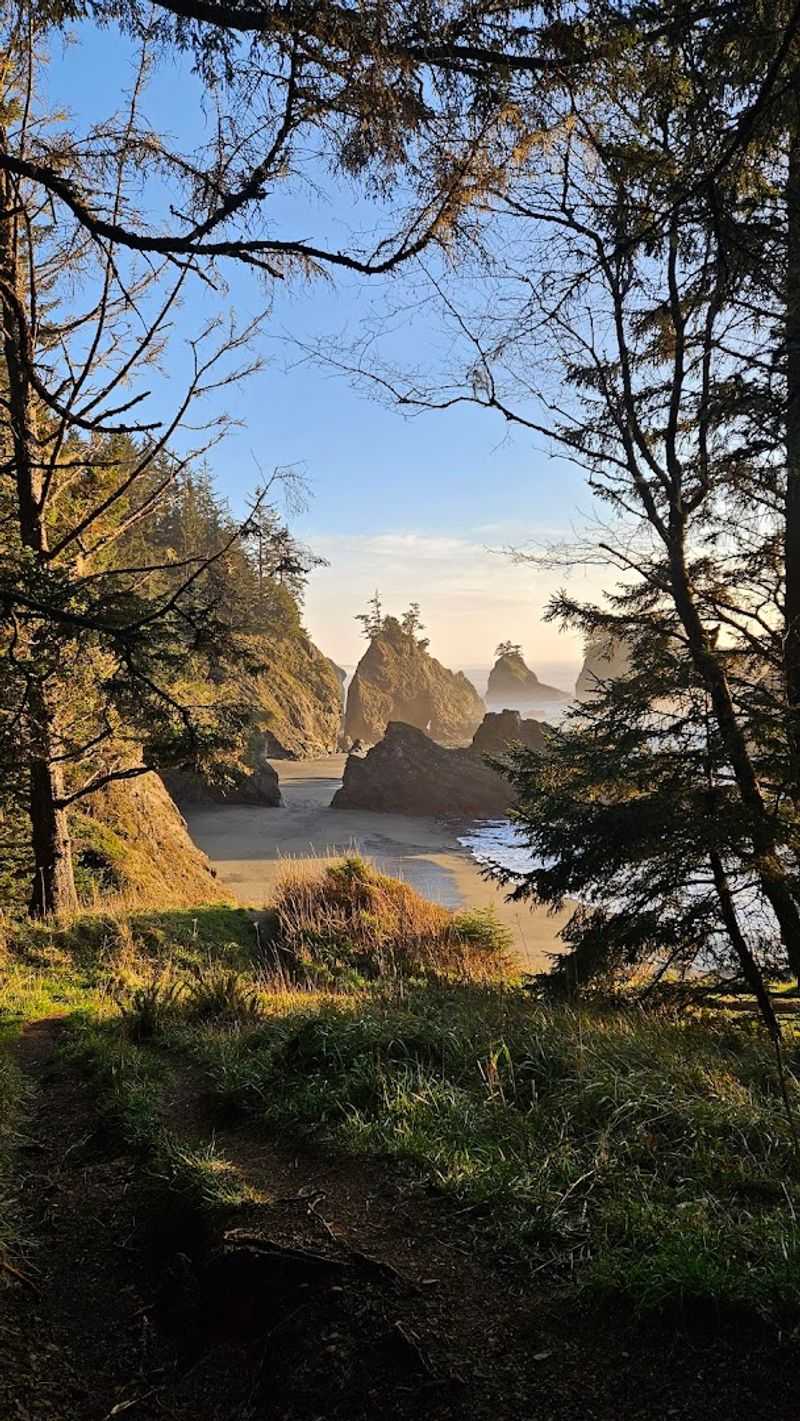
Oregon’s southern coast has a reputation for moody, overcast weather, and Secret Beach is genuinely beautiful in fog and drizzle just as much as it is under blue skies. That said, the timing of your visit does shape the experience in meaningful ways.
Summer months, particularly July through early September, offer the most reliable dry weather and the warmest temperatures, which hover in the mid-60s Fahrenheit on most days. Crowds are at their peak during this window, though Secret Beach rarely feels truly packed given its remote access and physical demands.
Spring and fall visits bring fewer people, softer light, and a rawer sense of the coast’s wild character. Rain gear and waterproof boots are practical additions to your pack during these seasons, and the trail becomes significantly muddier and more slippery after rainfall.
Winter visits are for the adventurous. Storm watching from the overlook is spectacular, with waves reaching dramatic heights against the sea stacks, but descending to the beach in winter conditions is not recommended for most visitors.
Sunset timing, regardless of season, adds a layer of magic to the experience. The way the last light catches the dark sand and the sea stacks creates a visual that stays with you long after you have driven away.
What to Bring and How to Prepare
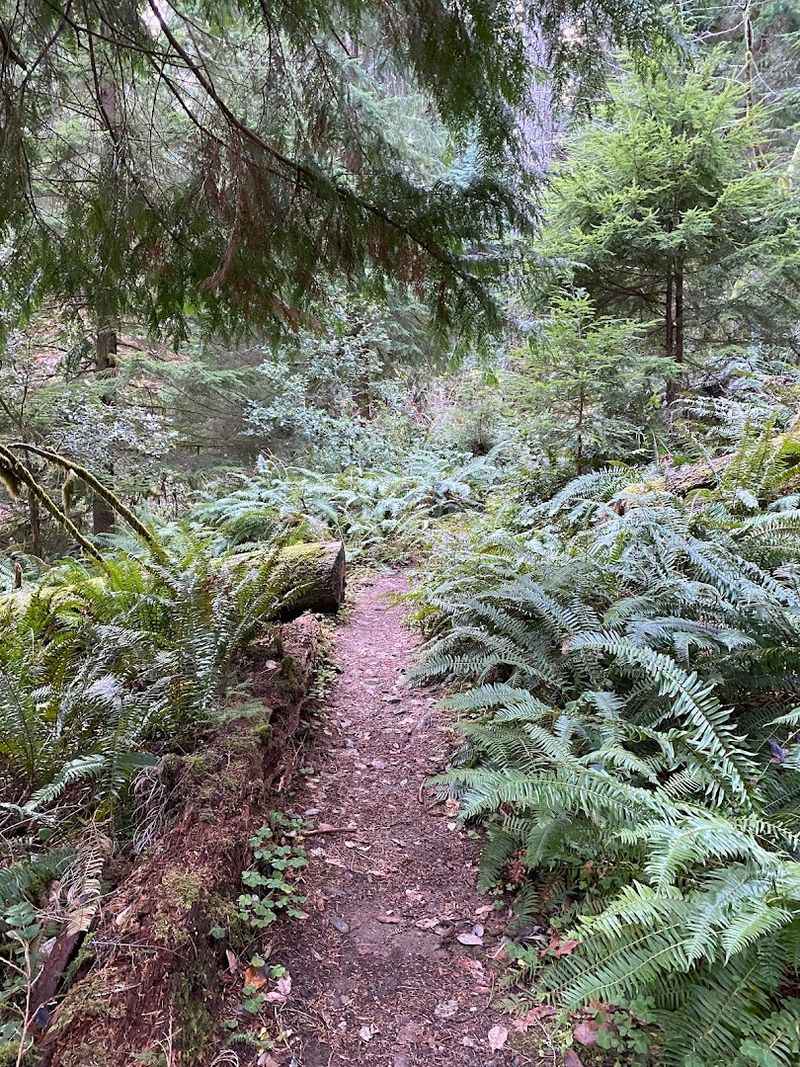
Secret Beach rewards visitors who show up prepared and has a way of humbling those who do not. The trail is short, but the combination of steep terrain, slippery rocks, and zero on-site facilities means a little preparation goes a long way.
Footwear is the most critical gear choice. Shoes with aggressive rubber soles and ankle support make the descent and the rocky scramble significantly safer and more enjoyable.
Sandals and flat-soled sneakers are genuinely risky on the wet rock sections.
There are no trash cans, restrooms, water fountains, or any other amenities at the trailhead or on the beach. Everything you carry in, you carry out, and having a small bag for trash keeps this special place clean for the next visitor.
A light rain jacket is worth packing year-round on the Oregon coast, where conditions can shift quickly. A small daypack with water, snacks, a first aid kit, and a printed or downloaded tide chart covers the practical bases comfortably.
Trekking poles are genuinely helpful for the return climb uphill, especially for anyone whose knees prefer a little extra support on steep grades. The hike back up is short but noticeably more demanding than the descent, and your legs will appreciate any assistance you can give them.
Parking and Finding the Trailhead
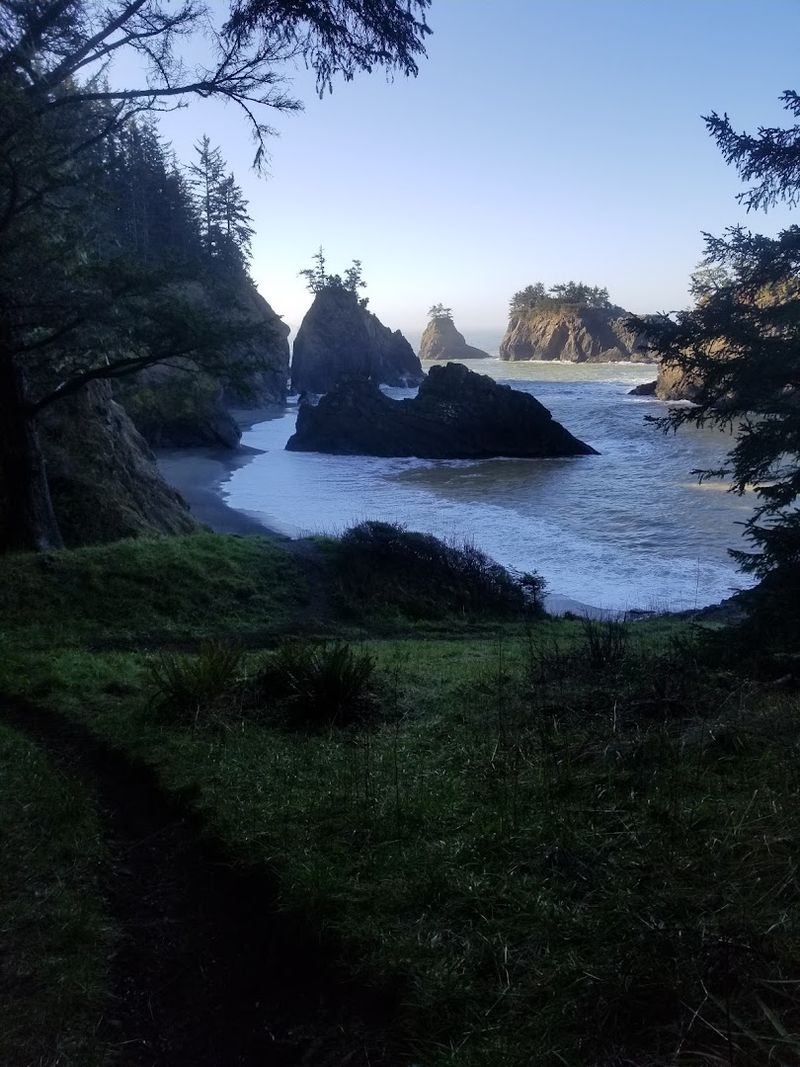
Finding Secret Beach for the first time is an adventure in itself, mostly because the trailhead is completely unmarked and the parking area is little more than a widened dirt shoulder along US Highway 101.
The most reliable approach is to plug the GPS coordinates directly into your navigation app of choice. Google Maps handles it well and will guide you to the correct pullout without confusion.
Looking for official signs will leave you driving in circles.
The parking area accommodates a modest number of vehicles, and it fills up quickly on summer weekends. Arriving early in the morning, ideally before 9 a.m., significantly improves your chances of finding a spot without waiting or parking further up the highway.
An alternative parking option exists just north of the bridge over Miller Creek, approximately 0.3 miles north of the main Secret Beach trailhead. From this secondary spot, the trail leads down to the beach in roughly five to ten minutes via a path at the far northern edge of the pullout, not the southern path, which does not connect to the beach.
Neither parking area has any security, so leaving valuables visible in your vehicle is not advisable. A clean car interior is your best theft deterrent on a remote highway pullout.
Thunder Rock Cove and the Views Above
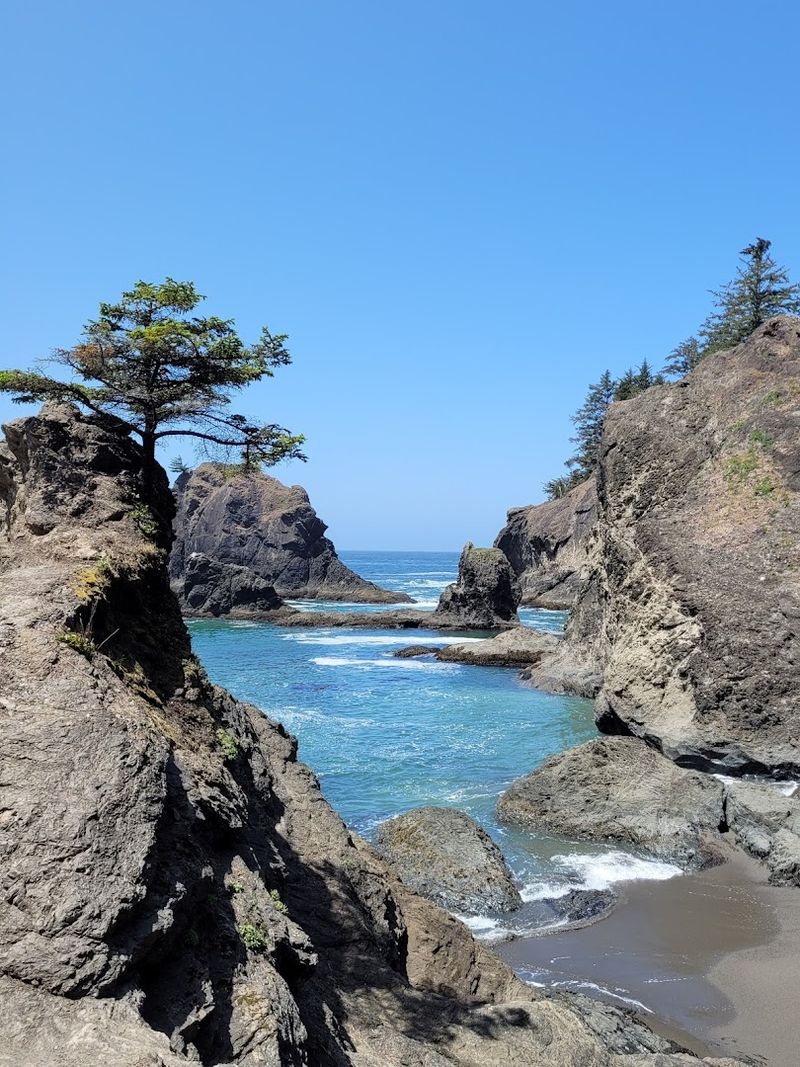
Not everyone who visits Secret Beach makes it all the way to the sand, and some of those visitors actually end up with the better story to tell. A fork in the trail offers a left branch that bypasses the beach entirely and climbs instead to Thunder Rock Cove, one of the most expansive viewpoints on the entire southern Oregon coast.
From Thunder Rock Cove, the Pacific Ocean spreads out in a view that spans more than 200 degrees. Cliffs, sea stacks, and the distant horizon stretch in every direction, and on a clear day the sense of scale is genuinely staggering.
The cove sits high above the water, which means the wind can be brisk and the edge of the cliffs demands respectful distance. The views are worth every step of the climb, and the elevated perspective gives you a completely different appreciation for the geography of the area.
Combining both the Thunder Rock Cove viewpoint and the Secret Beach descent into a single visit is entirely possible and makes for a well-rounded experience of everything this section of the Boardman Corridor has to offer.
Bringing a camera with a wide-angle lens does more justice to the panoramic scale of Thunder Rock Cove than a standard phone camera, though both will capture something worth keeping.
The Feeling of the Place and Why It Stays With You
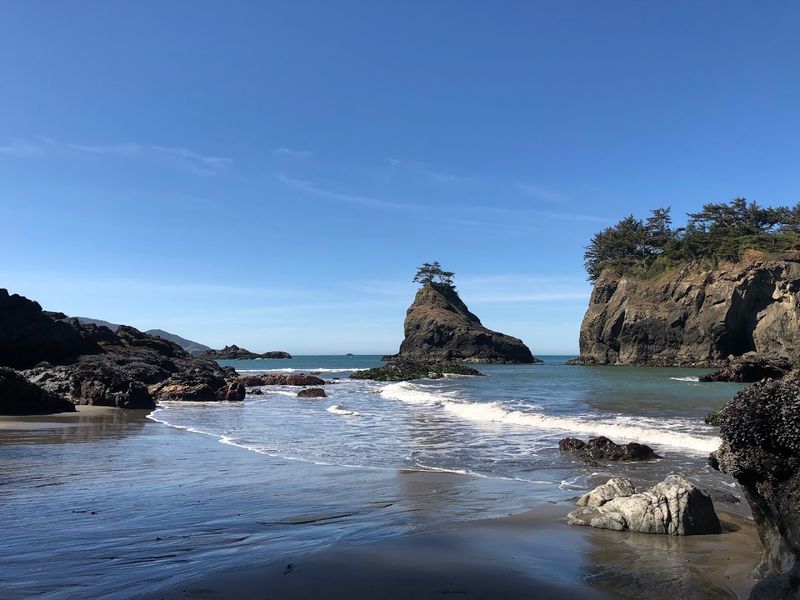
Some places are beautiful in a way that photographs capture perfectly. Secret Beach is not one of those places, and that is meant as a compliment of the highest order.
The combination of sensory details here, the salt air, the sound of waves echoing off the cliff walls, the cold spray on your face, the dark sand shifting underfoot, adds up to something that a screen simply cannot replicate. Visitors regularly describe feeling completely removed from the modern world the moment they reach the beach, as if the forest trail served as a kind of portal.
The smallness of the beach actually amplifies the experience rather than limiting it. With towering cliffs on one side and the open Pacific on the other, the human scale of the place becomes very apparent, and there is something grounding about that feeling.
Couples have exchanged wedding vows here. Solo travelers have sat for hours just watching the waves.
Families have let their kids scramble over the rocks while the adults simply breathed and looked around in quiet appreciation.
Whatever brings you to this corner of the Oregon coast, the beach has a way of giving you exactly what you needed, even if you did not know what that was before you arrived.
Closing Thoughts on Visiting Secret Beach
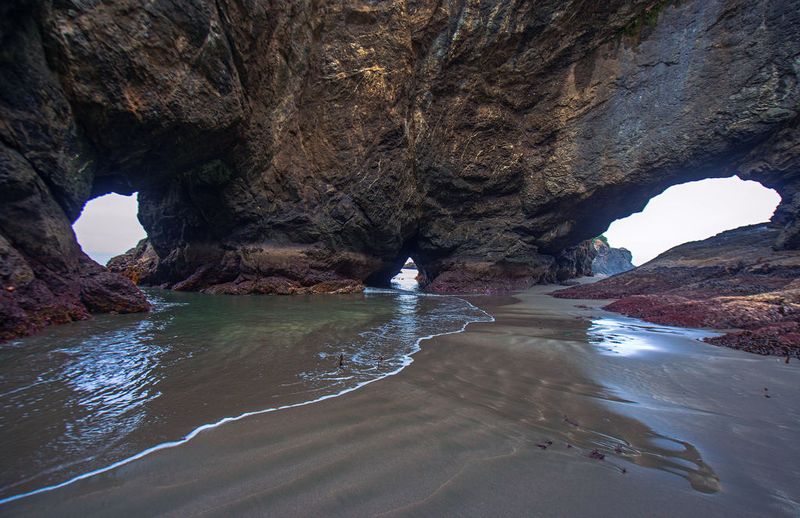
Secret Beach earns its name not just because it is hard to find, but because it holds the kind of beauty that feels personal once you experience it. The short forest trail, the steep scramble, the absence of signs and services, all of it contributes to a sense that you earned your way to something genuinely special.
The Samuel H. Boardman Scenic Corridor is full of remarkable spots, but Secret Beach stands apart because of how completely it rewards effort.
The harder something is to reach, the more it tends to mean when you get there, and this beach delivers on that principle every single time.
Practical preparation, grippy shoes, a tide chart, and an early start makes the experience smooth and safe. The beach itself handles the rest, offering drama, wildlife, solitude, and scenery in a combination that is hard to match anywhere along the West Coast.
Whether you make it all the way down to the dark sand or simply stand at the overlook and take in the view, the place leaves a mark. Most visitors start planning their return trip before they even make it back up the trail to the highway.
Oregon has no shortage of beautiful coastline, but this particular hidden corner is the kind that reminds you why you started exploring in the first place.
Share this story