 Unearth The Voyage
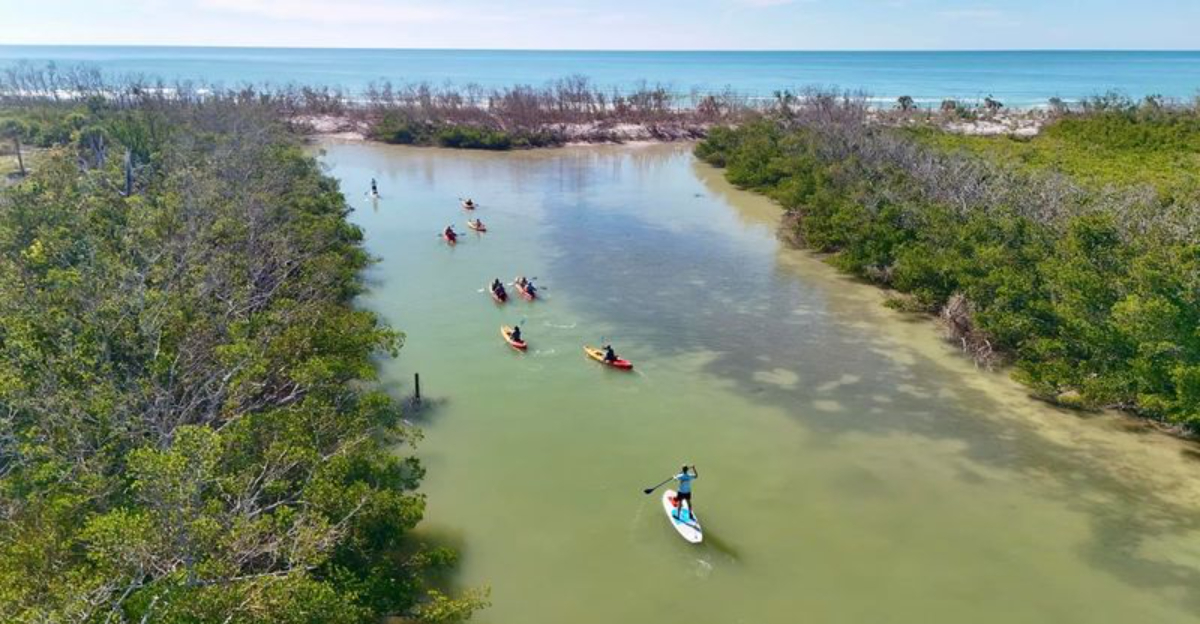
There is a barrier island off the southwest coast of Florida that you cannot reach by car, and that is exactly what makes it so special. A short ferry ride or kayak paddle is all that stands between you and a beach so loaded with shells that you will barely know where to step.
The water runs a clear, glassy turquoise, dolphins occasionally surface near the shoreline, and the whole place feels like it exists slightly outside of normal time. Don Pedro Island State Park sits in Charlotte County, and it has quietly earned a reputation as one of the most rewarding day trips in the state.
This article walks you through everything worth knowing before you go, from the ferry access and kayak rentals to the wildlife, the trails, and the best tips for making the most of your visit.
Getting There: The Address and How to Access the Park
The land-based entry point for Don Pedro Island State Park is at 8450 Placida Rd, Placida, in Charlotte County on Florida’s southwest Gulf Coast. Parking costs just three dollars per car, and the lot is generally spacious enough that finding a spot is rarely a problem.
From the parking area, you either launch a kayak or paddleboard across the water to reach the island itself, or you catch the ferry that connects the mainland launch point to the park. The ferry is the easiest option if you are not an experienced paddler, since the crossing involves navigating a busy boating channel where motorboat traffic moves fast.
The park is open every day from 8 AM to 5 PM, and the phone number for questions is 941-759-2007. No road or bridge connects the island to the mainland, which is a big part of why it stays so peaceful.
The Ferry Ride: A Short Trip That Feels Like an Escape
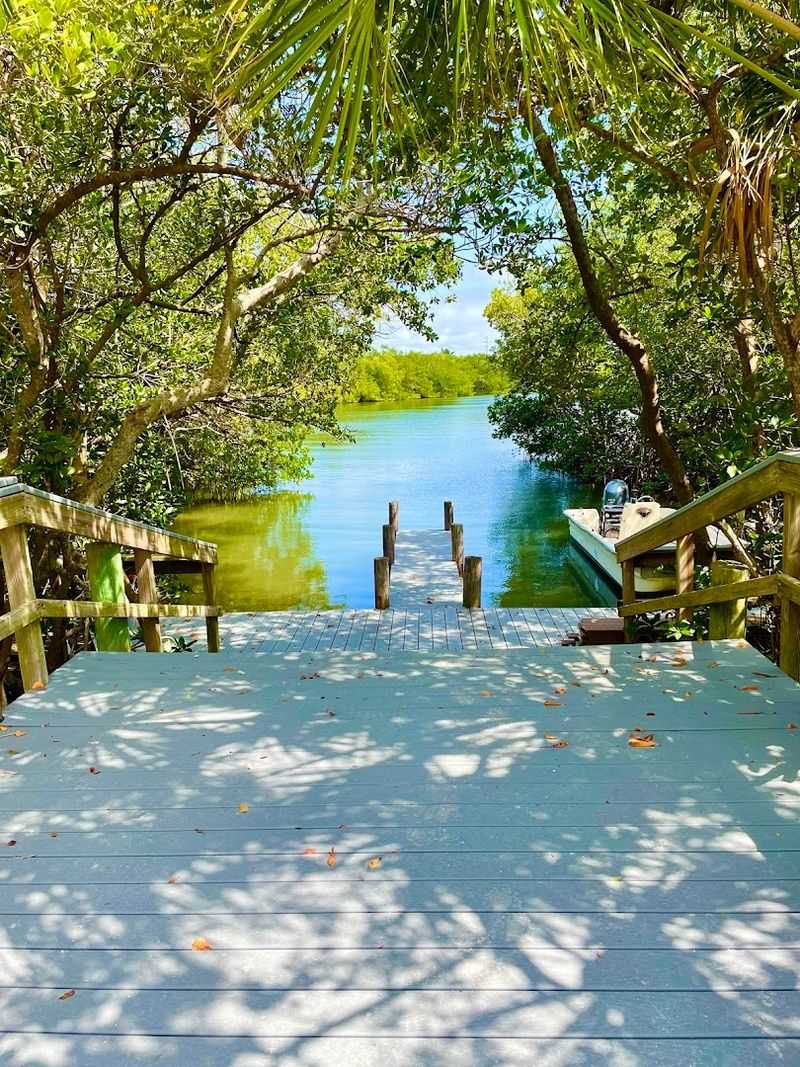
The ferry crossing to Don Pedro Island is brief, but it does something to your mood the moment the mainland shrinks behind you. The water around the boat shifts from murky green to a cleaner, lighter shade as you move closer to the Gulf side of the island.
That short ride signals to your brain that you are somewhere genuinely different, somewhere that cars and strip malls simply cannot follow. The boat channel is active with motorboat traffic, especially on weekends, so the crossing requires a little patience and awareness, but the crew handles the route smoothly.
Once you step off on the island side, the sound changes immediately. The engine noise fades, the breeze picks up, and the crunch of shells underfoot becomes the loudest thing around.
Few transitions in Florida travel feel as clean and satisfying as that short trip across the water.
Shells Everywhere: What Makes This Beach Truly Unusual
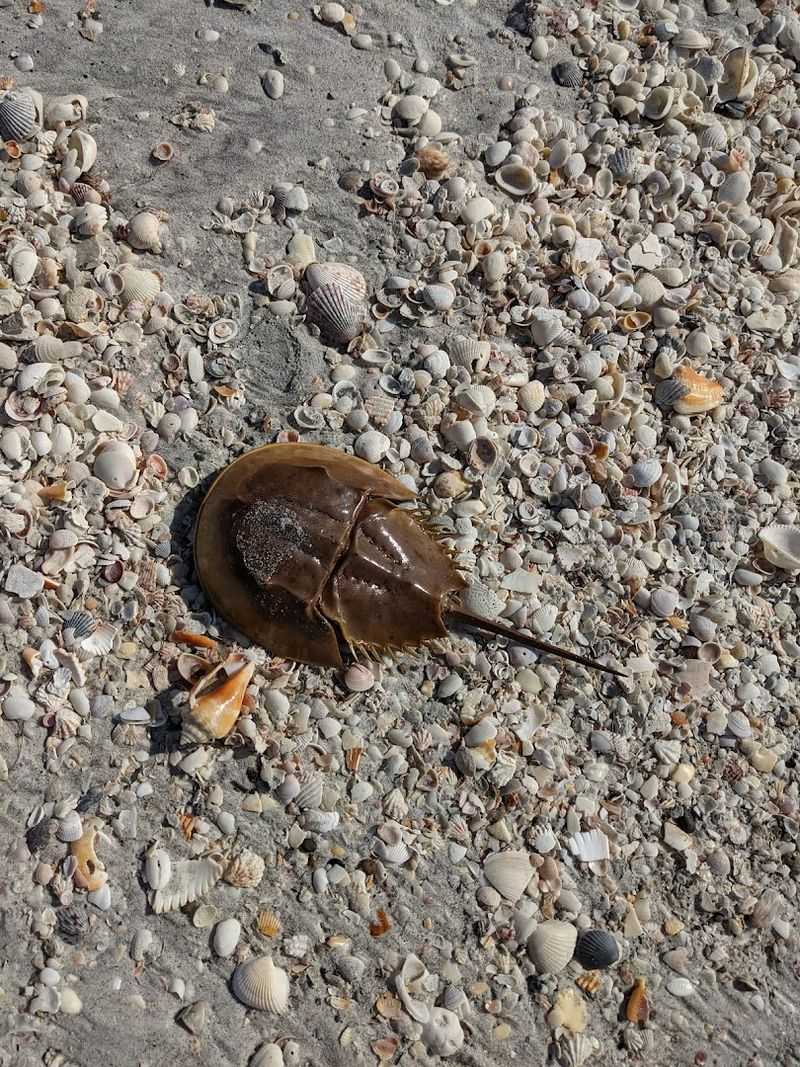
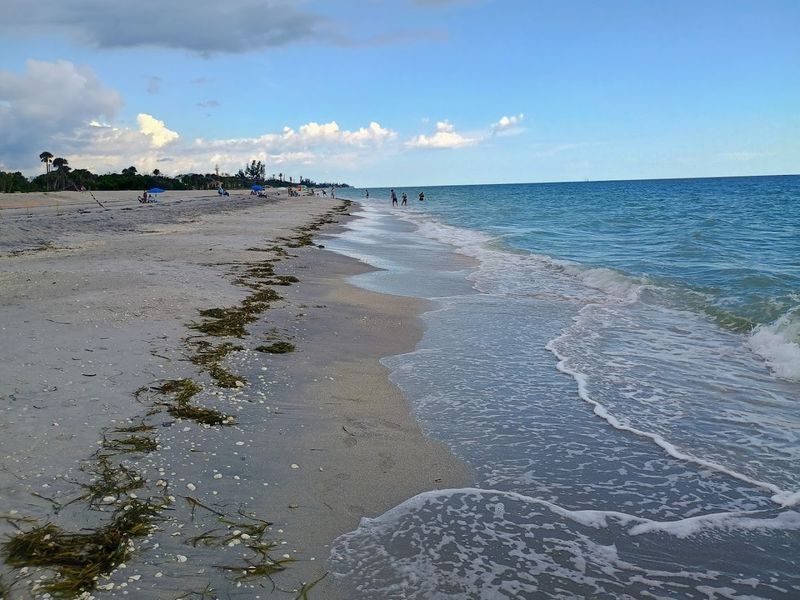
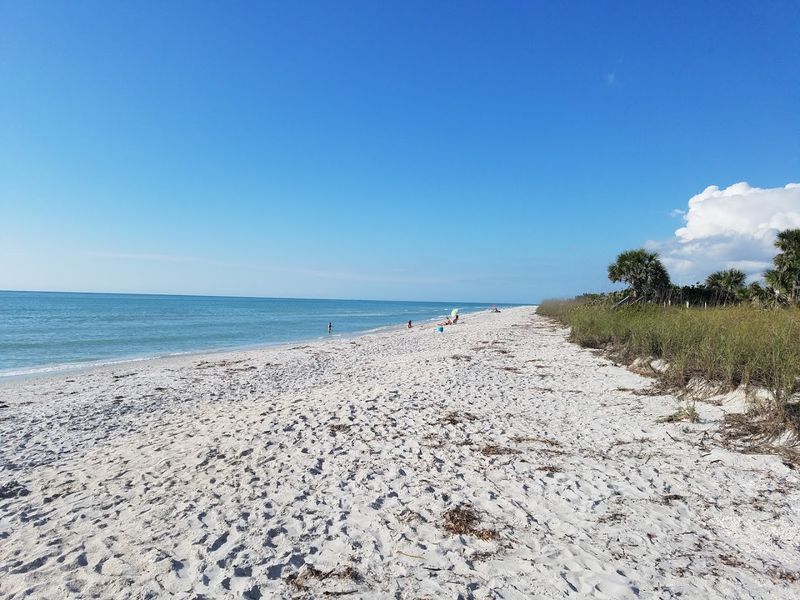
Most Florida beaches offer a shell or two if you scan carefully enough, but Don Pedro Island operates on a completely different scale. The beach is genuinely carpeted in shells, so thickly in some stretches that soft sand is hard to find beneath your feet.
Visitors regularly turn up shark teeth, which are dark, triangular, and surprisingly easy to spot once your eyes adjust to searching for them. Conch shells, whelks, and coquinas show up in abundance as well, and the variety keeps the beachcombing interesting from one end of the shoreline to the other.
The island’s geography helps explain the abundance. As a barrier island with no vehicle access and limited foot traffic compared to public beaches on the mainland, the shells accumulate naturally without being cleared away.
Bring a small bag, but be aware that state park rules apply regarding what you are allowed to collect and take home.
The Water: Clear, Shallow, and Full of Life
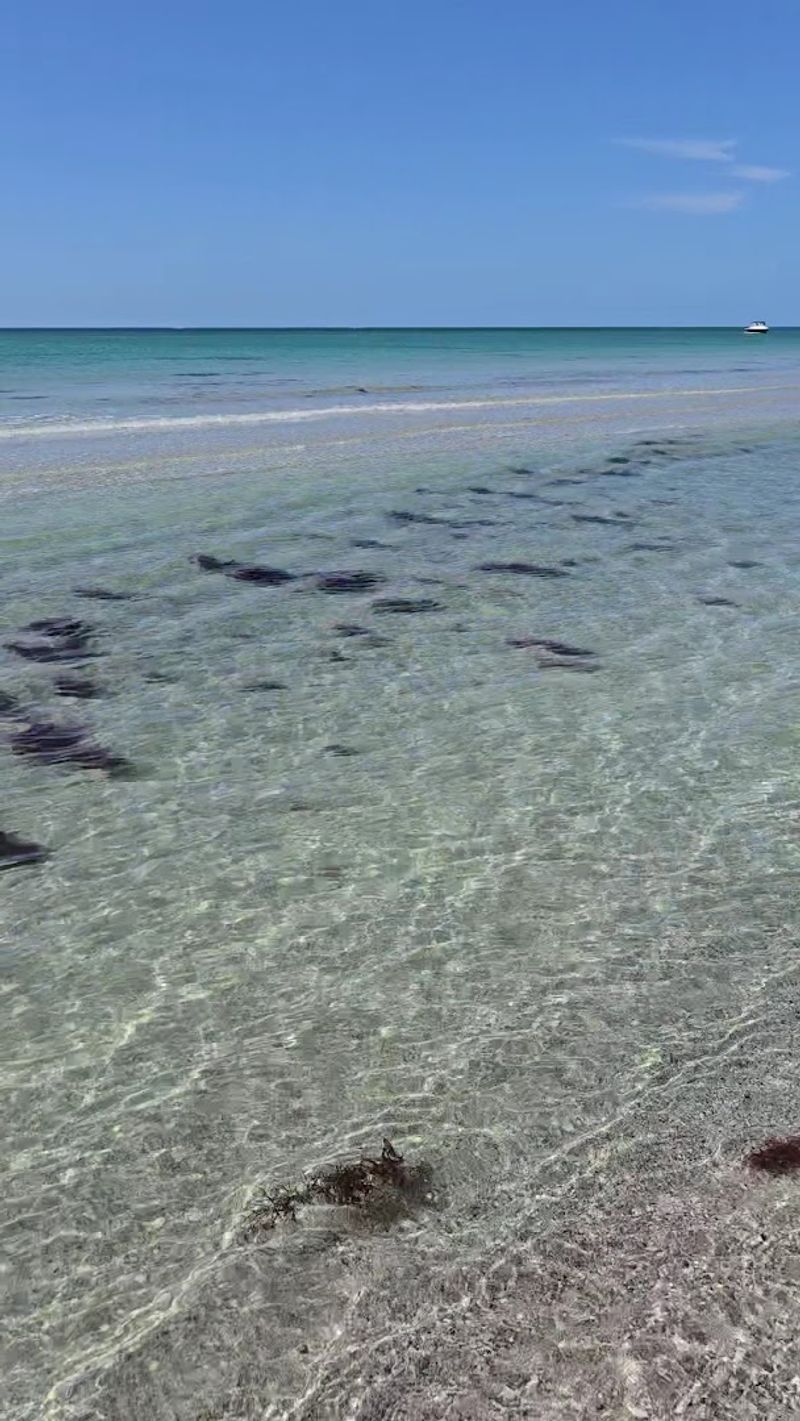
The water surrounding Don Pedro Island is remarkably clear by Florida standards, with a greenish-blue color that makes it easy to see the sandy bottom even in chest-deep areas. The Gulf side of the beach tends to be calm on most days, with small, gentle waves that make wading comfortable for all ages.
Snorkeling is listed among the park’s official activities, and the visibility makes it worthwhile even for beginners. The shallows hide stingrays, small fish, and occasionally sea turtles passing through the area, so the shuffle-your-feet approach when wading is genuinely good advice here.
On the bay side of the island, the water is calmer still, and that is where manatees are most often spotted drifting slowly through the warmer, sheltered areas. The combination of Gulf-side waves and bay-side stillness gives the island two entirely different water experiences within a short walking distance of each other.
Kayaking and Paddleboarding: The Best Way to See It All
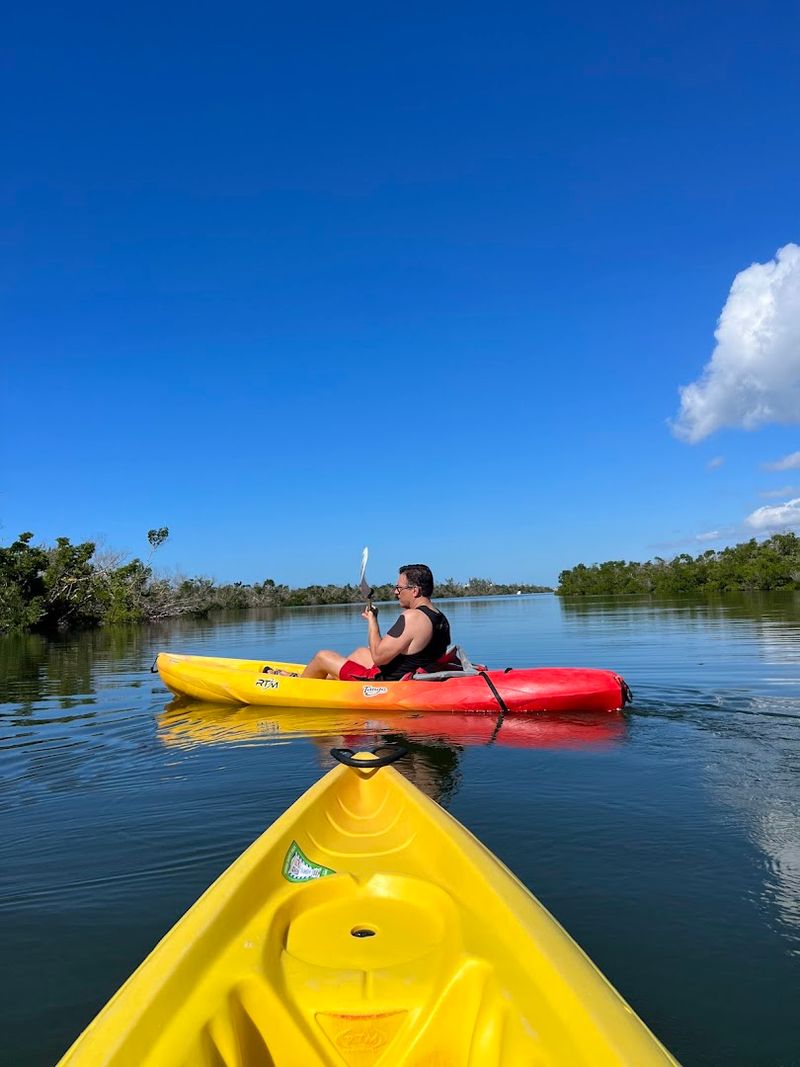
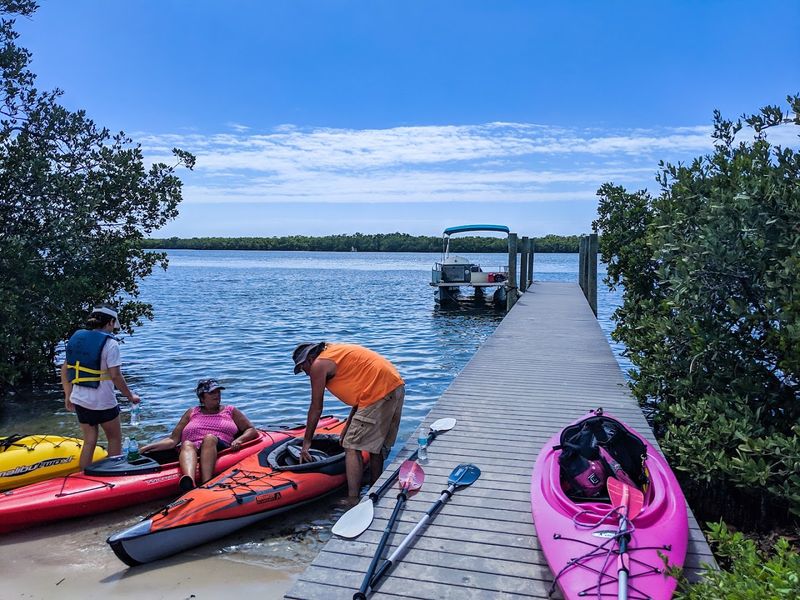
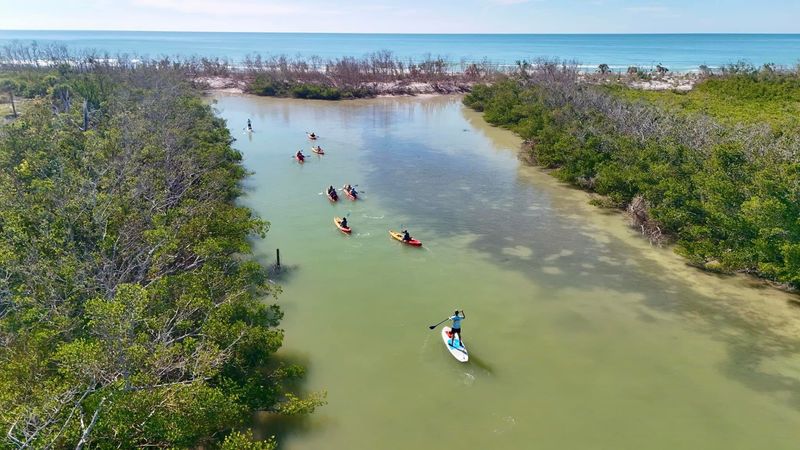
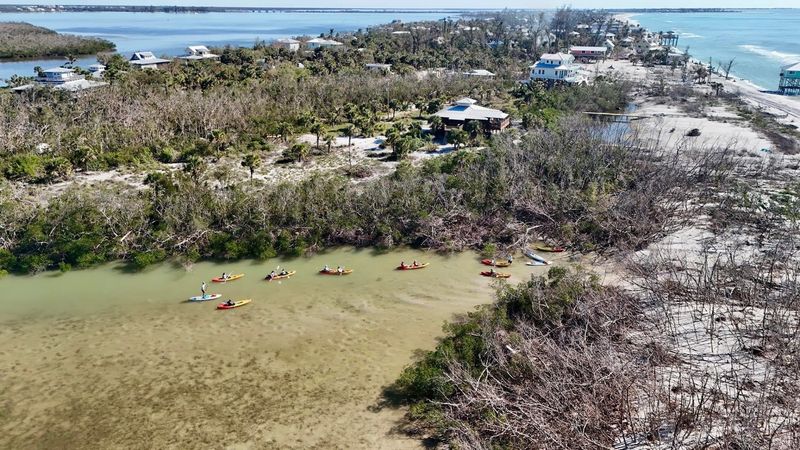
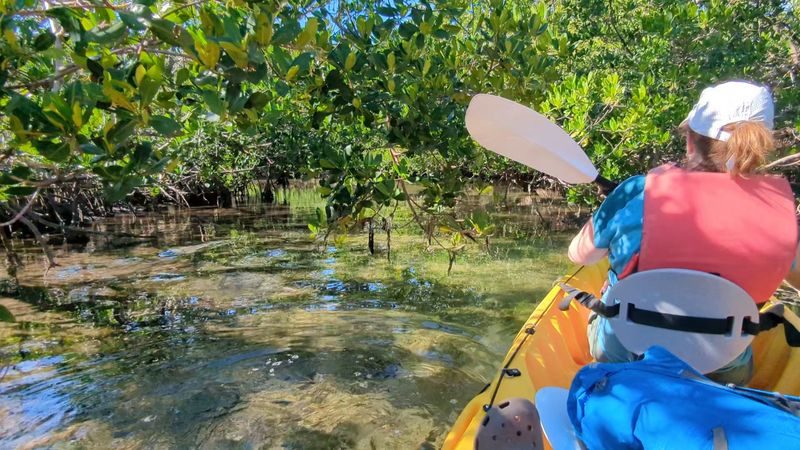
SUP Englewood operates out of the launch area at the mainland side of the park, offering kayak and stand-up paddleboard rentals along with guided tours and lessons. The staff there are knowledgeable and friendly, and they provide detailed maps that show routes through the surrounding waterways.
The paddling options here go well beyond a simple crossing to the island. Mangrove tunnels wind through the nearby wetlands, opening into quiet lagoons filled with birds, rays, and the occasional manatee.
Experienced paddlers can follow the barrier islands further south toward Palm Island and Little Gasparilla, with the route offering steady wildlife sightings the whole way.
If you bring your own kayak or paddleboard, a small wheeled cart is strongly recommended for the long walk from the parking lot to the launch. The distance is manageable but noticeably tiring when you are hauling gear in Florida heat before you have even touched the water.
Wildlife on the Water: Dolphins, Manatees, and More
Wildlife encounters at Don Pedro Island are not rare highlights saved for lucky visitors. They are a regular part of the experience, woven into almost every visit regardless of what activity you choose.
Dolphins are spotted near the boat channel and along the bay side of the island with impressive frequency.
Manatees move through the calmer, sheltered waterways year-round, though sightings increase in cooler months when they gather near warmer water sources. Sea turtles pass through the area as well, particularly during nesting season, and upside-down jellyfish rest on the sandy bay bottom in spots shallow enough to observe from a paddleboard.
The bird life is equally impressive. Roseate spoonbills, herons, ospreys, and various shorebirds patrol the shoreline and the mangrove edges throughout the day.
A single morning paddle here can turn into an informal wildlife tour that no guided excursion could reliably replicate.
The Trails: Short Loops Through a Protected Ecosystem
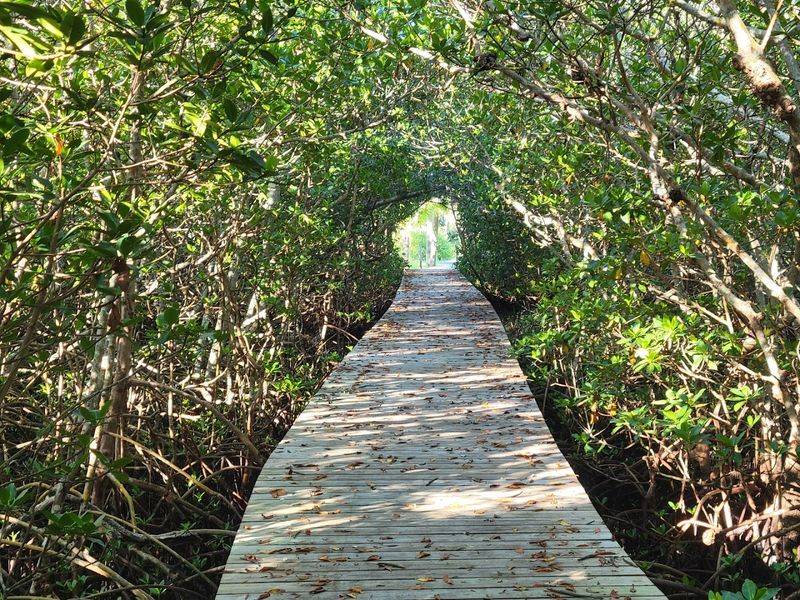
Don Pedro Island State Park maintains a network of hiking trails on the island, though calling them rugged would be generous. The loops are short, each running roughly a quarter mile, and they are kept in decent condition on the maintained sections near the main access points.
The trails wind through scrub habitat and subtropical vegetation, offering a shaded alternative to full sun beach time. Birding along the trail edges is productive, especially in the early morning hours when shorebirds and wading birds are most active in the wetter patches of the island interior.
Dogs are welcome in the park, which makes the trails a practical option for visitors who bring pets. Tick protection is genuinely important here, both for people and animals, as the vegetation is thick enough to harbor them in numbers.
A can of bug spray and a post-hike tick check are both worth building into your routine before you leave the parking lot.
The Pavilion and Picnic Area: A Spot to Slow Down
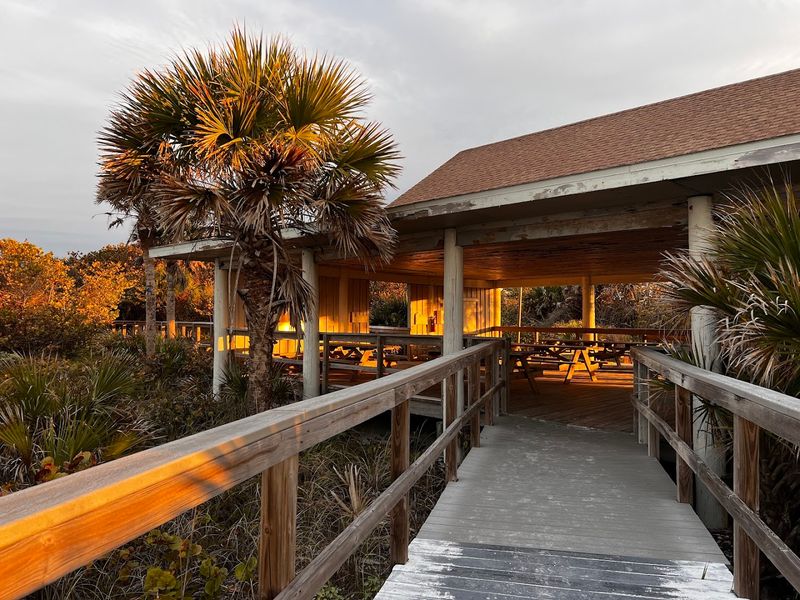
A covered pavilion sits near the beach access on the island side of the park, equipped with several spaced-out picnic tables and a large grill for cooking. The structure provides genuine shade, which matters enormously during Florida’s hotter months when the sun reflects off both sand and water at full intensity.
The pavilion makes the park a realistic option for a full-day family outing rather than just a quick beach stop. Families regularly arrive with coolers, set up at the tables, and spend the day rotating between the beach, the water, and the shade of the pavilion in a comfortable rhythm.
There are no food vendors, no shops, and no concession stands on the island, so everything you plan to eat or drink needs to come with you. That limitation is also a feature, since it keeps the atmosphere quiet and the beach free from the commercial noise that crowds other Florida coastal parks.
Restrooms and Facilities: Practical Info Worth Knowing
The park maintains clean, well-sized restrooms at both the mainland launch area and on the island itself, which is a detail that matters more than it sounds when you are spending a full day somewhere this remote. The facilities are consistently reported as clean and functional, a genuine convenience for a park with no commercial infrastructure.
On the mainland side, the SUP Englewood rental operation occupies a small building near the kayak launch, where staff can answer questions about conditions and routes even if you are not renting from them. A picnic table in the shade near the dock area provides a decent spot to eat breakfast before heading out on the water.
The three-dollar parking fee is collected at the entrance, and the lot is paved with enough capacity to handle busy weekend days without turning into a scramble. Overall, the practical side of the park is well-organized for a destination that deliberately keeps development minimal.
Hurricane Recovery: The Park After Recent Storms
Recent hurricane seasons left visible marks on Don Pedro Island, and those who visited shortly after the storms found sections of the vegetation stripped and the landscape altered. The island took a real beating from the storms that swept through Charlotte County, and the effects on the trails and island interior were noticeable.
Recovery is actively underway, with workers and volunteers involved in restoration efforts across the damaged sections. The beach itself remains beautiful and fully accessible, and the water quality has not been affected by the storm damage in any lasting way.
The wildlife has largely returned, with dolphins, manatees, and birds showing up in the same areas they frequented before the storms. The park is still worth every bit of the trip, and watching an ecosystem rebuild itself in real time adds a layer of meaning to the visit that a perfectly manicured beach simply cannot offer.
Best Time to Visit: Seasons, Crowds, and Conditions
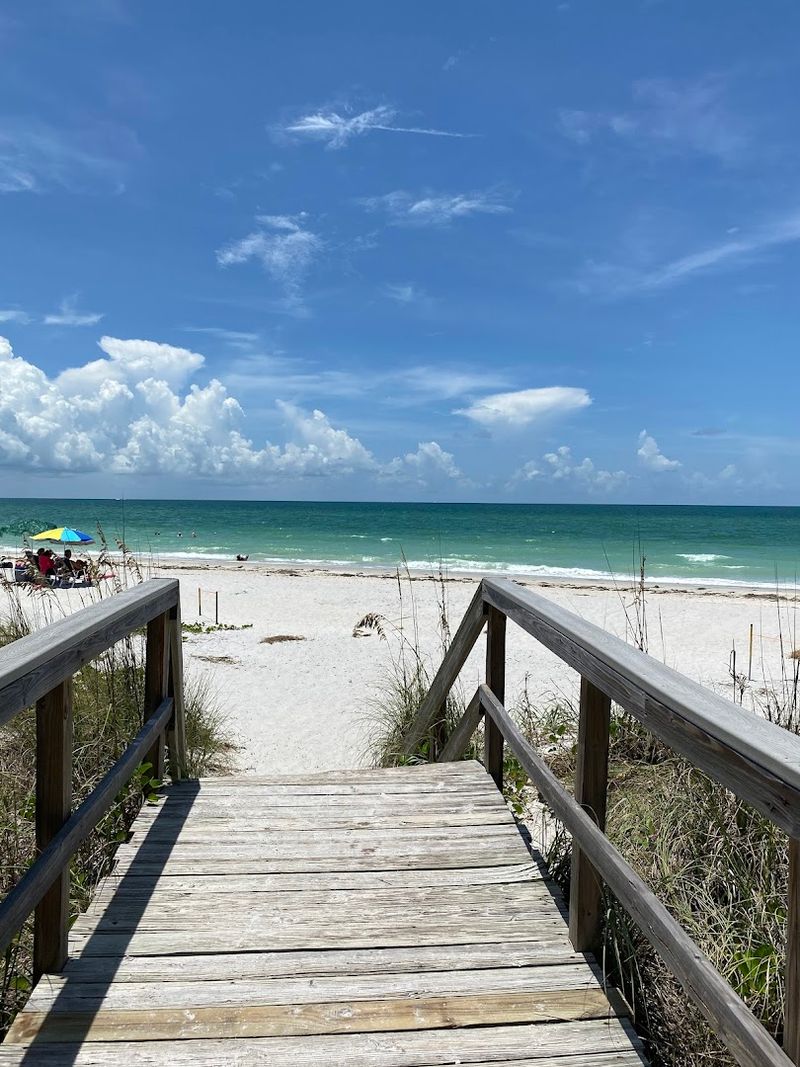
The sweet spot for visiting Don Pedro Island falls somewhere between late fall and early spring, when temperatures are comfortable, humidity drops to manageable levels, and the worst of the summer crowds have cleared out. November through April offers the most pleasant conditions for both beach time and paddling.
Summer visits are entirely doable but come with full Florida heat, higher humidity, and a stronger chance of afternoon thunderstorms that can shorten your day on the water. Kayak rentals may also be closed on particularly windy days, which is worth checking before you commit to a trip where paddling is the primary plan.
Weekday visits are noticeably quieter than weekends, and arriving close to the 8 AM opening time gives you the best chance of having the beach and the trails to yourself for at least the first couple of hours. The shells are also easier to spot before other visitors have walked the shoreline.
Endangered Species and Conservation: More Than Just a Beach
Don Pedro Island State Park carries an official designation as an endangered species habitat, and that status shapes how the park is managed and what visitors experience when they arrive. The island provides nesting ground for sea turtles and supports populations of birds and marine animals that depend on undeveloped coastal habitat.
The no-vehicle-access policy is not just a quirky feature of the park’s geography. It is a deliberate conservation choice that keeps the island’s ecosystem largely intact by removing the pressure that roads and parking lots typically bring to coastal environments.
The surrounding waters fall within a protected zone that limits certain types of boating activity, though enforcement of speed limits in the no-wake zone near the kayak launch is inconsistent based on actual conditions there. Visitors who treat the place with care, avoid disturbing nesting areas, and pack out everything they bring in are directly contributing to keeping this ecosystem functional for the long term.
Why This Place Stays Special: The Secret Worth Sharing
Don Pedro Island has a quality that is genuinely hard to manufacture and increasingly rare along Florida’s coastline. The combination of limited access, active conservation, and minimal commercial development means the place still feels like a discovery rather than a destination that has been polished for mass consumption.
The shells, the dolphins, the clear water, and the quiet are not marketing promises. They are just what the island is, on an ordinary Tuesday or a busy Saturday morning in February.
That consistency is what keeps people coming back and what makes first-time visitors feel like they found something the rest of the state has not caught up with yet.
The ferry ride is short, the parking fee is small, and the payoff is disproportionately large for the effort involved. Some places earn their reputation slowly and honestly, and this barrier island on Florida’s southwest coast is one of them.



