 Unearth The Voyage
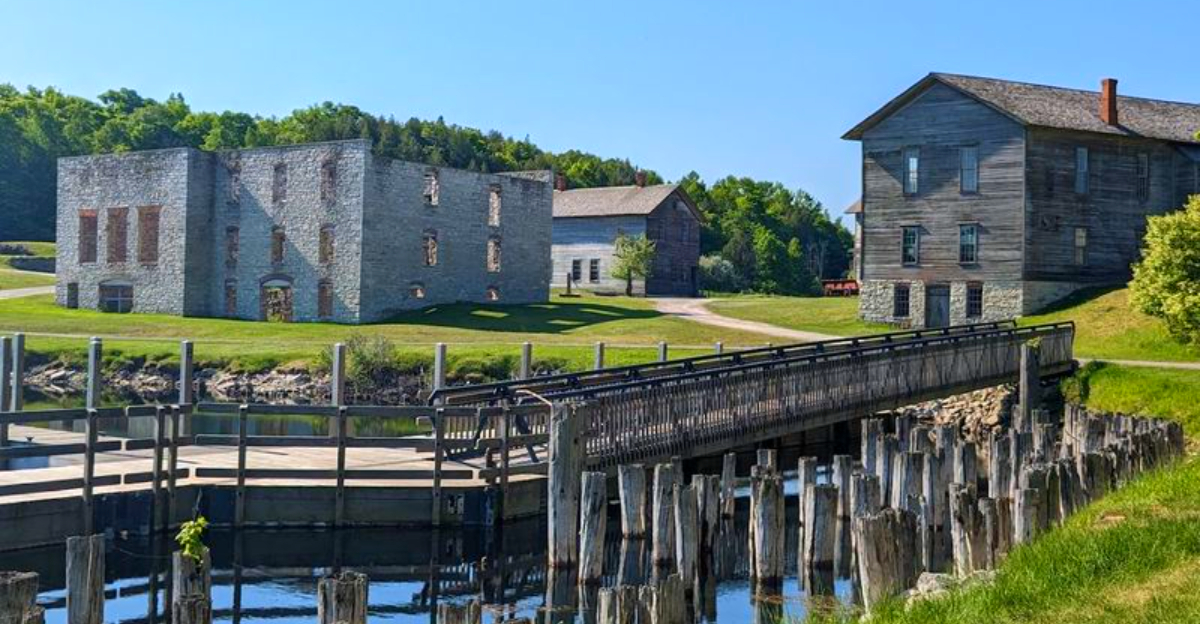
This historic site in Michigan’s Upper Peninsula preserves an entire 19th-century industrial town, complete with original buildings, furnaces, and homes dating back to 1891. Unlike most historic attractions, it was never rebuilt or recreated.
The town was abandoned, leaving behind a rare snapshot of daily life from that era.
Visitors can walk through furnished workers’ houses, see massive blast furnaces up close, and follow the layout of a once-busy iron smelting operation along the shoreline. The number of intact structures and artifacts sets it apart from typical historic sites.
It is one of the most unusual places in the Midwest, and it feels less like a museum and more like stepping into a place that was simply left behind.
Where Exactly This Forgotten Town Sits
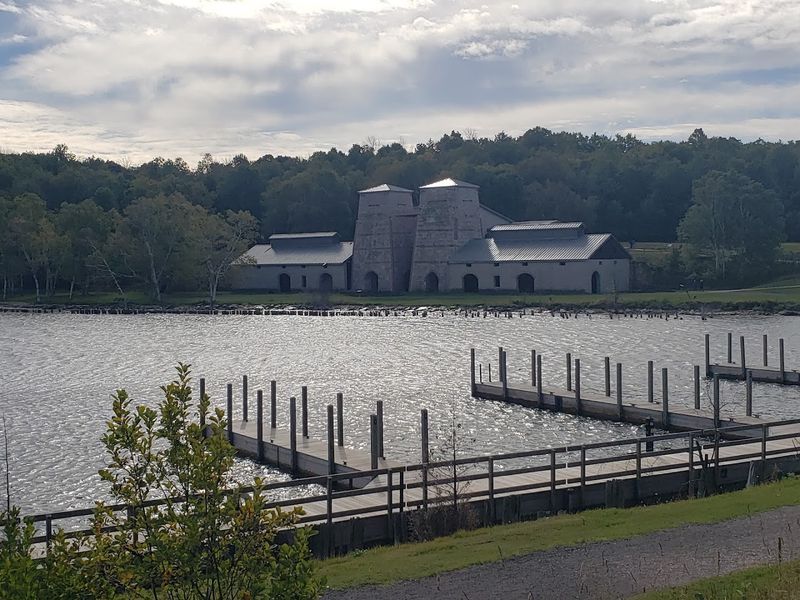
Few places carry the weight of history the way this quiet corner of Michigan’s Upper Peninsula does. Fayette Historic Townsite is located at 4785 II Road, Garden, MI 49835, on the Garden Peninsula along the shores of Lake Michigan’s Big Bay de Noc.
The drive down the peninsula itself is part of the experience. Narrow roads cut through dense forest, and then suddenly the tree line breaks open to reveal a harbor so blue and still it looks almost unreal.
The site sits within Fayette Historic State Park, managed by the Michigan Department of Natural Resources, and is open seasonally for visitors. The park also offers camping, so you can stay overnight and explore the grounds at your own pace.
The address puts you well off the beaten path, which is exactly the point. Getting there requires a genuine commitment, and that effort is rewarded the moment you catch your first glimpse of the old iron furnaces rising above the rocky shoreline.
The Industrial Story That Built This Town
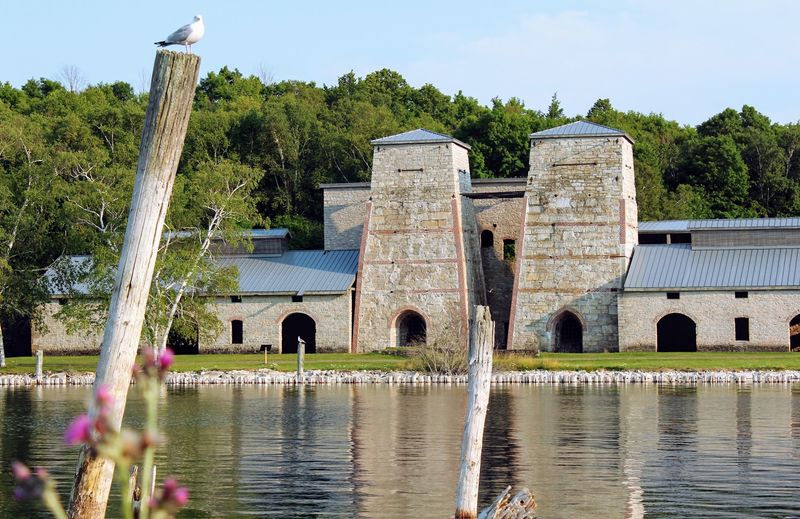
The Jackson Iron Company founded Fayette in 1867 with one clear goal: turn raw iron ore into pig iron as efficiently as possible. The location was chosen because it had everything needed for that process in one place.
Hardwood forests provided fuel for the charcoal kilns, the harbor allowed ore ships to dock directly at the furnaces, and the limestone bluffs supplied the flux needed to purify the iron. For about two decades, the operation ran at full capacity, producing thousands of tons of pig iron each year.
At its peak, Fayette was home to roughly 500 residents, most of them workers and their families who lived in company-owned housing and shopped at the company store. The Jackson Iron Company essentially controlled every aspect of daily life in town.
By 1891, the forests were gone and newer technologies made charcoal-based smelting obsolete. The company shut everything down and walked away, leaving the town almost entirely intact.
That abrupt ending is what makes the story so compelling to explore in person.
What the Twin Blast Furnaces Look Like Up Close
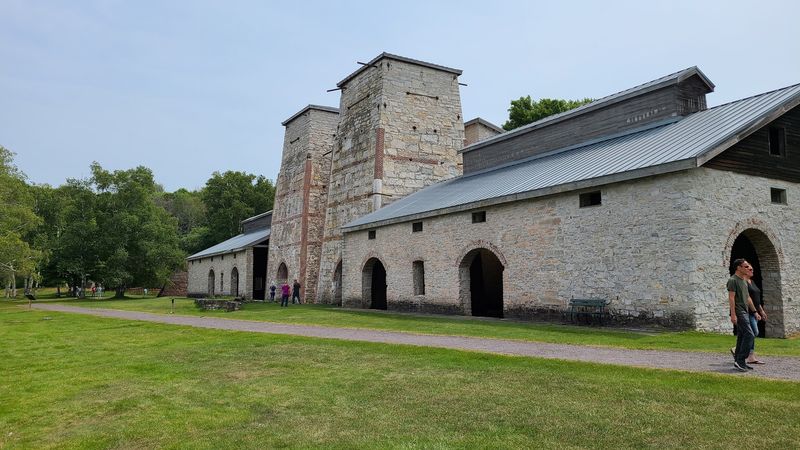
Standing next to the twin blast furnaces at Fayette is one of those moments that genuinely stops you in your tracks. These structures are massive, built from stone and mortar, and they rise up from the shoreline like something out of a forgotten industrial age.
The furnaces were the heart of the entire operation, and looking at them today, it is easy to imagine the intense heat, the noise, and the constant movement of workers hauling ore and charcoal to keep the fires burning around the clock.
Each furnace is remarkably well preserved, with much of the original stonework still intact. Interpretive signs explain exactly how the smelting process worked, breaking down the chemistry in a way that even younger visitors can follow.
The furnaces sit right at the edge of Snail Shell Harbor, so the contrast between the industrial ruins and the calm, turquoise water behind them creates a striking visual that photographers love. This is one of those spots where every angle seems to produce a great photo.
Snail Shell Harbor and the View That Will Stop You Cold
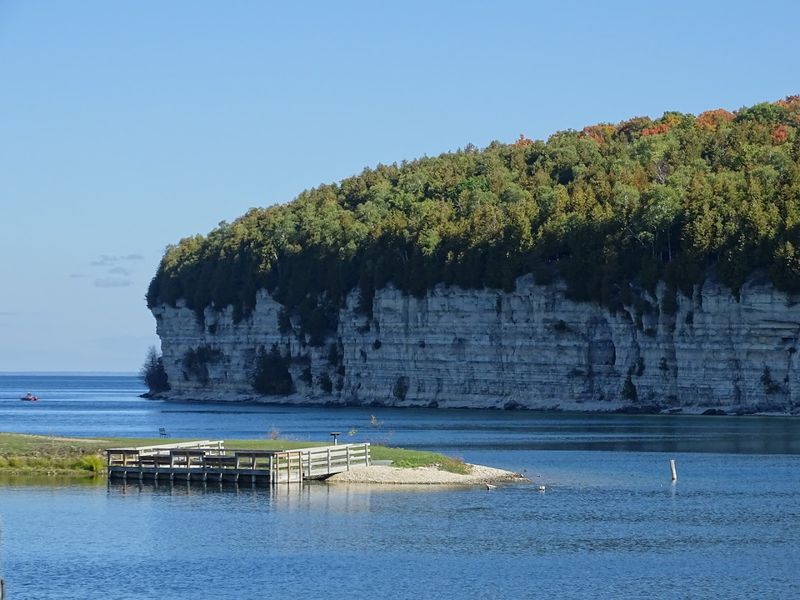
Snail Shell Harbor is one of the most visually striking natural harbors in Michigan, and the fact that it happens to frame a 19th-century ghost town makes it feel almost too cinematic to be real. The water is a deep, clear blue-green, calm on most days and almost mirror-flat in the early morning.
The harbor was the reason Fayette existed at all. Ships could dock here directly, loading up with pig iron and heading out across Lake Michigan to markets further south and east.
Without this natural shelter, the whole industrial enterprise would never have been possible.
Today, visitors stand at the water’s edge and look out at the same view those workers would have seen every day, minus the smoke and the noise. The limestone cliffs rise on the north side of the bay, adding a dramatic backdrop that feels almost theatrical.
Kayakers sometimes paddle the harbor, and the rocky shoreline is perfect for exploring on foot. The rocks themselves are full of unusual shapes and colors, many of them byproducts of the old smelting process.
More Than 20 Original Buildings Still Standing
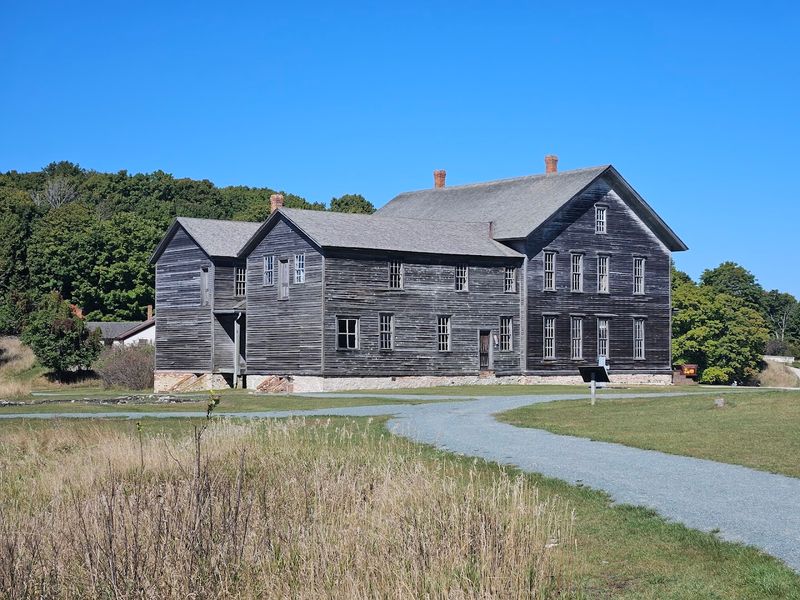
Most ghost towns offer a crumbling wall here or a broken foundation there. Fayette is different.
Over 20 original structures are still standing, and many of them are open for visitors to walk through and explore at their own pace.
The buildings include the company hotel, the superintendent’s house, workers’ cottages, a machine shop, a doctor’s office, and the company store. Many are furnished with period-appropriate items that give each space a lived-in feeling rather than a sterile museum atmosphere.
Walking from building to building feels like reading chapters of the same story. Each space reveals something new about the social hierarchy of the town, from the relatively comfortable superintendent’s quarters to the much simpler homes where laborers lived with their families.
The stone-paved paths connecting the buildings are well maintained and easy to walk, making the whole site accessible even for younger visitors or those who prefer a leisurely pace. The layout of the town is compact enough that you can cover the entire area in a few hours without feeling rushed.
The Limestone Cliffs That Frame the Whole Scene
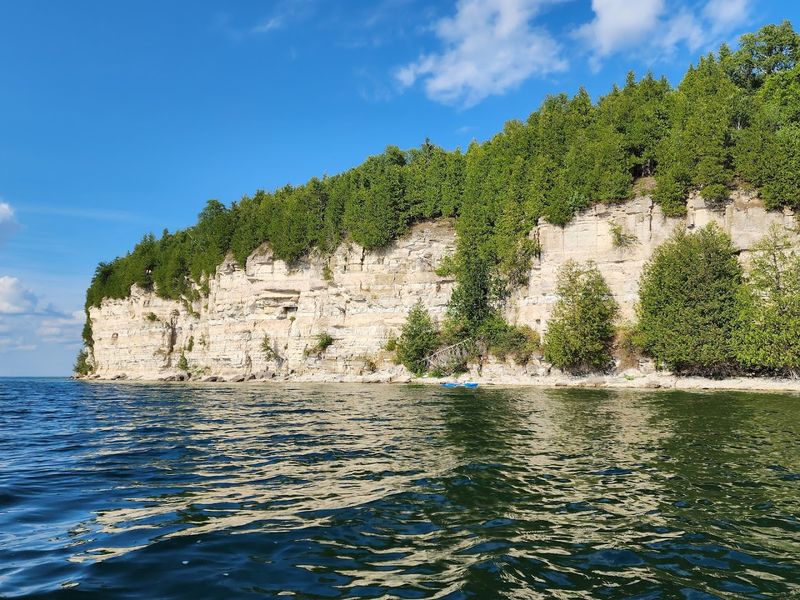
The limestone bluffs on the north side of Snail Shell Harbor are one of those natural features that keep pulling your eyes back no matter where you are in the townsite. They rise sharply from the water, pale and dramatic, and they are covered in hardy trees that cling to the rock with impressive determination.
These cliffs were not just scenic. The limestone they are made of was a critical raw material in the iron-smelting process, used as flux to remove impurities from the molten iron.
The Jackson Iron Company essentially had a quarry right next door to the furnaces, which was one of the key reasons this site was so economically valuable.
A hiking trail leads up to an overlook at the top of the bluffs, and the view from there is genuinely worth the short climb. You can see the entire harbor, the furnaces, and the town laid out below you like a map.
That overlook perspective is the best way to understand the geography of the place and why it was chosen for such an ambitious industrial project in the first place.
Daily Life Inside a 19th-Century Company Town
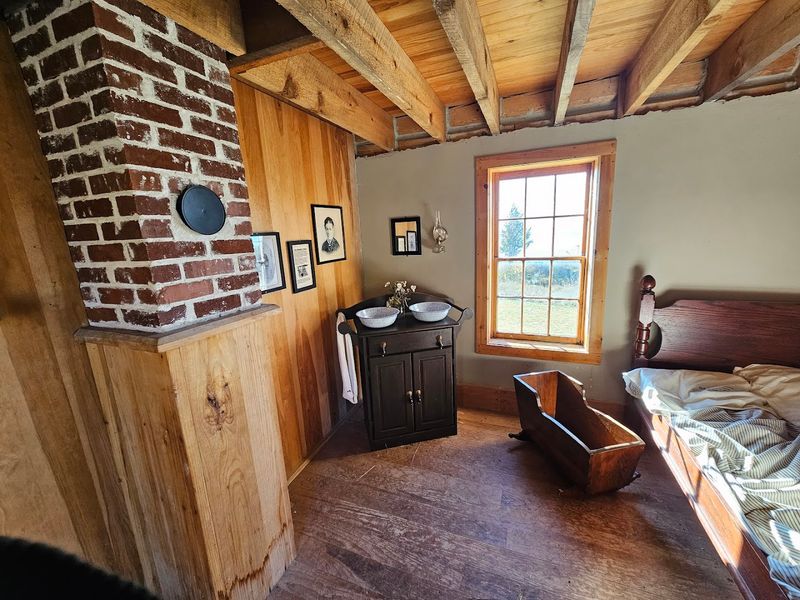
Life in Fayette was entirely organized around the iron company, and the physical layout of the town reflects that control in every detail. Workers and their families lived in housing owned by the company, shopped at the company store using wages often paid in company script, and had little reason or ability to look elsewhere for their needs.
The superintendent lived in a larger, more comfortable home near the top of the social order, while skilled workers occupied mid-tier cottages and unskilled laborers were packed into smaller, more crowded spaces. That hierarchy is still visible today in the different sizes and qualities of the surviving buildings.
Each building has informational displays that bring the human side of the story to life, describing not just the industrial processes but the everyday routines, the families, and the challenges of living in a remote company town in the 1870s and 1880s.
Children who visit often connect with these stories surprisingly well, finding the details of 19th-century domestic life both foreign and oddly familiar at the same time.
Hiking Trails Through the Surrounding Forest
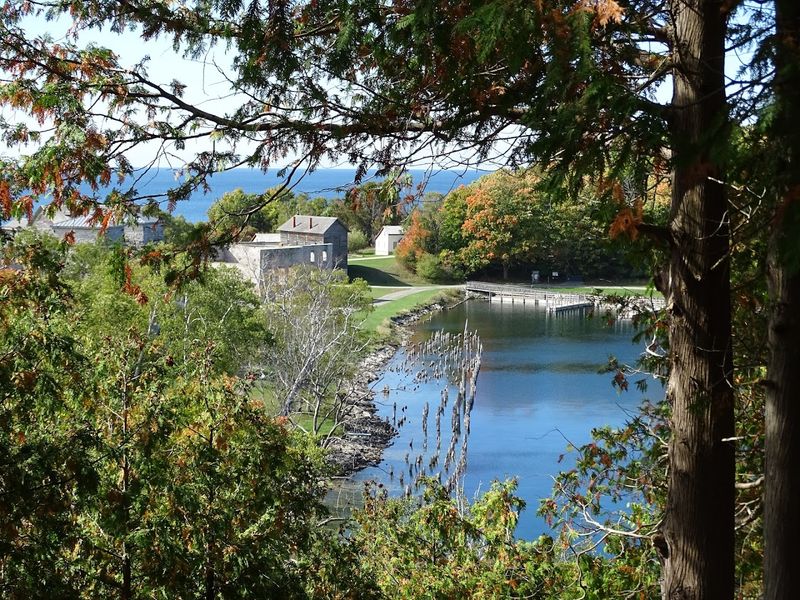
Beyond the townsite itself, Fayette Historic State Park has a network of hiking trails that wind through the surrounding forest, offering a different kind of experience from the structured historical walk through the buildings.
The trails are relatively quiet and see less foot traffic than the main townsite area, which makes them a nice option if you want some solitude after exploring the buildings. In fall, the leaf cover can make the paths a little harder to follow, so taking a photo of the trail map before heading in is a smart move.
The overlook trail to the top of the limestone bluffs is the most popular route, and for good reason. The view from the top is the best in the park, giving you a full perspective on the harbor and the industrial ruins below.
Dogs are welcome on the trails as long as they are kept on a leash, though they are not allowed inside the historic buildings. The trail system connects naturally to the townsite, so you can mix history and nature in the same visit without backtracking.
Rocky Shoreline Treasures Worth Bending Down For
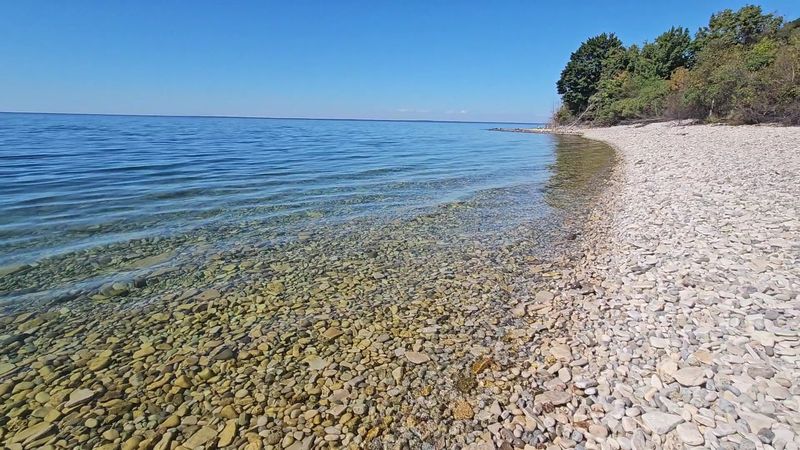
The shoreline along Snail Shell Harbor is one of the more unexpected highlights of a visit to Fayette, and it rewards anyone willing to slow down and look closely at the ground beneath their feet. The rocks here are not just ordinary Lake Michigan stones.
Mixed in with the natural limestone and sandstone are fragments of slag, the glassy, often colorful byproduct of the iron-smelting process that was dumped along the shoreline over decades of operation. These pieces come in unusual shapes and colors, ranging from deep black and dark green to iridescent blue-gray, and they feel unlike anything you would find on a typical Great Lakes beach.
Skipping rocks in the bay is a favorite activity for kids visiting the park, and the flat, smooth stones along the water’s edge are perfect for it. The shoreline walk also offers some of the best views of the blast furnaces from water level.
It is a surprisingly meditative stretch of shoreline for a place with such an intense industrial history behind it.
Best Times to Visit and What to Expect
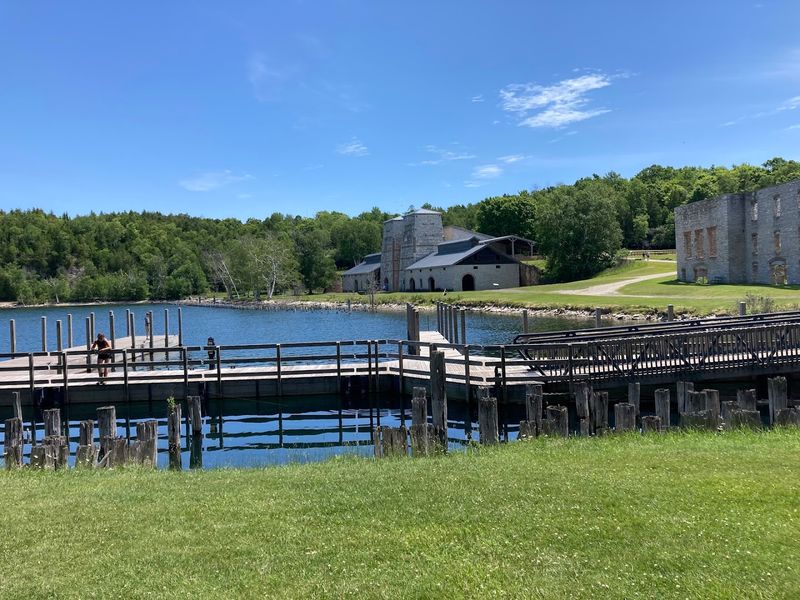
Timing your visit to Fayette can make a real difference in how you experience the place. Summer is the busiest season, with peak weekends drawing enough visitors to fill the parking lot and create a lively but sometimes crowded atmosphere on the main paths.
Midweek visits in the shoulder seasons, particularly late spring or early fall, offer the best combination of good weather, manageable crowds, and beautiful scenery. Fall is especially striking, with the hardwood forests turning vivid colors around the limestone bluffs and the water taking on a deeper, darker hue.
The park is open seasonally, and the visitor center operates on specific hours that can vary by month, so checking with the Michigan DNR before your trip is a smart step. The phone number for the park is +1 906-644-2603.
Winter visits are not typical, but the park’s natural setting is worth considering for snowshoeing if you are an experienced outdoor traveler. Most first-time visitors find that a half-day to a full day is the right amount of time to do the site justice.
Why This Place Stays With You Long After You Leave
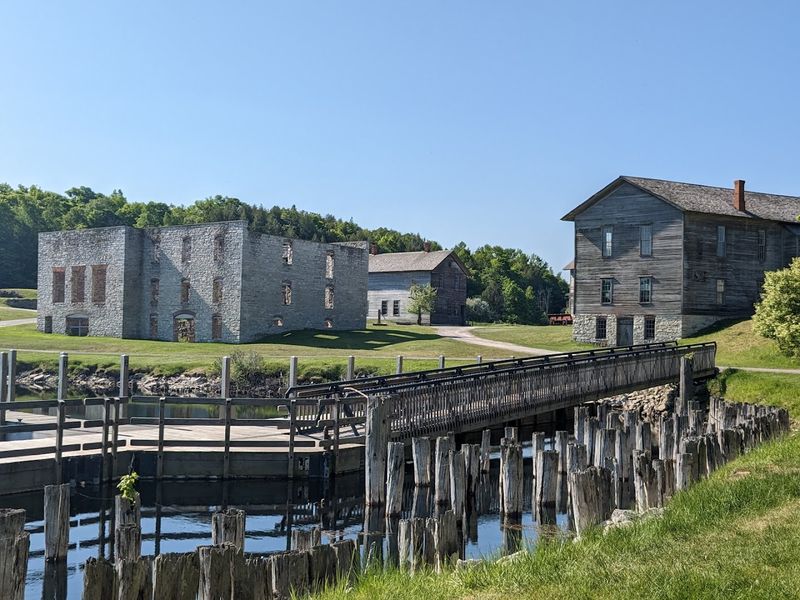
There are plenty of historic sites across the Midwest, but very few of them hit quite the same note as Fayette. The combination of industrial ruins, natural beauty, and human stories creates an experience that is harder to shake than a typical museum visit.
Part of what makes it linger is the sheer completeness of the place. You are not imagining what it once looked like from a pile of rubble.
You are walking through something that is genuinely, remarkably intact, and that physical reality makes the history feel personal rather than distant.
The setting along Snail Shell Harbor adds an emotional layer that purely indoor museums cannot replicate. There is something about standing at the water’s edge, looking at those old furnaces against a clear sky, that makes the past feel genuinely present.
Fayette is the kind of place that prompts people to tell others about it the moment they get home, not because it is flashy or loud, but because it is quietly, unexpectedly one of the most affecting spots in all of Michigan.



