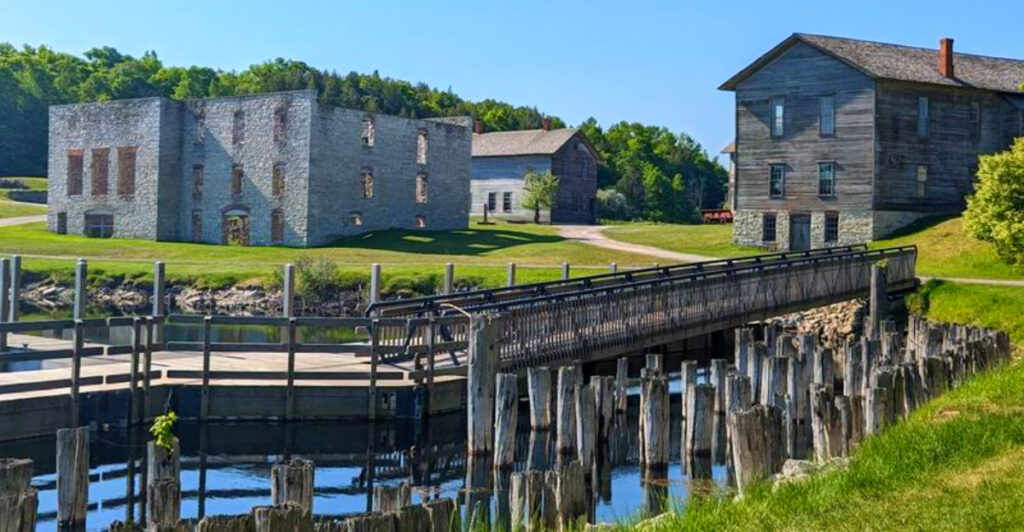
Most historic sites ask you to imagine the past. Fayette doesn’t have to.
Along the shoreline of Big Bay de Noc, this former iron-smelting town still holds its original structure – blast furnaces, buildings, and even furnished interiors – largely intact. When operations ended in 1891, much of the town was simply left behind.
What remains today is a rare, complete snapshot of industrial life, making Fayette one of the most compelling ghost towns in the Midwest.
A Historic Site Defined by What Was Never Removed
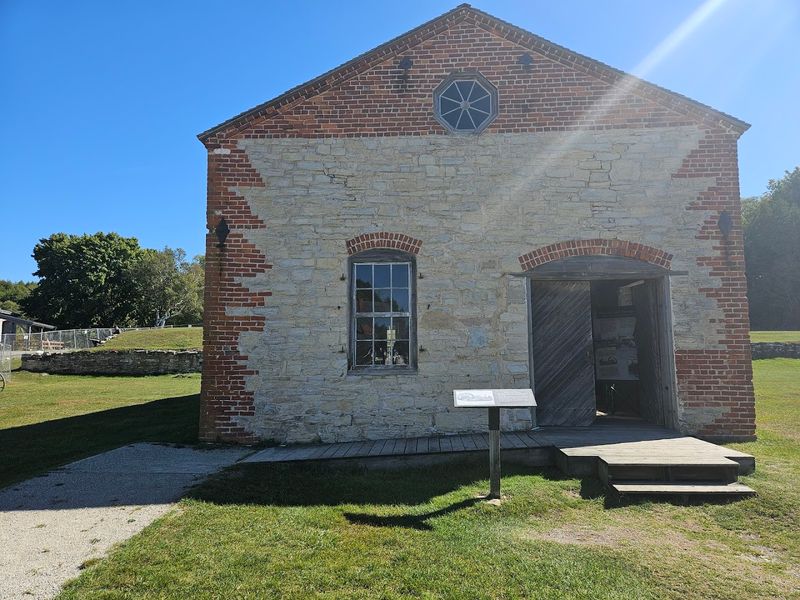
Most historic attractions ask visitors to imagine what used to be there. Fayette is unusual because so much of the physical story remains in place.
When the town’s industrial life ended in 1891, it was not fully stripped, rebuilt, or transformed into something entirely new. Instead, much of it stayed behind.
That fact changes the emotional tone of the visit immediately. You are not walking through a re-creation designed to suggest the past.
You are moving through the framework of an actual place that once functioned as a working town and then abruptly stopped.
That feeling of interruption is central to Fayette’s identity. The site does not present history as a polished exhibit with every edge smoothed out.
It presents evidence – buildings, industrial remains, pathways, and spaces that still reflect how people once lived and worked here. Because of that, the town feels complete in a way many preserved places do not.
Its power comes not from restoration alone, but from the rare chance to see a community whose essential structure survived because abandonment, rather than redevelopment, became its form of preservation.
Why the Jackson Iron Company Built a Town Here
Fayette was not founded because the location was charming or convenient for ordinary settlement. It was chosen because it made industrial sense.
When the Jackson Iron Company established the town in 1867, the decision was based on resources, transport, and efficiency. The surrounding forests could supply hardwood for charcoal.
Nearby limestone could be used in the smelting process. The harbor offered a practical route for moving raw materials in and pig iron out.
In industrial terms, the site solved multiple problems at once.
That kind of planning shaped the entire community from the beginning. Fayette existed to support production, and everything else followed from that goal.
Homes, business buildings, and work structures were not independent features that happened to cluster together. They were part of a system.
The town was, in effect, an industrial machine with a residential component attached to it. Understanding that is essential because it explains why Fayette developed so quickly, why daily life here was so tightly organized, and why the fate of the town was always inseparable from the success of the furnaces.
How the Ironmaking Operation Actually Worked
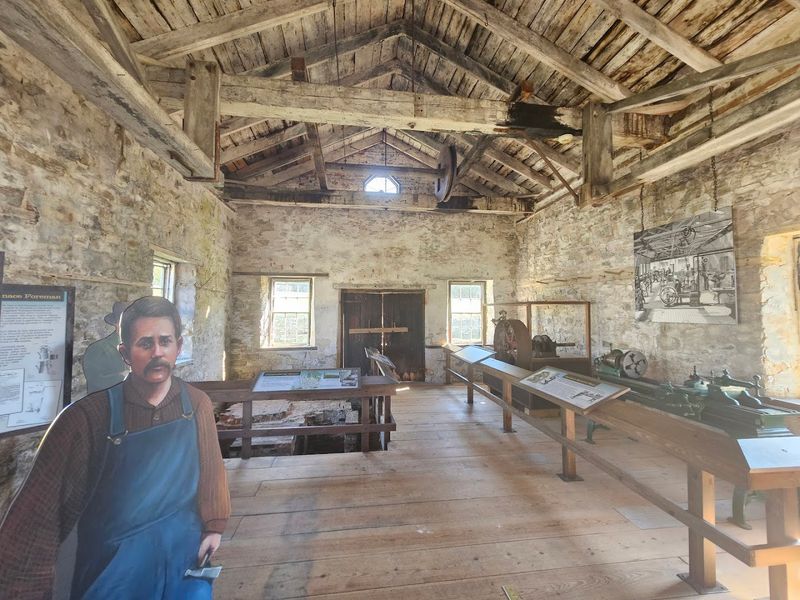
The ironmaking process at Fayette depended on a carefully coordinated combination of materials and labor. Iron ore, charcoal, and limestone were brought together in the blast furnaces, where extreme heat transformed them into pig iron.
Each of those materials mattered. The ore provided the metal content, the charcoal fueled the furnace, and the limestone served as a flux, helping remove impurities during smelting.
None of this happened casually. The system required constant management, steady supply lines, and workers who understood their roles in a demanding industrial cycle.
That process also helps explain why Fayette was so resource-dependent. A furnace operation of this kind could not continue indefinitely without nearby fuel and reliable access to transport.
The town’s early success came from having all those pieces aligned in one place. But the same dependence that made it efficient also made it vulnerable.
Once the forests were depleted and newer methods outperformed charcoal-based smelting, the advantages of the site weakened fast. Fayette’s story is therefore not just about industry in motion.
It is about a technology whose limits were built into its very success.
The Twin Blast Furnaces Still Dominate the Site
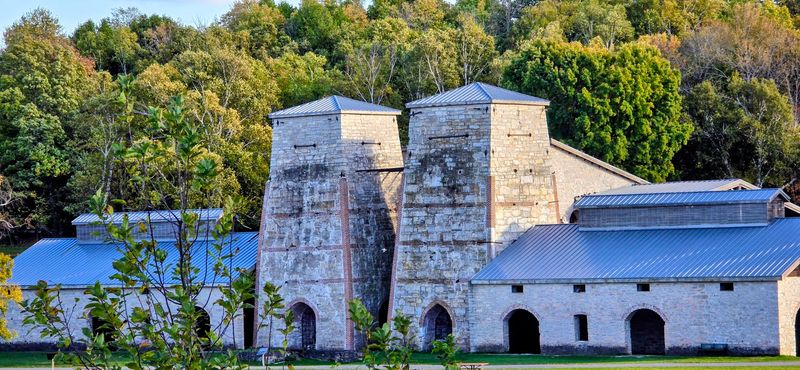
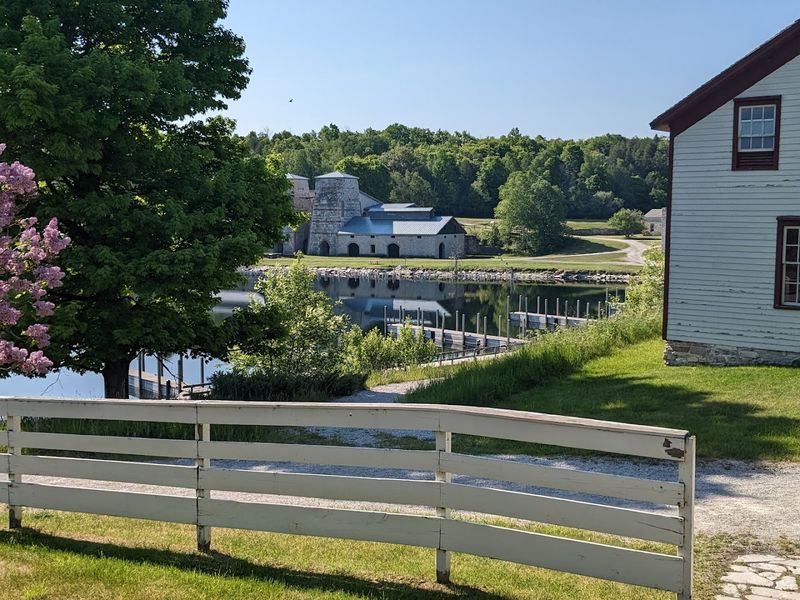
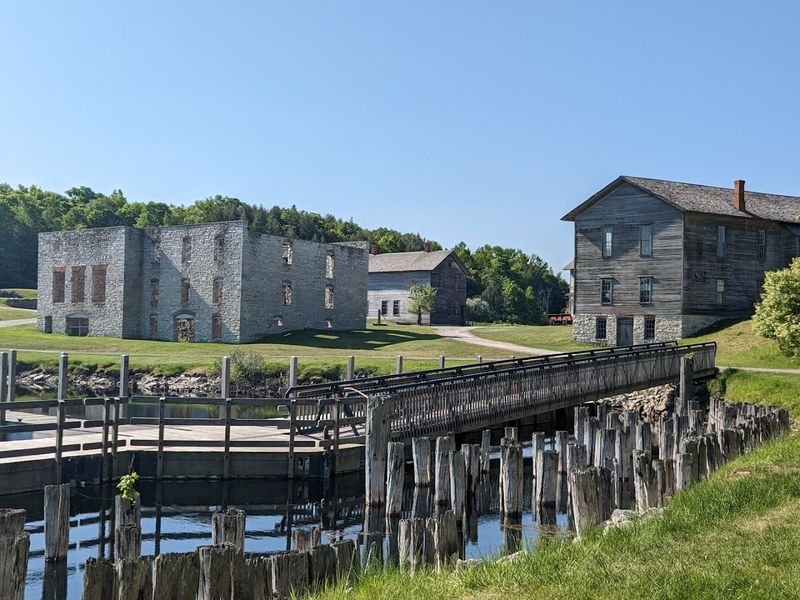
The most imposing structures at Fayette are the twin blast furnaces that still rise along the shoreline. Even now, long after the fires went cold, they remain the clearest symbols of what this town was built to do.
Their scale surprises many visitors. From a distance they appear solid and dramatic, but standing beside them makes the engineering feel more immediate.
These were not decorative relics or minor support buildings. They were the center of the entire operation, the point around which labor, transport, and daily routine revolved.
Their location along the harbor also intensifies their impact. The furnaces stand where industry once met water in the most literal way, turning the shoreline into a working edge between production and shipment.
That placement makes the contrast with the present especially striking. Today the water is calm, the air is quiet, and the structures seem almost solemn.
Yet their size and position still communicate urgency and scale. They remind you that Fayette was never a quaint village that happened to include industrial remains.
It was an industrial town first, and the furnaces still make that unmistakably clear.
Snail Shell Harbor Was More Than Scenic
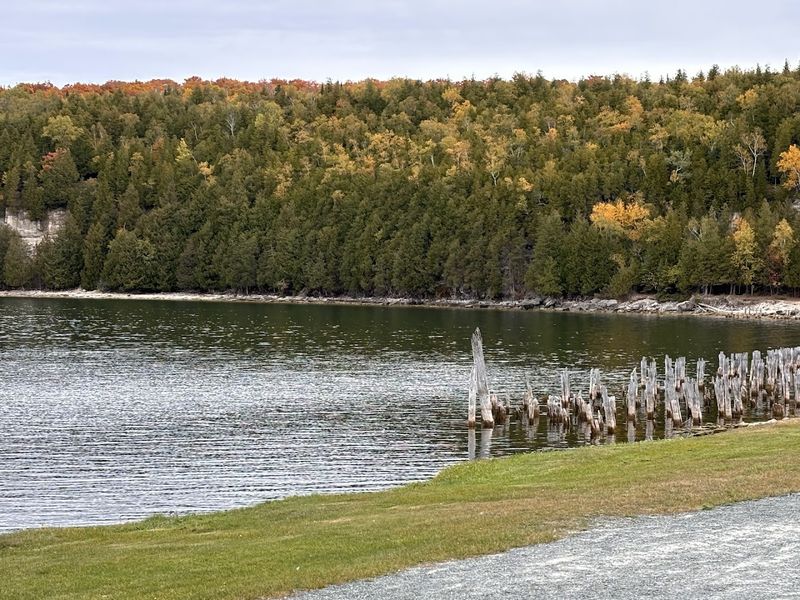
It is easy to look at Snail Shell Harbor today and focus on its beauty. The water is calm, the reflections are striking, and the surrounding cliffs frame it in a way that feels almost serene.
But during Fayette’s working years, the harbor was not merely picturesque background. It was essential infrastructure.
Ships used it to bring in raw materials and carry finished pig iron outward to broader markets across the Great Lakes. Without that connection, the town’s industrial system would have been far less viable.
That practical role changes how the harbor reads once you know the history. The stillness no longer feels purely natural.
It begins to feel like the silence left after a place of constant motion. You can imagine vessels docking, cargo being loaded, workers moving between shoreline and furnaces, and the daily rhythm of a town organized around industrial timing.
The harbor linked this remote location to a much larger economic network. In that sense, it was both local and outward-facing at once.
Fayette may seem isolated now, but in its prime, this harbor was its lifeline to the wider world.
More Than Twenty Buildings Still Tell the Story
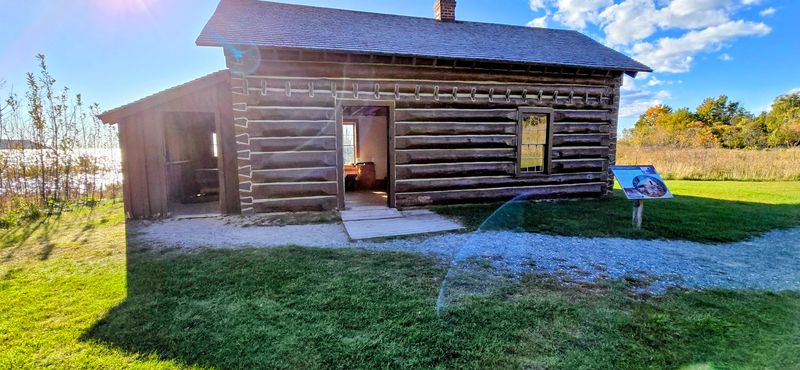
One reason Fayette feels so unusually complete is the number of surviving structures. More than twenty original buildings still stand, and together they create something much more powerful than a handful of isolated remnants.
Instead of forcing visitors to reconstruct the town mentally from foundations and signs, the site presents a coherent built environment. Streets, houses, service buildings, and industrial spaces still relate to one another in ways that reveal how the community once functioned.
That continuity is rare, and it is one of Fayette’s greatest historical strengths.
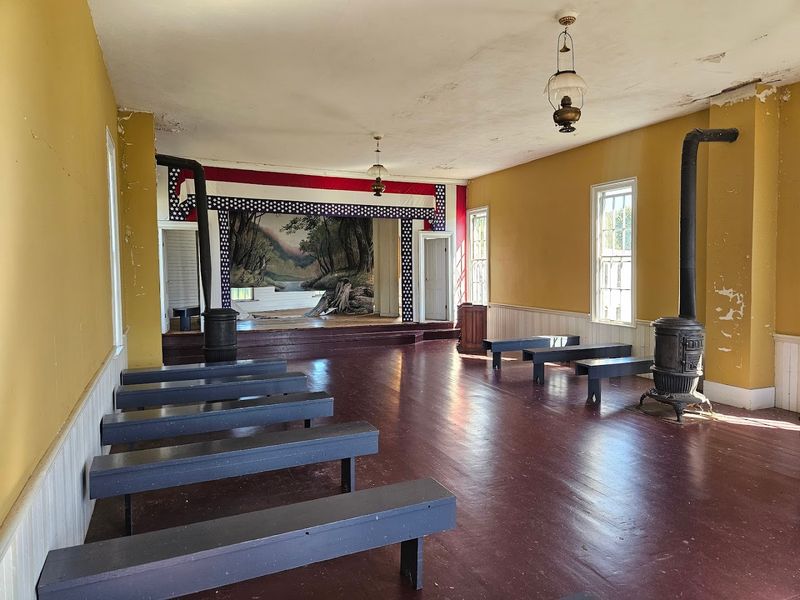
The surviving buildings also allow for a more nuanced reading of the town. You do not just see “old structures.” You begin to recognize categories of life and labor: administrative spaces, family homes, work-related buildings, and shared facilities.
Each contributes a different piece of the larger story. Because the town was preserved as a system rather than as a single landmark, visitors can move through it almost like reading a physical document.
The arrangement of the buildings tells you who held power, who lived close together, and how the industrial purpose of the town shaped its everyday architecture.
The Housing Layout Reveals a Social Hierarchy
Fayette was not only organized by industry. It was organized by status.
That hierarchy is still visible in the housing that survives today. Larger, more comfortable homes belonged to those higher in the company structure, while smaller cottages housed workers and their families in more modest conditions.
These differences were not accidental. They reflected the social order built directly into the town’s design.
Even without reading every interpretive sign, a visitor can sense that the built environment was structured to reinforce rank and role.
This is one of the most revealing aspects of the site because it turns abstract ideas about labor and authority into physical reality. The town makes visible what many industrial histories only describe in words: management occupied space differently, lived differently, and enjoyed a greater measure of privacy and comfort than the people whose daily labor sustained the operation.
Seeing those contrasts in person gives the social history a sharper edge. Fayette was not just a productive place.
It was a controlled one, where architecture itself participated in shaping class distinctions and reminding residents of where they fit in the local order.
Everyday Life Was Tied Closely to the Company
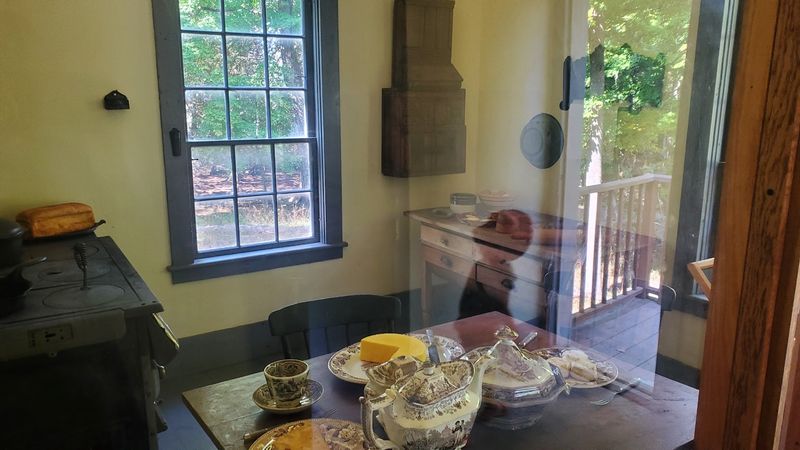
In Fayette, daily life extended far beyond the furnaces, but it remained tied closely to the company that built and ran the town. Housing, shopping, work, and much of the community structure were organized through that same industrial framework.
Families lived in company-owned homes. Goods were obtained through the company store.
The rhythms of domestic life were shaped by the needs of production, whether directly through work schedules or indirectly through the town’s overall dependence on the iron operation. Private life and corporate control were deeply intertwined.
That arrangement gave Fayette the characteristics of a classic company town. Residents did not simply work for the business; they lived within a system largely created and managed by it.
For workers and their families, this meant stability in some respects and limitation in others. A home, supplies, and employment were linked together, but so were dependence and restricted autonomy.
This helps explain why the site feels so revealing today. The surviving spaces do not just show where people slept or worked.
They show how industrial authority extended into the fabric of everyday life itself.
Furnished Rooms Make the Human Story Easier to Grasp
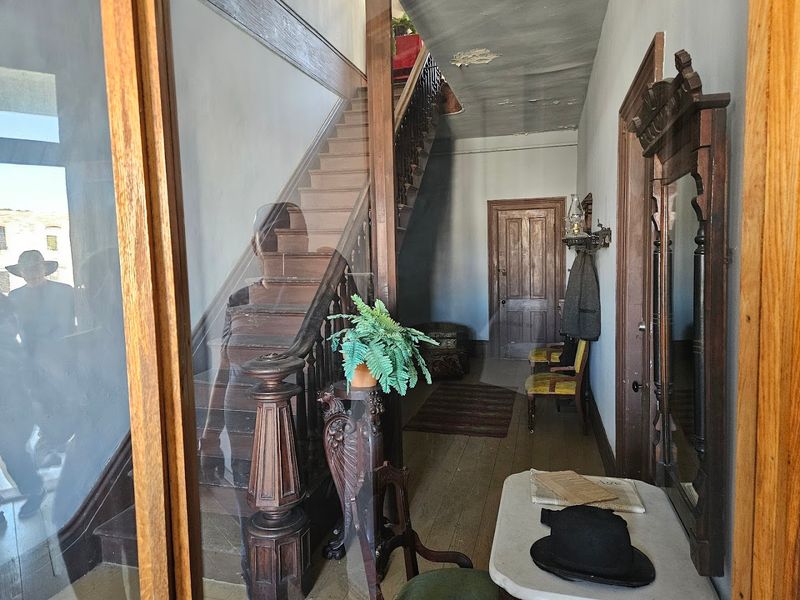
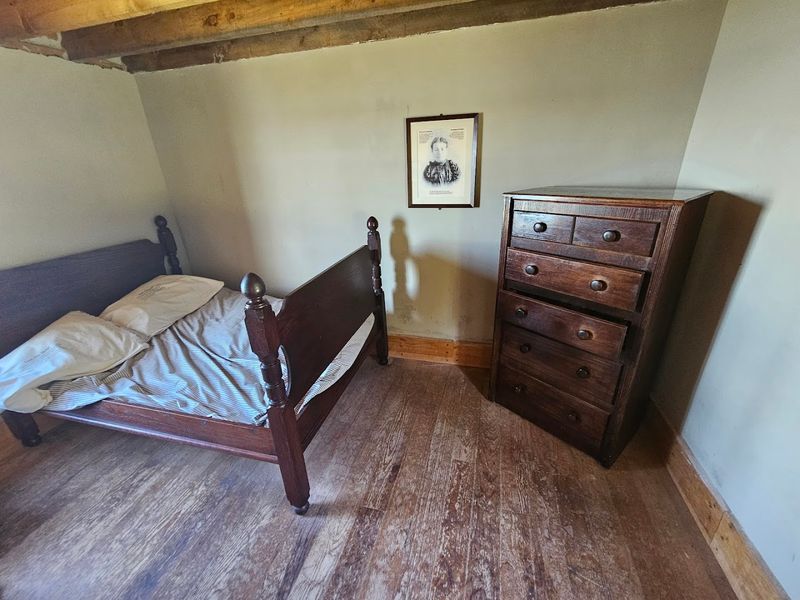
One of the reasons Fayette resonates so strongly with visitors is that many interiors feel inhabited rather than hollow. Furnished rooms, domestic layouts, and practical objects help bridge the gap between industrial history and ordinary human experience.
The furnaces tell you what the town produced, but the homes tell you how people actually lived while that production continued. Kitchens, bedrooms, and common spaces are often modest, direct, and functional.
Their simplicity reveals lives shaped by necessity, routine, and limited space rather than decorative comfort.
These interiors also help visitors notice differences that might otherwise be missed. A slightly larger room, a better-proportioned layout, or a more refined domestic space becomes meaningful when compared across buildings.
The human story becomes clearer through these contrasts. Children lived here, meals were prepared here, laundry was done here, and ordinary days unfolded here under the shadow of an industrial enterprise.
That grounding matters because it prevents Fayette from becoming just a story of machines and economics. It restores the people to the center of the narrative and reminds visitors that this was, above all, a lived-in town.
Why the Town’s End Came So Abruptly
Fayette did not slowly decline into irrelevance over generations. Its end was much sharper than that.
By the late nineteenth century, the conditions that had made the town productive were weakening. The hardwood forests that supplied charcoal were being exhausted, and iron production elsewhere was changing.
Newer technologies made charcoal-based smelting increasingly outdated and less competitive. The very system that had once made Fayette efficient had become a liability.
Its dependence on local fuel and older methods left it exposed at exactly the moment the industry was moving on.
When operations shut down in 1891, the result was not a graceful transition into a different economic future. The town lost the purpose for which it had been created.
That is why the site feels so abrupt today. Fayette was not built to diversify.
It was built to perform one task well. When that task no longer made sense, the logic holding the community together fell away with unusual speed.
The town’s historical power comes partly from that finality. It was not merely neglected.
It was functionally switched off, and much of its physical form remained.
Why Fayette Feels More Haunting Than Nostalgic
Many preserved towns invite nostalgia. Fayette evokes something more complicated.
Its appeal is not based on charming reinvention or romanticized small-town memory. Instead, it derives power from the fact that the place still reflects a working system that ended suddenly and never fully transformed into anything else.
Fayette feels as though time paused here in an unusually visible way, leaving the structure of the past exposed rather than softened.
That is why the site often stays with people. It does not merely offer information about a vanished industry.
It allows visitors to feel the proportions of that vanished world – the scale of labor, the hierarchy of the town, the dependence on natural resources, and the abruptness of industrial change. Fayette is compelling not because it is theatrical, but because it is intact enough to be convincing.
It shows how completely a town can be built around a single purpose, and how strange, quiet, and affecting it can feel once that purpose is gone.
Share this story