Long before modern roads and GPS, ancient caravan routes connected China to the Mediterranean through the heart of Central Asia. Along these trade networks, powerful cities rose from the desert as centers of commerce, culture, and learning.
Some still dazzle visitors with turquoise domes and grand architecture, while others survive as haunting ruins slowly reclaimed by the landscape. These 13 ancient caravan cities reveal the remarkable history of the Silk Road and the civilizations that once thrived along it.
1. Samarkand, Uzbekistan
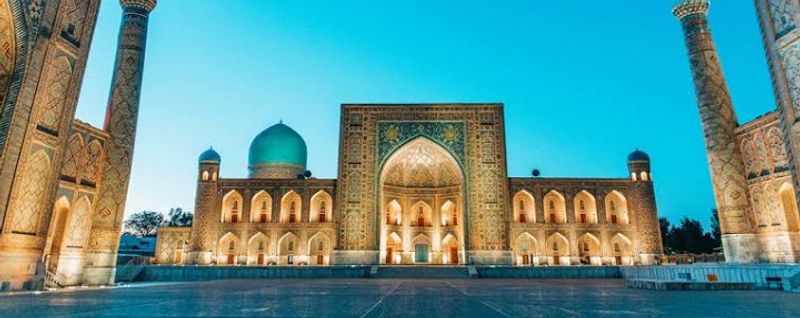
Called “the center of the world” by those who knew it best, Samarkand has been turning heads since at least the 5th century BC. Alexander the Great arrived here and reportedly declared it even more beautiful than he had imagined, which is high praise from a man who had seen quite a lot of the world.
Founded on a network of caravan routes, the city grew into one of the Silk Road’s most cosmopolitan hubs. Merchants from China, Persia, India, and the Byzantine Empire all passed through, exchanging silk, spices, and scientific ideas along the way.
Under the ruler Tamerlane in the 14th century, Samarkand became a powerhouse of architecture and scholarship. The Registan Square, Bibi-Khanym Mosque, and Shah-i-Zinda complex still stand as proof of that ambition.
An astronomical observatory built here in 1420 was among the most advanced in the medieval world.
2. Bukhara, Uzbekistan
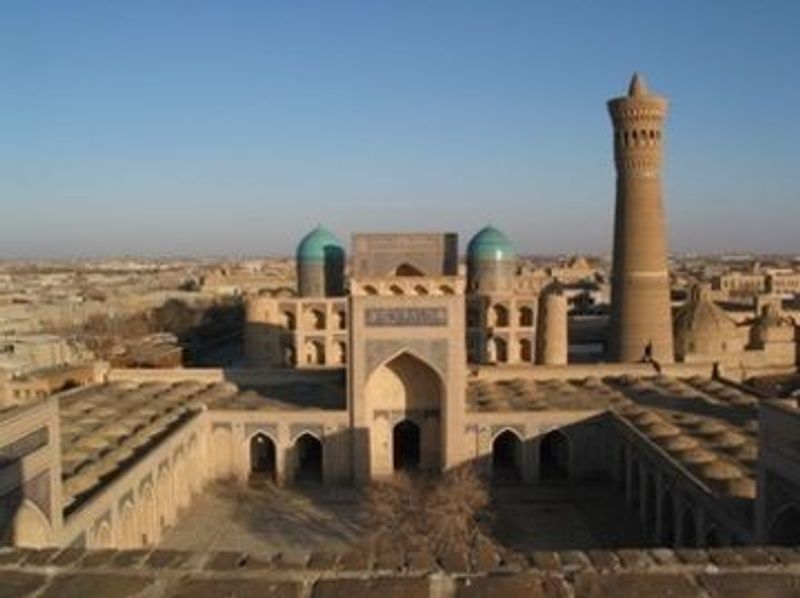
Few cities in the world carry a title quite like “the holiest city of Central Asia,” but Bukhara earned that reputation over more than two thousand years of continuous history. Traders did not just pass through here; they stayed, studied, and built.
Bukhara sat at the junction of several major caravan routes, making it the kind of place where a merchant heading west would bump into a scholar heading east. The city’s covered trading domes, known as Toki Zargaron and Toki Telpak Furushon, were essentially medieval shopping malls where silk, jewelry, and everyday goods changed hands daily.
During the Middle Ages, Bukhara became a leading center for Islamic scholarship and medicine. The philosopher and physician Ibn Sina, known in the West as Avicenna, was born nearby and educated here.
Today, the old city preserves that layered history remarkably well, with over 140 protected architectural monuments scattered across its streets.
3. Khiva, Uzbekistan
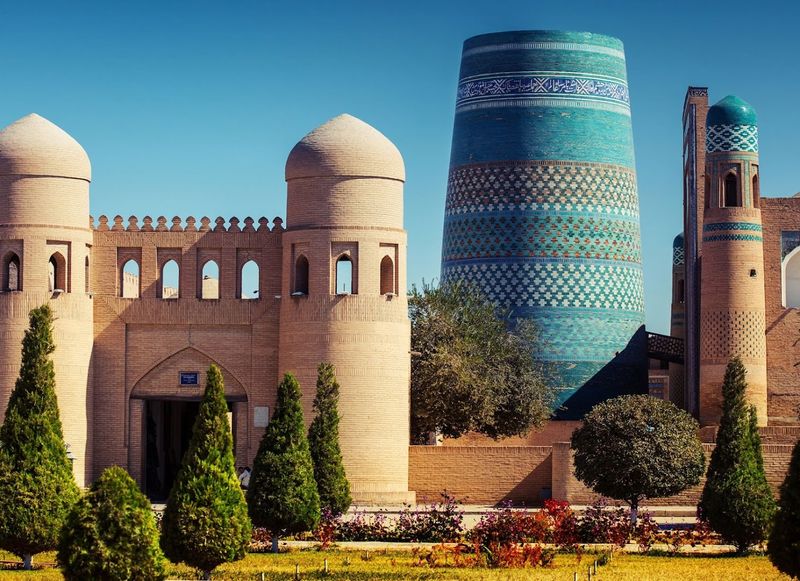
Khiva is the kind of place that makes you feel like you accidentally walked into a history book and cannot quite find the exit, which is not a complaint at all. The walled inner city, called Itchan Kala, is one of the best-preserved medieval settlements anywhere in Central Asia.
As a caravan stop, Khiva played a crucial role in connecting trade routes running between Persia, Russia, and the deeper deserts of Central Asia. The Kunya-Ark palace complex and the Khiva Juma Mosque reflect how much wealth passed through those mudbrick gates over the centuries.
Khiva was also a significant center for the regional slave trade between the 17th and 19th centuries, a darker chapter that historians continue to document carefully. The city became a UNESCO World Heritage Site in 1990, and its narrow alleyways and ornate tilework attract researchers and curious travelers from around the world.
The whole place covers less than one square kilometer.
4. Merv, Turkmenistan
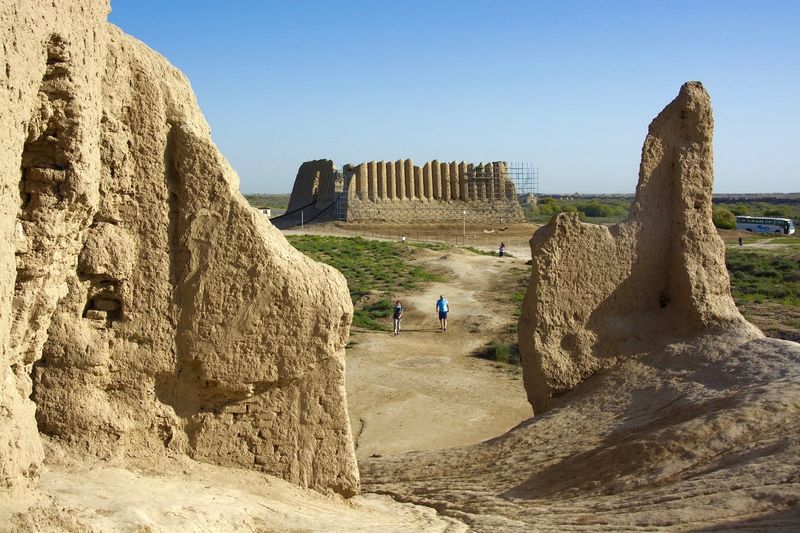
At its peak in the 12th century, Merv was the largest city on the planet. Let that sink in for a moment: a city in what is now the Turkmen desert once outranked every other urban center in the world by population.
Merv thrived as an oasis city, sitting at a point where the Murghab River made agriculture possible deep inside the Karakum Desert. Caravans traveling between China, India, and the Mediterranean depended on it as a critical water and supply stop.
The city’s bazaars were busy with artisans, merchants, and scholars for centuries.
The Mongol invasion of 1221 effectively ended Merv’s golden era, and the city never fully recovered. What remains today is a sprawling UNESCO-listed archaeological zone outside the modern city of Mary.
Visitors can explore the Sultan Sanjar Mausoleum, multiple fortress ruins, and remnants of ancient irrigation systems that once made this desert bloom with agricultural life.
5. Kashgar, China
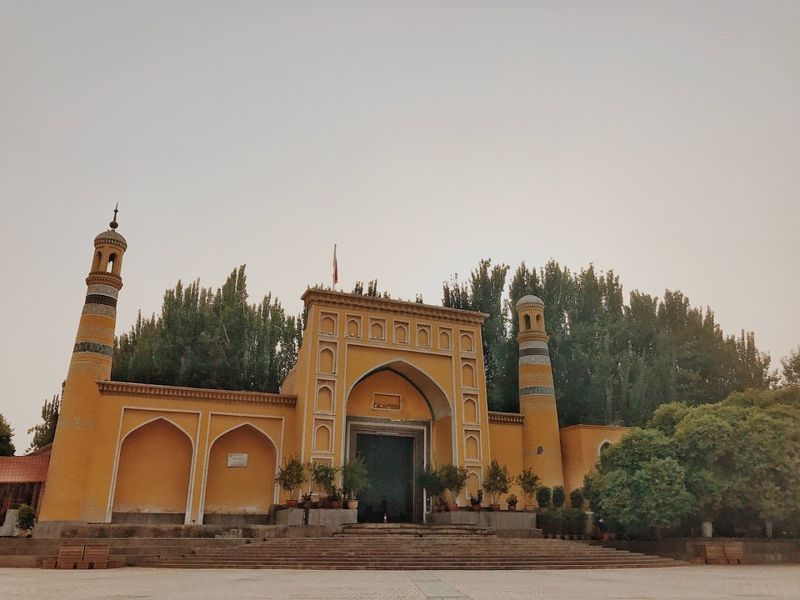
Perched near the borders of Kyrgyzstan and Pakistan, Kashgar occupies one of the most strategically dramatic positions of any city on the old Silk Road. For centuries, caravans heading east or west had to pass through this Uyghur trading city, and many of them decided to stay a while.
The Sunday Market, which actually runs most days of the week now, has been operating for roughly two thousand years. Traders once brought horses, jade, cotton, and metalwork here from across the region.
Today, the market still draws vendors and buyers from dozens of surrounding communities.
Kashgar’s old city quarter preserves traditional Uyghur mudbrick architecture, winding alleys, and a distinctive cultural identity that blends Central Asian, Persian, and Chinese influences. The Id Kah Mosque, one of the largest in China, stands at the city center and has served as a gathering point for both worship and community commerce for centuries.
Kashgar is a living document of Silk Road culture.
6. Turkistan, Kazakhstan
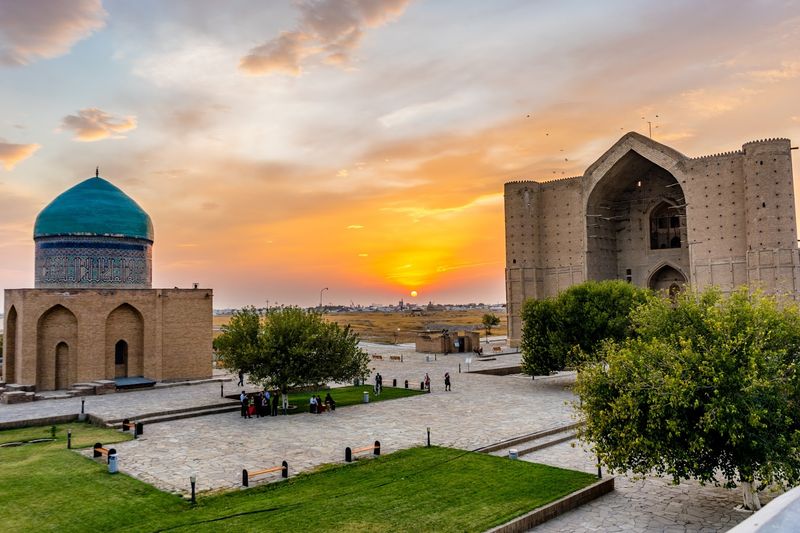
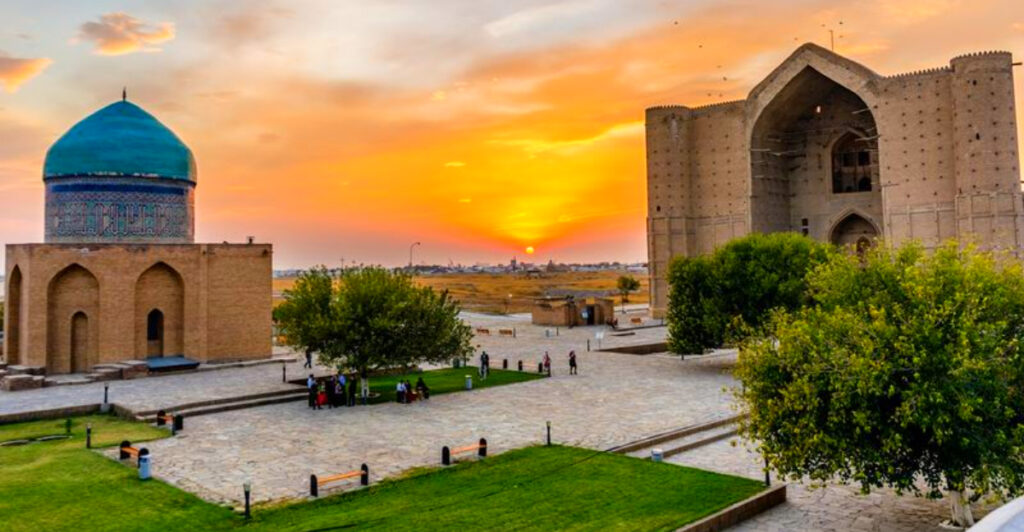
The Mausoleum of Khoja Ahmed Yasawi is so large and so ornately decorated that Tamerlane, who commissioned it in the 14th century, reportedly ran out of time to finish it before his own passing. The unfinished upper sections are still visible today, making the building a fascinating architectural time capsule.
Turkistan, formerly known as Yassy, has been inhabited for over 1,500 years. Its position on the Central Asian steppe made it both a trading hub and a spiritual destination.
Pilgrims and merchants shared the same roads, creating a city where commerce and religious devotion developed side by side.
The mausoleum became so significant in the Islamic world that three pilgrimages to Turkistan were considered equal to one journey to Mecca. That reputation drew enormous foot traffic, and foot traffic meant trade.
The surrounding bazaars grew alongside the spiritual economy, turning Turkistan into one of Kazakhstan’s most important historical cities. It remains a major pilgrimage site today.
7. Panjakent, Tajikistan
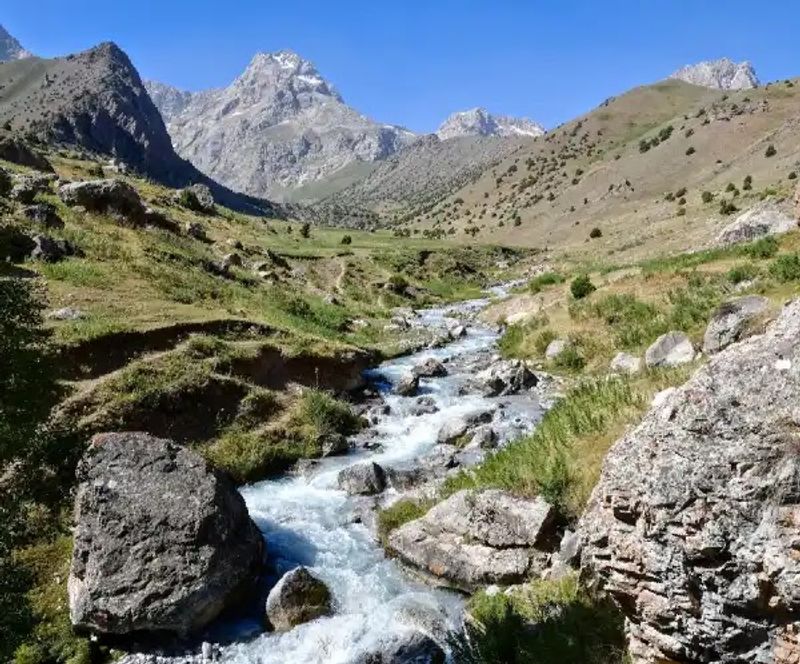
Calling a city the “Pompeii of Central Asia” is a bold claim, but ancient Panjakent backs it up with remarkable archaeological evidence. Excavations of the site have revealed detailed Sogdian wall paintings, temple ruins, and residential layouts that give historians a rare window into daily life along the Silk Road around the 5th to 8th centuries AD.
Panjakent was a prosperous Sogdian trading city long before the Arab conquests reshaped the region. The Sogdians were among the most active merchants of the ancient world, operating trade networks that stretched from China to the Byzantine Empire.
Panjakent served as one of their key urban centers.
The city was abandoned after the Arab invasion in the 8th century and gradually buried under centuries of soil, which actually helped preserve its structures remarkably well. Many of the wall paintings recovered here are now displayed in the Hermitage Museum in St. Petersburg.
The modern town of Panjakent sits just a short distance from the ancient ruins.
8. Kunya-Urgench, Turkmenistan
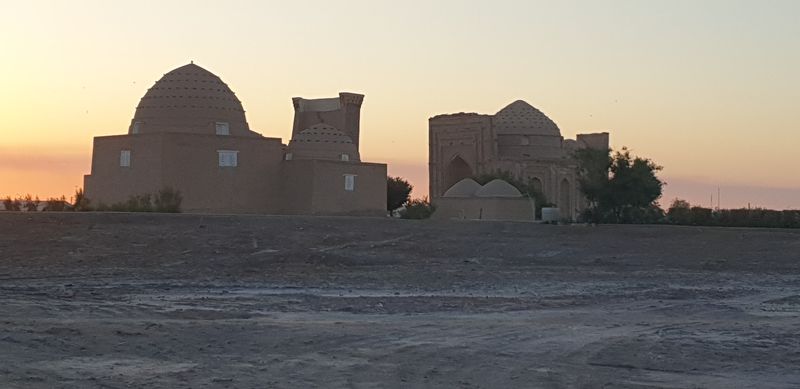
Once the capital of the Khwarezmian Empire, Kunya-Urgench was a medieval powerhouse that controlled a vast stretch of Central Asia and commanded significant influence over Silk Road commerce. At its height, it was one of the most culturally and economically active cities in the Islamic world.
The Kutlug-Timur Minaret, standing about 60 meters tall, is the highest surviving minaret in Central Asia and still dominates the flat landscape around it. Alongside it, a cluster of mausoleums marks the burial sites of rulers and scholars who shaped the region’s history for centuries.
The Mongol invasion of 1221 devastated Kunya-Urgench, and the city never regained its former scale. What survived became a UNESCO World Heritage Site, recognized for its outstanding collection of medieval Islamic architecture.
Archaeologists continue to work across the site, regularly uncovering new details about how this city functioned as a center of governance, trade, and learning during its long and eventful history.
9. Tash Rabat, Kyrgyzstan
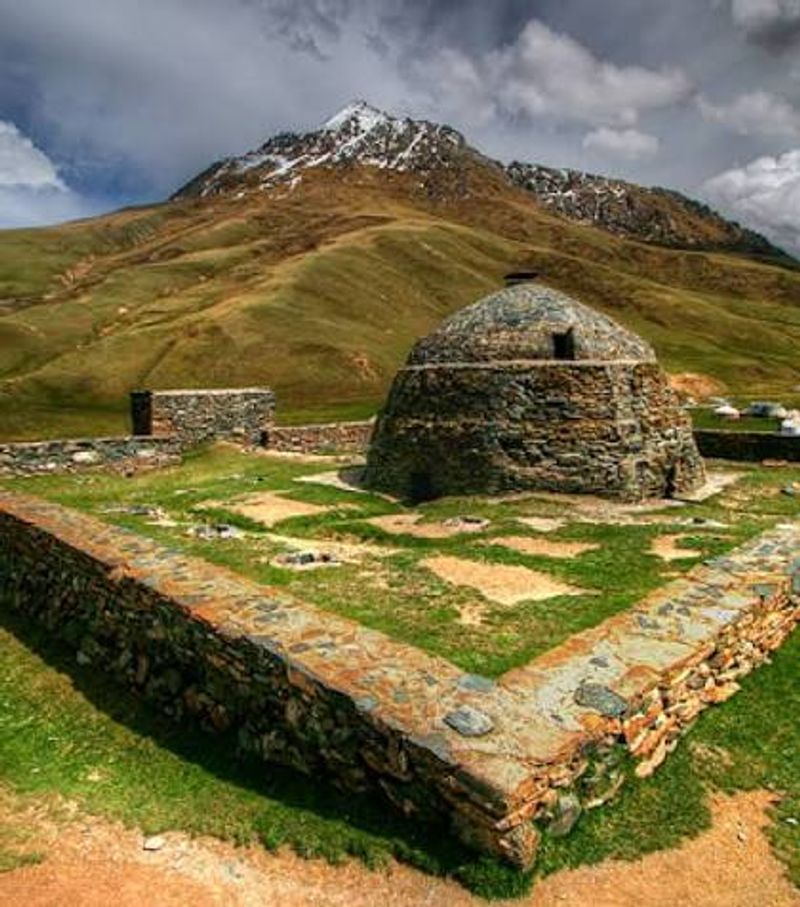
Hidden at an elevation of about 3,200 meters in the Tian Shan mountains, Tash Rabat is the kind of place that reminds you just how determined ancient traders were to move goods across the world. This stone caravanserai served as a high-altitude rest stop for Silk Road travelers braving the rugged passes of what is now Kyrgyzstan.
Built likely in the 10th century, the structure contains around 30 rooms arranged around a central domed hall. Merchants, horses, and goods all sheltered here before or after crossing the At-Bashi mountain range.
The building’s thick stone walls provided protection against both harsh weather and potential threats from the surrounding wilderness.
Tash Rabat is one of the best-preserved caravanserais in all of Central Asia, and its remote location has actually helped protect it from urban development and heavy modification over the centuries. Visitors today can reach it by jeep across open grassland, and the surrounding valley remains strikingly unchanged from how it would have appeared to exhausted Silk Road travelers centuries ago.
10. Herat, Afghanistan
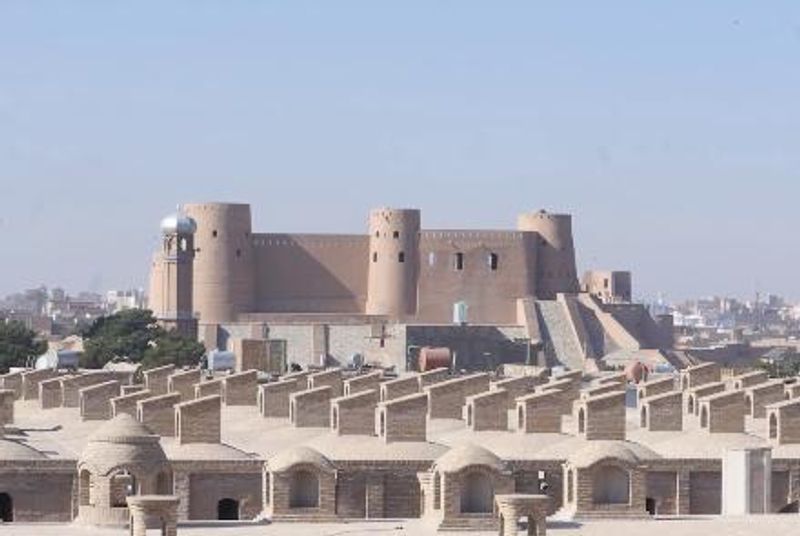
Herat has spent most of its very long history being fought over, rebuilt, and admired, often in that exact order. Founded over 2,500 years ago, this western Afghan city became one of the most culturally sophisticated urban centers in the entire Central Asian region during the Timurid period of the 15th century.
As a Silk Road hub, Herat connected trade routes running between Persia, India, and the deeper interior of Central Asia. Its bazaars handled silk, carpets, metalwork, and agricultural products, while its courts attracted poets, painters, and architects from across the Islamic world.
The ancient citadel, originally constructed during the time of Alexander the Great and significantly rebuilt over subsequent centuries, still stands at the city’s center. The Friday Mosque, with its intricate tilework, and the Musalla Complex are among the most historically significant structures in Afghanistan.
Despite centuries of conflict and reconstruction, Herat retains enough architectural evidence to confirm its former status as a true Central Asian cultural capital.
11. Osh, Kyrgyzstan
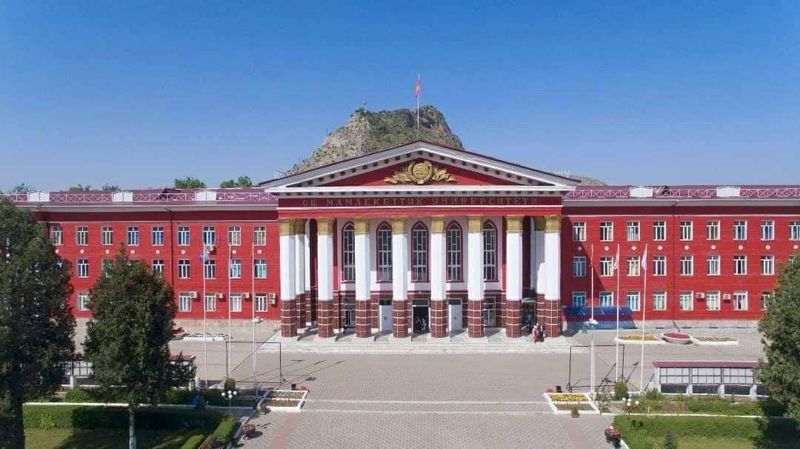
With a history stretching back at least 3,000 years, Osh holds the title of one of the oldest continuously inhabited cities in Central Asia, and it has been busy the entire time. The city developed at the edge of the fertile Fergana Valley, a geographic gift that made it a natural gathering point for farmers, traders, and travelers.
The Jayma Bazaar, which has operated for roughly 2,000 years along the banks of the Ak-Buura River, is one of the oldest markets in the region still functioning today. Traders come from across Kyrgyzstan and neighboring countries to buy and sell textiles, produce, and handmade goods, much as their ancestors did centuries ago.
Sulaiman-Too, a sacred mountain rising directly from the center of the city, was a recognized landmark for Silk Road travelers and is now a UNESCO World Heritage Site. Osh served as the eastern gateway to the Fergana Valley and a key junction for caravans moving between China and the broader Central Asian trade network.
Its markets remain genuinely active today.
12. Taraz, Kazakhstan
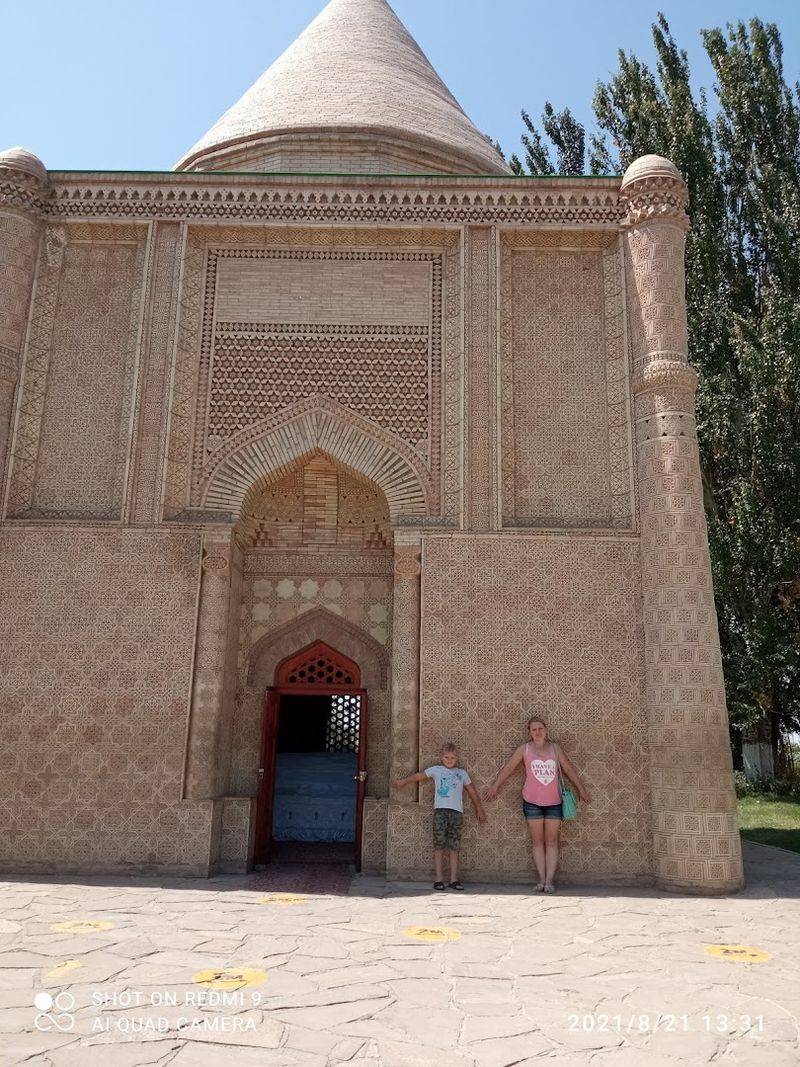
Known in ancient sources as “the town of merchants,” Taraz has been living up to that description for more than 2,000 years. Located in what is now southern Kazakhstan, the city grew into one of the most active commercial stops on the northern branch of the Silk Road.
Taraz changed hands between the Sogdians, Western Turkic Khaganate, Arab forces, and various nomadic confederations over the centuries, each group leaving traces in the city’s archaeological record. A famous 8th-century battle near Taraz, known as the Battle of Talas, saw Arab forces defeat a Tang Chinese army and is credited with spreading papermaking technology westward.
The Karakhan Mausoleum and the Aisha Bibi Mausoleum, both located near the modern city, are among the finest surviving examples of medieval Karakhanid architecture in Kazakhstan. Taraz was also where early Turkic populations first encountered Islamic teachings, making it a significant cultural crossroads beyond just its commercial importance.
13. Nisa, Turkmenistan
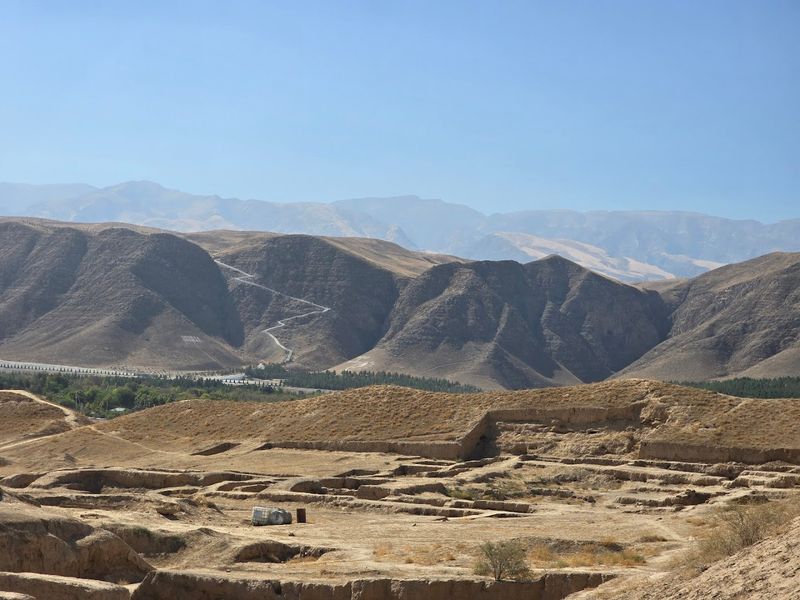
Ancient Nisa does not announce itself with towering monuments or dramatic skylines; instead, it crouches quietly in the foothills near modern Ashgabat, waiting for visitors who know what they are looking for. This UNESCO-listed site preserves the remains of the original capital of the Parthian Empire, one of antiquity’s most powerful states.
The Parthians ruled a territory stretching from eastern Turkey to eastern Iran between roughly 247 BC and 224 AD, and Nisa served as their royal ceremonial center. Excavations have uncovered ivory rhytons, elaborate sculpture fragments, and administrative records that confirm the city’s role as both a political headquarters and a node in early transcontinental trade.
Nisa actually consists of two separate sites: Old Nisa, the royal compound, and New Nisa, the residential urban area. Together they represent one of the earliest documented examples of a planned administrative city in the region.
The archaeological finds from Nisa are now split between local museums and international collections, giving researchers across multiple countries access to Parthian history.
Share this story