Thousands of years before modern construction crews and building permits, people across Southern Europe had already figured out the perfect home improvement hack: just move into the cliff. From the sun-baked hills of Andalusia to the rugged ravines of Puglia, ancient communities carved their homes, churches, and workshops directly into rock, creating villages that have outlasted empires, invasions, and centuries of weather. Some of these cave settlements are still lived in today, others have become open-air museums, and a few feel so remote that visiting them is like finding a secret history lesson tucked into the hillside. What makes these places extraordinary is not just their age, but the fact that they are still standing, still visible, and still telling their stories to anyone willing to look.
Here are 13 of the most remarkable ancient cave villages still standing across Southern Europe.
1. Guadix Cave Quarter, Guadix, Andalusia, Spain
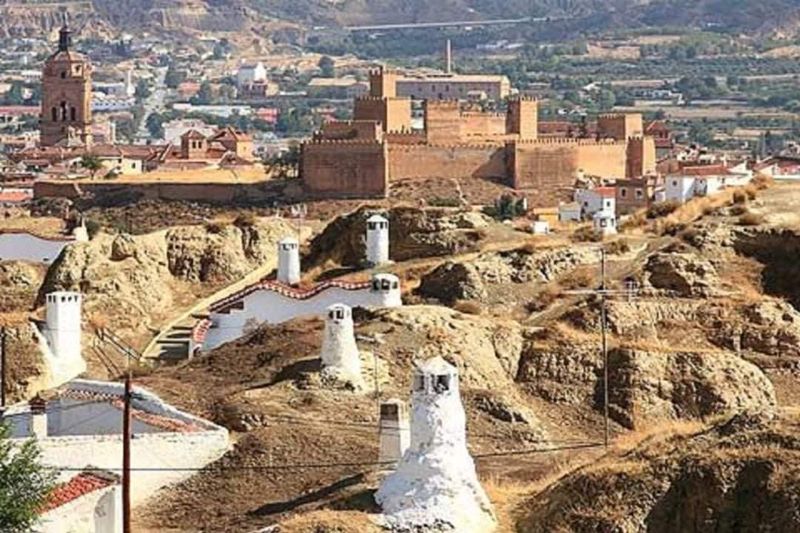
More than 2,000 people still live underground in Guadix, making it one of Europe’s largest active cave communities. The tradition dates back to the Moorish period around the 8th century, when settlers discovered that the soft volcanic hills were surprisingly easy to hollow out.
What gives the neighborhood away are the rows of white chimneys poking straight up from the ground, looking like a field of ceramic mushrooms from a distance. Each chimney marks a cave home below, complete with rooms, furniture, and modern utilities tucked inside the hillside.
The Cueva Museo, or Cave Museum, gives visitors a guided look at how these underground homes were arranged and lived in across different eras. Guadix is proof that cave living is not just a prehistoric habit. In this corner of Andalusia, it is a perfectly practical and ongoing way of life that has never gone out of style.
2. Sacromonte Caves, Granada, Andalusia, Spain
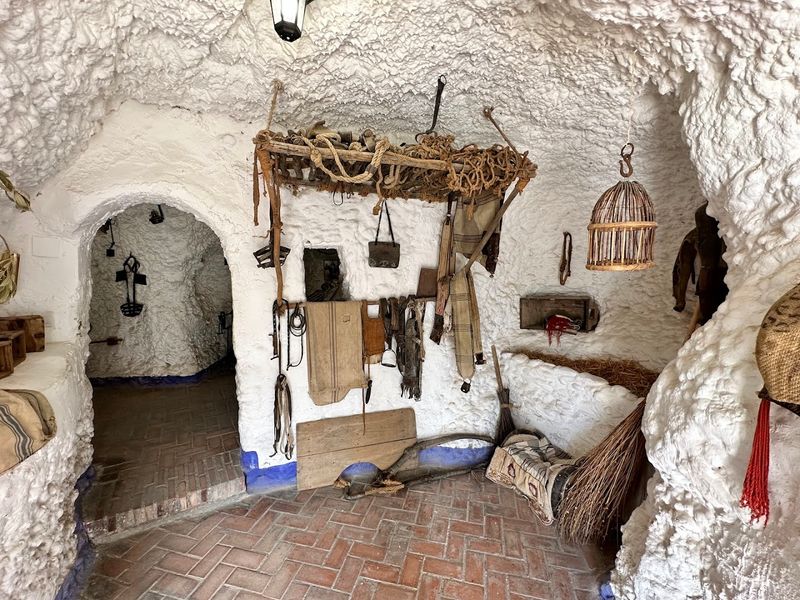
Sacromonte sits on a hill above Granada with one of the most dramatic backdrops in Spain, a direct sightline to the Alhambra palace across the valley. The cave dwellings here have been home to the Romani community for centuries, and the neighborhood became the birthplace of a distinctive style of flamenco that is still performed in the caves today.
The Museo Cuevas del Sacromonte preserves a collection of original cave rooms arranged to show how families lived, worked, and practiced trades inside the hillside. Rooms are furnished with period objects, tools, and textiles that give a clear picture of everyday cave life.
Each cave was typically expanded over generations, with new rooms dug further into the hill as families grew. Sacromonte is not a relic frozen in time. It is a living neighborhood where the past and present share the same address, just a bit further underground than most.
3. Almagruz Troglodytic Habitat, Purullena, Andalusia, Spain
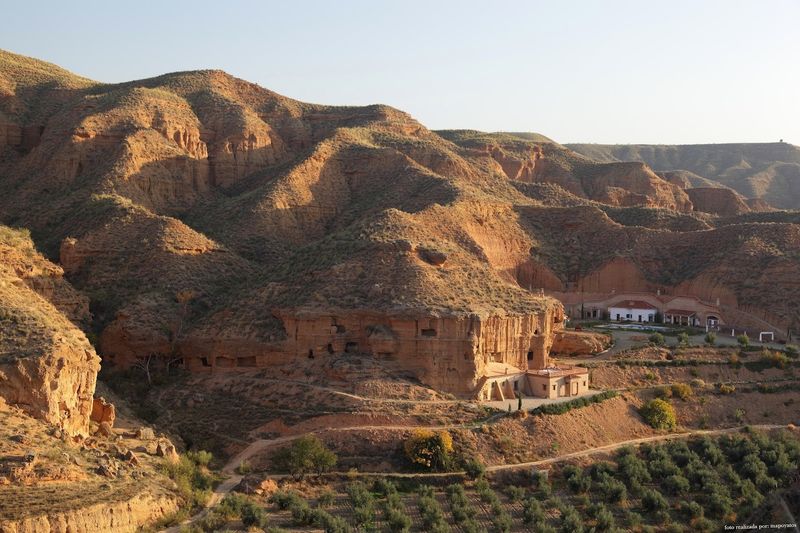
Purullena is often overshadowed by its flashier neighbor Guadix, but this small town holds one of the Granada Geopark’s most interesting educational stops. The Almagruz Troglodytic Habitat connects prehistoric settlement patterns, traditional cave-house living, and local geological history in one compact and well-explained site.
The site sits within the Granada Geopark, a protected area recognized for its volcanic landscapes and long record of human habitation. Visitors can explore cave interiors that have been adapted for interpretation, with displays explaining how early settlers chose their locations and modified natural cavities into functional homes.
For travelers who want the full cave-village story without fighting for space with tour groups, Almagruz offers a quieter and more focused experience than the bigger Andalusian destinations. It is a particularly good stop for families with curious kids or anyone who wants context before heading into the more famous cave quarters of the region.
4. Galera, Granada, Andalusia, Spain
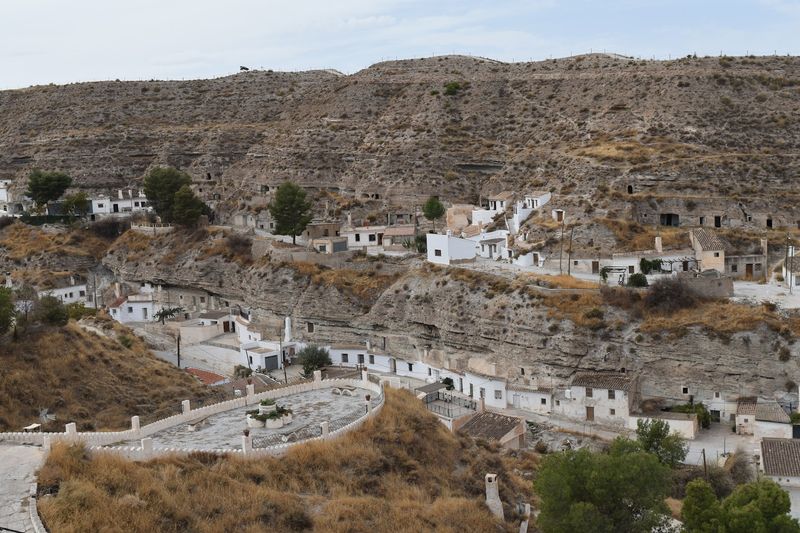
Galera sits in the Altiplano of Granada, a high plateau where the landscape looks like it belongs in a Western film, all eroded badlands, pale earth, and dramatic ridgelines. Tucked into this scenery is a village with cave homes that date back centuries and archaeological sites that go back much further.
The area around Galera contains some of the most significant prehistoric burial sites in Andalusia, including remains that give researchers clues about Bronze Age life in the region. The cave dwellings here range from simple historic hollows to renovated homes that are now rented as rural tourism accommodations.
What makes Galera stand out is the combination of wild landscape, archaeological depth, and a cave-living tradition that never fully disappeared. It feels less like a tourist attraction and more like a place that simply continued doing what it had always done, carving a life into the hillside, one generation at a time.
5. Setenil De Las Bodegas, Cádiz, Andalusia, Spain
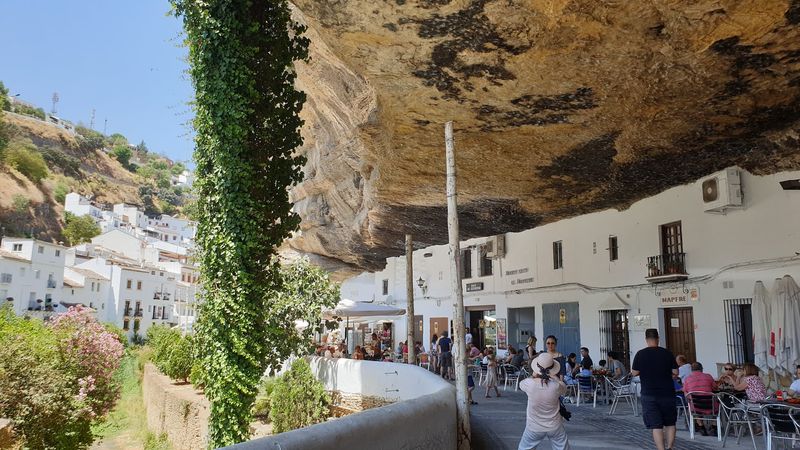
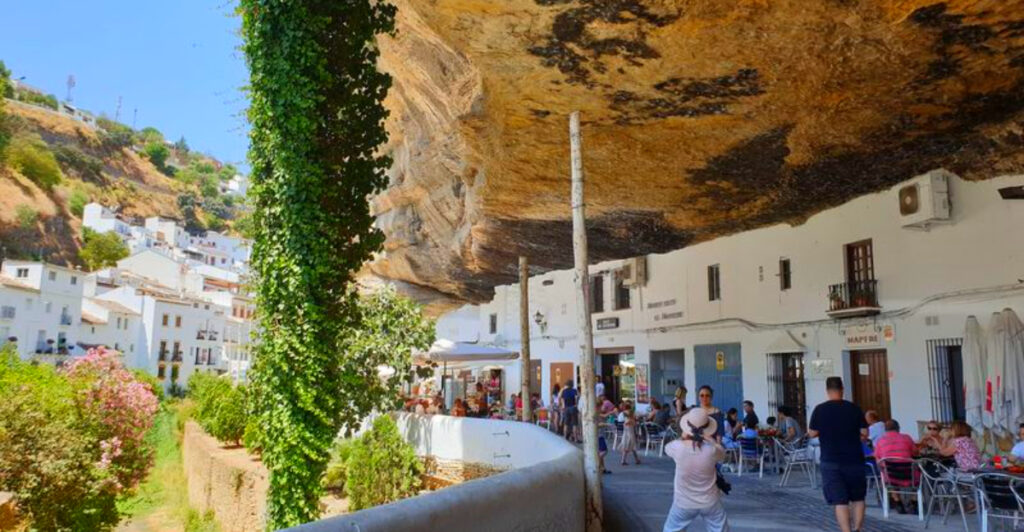
Nature built the roof and humans built everything else. That is essentially the founding principle of Setenil de las Bodegas, a village in Cádiz where houses, cafes, and shops sit tucked under enormous rock overhangs that stretch out like natural canopies over the streets below.
The rock formations are not decorative additions but structural parts of the buildings themselves, with walls and ceilings formed directly by the cliff face. People have been using these overhangs for shelter since at least the Moorish era, and the village still carries that layered sense of human stubbornness meeting geological convenience.
Setenil has become one of Andalusia’s most photographed villages, and it earns every snapshot. The main cave streets, Calle Cuevas del Sol and Calle Cuevas de la Sombra, run parallel beneath the rock and give the village one of the most genuinely unusual street layouts in all of Spain.
6. Grotte Di Zungri, Zungri, Calabria, Italy
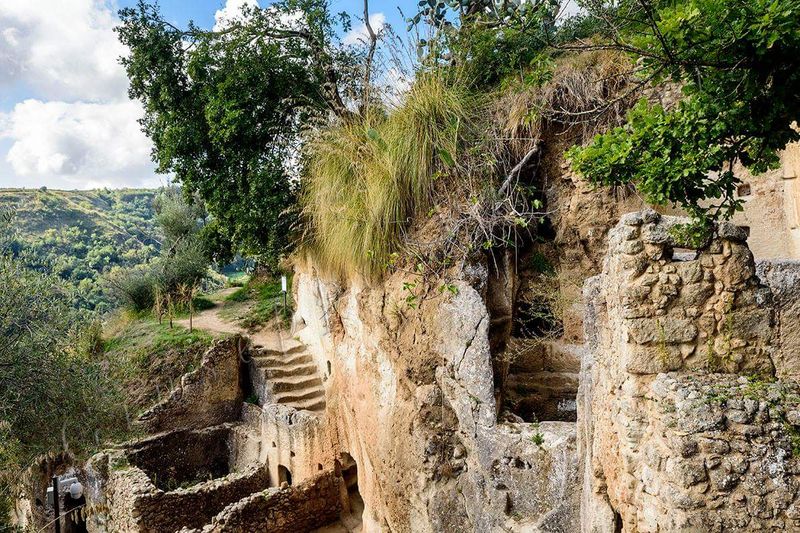
Most visitors to Calabria head straight for the Tropea coastline and never realize there is a hidden rock-cut settlement a short drive inland. The Grotte di Zungri form one of southern Italy’s most complete cave villages, with dozens of carved spaces arranged across a hillside of pale stone.
The settlement is believed to have been used from the Byzantine period onward, with caves serving as homes, storage rooms, stables, and gathering spaces for the local farming community. A small rural museum on site explains the agricultural life that surrounded and supported the cave village for centuries.
The site has well-maintained paths that connect the different levels and cave clusters, making it easy to explore without a guide. The Grotte di Zungri rewards the effort of finding it with a genuinely quiet and atmospheric experience, the kind of place that feels like a real discovery precisely because it is not on everyone’s itinerary.
7. Vitozza, Sorano, Tuscany, Italy
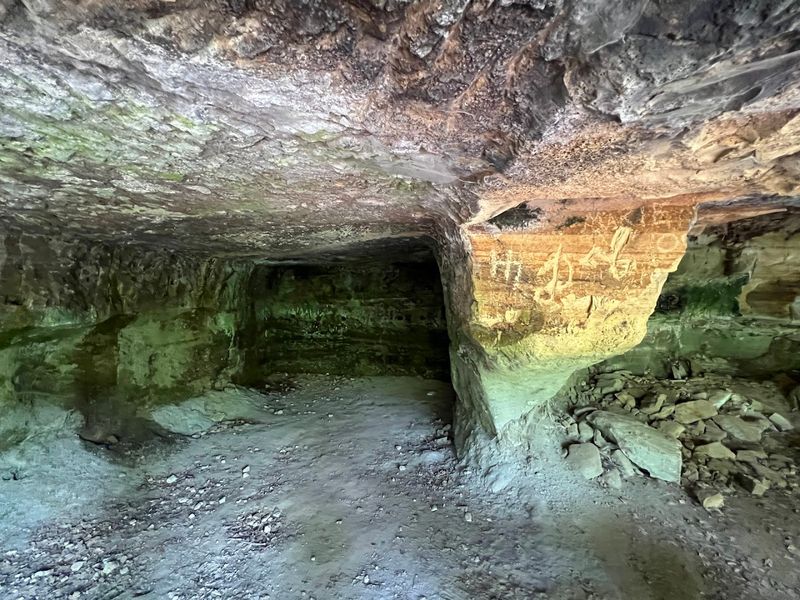
With more than 200 caves carved into golden tuff rock, Vitozza is one of Italy’s largest and least-visited cave settlements, and that combination of scale and obscurity makes it genuinely special. The site sits near Sorano in Tuscany’s Maremma region, an area better known for wild boar and medieval towers than prehistoric housing developments.
The caves served multiple purposes over the centuries, functioning as homes, storage spaces, animal shelters, and water collection systems. Some openings still show carved niches, door jambs, and drainage channels that reveal how carefully the inhabitants designed their underground spaces.
A well-marked trail runs through the woodland above and around the cave complex, connecting Vitozza to the nearby ruins of a medieval fortress. The walk takes roughly an hour at a relaxed pace and passes enough carved stone details to keep anyone with an interest in history stopping every few minutes to look more closely at what the rock still holds.
8. Chiafura, Scicli, Sicily, Italy
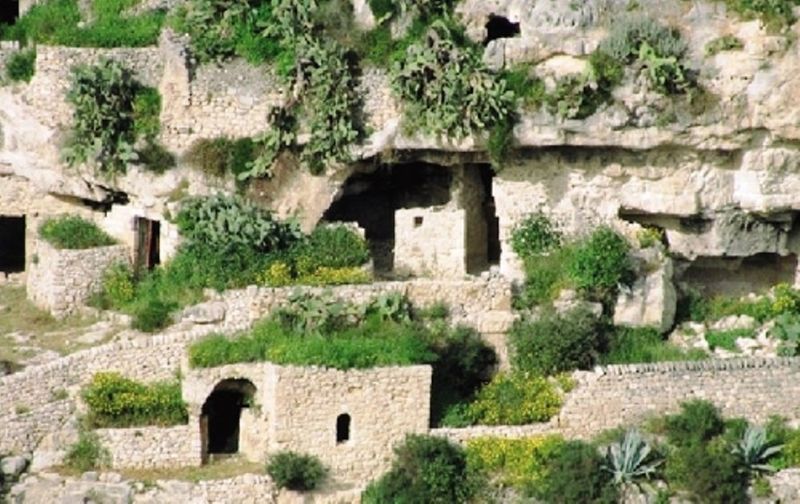
Above the Baroque rooftops of Scicli, a different and much older city clings to the hillside. Chiafura is a cave quarter that once housed a significant portion of Scicli’s population, with dwellings carved into the pale limestone on three sides of the hill that overlooks the town.
Residents lived in Chiafura until the 1950s and 1960s, when government relocation programs moved them into the modern town below. The caves were abandoned but not destroyed, and today the site functions as an open-air archaeological and ethnographic area that visitors can walk through freely.
The views from Chiafura over Scicli and the surrounding valley are genuinely impressive, and the contrast between the carved cave openings above and the ornate Baroque church facades below tells the story of Sicily’s layered history better than any guidebook could. Chiafura is a reminder that Scicli has been building its identity on this hillside for a very long time.
9. Sperlinga Rock Village, Sperlinga, Sicily, Italy
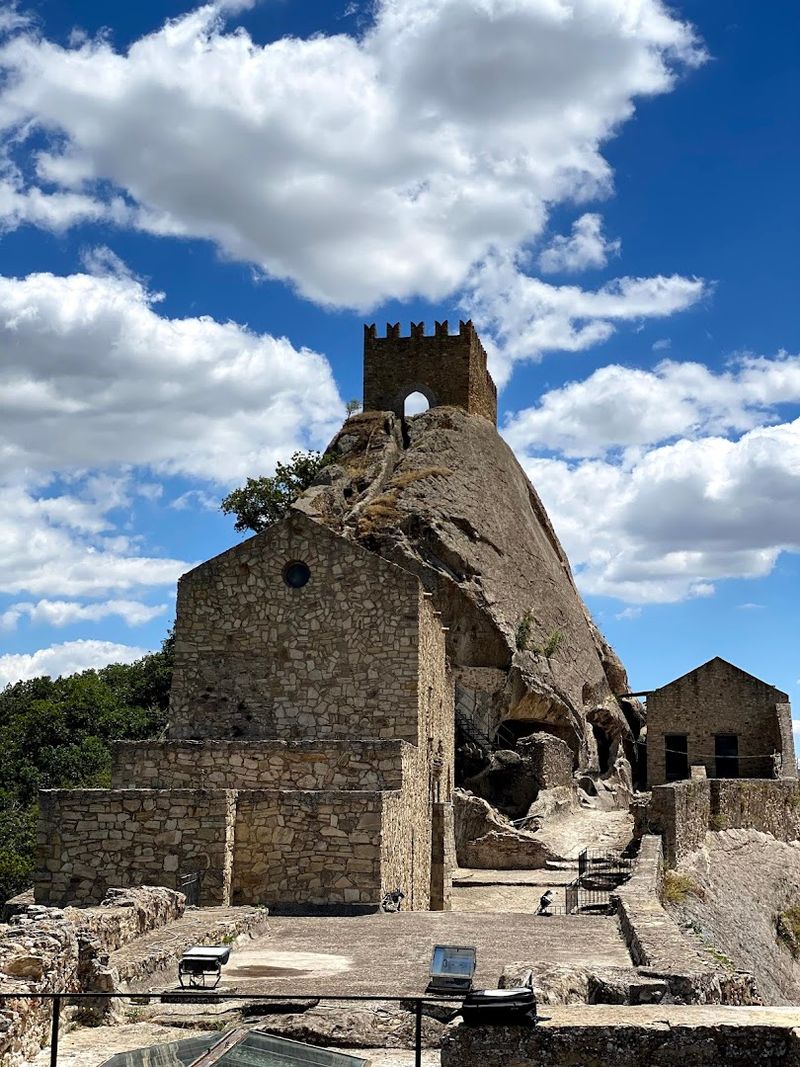
Sperlinga has a motto that has been carved into the rock of its castle for centuries: “Quod Siculis placuit sola Sperlinga negavit,” meaning Sperlinga alone refused what pleased the Sicilians. The reference is to the Sicilian Vespers of 1282, and it hints at a town that has always done things its own way.
Below the famous rock-cut castle, around 50 cave dwellings are connected by stone steps and narrow paths, forming a compact troglodyte village that was inhabited well into the 20th century. Several of the caves have been converted into an ethnographic museum displaying tools, furniture, and household objects used by the families who lived there.
The combination of the castle above and the cave village below creates a site with two distinct layers of history occupying the same piece of rock. Sperlinga is not widely advertised, which makes arriving there feel like finding something the rest of Sicily quietly kept to itself.
10. Gravina In Puglia, Bari, Puglia, Italy
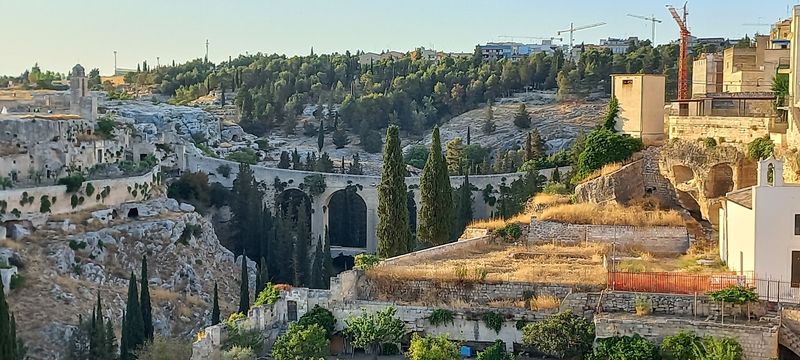
Gravina in Puglia has one of the most dramatic settings of any town in southern Italy, built above a deep ravine whose walls are filled with rock-cut churches, cave dwellings, and old stone paths that connect the upper town to the valley below. The ravine, called the Gravina, gives the town both its name and its defining character.
The cave churches are particularly impressive, with frescoes and carved altars still visible inside several of the rock-hewn interiors. The most famous is the Church of San Michele dei Grotti, a two-level cave church that was used continuously for centuries and still draws visitors today.
A medieval stone bridge spans the ravine and connects the historic center to the cave-church district, making the whole area walkable in an afternoon. Gravina in Puglia belongs to the same tradition of carved-from-the-earth towns that defines this part of Italy, but its ravine setting gives it a scale and drama that sets it apart from many of its neighbors.
11. Villaggio Rivolta, Ginosa, Puglia, Italy
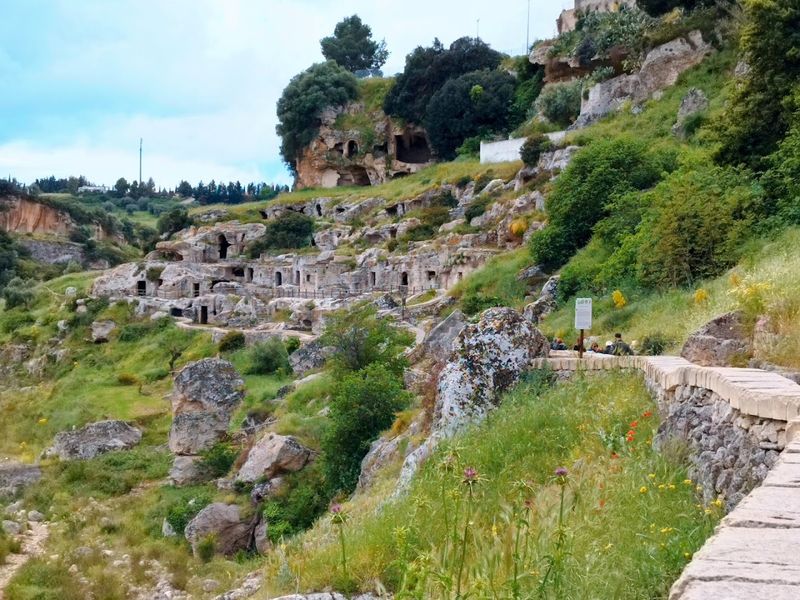
Sixty-six caves arranged across five levels of a limestone ravine make Ginosa’s Rivolta village one of Puglia’s most structurally impressive cave settlements. The organization of the site is remarkable, with paths, steps, and openings arranged in a pattern that suggests careful community planning rather than random digging.
Rivolta was inhabited from the Byzantine period through the medieval era and was gradually abandoned as the population moved to the town above. Today the site is accessible to visitors, and the layered arrangement of caves reveals how families expanded their homes horizontally and vertically into the rock as the community grew over generations.
The ravine setting adds a natural drama to the visit, with the cave openings framed by pale rock walls and patches of vegetation that have reclaimed parts of the old paths. Rivolta is not a rushed stop. It rewards patient exploration, because each level of the settlement has its own details and surprises waiting to be found.
12. Massafra Rupestrian Village, Massafra, Puglia, Italy
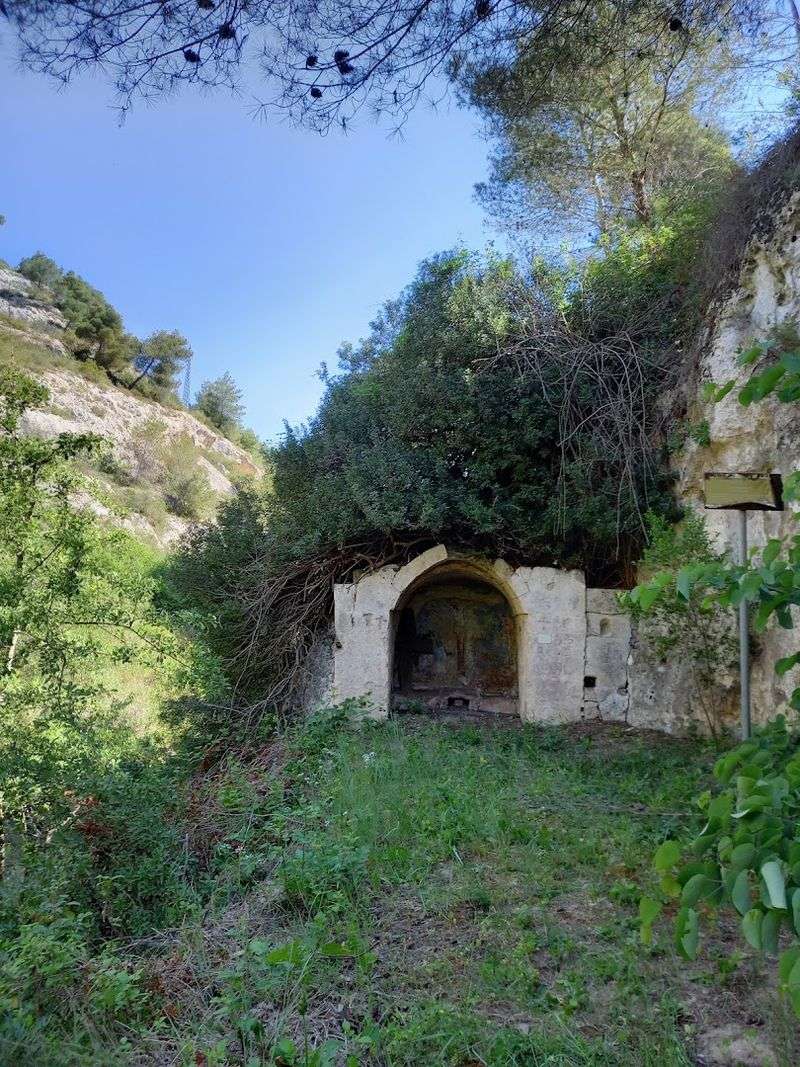
Massafra sits above a pair of deep ravines that slice through the town like natural moats, and inside those ravines is a world of carved rock churches, cave dwellings, and old settlement traces that most visitors to Puglia never find. The rupestrian heritage of Massafra is extensive, with more than 40 rock-cut churches documented in the surrounding area.
The Santuario della Madonna della Scala is one of the most visited cave churches, reached by a long staircase that descends into the ravine and opens into a carved interior with a Byzantine-style fresco. The contrast between the busy modern town above and the ancient carved world below is one of Massafra’s most striking qualities.
Unlike more polished heritage sites, Massafra has a raw and uneven quality to its cave districts that feels authentic rather than curated. Exploring the ravines here means accepting a bit of uneven terrain in exchange for some of Puglia’s most honest and underappreciated rock-cut history.
13. La Roque Saint-Christophe, Peyzac-Le-Moustier, Nouvelle-Aquitaine, France
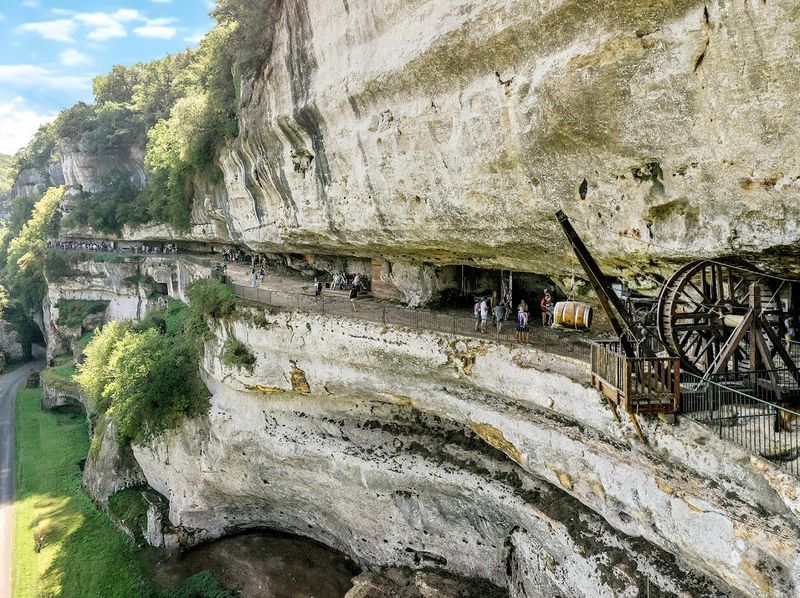
Carved into a limestone cliff nearly one kilometer long and rising 80 meters above the Vezere River, La Roque Saint-Christophe is one of the largest and longest-occupied troglodyte sites in Europe. Archaeological evidence shows human presence here stretching back roughly 55,000 years, from Neanderthals through to medieval communities.
The site has five terraces of cave spaces, some natural and some enlarged by human hands, which were used as homes, workshops, chapels, and defensive positions at different points in history. Reconstructed wooden structures on several terraces help visitors understand how the cave spaces were adapted and fitted out for daily life.
The Vezere River valley below is a UNESCO World Heritage corridor known for its concentration of prehistoric sites, and La Roque Saint-Christophe sits comfortably at the center of that story. It is one of those places where the sheer span of human time represented in a single cliff face makes even a brief visit feel quietly significant.
Share this story