 Unearth The Voyage
On a university campus in Michigan, there’s a building where you can stand inches from an ancient Egyptian mummy, study a 2,000-year-old coin, and explore artifacts older than most modern nations. Many students pass it every day without realizing what’s inside.
The Kelsey Museum of Archaeology at the University of Michigan packs an astonishing amount of history into a small space. With free admission and a collection of more than 100,000 artifacts, it offers everything from mummies and coins to hidden study drawers and even a full-scale room replica from ancient Pompeii.
Where You Will Find It: Address, Campus Setting, and First Impressions
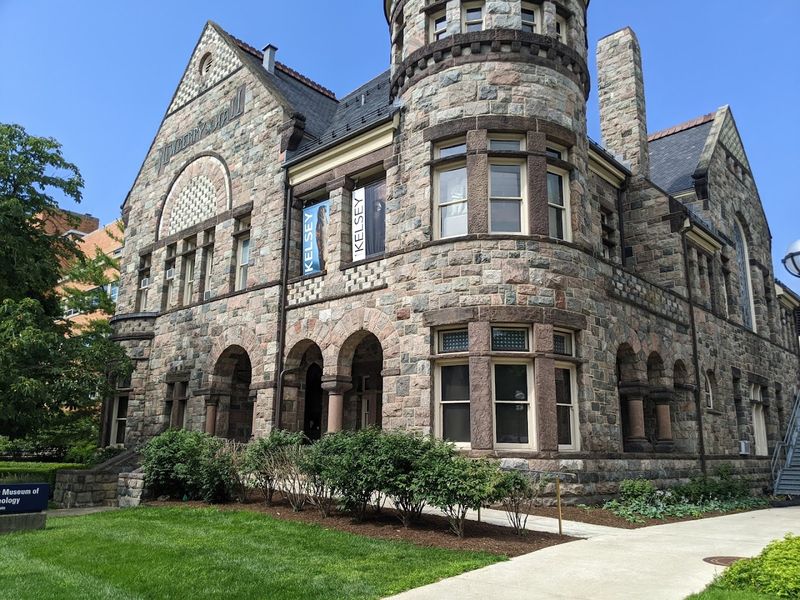
The moment you spot the building at 434 S State St, Ann Arbor, MI 48109, something about its stone facade and arched windows tells you this is not a typical campus stop. The Kelsey Museum of Archaeology sits right on the University of Michigan’s central campus, and the architecture alone is worth a slow look before you even step inside.
The surrounding neighborhood is full of beautiful older buildings with sculpted details and carefully kept grounds, which sets a fitting mood for a place dedicated to ancient civilizations. Parking is available in a garage about a block away, so the logistics are manageable even on a busy weekday.
The museum is open Tuesday through Friday from 10 AM to 4 PM and on weekends from 11 AM to 4 PM, with Monday being the one day it stays closed. You can also reach the team at 734-764-9304 if you want to plan ahead.
First impressions here tend to stick around long after you leave.
A Collection That Defies Its Square Footage: 100,000-Plus Artifacts
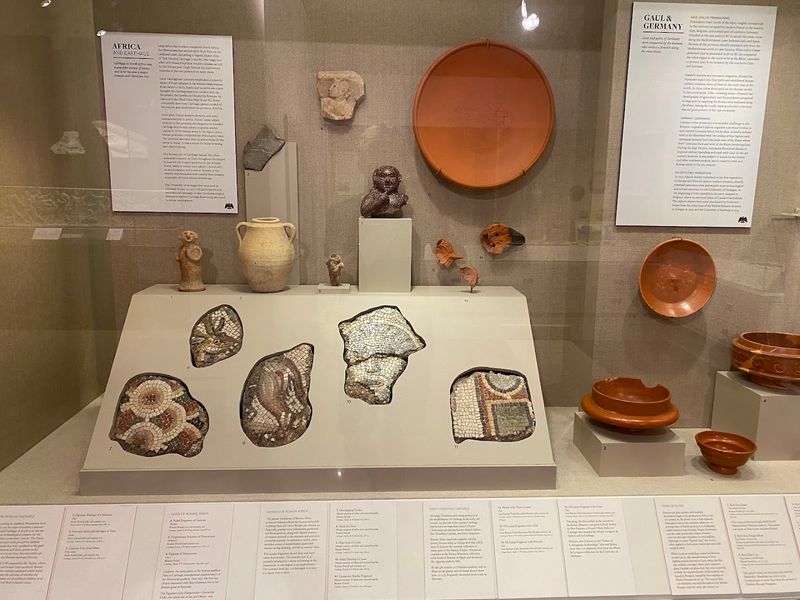
Numbers can feel abstract until you are standing in a room knowing that what is visible around you represents only a small slice of a collection that exceeds 100,000 individual objects. The Kelsey Museum holds one of the most significant archaeological collections in the entire United States, built up over more than a century of academic fieldwork and research.
The artifacts span ancient and medieval civilizations across the Mediterranean and Near East, covering cultures from ancient Egypt, Greece, Rome, Mesopotamia, and beyond. Because the physical museum space is compact and intimate, only a carefully curated selection is on view at any given time, which means the collection keeps rotating and rewarding repeat visits.
What makes this scale even more impressive is that the museum operates as part of the University of Michigan’s academic mission, meaning researchers and students actively work with these objects. The public gets to peek into a living archive of human history, not just a static display.
Face to Face with Ancient Egypt: The Mummies and Cartonnage
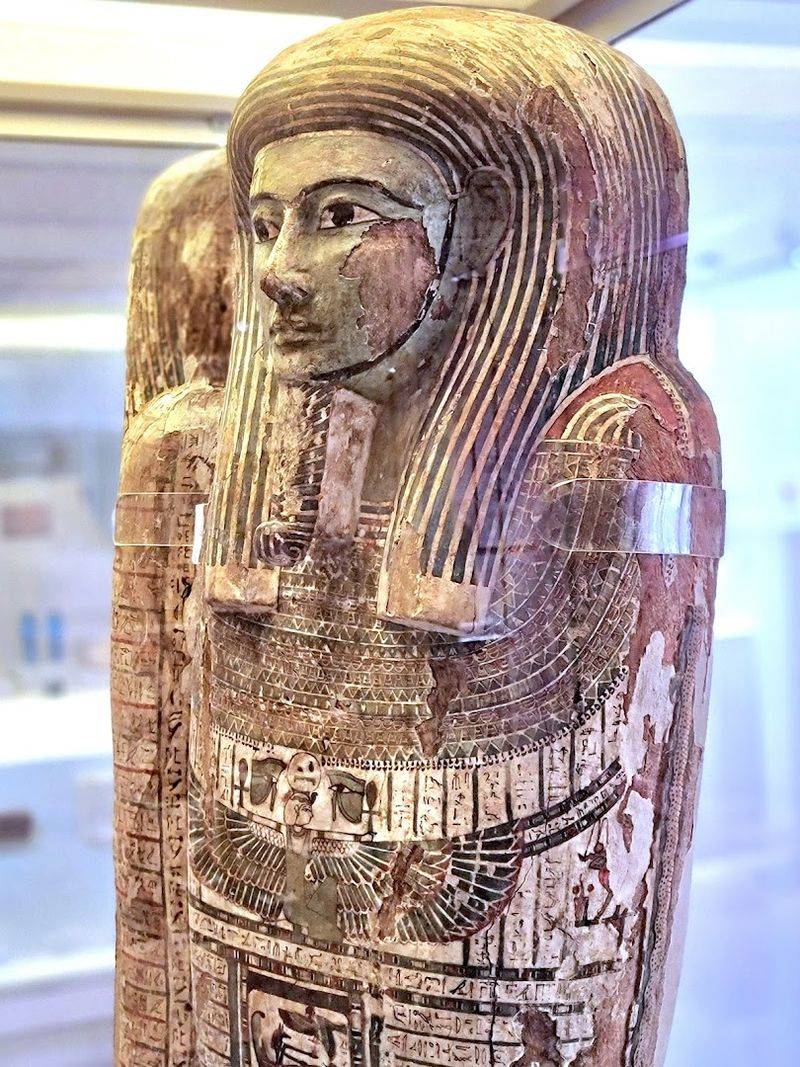
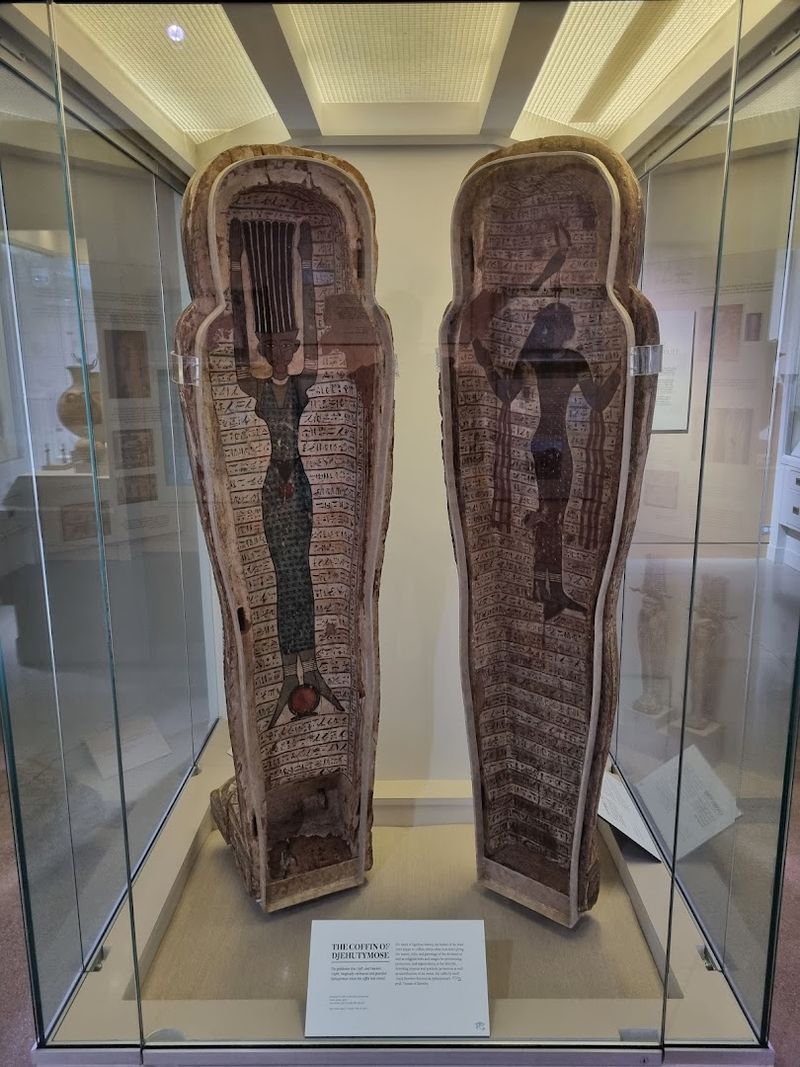
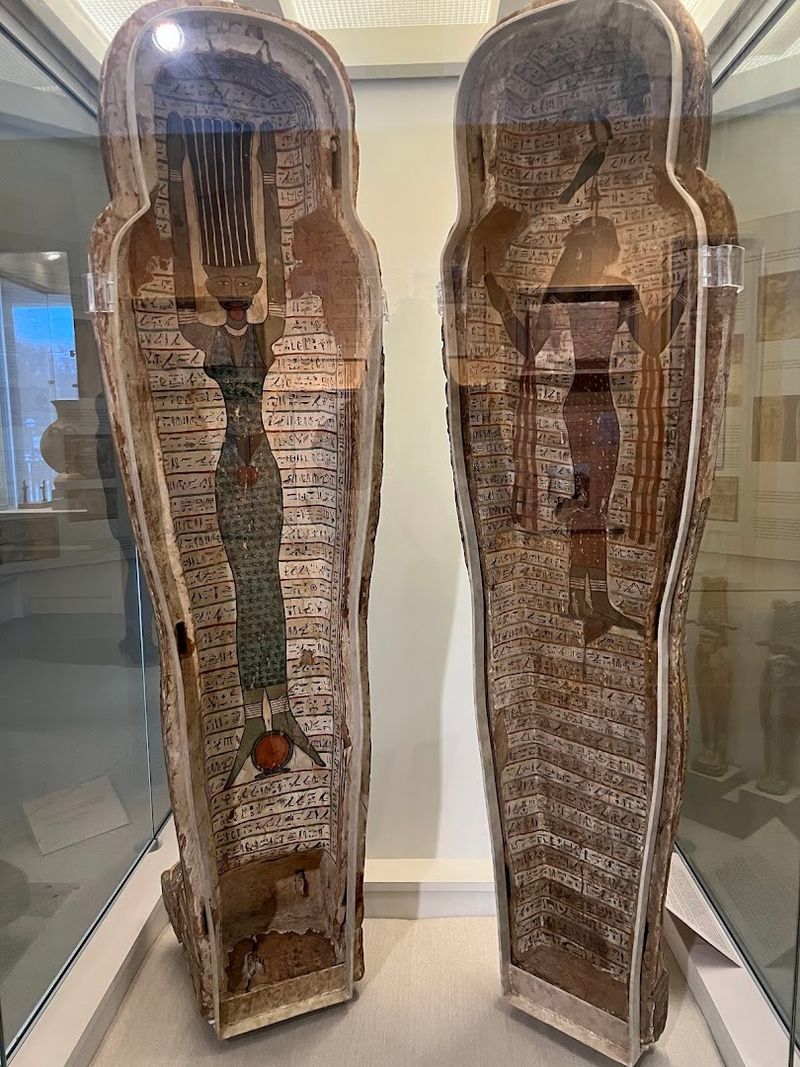
There is something genuinely humbling about standing in front of an actual ancient Egyptian mummy. The Kelsey Museum holds several, and they are displayed with enough context and care that the experience feels respectful rather than sensationalized.
Among the most visually striking pieces are examples of painted and gilded cartonnage, which is the layered material ancient Egyptians used to create decorative coverings for the wrapped remains of the deceased. The colors on some of these pieces are still vivid, which is a reminder that ancient people had a rich visual culture that time has only partially eroded.
One crowd favorite is the cat mummy, a small but fascinating object that speaks to how broadly the ancient Egyptians extended their practices of preservation and reverence. A child mummy is also part of the collection, and it tends to leave a quiet impression on visitors of all ages.
History here is not distant; it is right there, a few inches of glass away.
2,000-Year-Old Coins and the Town of Karanis
Coins are tiny time capsules, and the Kelsey Museum has a remarkable number of them. A significant portion of the coin collection comes from Karanis, a Graeco-Roman Egyptian town that University of Michigan archaeologists excavated extensively in the early twentieth century.
These coins date back roughly 2,000 years and offer a surprisingly personal window into daily economic life in the ancient world. The faces of rulers, the symbols of empires, and the wear patterns from countless hands passing them along are all preserved in metal that has outlasted the civilization that minted it.
Coin collecting might sound like a niche interest, but standing over a case of these objects changes the conversation quickly. Each one was once someone’s paycheck, market purchase, or tax payment.
The Kelsey’s numismatic holdings are studied by scholars from around the world, but they are also just genuinely cool to look at up close, especially when you realize how long they have been in existence.
The Hidden Drawers: A Museum Trick Worth Knowing
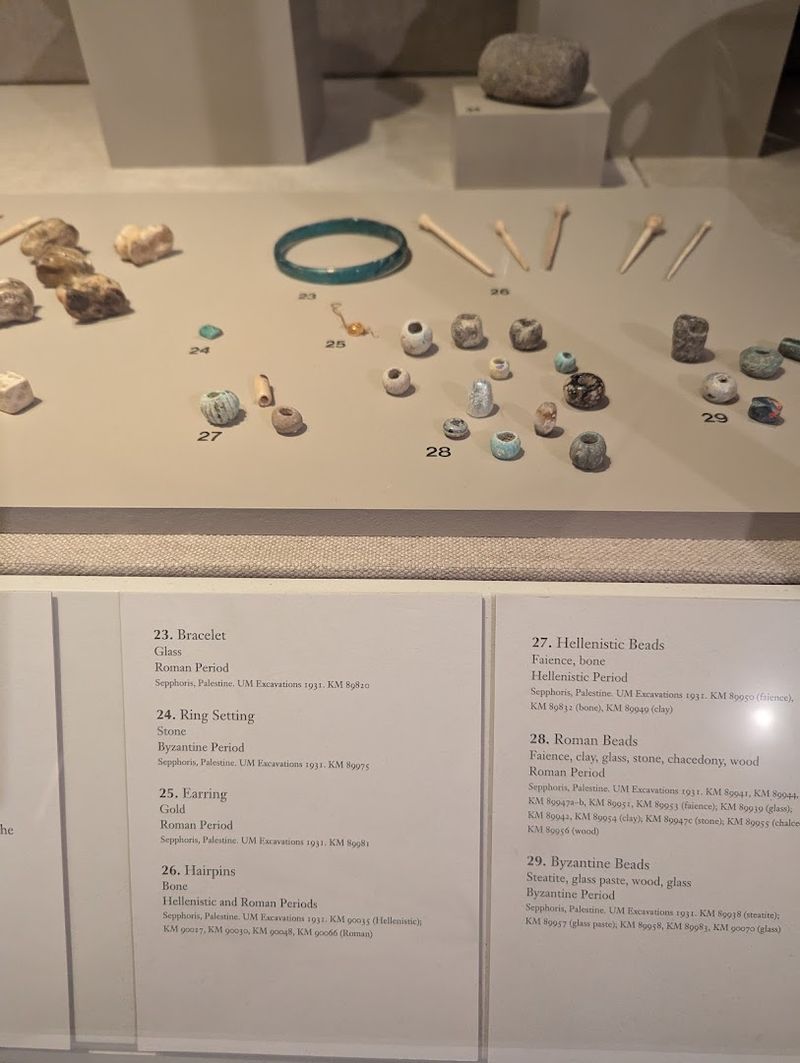
Here is a piece of advice that almost every enthusiastic visitor passes along after their first trip: pull open the drawers beneath the display cases. Many of the cases in the Kelsey Museum have pull-out drawers built right into their bases, and those drawers are filled with additional artifacts that are not immediately visible when you first scan the room.
It is a clever design choice that rewards curiosity and gives the museum an almost treasure-hunt quality. Children especially tend to love this feature, but plenty of adults have been equally surprised to discover what is tucked away just below eye level.
Some of the most interesting smaller objects, including beads, tools, and decorative fragments, live in those drawers.
The museum provides scavenger hunt sheets for younger visitors, which turns the drawer-opening into a structured adventure. Even without the sheet, though, the simple act of pulling open a drawer and finding a 2,000-year-old object sitting quietly inside is its own reward, and one that is hard to forget.
The Villa of the Mysteries: A Room Straight Out of Pompeii
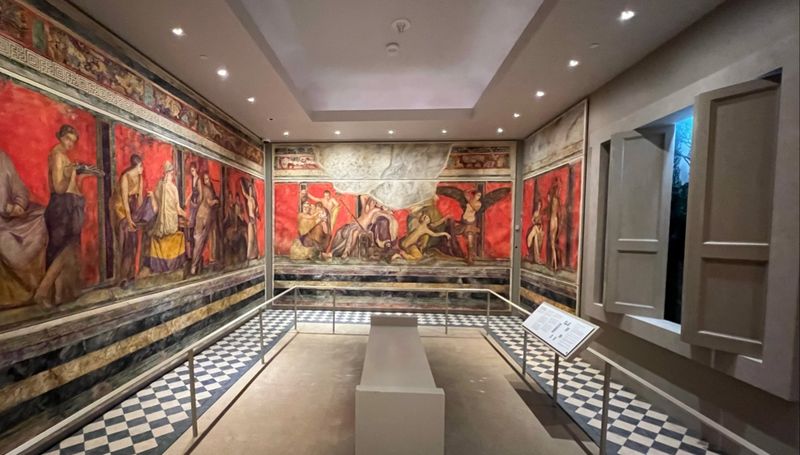
One of the most talked-about features of the Kelsey Museum is a reproduction of the Room of the Mysteries from the Villa of the Mysteries in Pompeii. It is built to approximately five-sixths scale and takes up a substantial portion of the museum’s floor plan, which gives it an immediate physical presence that photographs cannot fully capture.
The room is famous in art history circles for its dramatic, floor-to-ceiling painted scenes depicting figures engaged in what many scholars interpret as ritual or ceremonial activity. The reproduction at the Kelsey brings those murals to life in a way that lets you understand the sheer scale and ambition of Roman decorative art.
What makes this reproduction particularly interesting is the story of how it came to be, including the painstaking research into ancient pigments and painting techniques that went into recreating it. History, it turns out, is a lot more colorful and vibrant than most textbooks suggest, and this room makes that point better than any caption could.
Pottery, Glasswork, and the Craftsmanship of Ancient Hands
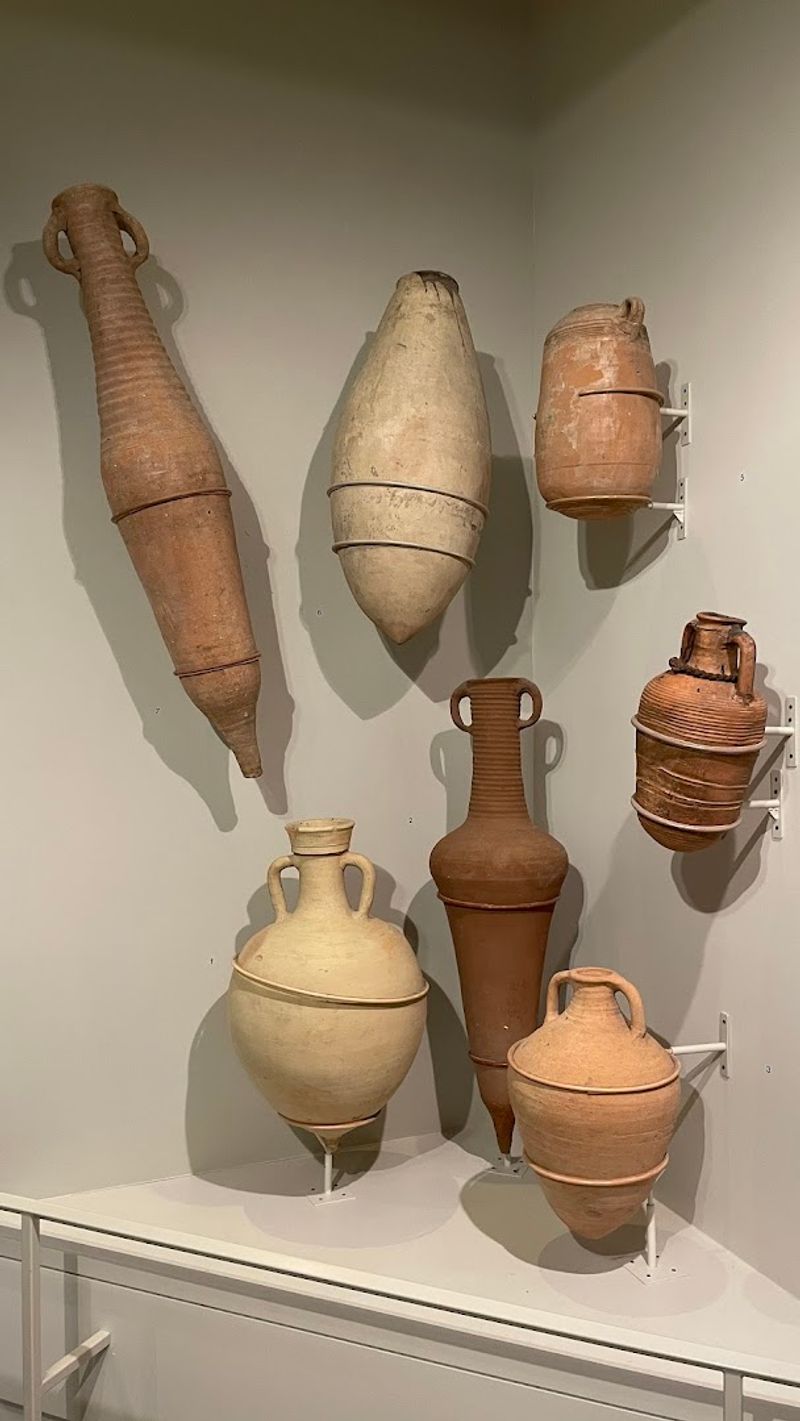
The pottery and glasswork collections at the Kelsey are the kind that make you stop and reconsider what ancient people were actually capable of. Amphorae, the large two-handled storage vessels used throughout the ancient Mediterranean world, are displayed in remarkable condition, with color and surface texture that feel almost fresh considering their age.
The glasswork is equally striking. Ancient glassblowing techniques produced vessels of surprising delicacy and beauty, and several examples in the collection show just how sophisticated those techniques were thousands of years ago.
Anyone with even a passing interest in how things are made will find a lot to appreciate here.
Beyond glass and pottery, the museum also holds examples of metalwork, carved objects, and gemstone settings that speak to the full range of ancient material culture. Each piece carries the fingerprints, metaphorically speaking, of the craftsperson who made it, and that human connection across millennia is exactly what makes a visit to the Kelsey feel like more than a history lesson.
Mesopotamia, Greece, and Rome All Under One Roof
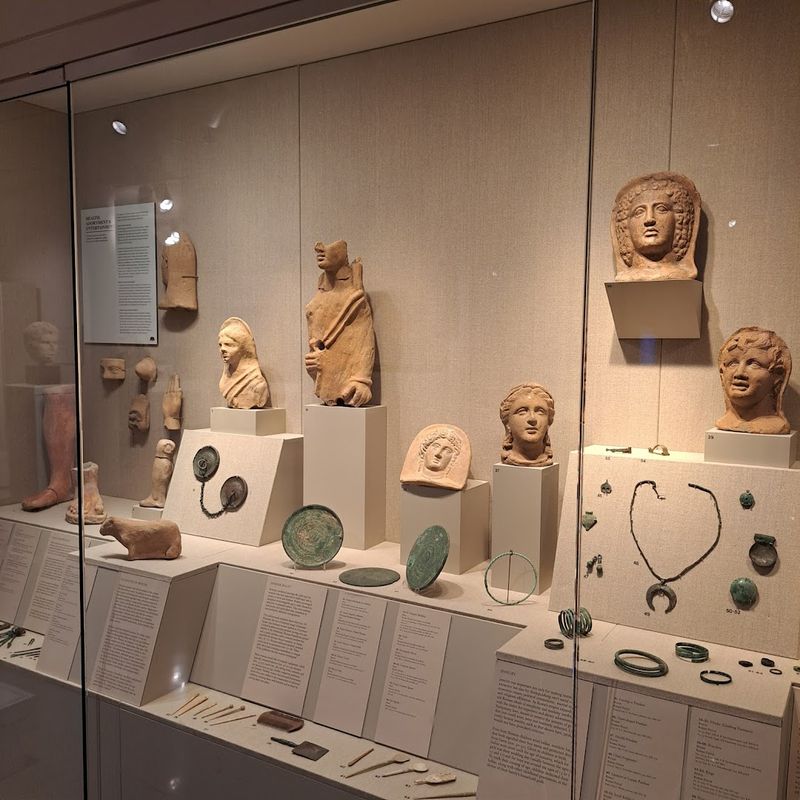
Not many museums can claim to cover Babylonian clay tablets, Greek sculpture fragments, and Roman everyday objects in the same building, but the Kelsey does exactly that. The geographic and chronological sweep of the collection is genuinely broad, spanning thousands of years and multiple continents worth of ancient civilization.
The Mesopotamian holdings include objects that connect directly to some of the earliest known writing systems and urban cultures in human history. The Greek and Roman sections fill in the story of how those earlier civilizations influenced the world that came after them.
Moving through the galleries, you get a loose but satisfying sense of how one culture borrowed from, competed with, and built upon another.
The museum is transparent about the origins of its pieces, which adds an extra layer of trust and academic credibility to the experience. Knowing where an object came from, how it was excavated, and what its original context was makes each artifact feel like a real piece of evidence rather than just a decorative curiosity on a shelf.
Free Admission and the Donation Model That Works
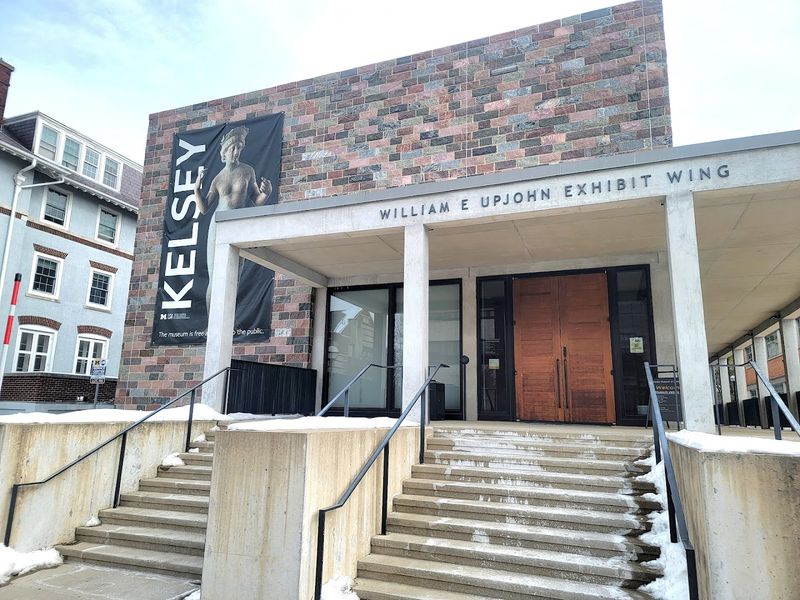
Free admission is a phrase that tends to get buried in fine print, but at the Kelsey Museum, it is genuinely straightforward. Entry is free, donations are accepted and appreciated, and there is no pressure either way.
For a collection of this caliber, that policy feels almost startlingly generous.
The donation model works because the museum benefits from its connection to the University of Michigan, which supports it as an academic and public resource. That arrangement allows the Kelsey to focus on quality of experience rather than ticket revenue, and the result is a museum that feels welcoming rather than transactional.
Families, students, and solo visitors all tend to show up here with different expectations and leave equally satisfied. A couple of hours is usually enough to see everything on display, though the experience tends to stretch longer once you start opening drawers, reading the detailed information signs, and pausing over objects that keep pulling your attention back.
Some of the best things in life really do come without a cover charge.
Family-Friendly Features: Scavenger Hunts and Kid-Sized Curiosity
Bringing kids to a museum full of ancient artifacts might sound like a recipe for restless energy, but the Kelsey Museum handles it well. The staff provides scavenger hunt sheets designed specifically for younger visitors, turning the gallery walk into an active search rather than a passive stroll.
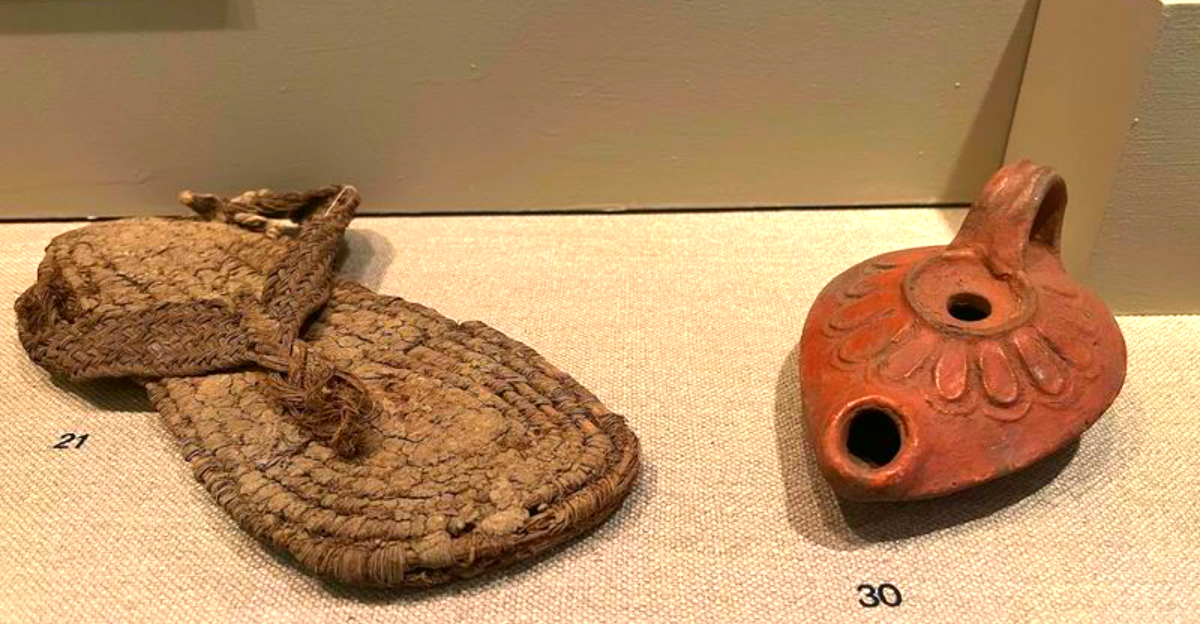
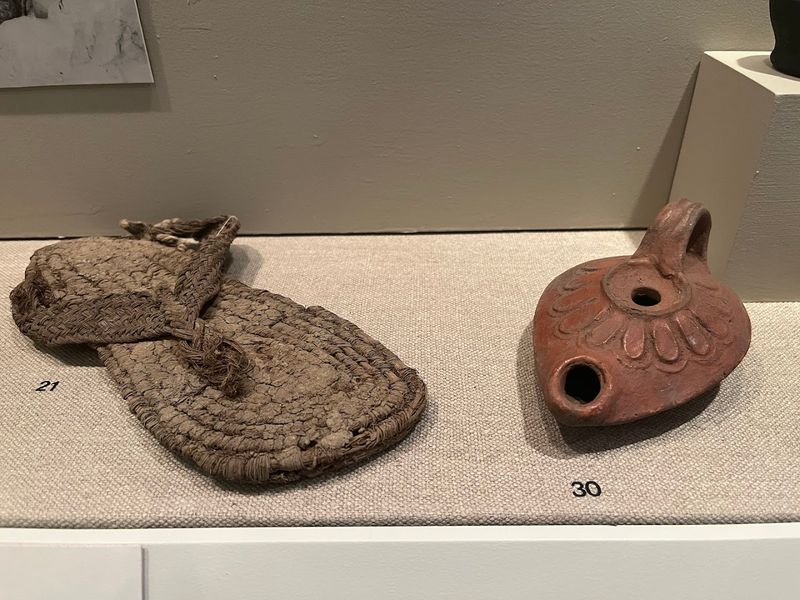
Children’s toys and shoes from ancient civilizations are among the collection’s most surprisingly touching objects. Seeing a small sandal or a simple game piece that a child played with thousands of years ago creates an immediate emotional connection that no textbook description can replicate.
Kids often respond to these objects with genuine curiosity rather than the glazed-over look that sometimes appears in larger, more overwhelming museums.
The museum’s compact size is actually an advantage for families because it is easy to cover the whole space without anyone hitting a wall of exhaustion. The scavenger hunt keeps younger visitors focused and gives them something to accomplish, which means parents can actually slow down and appreciate the collection too.
Everyone leaves with something memorable.
Tours, Lectures, and the Academic Life Behind the Displays
The Kelsey Museum is more than a place to view ancient artifacts. It also serves as an active center for research, regularly hosting public tours, lectures, and academic events connected to the University of Michigan’s archaeology programs.
Staff members are known for being knowledgeable and approachable, helping visitors understand the stories behind the objects. A guided tour can turn a simple museum visit into a deeper learning experience without feeling overly academic.
The museum also rotates special exhibits throughout the year to keep things fresh for returning visitors. Whether you explore on your own or join a tour, the Kelsey rewards visitors who take their time and look closely.
Why the Kelsey Museum Deserves a Spot on Your Ann Arbor Itinerary
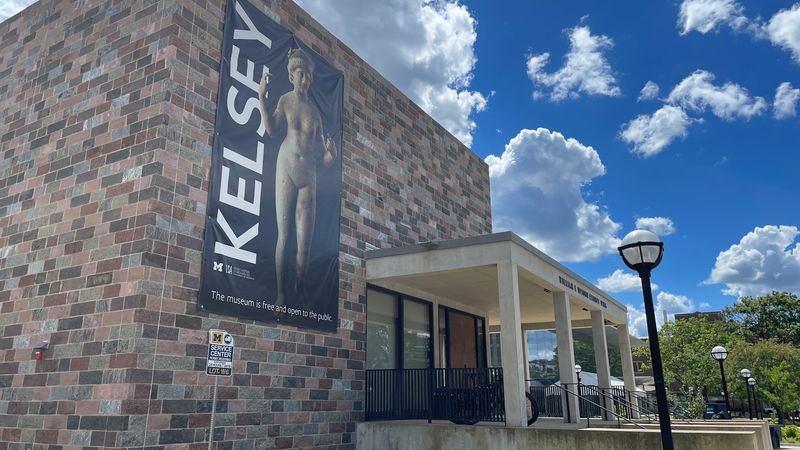
Ann Arbor has plenty of reasons to visit, but the Kelsey Museum is one of those stops that tends to surprise people who were not expecting much. Its rating of 4.8 stars across nearly 300 reviews is not an accident; it reflects a consistently well-run experience that punches far above its square footage in terms of impact.
The museum sits in a genuinely beautiful building in a walkable part of campus, which makes it easy to combine with other Ann Arbor activities. A parking garage a block away handles the logistics, and the 10 AM to 4 PM weekday hours give you a comfortable window to visit without rushing.
What the Kelsey does better than almost any museum of its size is make ancient history feel immediate and personal rather than distant and dusty. Whether you are a lifelong history enthusiast, a curious first-timer, or a parent looking for something genuinely enriching to do with your kids, this campus vault of wonders has a way of staying with you long after you step back outside into the Ann Arbor afternoon.



