 Unearth The Voyage

If you have ever dreamed of seeing the Northern Lights without traveling far north, tonight might be your chance. A surge in geomagnetic activity is lining up to push aurora visibility well into the northern United States. With the right timing, dark skies, and a clear northern horizon, you could witness ribbons of color dance above your neighborhood. Keep reading to see where, why, and how to catch this rare sky show.
Rare Northern Lights Forecast May Bring Aurora Borealis to Dozens of U.S. States Tonight
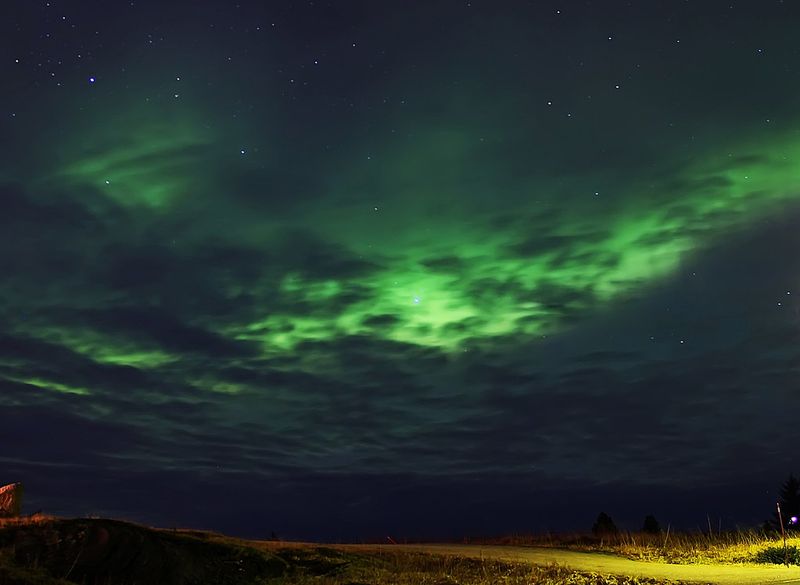
Space weather models are lighting up with promise, and tonight could deliver a rare aurora show for many across the northern United States. When streams of charged particles from the sun interact with Earth’s magnetic field and upper atmosphere, the sky can glow in greens, purples, and reds. You do not need to be under the Arctic Circle to have a chance when geomagnetic activity spikes.
NOAA’s SWPC publishes real time aurora maps and the experimental Aurora Viewline that estimates the southernmost visibility by Kp index. Elevated Kp values tonight suggest favorable windows after sunset through the early morning hours. Even if the lights are not overhead, look low along the northern horizon where a faint arc may intensify into curtains and pillars.
Patience is your superpower. Auroras often pulse in waves, with quiet stretches followed by sudden bursts, so plan to linger at least an hour. Find a dark site, let your eyes adjust, and avoid bright screens that ruin night vision.
Clouds remain the biggest spoiler, so check local forecasts right before heading out. If skies clear, remember that cameras can reveal color before your eyes do, especially with longer exposures. Tonight does not guarantee sightings, but the setup is noteworthy and worth a look.
Ultimately, solar energy is the fuel, the geomagnetic field the stage, and your location the front row. With minimal light pollution and a clear view north, you could catch one of nature’s most unforgettable performances.
States Where Northern Lights Could Be Seen Tonight
Curious if your state has a shot tonight? Forecast products highlight a corridor from Alaska across the northern tier of the continental U.S., where geomagnetic conditions may push the aurora into view. The sweet spot includes dark, open locations with a clear northern horizon.
Based on recent maps and model guidance, watch from Washington, Idaho, Montana, North Dakota, South Dakota, Minnesota, Wisconsin, Michigan, New York, Vermont, New Hampshire, and Maine. Parts of Oregon and northern Pennsylvania sometimes sneak in, and southern Canada from British Columbia to Ontario looks favorable. Local visibility still hinges on cloud cover and the exact Kp peak.
When activity surges, the viewline can slide south, making brief appearances possible in central states. In those cases, the aurora often sits low on the horizon as a pale band that brightens and develops structure. If the Kp jumps higher, pillars and moving rays can emerge quickly.
To improve your odds, step away from city glare and choose rural vantage points. Lake shorelines, open prairies, and hilltops facing north are excellent. Give yourself time for eyes to adapt and scan slowly.
Even if you are not in the core zone, do not count yourself out. Weather breaks, power outages, and microclimates can make a surprising difference. If forecasts trend stronger through the evening, be ready to head out fast.
What Drives the Northern Lights and How Space Weather Is Forecast
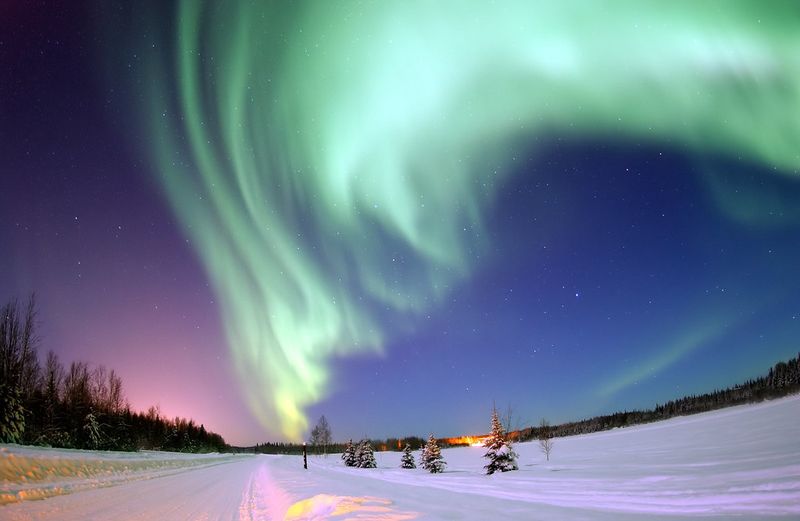
The aurora begins at the sun, where eruptions launch charged particles that stream through space and meet Earth’s magnetic shield. When those particles funnel along magnetic field lines and collide with oxygen and nitrogen high above, the sky glows. Green often comes from oxygen around 100 to 150 miles up, while reds appear higher and purples blend with nitrogen emissions.
Forecasters watch solar wind speed, density, and the interplanetary magnetic field’s orientation, especially Bz turning southward, which opens the door for energy transfer. NOAA’s SWPC runs models like OVATION to estimate the auroral oval and intensity in near real time. These outputs, combined with ground magnetometers and satellite data, guide alerts and outlooks.
The Kp index condenses global geomagnetic activity on a 0 to 9 scale. Values of 5 and above signal storm levels with U.S. viewing potential, while higher spikes push the oval farther south. Forecasts update frequently because solar wind conditions can change quickly.
Beyond beauty, geomagnetic storms affect radio, GPS, and power grids, so accurate warnings matter. That is why space weather watches and alerts mirror terrestrial weather products, offering lead time for operations. For skywatchers, the same tools translate into practical go or wait decisions.
Tonight’s setup points to moderate activity windows after dark. If the solar wind strengthens and Bz holds south, visibility increases. Keep an eye on real time dashboards, and you will know when to head outside.
Tips for Viewing and What to Expect Tonight
Think of tonight like a pop up show where timing and location decide everything. Aim for the window from just after twilight deepens to pre dawn, when darkness peaks. If you can, scout a spot now so you are not hunting in the dark later.
Chase dark skies. Get beyond city glow, face north, and favor open horizons such as fields, lakes, or shorelines. Turn screen brightness down, and give your eyes 20 minutes to adjust.
Clouds will make or break the night, so refresh local forecasts before you leave. Bring warm layers, a headlamp with red mode, and a thermos to stay comfortable while you wait. Patience pays because auroras often pulse in short bursts.
Photographers, lock your camera on a tripod, shoot wide, and start around ISO 1600 to 3200 with multi second exposures. Manual focus on a bright star, and bracket shots to catch faint bands. Many smartphones in night mode can reveal color more clearly than your eyes.
Keep an eye on real time data from NOAA aurora products and geomagnetic monitoring apps. If the Kp climbs and Bz dips south, your chances improve fast. When the sky suddenly brightens, look for arcs to ripple into curtains and vertical rays.



