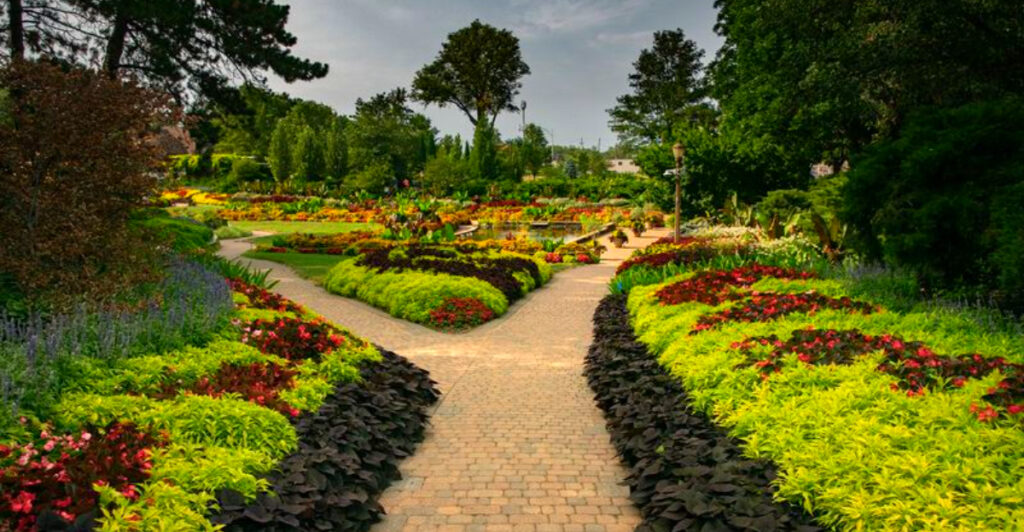
Few public gardens can claim a transformation as dramatic as this one. What was once a neighborhood dumpsite in Lincoln, Nebraska, is now a nationally recognized garden known for its elaborate seasonal displays, artful landscaping, and free admission.
Each year, more than 30,000 annual flowers are planted around a new theme, giving returning visitors a completely different experience. Waterfalls, koi ponds, sculptures, and specialty gardens add even more variety to a space that has earned recognition from National Geographic as one of the top gardens to visit in North America.
Keep reading to see why this 1.5-acre garden attracts visitors from across the country and continues to be one of Nebraska’s most remarkable hidden gems.
A Former Dumpsite Turned National Landmark
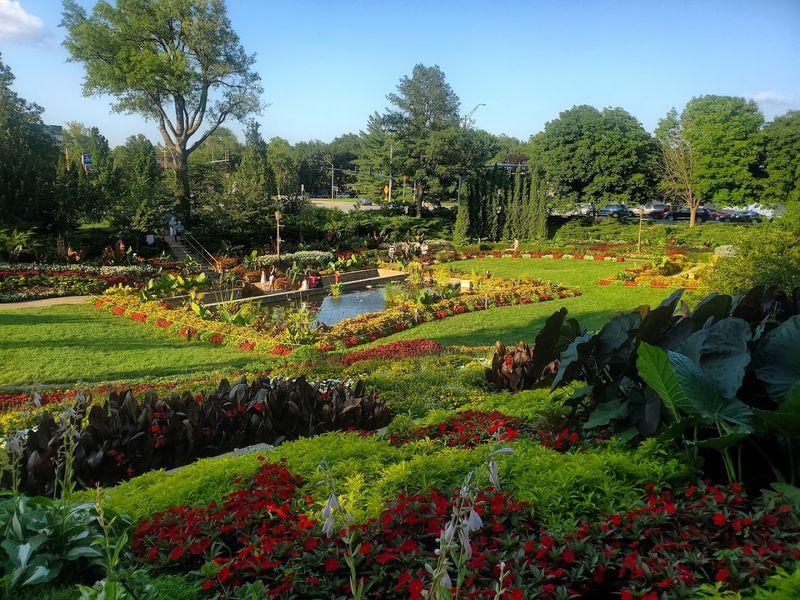
Not every great garden starts with great soil. The land at 2600 D St, Lincoln, NE 68502, now known as Sunken Gardens, was once a neighborhood dumpsite before the city decided to do something remarkable with it in 1930.
That transformation took 1.5 acres of neglected ground and shaped it into what locals originally called Lincoln’s “Rock Garden.” The sunken layout was not just an aesthetic choice; the low-lying terrain naturally created a bowl-shaped space that holds the garden’s distinct visual energy.
Over nine decades later, the garden holds a 4.8-star rating from thousands of visitors and is the only Nebraska garden listed in National Geographic’s guide to the top 300 public gardens in the United States and Canada. The address sits near the historic district, close to the Lincoln Children’s Zoo, making it easy to combine both into a full day out.
Few urban spaces carry this kind of history beneath their flower beds.
The Annual Floral Theme That Keeps Everyone Guessing
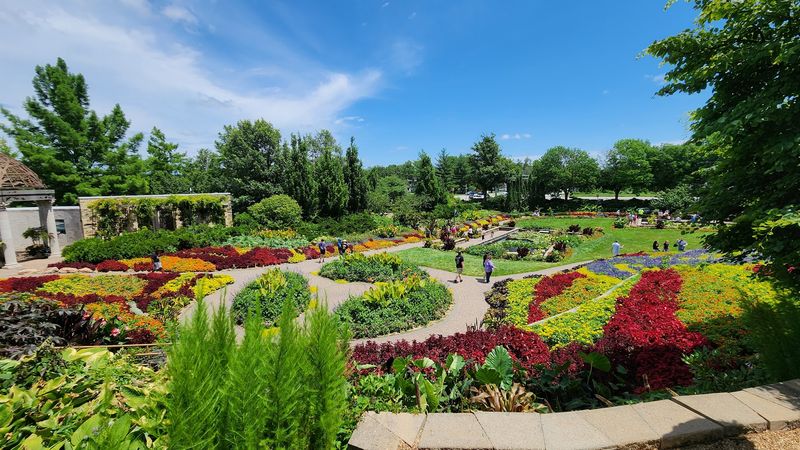
One of the most exciting traditions at Sunken Gardens is the yearly reveal of a completely new floral theme, designed fresh by a team of garden artists each season.
Over 30,000 annuals are planted to bring each concept to life, and past themes have included “Enchanted Ocean” in 2025, “Golden Hours” in 2024, “Magical Mystery Tour” in 2023, and the upcoming “A Patchwork Garden” for 2026. Each theme reshapes the garden’s personality entirely, so a visit one summer can feel nothing like the one before.
The creativity behind these designs is genuinely impressive. Colors are layered with intention, patterns stretch across wide beds, and the overall effect feels more like walking through living artwork than a typical public park.
Regular visitors make a habit of returning each new season just to see how the space has been reinvented. That built-in surprise factor is one reason this garden never feels old or predictable.
Lily Ponds Full of Color and Life
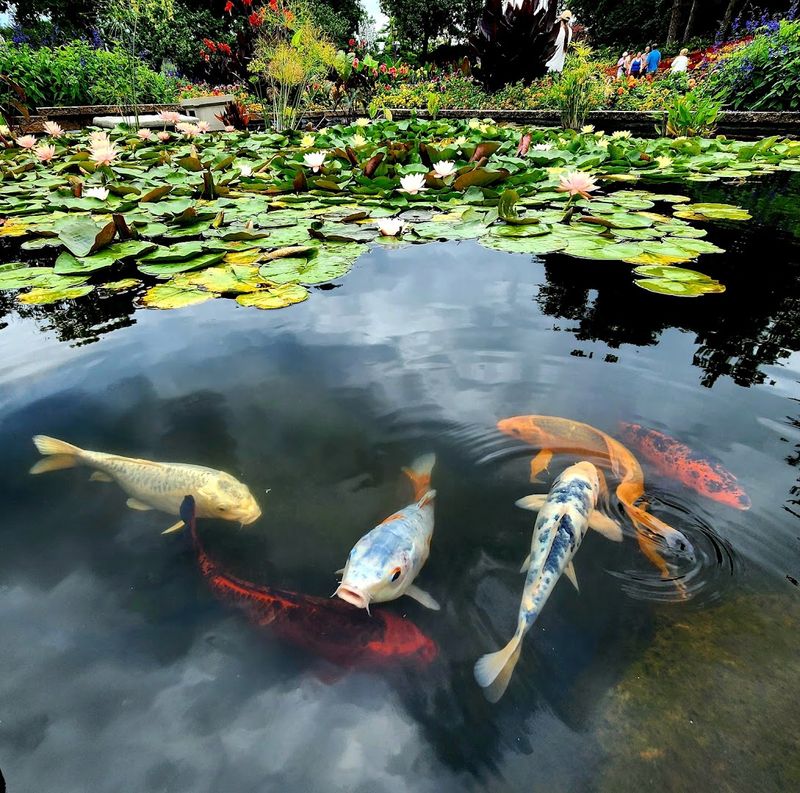
The lily ponds at Sunken Gardens are a genuine crowd-pleaser, and it is easy to understand why. Two ponds sit within the garden, each home to colorful koi fish that glide through the water with an almost theatrical calm.
Kids are completely captivated watching the fish dart and swirl beneath the lily pads, and honestly, adults are too. The ponds were renovated as part of a major 2005 upgrade that also added accessible walkways, new sculptural elements, and a restored cascading water feature nearby.
The sound of water moving through the garden adds a layer of calm that is hard to replicate in any urban setting. Morning visits are especially rewarding, when the light catches the water and the dew still clings to the surrounding plants.
Benches near the ponds give visitors a reason to slow down and simply sit for a while, which turns out to be one of the best things you can do here.
The Cascading Waterfall That Sets the Mood
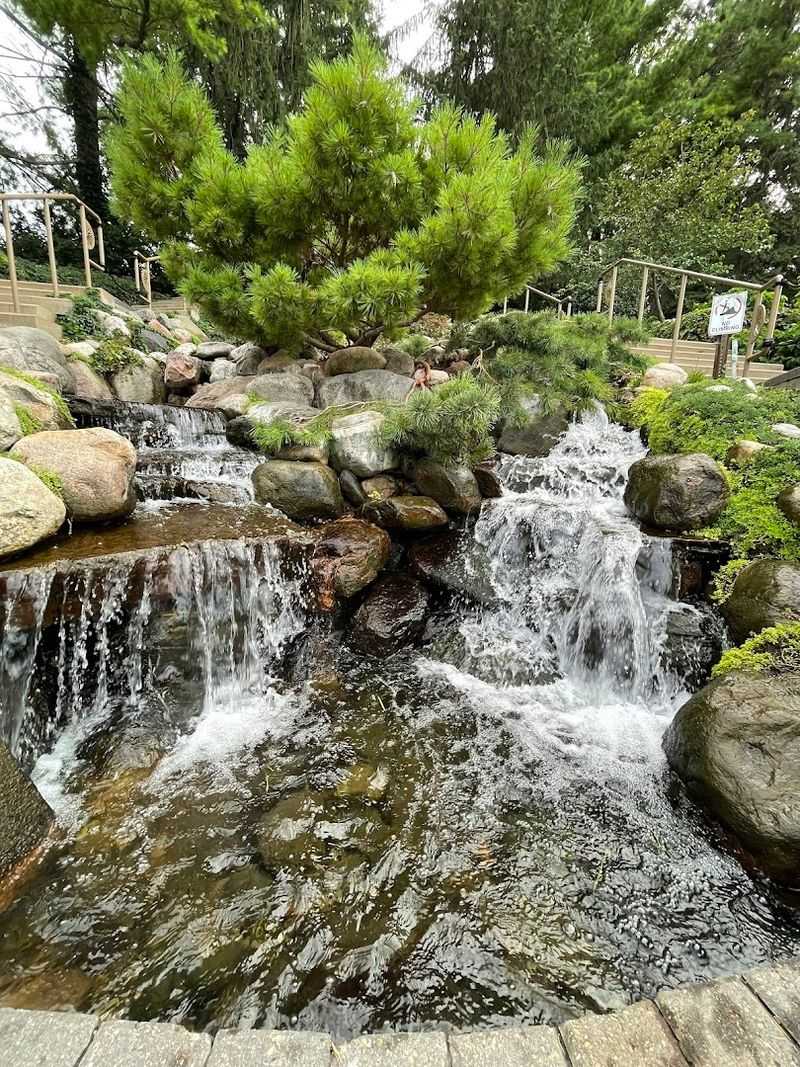
There is something about moving water in a garden that changes the entire atmosphere, and the cascading waterfall at Sunken Gardens earns its place as one of the park’s most beloved features.
Restored during the 2005 renovation, the waterfall tumbles down a structured stone face and feeds into the garden’s water system below. The sound travels across the sunken bowl of the garden, mixing with birdsong and the rustle of leaves in a way that makes the surrounding city feel very far away.
The waterfall also serves as a natural focal point for photography. Whether you frame it wide with the surrounding flower beds in view or zoom in on the cascading water itself, the results tend to be striking.
The combination of stone, water, and dense planting around the falls creates a layered visual texture that rewards a slow, close look. It is one of those features that photographs well but feels even better in person.
The Healing Garden Inspired by a Castle in England
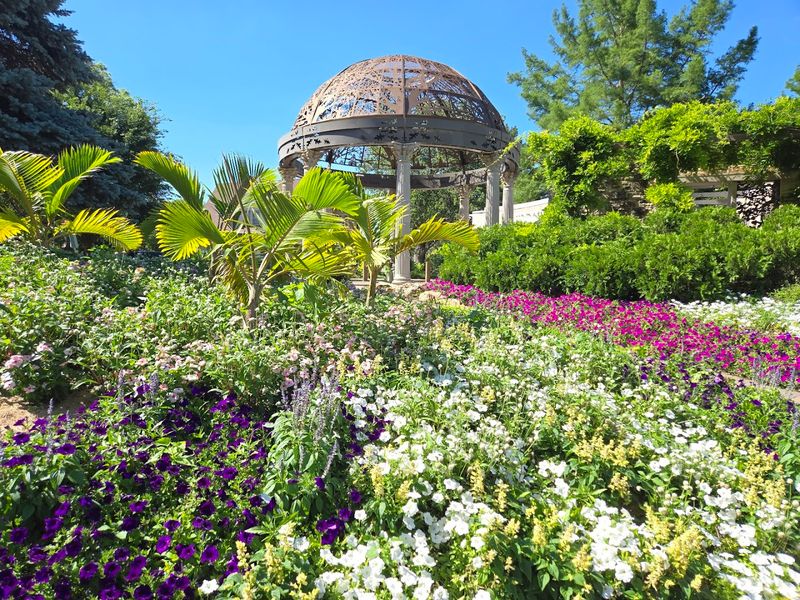
Tucked within the broader landscape of Sunken Gardens is a quieter, more contemplative space known as the Healing Garden, sometimes called the White Garden. Its design draws inspiration from the famous White Garden at Sissinghurst Castle in England, where plantings are kept almost entirely in shades of white and cream.
The effect is surprisingly powerful. After walking through beds of vivid reds, oranges, and purples, stepping into the Healing Garden feels like turning down the volume.
The restrained palette creates a sense of focus and stillness that stands apart from the rest of the park.
This section of the garden tends to attract visitors who want a moment of genuine quiet rather than visual stimulation. It pairs well with the nearby perennial plantings, which offer softer textures and longer-lasting seasonal interest compared to the bold annual displays elsewhere.
The Healing Garden is a reminder that beauty does not always need to shout to make an impression, and that contrast within a garden can be just as powerful as color itself.
Public Art That Gives the Garden Its Character
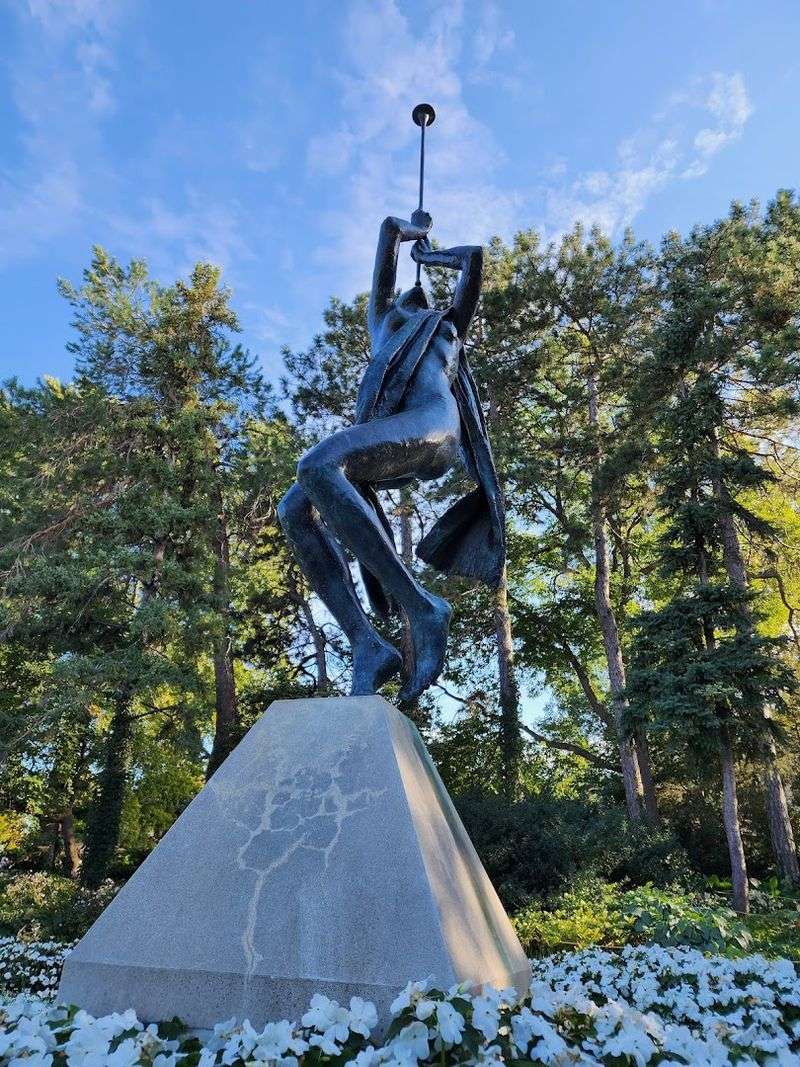
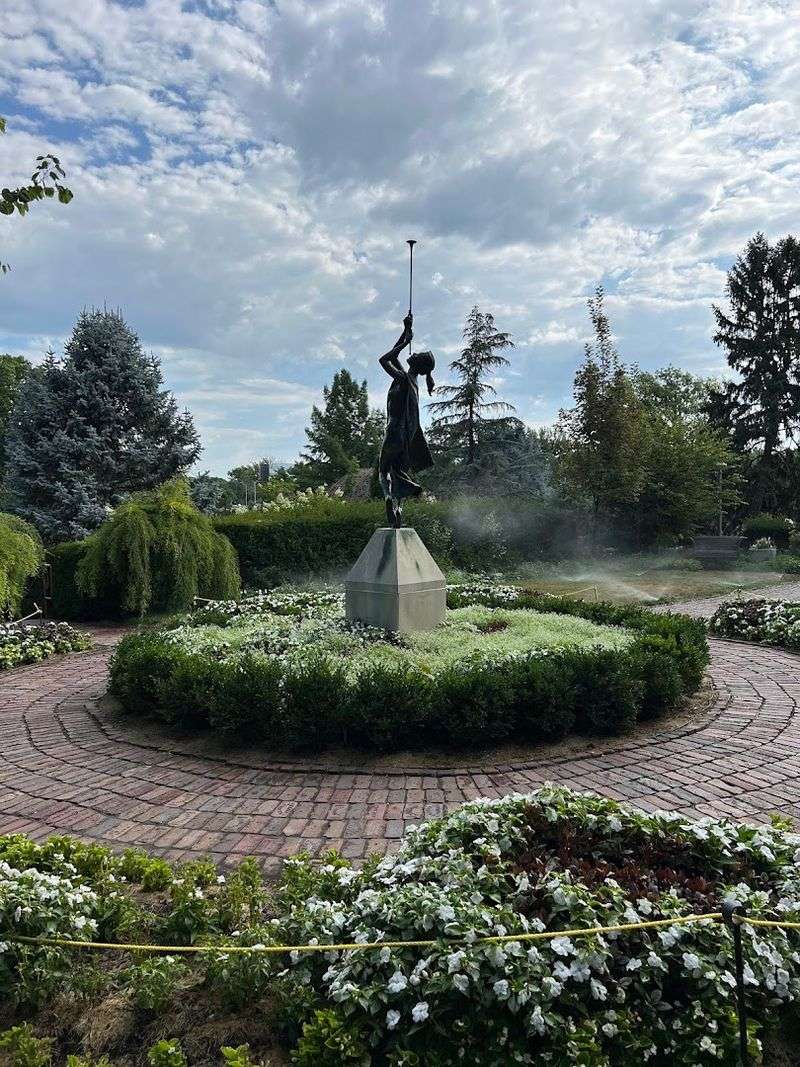
Art and nature share the space at Sunken Gardens in a way that feels intentional rather than decorative. The garden displays several public art pieces throughout its grounds, with Wayne Southwick’s “Reville” statue being one of the most recognized.
The Rotary Pavilion adds another layer of artistic interest, featuring a dome designed by Jeffrey Chadwick that represents Lincoln’s skyline in sculptural form. These installations give the garden a cultural dimension that goes beyond horticulture, turning a walk through the grounds into something closer to an outdoor gallery experience.
What makes the art work here is that it does not compete with the plants for attention. Each piece is positioned to complement its surroundings, so the sculptures feel like natural extensions of the landscape rather than objects dropped into it.
Even in winter, when the blooms are gone, these installations give visitors a reason to walk the paths and appreciate the garden from a different angle. The art keeps the space alive across all four seasons.
Spring Tulips and the Season That Starts It All
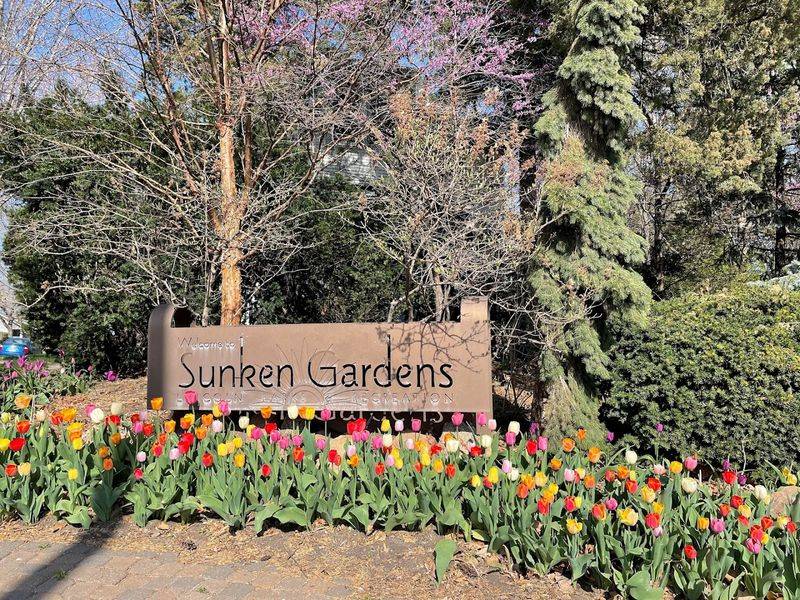
Spring at Sunken Gardens has its own distinct personality, led by a display of tulips that signals the start of the growing season in the most colorful way possible. The tulips typically bloom before the main annual planting gets underway, giving early-season visitors a preview of the color that will fill the garden for months to come.
There is a particular kind of anticipation that builds around this time of year in Lincoln. Locals who follow the garden closely start checking in as temperatures climb, eager to catch the tulips at peak bloom before they fade and the summer annuals take over.
The spring display also tends to be less crowded than the peak summer months, which makes it a great time for a leisurely visit without fighting for space near the ponds or the waterfall. Morning light in spring has a soft quality that makes the tulips glow, and the garden’s low-lying layout keeps the wind calm enough to enjoy without a heavy jacket.
Why This Garden Stays Interesting All Winter
Most people think of Sunken Gardens as a warm-weather destination, and the summer displays certainly earn that reputation. But the garden holds its own through the colder months in ways that are easy to overlook.
The combination of mature trees, structural shrubs, and perennial plantings creates a layered winter landscape that has its own quiet appeal. Bare branches catch the light differently than full foliage, and the garden’s sculptural art installations become more prominent when there is less greenery competing for attention.
The Rotary Pavilion and the “Reville” statue both read differently against a winter sky, and the stone and water features take on a more architectural quality when the surrounding plants are dormant. The garden is open daily from 5 AM to 11 PM year-round, so there is no off-season barrier to entry.
A winter morning walk here, with frost on the ground and the whole place nearly to yourself, is a genuinely different experience worth trying at least once.
Free Admission and What That Actually Means for Visitors
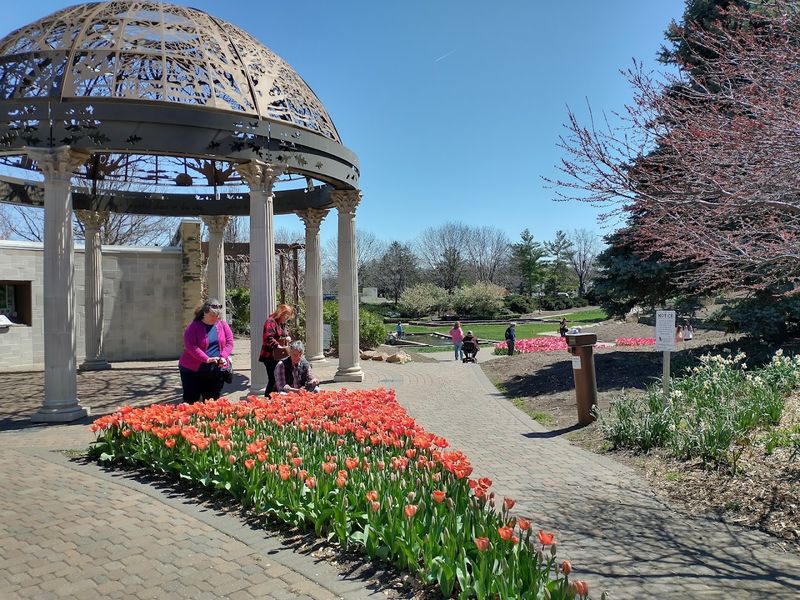
Free admission to a garden of this quality is not something to take for granted. Sunken Gardens charges nothing at the gate, and the grounds are open every single day of the year from 5 AM to 11 PM, which gives visitors a remarkable amount of flexibility.
The 2005 renovation added a proper entry garden pavilion, handicap-accessible entrances, and redesigned walkways that make the space genuinely easy to navigate for visitors of all mobility levels. Donation boxes are placed around the park for those who want to contribute to its upkeep.
Parking is available in a small lot on site, and street parking in the surrounding neighborhood fills in the gap on busier days. The garden’s proximity to the Lincoln Children’s Zoo, just across the street, makes it a natural pairing for a full family outing that costs very little.
For a city park, the level of care and investment visible throughout the grounds is exceptional, and the free access makes it welcoming to absolutely everyone.
The Perennial Garden and Its Quiet, Lasting Appeal
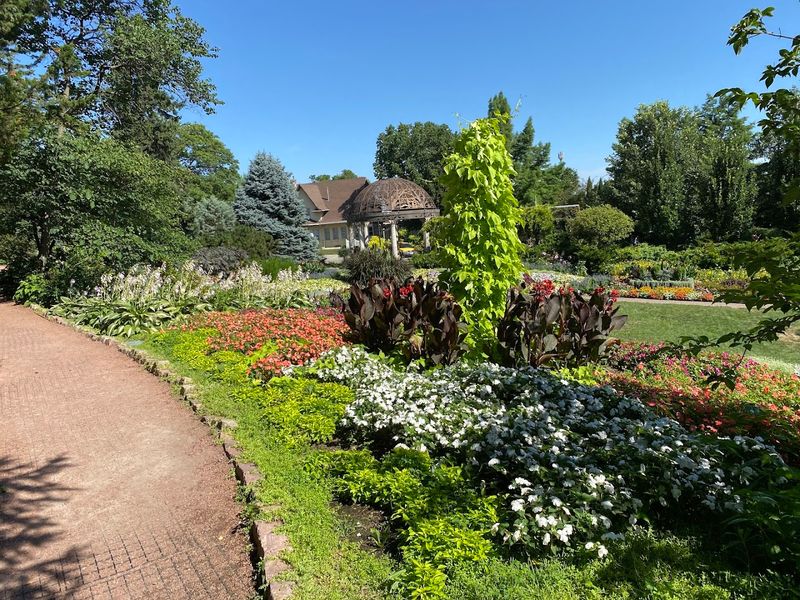
Beyond the bold annual displays that change each year, the Perennial Garden at Sunken Gardens offers a different kind of beauty. Perennials return season after season, building in size and presence over time, and this section of the garden rewards repeat visitors who notice how plants evolve from one year to the next.
The textures here are richer and more varied than in the annual beds. Ornamental grasses, flowering perennials, and established shrubs create a layered planting that supports pollinators throughout the growing season.
Bees, butterflies, and birds are a constant presence in this part of the garden, adding movement and life to every visit.
This section also tends to look its best in late summer and early autumn, when many perennials hit their peak bloom and the annuals elsewhere begin to wind down. The Perennial Garden is a good reminder that a well-designed landscape is not just about spectacle; it is also about patience, repetition, and the satisfaction of watching something grow more beautiful over time.
Photography Tips for Getting the Best Shots Here
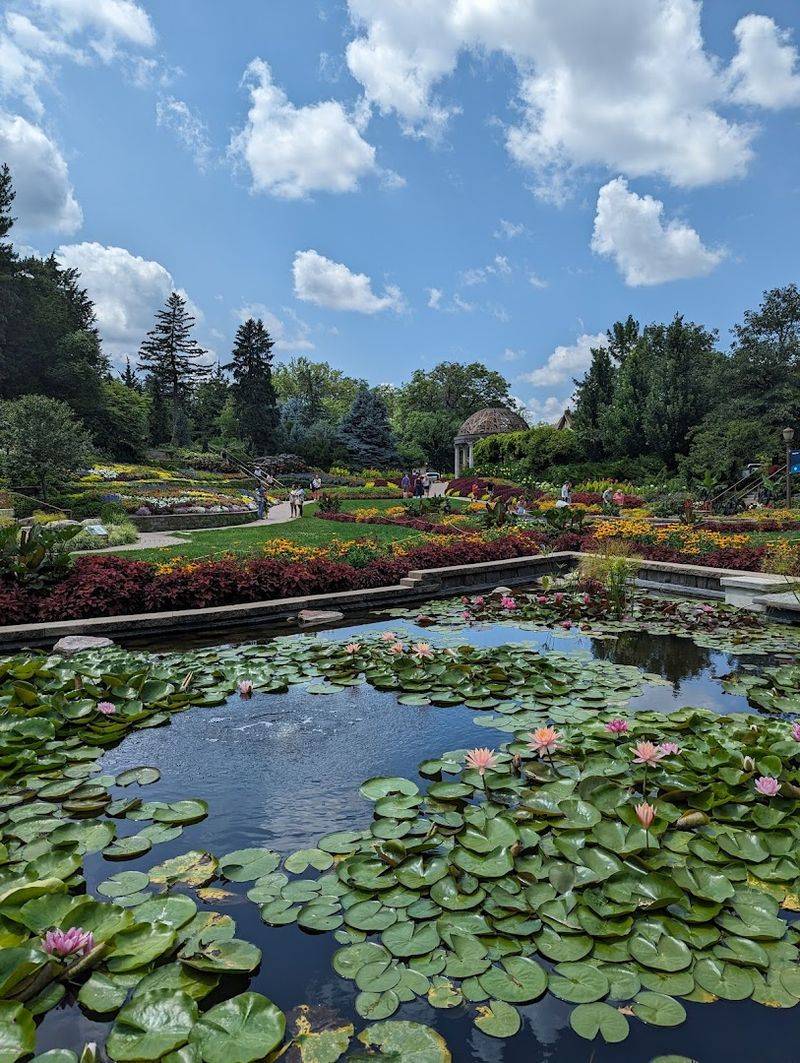
Sunken Gardens is one of the most photogenic public spaces in Nebraska, and a little planning goes a long way toward getting great images. The best light arrives in the early morning, when the sun is low and soft, and the dew on the plants creates a natural sparkle that midday light simply cannot replicate.
The garden’s sunken layout works in your favor compositionally. Shooting from the upper paths looking down into the flower beds gives you a natural bird’s-eye perspective that captures the scale and pattern of the annual displays.
Getting low near the lily ponds and shooting across the water surface adds reflections and depth to otherwise straightforward garden shots.
The art installations make strong subjects on their own, especially when framed against contrasting flower colors. The cascading waterfall rewards a slower shutter speed if you want that silky water effect.
Weekday mornings tend to be quieter, which means fewer people in the frame and more time to compose shots without feeling rushed by the crowd behind you.
Practical Tips for Planning Your Visit
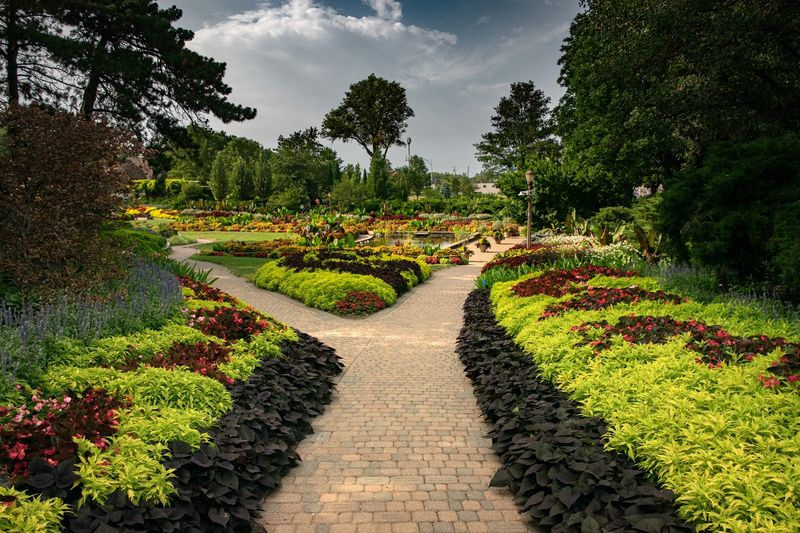
A visit to Sunken Gardens is easy to plan, but a few practical details can make the experience noticeably smoother. The garden is open daily from 5 AM to 11 PM at 2600 D St, Lincoln, NE 68502, and you can reach the main line at 402-441-8258 for current information on events or seasonal conditions.
The small on-site parking lot fills up quickly on weekends and during peak summer bloom. Street parking in the surrounding neighborhood is a reliable backup, and the walk from most nearby streets is short.
Arriving early on weekdays gives you the best combination of good light, open parking, and a quieter atmosphere.
The pathways are fully wheelchair accessible following the 2005 renovation, and restroom facilities are clean and well-maintained on site. The Lincoln Children’s Zoo is directly across the street, making it straightforward to combine both into one outing.
Sunken Gardens does not need much preparation to enjoy, but going in with even a little knowledge of what to expect means you leave with nothing left on your list.
Share this story