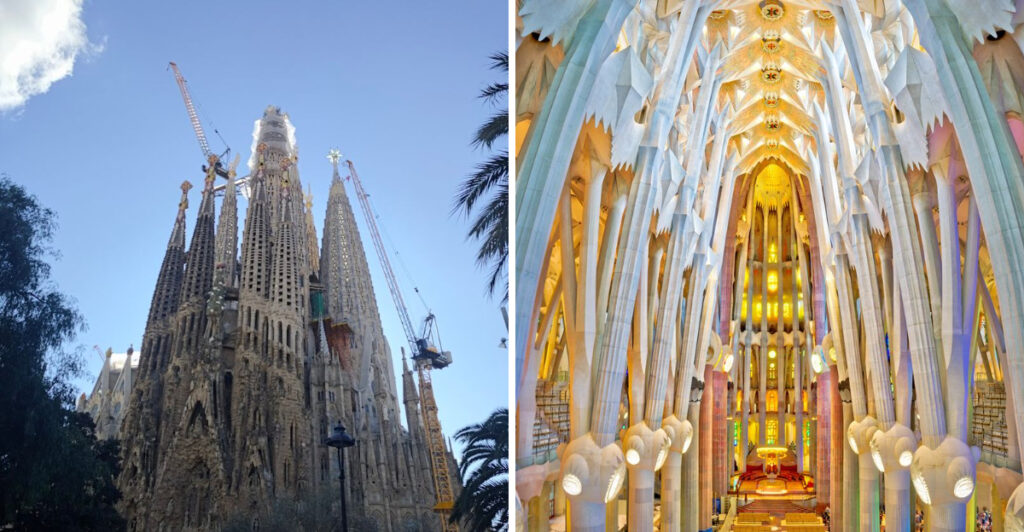
After more than 140 years of construction, Antoni Gaudí’s Sagrada Família in Barcelona has officially become the tallest church on Earth, reaching a jaw-dropping 172.5 meters. This milestone is the result of generations of architects, craftspeople, and dreamers carrying forward one man’s extraordinary vision.
The basilica is not just a building — it is a living story of faith, art, and human stubbornness in the best possible way. Whether you are a history lover, an architecture fan, or just someone who appreciates truly epic things, this is a moment worth knowing about.
A Record-Breaking Moment More Than a Century in the Making
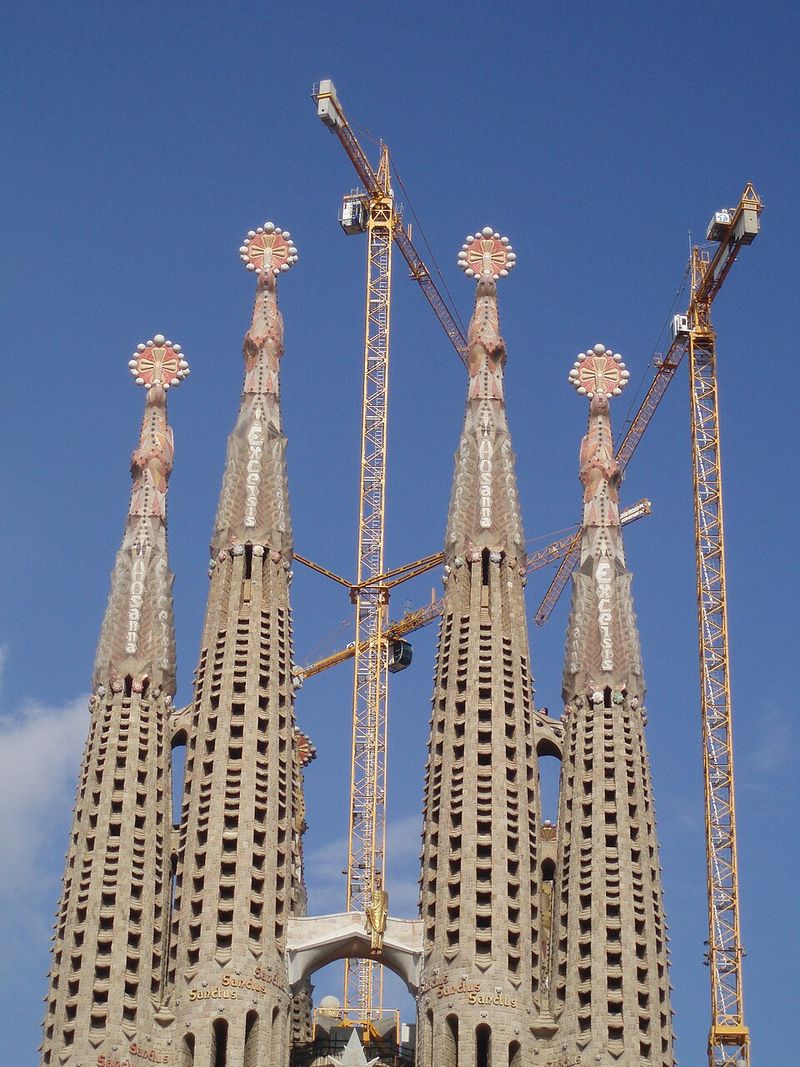
History does not always happen overnight — sometimes it takes 143 years. The Sagrada Família first claimed the world record in late 2025, when construction on the central Tower of Jesus Christ pushed the basilica past Germany’s Ulm Minster at 161.5 meters.
That was already a massive deal, but the story was not finished yet.
On February 20, 2026, workers installed the upper arm of the crowning cross, locking the tower’s exterior height at 172.5 meters. That single moment officially made the Sagrada Família the tallest church ever built.
No other religious building on Earth currently stands taller.
What makes this record feel different from most is the sheer weight of time behind it. Construction started in 1882, survived wars, funding crises, and even the destruction of Gaudí’s original plans in a 1936 fire.
The fact that it got here at all is almost as remarkable as the height itself. Patience, it turns out, can move mountains — or at least build them.
The Tower of Jesus Christ Changed Barcelona’s Skyline Forever
Before 2026, Barcelona’s highest point was Tibidabo hill. Now, the Tower of Jesus Christ holds that honor within the city’s urban area, and the skyline looks noticeably different because of it.
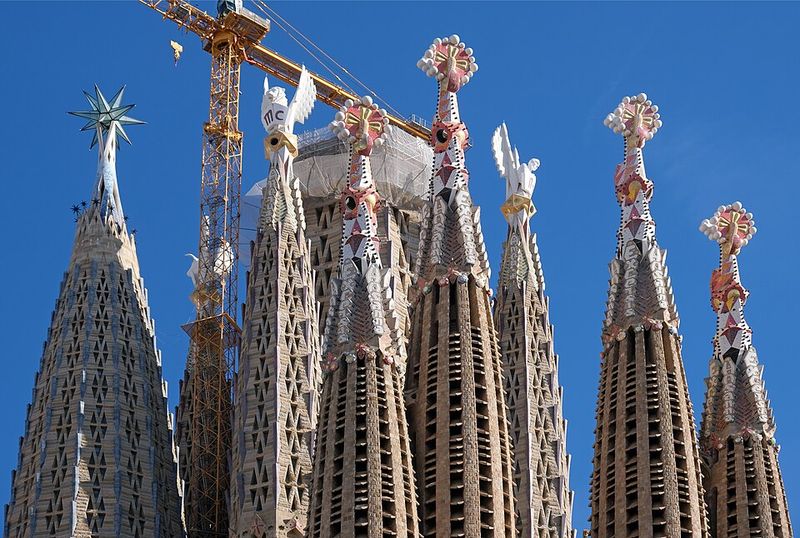
Standing at 172.5 meters, it is the central and tallest of the basilica’s planned 18 towers, each one representing a religious figure from the Bible.
The tower rises above three major façades — the Nativity, the Passion, and the Glory — which together tell the full story of Christ’s life in carved stone. At the very top sits a giant illuminated star and a cross, designed to be visible from across the city at night.
Gaudí wanted the tower to feel like a beacon, and now it genuinely is one.
For locals, the change is hard to miss. People who have lived in Barcelona their whole lives are suddenly seeing their city from a new angle.
Tourists are already booking rooftop restaurant tables with views of the tower. One thing is clear: this is not just a church anymore.
It is Barcelona’s new defining landmark, full stop.
The Milestone Arrived on a Deeply Symbolic Date
June 10, 2026 was not picked at random. That date marked exactly 100 years since Antoni Gaudí was struck by a tram in Barcelona and died three days later, in 1926.
Choosing his centenary to formally bless and inaugurate the completed Tower of Jesus Christ was a deliberate act of respect and remembrance. It gave the whole ceremony an emotional charge that no other date could have matched.
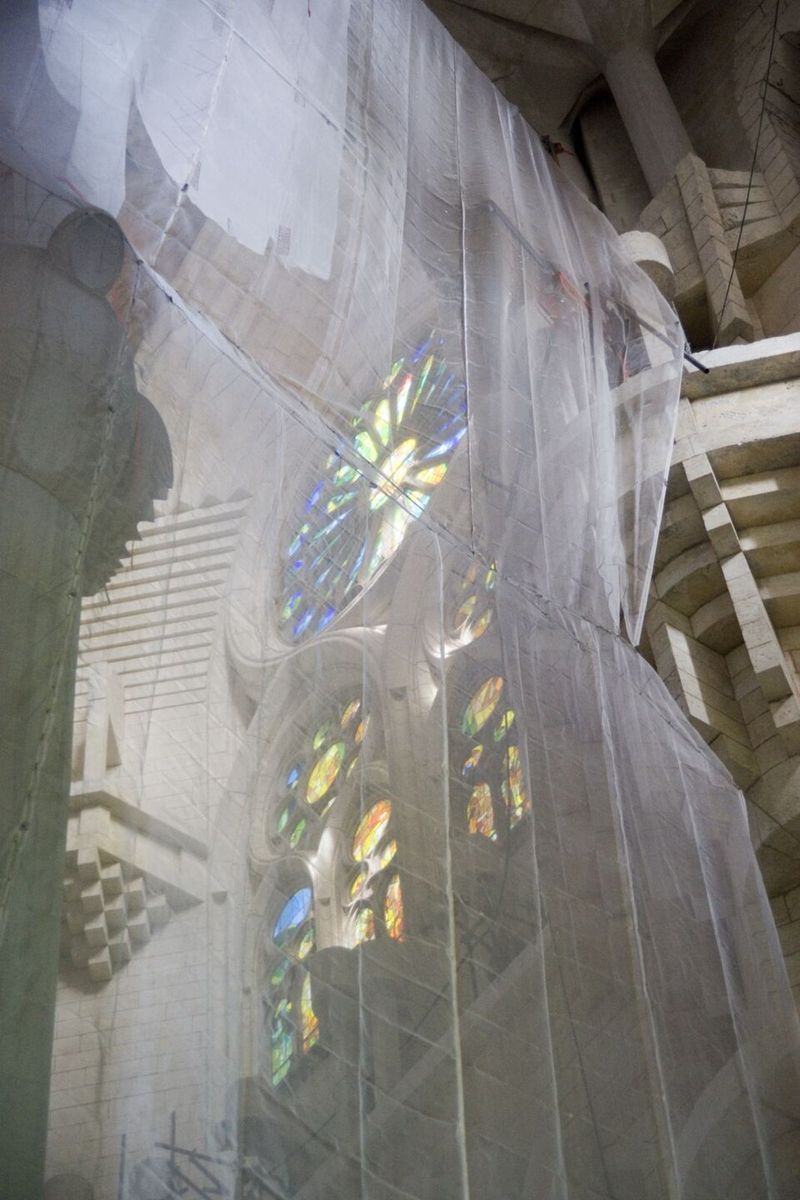
Pope Leo XIV led a special Mass at the basilica, with Spanish royals, global church leaders, and thousands of visitors packed inside and outside the building. The colorful stained glass sent rivers of red, gold, and blue light across the interior, which many attendees described as genuinely overwhelming.
It was, by most accounts, a once-in-a-lifetime event.
Gaudí himself famously said he was working for God and had no rush, because his client had plenty of time. Whether you are religious or not, there is something genuinely moving about a building that outlasted its creator by a full century and still arrived exactly where he intended.
That kind of dedication does not come along very often.
Gaudí’s Vision Was Always Bigger Than a World Record
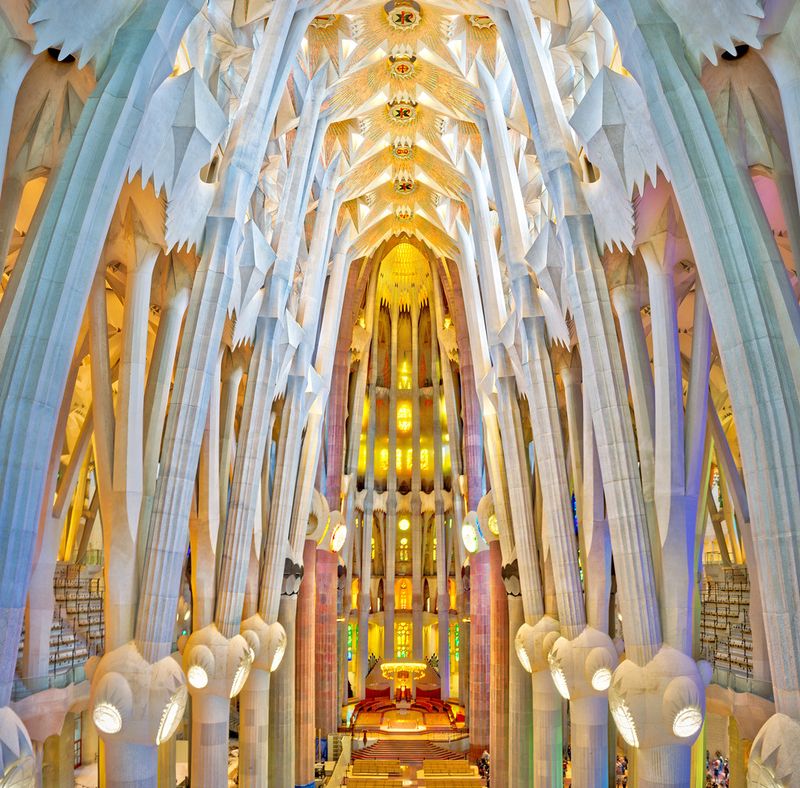
Antoni Gaudí was not trying to build the world’s tallest church. He was trying to build a sermon in stone, glass, and geometry.
When he took over the Sagrada Família project in 1883 from architect Francisco de Paula del Villar, he scrapped the original Neo-Gothic design and replaced it with something the world had never seen before.
Gaudí pulled inspiration from nature — tree trunks, spiraling shells, the branching patterns of plants — and fused it all with deep Catholic symbolism. Every surface, every tower, every carved figure has a meaning.
The building was never meant to be just impressive. It was meant to be readable, like a Bible written in architecture for people who could not read text.
He spent over 40 years on the project and lived so simply toward the end of his life that when he was hit by a tram, passersby initially thought he was a beggar. His dedication bordered on obsession, but the results speak for themselves.
Gaudí never saw more than the crypt and the Nativity Façade completed. Knowing that makes the finished tower feel like the longest overdue tribute in architectural history.
Why the Final Height of 172.5 Meters Actually Means Something
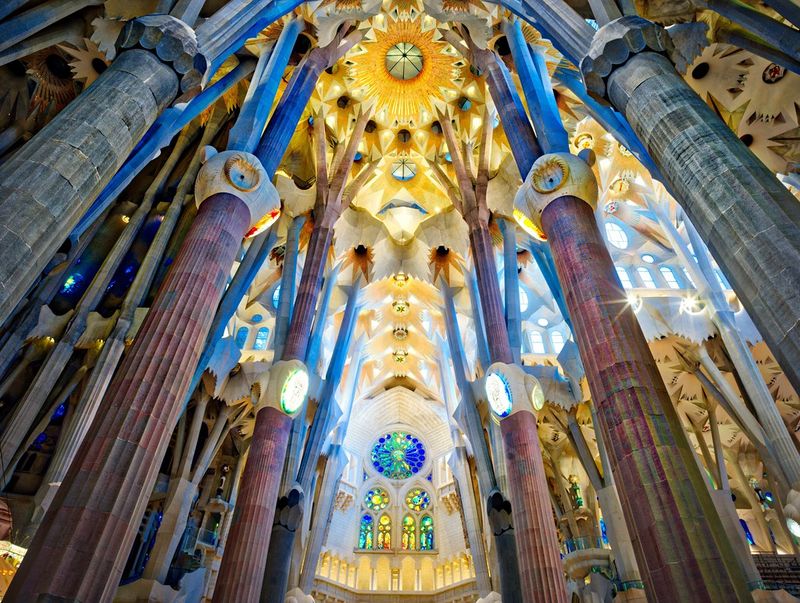
Numbers on their own can feel pretty dry, but the number 172.5 has a story behind it. Gaudí was firm that the basilica should never be taller than Montjuïc, the hill that overlooks Barcelona’s port.
Montjuïc stands at approximately 173 meters above sea level, meaning the tower clears it by just half a meter. That was entirely intentional.
Gaudí believed human construction should always bow to nature. Designing the tower to sit just below the hill’s natural height was his way of keeping that principle alive, even in a record-breaking structure.
It is a rare case where humility and ambition exist in the same building at the same time.
That philosophy gives the height a meaning that goes beyond bragging rights. It is not just the tallest church — it is the tallest church that deliberately chose not to go any higher.
For architecture fans, that kind of intentional restraint is actually more impressive than simply building as tall as possible. Gaudí managed to break a world record while also being modest about it, which might be the most uniquely Gaudí thing about this entire project.
The Building Is Still Not Completely Finished
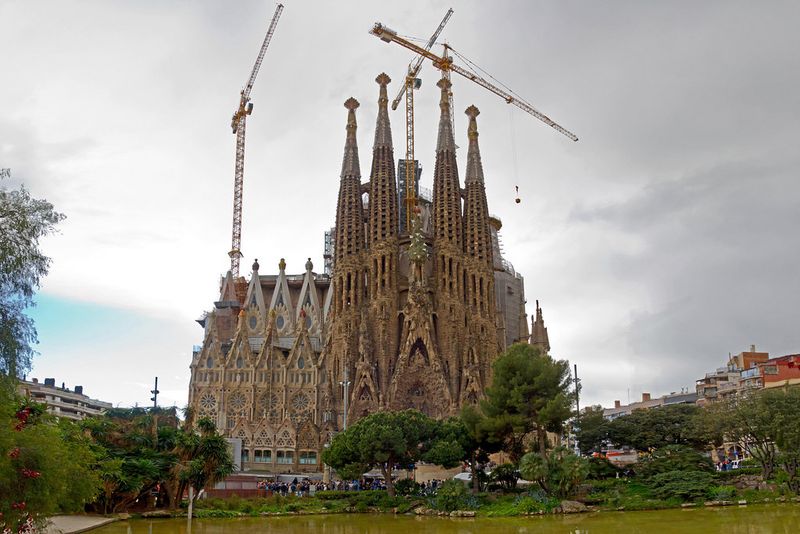
Reaching record height does not mean the work is done. According to the basilica’s official construction team, interior work on the Tower of Jesus Christ will continue through 2027 and 2028.
Several decorative elements, finishing details on existing façades, and remaining sections of the complex still need attention before anyone can call the whole project complete.
This might sound like a letdown after such a big milestone, but it is actually pretty normal for a building of this scale and complexity. The Sagrada Família is not a single structure — it is a collection of towers, façades, chapels, and interior spaces, each with its own level of detail.
Finishing one major element does not flip a switch that completes everything else.
The construction team has been remarkably transparent about the timeline, regularly updating the public through their website and social media. They use a mix of traditional stone-carving techniques and modern computer-aided tools, which would have absolutely blown Gaudí’s mind.
For visitors, seeing active construction is actually part of the experience. There is something oddly exciting about watching a 140-year-old project still quietly getting its finishing touches.
UNESCO Recognized the Sagrada Família as a World Heritage Site
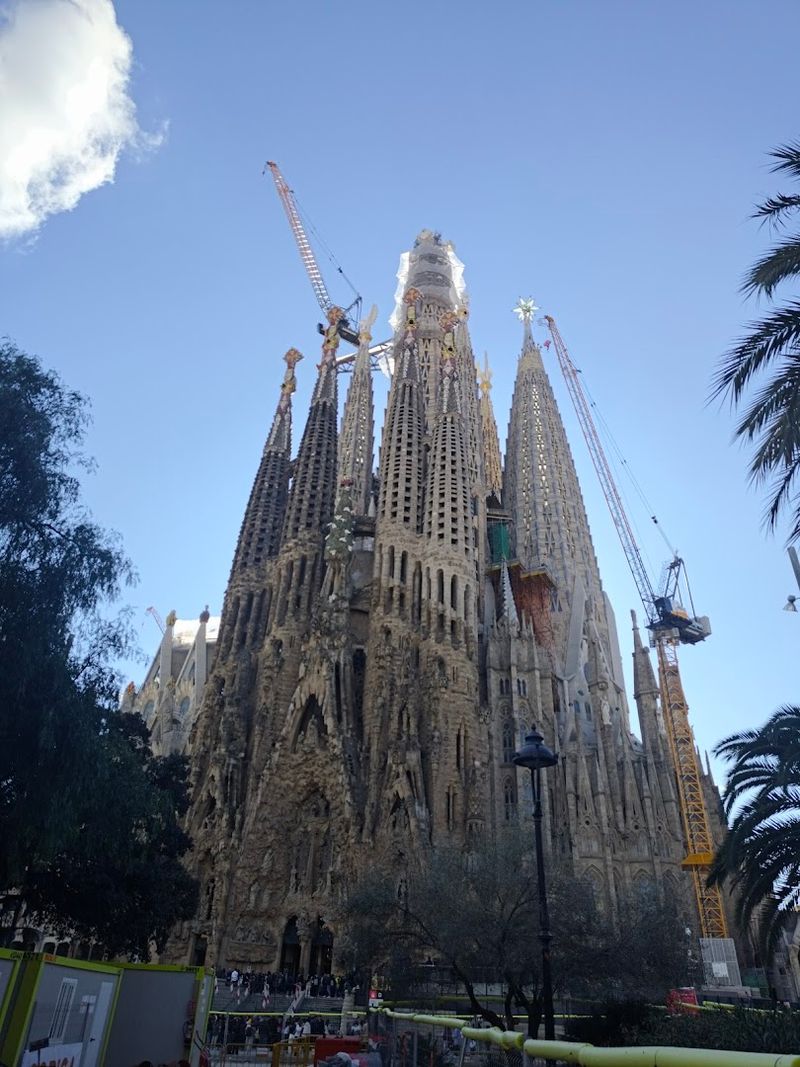
Not every famous building earns a UNESCO World Heritage listing, but the Sagrada Família has had one since 2005. Specifically, the sections built directly under Gaudí’s supervision — the Nativity Façade and the Crypt — are included in UNESCO’s broader listing of the Works of Antoni Gaudí, which also covers six other Gaudí buildings across Catalonia.
UNESCO highlights the basilica’s material authenticity, meaning the original stonework, carving methods, and structural ideas from Gaudí’s era are genuinely preserved in those sections. The Nativity Façade alone features hundreds of individual carved figures, animals, plants, and geometric forms, all layered with symbolic meaning.
Running your eyes across it is like reading a very dense, very beautiful page of text.
The World Heritage status adds a layer of protection and global recognition that goes beyond tourism numbers. It means the international community has officially agreed this building matters to all of humanity, not just to Barcelona or Spain.
For a structure that was once mocked as a eyesore and nearly demolished after Gaudí’s death, ending up on UNESCO’s list is a satisfying twist in a very long story.
Why Travelers Should Put Sagrada Família at the Top of Their List Right Now
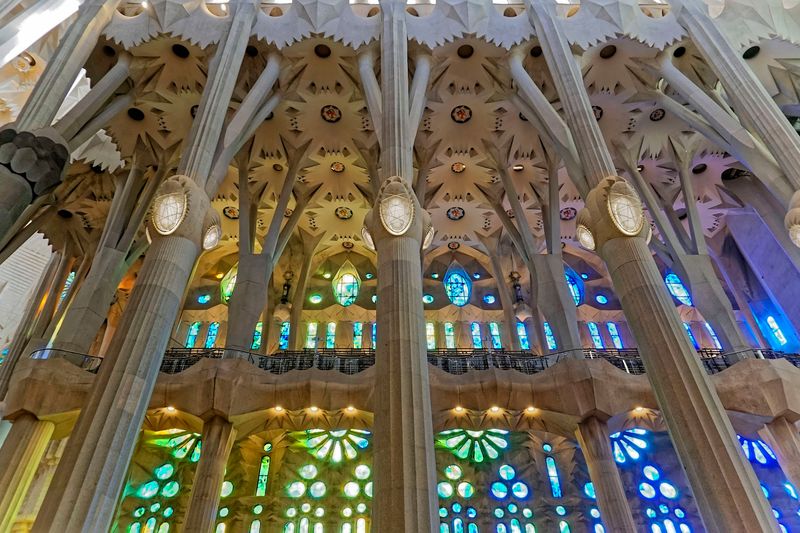
Walking into the Sagrada Família for the first time tends to stop people mid-sentence. The interior columns branch upward like a stone forest, and the stained glass fills the whole space with color that shifts as the sun moves.
It is one of those rare places where photographs genuinely do not do it justice — you have to stand inside it to feel what it does to you.
Now that the Tower of Jesus Christ has reached its full exterior height, visitors can see the complete vertical profile of the basilica for the first time in its history. That is a genuinely rare thing to witness.
Future generations will only ever know it finished. Right now, you can be part of the first wave of people who saw the moment it got there.
Tickets sell out weeks in advance, so planning ahead is essential. Early morning entry slots tend to offer the best light inside the building, especially on the east-facing Nativity side.
Guided tours are worth the extra cost if you want to understand the symbolism behind what you are looking at. This is not just a tourist stop — it is one of the most extraordinary things human hands have ever built.
Share this story