 Unearth The Voyage
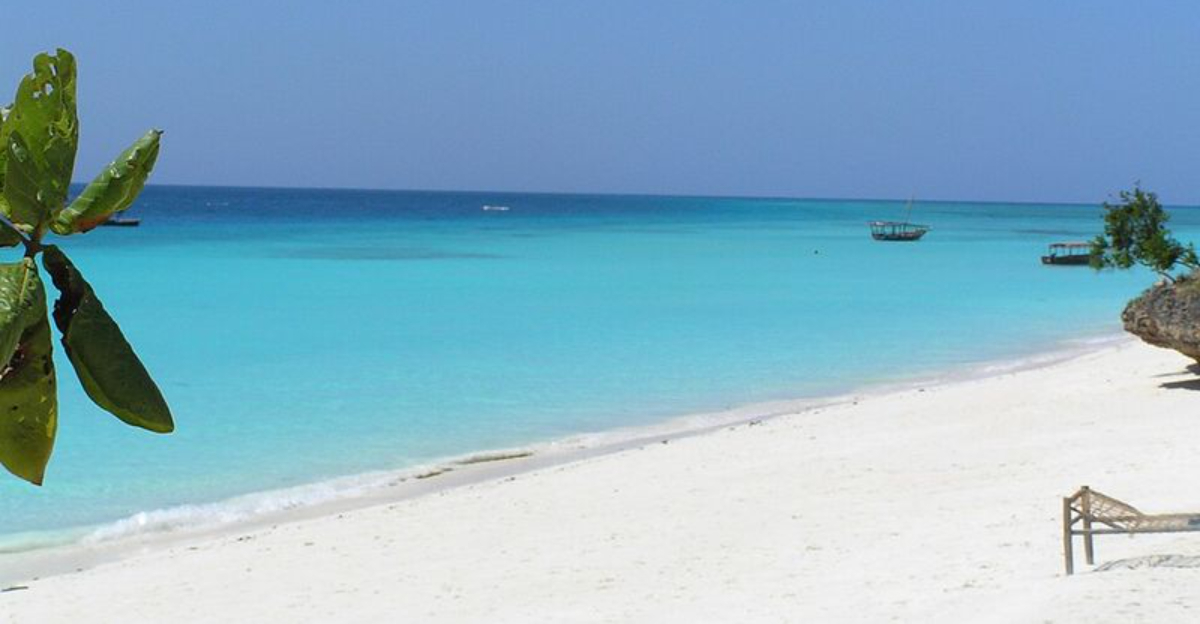
If you’ve ever felt winter slowly draining your will to live, you’re not alone. Some of us need sunshine the way plants need water, and lucky for us, the planet is loaded with beaches that deliver year-round warmth, turquoise water, and sand so soft it feels like a spa treatment for your feet.
From Caribbean islands where the breeze does all the cooling to Pacific lagoons that redefine the color blue, these spots prove that paradise isn’t just a postcard myth. Pack your sunscreen and let’s go.
Grace Bay, Turks and Caicos: Silk-sand perfection
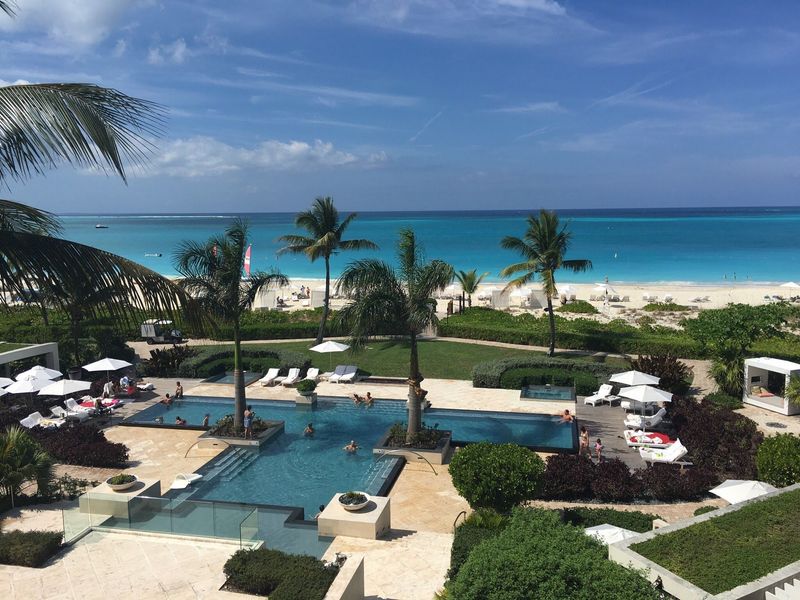
Your camera will struggle to convince anyone back home that the water really looks like that. Grace Bay serves up a shade of turquoise so vivid it borders on unreal, paired with sand that feels more like powdered sugar than anything scraped from the ocean floor.
This isn’t hype or clever marketing.
Year after year, travel experts toss Grace Bay onto their “world’s best” lists, and honestly, it’s hard to argue. The water stays calm enough for toddlers to paddle safely while adults float around wondering why they don’t live here full-time.
No aggressive waves, no hidden rocks, just three miles of bliss.
I spent an afternoon there once, convinced I’d get bored after an hour. Four hours later, I was still planted in the same beach chair, toes buried in that famous sand, debating whether I should move at all.
The vibe is peaceful without feeling deserted, and the resorts lining the shore know how to stay subtle.
If you’re the type who rates beaches by how long you can stare at the horizon without checking your phone, Grace Bay will ruin you for other coastlines.
Whitehaven Beach, Whitsundays, Australia: Pure white magic
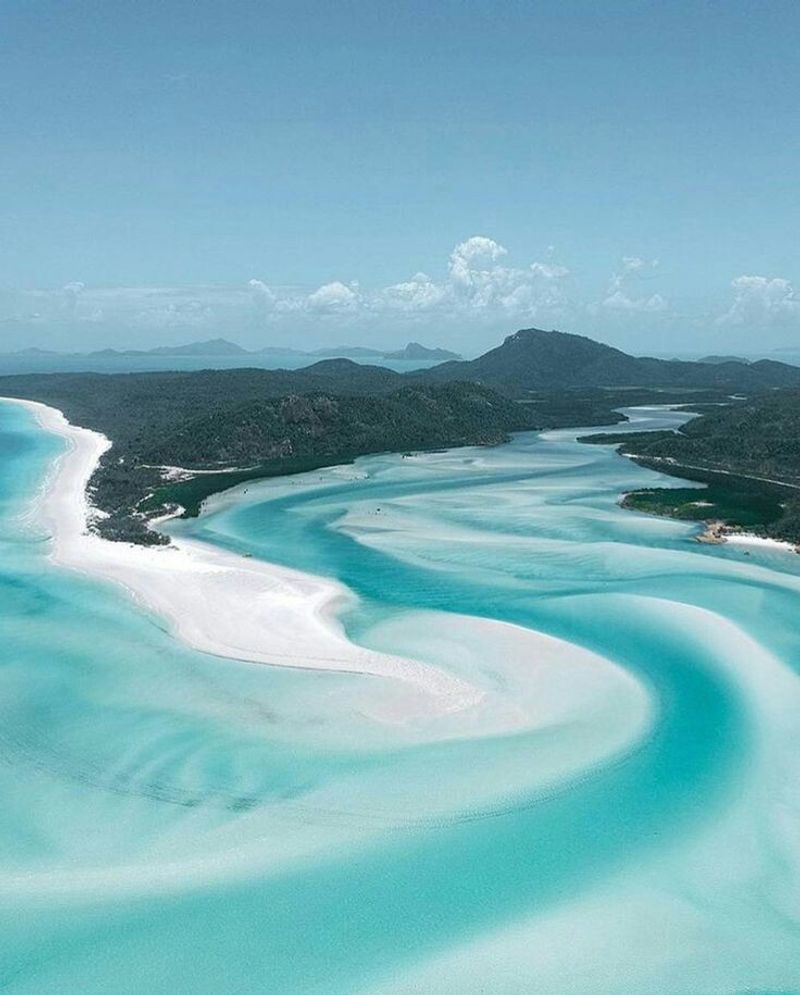
Silica sand sounds like something a geologist made up to impress people at parties, but at Whitehaven Beach, it’s the reason your sunglasses work overtime. The sand here is roughly 98 percent pure silica, which means it glows an almost blinding white and somehow stays cool even under the Australian sun.
Science is wild.
Hill Inlet is where things get properly surreal. Tides shift the sand and water into swirling patterns that look like abstract art painted by someone who really loves blue and white.
Helicopter tours will give you the full aerial view, but even from the beach, the colors are enough to make you question reality.
Stinger season runs roughly November through May, so plan your swim accordingly unless you enjoy impromptu trips to the medical tent. Outside that window, the water is as inviting as it looks.
Whitehaven even snagged a 2025 “best beach” title, which feels less like news and more like a formality at this point.
Pack a picnic, leave the makeup at home (you’ll sweat it off in ten minutes), and prepare for sand that refuses to stick to your skin. It’s oddly satisfying.
Aruba: Sunshine’s favorite address
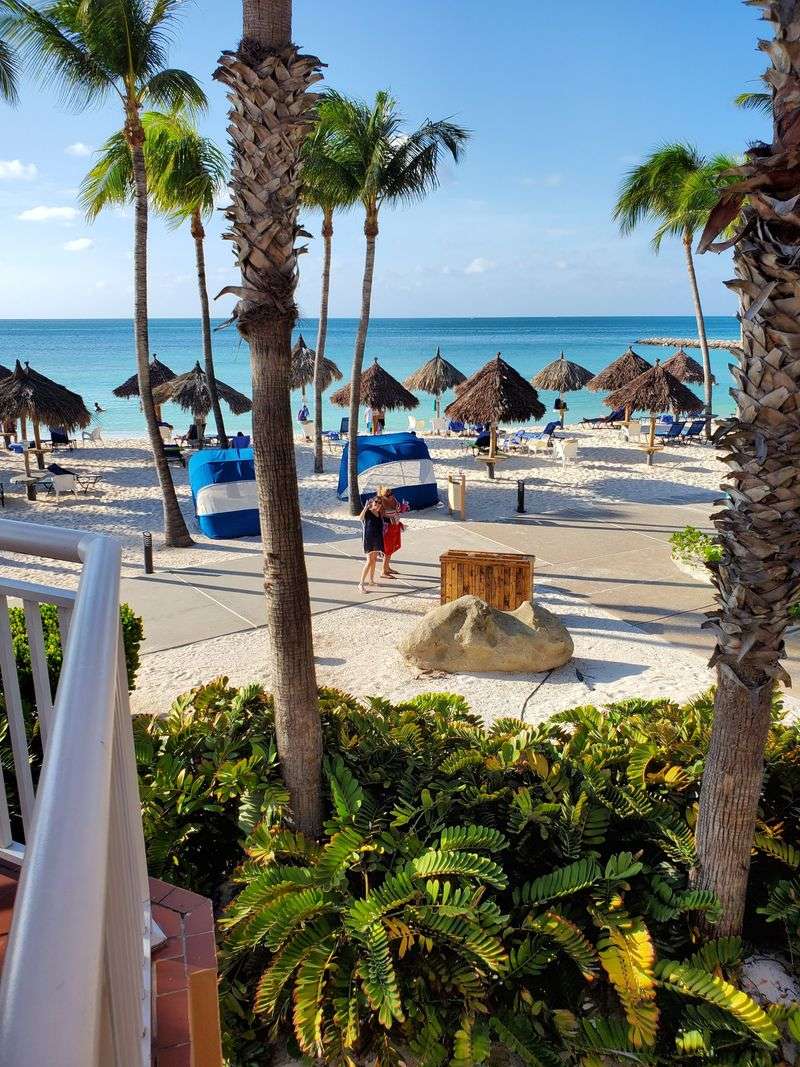
Rain in Aruba is about as common as a quiet day at Times Square. This island sits comfortably outside the hurricane belt, which means your vacation plans are far less likely to get wrecked by a surprise storm.
The weather stays reliably sunny and dry, with trade winds doing the heavy lifting to keep you from melting into a puddle.
Eagle Beach and Palm Beach are the headliners, offering soft sand and water that shifts from pale blue to deep turquoise depending on where you stand. The vibe is relaxed but never boring, with beach bars serving cold drinks and enough water sports to keep restless types entertained.
Snorkeling spots are scattered along the coast, and the visibility is excellent.
I’ve met people who visit Aruba every single year, like clockwork, and I used to think that was overkill. Then I spent a week there and understood the obsession.
When you find a place that delivers sunshine, safety, and zero drama, you don’t mess with the formula.
The island also throws in some quirky touches, like wild flamingos and colorful Dutch colonial architecture, so it’s not just beach-and-repeat. Though honestly, beach-and-repeat works just fine here.
Tenerife, Canary Islands: Island of Eternal Spring
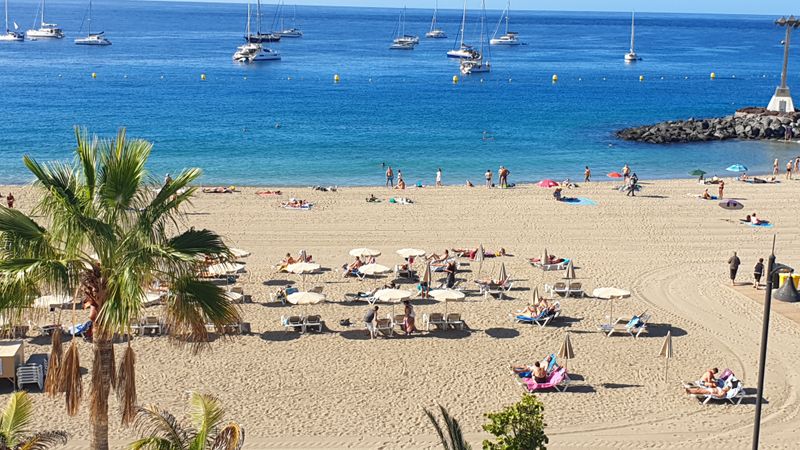
Mornings in Tenerife feel like someone dialed the thermostat to “just right” and then locked it there. The island earned its “eternal spring” nickname honestly, thanks to its Atlantic location and those dependable trade winds that keep temperatures steady year-round.
No scorching summers, no freezing winters, just consistent comfort.
The beaches range from golden stretches in the south to dramatic black volcanic sand in the north, so you can pick your aesthetic. Playa de las Teresitas is the postcard favorite, with imported Saharan sand that glows pale gold against the blue water.
It’s sheltered by a breakwater, which keeps the waves gentle and the vibe family-friendly.
Mount Teide looms over the island like a sleeping giant, and you can actually ride a cable car most of the way up if you want a break from sea level. The contrast between beach heat and alpine chill is jarring in the best way.
One morning you’re sipping coffee by the ocean, and by afternoon you’re surrounded by volcanic rock that looks like a Mars landing site.
Evenings are made for seaside tapas, preferably with a glass of local wine and zero plans beyond watching the sunset.
Phuket, Thailand: Dry-season dream
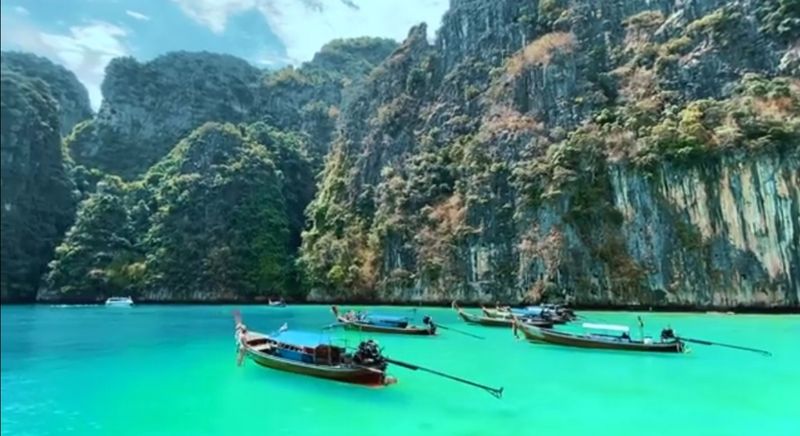
Timing is everything in Phuket, and if you land between November and April, you’ve nailed it. The dry season delivers endless blue skies, calm seas, and weather so perfect you’ll forget rain exists.
Outside that window, monsoons show up uninvited and the ocean gets moody, so plan accordingly.
Kata and Karon beaches are where you go when you want space to breathe without sacrificing scenery. The sand is soft, the water is swimmable, and the crowds thin out the farther you walk.
Patong is the party headquarters, loud and unapologetic, which is either your dream or your nightmare depending on your tolerance for bass-heavy music at breakfast.
Day trips to Phi Phi Islands are practically mandatory, though the boat ride can feel like a floating nightclub depending on which tour you book. The payoff is limestone cliffs rising straight out of emerald water, plus snorkeling that doesn’t require a PhD to enjoy.
Maya Bay is still recovering from its tourist stampede years, but the surrounding islands more than make up for it.
Street food in Phuket is criminally good and criminally cheap. Pad Thai by the beach, mango sticky rice for dessert, and you’re set.
Bora Bora, French Polynesia: Lagoon that rewrites blue
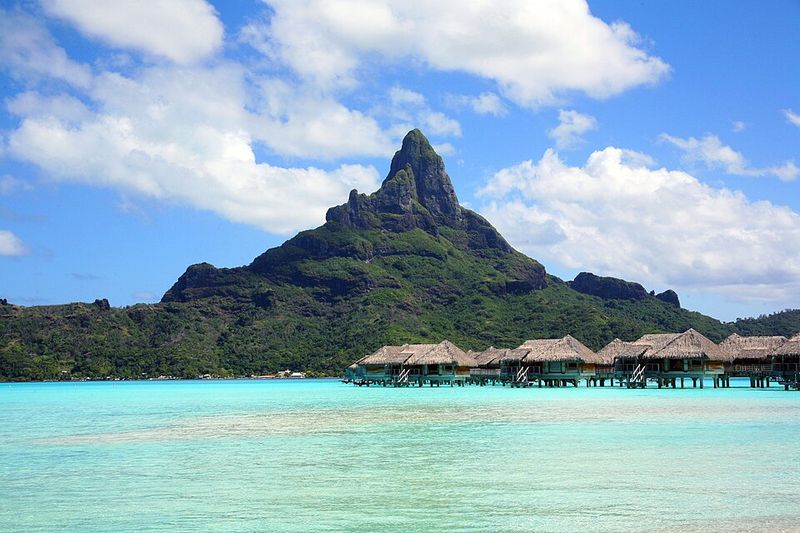
Mount Otemanu doesn’t just sit in the background; it commands the entire view like it’s auditioning for a fantasy movie. This jagged volcanic peak rises from the center of the island while overwater bungalows hover above water so clear you can count fish from your deck.
Even the budget rooms (and I use that term loosely) come with views that belong on a screensaver.
The lagoon is the real star, shifting through every shade of blue and green depending on the light and the depth. Snorkeling here feels like swimming inside an aquarium, except the fish didn’t get the memo that they’re supposed to be shy.
Stingrays glide past like they own the place, which, fair enough, they probably do.
Bora Bora isn’t cheap, and pretending otherwise would be dishonest. This is a splurge destination, the kind of place you save for or justify with a major life event.
But if you’re going to blow your budget on a beach, this lagoon makes a strong case for itself.
Sunsets here are absurdly dramatic, all pink and orange and gold, like the sky is showing off. Grab a cocktail, find a spot on your private deck, and just watch.
Maldives: The overwater capital
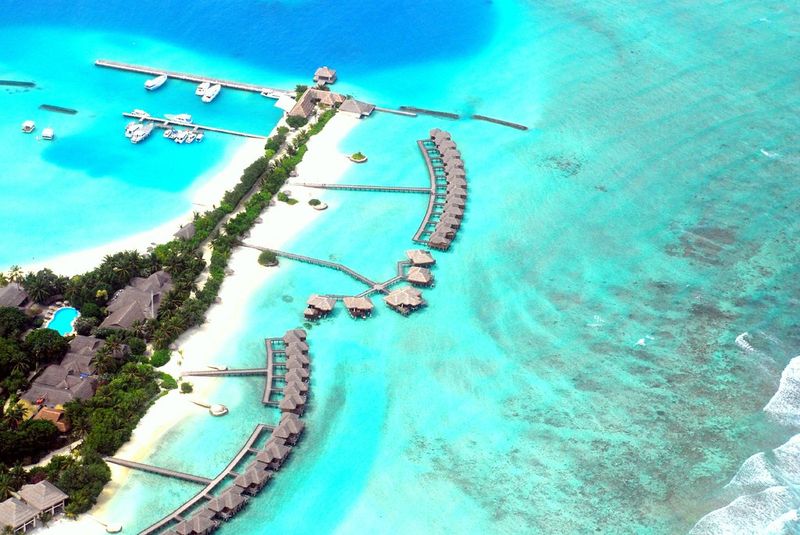
Every time I think the whole “villa on stilts” trend has peaked, the Maldives reminds me why it invented the concept in the first place. These overwater bungalows aren’t just rooms with a view; they’re full-blown experiences, complete with glass floor panels so you can watch marine life cruise by while you’re brushing your teeth.
Some even include stairways that lead straight into water so clear it looks Photoshopped.
The Maldives is made up of over a thousand islands, and most resorts claim their own private slice of paradise. That means your biggest decision is choosing between snorkeling off your deck or taking a five-minute walk to the beach.
Tough life. The water stays warm year-round, and the visibility is absurd, making it a top pick for divers and casual snorkelers alike.
Yes, it’s expensive. Yes, you’ll probably need to take a seaplane to reach your resort, which costs extra and feels like overkill until you’re soaring over those impossible blues and atolls shaped like jewelry.
Then it clicks.
This is what people mean when they say “bucket list.”
The Maldives remains the gold standard for overwater bliss, and honestly, the competition isn’t even close.
Anse Source d’Argent, Seychelles: Granite glam
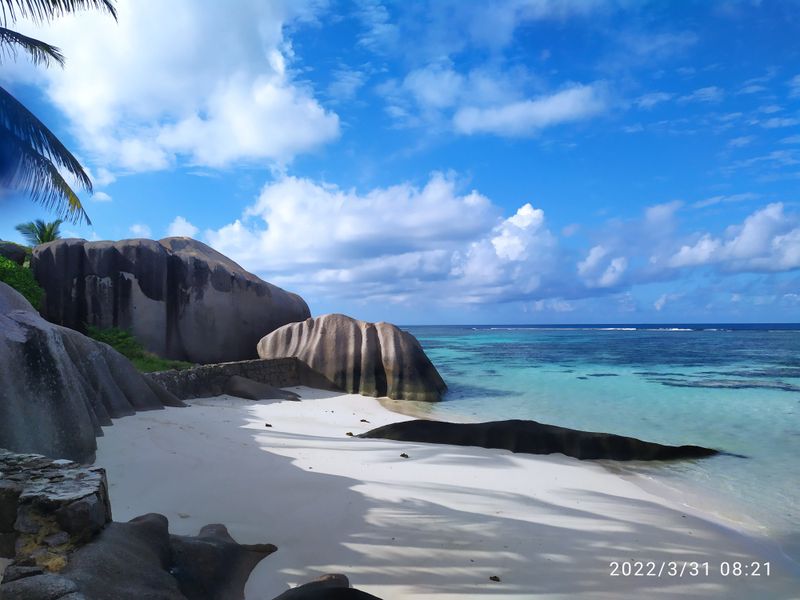
Giant granite boulders the size of buildings scattered along a beach sound like something out of a fever dream, but at Anse Source d’Argent, they’re just part of the scenery. These smooth, rounded rocks have been posing for postcards and travel magazines for decades, and they still haven’t gotten old.
The lagoon is calm and shallow, protected by a reef that keeps the waves gentle and the water crystal clear.
This is one of the most photographed beaches on the planet, and once you arrive, you’ll understand why every angle looks like a professional setup. The boulders create natural frames and shadows, the sand glows white, and the water does that thing where it shifts from pale turquoise to deep blue in a single glance.
Even amateur photographers walk away looking like pros.
La Digue, the island where Anse Source d’Argent lives, moves at a slower pace. Cars are rare, bikes are everywhere, and the vibe is refreshingly low-key.
You can cycle to the beach in about twenty minutes from the main village, and the ride itself is half the fun.
Pack a picnic, claim a spot between the boulders, and prepare to take about three hundred photos. You won’t be able to help yourself.
Nungwi and Kendwa, Zanzibar: Sunset theater
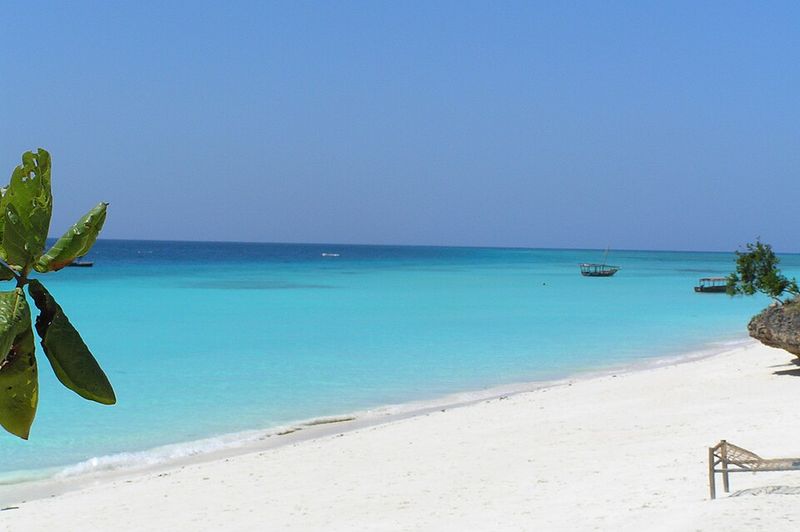
Waves at Nungwi shimmer like polished glass during the day, and by evening, the sky turns into a full-blown light show. Zanzibar’s northwest coast is famous for sunsets that look like someone cranked the saturation slider to maximum, all neon pinks and oranges melting into the Indian Ocean.
It’s the kind of view that makes you forget your phone exists for a solid ten minutes.
Nungwi is the livelier of the two beaches, with beach bars, dive shops, and enough activity to keep you entertained without feeling chaotic. Kendwa sits just south and offers a quieter vibe, perfect if you want to stretch out on powdery sand without negotiating for space.
Both beaches have that postcard-perfect combination of turquoise water and white sand that Zanzibar is known for.
The water stays warm year-round, and snorkeling trips to nearby Mnemba Atoll are worth the early wake-up call. You’ll spot sea turtles, colorful reef fish, and if you’re lucky, dolphins cruising past like they’re late for a meeting.
Local dhow boats offer sunset cruises, which sound touristy but deliver exactly what they promise.
Stone Town is close enough for a day trip if you need a break from beach mode. Spice markets, winding alleys, history everywhere.
Tulum, Mexico: Beach days, cenote dips
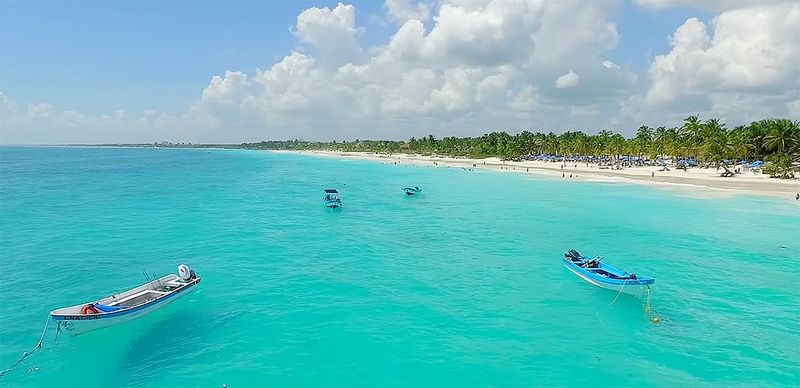
Morning swim in the Caribbean, midday tacos from a beachside shack, afternoon dip in a crystal-clear cenote. Tulum’s daily routine is almost unfairly good.
The beach itself is gorgeous, with soft sand and that signature turquoise water the Riviera Maya is known for, but the real bonus is having dozens of cenotes within easy reach. These natural sinkholes were sacred to the Maya, and today they’re perfect for cooling off when the sun gets intense.
The Tulum ruins perched on the cliff above the beach are one of the few archaeological sites where you can combine history with a swim. Explore the ancient structures, then walk down to the beach and jump straight into the water.
It’s a solid combo, even if the ruins themselves are smaller than Chichen Itza or Uxmal.
Cenotes like Gran Cenote and Dos Ojos are a short bike ride or drive from town, and each one has its own vibe. Some are open-air with jungle views, others are cave systems lit by shafts of sunlight.
Snorkeling gear is cheap to rent, and the underwater visibility is incredible. You’ll see fish, rock formations, and water so clear it barely looks real.
Tulum’s restaurant scene has exploded in recent years. Expect fresh ceviche, killer cocktails, and prices that reflect the town’s growing popularity.
Manuel Antonio, Costa Rica: Wildlife with your wave
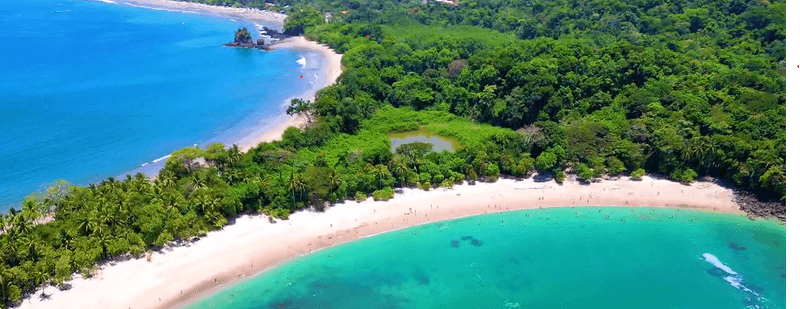
Capuchin monkeys patrolling the beach path while you search for your towel clip is peak Manuel Antonio energy. This tiny national park on Costa Rica’s Pacific coast somehow blends dense jungle with gorgeous coves, and the wildlife doesn’t seem to care that humans are around.
Sloths hang from branches like furry ornaments, iguanas sunbathe on rocks, and raccoons plot elaborate snack heists.
The beaches inside the park are small but stunning, with soft sand and water that’s warm enough for long swims. Playa Manuel Antonio is the main draw, sheltered by forest on three sides and calm enough for families.
Playa Espadilla Sur is quieter and tends to attract fewer crowds, though you’ll still share the space with curious wildlife.
Hiking trails wind through the jungle, and even the short loops offer chances to spot howler monkeys, toucans, and those famously slow sloths. Guides are available at the entrance and worth hiring if you want someone to point out camouflaged creatures you’d otherwise miss.
The park limits daily visitors, so arriving early is smart, especially on weekends.
Outside the park, the town of Manuel Antonio has plenty of restaurants, tour operators, and accommodations ranging from budget hostels to high-end resorts. It’s touristy but manageable, and the wildlife makes it worth the trip.
Mauritius: Blue bays and easy days
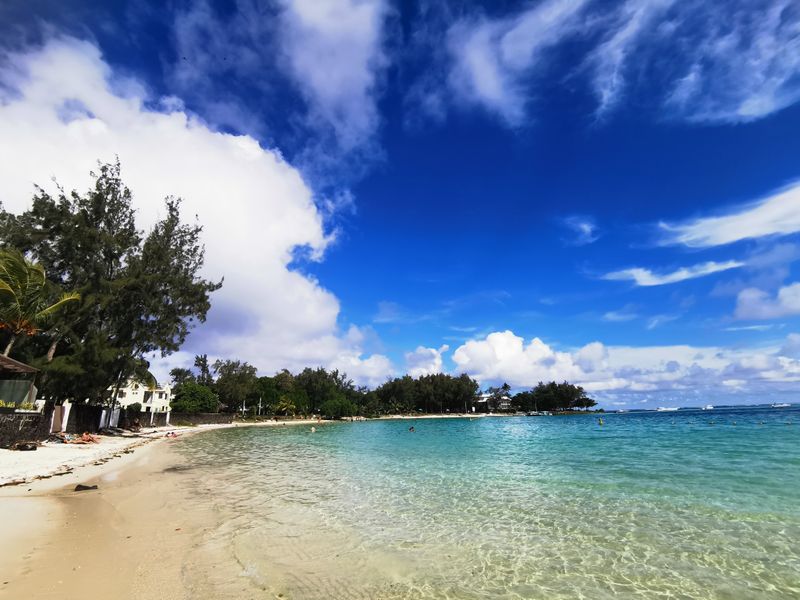
Pick your coast in Mauritius like you’re curating a playlist. Trou aux Biches on the northwest offers water so clear you can see fish darting around your ankles.
Flic en Flac stretches for miles, perfect for long strolls where the only decision is whether to stop for a swim now or in ten minutes. Le Morne in the southwest delivers scenery that hits hard, with the dramatic Le Morne Brabant mountain rising from the peninsula like a natural monument.
The island is surrounded by coral reefs, which means the lagoons stay calm and protected, ideal for snorkeling or just floating around without worrying about waves. The water stays warm year-round, and the beaches are clean and well-maintained.
Mauritius doesn’t do the deserted-island vibe; instead, it offers a polished, accessible version of paradise with good infrastructure and plenty of amenities.
Inland, you’ll find botanical gardens, volcanic craters, and waterfalls worth exploring if you need a break from the beach. The culture is a blend of Indian, African, French, and Chinese influences, which shows up in the food.
Curries, street snacks, fresh seafood, all of it excellent.
The island is also popular for kite surfing, especially around Le Morne, where the wind conditions are consistently strong. Even if you’re not into water sports, watching the kites fill the sky is its own kind of entertainment.
Boracay, Philippines: Powder underfoot
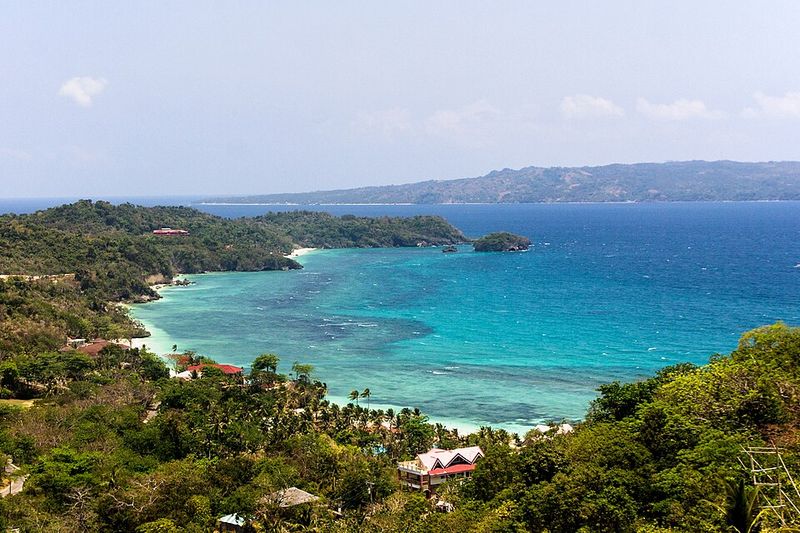
Walking on White Beach in Boracay feels like someone sifted flour and called it sand. It’s that soft, that fine, and it stretches for roughly four kilometers of swim-friendly shoreline.
This beach keeps landing on global “best of” lists, and after spending time there, the hype makes sense. The sand is legitimately special, and the water stays calm and inviting most of the year.
Boracay went through a rough patch a few years back when overcrowding forced a temporary shutdown for environmental cleanup. The island has since reopened with stricter regulations, and the difference is noticeable.
The beach is cleaner, the water is clearer, and the whole place feels more sustainable. It’s still busy, especially during peak season, but the chaos is more controlled now.
White Beach is divided into stations, each with its own vibe. Station One is the upscale end with high-end resorts and a quieter atmosphere.
Station Two is the action hub, packed with restaurants, bars, and beach vendors. Station Three is more laid-back and budget-friendly.
Pick your station based on your tolerance for noise and your wallet.
Sunsets here are a daily event, with the sky turning shades of orange and pink while paraw sailboats drift across the horizon. It’s touristy but undeniably beautiful.
Jumeirah Beach, Dubai, UAE: City glow, beach flow
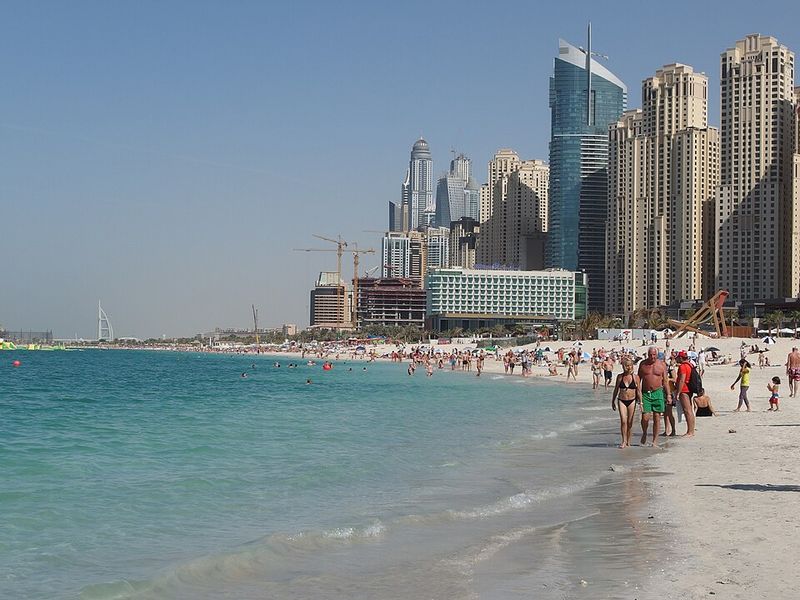
Skyscrapers lining the shore behind you, warm Gulf water lapping at your feet, and miles of pale sand stretching in both directions. Jumeirah Beach is what happens when a city decides to do beaches with the same ambition it brings to everything else.
This is a polished, well-maintained stretch of coastline with cafés, showers, lifeguards, and enough infrastructure to make beach days effortless.
The Burr Al Arab looms in the distance like a giant sail, and whether you find it stunning or gaudy depends entirely on your taste. Either way, it’s impossible to ignore.
The water is warm year-round, though summer months push temperatures into the uncomfortably hot zone. Winter is prime beach season, with sunny skies and temperatures that hover in the pleasant range.
Jumeirah Beach is free and public, which is surprisingly rare in Dubai, where exclusivity often comes with a price tag. You’ll find locals and tourists mixing on the sand, families setting up picnics, and plenty of water sports options if you’re feeling active.
Kite Beach, just north, is the spot for kite surfing and beach volleyball.
Dubai’s beach scene is more about convenience and comfort than wild, untouched beauty. You won’t find hidden coves or jungle backdrops, but you will find clean facilities, easy access, and a skyline that’s hard to beat.



