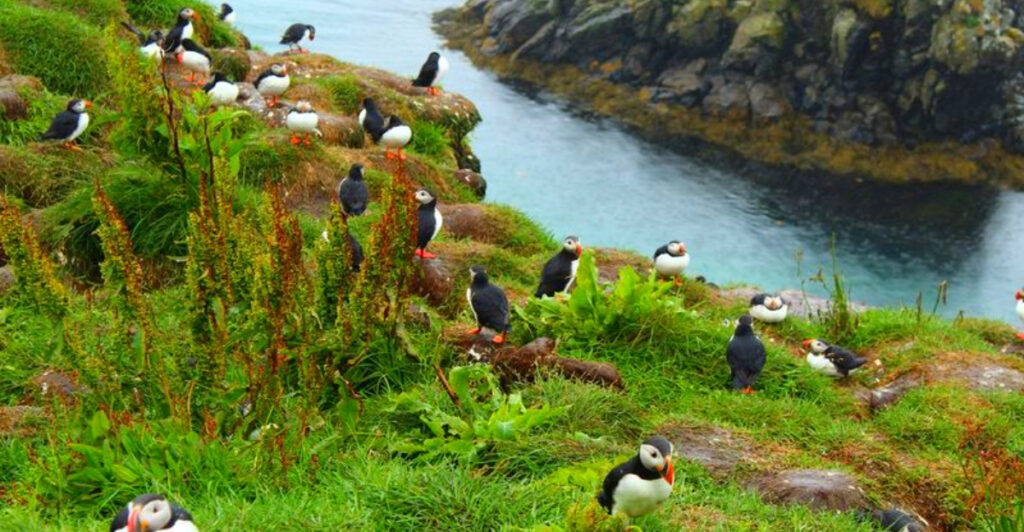
Puffins are arguably the most charming birds on the planet, with their tuxedo-black bodies, bright orange feet, and beaks that look like they were painted by someone who really committed to the color wheel. Every year, thousands of travelers plan entire trips around catching a glimpse of these comical little birds in their natural habitat, and honestly, who could blame them.
The good news is that puffins nest at some of the most dramatic and breathtaking coastal spots in the world, from windswept Atlantic cliffs to remote Arctic islands, so the journey to find them is half the adventure. Whether you are a dedicated birdwatcher with a camera the size of a small telescope or simply someone who saw a puffin photo online and immediately wanted to book a flight, this list covers the 13 best coastal areas where these birds actually show up in impressive numbers.
Get ready to add some serious miles to your passport.
1. Skomer Island, Marloes, Pembrokeshire, Wales
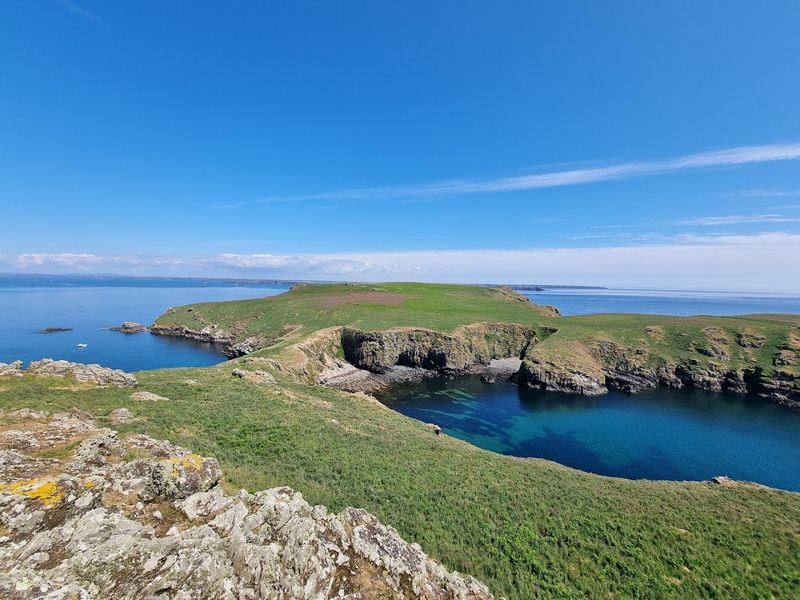
Few places in Britain make you feel as instantly transported as Skomer Island, where puffins wander the cliff paths with zero regard for the humans gawking at them from two feet away.
The island sits just off the Pembrokeshire coast and is managed as a nature reserve, which means no development, no crowds beyond the daily visitor limit, and absolutely no distractions from the wildlife.
Boat trips run from Martin’s Haven during puffin season, roughly late April through July, and booking ahead is strongly recommended since spaces fill up fast.
Once on the island, you follow marked paths across a landscape of bluebells and bracken, with puffins popping in and out of their burrows along the cliff edges.
The island also hosts Manx shearwaters, razorbills, and grey seals, so even on a quiet puffin day there is plenty to watch.
Skomer is genuinely one of Europe’s top seabird experiences, and the short crossing makes it surprisingly accessible for a place that feels so wonderfully remote.
2. Farne Islands, Seahouses, Northumberland, England
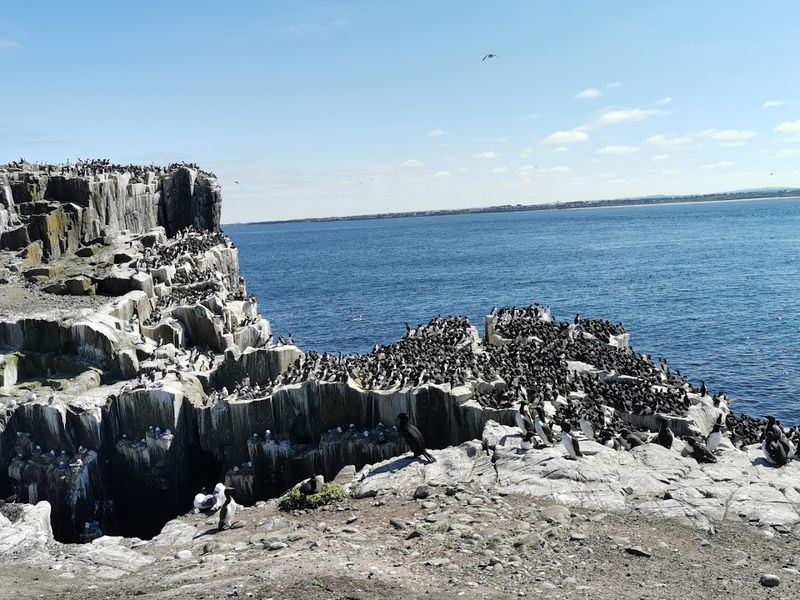
There is something almost theatrical about arriving at the Farne Islands by boat, when suddenly the rocky outcrops come into view and every ledge seems to be occupied by a bird with opinions.
National Trust boat tours depart from the small harbor town of Seahouses, and the crossing takes roughly 15 to 20 minutes depending on which islands you are visiting.
Puffins return to the Farnes from April through July, sharing the islands with Arctic terns, guillemots, shags, and a large colony of grey seals that lounge on the lower rocks with spectacular indifference.
Inner Farne is the most visited island and offers the closest puffin encounters, with birds nesting right beside the boardwalks.
A word of warning: the Arctic terns nesting here are fiercely protective and will swoop low at visitors’ heads, so a hat is not optional.
3. RSPB Bempton Cliffs, Bempton, East Riding Of Yorkshire, England
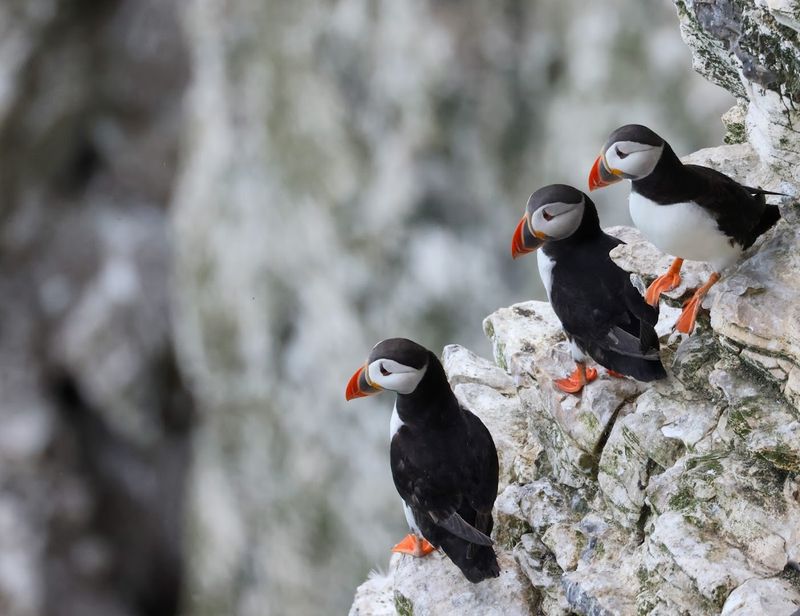
Bempton Cliffs proves that you do not need a boat, a guide, or a particularly adventurous spirit to get a genuinely excellent puffin sighting.
The RSPB reserve sits on the Yorkshire coast near Bridlington and features over four miles of chalk cliff paths with multiple viewing platforms positioned right at the cliff edge.
Gannets steal most of the attention here since the colony is one of England’s largest, but puffins nest in the cliff crevices from April through August and reward patient watchers who scan the rock face carefully.
The visitor center has helpful staff, binocular hire, and regular guided walks during the season, making this a strong option for families and first-time birdwatchers.
Parking is available on site, and the paths are well-maintained and mostly flat, which makes the reserve far more accessible than most cliff-top puffin spots.
4. Mykines, Mykines, Vágar, Faroe Islands
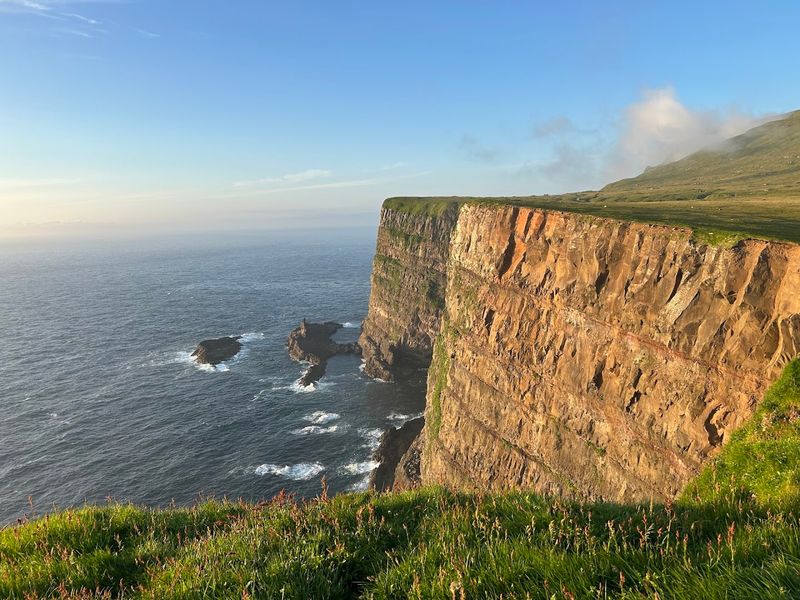
Getting to Mykines requires either a helicopter or a small ferry from Sorvagur, and the journey alone tells you that this is not a casual day trip for the faint-hearted traveler.
Mykines is the westernmost of the Faroe Islands, with a population that rarely exceeds a dozen permanent residents, and in summer the puffins very nearly outnumber the people.
The walking route from the village leads across open moorland to the lighthouse at the island’s tip, passing cliff edges where puffins nest in the grass at arm’s reach from the path.
Visitors must be accompanied by a local guide during the nesting season to protect the birds and their burrows, which is a sensible rule that keeps the experience from becoming chaotic.
5. Hafnarhólmi Puffin Viewing Area, Borgarfjörður Eystri, East Iceland, Iceland
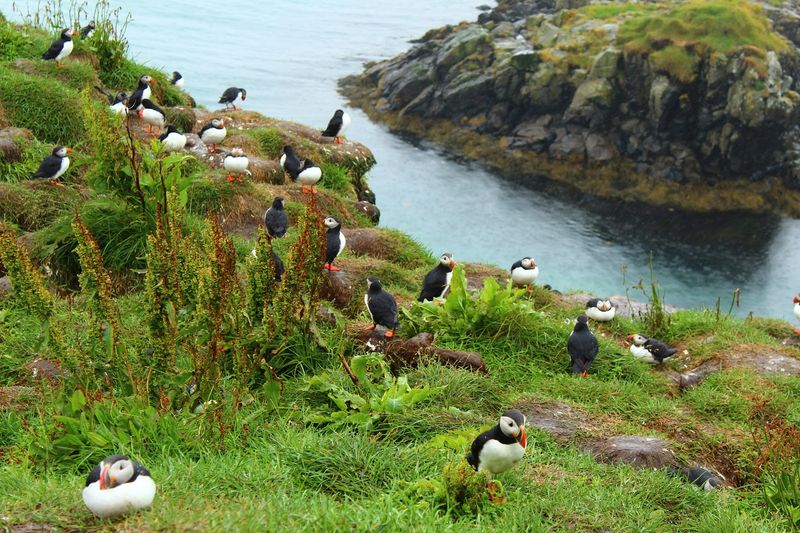
Borgarfjörður Eystri is one of those places that feels like it exists slightly outside the normal flow of time, tucked into a fjord in East Iceland with mountains on one side and the sea on the other.
Hafnarhólmi is a small rocky islet connected to the harbor by a boardwalk, and the puffin viewing platforms here are some of the best-designed in all of Iceland.
Birds nest just below the walkway level, meaning you can look almost directly down at puffins standing outside their burrows, which makes for genuinely close and unobtrusive observation.
The colony here numbers in the thousands, and the birds are present from May through August each year.
Unlike Iceland’s more famous tourist routes, Borgarfjörður Eystri sees relatively modest visitor numbers, which keeps the atmosphere calm and the wildlife undisturbed.
6. Látrabjarg Bird Cliffs, Patreksfjörður, Westfjords, Iceland
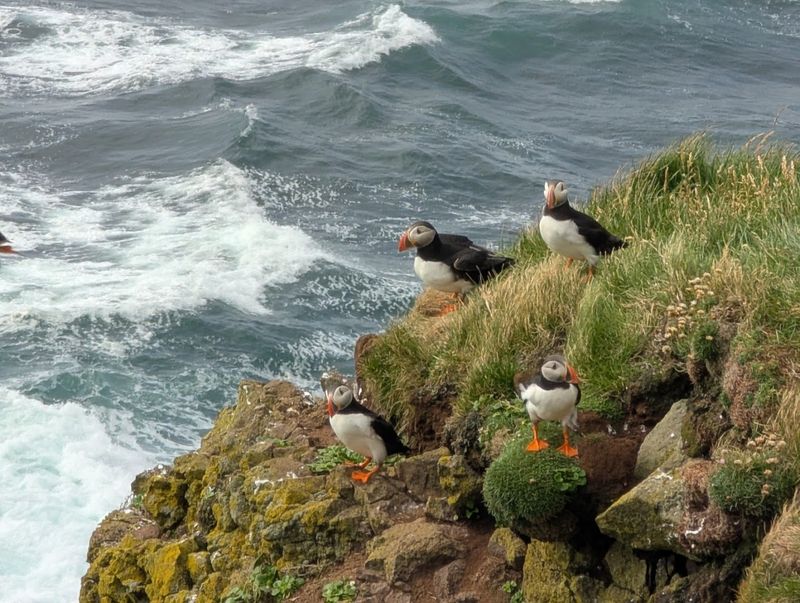
Látrabjarg is Europe’s largest seabird cliff, stretching for roughly 14 kilometers along the westernmost edge of Iceland, and the scale of the place is genuinely hard to process until you are standing at the top looking out.
The cliffs rise up to 440 meters at their highest point, and the grassy tops are riddled with puffin burrows from June through August.
One of Látrabjarg’s most talked-about features is how unbothered the puffins seem by human visitors, often sitting just centimeters from the cliff edge while photographers crouch nearby.
Getting here requires a long drive through the Westfjords, a region that sees far fewer tourists than Iceland’s more famous south and west coasts.
The road conditions can be rough, especially after rain, so a four-wheel-drive vehicle is worth considering for the journey.
7. Runde Island, Runde, Møre Og Romsdal, Norway
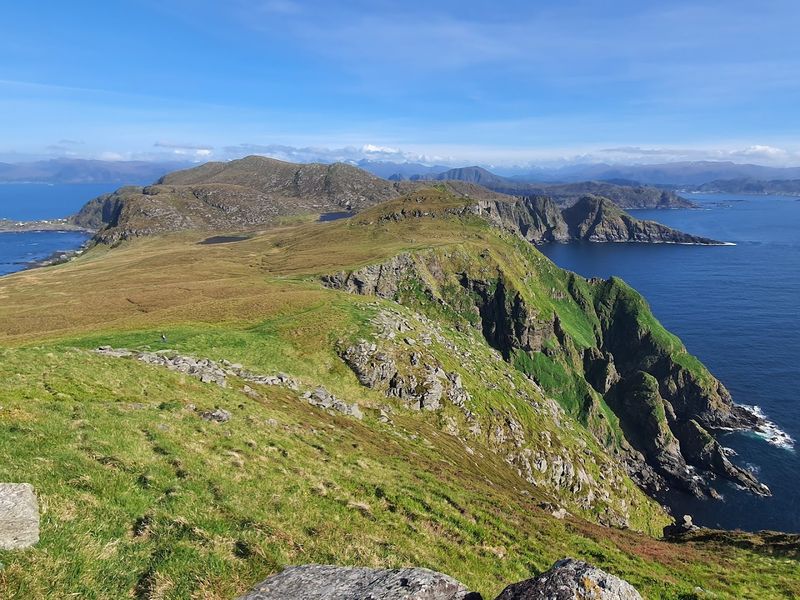
Norway is not the first country most people think of when planning a puffin trip, but Runde Island makes a very convincing case for itself, hosting one of the largest seabird colonies in the country.
The island sits off the coast of Møre og Romsdal and is accessible by road and bridge from the mainland, which is a rare convenience for a puffin destination of this quality.
Around 100,000 pairs of puffins use Runde each year, arriving in spring and remaining through the summer breeding season before heading back out to sea.
Hiking trails cross the island and lead to the cliff areas where birds nest, with several viewpoints offering good sightlines over the colony without requiring visitors to get too close.
Runde also attracts birdwatchers interested in gannets, kittiwakes, and various species of auk, making it a productive stop for anyone serious about seabird watching in Scandinavia.
8. Lunga, Treshnish Isles, Argyll And Bute, Scotland
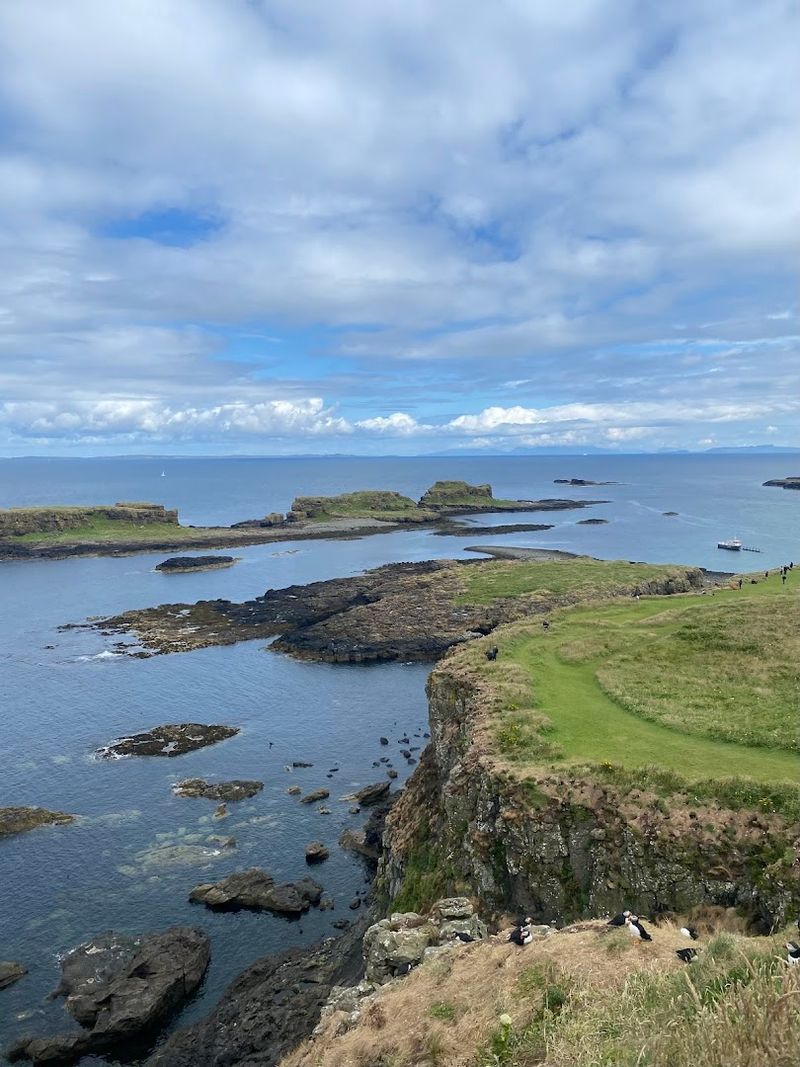
Lunga has earned something of a legendary reputation among Scottish wildlife enthusiasts, and a single afternoon on the island is usually enough to understand why people return year after year.
The island is uninhabited and part of the Treshnish Isles, a chain of basalt islands off the west coast of Mull, reachable only by wildlife boat tours that operate from Mull, Oban, and nearby ports.
Puffins nest in the grassy slopes at the top of the island’s basalt cliffs, and the birds are so accustomed to careful visitors that they will often stand just a meter or two away without any sign of alarm.
The tours typically allow around two hours on the island, which is enough time to walk the main path, observe the puffins, and take in the surrounding sea views toward Staffa and Mull.
Breeding season runs from roughly late April through July, with June generally considered the peak month for activity at the colony.
9. Hermaness National Nature Reserve, Unst, Shetland, Scotland
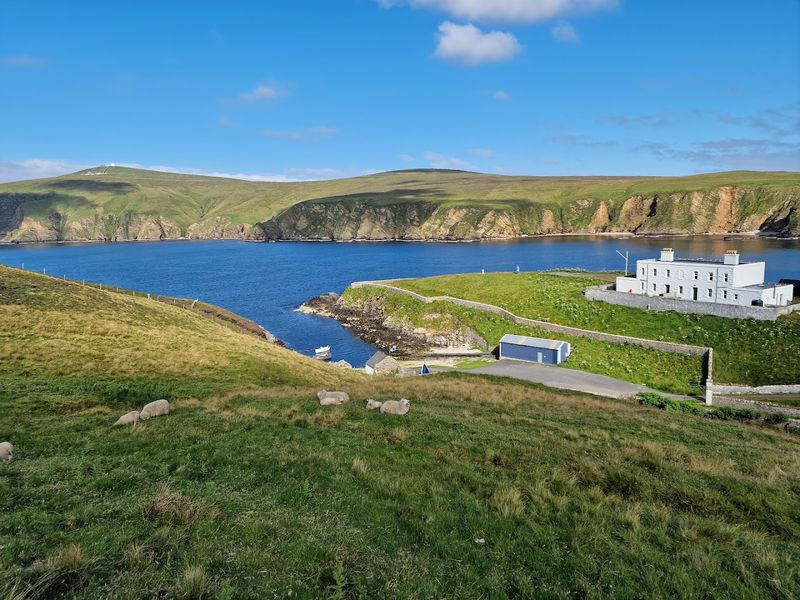
Unst is Britain’s most northerly inhabited island, and Hermaness sits at its northern tip, which means you are about as far from central London as you can get while still technically being in the UK.
The reserve is managed by NatureScot and protects an extraordinary concentration of breeding seabirds, including puffins, gannets, great skuas, and fulmars, all sharing a stretch of moorland and cliff that feels magnificently elemental.
The walk from the visitor center to the cliff edge takes around 45 minutes each way along a boardwalk that crosses open moorland, and great skuas will dive-bomb you on the way if you pass too close to their nests.
Puffins nest at the cliff base and can be spotted from the cliff-top paths during May, June, and July.
The sea stacks visible from Hermaness, including the famous Muckle Flugga lighthouse stack, add a dramatic visual backdrop that makes the walk feel especially rewarding.
10. Castle O’Burrian, Westray, Orkney, Scotland
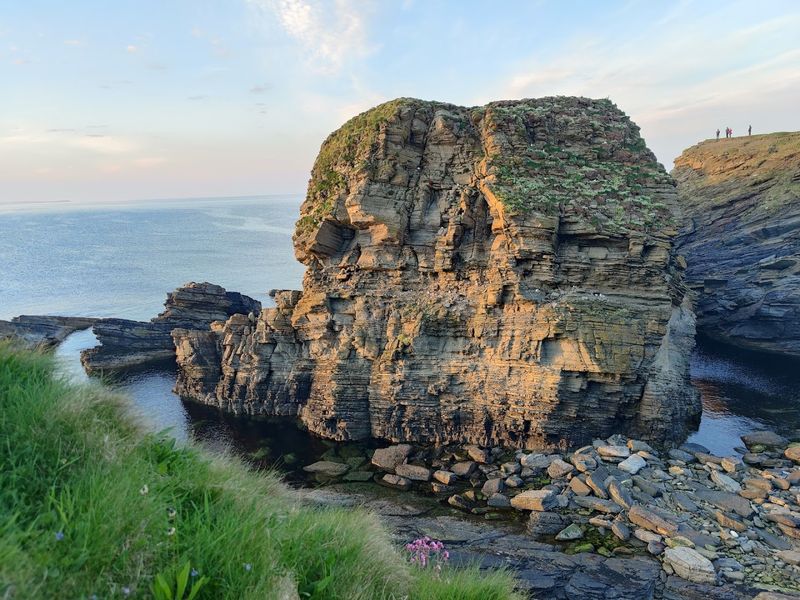
Castle O’Burrian is a sea stack that rises from the coast of Westray like a small forgotten fortress, and every summer it becomes one of Orkney’s most reliably charming puffin spots.
Westray is one of the larger Orkney islands, accessible by ferry or small plane from the Orkney mainland, and the walk to Castle O’Burrian from the road is short and uncomplicated.
Puffins nest in the cliff face of the stack itself and in the surrounding coastal turf, and the viewing area allows visitors to watch from above without disturbing the birds on the ledges below.
The site is free to visit and has no formal infrastructure beyond a parking area, which gives it a pleasantly old-fashioned feel compared to managed reserves with entrance fees and gift shops.
Westray itself is worth spending time on, with prehistoric sites, sandy beaches, and a community that takes quiet pride in the island’s wildlife credentials.
11. Elliston Puffin Viewing Site, Elliston, Newfoundland And Labrador, Canada
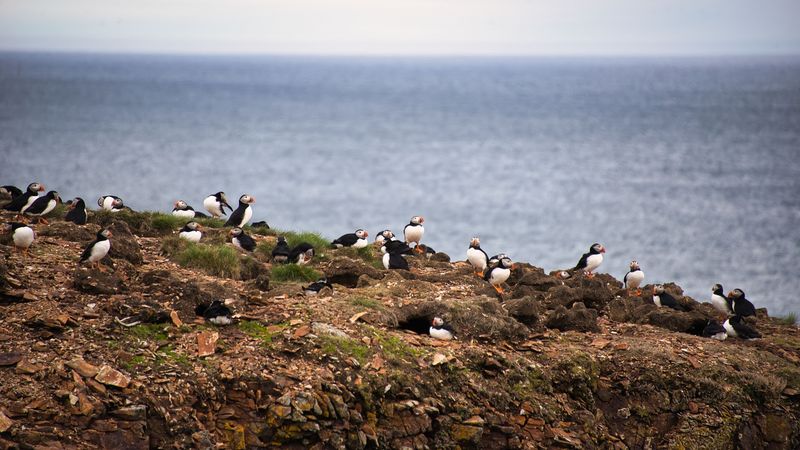
Elliston holds a title that its small community wears with obvious pride: it is widely recognized as the puffin capital of North America, offering some of the closest land-based views of Atlantic puffins on the continent.
The viewing site is located at the edge of the town and involves a short walk along grassy paths to rocky coastal ledges that look directly across to the offshore nesting rocks where puffins gather in summer.
No boat trip is required, which makes Elliston an excellent option for visitors who prefer to keep their feet on solid ground while still getting a genuinely close look at the birds.
Puffins are typically present from May through August, with July often producing the largest numbers as chicks are being raised and adult birds make constant trips between the sea and the nest sites.
The town of Elliston is also known for its historic root cellars, which are built into the hillsides around the community and add an unexpected cultural dimension to the visit.
12. Witless Bay Ecological Reserve, Witless Bay, Newfoundland And Labrador, Canada
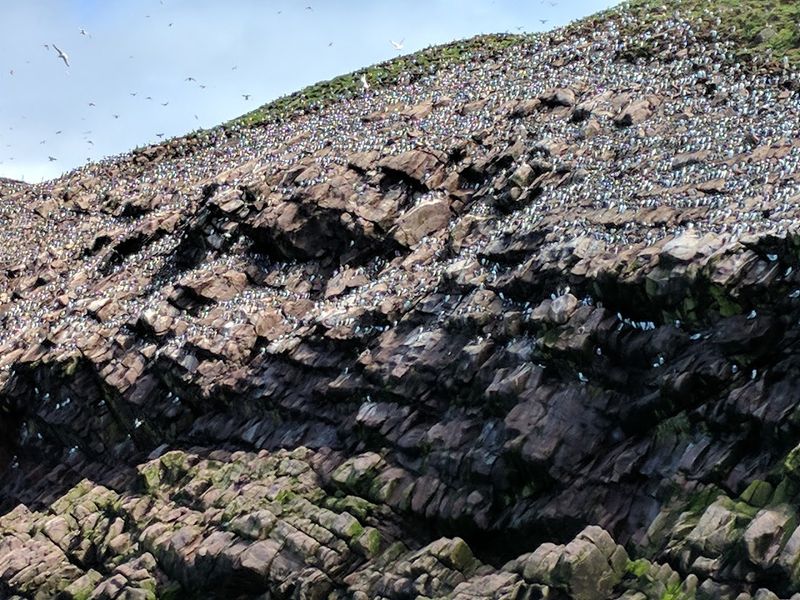
The name Witless Bay might raise an eyebrow, but there is nothing even slightly clueless about this reserve, which protects one of the largest Atlantic puffin colonies in North America across four offshore islands.
Boat tours depart from the small communities along the shore and carry visitors out into the bay where the islands rise steeply from the water and the air above them fills with circling seabirds.
The reserve is home to an estimated 260,000 pairs of puffins, along with Leach’s storm petrels and common murres, making the scale of the colony genuinely astonishing when you see it from the water.
Humpback whales are frequently spotted in the same waters during summer, and in late spring some years, drifting icebergs add a striking visual element to the boat tours.
Tours typically run from May through August, with licensed operators based in Bay Bulls, Bauline, and Witless Bay itself.
The surrounding Avalon Peninsula offers good accommodation options and additional coastal scenery for those extending their trip.
13. Machias Seal Island, Cutler, Maine, United States
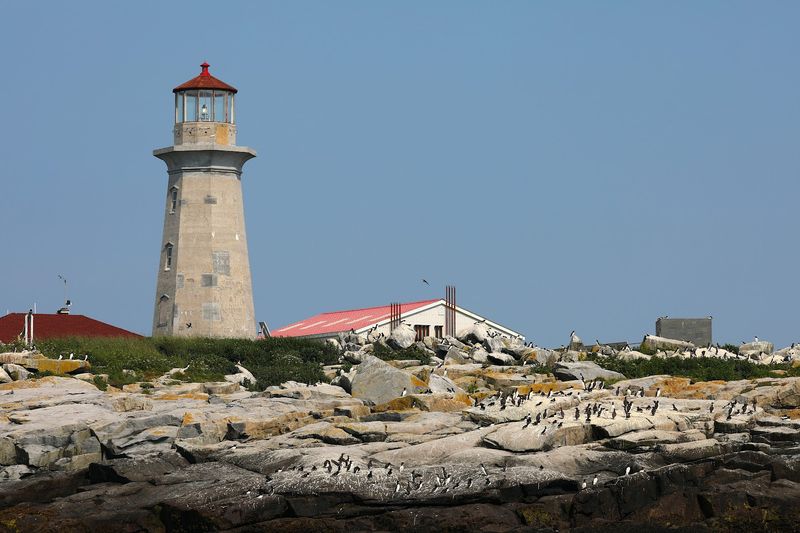
Machias Seal Island operates on a system that makes it feel genuinely exclusive: only a small number of visitors are permitted to land each day, and spots on the licensed boat tours from Cutler fill up weeks or months in advance.
The island is the only place in Maine where visitors can actually set foot on land and observe puffins at close range, which explains why competition for those limited spaces is so fierce each season.
Wooden observation blinds are positioned around the colony, allowing visitors to watch the birds from concealment without causing disturbance to the nesting activity.
Atlantic puffins began recolonizing the island in the 1970s as part of restoration efforts by the Audubon Society, and the colony now numbers over 700 pairs during the breeding season.
The boat trip from Cutler takes around 90 minutes each way and crosses open ocean, so conditions can vary considerably depending on the weather and time of season.
Share this story