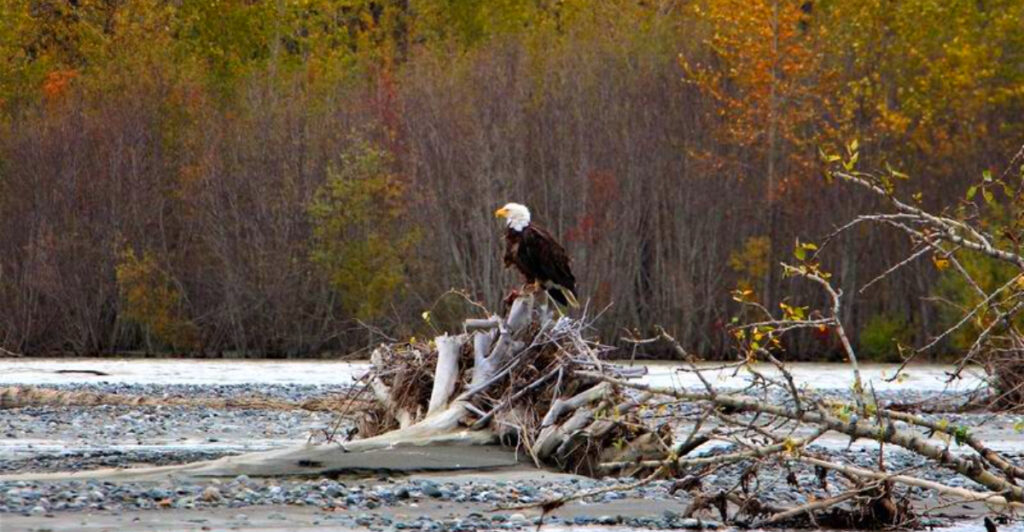
Every year, thousands of bald eagles put on one of the most jaw-dropping wildlife shows on the continent, and the best part is you do not need a wildlife degree or expensive gear to catch the action. North America is home to roughly 30,000 of these impressive birds, and they tend to gather in predictable hotspots where fish are plentiful and open water is available even during the coldest months. From the salmon-rich rivers of Alaska and British Columbia to the frozen-over Midwest, bald eagles follow the food, and smart visitors follow the eagles. Whether you are a dedicated birder with a 600mm lens or a curious traveler who just wants to see something genuinely wild, the 15 locations in this list will deliver.
Some offer guided tours and annual festivals, others reward those willing to wake up early and stand quietly by a riverbank. All of them are worth the trip.
1. Conowingo Dam, Darlington, Maryland, United States
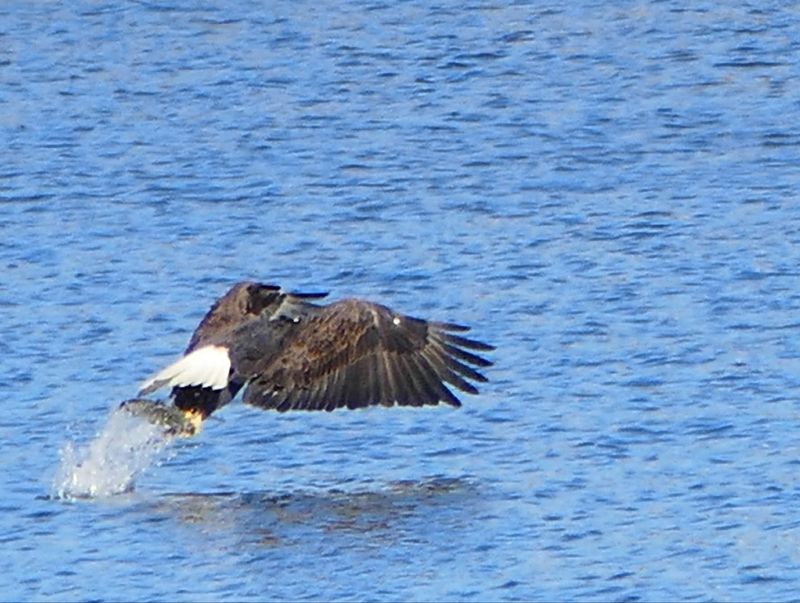
Conowingo Dam on the Susquehanna River has become one of the most celebrated eagle-watching and eagle-photography destinations in the eastern United States. The dam’s turbines stun or kill fish passing through, depositing them in the turbulent water below and creating what amounts to a fast-food drive-through for bald eagles.
Peak season runs from late October through early January, with November and December delivering the most action. High counts regularly exceed 100 eagles in a single day, and totals of 250 to 500 have been recorded at the absolute peak.
Fisherman’s Park on the Harford County side offers prime viewing, with spots along the fence line and a fishing pier providing different angles on the aerial action. Checking the dam’s water release schedule by calling 1-888-457-4076 after 5 PM helps visitors time their visit, since gate openings trigger intense feeding activity. Parking fills fast on weekends, so an early arrival is strongly recommended.
2. Squamish Estuary, Squamish, British Columbia, Canada
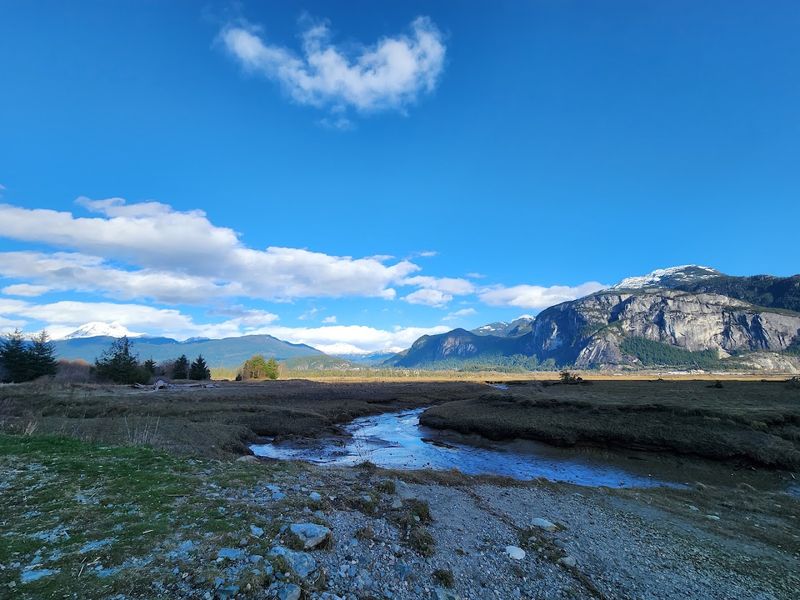
Squamish, British Columbia, carries the title of Eagle Capital of the World, and that is not marketing fluff. The area set a world record count of 3,769 bald eagles in 1994, and annual tallies have averaged around 1,300 birds ever since, with 1,397 counted in 2026.
Chum, coho, and chinook salmon spawning in the Squamish, Cheakamus, and Mamquam rivers drive the gathering, which runs from late October through February and peaks in November and December. Eagles migrate in from regions where rivers and lakes have frozen, following the salmon.
The Eagle Run Vista Viewpoint on Government Road in Brackendale provides an accessible, sheltered observation area, often staffed by EagleWatch volunteers on weekends. Guided raft floats offer a quieter way to observe birds without disturbing them. The month-long Brackendale Eagle Festival adds concerts, lectures, and art shows to the experience each season.
3. Klamath Basin National Wildlife Refuge Complex, Klamath Falls, Oregon, United States
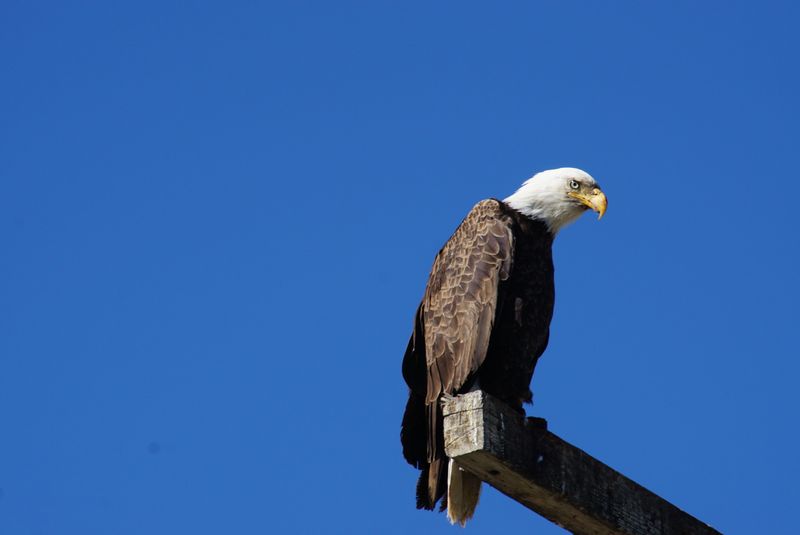
Straddling the Oregon-California border, the Klamath Basin holds a remarkable winter secret: it hosts the largest concentration of wintering bald eagles in the entire contiguous United States. Numbers typically range from 500 to 700 birds, occasionally topping 1,000 during peak periods in January and February.
Six distinct refuges make up the complex, covering over 200,000 acres of wetlands, lakes, marshes, and agricultural fields. Eagles follow the migratory waterfowl that pour through this section of the Pacific Flyway, and flooded fields provide easy hunting when conditions get harsh.
Bear Valley National Wildlife Refuge is famous for its morning fly-outs, when roosting eagles leave their old-growth trees at dawn in dramatic waves. Self-guided auto tour routes at Lower Klamath and Tule Lake refuges are excellent for photography. The Winter Wings Festival, held around Presidents Day weekend, draws birders and wildlife photographers from across the country.
4. Homer, Alaska, United States
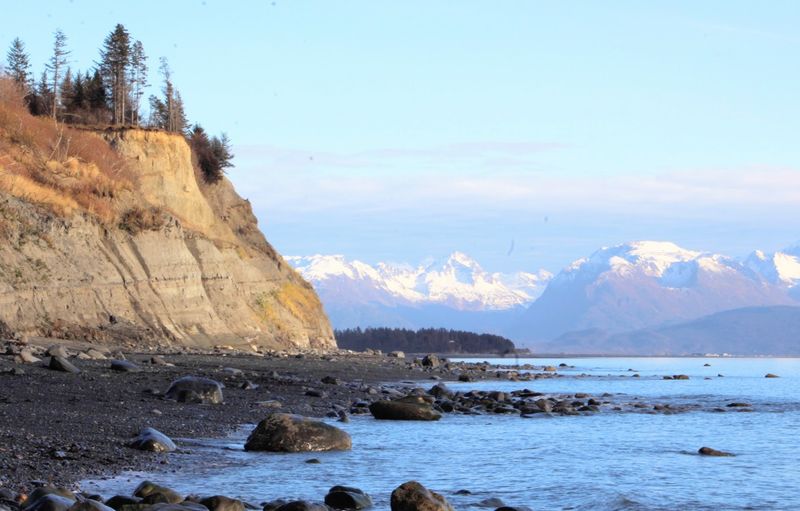
Homer, Alaska, wears its “Halibut Fishing Capital of the World” badge proudly, but any wildlife enthusiast will tell you the bald eagles deserve equal billing. Alaska holds roughly half of North America’s entire bald eagle population, and Homer concentrates a generous slice of that number along its coastline year-round.
The four-and-a-half-mile Homer Spit is the prime viewing corridor, where eagles perch on posts, scan the harbor, and circle above the tide flats in search of fish. Low tide exposes the seabed and triggers the most active feeding behavior, and several viewing stations with spotting scopes are positioned along the Spit Trail.
Winter typically brings the highest numbers, with 50 to 70 birds sometimes visible at once. The Anchor River State Recreation Area, about 25 minutes north of town, offers additional sightings during tide changes. Homer’s position between Kachemak Bay and Cook Inlet keeps winter temperatures more moderate than most Alaskan destinations.
5. Vancouver Island, Campbell River, British Columbia, Canada
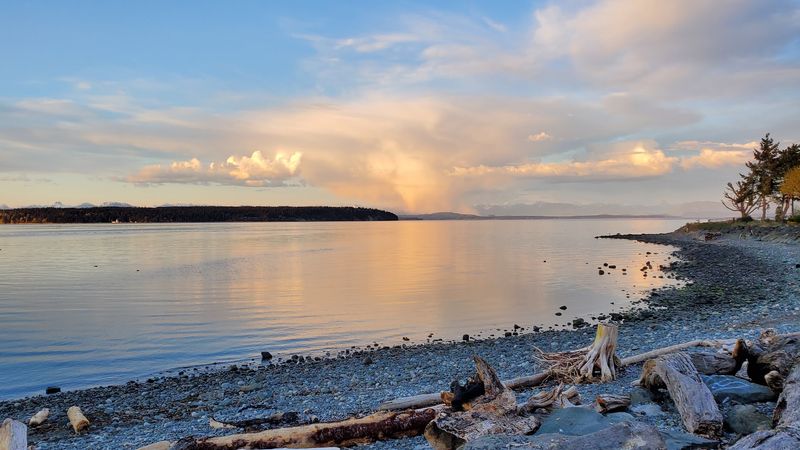
Campbell River holds the title of Salmon Capital of the World, and that reputation has a very direct benefit for eagle watchers. Fall salmon runs attract large numbers of bald eagles each season, but the real showstopper happens in late May through early July during an event locals call the Eagle Show.
Powerful tidal currents in the Discovery Islands force North Pacific Hake to the surface, where barotrauma leaves the fish floating and helpless. Hundreds of eagles respond immediately, diving with precision in a concentrated feeding event that plays out in a relatively small area of open water.
Guided boat tours from Discovery Harbour Marina bring visitors directly into the action, with naturalists providing commentary throughout. Photography workshops are available during peak weeks. Year-round, eagles are present near the coast, rivers, and lakes, making Campbell River a reliable destination for sightings in any season. The city also protects nest trees within a 60-meter development buffer zone.
6. Chilkat Bald Eagle Preserve, Haines, Alaska, United States
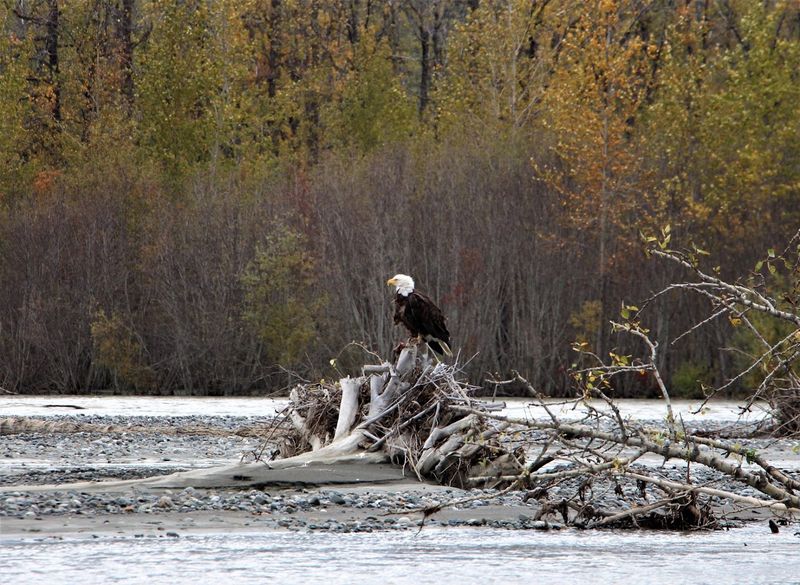
No other place on Earth pulls together as many bald eagles in one spot as the Chilkat Bald Eagle Preserve in Haines, Alaska. Each fall, between 3,000 and 4,000 birds descend on a five-mile stretch of the Chilkat River, drawn by a late run of chum salmon.
Warm groundwater upwellings keep sections of the river ice-free well into winter, giving eagles a reliable fishing ground when everything else has frozen solid. The peak arrives in November, though strong numbers persist from October through February.
Designated pull-outs along the Haines Highway between miles 18 and 24 make viewing easy and accessible. The annual Alaska Bald Eagle Festival in November adds guided tours and photography workshops to the experience. Cottonwood trees along the riverbanks sometimes hold two dozen eagles in a single tree, which is a sight that is genuinely hard to forget.
7. Mississippi River Visitor Center, Keokuk, Iowa, United States
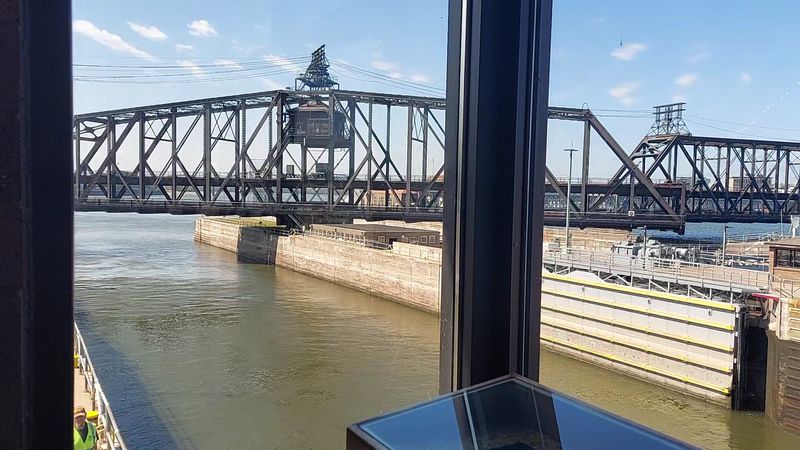
Keokuk, Iowa, may not be the first place that comes to mind for a wildlife adventure, but every winter it quietly becomes one of the Midwest’s most impressive eagle-watching destinations. The turbulence below Lock and Dam No. 19 keeps the Mississippi River ice-free even in the coldest months, concentrating fish near the surface and drawing hundreds of bald eagles south from frozen northern waterways.
Peak viewing runs from December through February, with eagles most active at dawn and late afternoon. Up to 400 birds have been tallied in the Keokuk area during a single winter season, and the broader Middle Mississippi River Valley hosts approximately 2,000 overwintering eagles, the second-largest concentration in the contiguous U.S.
Victory Park along the riverfront features free spotting scopes provided by Lee County Conservation, making viewing accessible to everyone. The annual Bald Eagle Appreciation Days event in January adds live raptor demonstrations and guided tours. Warm layers and binoculars are the only gear required.
8. Starved Rock State Park, Oglesby, Illinois, United States
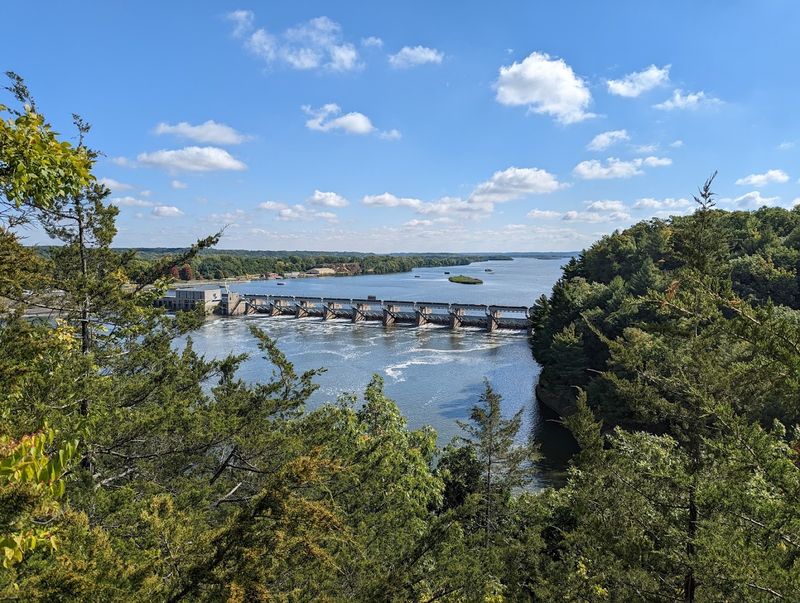
Illinois ranks second only to Alaska for winter bald eagle concentrations in the contiguous United States, and Starved Rock State Park is the front row seat for that spectacle. Around 3,000 eagles migrate to the Illinois River Valley each winter, drawn by the unfrozen tailwaters below the Illinois Waterway Lock and Dam where fish concentrate near the surface.
Peak activity runs from January through February, with dawn offering the best chances to watch dozens of birds diving for breakfast along the riverbank. The Illinois Waterway Visitor Center is often staffed by Starved Rock Audubon Society members who set up professional viewing scopes for visitors at no charge.
The annual Eagle Watch Weekend in January features guided hikes, trolley tours, live Birds of Prey programs, and children’s activities, all free to attend. The iconic 125-foot Starved Rock bluff provides a sweeping view of the river and the Lock and Dam below. Binoculars, warm clothing, and an early start are the recipe for a successful visit.
9. Hauser Lake, Helena, Montana, United States
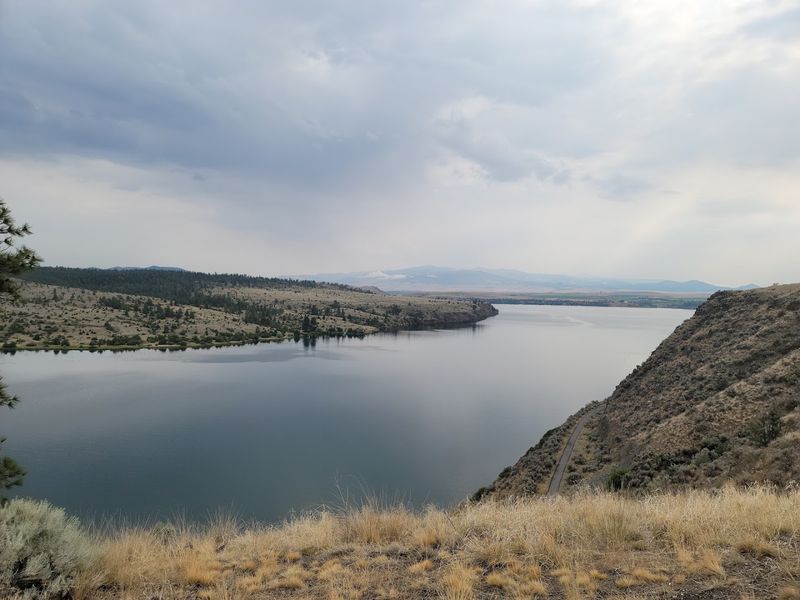
Hauser Lake sits about 14 miles northeast of Helena, formed by the Hauser Dam on the Missouri River, and it has quietly built a reputation as one of Montana’s most reliable winter eagle-watching spots. The reservoir stays partially open even in cold weather, giving eagles consistent access to fish when surrounding lakes have frozen solid.
The best window runs from late November through February, as migratory birds arrive from Alaska and Canada to supplement the resident Montana population. Over 300 bald eagles have been counted along the broader Madison-Missouri River system during late autumn and winter. Eagles are regularly spotted patrolling the open water or sitting in tall cottonwoods that line the shoreline.
The peaceful, unhurried setting makes Hauser Lake a pleasant contrast to busier viewing destinations. Black Sandy State Park and White Sandy Recreation Area both provide comfortable access points along the lake. Montana removed bald eagles from its threatened species list in 2007, a direct result of decades of steady conservation work.
10. Lake Coeur d’Alene, Coeur d’Alene, Idaho, United States
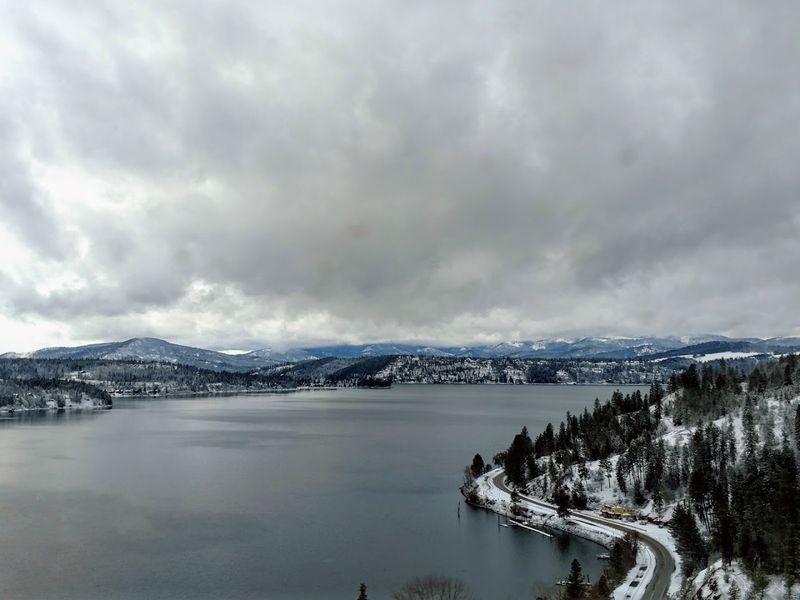
Wolf Lodge Bay at the northern end of Lake Coeur d’Alene transforms into one of Idaho’s great wildlife spectacles each winter, when hundreds of bald eagles arrive to feed on spawning kokanee salmon. These landlocked sockeye salmon gather in the bay’s shallow northern waters to complete their life cycle, providing an easy and predictable meal.
The U.S. Bureau of Land Management counts eagles throughout the season, and records have climbed steadily, with 409 birds tallied on December 20, 2023, the highest count in the lake’s recorded history. Peak viewing runs from mid-December to early January, with mornings from sunrise to 10 AM being the most active period.
Lake Coeur d’Alene Eagle Watching Cruises run from late November through early January, offering two-hour heated boat tours directly into Wolf Lodge Bay with expert narration. Shoreline viewpoints at Higgins Point and Mineral Ridge also provide solid options for land-based observers. Mountain scenery surrounding the lake makes every outing visually rewarding regardless of eagle count.
11. Boundary Bay Regional Park, Delta, British Columbia, Canada
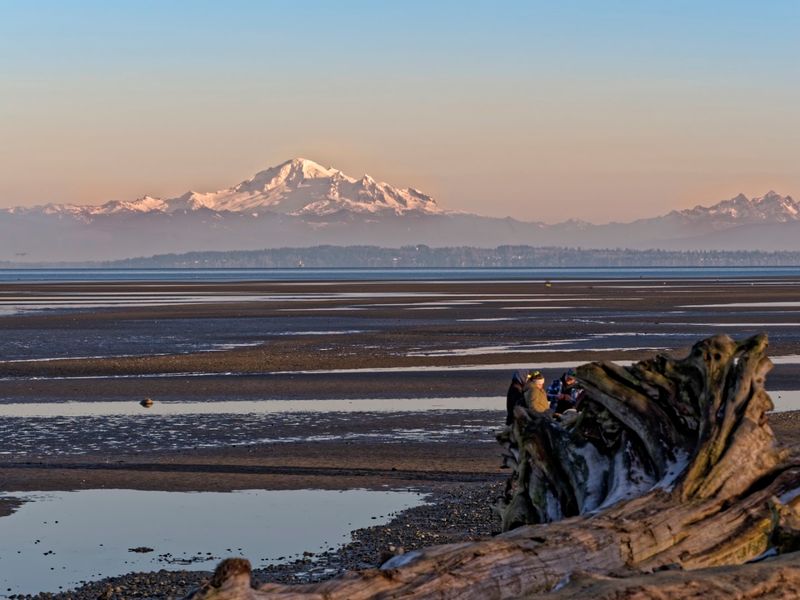
Boundary Bay Regional Park in Delta, British Columbia, sits on one of the most important sections of the Pacific Flyway, and that positioning makes it a year-round hotspot for bald eagle activity. The park forms part of the Fraser River Estuary Important Bird Area, a designation that reflects just how much wildlife depends on these coastal habitats.
Eagle numbers climb sharply during fall salmon runs and waterfowl migrations, with winter months from November through March delivering the highest counts. Up to 200 eagles have been observed in a single day, with reports of over 80 birds circling simultaneously above the bay.
The 20-kilometer Dyke Trail between Beach Grove and Mud Bay Park offers multiple access points and open sightlines perfect for watching eagles in flight. Birds are also regularly spotted perched on telegraph poles and scattered trees along the dyke. Dogs must stay leashed throughout the park, as ground-nesting birds are sensitive to disturbance during key migration periods.
12. Reelfoot Lake State Park, Tiptonville, Tennessee, United States
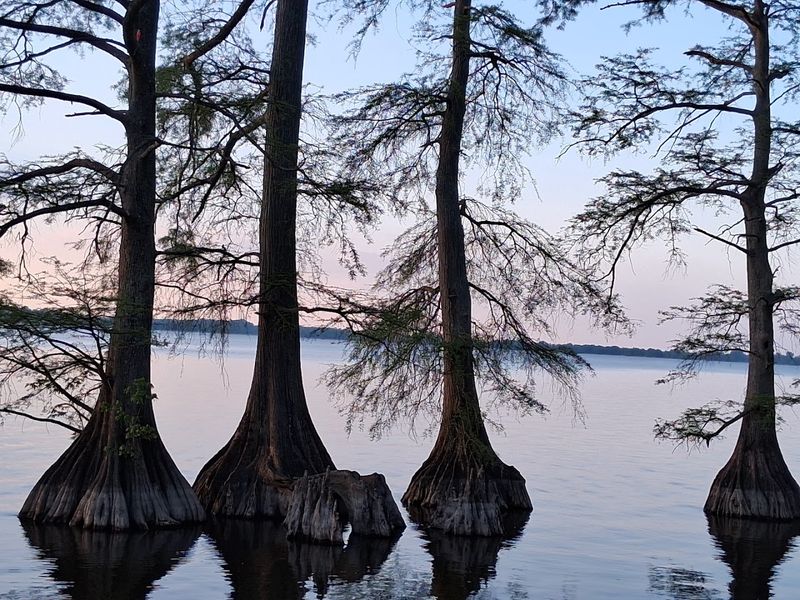
Reelfoot Lake exists because of one of the most powerful earthquake sequences in recorded North American history. The New Madrid Fault earthquakes of 1811-1812 caused the land to sink and the Mississippi River to flow backward, submerging cypress forests and creating the shallow, flooded-timber lake that now supports one of the Southeast’s largest wintering bald eagle populations.
Eagles arrive in late October, with numbers peaking from late January to mid-February, when as many as 200 birds winter on the lake. Over 90 active eagle nests surround the area, making Reelfoot a breeding and wintering destination combined.
State park rangers lead guided two-hour bus and van tours from the visitor center on weekends throughout the winter season, stopping for photography and scope viewing. The annual Reelfoot Lake Eagle Festival in late January features bird of prey shows and educational programs for all ages. Beyond eagles, the lake hosts thousands of waterfowl and over 200 bird species in total.
13. Quabbin Reservoir, Belchertown, Massachusetts, United States
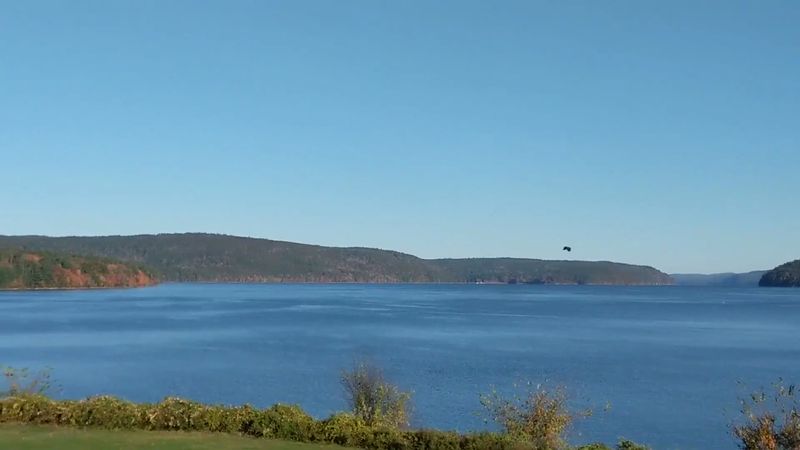
Quabbin Reservoir is not just a great place to watch bald eagles today; it is the reason bald eagles exist in Massachusetts at all. Between 1982 and 1988, wildlife managers raised 41 eagle chicks in specially built hack towers overlooking the reservoir and released them to establish a new breeding population after the species had been absent from the state since the early 1900s.
The first successful nesting occurred in 1989, and by 2024 at least 88 pairs maintained breeding territories across Massachusetts, producing over 1,160 wild-born chicks since the program began. Winter is an excellent viewing season, as eagles gather on open water to feed on fish and carrion.
Enfield Lookout, Winsor Dam, and Gate 43 in Hardwick are among the most productive viewing areas, all accessible by car along quiet roads. Swimming, dogs, and bicycles are restricted throughout most of the reservation to protect the water supply and wildlife. Binoculars are a must, as the reservoir covers 39 square miles of protected land.
14. Bay of Fundy, Grand Manan Island, New Brunswick, Canada
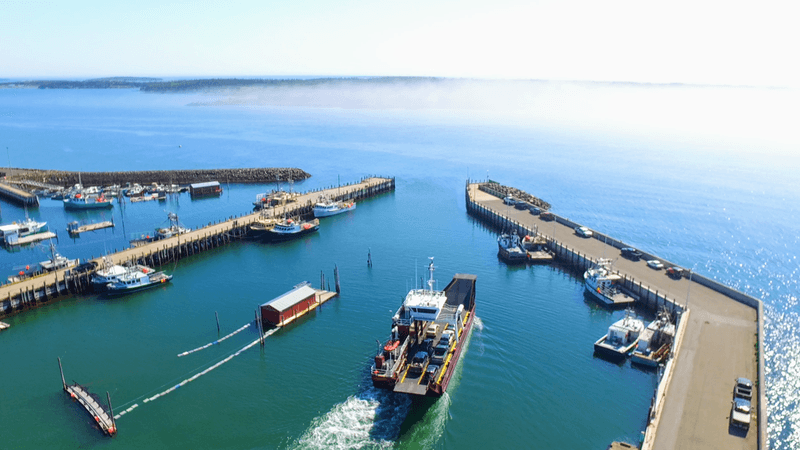
Grand Manan Island sits at the mouth of the Bay of Fundy, where massive tidal surges create nutrient-rich upwellings that attract an extraordinary concentration of marine life, and the bald eagles that hunt it. The island ranks among the top ten birding locations in all of North America, a distinction backed by the sheer diversity of species that pass through or reside here.
Bald eagles are permanent residents, visible in every season, but the southern cliffs deliver the most consistent sightings from mid-August through November when fall raptor migration is at its peak. The island’s rugged cliffs, rocky shores, and coastal forests provide both hunting grounds and nesting habitat.
Whale watching cruises operating from July through October regularly include eagle sightings as part of the package, since both species favor the same fish-rich waters. Eighteen hiking trails totaling 70 kilometers cross the island, many passing through protected bird sanctuaries. The Grand Manan Whale and Seabird Research Station provides educational context about the Bay’s remarkable marine ecosystem.
15. Alaska Chilkat River, Klukwan, Alaska, United States
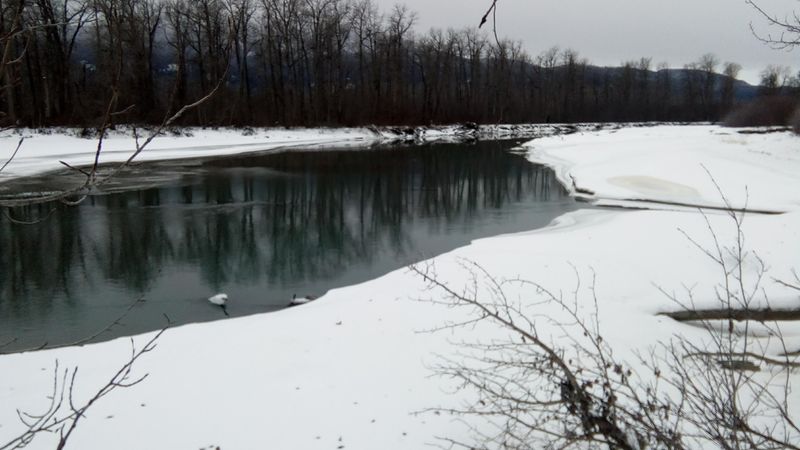
Klukwan, meaning Eternal Village in Tlingit, is the only remaining village of the Chilkat Tlingit people, and it sits directly within the Council Grounds, the area of the Chilkat River that draws the world’s largest known gathering of bald eagles each fall. This is not a secondary destination; it is the heart of the spectacle.
Warm groundwater upwellings keep a five-mile stretch of the river ice-free through winter, and late-running chum and coho salmon fill that open water with food. Numbers reach between 3,000 and 4,000 eagles from October through February, peaking in November, with birds packed into Black Cottonwood trees along the banks.
A three-mile stretch of the Haines Highway parallels the river with designated pull-outs for easy viewing. The Jilkaat Kwaan Cultural Heritage Center and Bald Eagle Observatory in Klukwan offers guided cultural tours connecting the Tlingit relationship with eagles to the landscape itself. Raft and jet boat tours provide a quieter way to observe birds without disturbing feeding activity.
Share this story