Paris may steal the spotlight, but some of France’s most unforgettable experiences are hiding in its small towns. From medieval villages perched on cliffsides to colorful wine towns and quiet seaside escapes, these places reveal the country’s authentic charm, rich history, and spectacular scenery without the massive crowds.
France officially recognizes more than 150 villages as “Les Plus Beaux Villages de France,” meaning travelers have countless reasons to explore beyond the capital. Pack your bags and get ready to discover the France that most tourists never see.
Eguisheim
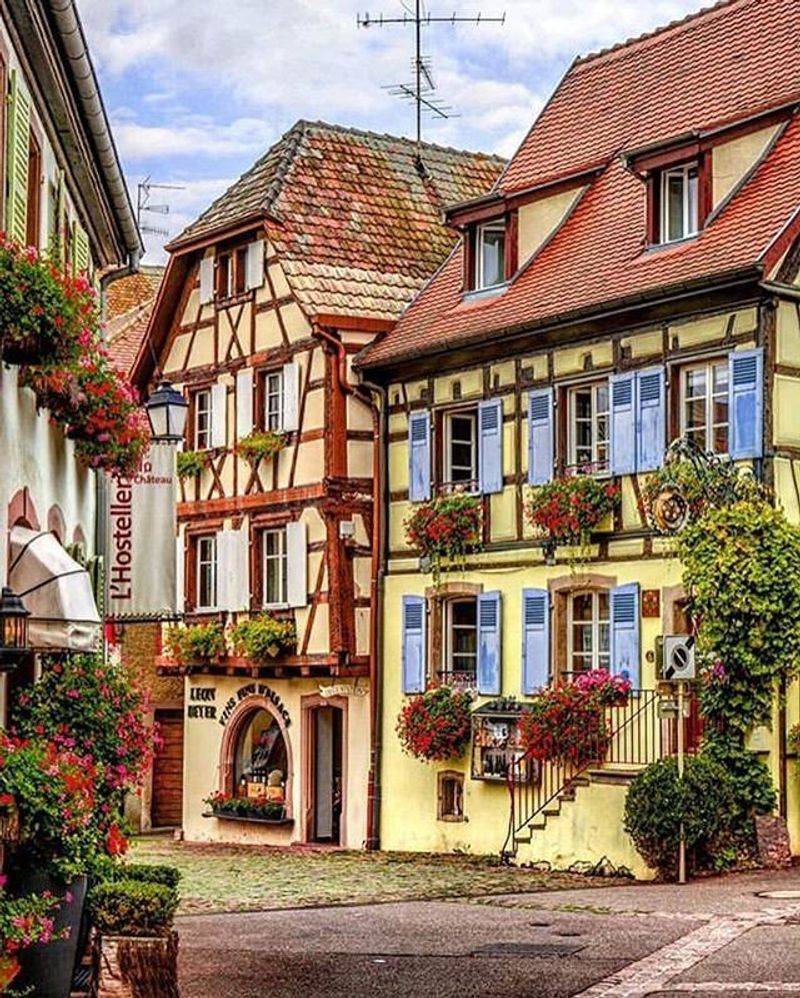
Every house in Eguisheim looks like it was painted by someone who really, really loved color. Located in Alsace near the German border, this circular village is arranged in three concentric rings of cobblestone streets, a layout so unusual that wandering through it genuinely feels like exploring a maze.
The half-timbered homes come in shades of mustard yellow, rose pink, and sky blue, each one decorated with window boxes overflowing with geraniums.
Eguisheim sits at the heart of the famous Alsace Wine Route, surrounded by vineyards producing some of France’s finest Riesling and Gewurztraminer wines. Local wineries welcome visitors for tastings year-round, and the village market is a great spot to pick up regional treats.
The town is compact enough to explore on foot in an afternoon, yet rich enough in detail to keep you busy all day.
Founded in the eighth century, Eguisheim was also the birthplace of Pope Leo IX, a fun historical footnote that locals are justifiably proud of. Every August, the village hosts a lively wine festival that fills the streets with music, food, and festive energy.
Visiting in autumn, when vineyards turn golden, is especially stunning.
Dinan
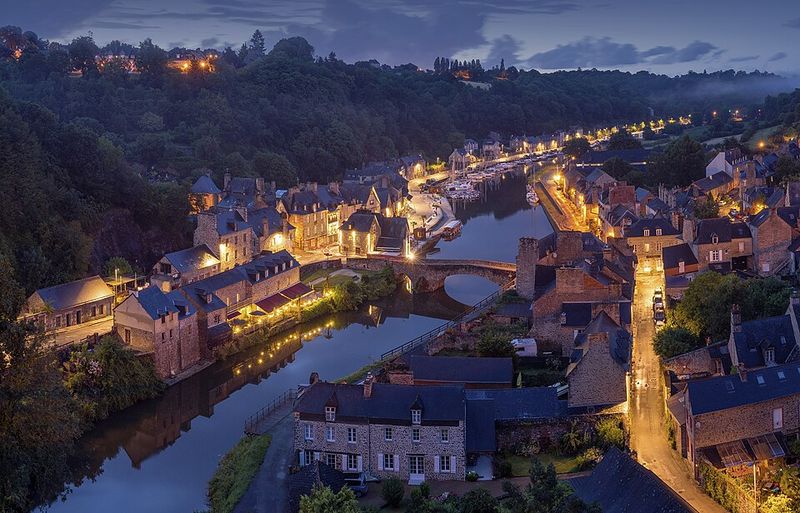
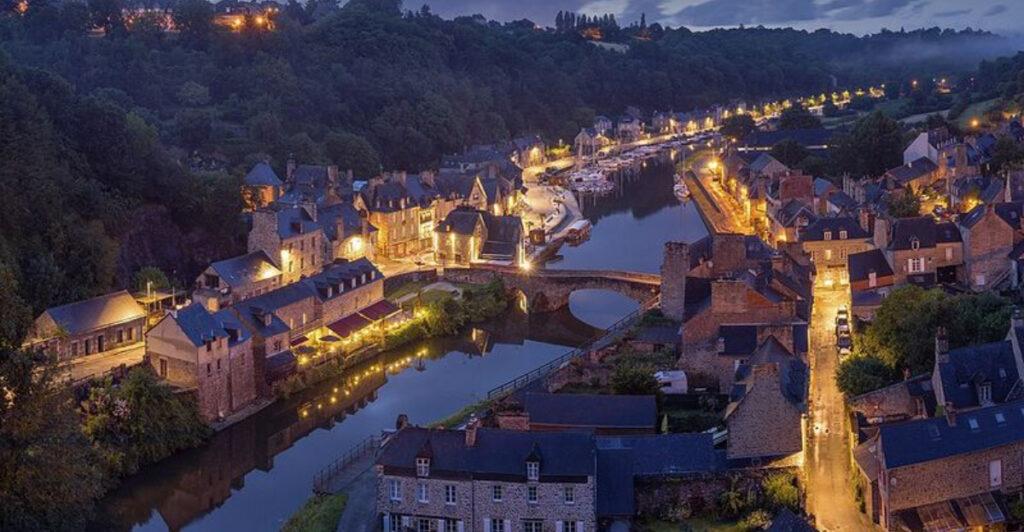
Standing on Dinan’s ancient ramparts and looking out over the Rance River valley feels like something out of a history book that somehow came to life. This medieval town in Brittany is one of the best-preserved in all of France, with stone walls stretching nearly three kilometers around its historic center.
Few places in the country wear their age this well.
The old town is packed with timber-framed houses, many dating back to the 14th and 15th centuries, leaning slightly over narrow cobbled lanes in that charmingly crooked way only genuinely old buildings can pull off. The main square, Place des Cordeliers, is lined with cafes where you can sit and watch the world move at a wonderfully slow pace.
Specialty crepe shops are everywhere, because you are in Brittany and that is simply the law.
Down by the river port, a cluster of restaurants and boat rental shops creates a relaxed waterside atmosphere that contrasts beautifully with the town’s fortified upper streets. Kayaking along the Rance is a popular activity in summer.
Dinan also hosts a spectacular medieval festival every two years, drawing thousands of visitors dressed in period costumes for jousting, markets, and theatrical performances throughout the town.
Collioure
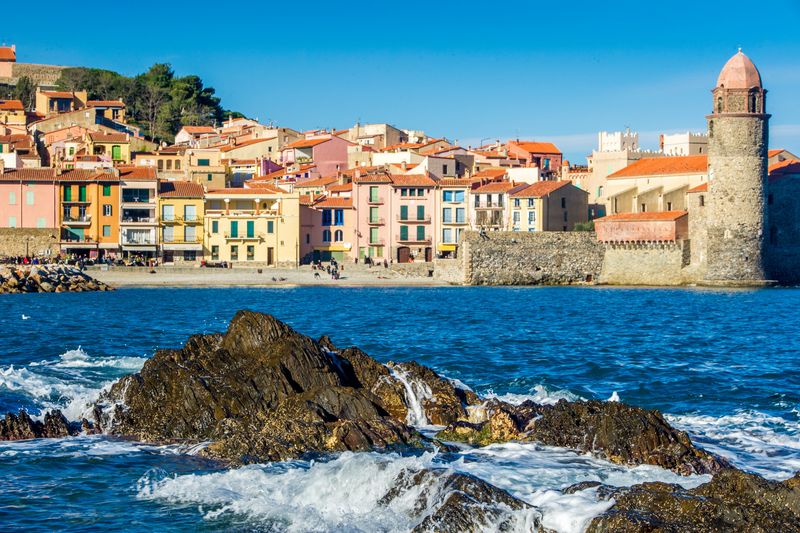
Collioure is the kind of place that makes artists lose track of time entirely. Situated where the Pyrenees meet the Mediterranean near the Spanish border, this small Catalan fishing town has a visual energy that is genuinely difficult to describe without reaching for superlatives.
Henri Matisse arrived here in 1905 and left having invented an entirely new art movement called Fauvism, inspired by the town’s extraordinary light and color.
The harbor is framed by a 13th-century royal castle, a pastel-painted church with a round tower that doubles as a lighthouse, and rows of vivid houses stacked along the waterfront. The beaches are small but scenic, and the water is that particular shade of deep blue that makes you want to jump in immediately.
Anchovy fishing has been central to local culture for centuries, and local anchovies are considered among the finest in Europe.
Collioure’s Catalan identity sets it apart from other French coastal towns. Street signs appear in both French and Catalan, local festivals reflect Spanish traditions, and the food leans heavily on Mediterranean flavors.
Grilled fish, local wine from the Roussillon region, and tapas-style dishes are staples at the waterfront restaurants. The town stays lively through summer but quiets down beautifully in spring and autumn.
Rocamadour
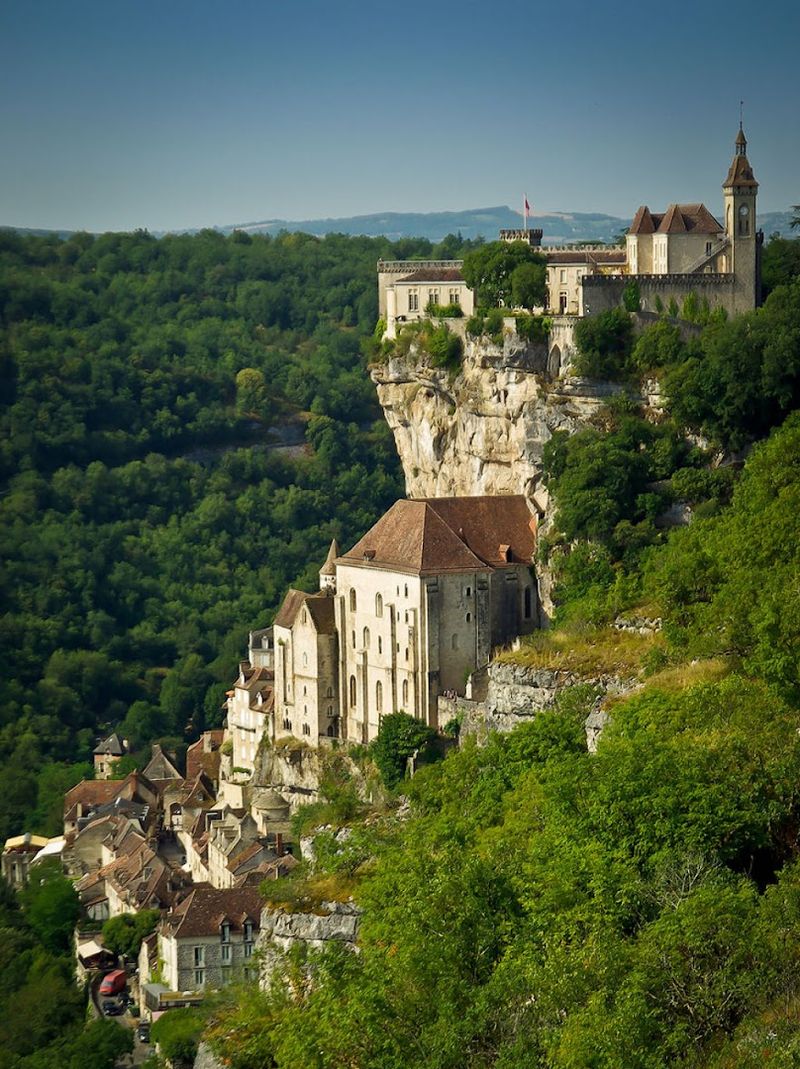
Rocamadour does not sit beside a cliff. It clings to one, defiantly, as if gravity is merely a suggestion.
Built vertically into a limestone escarpment rising nearly 150 meters above the Alzou Valley, this medieval pilgrimage town is one of the most visually dramatic places in all of France. Seeing it for the first time, from across the valley, genuinely stops people in their tracks.
The town is arranged in distinct levels connected by steep staircases carved directly into the rock. At the top sits a castle; below it, a cluster of chapels and sanctuaries; lower still, the main street of shops and cafes; and at the base, the valley floor.
Pilgrims have climbed the Grand Escalier staircase on their knees for centuries, making Rocamadour one of Christianity’s most important medieval shrines after Rome and Santiago de Compostela.
The Black Madonna housed in the Chapel of Notre-Dame is the town’s most venerated treasure, said to have miraculous powers. Rocamadour is located in the Lot department of southwestern France, surrounded by limestone gorges, walnut orchards, and foie gras farms.
The local market is a great place to sample regional specialties. Visiting at dusk, when the cliff face glows warm orange, is an experience worth planning your entire trip around.
Aigues-Mortes
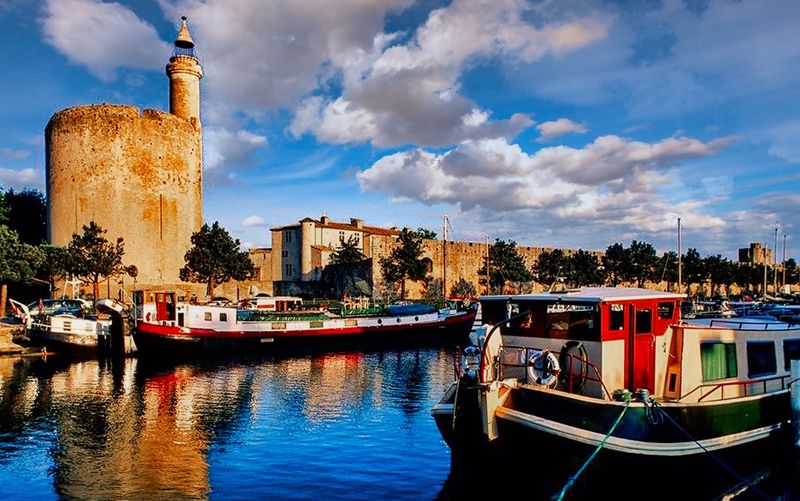
Aigues-Mortes has walls so well preserved that walking along the top of them feels slightly unreal, like being inside a strategy board game that someone forgot to finish. Built in the 13th century by King Louis IX as a launching point for the Crusades, this fortified town in the Camargue region of southern France is completely encircled by its original medieval ramparts.
Almost nothing about the exterior has changed in 700 years.
Inside the walls, the town is calm and surprisingly livable, with a central square, local restaurants, wine bars, and small shops selling regional goods. Aigues-Mortes produces its own Camargue rosé wine, which pairs extremely well with the local specialty of bull steak, a nod to the wild Camargue bulls that roam the surrounding wetlands.
The pace of life here is refreshingly unhurried.
Just outside the walls, the pink salt flats of the Camargue create one of France’s most surreal landscapes. The salt has been harvested here since ancient times and is still produced today by the Salins du Midi company.
Flamingos regularly gather near the salt pans, adding a splash of improbable color to an already unusual scene. Bicycle rentals are available in town, making it easy to explore the flat surrounding marshland at your own pace.
Gordes
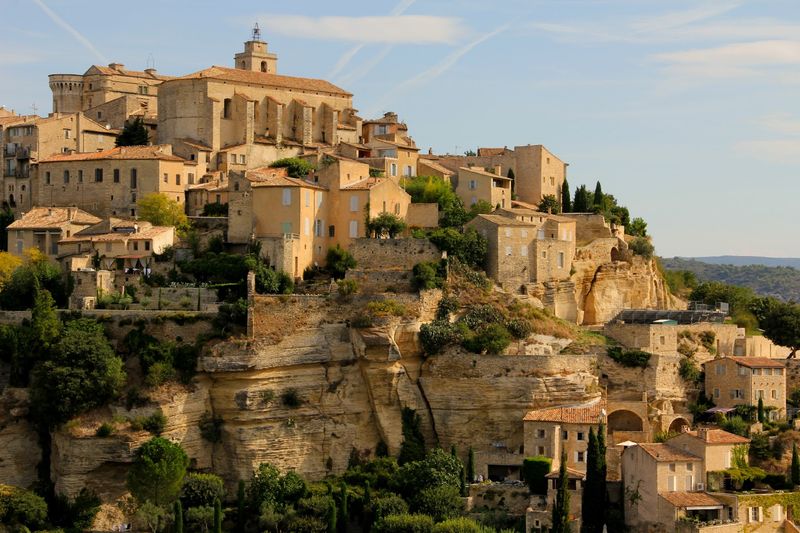
Gordes has appeared on so many travel magazine covers that it has practically become a cliche, yet somehow the real thing still manages to exceed expectations. Perched dramatically on a rocky outcrop above the Luberon Valley in Provence, this hilltop village is built almost entirely from honey-colored limestone, giving it a warm, golden glow that changes beautifully throughout the day.
Early morning light is particularly spectacular here.
The village clusters tightly around a Renaissance chateau that now houses a contemporary art museum. Narrow streets wind between old stone houses, past artisan boutiques, pottery workshops, and small restaurants serving classic Provencal dishes like ratatouille, tapenade, and lamb with herbes de Provence.
The weekly market on Tuesday mornings draws locals and visitors alike for fresh produce, cheese, and handmade goods.
Just a few kilometers from Gordes, the Abbaye de Senanque is one of Provence’s most photographed sights, especially in late June and July when rows of purple lavender bloom around its ancient stone walls. The nearby Village des Bories features mysterious dry-stone huts dating back thousands of years, adding an archaeological dimension to the area.
Gordes can get busy in high summer, so visiting in May, June, or September offers a quieter, equally beautiful experience.
Saint-Cirq-Lapopie
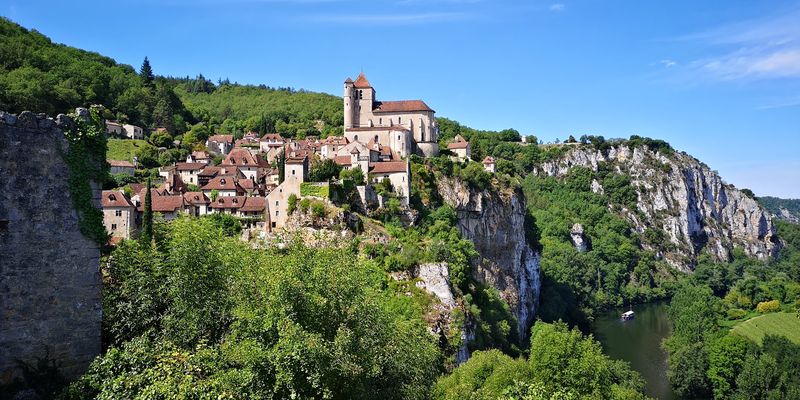
Surrealist poet Andre Breton once declared that after discovering Saint-Cirq-Lapopie, he no longer felt the need to be anywhere else. That is perhaps the most extravagant real estate review in French history, but it is not hard to understand the sentiment.
This medieval village clings to a 100-meter cliff above the Lot River in southwestern France, and the view from its highest point is the kind that makes you forget what you were worried about.
The village is a living showcase of medieval architecture, with Gothic and Renaissance-era stone houses lining steep, narrow streets that wind up toward a ruined 13th-century castle. Many of the buildings have been carefully restored and now house artisan workshops where potters, weavers, and woodworkers practice traditional crafts.
Browsing these studios is one of the most enjoyable ways to spend an afternoon here.
Saint-Cirq-Lapopie has been voted France’s favorite village in a national television poll, a title that reflects genuine public affection rather than just tourist marketing. The Lot River below offers excellent kayaking and canoeing, and the surrounding valley is laced with hiking trails that reveal even more dramatic views of the village from across the water.
Parking is limited, so arriving early in summer is strongly recommended.
Perouges
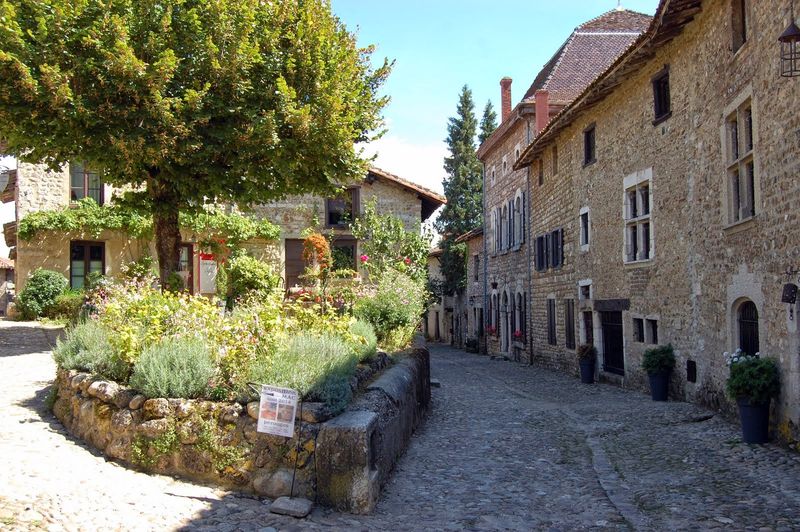
Perouges is so convincingly medieval that filmmakers have used it as a set for historical movies and TV shows without changing a single thing about it. Located just 35 kilometers northeast of Lyon, this walled hilltop village looks exactly as it did in the 15th century, complete with cobblestone streets worn smooth by centuries of foot traffic, fortified gates, and stone houses draped in ivy.
Time, remarkably, seems to have left it almost completely alone.
The village is centered on the Place de la Halle, a charming square shaded by an ancient linden tree and surrounded by medieval buildings housing small restaurants and artisan shops. The local specialty is galette de Perouges, a flat, buttery, sugar-dusted pastry that has been made here for generations and is absolutely worth every calorie.
Paired with a glass of local wine, it makes for a perfect afternoon snack.
Perouges was nearly demolished in the early 20th century before a group of determined residents and local officials campaigned successfully to save it. That rescue effort now stands as one of France’s earliest examples of historic preservation activism.
The village receives far fewer visitors than similarly impressive sites, making it one of the most peaceful medieval experiences available this close to a major French city. Weekend mornings are ideal for a visit.
Dinard
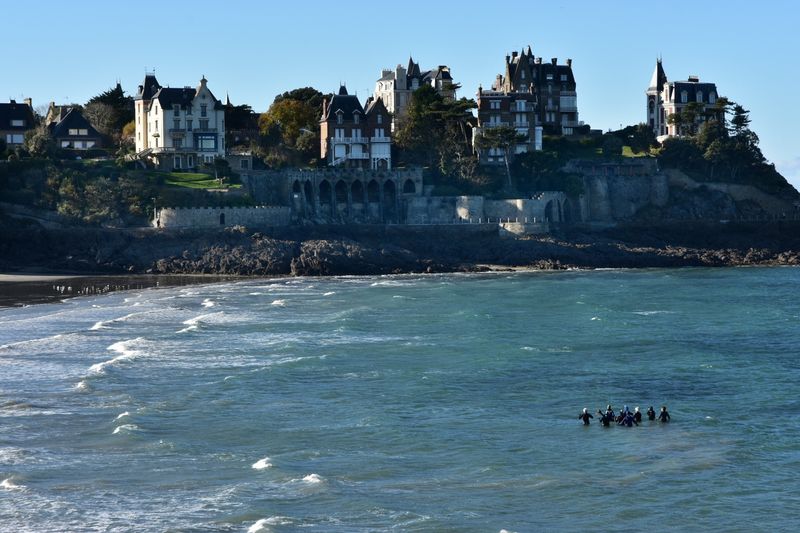
Dinard has a particular kind of faded glamour that is more appealing than the polished kind. Nicknamed the “Cannes of the North” during its Victorian and Edwardian heyday, this Breton seaside resort attracted British aristocrats, American socialites, and European royalty who built extravagant villas along its cliff-top promenades.
Pablo Picasso spent several summers here in the 1920s, and the town’s light-filled coastal scenery clearly left an impression on his work.
The striped beach tents that line Dinard’s sandy beaches are a beloved local tradition, giving the waterfront a cheerful, nostalgic character that feels entirely its own. The Promenade du Clair de Lune, a moonlit coastal path lined with flowering plants, is one of the most romantic evening walks in all of Brittany.
The path offers views across the estuary to the medieval walled city of Saint-Malo, which is just a short ferry ride away.
Dinard hosts an annual British Film Festival each October, a quirky tradition that reflects the town’s long historical connection to British visitors. Seafood restaurants along the waterfront serve fresh oysters, moules mariniere, and grilled langoustines straight from Brittany’s cold Atlantic waters.
The town is far less crowded than Saint-Malo while offering equally dramatic coastal scenery, making it a genuinely smart choice for independent travelers.
Moustiers-Sainte-Marie
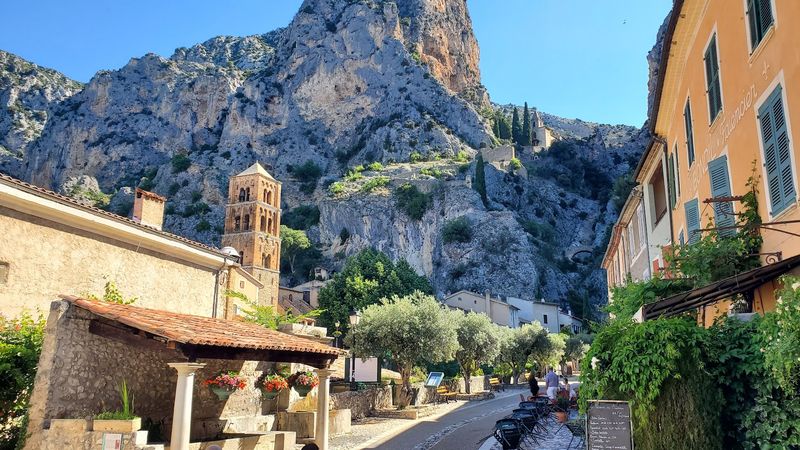
Hanging between two limestone cliffs above Moustiers-Sainte-Marie is a golden star on a chain, 227 meters long, placed there according to legend by a knight returning from the Crusades. Nobody is entirely sure how it got up there or how anyone maintains it, which makes it even more fascinating.
This small Provencal village in the foothills above the Verdon Gorge is full of details like that, quietly extraordinary things that reveal themselves the longer you look.
Moustiers is world-famous for its faience pottery, a tradition of hand-painted tin-glazed ceramics that dates to the 17th century. The village has around 20 active pottery studios, many of them run by families who have been practicing the craft for generations.
Watching a skilled potter paint intricate floral designs onto a plate by hand is genuinely mesmerizing, and the finished pieces make exceptional souvenirs.
A steep trail behind the village leads up to the Chapel of Notre-Dame de Beauvoir, perched on a ledge above town with sweeping views across the valley. The Verdon Gorge, often called the Grand Canyon of Europe, begins just a short drive away and offers world-class hiking, kayaking, and rock climbing.
Moustiers serves as an ideal base for exploring this spectacular natural area, combining village charm with serious outdoor adventure in equal measure.
Share this story