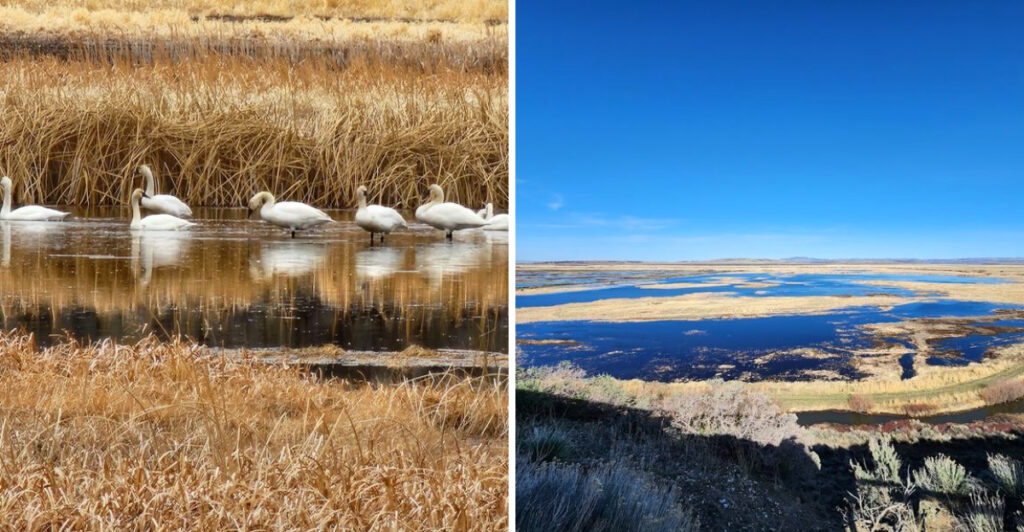
There is a stretch of high desert in southeastern Oregon where the sky fills with wings every single morning. More than 320 bird species pass through or call this place home, and the numbers alone are enough to make any birder’s heart race.
The refuge covers roughly 50 miles of wetlands, meadows, and sagebrush flats, creating one of the most diverse wildlife habitats in the entire Pacific Northwest. Whether you are a seasoned birder with a life list stretching into the hundreds or a curious first-timer who just wants to see something spectacular, this place delivers in ways that are hard to put into words.
Pack your binoculars, download the auto-tour stops before you lose cell signal, and get ready for a wildlife experience that will completely reframe what you thought a desert could be.
The Visitor Center: Your First Stop at 36391 Sodhouse Lane
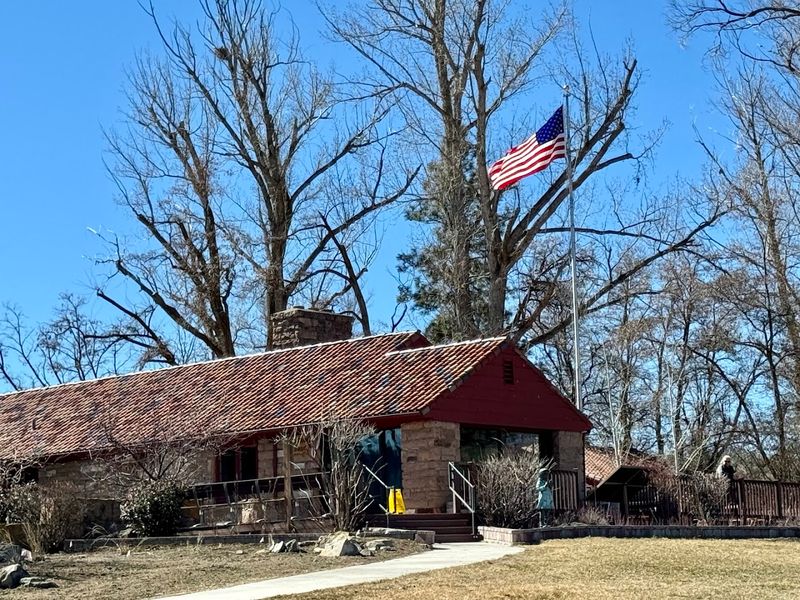
Right at the edge of the Oregon high desert, the Malheur National Wildlife Refuge Visitor Center sits at 36391 Sodhouse Ln, Princeton, OR 97721, and it is the kind of place that surprises you the moment you arrive.
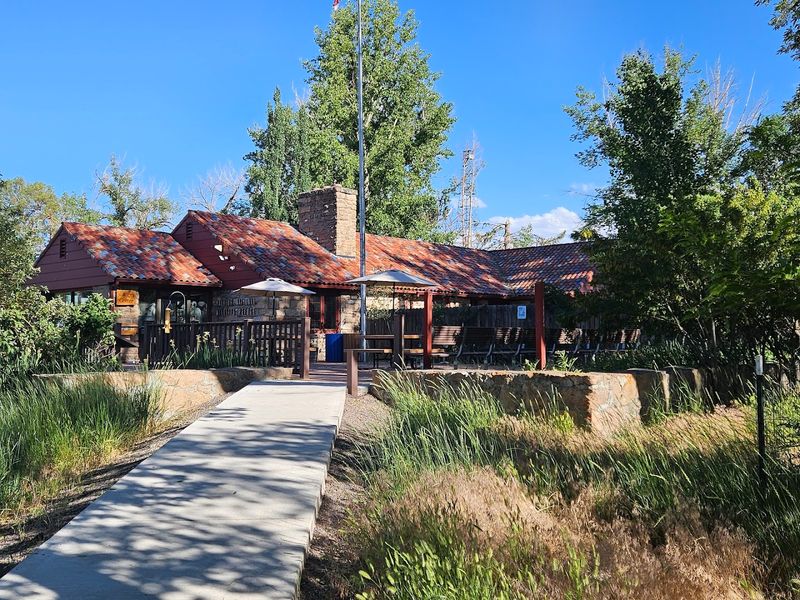
After miles of gravel road and wide-open ranch land, a paved path leads into beautifully groomed grass and gardens shaded by tall cottonwood trees. The contrast is striking and completely worth the drive.
The center is open Monday through Sunday from 8 AM to 4 PM, making it easy to plan your visit around an early morning start. The staff and knowledgeable volunteers greet you warmly and are genuinely enthusiastic about helping you make the most of your time in the refuge.
They hand out free refuge maps and often mark recent bird sightings directly on them, which can completely change your route for the better. The phone number is +1 541-493-2612 if you want to call ahead.
Think of this visitor center not just as a starting point but as the compass that points your whole adventure in the right direction.
The Natural History Museum Inside the Center
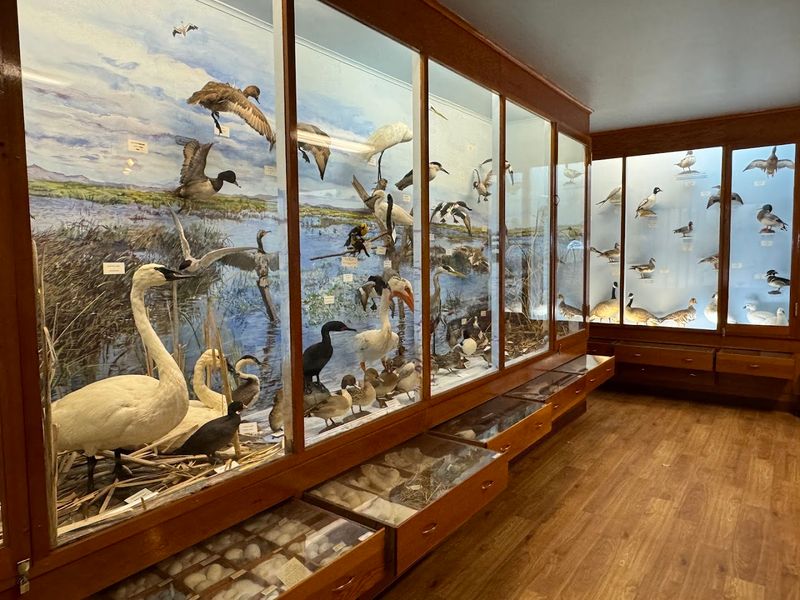
Tucked inside the visitor center is a small but genuinely fascinating natural history museum that covers every migratory bird species documented at the refuge, complete with mounted specimens, eggs, and information panels.
It is the kind of museum that rewards slow, careful attention. Each display case holds something new, from the delicate speckled eggs of shorebirds to the impressive wingspan of raptors posed mid-flight.
Even people who do not usually consider themselves museum types tend to linger here longer than they expected. The exhibits are organized clearly enough for kids to follow but detailed enough to hold the interest of serious naturalists.
Rodents, reptiles, and other desert wildlife share space with the birds, giving you a fuller picture of the ecosystem you are about to explore. The museum also provides context for the landscape outside, so when you spot a Sandhill Crane or a White-Faced Ibis in the marsh, you already know its story.
First-time visitors consistently say that spending even 20 minutes here before heading out into the refuge made their wildlife sightings far more meaningful and memorable.
Over 320 Bird Species: What You Can Actually Expect to See
The number 320 sounds almost unbelievable until you spend a full day at the refuge and start ticking species off your list faster than you ever thought possible.
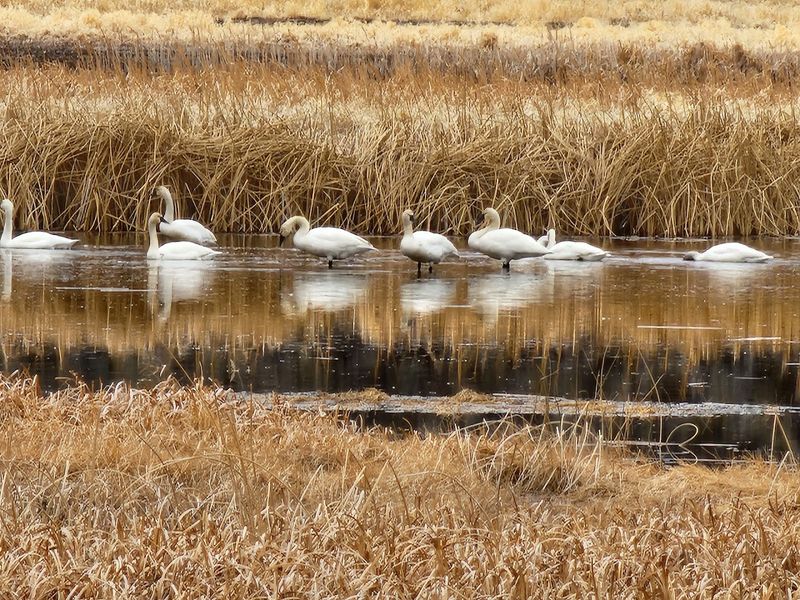
Spring migration brings Tundra and Trumpeter Swans, Sandhill Cranes, and massive flocks of White-Faced Ibis sweeping low over the marshes in tight, shimmering formations. Shorebirds like American Avocets, Willets, and Long-Billed Curlews work the shallow water edges with focused efficiency.
Summer and fall bring a different cast, with abundant shorebirds at the narrows and raptors hunting the open sagebrush flats. Bald Eagles and Golden Eagles are regular sightings, and patient observers are sometimes rewarded with a glimpse of a Great Horned Owl roosting in a cottonwood.
Even in late summer, when water levels drop, pheasants, chukars, and quail fill the brushy edges with sound and movement. One visitor documented 105 species in just a few days without any special effort.
The sheer variety here is not a lucky fluke but the result of a landscape that funnels birds from across western North America through a single remarkable corridor every single year.
The 42-Mile Auto Tour Route Through the Refuge
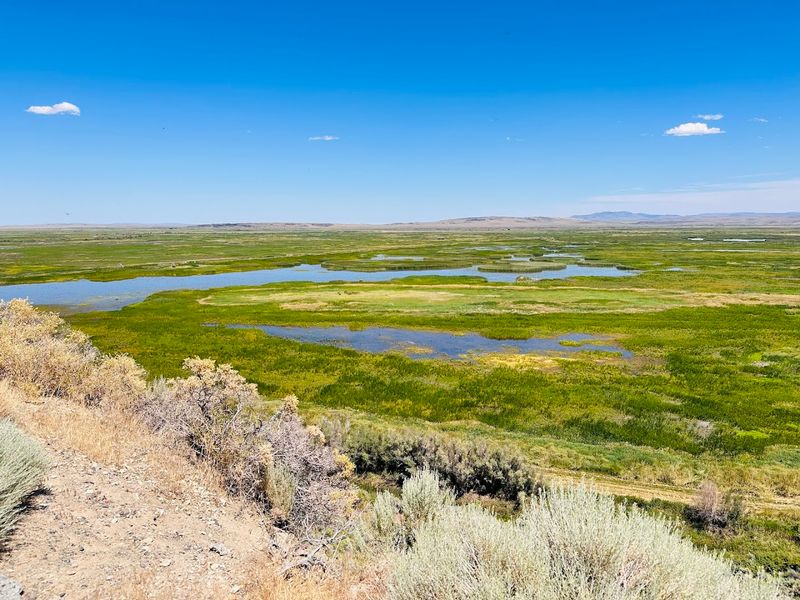
The self-guided automobile tour through the refuge is genuinely one of the best free wildlife drives in the entire Pacific Northwest, and you do not need to be a hardcore birder to love every mile of it.
The route stretches roughly 42 miles and winds through wetlands, meadows, riparian corridors, and open desert, with signed stops along the way that guide you to the most productive wildlife-watching spots. The Friends of Malheur NWR auto tour is available on Spotify, and downloading each stop before you go is strongly recommended since cell service is unreliable throughout the refuge.
The northern section of the refuge and the southern section each offer a distinct character, and many visitors spend one full day in each area to do it justice. Key stops include Benton Pond, the P Ranch where Bald Eagles sometimes nest high in cottonwood trees, and the Round Barn area where owls roost and migrating shorebirds gather.
The backdrop of Steens Mountain rising in the distance gives the whole drive a cinematic quality that no photograph quite captures. Plan for at least a half day, but a full day is even better.
The Gift Shop and Picnic Areas Around the Grounds
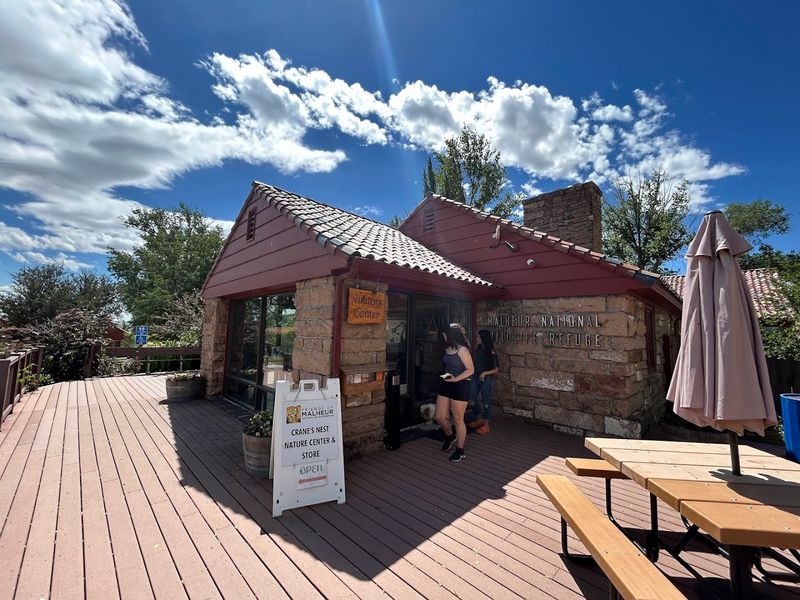
The gift shop at the visitor center is staffed by enthusiastic volunteers who genuinely know the refuge inside and out, and stopping in is about more than just browsing merchandise.
Volunteers have been known to write down recent bird sightings directly on free refuge maps, pointing visitors toward species they would never have found on their own. The shop carries field guides, nature books, and souvenirs that are actually worth buying, and a membership to Friends of Malheur NWR is available for just $20, which directly supports habitat protection and facility upkeep.
Outside, the grounds around the visitor center are surprisingly lush, with multiple picnic tables scattered across the manicured lawn and a covered picnic area near the gift shop that provides welcome shade on hot summer days. The cottonwood trees are tall and generous with their shade, and hummingbirds visit the feeders near the building with almost comic regularity.
Clean and well-stocked restrooms are available on the grounds, which is genuinely appreciated after a long drive through remote eastern Oregon. The whole setup makes it easy to pack a lunch, slow down, and let the place settle into you before heading back out into the refuge.
Watching Wildlife Beyond Birds: Mammals and More
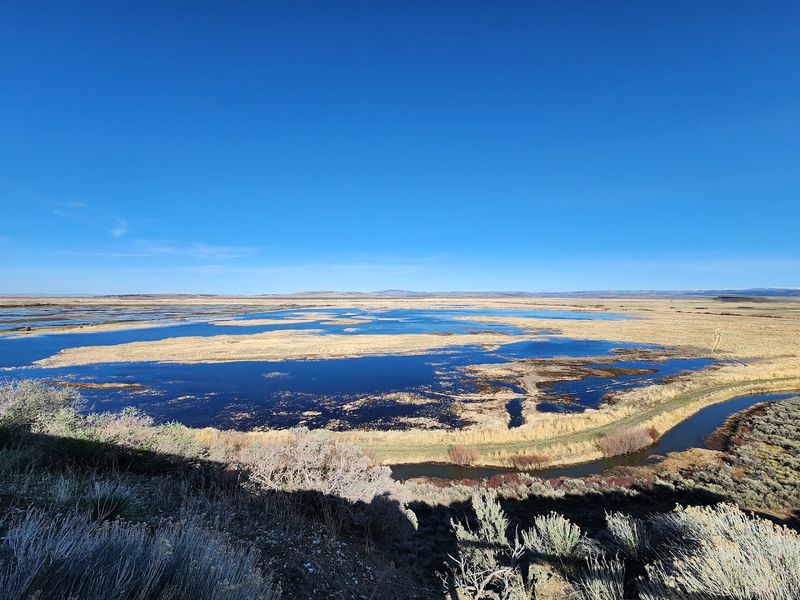
Most people arrive at the refuge with birds on their mind, but the wildlife list here extends well beyond feathers and beaks in ways that consistently catch first-time visitors off guard.
Mule deer move quietly through the willows along the river channels, and pronghorn antelope are spotted with regularity on the open sagebrush flats that border the refuge. Cottontail rabbits and jackrabbits are almost guaranteed sightings along any road through the refuge, and ground squirrels pop up along the roadsides with cheerful persistence.
The refuge also supports populations of muskrats, beavers, and river otters in the wetter sections, though these require more patience and a bit of luck to spot. Coyotes are active in the early morning and late afternoon, and they move through the landscape with a confidence that suggests they know exactly who owns this territory.
For families with kids who are not yet fully committed to birding, the mammal sightings provide a steady stream of excitement that keeps everyone engaged throughout the drive. The refuge functions as a complete, functioning ecosystem rather than a single-species showcase, and that full-picture quality is a big part of what makes a visit here so satisfying.
Best Times to Visit and Seasonal Highlights
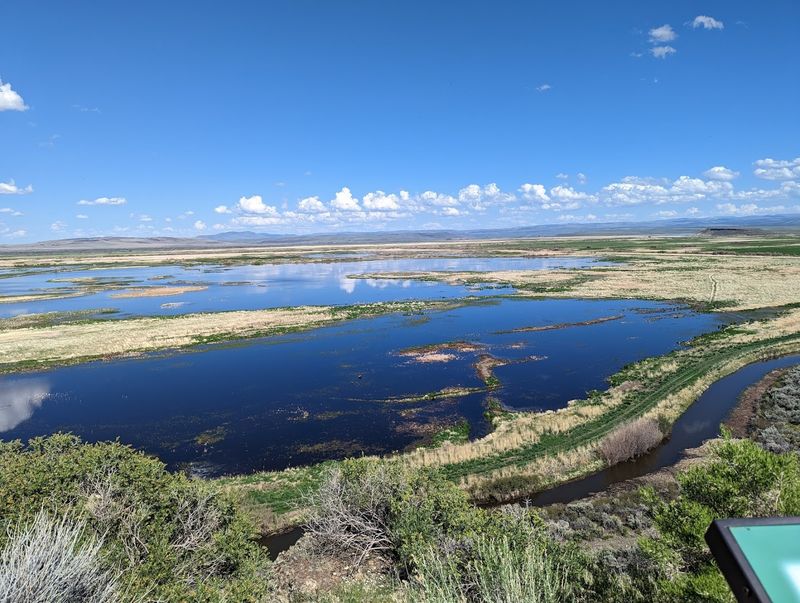
Timing your visit to the refuge makes an enormous difference in what you will see, and spring is widely considered the peak season for good reason.
April and May bring the largest concentrations of migratory birds, with Sandhill Cranes, Tundra Swans, and shorebirds filling the marshes in numbers that can genuinely take your breath away. The water levels are typically high in spring, which concentrates wildlife and makes sightings much easier from the road.
Fall migration, running from late August through October, offers a second excellent window with a different mix of species moving through on their way south. Winter visitors will find the refuge quieter but still rewarding, with raptors and resident species providing steady activity against a stark, beautiful landscape.
Summer visits are possible but come with a notable trade-off: mosquitoes and grasshoppers can be extremely intense, particularly in June and July. Bringing strong insect repellent is not optional during those months but genuinely essential.
The early morning hours offer the best wildlife activity and the coolest temperatures regardless of season, so setting an alarm and arriving at the refuge just after sunrise is always the right call.
The History and Landscape of the Refuge
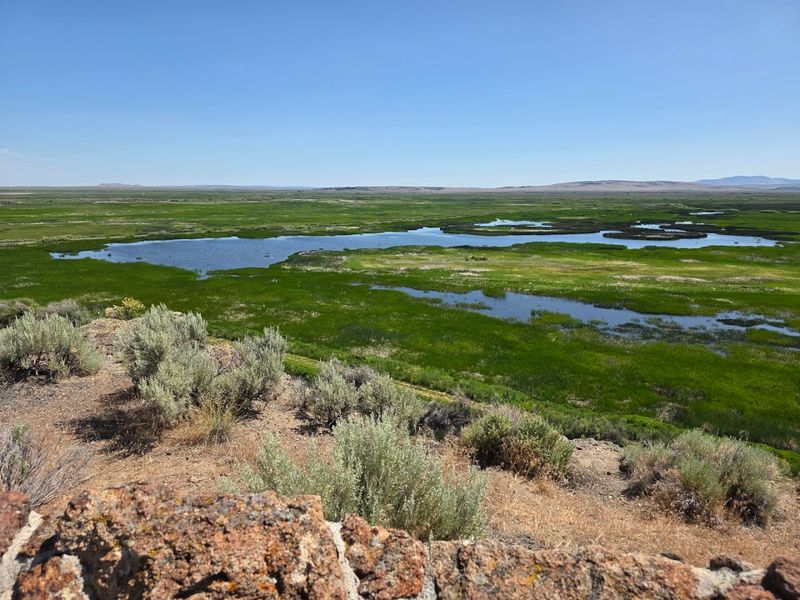
The Malheur National Wildlife Refuge has a layered history that stretches back to 1908, when President Theodore Roosevelt established it as a protected area for migratory birds that were being heavily hunted for their feathers.
The landscape itself tells a geological story that spans millions of years, with Steens Mountain rising dramatically to the south and the Diamond Craters volcanic area nearby adding another dimension to the scenery. The P Ranch, located within the refuge, preserves remnants of one of the largest cattle operations in Oregon history, and the historic hay barn and other structures still stand as quiet markers of that era.
The Blitzen Valley, which runs through the heart of the refuge, was shaped by volcanic activity and ancient lake systems, and the wetlands that exist today are partly the result of deliberate water management by refuge staff over many decades. The Diamond Craters Outstanding Natural Area, just outside the refuge boundary, is worth a side trip for its otherworldly volcanic formations.
All of this history sits inside a landscape that feels genuinely remote and unhurried, far from the noise of major highways and cities. The refuge carries its past lightly but visibly, and paying attention to that history deepens the experience considerably.
Planning Your Trip: Practical Tips for First-Time Visitors
A little preparation goes a long way at a refuge this size, and the visitor center staff are genuinely the best resource you have before heading out into the field.
Cell service is unreliable throughout most of the refuge, so downloading the Spotify auto tour stops, saving offline maps, and grabbing a free paper map from the visitor center before you leave the parking lot are all practical steps that will save you frustration later. The visitor center is open every day from 8 AM to 4 PM, and arriving early gives you time to talk with staff and plan your route before the day heats up.
Bring plenty of water, sunscreen, and food since there are no services within the refuge itself, and the nearest town options are limited. Insect repellent is essential from late spring through midsummer, and long sleeves can make a real difference during peak mosquito hours near the marshes.
The refuge is free to enter, which makes it one of the best-value wildlife experiences in the entire region. Binoculars and a basic field guide will enhance your visit significantly, but even without them the sheer volume of wildlife visible from your car window makes the trip worthwhile.
The refuge also holds connections to broader conservation conversations that extend well beyond Oregon.
Share this story