Gettysburg’s battlefields tell the story of armies. This historic home tells the story of the civilians who found themselves trapped in the middle of the fighting.
Preserved much as it was during the Battle of Gettysburg, the house offers a rare and deeply personal look at how ordinary families experienced one of the defining events in American history.
Inside, visitors can still see evidence of the battle, including bullet damage and other physical reminders left behind during the three-day conflict. The home belonged to a mother and her two young daughters, whose experiences provide a powerful human perspective often missing from military history.
For anyone seeking to understand Gettysburg beyond troop movements and battlefield strategy, this is one of the most compelling places to visit in town.
A Family Home at the Center of the Storm
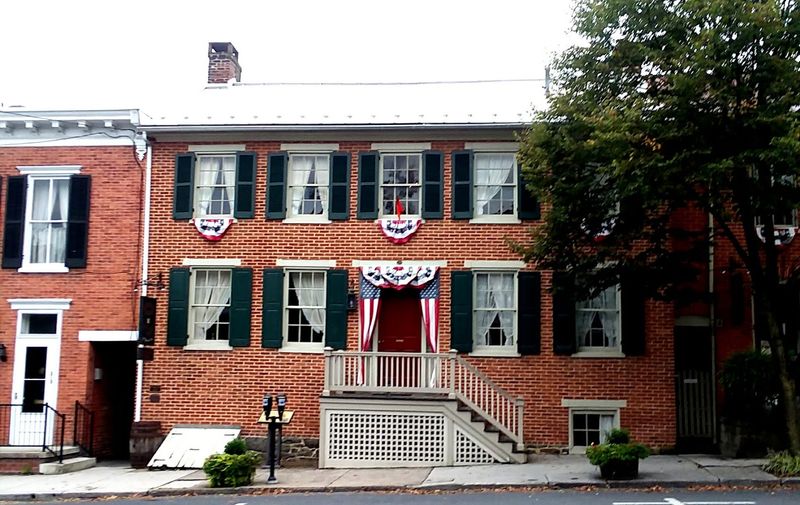
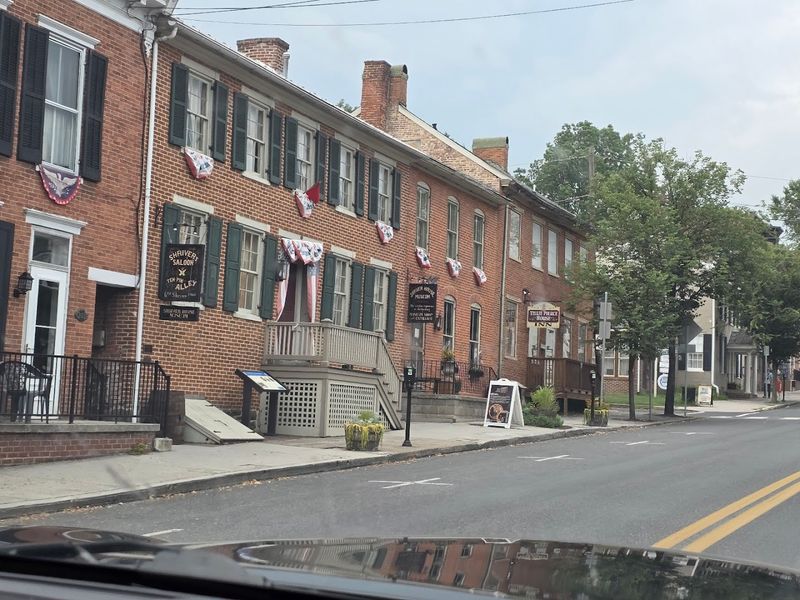
There is something quietly powerful about standing in front of a real family’s home and knowing exactly what unfolded inside its walls. The Shriver House Museum is at 307 Baltimore Street, Gettysburg, Pennsylvania 17325, right in the heart of town, just a short walk from the main square.
Built in 1860, the house belonged to George and Hettie Shriver and their two young daughters, Sadie and Mollie. George had the home constructed as a fresh start for his growing family, complete with a small bowling alley and saloon in the cellar, which he planned to run as a business.
The house is a modest but well-built two-story brick structure, and from the outside it looks like a perfectly preserved slice of 1860s small-town life. What makes it extraordinary is not its size or its architecture, but the raw, unfiltered history that happened inside it just three years after it was built.
When George Left and Everything Changed
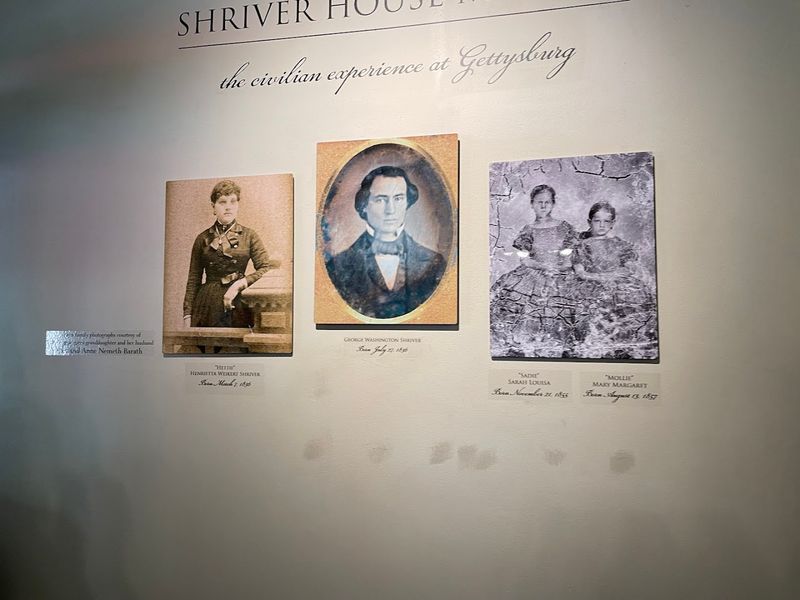
George Shriver enlisted in the Union Army not long after the war began, leaving behind Hettie and their daughters in a home that was barely a year old. It was a decision made out of duty, but it set in motion a chain of events that would shape the family’s entire future.
With George gone, Hettie managed the household on her own. She was a practical and determined woman, and the museum does an excellent job of conveying just how much responsibility fell on her shoulders during this period.
When word spread in early July 1863 that Confederate forces were moving toward Gettysburg, Hettie made the agonizing call to pack up her daughters and flee to her parents’ farm for safety. The decision made complete sense at the time.
What she could not have known was that her parents’ farm sat near the area that would become one of the fiercest combat zones of the entire battle.
Confederate Sharpshooters Move In
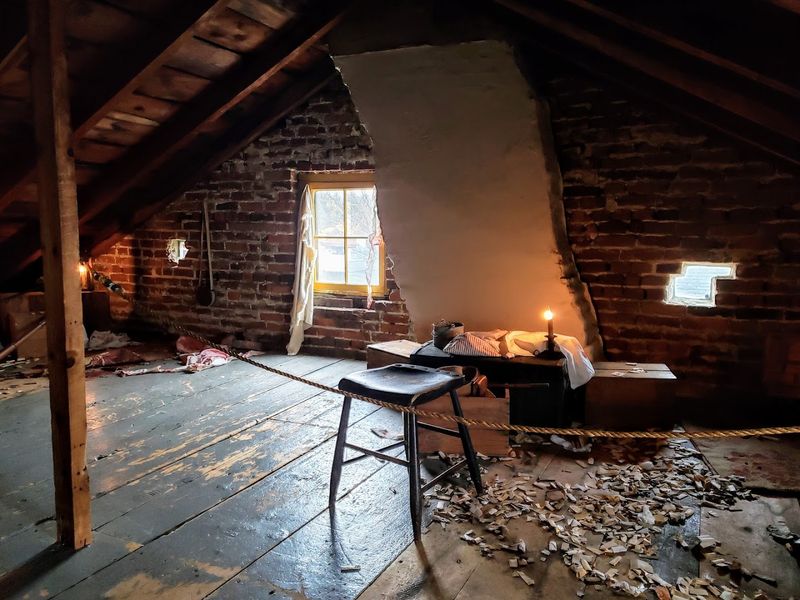
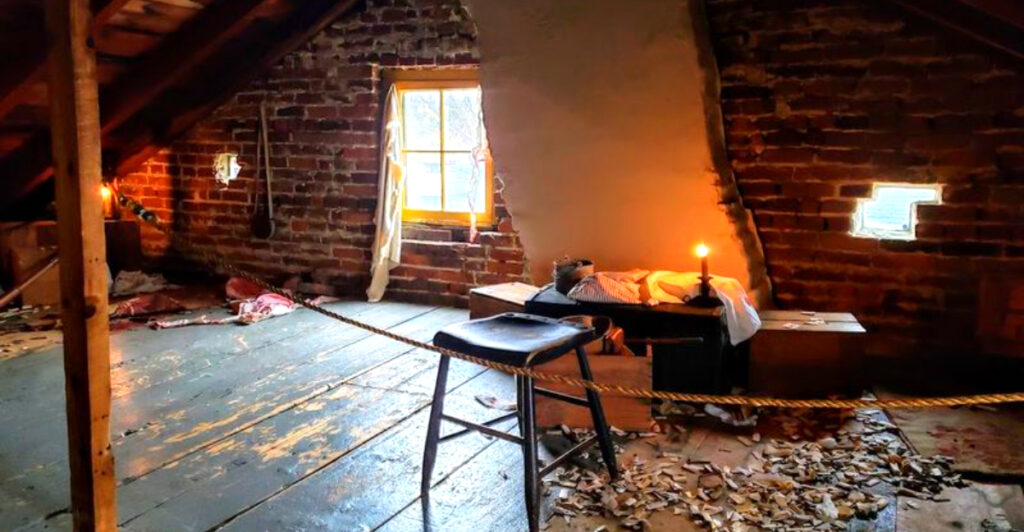
While Hettie and her daughters were gone, Confederate sharpshooters took over the Shriver home and turned it into a tactical position. They chose the attic specifically because it offered a clear line of sight toward Union troops on nearby Cemetery Hill.
To create firing positions, they knocked holes directly through the south-facing brick walls. Those holes are still visible today, and standing in that attic makes the reality of what happened there feel uncomfortably close.
Forensic analysis later confirmed the presence of bloodstains in the attic belonging to at least two Confederate soldiers who did not survive their time there. The guides explain this part of the tour with care and precision, letting the physical evidence speak for itself rather than dramatizing it unnecessarily.
The attic is one of the most memorable stops on the tour, not because it is staged to shock, but because it is simply honest about what a family home became during three days in July 1863.
What Hettie Found When She Came Home
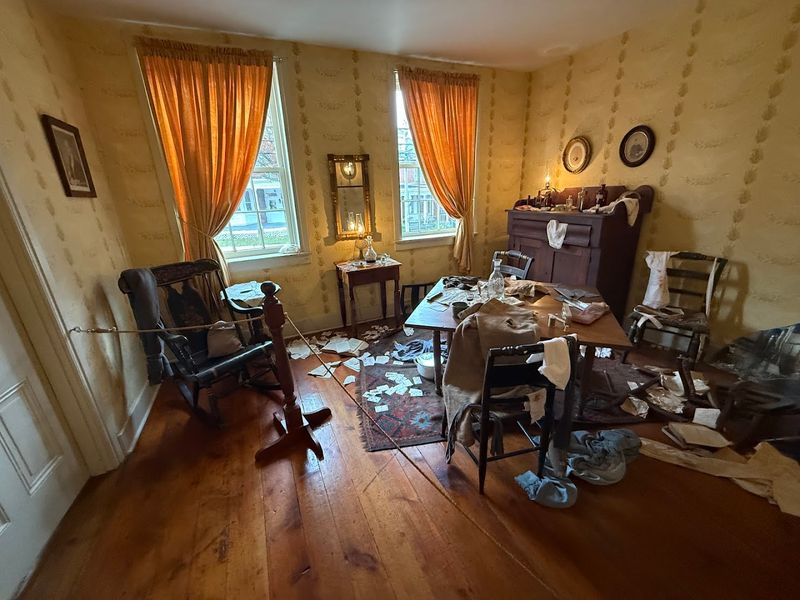
Six days after fleeing, Hettie Shriver brought her daughters back to Baltimore Street and walked into a home that had been turned upside down. Furniture was overturned, belongings were scattered, and the damage to the walls and attic told a story she could not have prepared for.
The museum recreates this moment with careful attention to detail. The rooms are arranged to reflect the disruption of the post-battle period, and the guides walk visitors through exactly what Hettie would have encountered room by room.
What strikes most visitors is how personal the damage feels. This was not a government building or a military installation.
It was a family’s home, with children’s belongings and everyday household items, and it had been treated as a resource to be used and discarded.
Hettie’s resilience in the face of that discovery is one of the emotional anchors of the entire tour, and it sets the stage for the even harder years that were still ahead of her.
The Saloon in the Cellar Nobody Expects
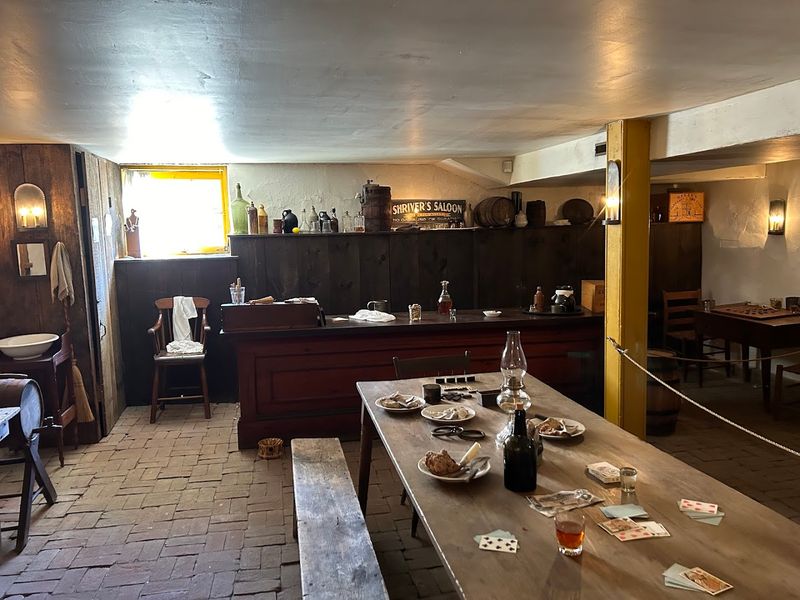
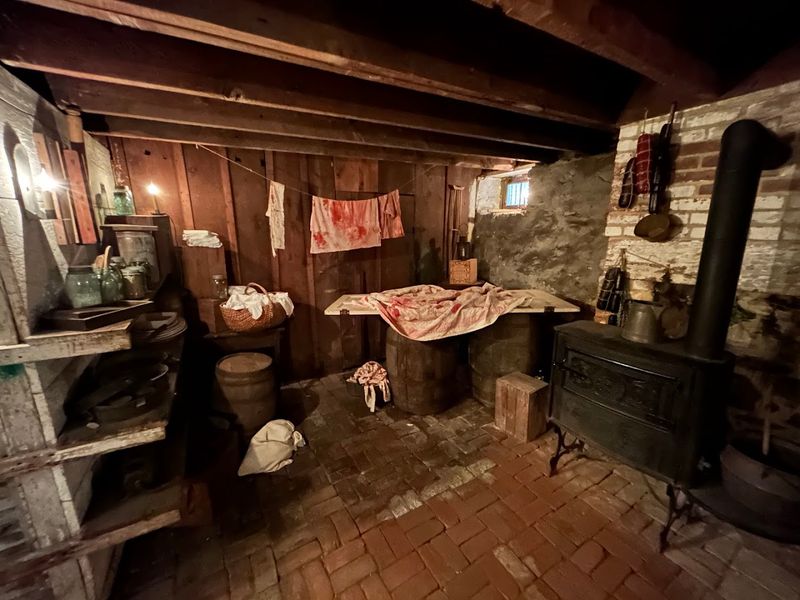
Before the war changed everything, George Shriver had big plans for the basement of his new home. He built a small bowling alley and saloon in the cellar, intended as a community gathering spot and a source of income for the family.
It never really got the chance to operate the way George envisioned. The war came too quickly, and the cellar ended up serving a very different purpose during the battle days, as a potential shelter rather than a social space.
Today, the cellar is one of the most surprising and delightful parts of the tour. Visitors often do not expect to find a saloon tucked beneath a Civil War-era family home, and the contrast between the cozy domestic spaces upstairs and the commercial ambitions downstairs adds real texture to the Shrivers’ story.
The restoration work here is particularly impressive, and the guides bring the original concept to life in a way that makes you genuinely wish George had gotten the chance to see his plans succeed.
George’s Fate and a Family Left Behind
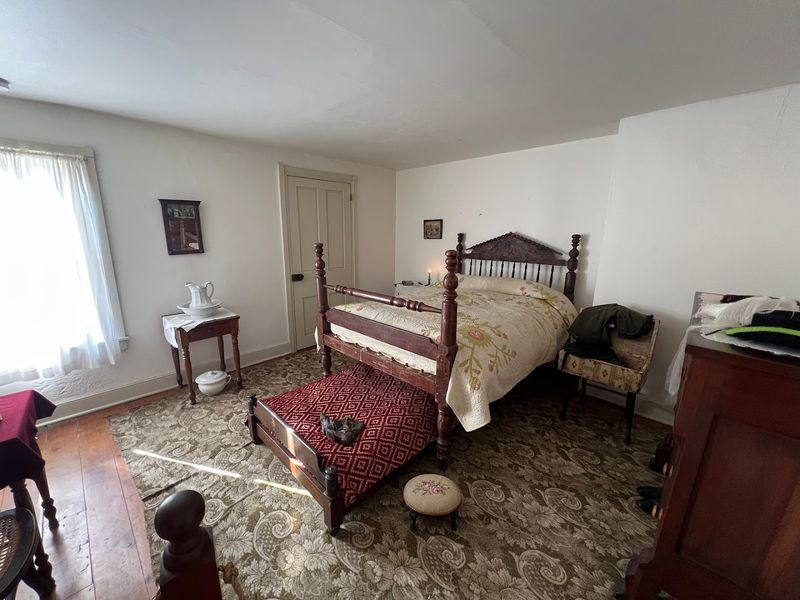
George Shriver never came home. After enlisting and serving in the Union Army, he was captured by Confederate forces and sent to Andersonville Prison in Georgia, one of the most brutal prisoner of war camps of the entire conflict.
He passed away there in December 1864, just months before the war ended. The museum handles this part of the story with honesty and sensitivity, making sure visitors understand the full weight of what his absence meant for Hettie and the girls.
Hettie was left to raise her daughters, repair a damaged home, and figure out a financial future entirely on her own. She managed to keep the family together for a few more years before eventually selling the house in 1866.
George’s story is a reminder that the personal cost of the Civil War extended far beyond the battlefield, and the Shriver House makes that cost feel real in a way that no statistic or textbook passage ever quite manages to do.
The Guided Tour Experience That Sets This Place Apart
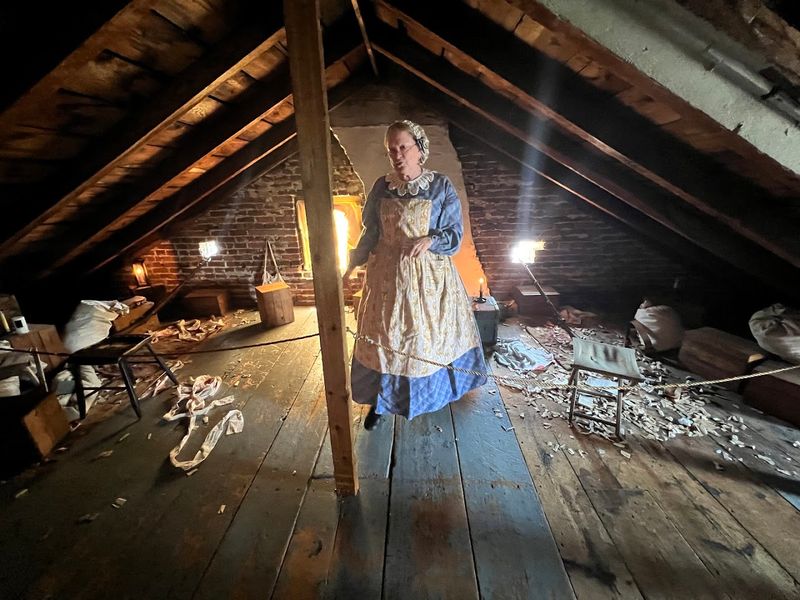
The guided tour format at this museum is genuinely one of its greatest strengths. Guides dress in period attire, and their knowledge of the Shriver family’s story goes well beyond surface-level facts.
Each tour moves through the entire house, from the front parlor to the upper bedrooms, the attic, and down to the cellar saloon. The guides encourage questions throughout, and the pace feels relaxed and personal rather than rushed or scripted.
What makes the experience stand out is how the storytelling stays grounded in the specific details of this one family rather than drifting into broad historical generalizations. You learn about Hettie’s personality, the girls’ routines, and George’s ambitions in a way that makes them feel like real people rather than historical footnotes.
Tours run approximately one hour, and the museum recommends making a reservation in advance, especially during peak summer months when Gettysburg sees its highest visitor traffic. The staff’s enthusiasm for the material is obvious from the first minute.
Artifacts That Survived the Battle
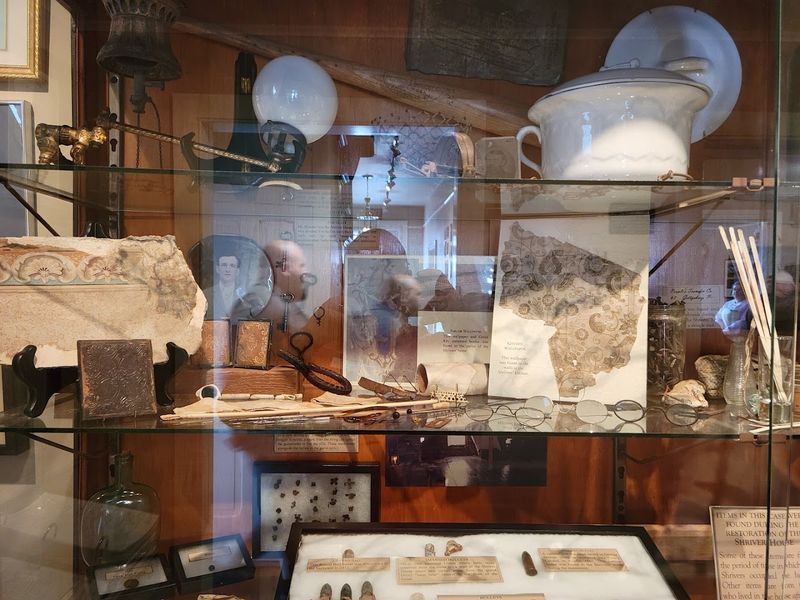
During the meticulous restoration of the house in the 1990s, workers uncovered a remarkable collection of artifacts hidden within the walls, floors, and spaces of the original structure. Civil War bullets, medical supplies, and everyday household objects came to light, each one adding a new layer to the family’s story.
These items are displayed throughout the museum with clear context, so visitors understand not just what each object is, but what it tells us about the specific moments that produced it. A bullet found in the attic wall means something very different when you are standing in that same attic.
The artifact collection is not enormous by major museum standards, but its power comes from specificity. Everything here belonged to or passed through this house, and that connection to a single address makes even small objects feel significant.
The museum opened in 1996 after years of careful restoration work, and the commitment to accuracy in both the physical space and the displayed items remains one of its defining qualities.
The Broader Civilian Story of Gettysburg
The Shriver family’s experience was not unique to their address. Across Gettysburg, ordinary residents faced the same terrifying choices in early July 1863: stay and shelter in place, or flee and hope for the best.
Many families hid in their cellars for days, listening to the sounds of combat above them. Others opened their homes to wounded soldiers after the fighting ended, turning parlors and barns into improvised medical spaces.
Jennie Wade, a young woman baking bread for Union soldiers, became the only civilian directly killed during the battle.
The Shriver House Museum places the family’s story within this larger context, helping visitors understand that the civilian population of Gettysburg was not a passive backdrop to the military action but an active and deeply affected part of the event.
This perspective is genuinely rare in Gettysburg’s crowded tourism landscape, and it is one of the main reasons the museum draws visitors who have already seen every battlefield monument and still want to understand more.
The Garden and the Details You Almost Miss

One of the quieter pleasures of visiting the Shriver House is the garden space outside the home. Staff members tend it with attention to historical accuracy, growing plants and herbs that the Shriver family would likely have cultivated themselves in the 1860s.
Visitors waiting for their tour to begin are often invited to explore the garden, and the staff member working there tends to share details about period gardening practices with genuine enthusiasm. It is a small touch, but it adds warmth to the overall experience.
The garden is a good reminder that the Shrivers were not just a family defined by the battle. They had a daily life with routines, meals, and small domestic rituals, and the garden represents that quieter, more ordinary side of their story.
These kinds of details are easy to overlook when the main narrative involves Confederate sharpshooters and a ransacked home, but they are exactly what makes the museum feel complete rather than one-dimensional.
Christmas Tours and Seasonal Programming

The Shriver House Museum is not just a warm-weather destination. During the holiday season, the museum offers a special Christmas tour that explores what the holiday would have looked like for a family like the Shrivers in the 1860s.
The Christmas programming digs into period-accurate holiday traditions, decorations, and customs, giving visitors a completely different angle on the same home they might have toured during the summer. The house takes on a different atmosphere with seasonal decor, and the guides shift their storytelling to match the festive context while still grounding everything in the family’s real history.
This kind of seasonal programming reflects the museum’s commitment to finding new ways to tell the Shriver story throughout the year. It also makes the museum worth revisiting, since the Christmas tour covers material that the standard tour does not.
For anyone planning a trip to Gettysburg during the holiday festival season, the Christmas tour at the Shriver House is a genuinely worthwhile addition to the itinerary.
Why This Museum Belongs on Every Gettysburg Itinerary
Gettysburg has no shortage of places to learn about the Civil War, but most of them focus on military strategy, troop movements, and battlefield geography. The Shriver House Museum occupies a completely different space in that landscape.
It holds a near-perfect 4.8-star rating across hundreds of visitor reviews, and the consistent praise centers on two things: the quality of the guides and the emotional impact of seeing history inside a real home rather than through a display case in a large institution.
The museum is open daily from 10 AM to 5 PM, and tours run approximately one hour. Reservations are recommended, particularly on weekends and during the summer months.
The gift shop is thoughtfully curated, and the overall presentation of the space is polished without feeling corporate.
Anyone who has ever wondered what ordinary people experienced during one of history’s defining moments will find something genuinely moving here, and that kind of honest, human storytelling is exactly what makes the Shriver House worth every minute of your time in Gettysburg.
Share this story