Most coffee shops hand you a cup and send you on your way. But a growing number of cafés around the world have decided that the drink itself is only half the story. Some serve espresso in waffle cones, some whip eggs into the cup, and others set up shop inside former public toilets or buildings shaped like giant cameras. The creativity on display is genuinely surprising, and the results are worth tracking down.
This list covers 15 real cafés that have turned an ordinary coffee order into something you will want to photograph, talk about, or fly across an ocean to try. A few are tucked into old factory buildings, others hide behind cartoon-painted walls, and at least one will make you question everything you thought you knew about what belongs in a coffee cup.
1. Café Giảng, Hanoi, Vietnam
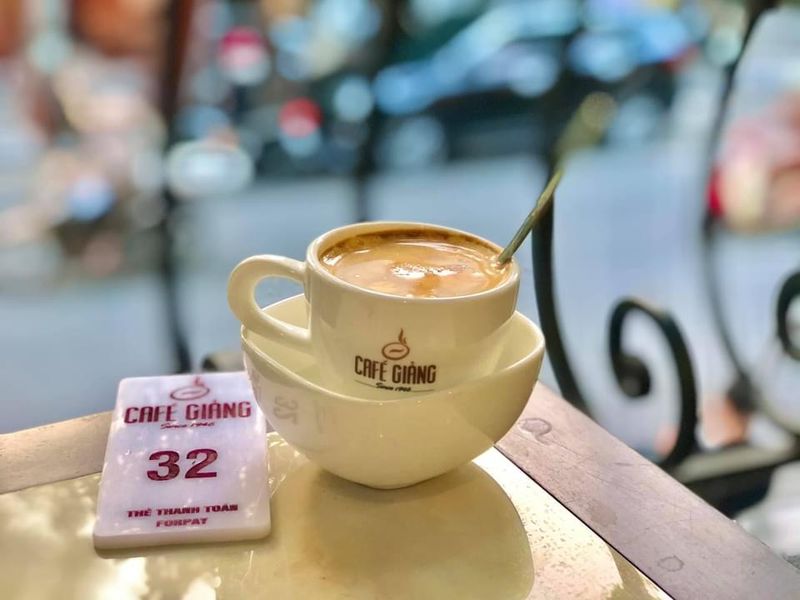
Egg coffee sounds like a dare, but Café Giảng has been serving it since 1946 and has never needed to apologize for the idea. The drink layers whipped egg yolk and sweetened condensed milk over strong Vietnamese coffee, creating something that sits between a cappuccino and a custard dessert.
The café’s origin story is part of its appeal. Its founder, Nguyen Van Giang, developed the recipe during a milk shortage by substituting egg yolk, and the result stuck around long after the shortage ended.
The space itself is narrow and tucked away, accessed through a small alley in Hanoi’s Old Quarter. Regulars and first-timers sit side by side on low stools, drinking from small glasses placed on wooden trays.
Egg coffee has since spread to other cafés across Vietnam, but Giảng remains the original address. That history alone makes the cup taste a little different here.
2. Cà Phê Muối, Huế, Vietnam
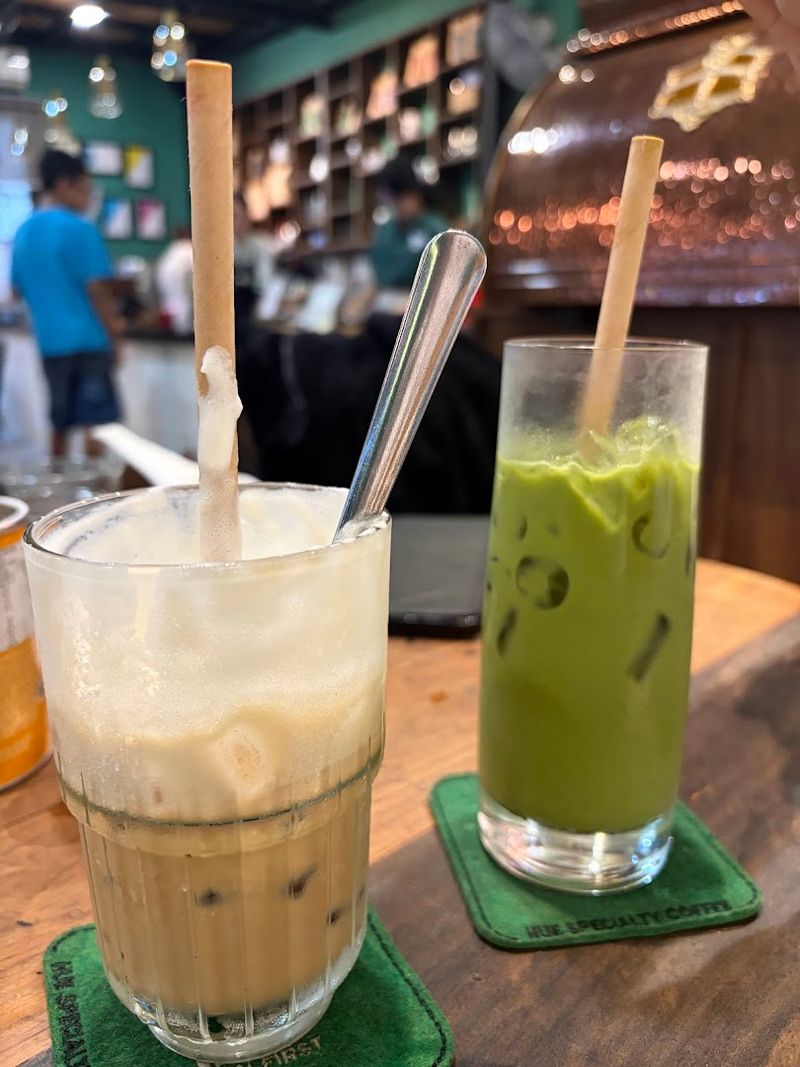
Salt in coffee is not a typo. Cà Phê Muối, which translates directly to salt coffee, is a Huế specialty that has built a dedicated following far beyond the city’s borders.
The drink tops strong Vietnamese coffee with a layer of lightly salted cream, creating a sweet-salty combination that regular coffee drinkers tend to find surprisingly addictive. It is the kind of thing that sounds wrong until the first sip changes your opinion completely.
Huế has a reputation for distinctive regional food and drink, and salt coffee fits neatly into that tradition. Cà Phê Muối is one of the city’s best-known stops for trying it close to where the idea originated.
The café keeps a relaxed, neighborhood feel. Most visitors order one cup, decide they need another, and then spend the rest of the afternoon wondering why salted cream is not already standard everywhere else.
3. Cafe Duy Trí, Hanoi, Vietnam
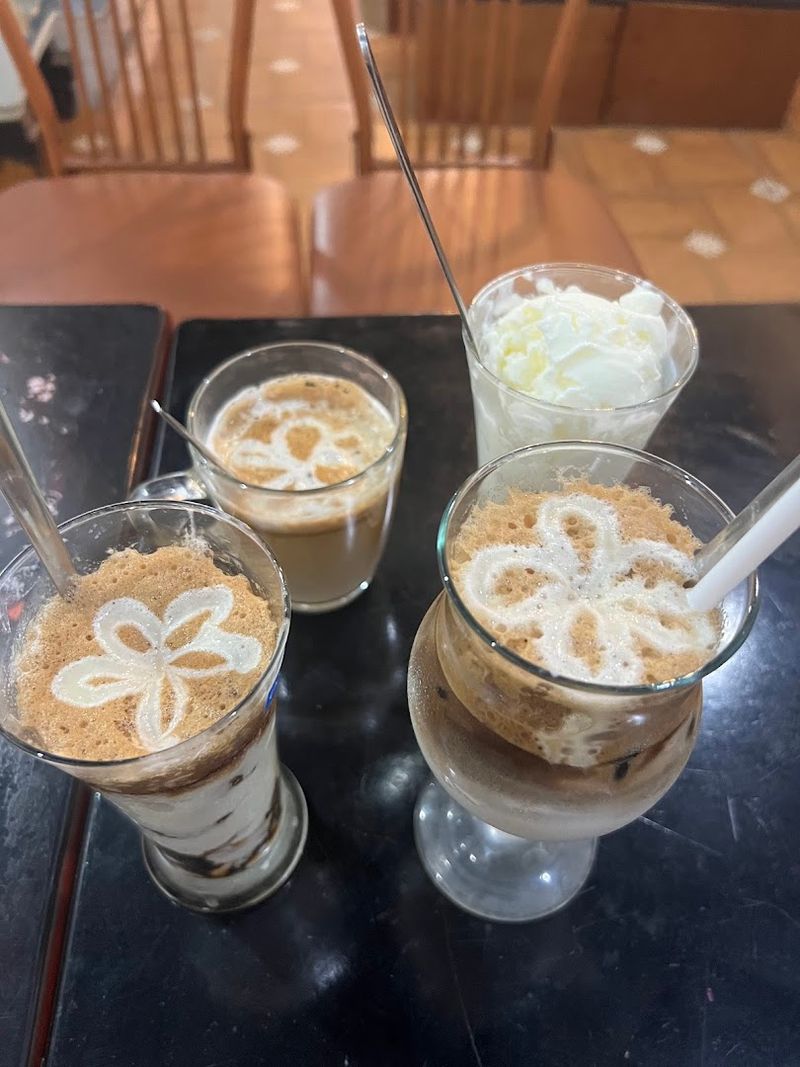
Yogurt coffee is one of Hanoi’s most quietly brilliant inventions, and Cafe Duy Trí is one of the city’s most reliable places to try it. The drink combines strong Vietnamese drip coffee with thick, slightly tangy yogurt, served either chilled or frozen.
The frozen version in particular has a texture closer to a coffee granita than a traditional café drink. It is cool, creamy, and coffee-forward all at once, which makes it especially popular during Hanoi’s hot months.
Duy Trí has been around long enough to feel like a neighborhood institution rather than a trend. The café has a lived-in quality, with simple furniture and a relaxed pace that regulars clearly appreciate.
For visitors used to standard iced lattes, yogurt coffee offers a genuinely different experience. It is proof that Vietnamese coffee culture keeps finding new directions without abandoning the strong, bold base that defines it.
4. Fenster Café, Vienna, Austria
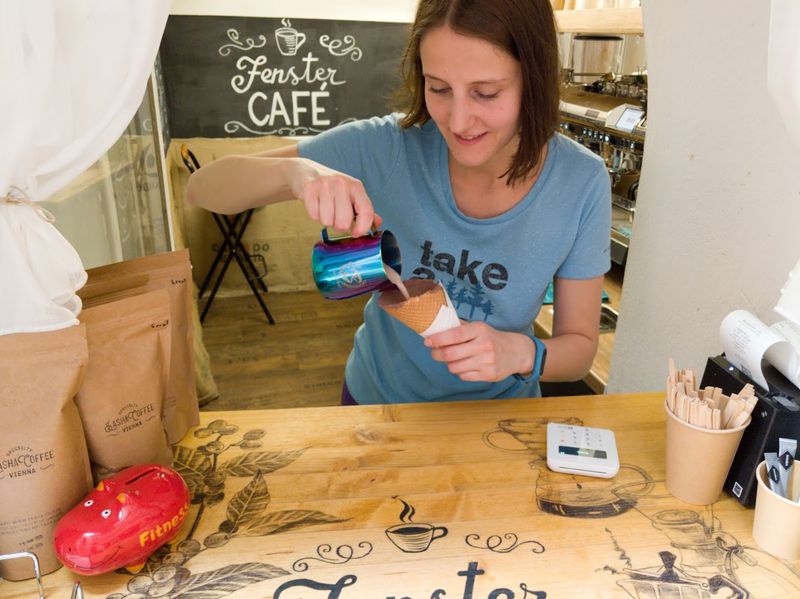
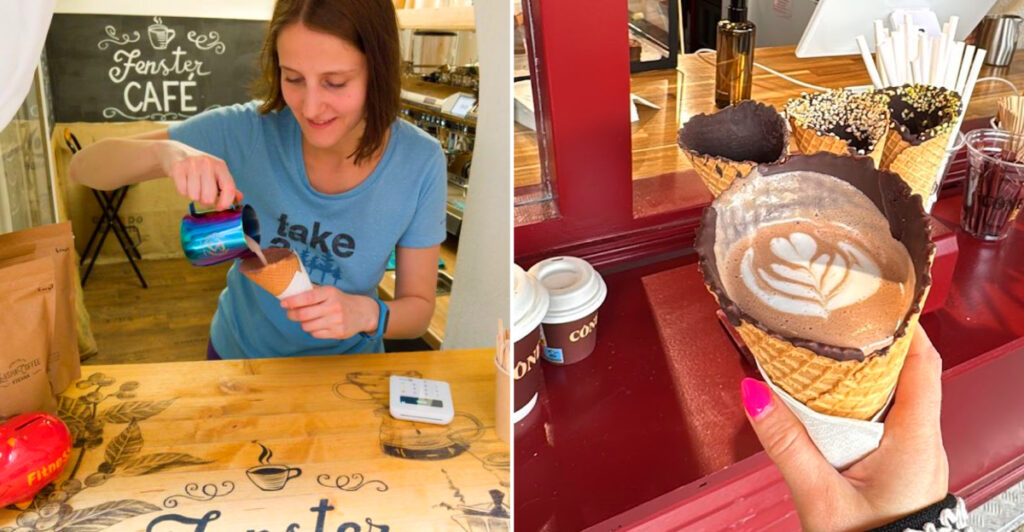
Vienna has been serious about coffee culture for centuries, so it takes genuine creativity to stand out there. Fenster Café managed it by swapping the traditional ceramic cup for a chocolate-lined waffle cone.
The signature cappuccino cone has become one of the city’s most talked-about modern coffee moments. Visitors wandering the old city regularly stop mid-stroll when they spot someone holding one.
The café itself is compact and street-facing, which means most customers grab their cone and keep moving. It works perfectly as a portable treat that combines a proper espresso drink with a dessert-style vessel.
The chocolate lining keeps the cone from going soggy too quickly, which is a practical detail that shows real thought went into the concept. For first-time visitors to Vienna, it is an easy and delicious introduction to how the city continues to reinvent its coffee traditions.
5. The Note Coffee, Hanoi, Vietnam
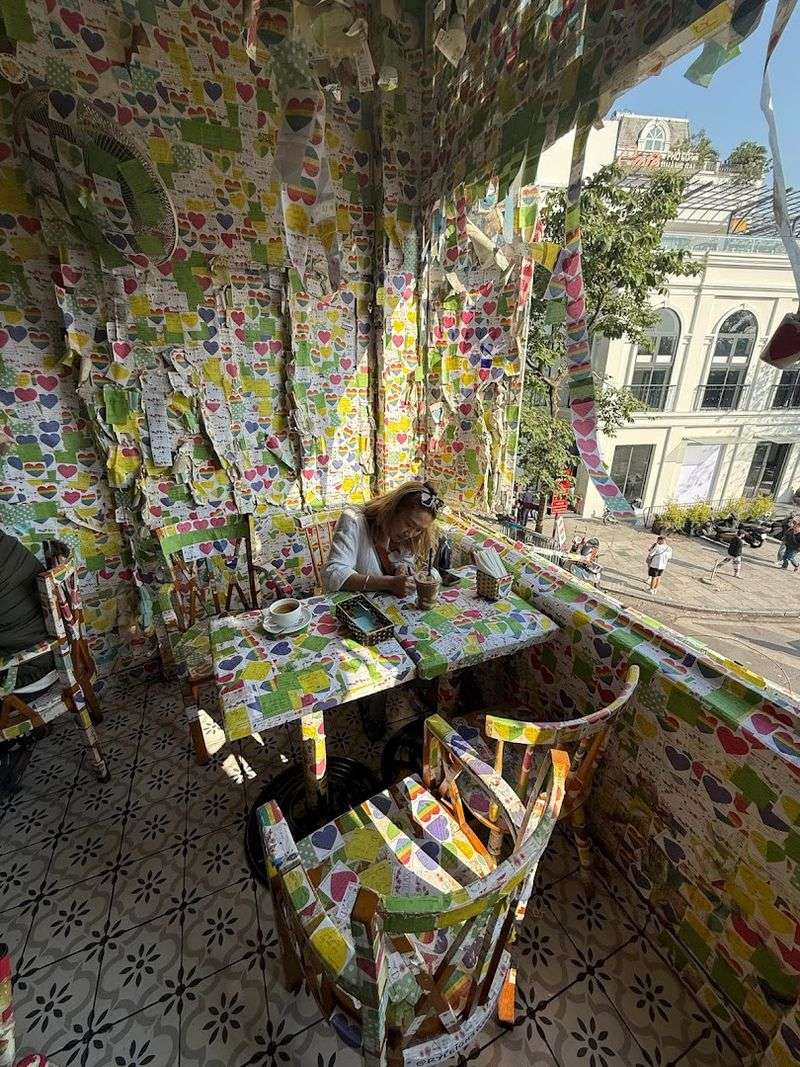
Every surface inside The Note Coffee is covered in handwritten messages left by previous visitors. The walls, the ceiling, the furniture, and even parts of the counter are layered with colorful notes from people who passed through and wanted to leave something behind.
The café serves coconut coffee, which blends Vietnamese drip coffee with coconut milk or cream, giving it a tropical richness that pairs well with the chaotic but cheerful décor. The combination of unusual drink and unusual setting makes it genuinely hard to take a bad photo here.
Located in Hanoi’s Old Quarter, it draws a steady mix of backpackers, locals, and travelers who heard about it and came specifically to add their own note to the collection.
Bringing a pen is practically part of the visit. Most people sit, drink, look around at thousands of other messages, and then spend longer than expected deciding what to write.
6. Cône, Paris, France
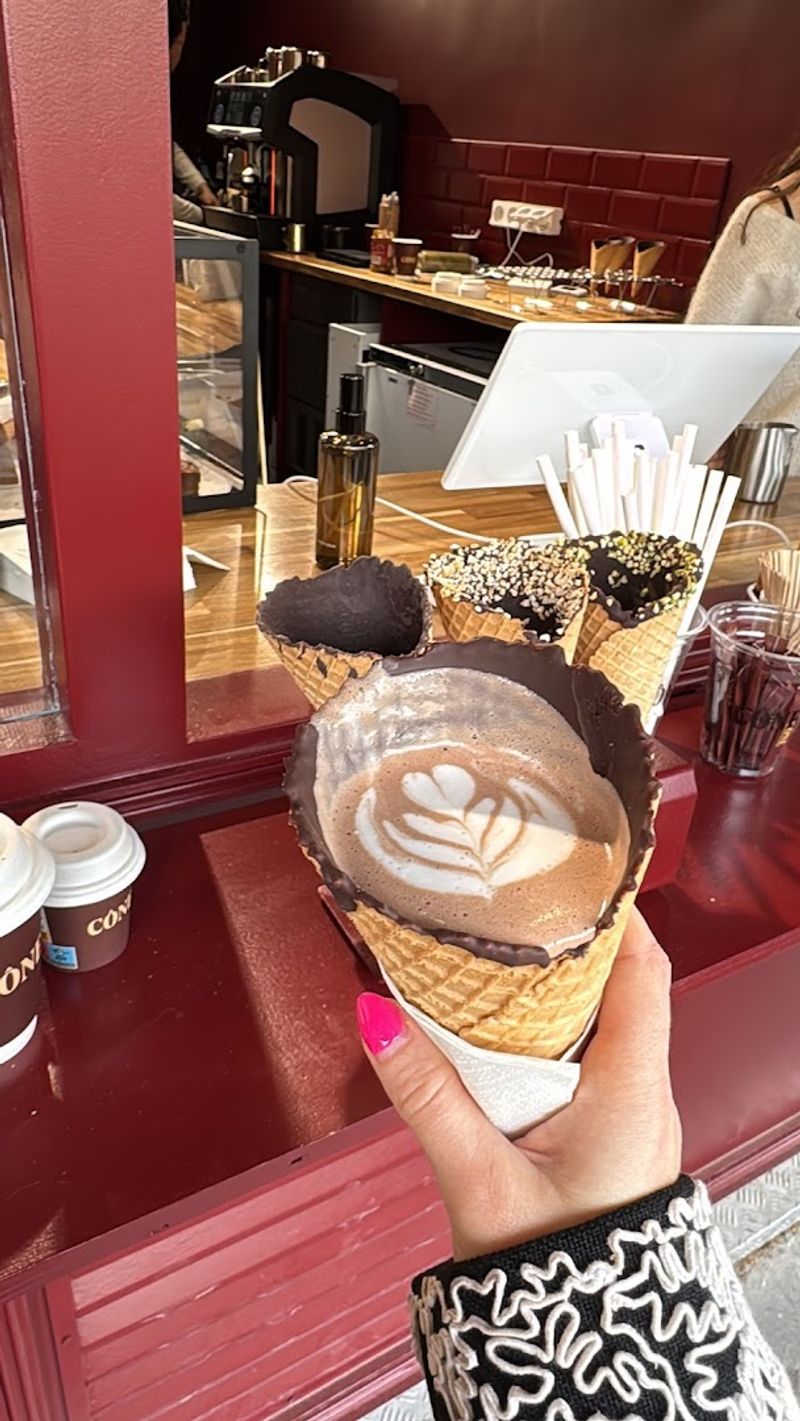
Paris has no shortage of espresso bars, but Cône carved out its own niche by making the cone the main event. The small counter in Saint-Germain serves cappuccino and hot chocolate in handmade cones, turning a simple coffee order into a crossover between an ice cream shop and an espresso bar.
The concept travels well in a city where people love to eat and drink while walking. Tourists and locals alike tend to do a double-take when they see the menu for the first time.
Hot chocolate in a cone is a particular crowd-pleaser, especially in cooler months. The cones are made fresh and hold up well enough for a short Parisian stroll.
Cône keeps things simple on purpose. There is no sprawling menu or complicated ordering process, just a focused idea executed cleanly in one of the world’s most competitive café cities.
7. Cong Caphe, Hanoi, Vietnam
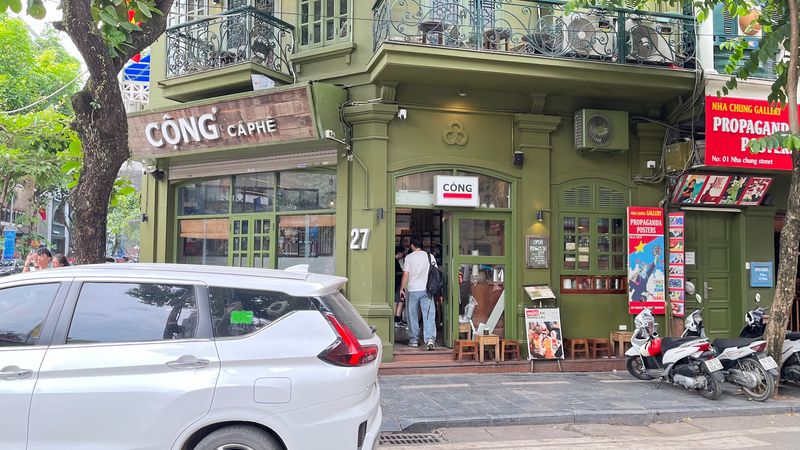
Cong Caphe turned coconut coffee into one of Vietnam’s most recognizable café orders. The signature drink blends strong Vietnamese coffee with coconut smoothie or slush, landing somewhere between an iced coffee and a tropical dessert drink.
The café chain started in Hanoi and has expanded across Vietnam, but the original locations in the capital still carry the most atmosphere. The interior design draws on a retro Vietnamese military aesthetic, with vintage posters, green army tones, and old propaganda-style graphics covering the walls.
That combination of nostalgic décor and inventive menu has made Cong Caphe a go-to stop for visitors who want something distinctly Vietnamese rather than a standard café chain experience.
The coconut coffee works especially well in hot weather, which describes most of the year in Hanoi. It is filling enough to count as a snack, which is a practical bonus that keeps the line moving steadily throughout the day.
8. Lacàph Coffee Experiences Space, Ho Chi Minh City, Vietnam
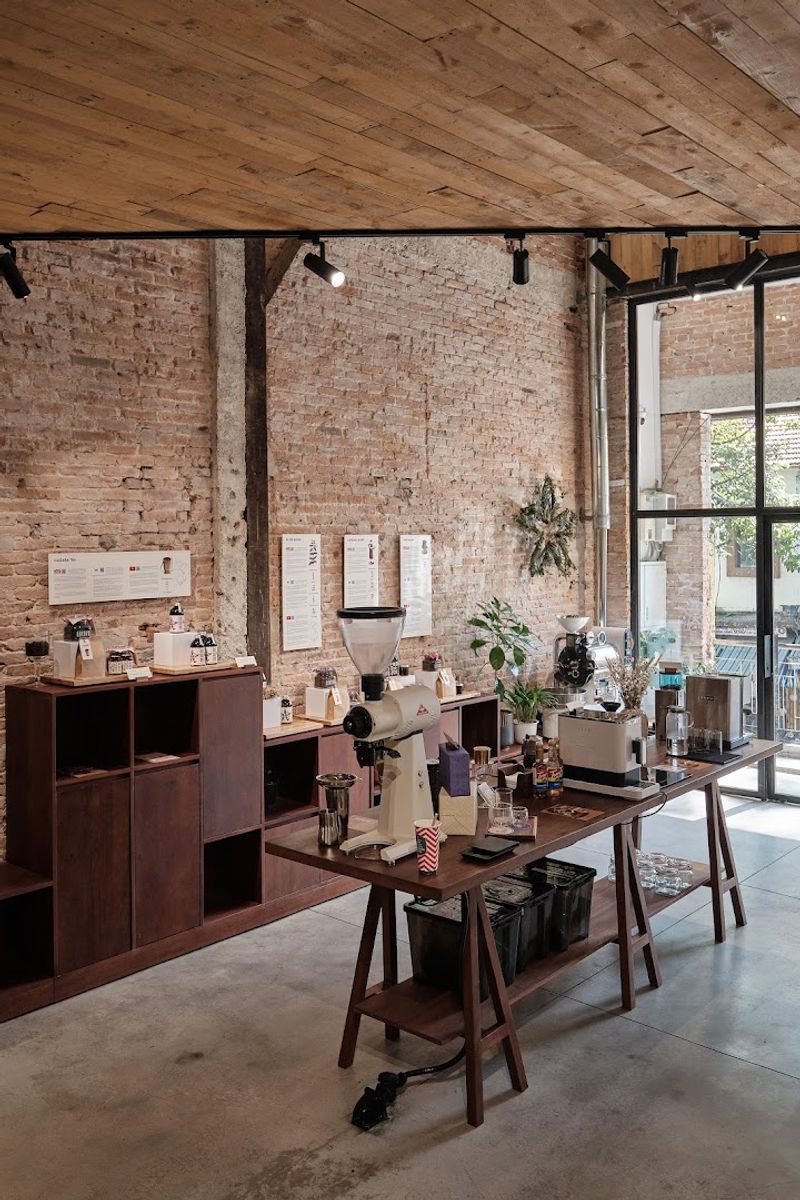
Lacàph is not a place to grab a quick takeaway cup. The Ho Chi Minh City café positions itself as an educational coffee experience, offering tastings, brewing workshops, and guided explorations of Vietnamese coffee varieties.
Visitors can work through a curated coffee flight that highlights different beans, roast levels, and brewing methods, each served with context about where the coffee comes from and how it was prepared. That kind of structured approach is unusual in a country where coffee is often simply handed over and enjoyed without ceremony.
The space itself is designed with the experience in mind, featuring clean lines and dedicated tasting areas that help visitors focus on the cups in front of them.
For serious coffee drinkers, Lacàph offers a genuinely different way to understand Vietnamese coffee beyond the classic drip-and-condensed-milk format. It is one of the few places in Southeast Asia where coffee is treated with the same attention usually reserved for specialty wine or tea.
9. Truth Coffee Roasting, Cape Town, South Africa
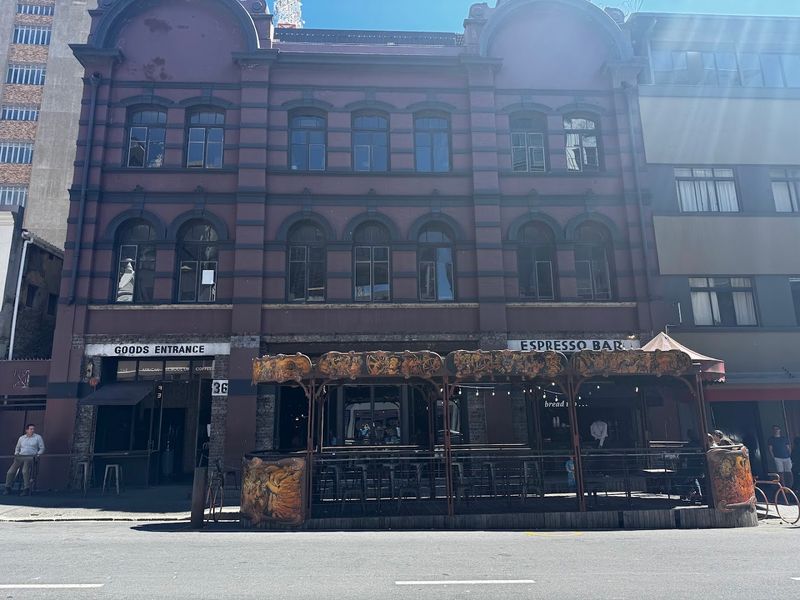
Truth Coffee Roasting has been called one of the world’s best coffee shops, and the interior goes a long way toward explaining why that claim sticks. The Cape Town café is built around a full steampunk aesthetic, complete with exposed pipes, vintage industrial machinery, leather upholstery, and a roasting setup that dominates the center of the space.
The coffee itself is taken seriously, with single-origin options and a menu that rewards customers who want to explore beyond a standard flat white. But the setting is what most first-time visitors photograph before they even order.
Truth occupies a converted warehouse in the Buitenkant Street area, and the scale of the space matches the ambition of the concept. It seats a large number of people without ever feeling like a generic chain.
For coffee travelers passing through Cape Town, it is one of those stops that tends to appear on every list for a reason. The roasting operation runs on-site, so the beans in your cup were processed just a short distance from where you are sitting.
10. Attendant Coffee Roasters, London, England
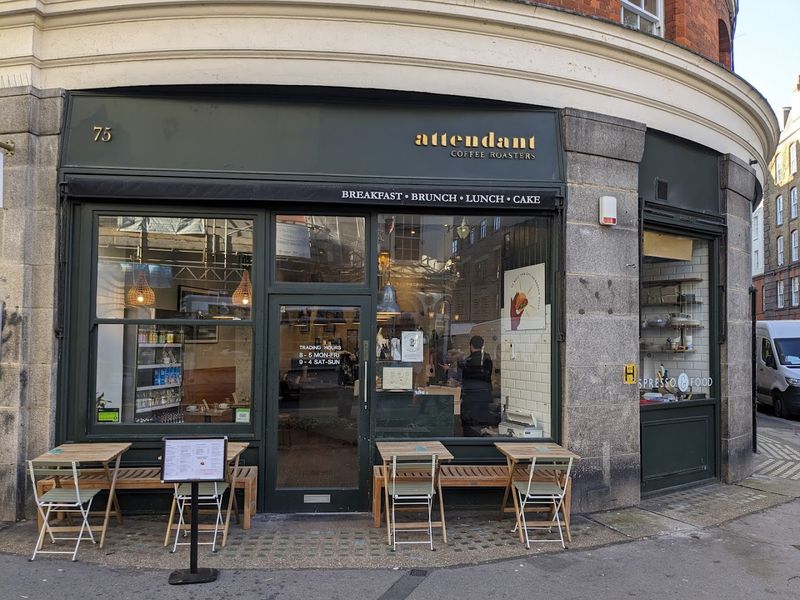
Not many cafés can claim their building was once a Victorian public toilet, but Attendant’s Fitzrovia location wears that history as a genuine selling point. The underground space retains its original ceramic tiles and some of the restored fixtures, which have been cleverly incorporated into the café layout.
The former urinal stalls now function as individual seating booths, giving the space a quirky intimacy that no purpose-built café could replicate. It is one of those places where the architecture tells a story that the menu alone never could.
Attendant focuses on specialty coffee and a rotating food menu, keeping the quality high enough that the novelty of the setting never overshadows the actual drinks. Regulars visit for the espresso as much as for the conversation starter it provides.
The Fitzrovia location opened in 2013 and helped establish Attendant as one of London’s more interesting independent roasters. A few additional London locations followed, but the underground original remains the most talked-about.
11. Greem Café, Seoul, South Korea
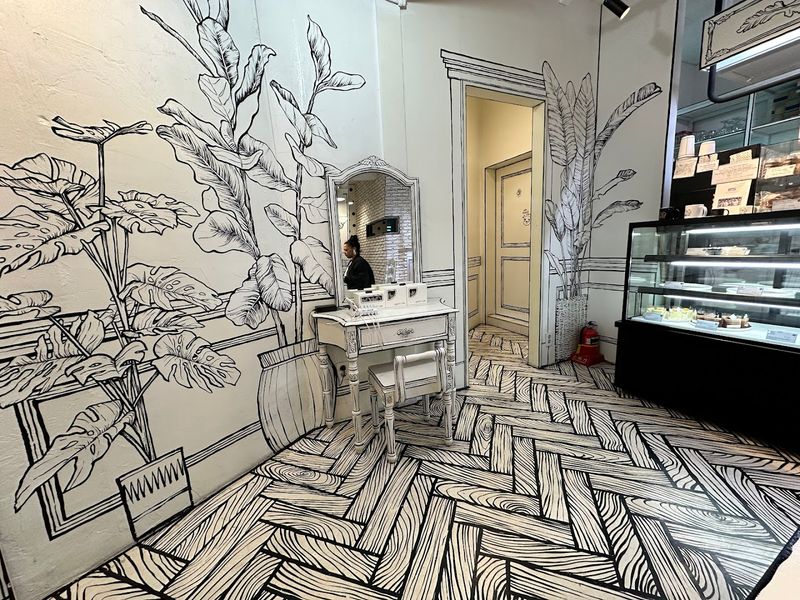
Greem Café looks exactly like someone drew a coffee shop in a sketchbook and then made it real. Every element of the interior, from the tables and chairs to the cups and walls, is designed with bold black outlines on white backgrounds, creating the visual effect of a black-and-white cartoon.
The concept is consistent and committed. There are no half-measures here, no single cartoon wall surrounded by normal furniture. The entire space holds the aesthetic together, which makes the effect genuinely striking rather than gimmicky.
Located in Seoul, Greem draws a steady stream of visitors who come specifically to photograph the interior. The café has become well known on social media, but the in-person experience is different from what a photo captures because the scale of the commitment to the concept only registers when you are sitting inside it.
Coffee and desserts are served in cups and plates that continue the black-and-white theme. It is a café that makes a regular Americano feel like part of an art installation.
12. Dreamy Camera Cafe, Yangpyeong, South Korea
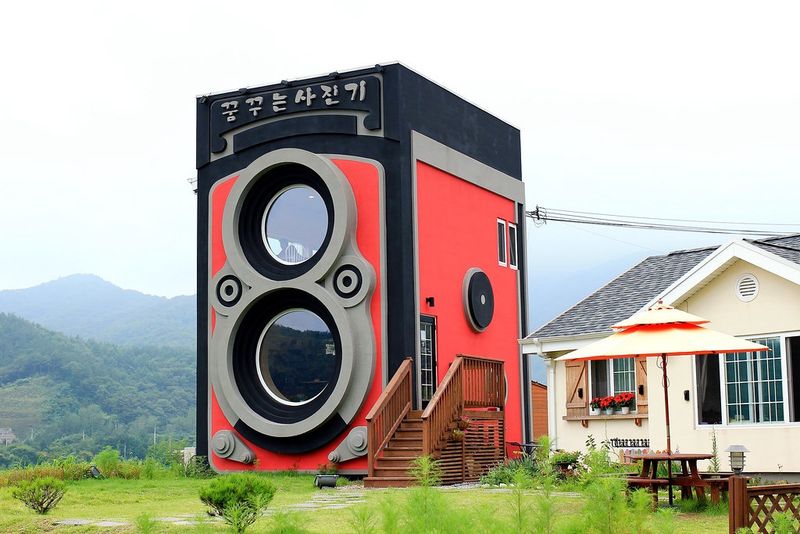
From the outside, Dreamy Camera Cafe looks like an oversized vintage camera dropped into the South Korean countryside. The building is shaped to resemble a classic film camera, complete with a circular lens detail on the front, which makes it one of the more photographed café exteriors in the country.
Located in Yangpyeong, about an hour from Seoul, it sits in a rural setting that gives the structure plenty of room to be seen from a distance. The contrast between the architectural novelty and the surrounding countryside is part of what makes it worth the trip.
Inside, the café continues the camera theme with photography-related details and wide windows that frame the countryside views. The menu covers standard café fare, but most visitors are honest about the fact that the building is the main draw.
Road trips from Seoul often include a stop here specifically for the exterior photo opportunity. It is the kind of destination that makes a long drive feel worthwhile even before the coffee arrives.
13. Cafe Onion Seongsu, Seoul, South Korea
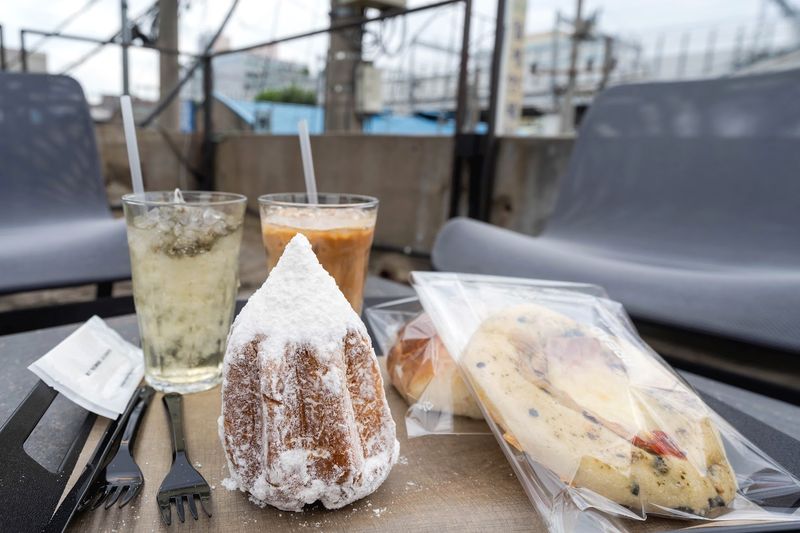
Seongsu-dong has become Seoul’s most talked-about creative district, and Cafe Onion is one of the spaces that helped put it on the map. The café occupies a former factory building, and the renovation kept most of the raw industrial character intact rather than smoothing it over with polished finishes.
Raw concrete walls, exposed structural elements, and high ceilings give the space a scale that feels unusual for a coffee shop. The contrast between the rough building and the carefully curated pastry counter is deliberate and effective.
Cafe Onion Seongsu draws long lines on weekends, which says something about how strongly the concept resonates with Seoul’s younger creative crowd. The menu features specialty coffee and freshly baked goods, both of which hold up to the hype the setting generates.
For visitors exploring Seongsu, it functions as both a café stop and a window into how the neighborhood has repositioned itself. The building alone makes it worth seeking out even on a busy Saturday.
14. Round K Coffee Roasters, New York, New York
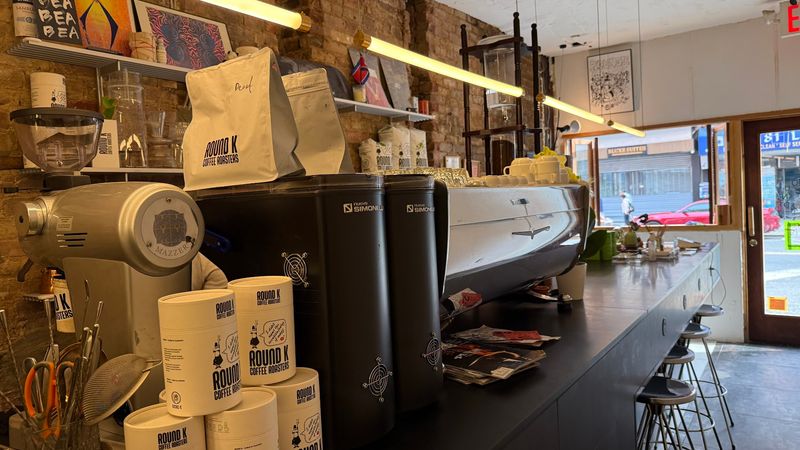
Round K brought a distinctly Korean café sensibility to the Lower East Side, and the result stands out in a neighborhood already crowded with independent coffee shops. The space has a dark, minimal interior that feels more curated art space than casual coffee stop.
The butter latte is the drink that gets the most attention. It is made by adding a small pat of cultured butter to the espresso base, which creates a richness that is hard to describe without sounding like a food science experiment gone right.
The café draws a mix of locals, coffee enthusiasts, and visitors who read about it online and came to see whether the butter concept actually works. Most leave converted.
Round K also serves a rotating selection of Korean-inspired pastries and drinks that change with the seasons. The menu rewards repeat visits, and the moody interior makes it an easy place to spend an afternoon without feeling rushed.
15. The Coffee Academïcs, Hong Kong, China
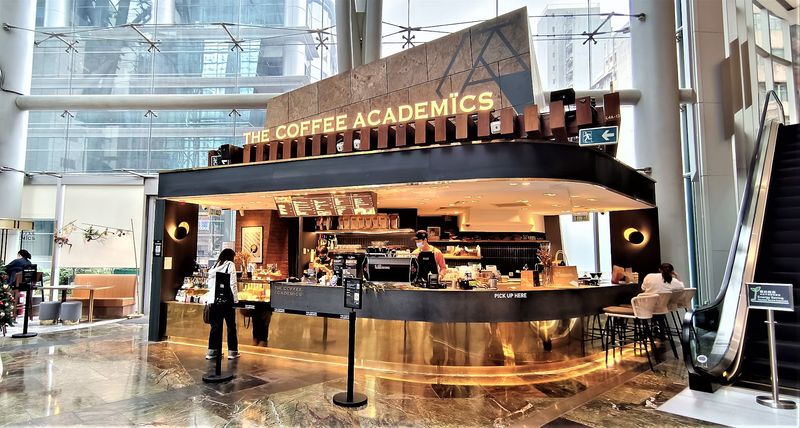
The Coffee Academïcs built its Hong Kong reputation on specialty coffee that takes its flavor combinations seriously. The menu includes signature drinks made with ingredients like black pepper, agave, and other additions that most cafés would never consider putting near an espresso machine.
The café treats its coffee program with a level of precision that reflects genuine research into how flavors interact. Each unusual combination on the menu has a logic behind it, even when the description sounds more like a cocktail recipe than a coffee order.
Multiple locations operate across Hong Kong, but the brand maintains consistent quality and a menu that changes regularly to reflect seasonal ingredients and new experiments.
For visitors who find standard specialty coffee menus predictable, The Coffee Academïcs offers something genuinely worth studying. The unusual ingredient pairings are not there for novelty alone, they are developed with enough care that the drinks actually taste better for the experimentation. The menu is the kind you read twice before ordering.
Share this story