Chicago is a city with a skyline everyone recognizes, a food scene worth traveling for, and neighborhoods packed with personality. Beyond the postcard views, the city rewards visitors with history, culture, comedy, and unforgettable local experiences.
This guide covers 15 of the best things to do in Chicago, from iconic public art to legendary entertainment venues. Whether you are visiting for a weekend or staying longer, these stops offer a real taste of what makes Chicago one of America’s most exciting cities.
1. Walk Through Millennium Park
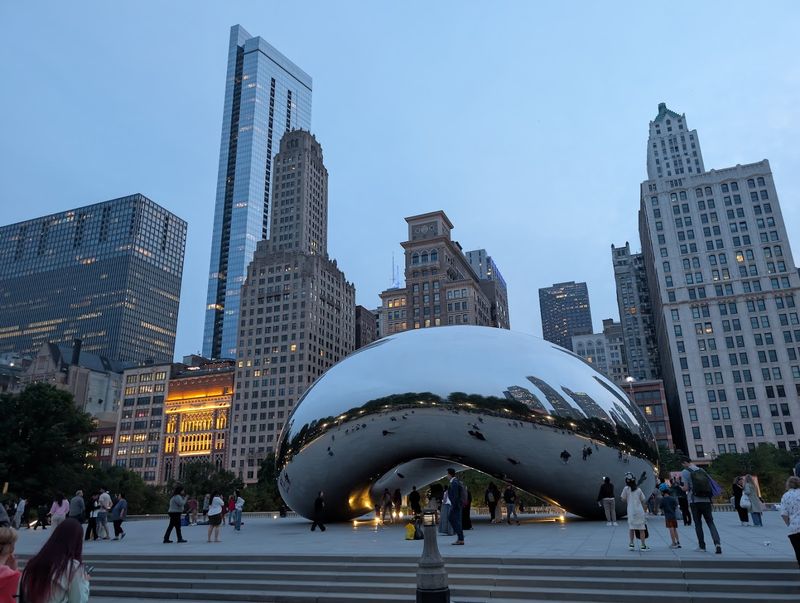
The Bean is not just a photo opportunity. Cloud Gate, the official name of this 110-ton stainless steel sculpture, was designed by artist Anish Kapoor and completed in 2006 after years of construction and polishing.
The reflective surface curves in a way that distorts and multiplies the skyline around it, making every angle look different from the last. Visitors often spend more time here than they planned.
Beyond The Bean, Millennium Park includes the Jay Pritzker Pavilion, which hosts free outdoor concerts throughout summer, and the interactive Crown Fountain, which features two 50-foot glass towers displaying faces of Chicago residents. The park covers 24.5 acres and sits right in the heart of downtown, making it an easy first stop for any visit to the city.
2. Take in the Views from Skydeck Chicago
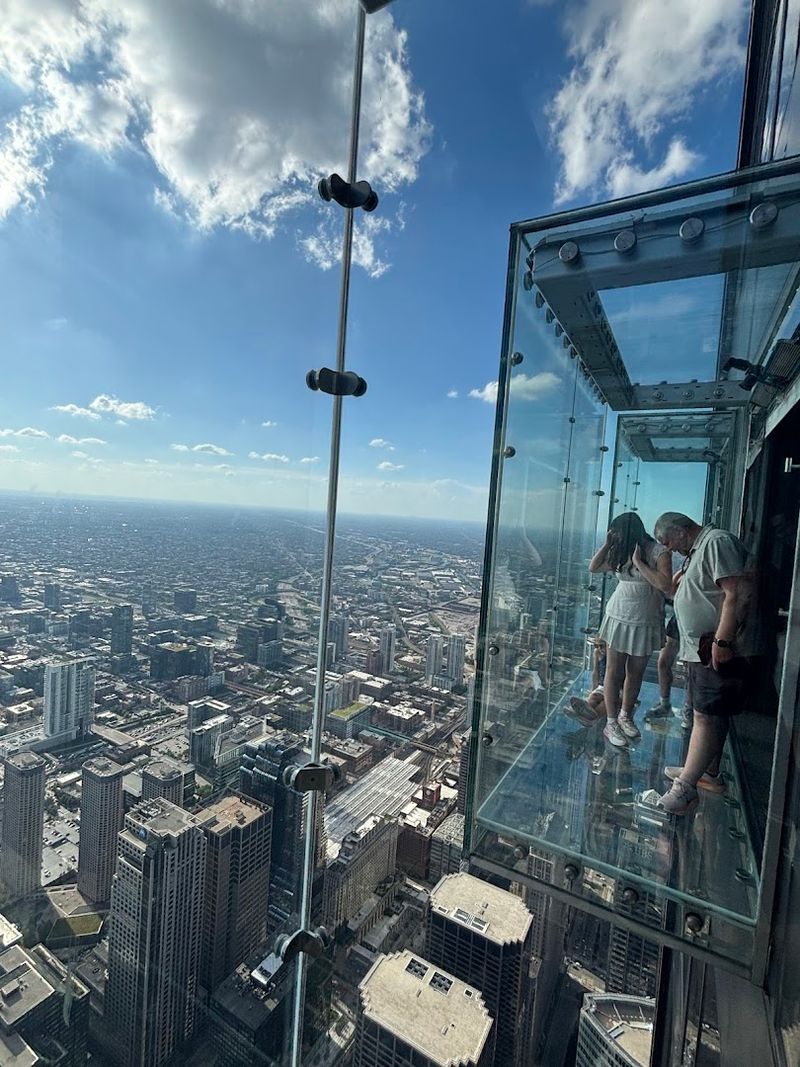
At 1,353 feet above street level, the 103rd floor of Willis Tower puts the entire city grid beneath your feet. Skydeck Chicago offers unobstructed panoramic views that, on a clear day, stretch across Illinois, Indiana, Michigan, and Wisconsin simultaneously.
The real draw for most visitors is The Ledge, a set of glass-floored boxes that extend four feet out from the building. Standing on transparent glass with nothing but open air below is a genuinely memorable experience, even for people who consider themselves unafraid of heights.
Tickets can be purchased in advance online, which is strongly recommended during peak summer months when lines can stretch well past an hour. The observation deck also includes historical exhibits about the tower’s construction and its role in Chicago’s architectural identity.
3. Explore the Chicago Riverwalk
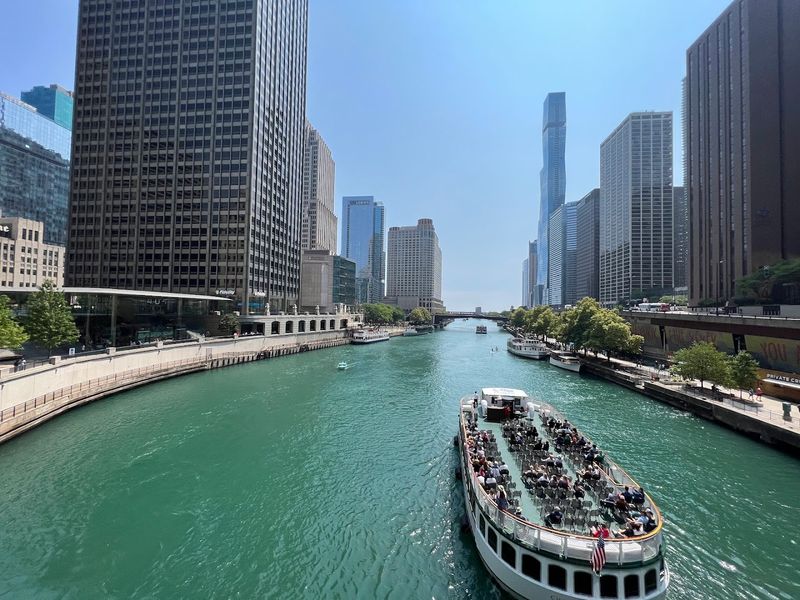
Stretching nearly a mile along the south bank of the Chicago River through downtown, the Riverwalk is one of the most well-designed public spaces in the city. It opened in its current expanded form in 2015 and has become a daily destination for both locals and tourists.
The path is divided into distinct sections, each with its own character, including a kayak launch area, outdoor seating, a floating garden, and a Vietnam Veterans Memorial. Architecture boat tours also depart from the Riverwalk, giving visitors a water-level view of the buildings that line both riverbanks.
Most of the major architecture cruise companies launch from docks along this stretch, making it the most practical starting point for exploring Chicago’s building history. Early morning visits offer a quieter experience before the crowds arrive.
4. Try Authentic Chicago Deep-Dish Pizza

Chicago deep-dish pizza is not the same as a thick-crust pizza from anywhere else. The structure is built in reverse, with cheese layered directly on the dough, followed by toppings, and then a chunky tomato sauce poured on top before baking.
Lou Malnati’s, Giordano’s, and Pequod’s each have devoted followings, and locals will happily argue for hours about which one deserves the title. Pequod’s is known for its caramelized crust edge, while Giordano’s specializes in a stuffed version with a second layer of dough in the middle.
Deep-dish takes 30 to 45 minutes to bake, so ordering ahead or arriving early is a practical move. Most first-time visitors are surprised by how filling a single slice can be, so plan accordingly before ordering a full pie.
5. Visit the Art Institute of Chicago
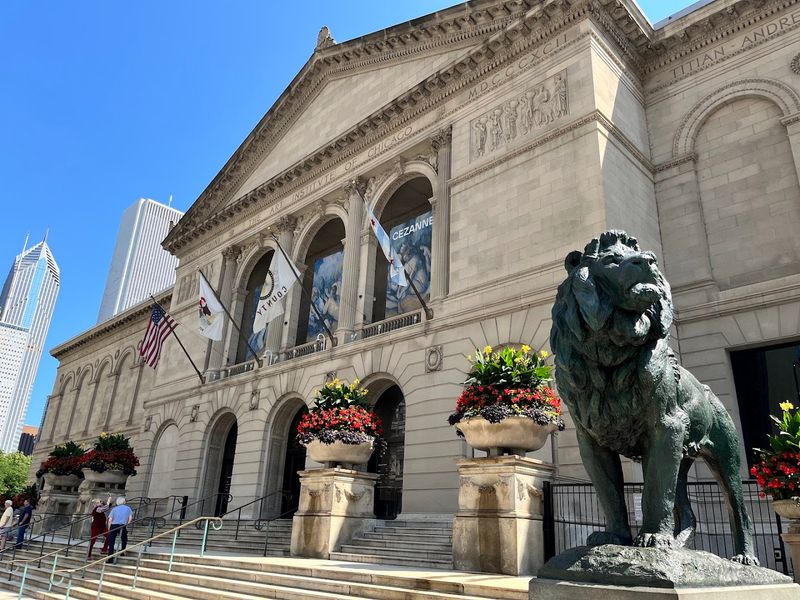
Founded in 1879, the Art Institute of Chicago holds one of the most significant art collections in the United States. The permanent collection spans more than 5,000 years of human creativity across 300,000 works.
The Impressionist and Post-Impressionist galleries are among the most visited in the building, featuring paintings by Monet, Seurat, and Toulouse-Lautrec. Grant Wood’s “American Gothic” and Georges Seurat’s “A Sunday on La Grande Jatte” are two of the most recognized works on permanent display.
The museum is large enough to require a full day if you want to cover it seriously. A good strategy is to download the museum map in advance and prioritize two or three galleries rather than trying to see everything.
The Modern Wing, added in 2009, is worth a separate visit on its own.
6. Spend Time at Navy Pier
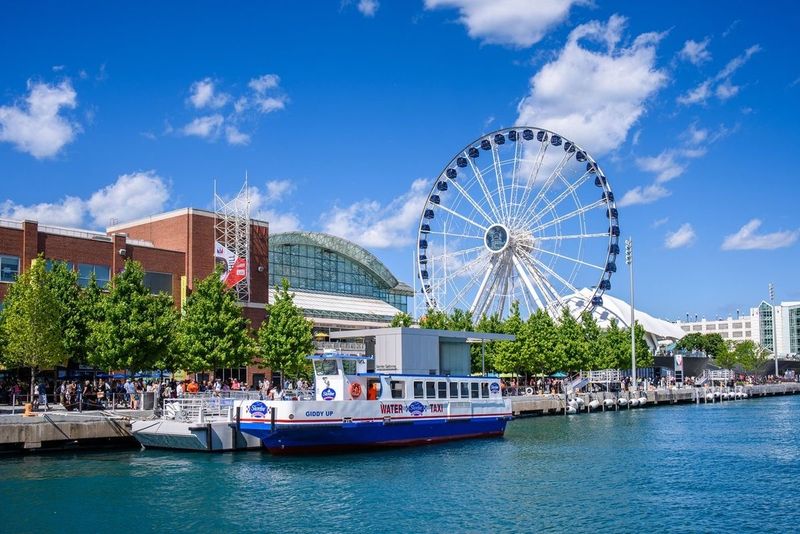
Navy Pier juts half a mile into Lake Michigan and packs a surprising amount of activity into one location. Originally built in 1916 as a shipping and recreation facility, it has been transformed over the decades into one of Chicago’s busiest tourist destinations.
The Centennial Wheel stands 196 feet tall and offers sweeping views of the lakefront and downtown skyline during its rotation. The pier also houses the Chicago Children’s Museum, the Chicago Shakespeare Theater, an IMAX theater, and multiple dining options spread across its length.
Summer weekends bring outdoor performances and fireworks displays on Wednesday and Saturday evenings. Arriving by water taxi from the Riverwalk is a practical and enjoyable alternative to navigating the surrounding traffic on busy days.
Winter visits are quieter but still worth the trip.
7. Catch a Game at Wrigley Field
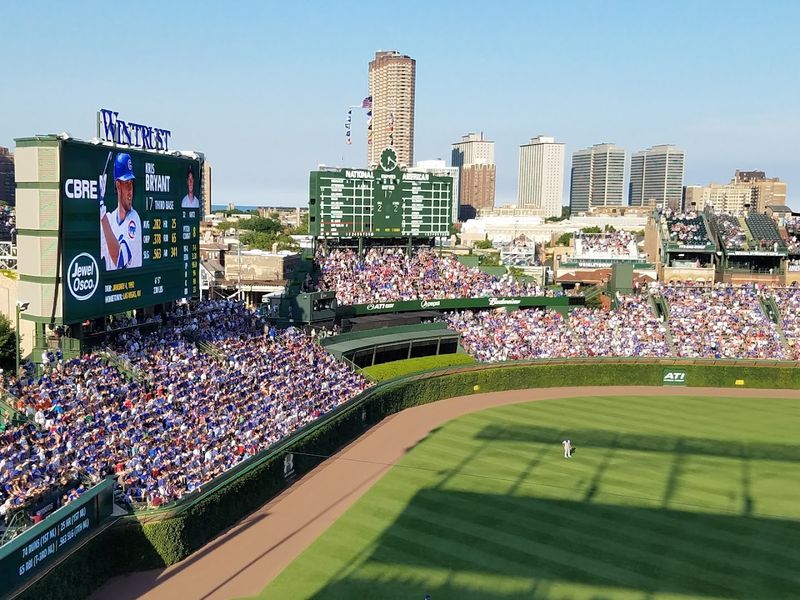
Wrigley Field opened in 1914, making it the second-oldest Major League Baseball stadium still in active use. The ivy-covered outfield walls and hand-operated scoreboard are two features that have remained largely unchanged for decades, giving the ballpark a distinctly old-school character.
Attending a Cubs game here is as much about the environment as it is about baseball. The rooftop bleachers on buildings across the street from the stadium are a Chicago-specific tradition that exists nowhere else in professional sports.
The surrounding Wrigleyville neighborhood fills up on game days with fans moving between restaurants and bars, and the energy is worth experiencing even if you end up watching only a few innings. Tickets for day games are generally easier to get and offer a great view of the city skyline beyond the outfield.
8. Cruise Along Lake Michigan
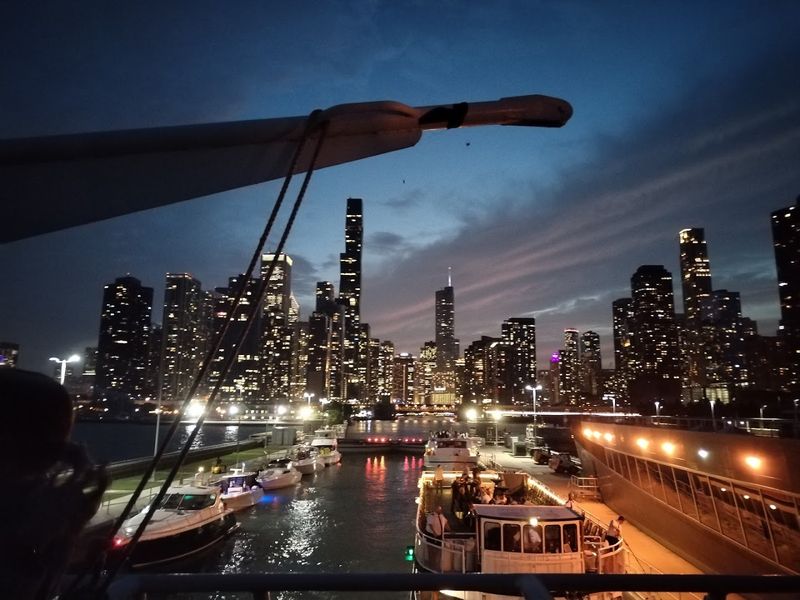
Chicago’s relationship with Lake Michigan is central to how the city was built and how it functions today. The lake acts as a natural boundary on the east side of the city, shaping the layout of neighborhoods, parks, and the famous Lakefront Trail.
Architecture cruises departing from the Riverwalk provide detailed commentary on the buildings that line the Chicago River before opening up onto the lake itself. Chicago’s First Lady and Wendella Boats are two of the most established operators, with tours running approximately 90 minutes.
The Lakefront Trail runs 18 miles along the shoreline and connects dozens of beaches, parks, and harbors. Renting a bicycle and riding a section of this trail gives a completely different perspective on the city’s scale and its relationship to the water alongside it.
9. Explore the Magnificent Mile
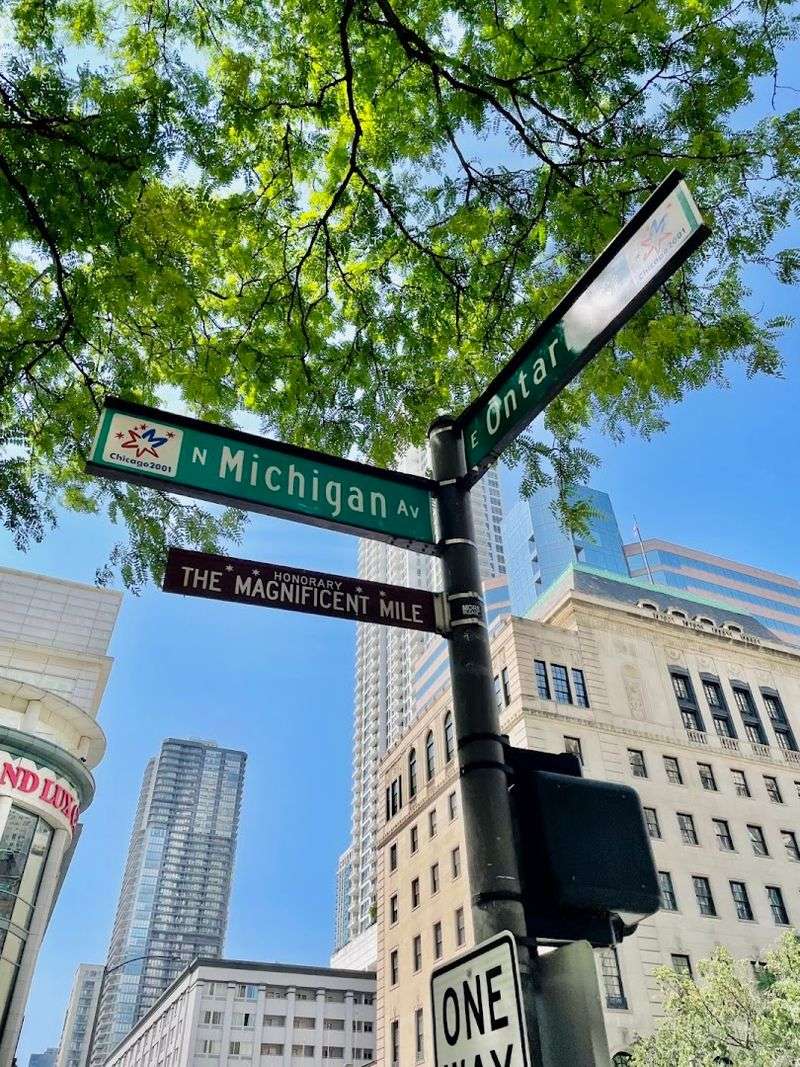
The Magnificent Mile is the stretch of North Michigan Avenue running from the Chicago River to Oak Street, and it has served as Chicago’s main commercial corridor for over a century. The nickname was coined in 1947 by real estate developer Arthur Rubloff as a promotional strategy that clearly worked.
The street combines flagship retail stores, historic landmarks, and major hotels in a walkable stretch that covers roughly one mile. The Tribune Tower, the Wrigley Building, and the old Water Tower are three architectural standouts worth pausing to examine closely.
Beyond shopping, the area is useful as a central navigation point for exploring nearby neighborhoods like Streeterville and the Gold Coast. The Chicago Architecture Center, located just south of the river on Michigan Avenue, is a strong starting point for understanding the buildings you pass along the way.
10. Visit the Museum of Science and Industry
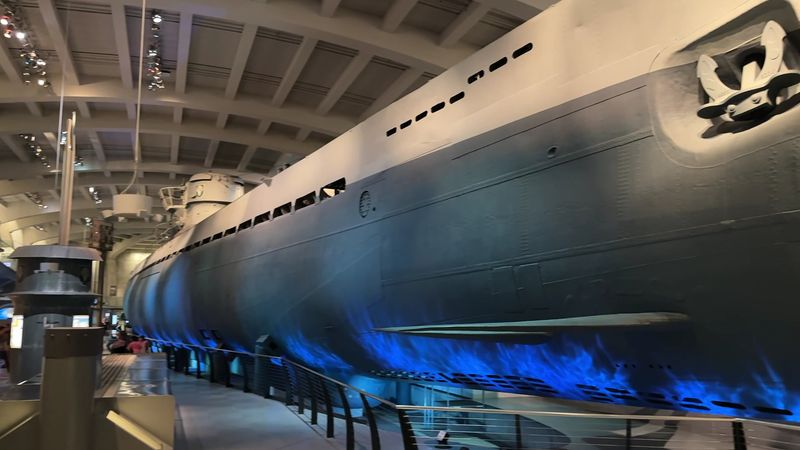
The Museum of Science and Industry occupies a building that was originally constructed for the 1893 World’s Columbian Exposition. That history alone makes the structure worth a visit, but the exhibits inside are what keep people coming back.
The U-505 submarine is the centerpiece of the museum’s lower level, a fully preserved German submarine captured by the U.S. Navy during World War II in 1944.
It remains one of the few German U-boats still in existence anywhere in the world.
Other highlights include a replica coal mine that visitors can descend into, a full-size model of a tornado, and an exhibit featuring a German Stuka dive bomber hanging from the ceiling. The museum is located in Hyde Park, about 30 minutes south of downtown by train, and is well worth the commute.
11. Experience Chicago’s Food Scene Beyond Pizza
A Chicago-style hot dog comes with a very specific set of rules: a steamed poppy seed bun, yellow mustard, neon green relish, chopped onions, tomato slices, a dill pickle spear, and sport peppers. Ketchup is not included, and most Chicago hot dog stands will let you know that firmly.
The Italian beef sandwich is another local institution, built from thin-sliced seasoned beef served on a long Italian roll and typically dipped in the cooking juices before serving. Portillo’s and Al’s Beef are two of the most referenced spots for this experience.
Garrett Popcorn, with its Chicago Mix of cheese and caramel corn combined in one bag, has been a Chicago tradition since 1949. Neighborhood food tours organized by companies like Chicago Food Planet cover multiple stops in a single outing and are well worth the investment.
12. Watch the Buckingham Fountain Show
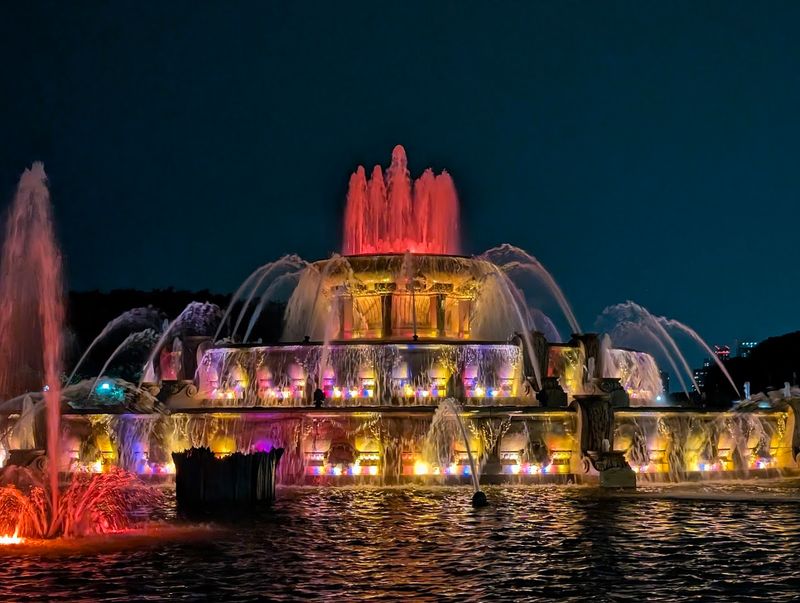
Buckingham Fountain was dedicated in 1927 and remains one of the largest decorative fountains in the world. It was modeled after the Bassin de Latone at the Palace of Versailles in France, though at twice the scale of its inspiration.
The fountain operates from mid-April through mid-October, with water displays running every hour on the hour during the day. Evening shows between 9 p.m. and 11 p.m. include a synchronized light program that draws consistent crowds from the surrounding Grant Park area.
The fountain sits at the center of Grant Park, which also contains the Petrillo Music Shell, the Lurie Garden, and easy access to the lakefront. The surrounding park is free to access and offers some of the best unobstructed views of the downtown skyline available from ground level in the city.
13. Wander Through Lincoln Park
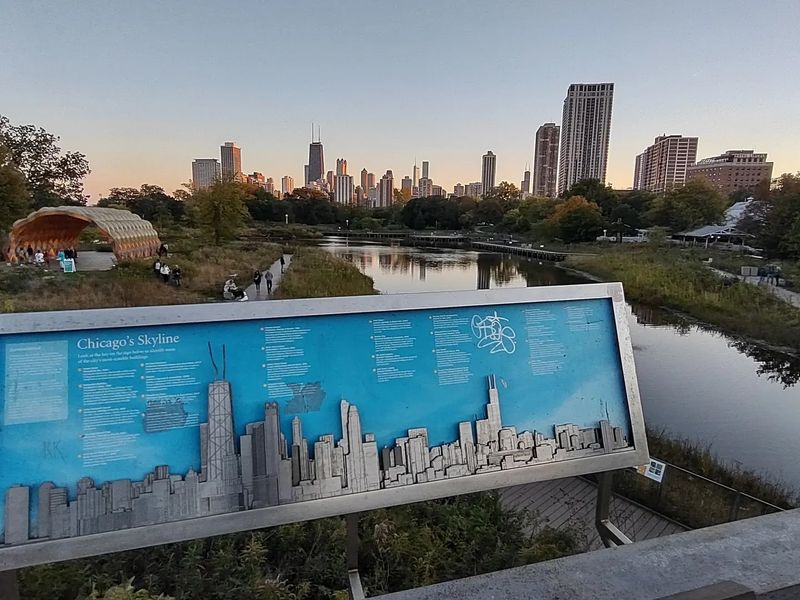
Lincoln Park is Chicago’s largest public park, covering over 1,200 acres along the North Side lakefront. It runs for about seven miles from North Avenue Beach up to Hollywood Avenue, connecting dozens of smaller attractions along the way.
The Lincoln Park Zoo, established in 1868, is one of the oldest zoos in the country and remains completely free to visit. It houses more than 200 species of animals and draws about 3.5 million visitors annually, making it one of the most visited free attractions in the entire Midwest.
The park also contains the Chicago History Museum, the Peggy Notebaert Nature Museum, and the Lincoln Park Conservatory, a Victorian-era greenhouse with year-round botanical displays. North Avenue Beach, located at the southern edge of the park, is one of the city’s most popular summer destinations.
14. Enjoy Live Blues and Jazz Music
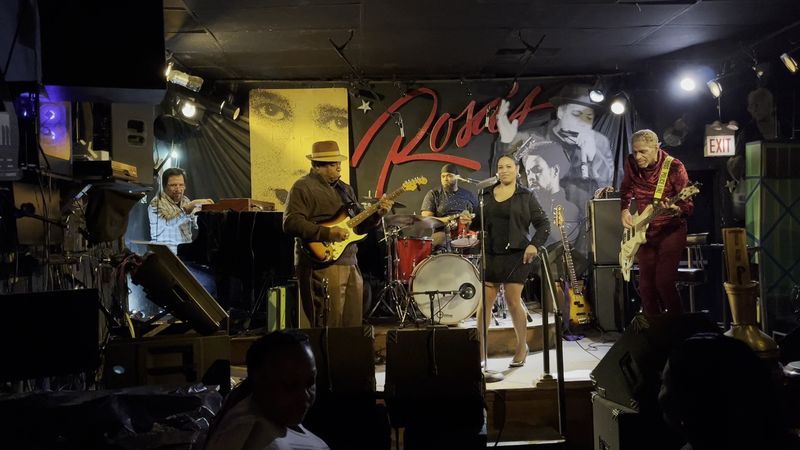
Chicago blues developed in the 1940s as musicians from the Mississippi Delta brought their style north and adapted it for electric instruments and urban audiences. Artists like Muddy Waters, Howlin’ Wolf, and Little Walter recorded some of the most influential music in American history right here in this city.
Kingston Mines on Halsted Street has been operating since 1968 and runs two stages simultaneously, so there is always live music playing regardless of which room you are in. Buddy Guy’s Legends, opened by the legendary guitarist himself in 1989, hosts national and international acts alongside local performers.
The Green Mill Jazz Club in Uptown opened in 1907 and maintains one of the most intact vintage interiors of any music venue in Chicago. Sunday night jam sessions are a long-standing tradition and attract serious musicians from across the city.
15. See the City Lights at Night
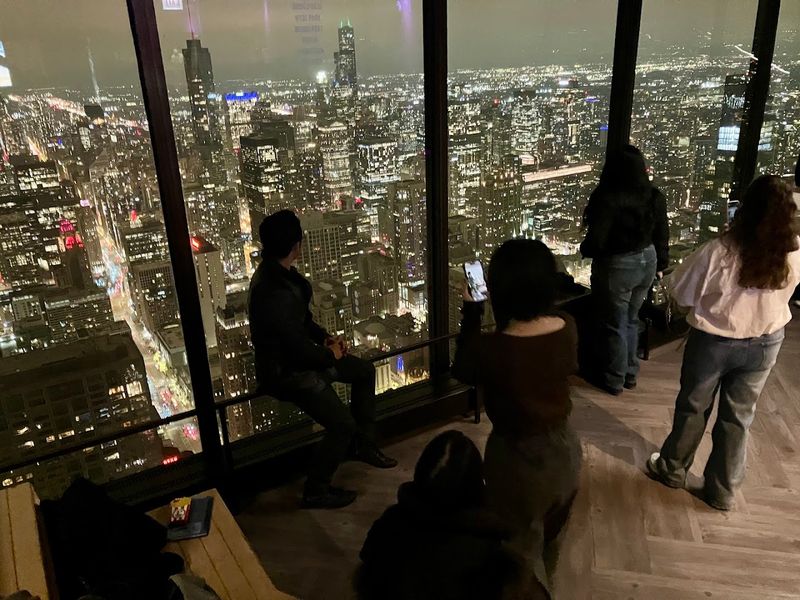
Chicago at night operates on a different scale than most American cities. The downtown skyline, when viewed from the Riverwalk or across the river from the Michigan Avenue Bridge, presents a wall of illuminated glass and steel that has been photographed from this angle millions of times and still manages to impress in person.
The 360 Chicago observation deck on the 94th floor of 875 North Michigan Avenue offers a nighttime view that includes the full sweep of the lakefront, the grid of the city stretching west, and the dark expanse of Lake Michigan to the east. The TILT experience there rotates visitors outward over Michigan Avenue at an angle.
An evening walk from Millennium Park to the Riverwalk covers about half a mile and passes through the most visually concentrated section of the city. Most of the major landmarks along this route are lit after dark.
Share this story