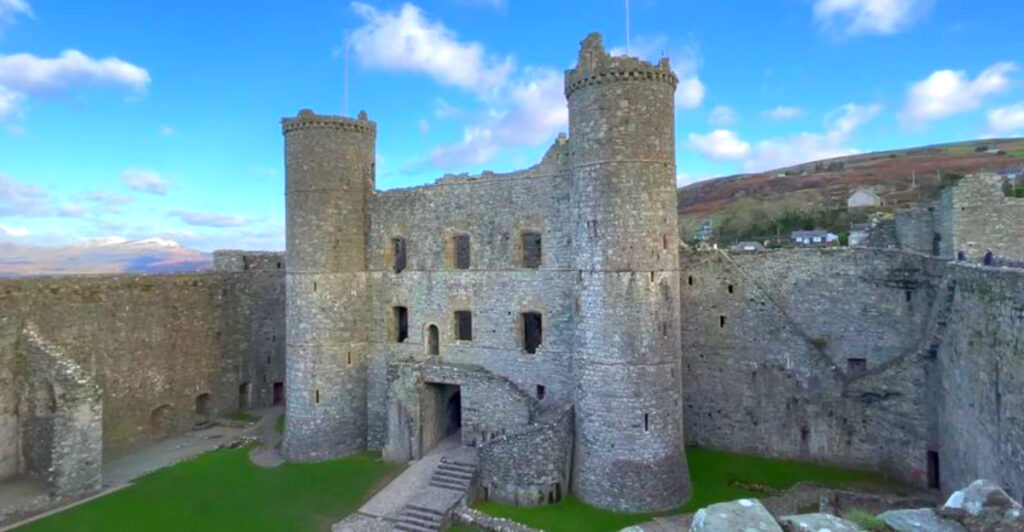
Castles were built for defense, but many became the stage for some of history’s most dramatic conflicts. Across centuries of warfare, these fortresses witnessed brutal sieges, political betrayals, shifting alliances, and battles that helped shape entire kingdoms.
What makes these castles memorable is not just their imposing architecture, but the extraordinary events that unfolded within their walls. From infamous rivalries to relentless attacks, these strongholds have stories every bit as compelling as the legends that surround them.
These castles earned their place in history through conflict, resilience, and unforgettable moments that still captivate visitors today.
1. Edinburgh Castle, Edinburgh, Scotland
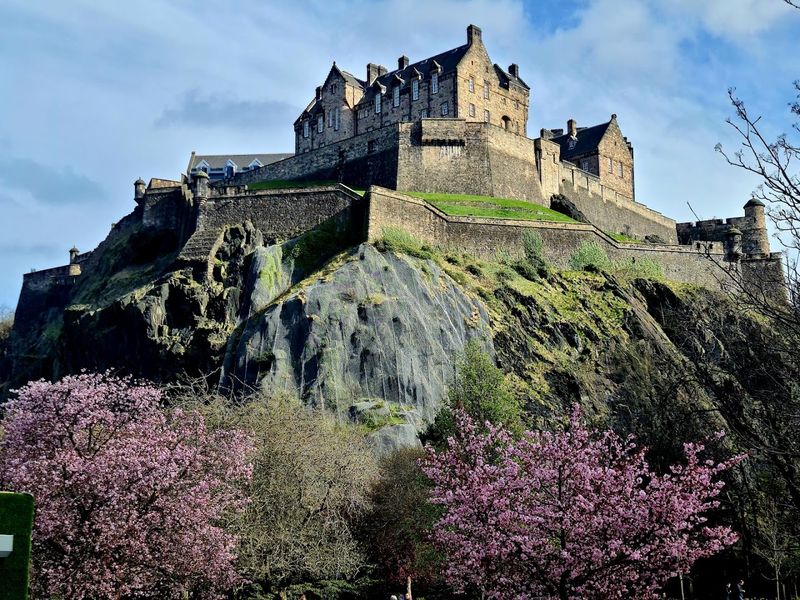
At least 23 major sieges have targeted this fortress, which is more than any other castle in Britain and more than most actual battlefields ever saw. Perched on a volcanic rock that rises sharply above the city, Edinburgh Castle has been fought over since at least the 7th century.
Its position made it both a military prize and a nightmare to attack. Armies used starvation tactics, cannon fire, and tunneling to try to crack its defenses, often at a terrible cost in lives.
One of its most dramatic moments came in 1314, when a small Scottish force scaled the cliffs at night and retook the castle from English control in a raid that is still celebrated today.
The castle also served as a prison for French and American captives during later centuries. Layers of history are literally built into its walls, each one representing a conflict that left real marks on the stone and on the people inside.
2. Château Gaillard, Les Andelys, France
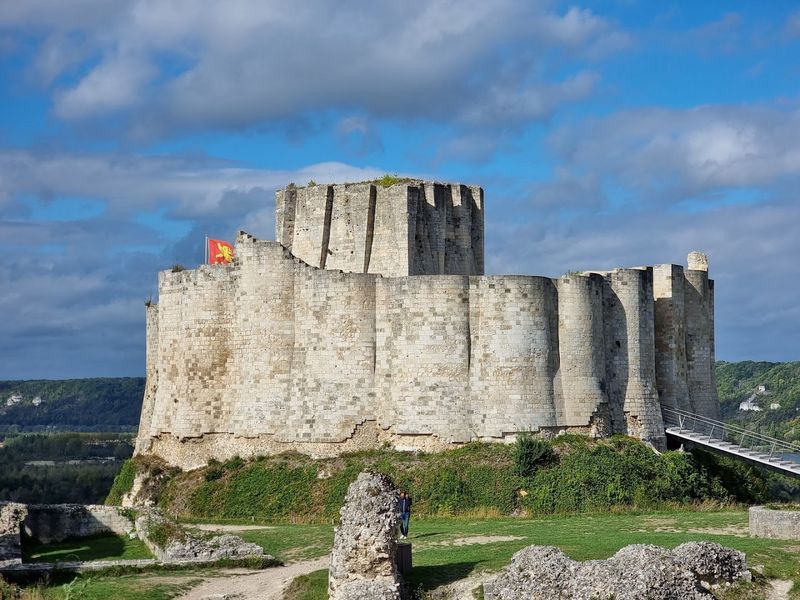
Richard the Lionheart personally designed this castle, boasting that he could hold it even if its walls were made of butter. He was wrong, but it still took one of the Middle Ages’ most brutal sieges to prove it.
In 1203, French King Philip II surrounded the fortress and cut off all supplies. The English garrison tried to expel hundreds of civilians to save food, but Philip refused to let them pass, leaving them trapped in the moat through an entire winter without adequate provisions.
When Philip’s forces finally broke through in 1204, they used an unexpected route: soldiers reportedly climbed through a latrine shaft in the chapel wall to unlock a gate from the inside.
The fall of Chateau Gaillard triggered the collapse of English rule across Normandy. Today its ruins still sit dramatically above the Seine River, a crumbling reminder of how quickly even the most confident military plans can unravel under sustained pressure.
3. Malbork Castle, Malbork, Poland
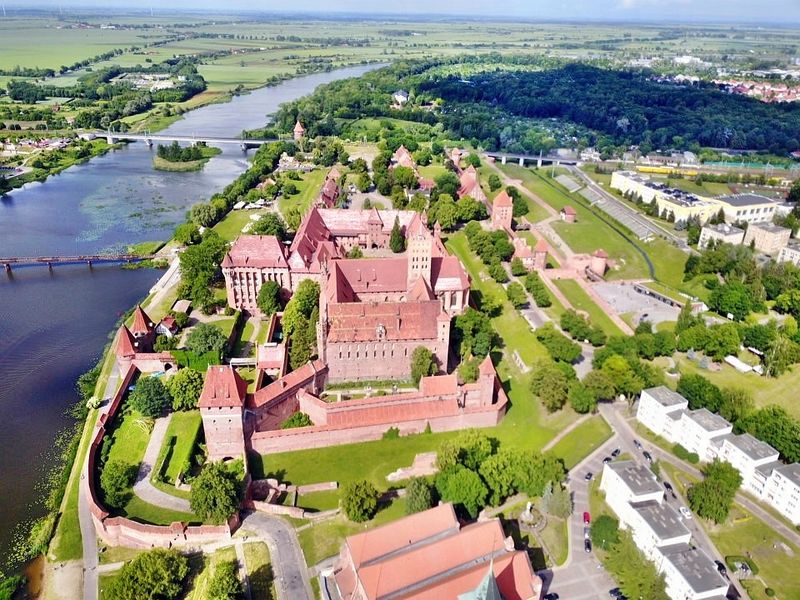
The largest brick castle ever constructed covers nearly 52 acres, a number that sounds impressive until you realize that defending every inch of it required thousands of soldiers and constant military readiness.
Built by the Teutonic Knights in the 13th century, Malbork became the headquarters of one of medieval Europe’s most aggressive military orders. Its sheer size made it a symbol of power, but that same visibility made it a target that rivals could never ignore.
The Siege of Marienburg in 1410, following the Polish-Lithuanian victory at the Battle of Grunwald, nearly brought the fortress down. Polish and Lithuanian forces surrounded it for months, but internal divisions among the besiegers ultimately saved the castle from capture.
The Thirteen Years’ War that followed brought more bloodshed to its walls, with mercenaries switching sides and garrison troops fighting grueling battles for control. Malbork was eventually sold to Poland in 1457, ending Teutonic rule through financial collapse rather than military defeat.
4. Stirling Castle, Stirling, Scotland
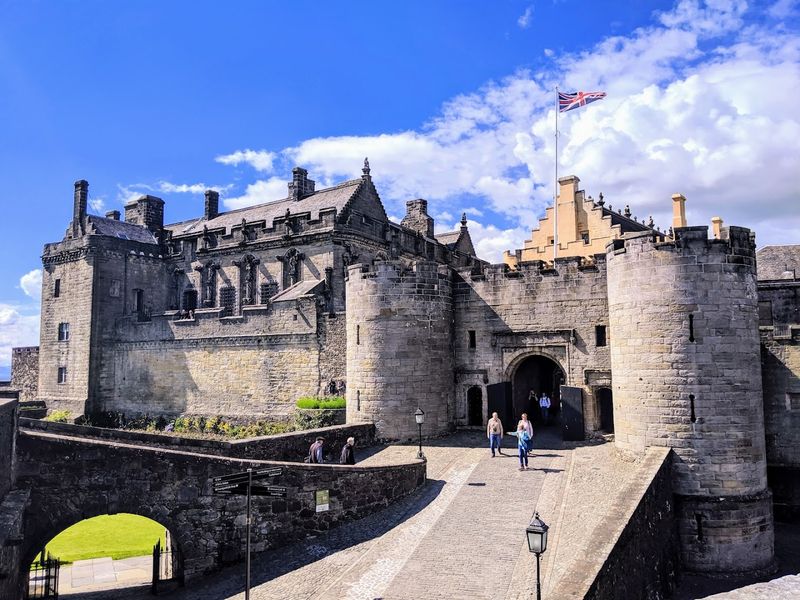
In 1452, King James II of Scotland personally stabbed William, the 8th Earl of Douglas, during a private meeting inside this castle, then had the body thrown from a window. That single incident tells you everything you need to know about how politics worked at Stirling.
The castle’s location between the Scottish Highlands and Lowlands made it the most strategically important fortress in the country. Whoever held Stirling effectively controlled the movement of armies across all of Scotland, which is why English and Scottish forces fought over it repeatedly for generations.
Edward I of England brought a siege engine called Warwolf to the 1304 siege, reportedly the largest trebuchet ever built. He apparently insisted on using it even after the garrison had already agreed to surrender, simply because he wanted to see what it could do.
The castle changed hands at least eight times during the Wars of Scottish Independence alone. Each transfer came with a fresh round of military violence that left its mark on the surrounding region.
5. Harlech Castle, Gwynedd, Wales
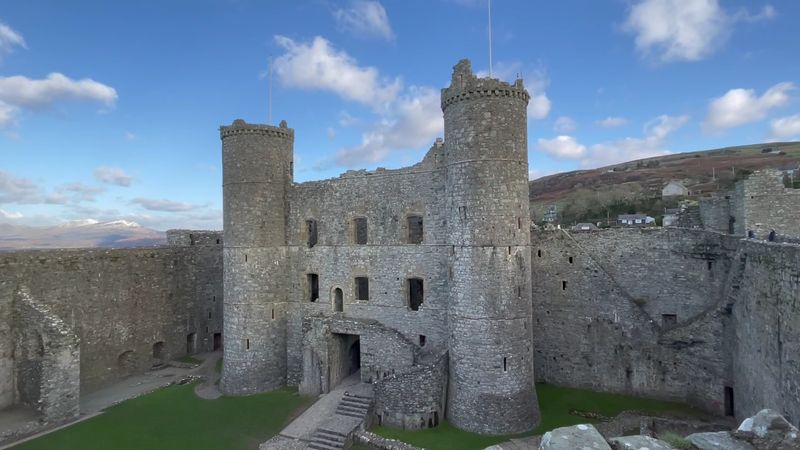
Britain’s longest recorded siege lasted seven years, and it happened right here. Between 1461 and 1468, during the Wars of the Roses, a small Lancastrian garrison held Harlech Castle against all Yorkist attempts to dislodge them, surviving on minimal supplies and sheer determination.
The castle was built by Edward I in the 1280s as part of his campaign to crush Welsh resistance, and it was designed from the start to be nearly impossible to take by force. A narrow supply route to the sea allowed defenders to receive shipments even when surrounded on land, which is what kept the garrison alive during that famous seven-year standoff.
Harlech also played a central role in Owain Glyndwr’s Welsh rebellion in the early 1400s, serving as his headquarters and the place where he held a Welsh parliament.
The castle’s history is a repeated cycle of siege and surrender. Its song, Men of Harlech, became one of Wales’ most enduring national anthems, inspired directly by that extraordinary seven-year resistance.
6. Buda Castle, Budapest, Hungary
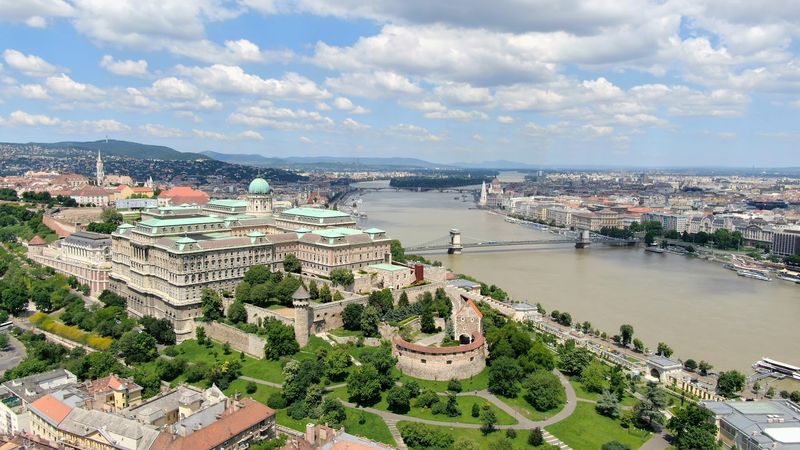
Central Europe’s most fought-over fortress changed hands dozens of times across five centuries, but the 1686 siege stands out as one of the most catastrophic military events in Hungarian history. A combined Christian army of roughly 65,000 soldiers attacked Ottoman-held Buda in a campaign that left the city in ruins.
The Ottomans had controlled Buda since 1541, turning the castle into a regional administrative center. When the Holy League forces arrived, the defenders put up fierce resistance, and the assault involved weeks of artillery bombardment, tunnel warfare, and brutal close-quarters combat inside the fortress walls.
By the time the siege ended, the city below had been almost entirely destroyed. Estimates suggest that out of a pre-siege population of around 10,000, fewer than a thousand residents survived the conflict and its immediate aftermath.
Buda Castle was subsequently rebuilt and expanded multiple times, eventually becoming the grand palace complex visitors see today. Its elegant exterior gives almost no hint of the extraordinary violence that its foundations have witnessed across the centuries.
7. Tower Of London, London, England
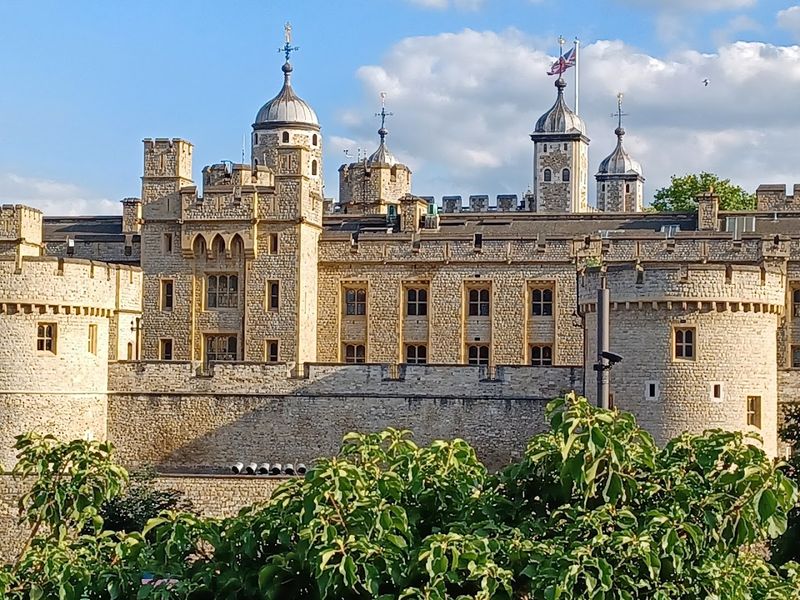
More than 700 people were executed within or immediately outside these walls between the 14th and 18th centuries, which makes the Tower of London less a castle and more a historical record of how dangerous it was to be important in English politics.
Two young princes, Edward V and his brother Richard, disappeared inside the Tower in 1483 and were almost certainly murdered there. Anne Boleyn, Catherine Howard, and Lady Jane Grey were all imprisoned and executed here, and their stories are among the most well-known in English history.
During the Peasants’ Revolt of 1381, an angry mob actually broke into the Tower and beheaded the Archbishop of Canterbury on the spot, proving that even this heavily fortified complex was not completely secure against determined crowds.
The Tower also served as a torture facility, with 48 officially recorded cases of sanctioned torture between 1540 and 1640. It functioned simultaneously as a royal residence, a prison, a weapons storehouse, and an execution ground, which is a combination of roles that no modern building has ever needed to serve.
8. Corfe Castle, Dorset, England
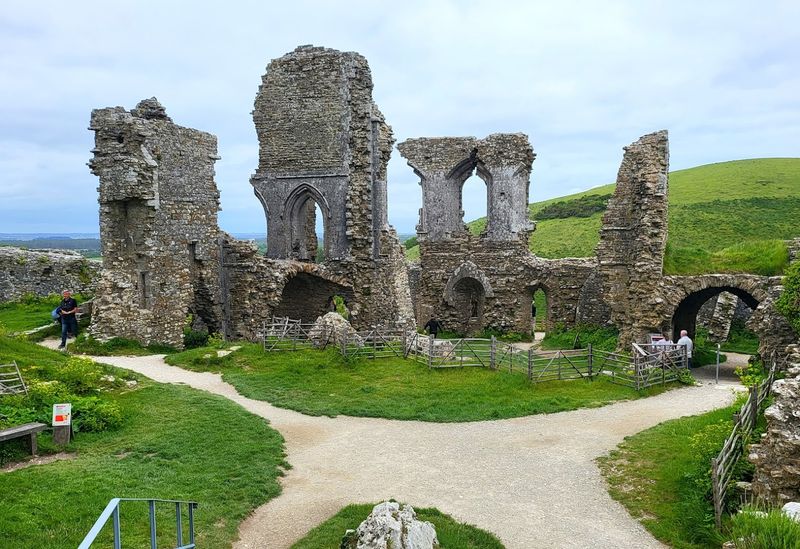
Corfe Castle’s most remarkable chapter involves a woman holding off an entire army while her husband was away. During the English Civil War, Lady Mary Bankes commanded the castle’s defense against Parliamentary forces not once but twice, making her one of the most celebrated defenders in English military history.
The first siege in 1643 involved just five men and a handful of servants successfully repelling a force of several hundred attackers. The second siege, in 1645 and 1646, was far more sustained and ended only when a Royalist officer inside the castle betrayed its position to the enemy.
After Parliament gained control, they ordered the castle to be deliberately demolished so it could never be used as a military stronghold again. Workers used gunpowder to collapse the towers, which is why the ruins look the way they do today, dramatically split and tilted at impossible angles.
The name Corfe itself comes from an Old English word for a gap or pass in a ridge, which is exactly the strategic feature that made this location so valuable for centuries of military planners.
9. Krak Des Chevaliers, Homs Governorate, Syria
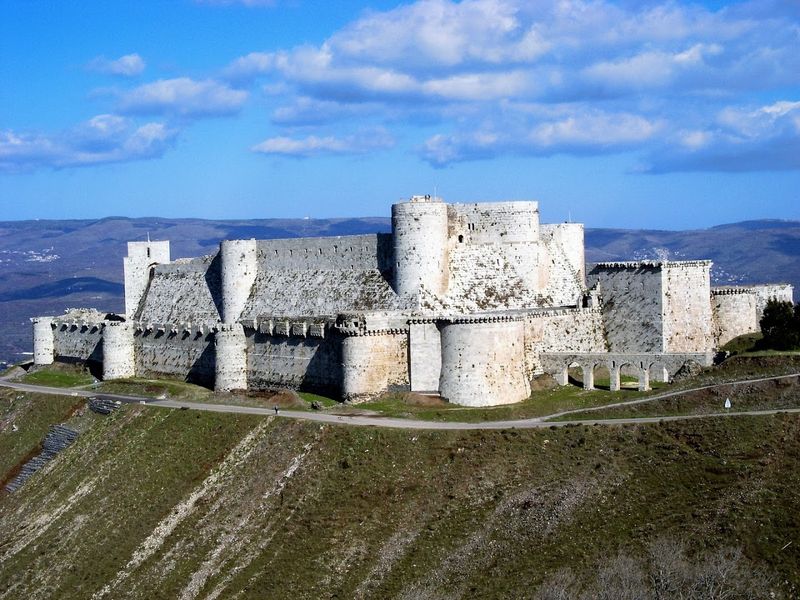
Saladin himself looked at this castle’s walls in 1188 and decided it was not worth attacking, which is a meaningful endorsement of its defensive strength from one of history’s most capable military commanders.
Krak des Chevaliers was designed to house a garrison of around 2,000 knights and soldiers, and at its peak it was considered virtually impregnable. The Knights Hospitaller who occupied it used the fortress as a base for Crusader military operations across the region for over a century.
When Sultan Baibars finally captured it in 1271 after a 36-day siege, he reportedly did so partly through a forged letter, instructing the defenders to surrender on behalf of their own commanders. Whether that story is fully accurate remains debated, but the fortress did fall.
The castle’s outer walls, inner citadel, and multiple defensive rings made it an engineering masterpiece of the medieval world. Remarkably well-preserved, it was designated a UNESCO World Heritage Site in 2006 alongside the nearby Castle of Salah El-Din.
10. Montfort Castle, Upper Galilee
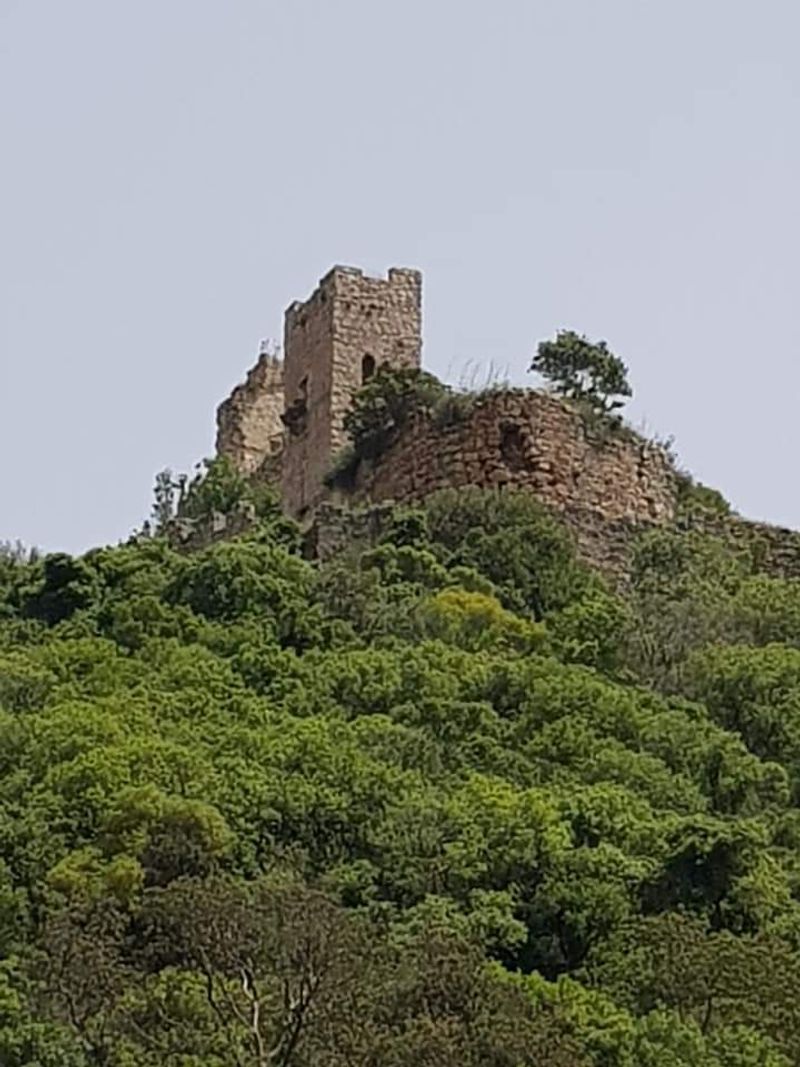
Tucked into a forested ravine in northern Israel, Montfort Castle looks more like a nature hike destination than a former center of military power, but its history tells a very different story.
The Teutonic Knights acquired the site in 1220 and transformed it into their regional headquarters, using it to manage administrative and financial operations for their Crusader activities in the Holy Land. Its remote location was a deliberate choice, designed to protect important documents and treasury resources from attack.
That strategy only worked for so long. Mamluk Sultan Baibars besieged the castle in 1271, the same year he captured Krak des Chevaliers, and the fortress fell within days.
The Teutonic Knights were allowed to leave with their archives and treasury, but the castle itself was dismantled to prevent future military use.
The ruins that remain today are largely unrestored, giving the site an unusually raw and authentic quality. Archaeologists from the Metropolitan Museum of Art conducted excavations here in the 1920s, recovering artifacts that now sit in museums far from the hilltop where they were originally used.
11. Himeji Castle, Himeji, Japan
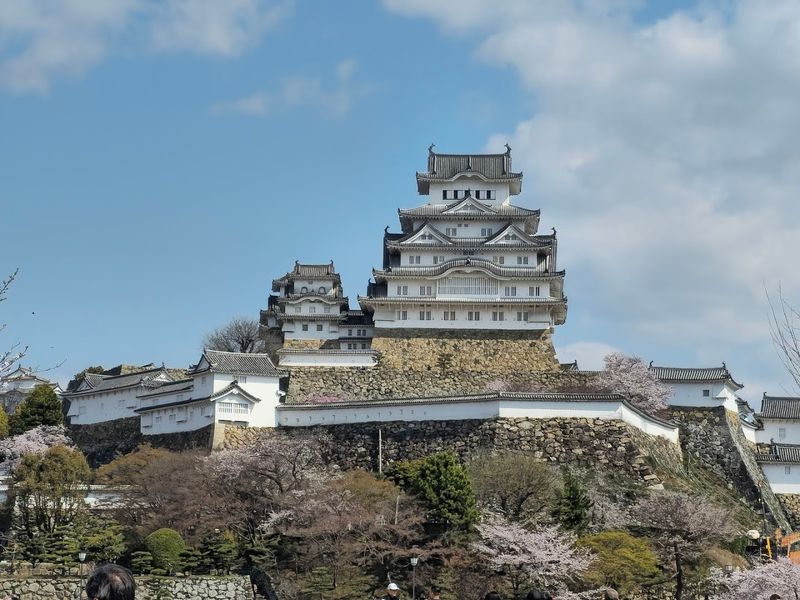
Called the White Heron Castle because of its brilliant white exterior, Himeji looks far too elegant to have been built for warfare, but its entire layout was engineered specifically to trap, confuse, and overwhelm attacking armies.
The castle’s approach path winds in a deliberately confusing spiral, forcing any attacker to expose their flank to defenders on the walls above for an extended period. Arrow loops, stone-dropping holes, and a maze-like network of gates made every step toward the main keep potentially the last one for an attacker.
Himeji stood through the turbulent Sengoku period, one of Japan’s most violent eras, when rival warlords fought continuously for territory. The castle changed hands multiple times through political maneuvering and military threat, though it was never actually taken by direct assault.
That distinction makes it unusual among Japan’s great fortresses. When Japan modernized in the Meiji era, many castles were demolished, but Himeji survived.
It became a UNESCO World Heritage Site in 1993 and remains one of the best-preserved feudal castles anywhere in the world.
12. Dover Castle (England)
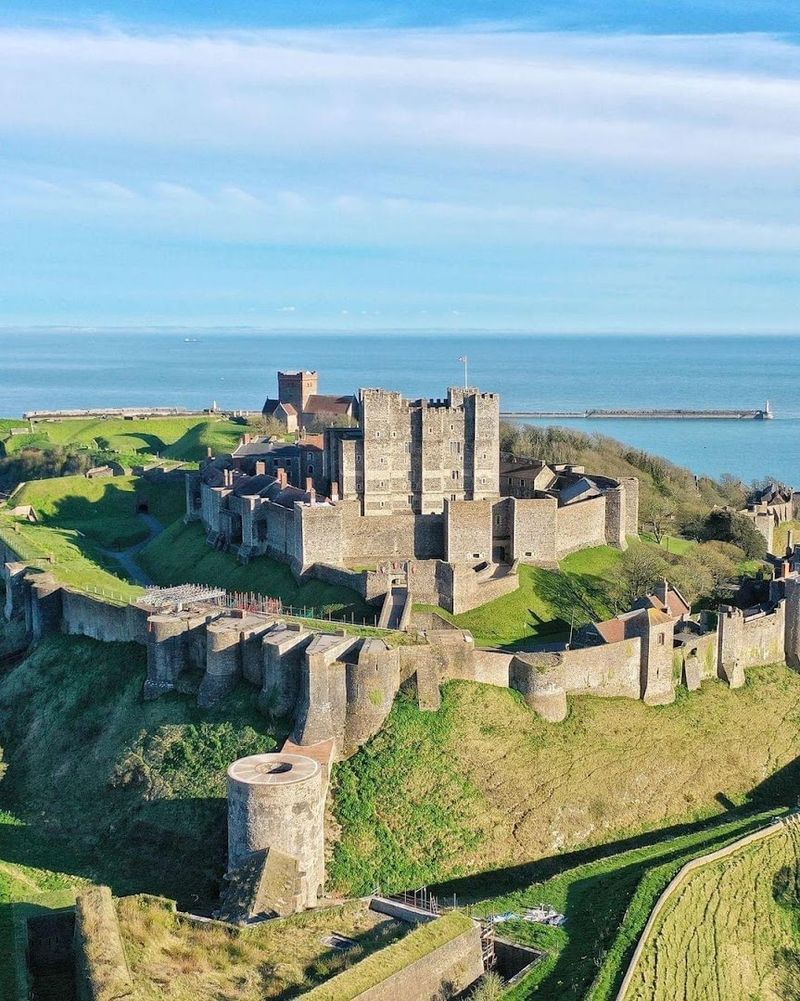
Sitting on the famous white cliffs directly above the English Channel, Dover Castle has been on active military duty longer than almost any other fortress in Europe, with a military history stretching from the Iron Age all the way through World War II.
During the First Barons’ War in 1216 and 1217, French Prince Louis and his Anglo-French forces launched two major sieges against the castle. Attackers used siege engines, mined beneath the walls, and successfully breached the outer defenses, but the castle’s constable, Hubert de Burgh, refused to surrender despite enormous pressure.
The castle was besieged again during the Second Barons’ War in 1265. Its underground tunnel network, originally dug during the Napoleonic Wars, later became a crucial operations center during the Dunkirk evacuation in 1940, proving that Dover never really stopped being useful in a crisis.
Its nickname, the Key to England, was not given lightly. Control of Dover meant control of the shortest crossing between Britain and continental Europe, which is why so many different armies across so many different centuries kept trying to take it.
Share this story