 Unearth The Voyage

Snow on the Taklamakan Desert feels like a plot twist you did not see coming. Golden dunes turn silver overnight, and a place known for scorching heat suddenly shimmers with quiet frost. You will discover how this rare weather reshapes the dunes, transforms wildlife patterns, and rewrites expectations of a harsh landscape. Keep reading to witness a desert that proves extremes can coexist beautifully.
1. First Light Over Snowy Dunes

At sunrise, the Taklamakan wears snow like silk, catching peach and lavender light across its ridges. Your breath fogs in the cold as ripples sharpen into tiny knife edges, each shadow deepening the dune’s contour. This quiet is different from summer silence, lighter and crystalline, as if the desert learned to whisper.
Step forward and hear snow squeak under your boots, a sound that feels borrowed from the far north. The sun nudges warmth into the sand, and thin veils of frost begin to sparkle, then fade. You watch wind comb the surface, sketching faint lines that hint at the storm’s choreography.
Here, color theory becomes memory. Gold remembers itself beneath white, and your eyes adjust to subtleties you might miss. The scene is fleeting, but it changes the way you carry desert light forever.
2. Frozen Ripples and Aeolian Art
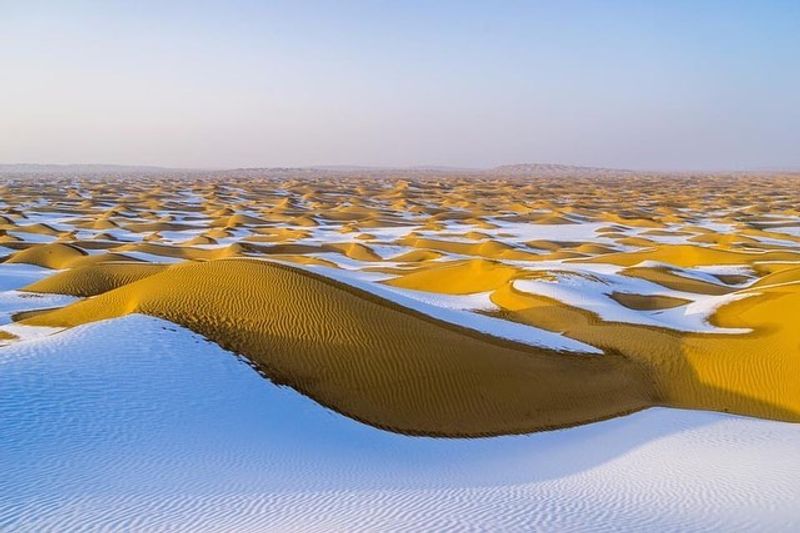
Look closely and the snow reveals the desert’s handwriting. Each ripple is a sentence, each crest a comma shaped by prevailing winds funneling through the Tarim Basin. Under a sugar-thin crust, warm sand breathes, creating micro-pockets that collapse with the gentlest step.
You notice lace-like scallops where gusts carved filigree into frost. Some ridges hold crystalline grains, refracting light like crushed glass, while hollows collect denser, bluish snow. The effect is a monochrome map of motion and rest, a record of invisible air.
This is aeolian art pressed into a winter album. You trace a finger along a ridge and feel the gritty cold, that paradox of dry desert and wet geometry. The patterns will vanish by noon, but right now they teach you how to read wind without ever seeing it.
3. Karakoram Winds After Snowfall
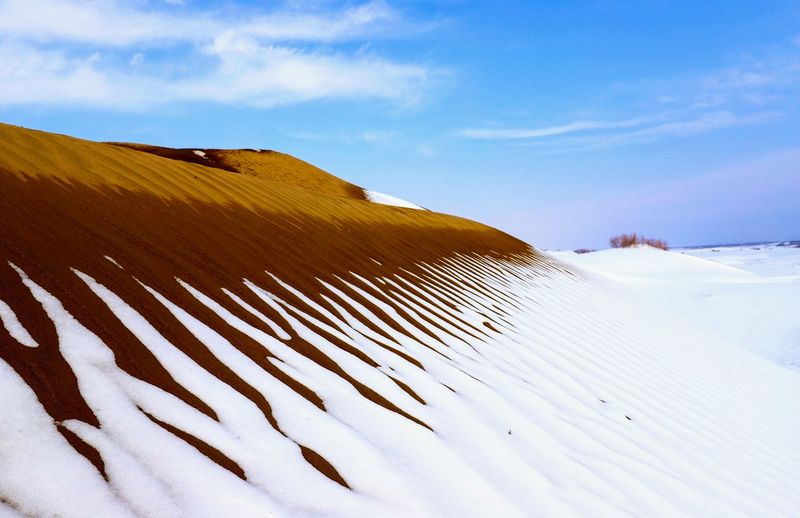
After the storm, the Karakoram-fed winds return, teasing snow into banners that stream off dune crests. You watch spindrift lift, hover, then slide away like silky smoke. It redraws edges constantly, rounding one ridge while sharpening another.
The air smells clean, almost metallic, and your lips chap quickly in the dry cold. Snow grains collide midair, making a faint hiss you barely catch. Where wind scours, tawny sand reappears like old parchment under scraped paint, revealing the desert’s permanent script.
Stand still and you feel the scale. Nothing here is small, not the gusts, not the distances, and not the quiet courage required to cross. The wind writes fast, and by afternoon the page will be different. That is the Taklamakan’s promise and challenge.
4. Mirages on a White Canvas
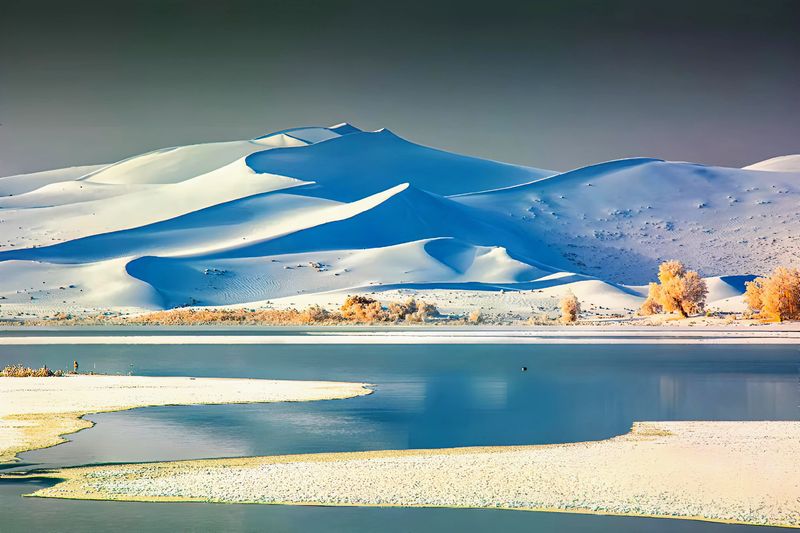
Mirages do not retire for winter. Over snow, refracted light bends differently, steeper temperature gradients stacking layers of shimmering air. You stare across a white corridor and see distant dunes float, flip, then resolve into ghostly doubles.
The horizon acts like a lens, building thin lakes where none exist, suspending camel silhouettes upside down. Even footprints distort, stretching into long, improbable ovals. The desert shows its magician’s kit openly, yet you still fall for each trick.
Walk toward the apparition and it retreats just enough to keep you curious. Cold air pools in depressions while sunlight warms the slopes, and the physics keeps playing. Snow softens the palette, but the illusions feel sharper, like ink on fresh paper. Trust your compass more than your eyes here, because beauty edits reality without warning.
5. Tracks of Life in Winter
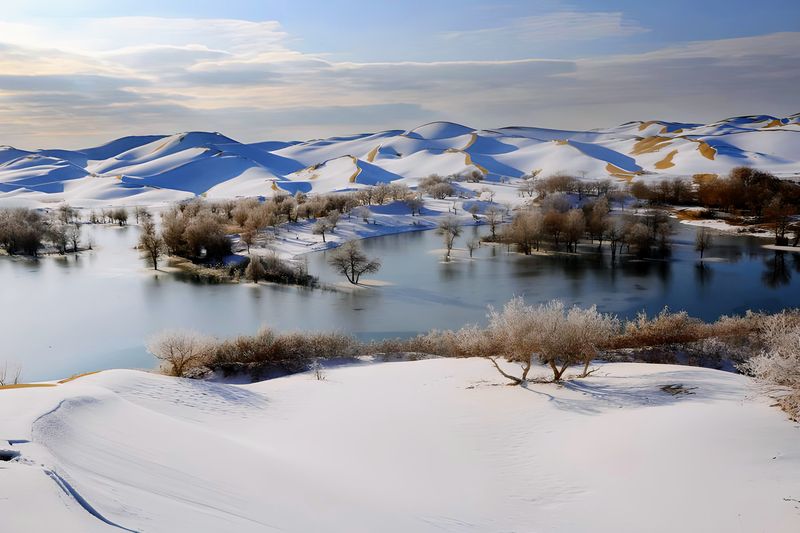
Even in snow, the Taklamakan is not empty. You find fox tracks stitching a zigzag between saxaul shrubs, then disappearing into a hollow sheltered from the wind. A beetle’s dotted line crosses the slope, stuttering where crystals clumped overnight.
These small signatures read like notes to you. Birds leave tidy hieroglyphs near exposed seeds, and a stray dog’s pads overlap your bootprints. Life adapts quickly, exploiting warmth where sand peeks through and using snow as camouflage.
Pause and listen for wingbeats that sound like paper turning. The quiet amplifies every clue, and suddenly the desert feels observant, almost companionable. Snow does not erase the ecosystem here. It highlights it, framing survival strategies with negative space and letting you trace the choreography between food, shelter, and timing.
6. The Tarim Basin’s Winter Breath

From above, the Taklamakan rests like a pale lion inside the Tarim Basin’s stone cradle. Snow traces its mane, settling in arcs that echo long-forgotten river paths. You glimpse fossil channels, faint braids that awake after rare storms then fade.
Mountains ring the desert like guardians, funneling cold air that pools and lingers. That pooled chill explains why snow sometimes survives into late morning, even under strong sun. The basin’s geometry is climate written in capital letters.
Looking down, you understand routes and risk. Dunes align with prevailing winds, and gaps in the ranges suggest corridors caravans once used. Today, roads skirt the edges wisely. The desert breathes through the basin, slow and deep, and winter lets you see that breath in white.
7. Singing Dunes Under Frost
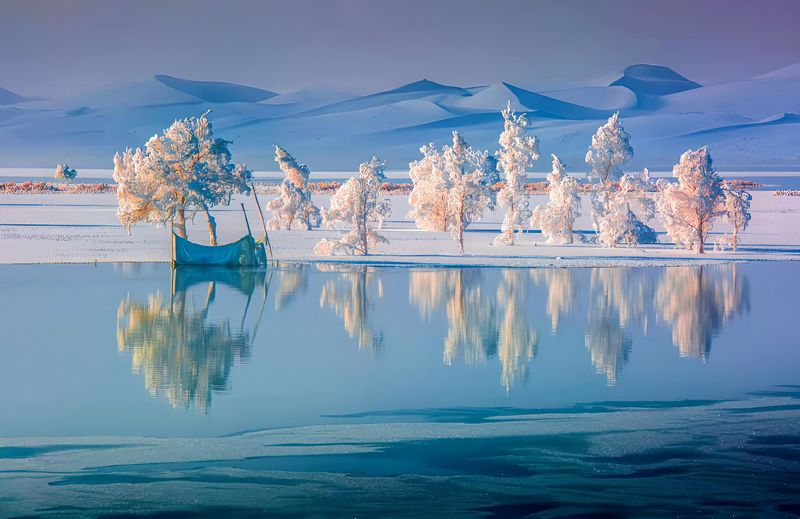
You have heard of singing dunes, but frost changes the chorus. When dry layers slip, grains resonate and hum, a baritone vibration that seems to come from under your ribs. Add a cold crust and the note deepens, rich but brief.
Sit at the brink and push a sheet of snow-sand mixture gently. The surface avalanches in a silky roll, and you feel the dune respond like a giant instrument. It is science wrapped in theater, friction and size deciding pitch.
Record the moment, then hold still. The sound fades into the open air, leaving your ears ringing with possibility. Not every dune sings, and not every day grants the right dryness. When it does, winter writes a rare refrain you will not forget.
8. Desert Roads and Snow Drifts
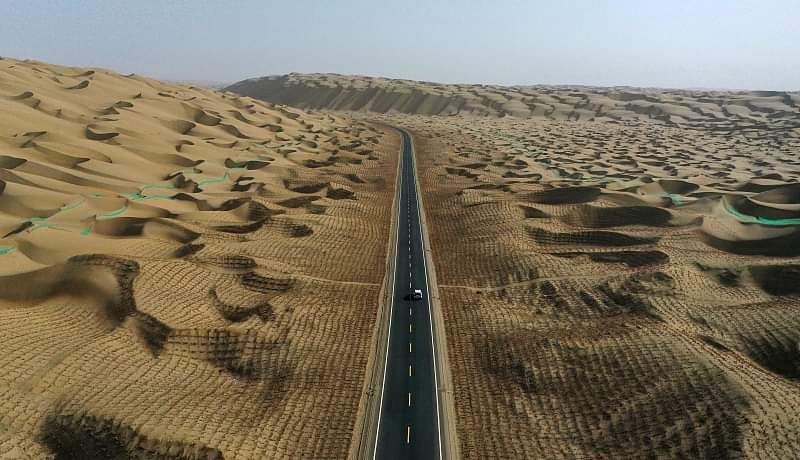
Out on the cross-desert highway, snow gathers where barriers break the wind. Drifts lip over asphalt like slow waves, and the road crew’s orange trucks leave bright scars of grit. You drive carefully, watching for shaded patches that stay slick longer than they look.
Salt flats nearby glitter faintly under frost, misleading as safe pullouts. Better to stop at official bays and check the weather ahead. The desert punishes impatience, especially when visibility drops to a white veil.
There is relief in the geometry of a straight road. It anchors you while the dunes shift visually, a steady graphite line through a restless gallery. Snow narrows that line temporarily, then releases it by noon. Travel here is timing, respect, and a good thermos.
9. Oases Wearing Winter
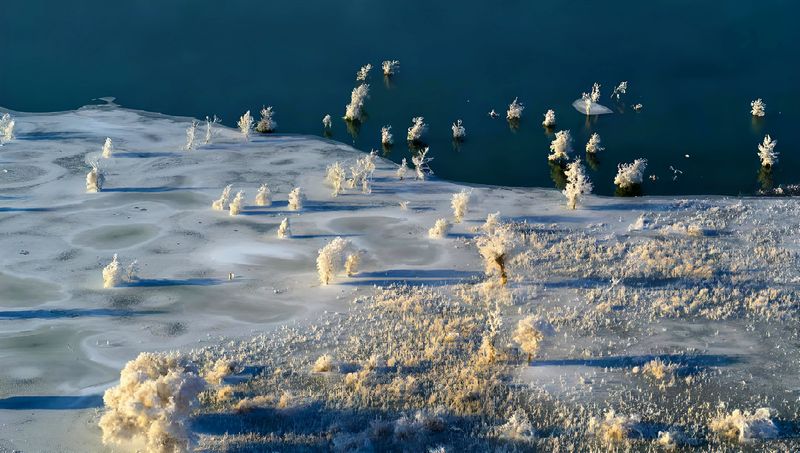
At the desert’s margins, oases breathe differently after snow. Poplars stand like paintbrushes dipped in white, and irrigation channels glaze into thin mirrors. You walk past mud-brick walls radiating stored sun, windows glowing amber against the chill.
Vendors sell hot noodles steaming into the evening air. The scent of cumin and lamb travels farther in cold, inviting you closer. Snow softens footsteps, and the town slows into a gentle rhythm that feels earned after summer’s blaze.
These communities always measure water carefully. Winter grants a pause, a moment to mend tools, check wells, and share stories. You feel the edge between grit and comfort more clearly here, and it makes both sides make sense.
10. Starfields Above White Dunes
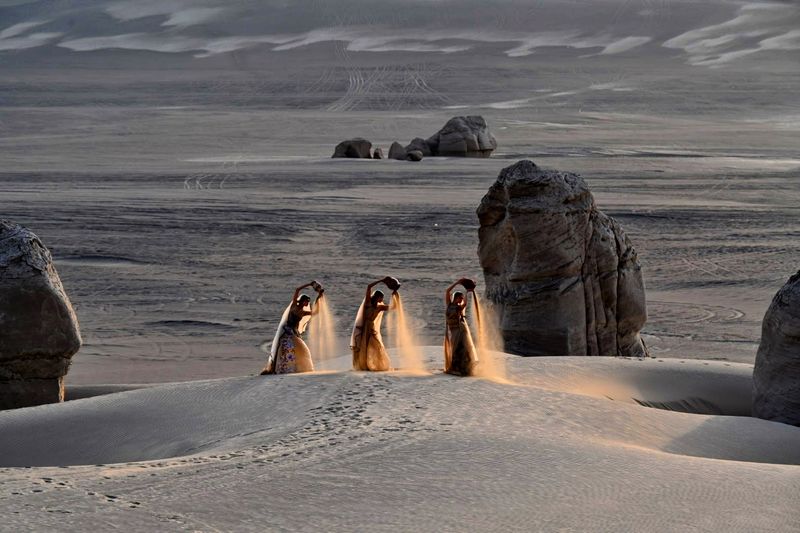
Night erases everything except stars and the pale dunes catching starlight. Your breath crystallizes, and each exhale briefly fogs Orion before drifting away. The Milky Way arches like a frozen river, and the snow answers with a faint, blue glow.
Footprints look bolder under this light, a dotted path into a universe that feels close enough to touch. Sound shrinks to fabric rustle and heartbeats. You realize how clean the sky can be when the land holds still.
Set the tripod, wait, and the long exposure reveals colors your eyes miss. Magentas whisper, greens tease the horizon, and the desert becomes a quiet observatory. Winter’s clarity turns stargazing into communion, and you carry the silence with you.
11. When Dust Meets Snow
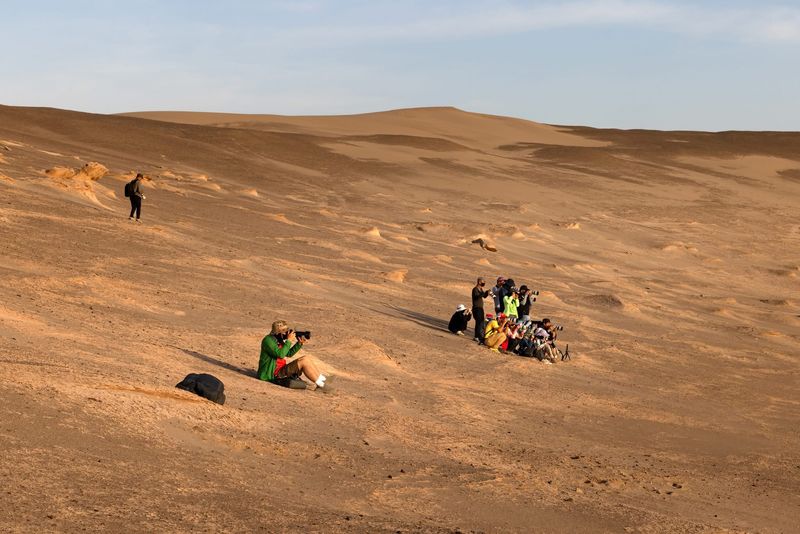
Sometimes a dust plume arrives late to a snow party. Fine orange particles settle on the white, painting apricot gradients that look deliberate. You kneel to study it, seeing wind direction in tiny streaks laid like brushwork.
This layering matters beyond beauty. Darker dust absorbs sunlight and melts the snow faster, rewriting the day’s timeline. You can watch margins recede hour by hour, exposing warm sand that releases a soft breath.
It is a collaboration between sky and ground. The desert adds pigment to its own eraser, and you witness climate in miniature. Stand back and the scene becomes an abstract canvas. Lean in and it becomes physics, plain and persuasive.
12. Echoes of the Silk Road in Winter
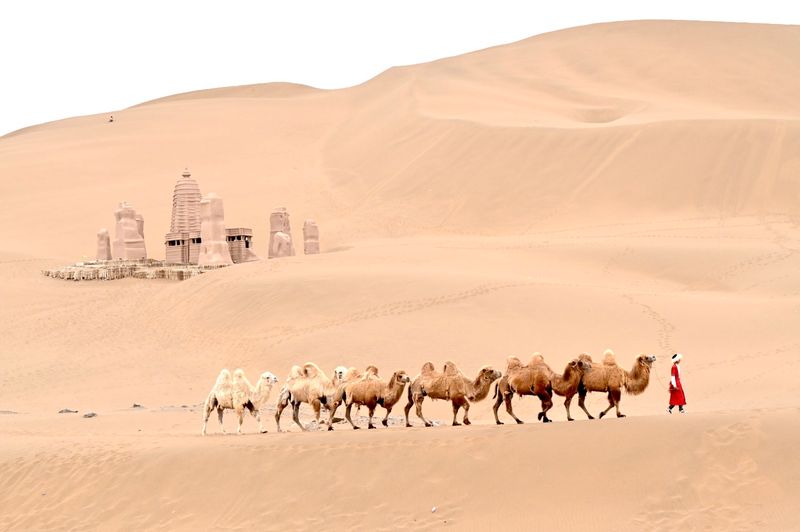
Snow drapes history with a careful hand. Along old Silk Road corridors, faint tracks reappear where frost hardens low ground between dunes. You imagine hooves crunching, bells muted, traders scanning the same horizons you do now.
Ruins emerge sharper in cold air. A broken wall casts a precise shadow that noon would blur in summer. Even the silence feels archival, storing voices that once debated routes, prices, and weather gambles.
Follow the line until it vanishes beneath a fresh drift. You realize navigation has always been a conversation with absence here. Winter turns the dialogue into print you can read for an hour, then the wind edits the page again.
13. Saxaul and Survival Strategies
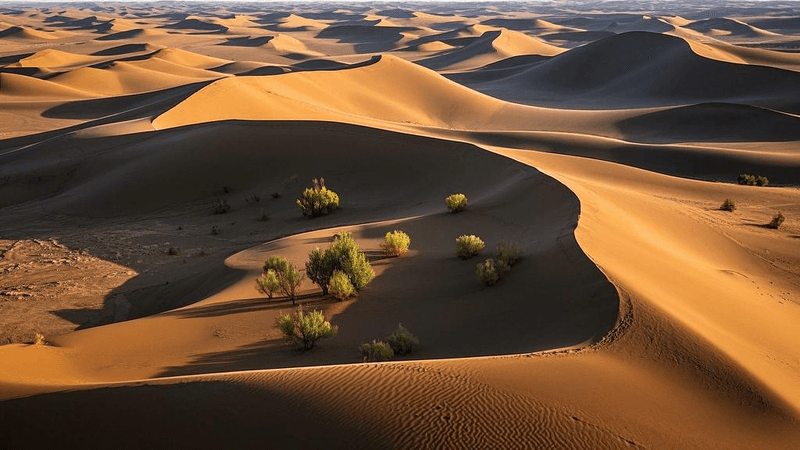
Saxaul shrubs look modest until you notice where they live. Roots dive deep to tap hidden moisture, anchoring dunes that might otherwise wander. After snow, their dark branches sketch calligraphy against white, revealing how they catch and hold drifting crystals.
Touch a twig and feel the toughness, a desert logic built into wood. Animals shelter behind these shrubs, and seeds bide their time for warmer days. You see a living blueprint for patience and efficiency.
In a place famous for movement, saxaul provides commitment. It slows sand, feeds insects, and dots the winter field with proof that austerity is still generosity. Walk away with respect, and maybe a photograph that underestimates nothing.
14. The Sound of Thaw
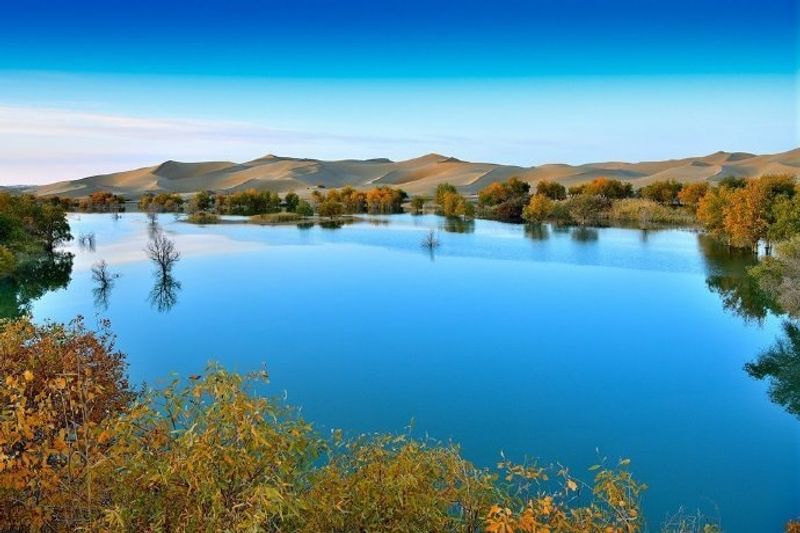
When the sun climbs, thaw begins as a whisper. Tiny beads of water sizzle into the sand, a fizz you only hear if you crouch and close your eyes. It smells like minerals and morning, a fresh page turning.
Little rivulets sketch fleeting paths, then vanish. The surface softens under your palm, releasing the night’s stored cold one sigh at a time. You can practically time the day by how quickly shadowed slopes loosen.
By midday, white islands shrink, marooned on higher crests. The transformation is so complete it feels like a magic trick you just witnessed. Winter does not leave. It recedes, promising to return with another surprise.
15. Respecting the Desert in Winter

Snow can disguise danger as easily as beauty. Corniced dune edges look inviting but can collapse without warning, especially after wind stacks powder on the leeward side. Keep weight back from ridgelines, and probe with poles before committing.
Cold magnifies dehydration, so drink often and pace yourself. Electronics drain fast, maps freeze into brittle sheets, and tracks can vanish in minutes. Share your route and carry redundancies like a second compass and extra layers.
Respect here means leaving light footprints. Let the wind erase them, and pack out everything you bring. The Taklamakan rewards care with unforgettable moments, and winter simply raises the stakes.
16. Why Snow Here Matters
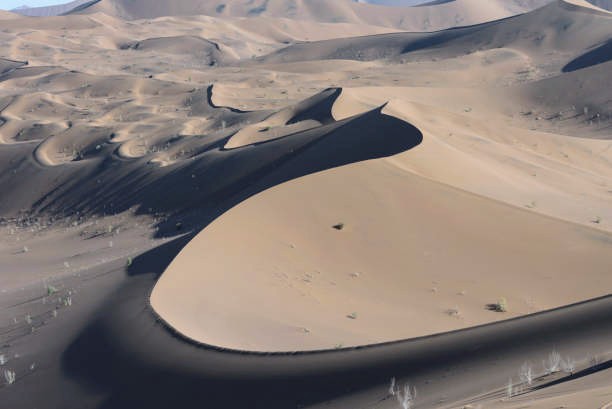
Snow in the Taklamakan is rare enough to be news, but common enough to matter. It cools the surface, shifts albedo, and briefly feeds subsurface moisture that plants and insects exploit. You can see ecological gears turning faster after a dusting.
For climate watchers, these events are signals. They reveal how air masses mix around the Tarim Basin and how dust cycles might change as temperatures pivot. Snow lines are like progress bars for a complex system.
For you, it is also simple. Beauty arrives, transforms everything, then leaves you changed too. The desert does not soften. It clarifies, teaching you to notice more with less.



