 Unearth The Voyage
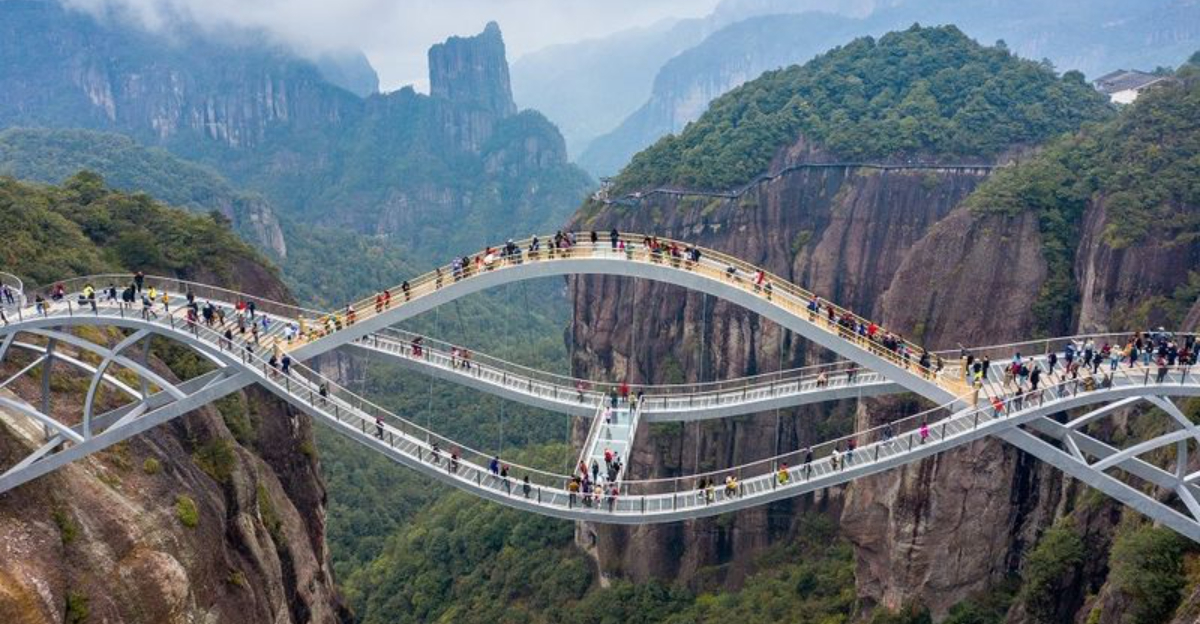
You know those photos that make you squint and think, ‘Okay… that can’t be real.’ The kind that looks like someone typed a wild prompt into an AI generator? The Ruyi Bridge in Zhejiang, China is exactly that – except you can actually buy a ticket, show up, and walk right onto it.
And the second you step forward, it hits: glass under your feet, curves that feel impossible, and misty mountains wrapping around you like a movie set. If you love places that mess with your head in the best way – half adrenaline, half awe – this is where your courage and curiosity finally shake hands… and take the first step.
It Went Viral Because It Looks Like an AI Image
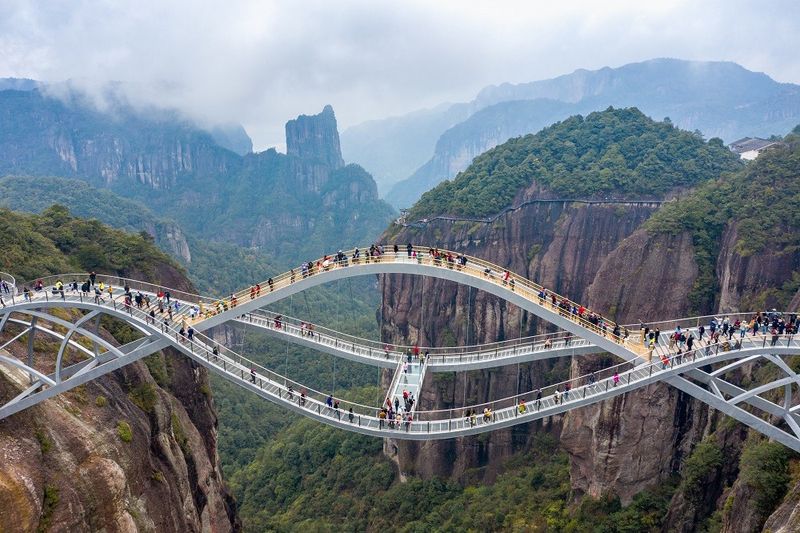
A hush falls over the valley when the fog lifts, and suddenly the bridge looks impossible. Photos of Ruyi Bridge spread because they fooled people, not with filters, but with geometry that seemed beyond real-world physics.
Scroll long enough and you will spot comments accusing the image of being rendered.
I watched strangers on the deck compare angles like detectives. The glass panels reflect sky, then vanish, making edges dissolve into light.
That transparency gives photos an uncanny quality that reads as digital even when you are physically present.
What really sells the illusion is how clean the curves are. The metal sweeps like a drawn line, with minimal visual noise, so the brain classifies it as computer-made.
Viral fame stuck because every new angle looked like a different render, each one daring you to believe.
The Bridge Is Actually Made of Three Sections
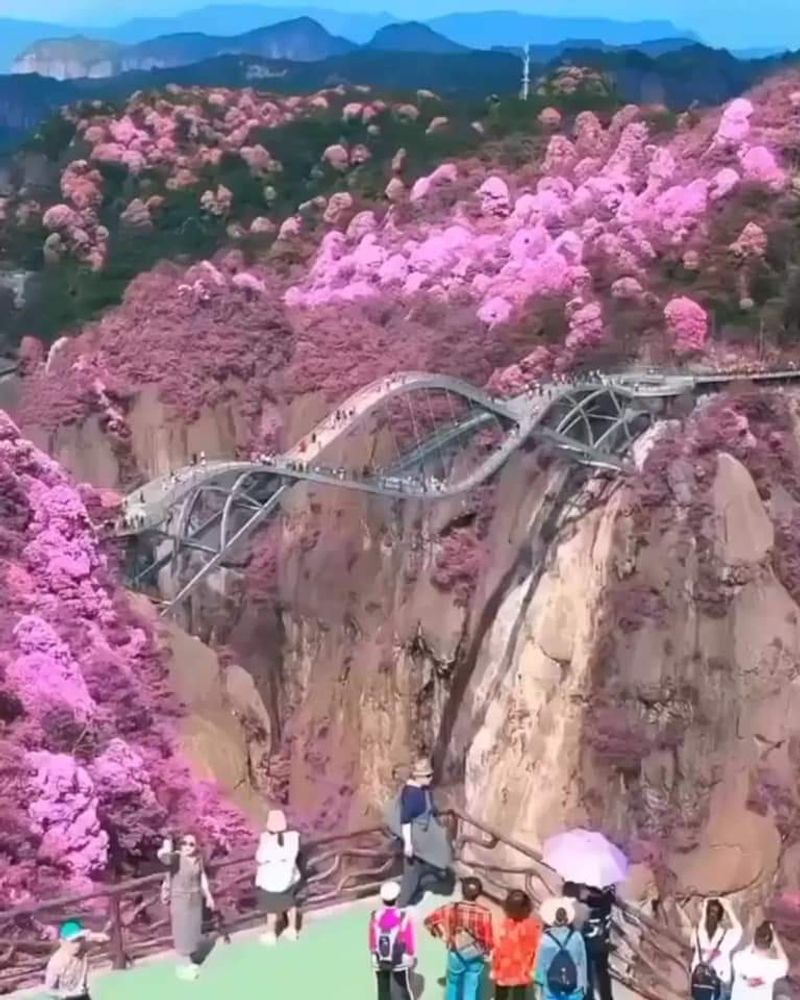
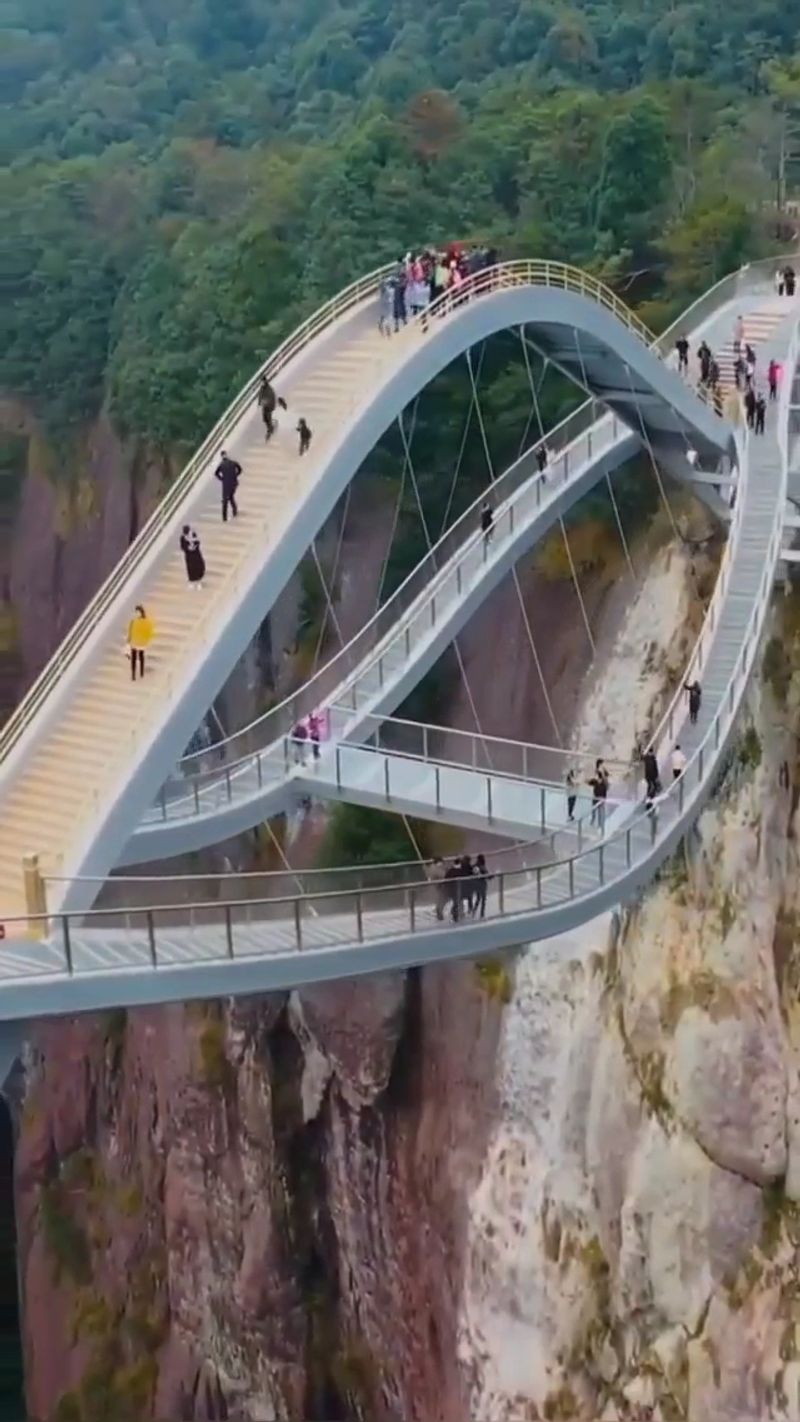
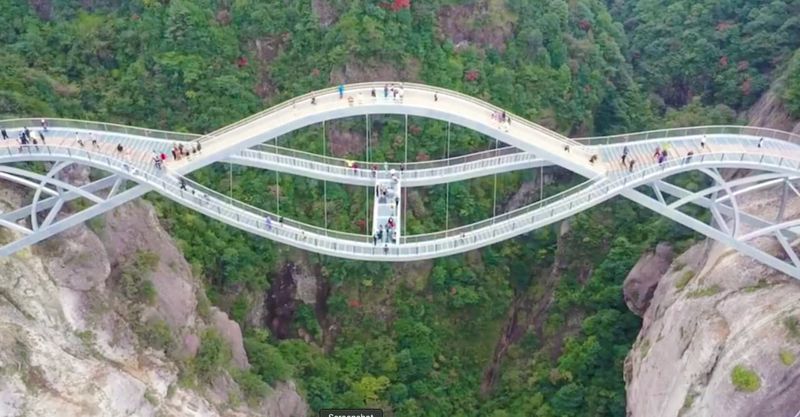
A small sign near the entrance hints at the trick: three sections, interlocked. Instead of one straight crossing, the Ruyi Bridge loops and layers pathways so you experience shifting perspectives as you move.
It feels more like a sculptural promenade than a connection from A to B.
Stand at a junction and watch people hesitate, deciding which curve to follow first. The design nudges you to slow down, glance back, then lean over the rail for a panoramic sweep.
You collect views the way you collect stamps, each bend adding a new composition.
Because the segments weave together, the structure reads as a single fluid form in photos. Up close, the choreography reveals itself: staggered decks, measured transitions, and sightlines that trade vertigo for drama.
It is a rare bridge that invites detours and rewards them.
It’s 100 Meters Long – But the Height Is What Shocks People
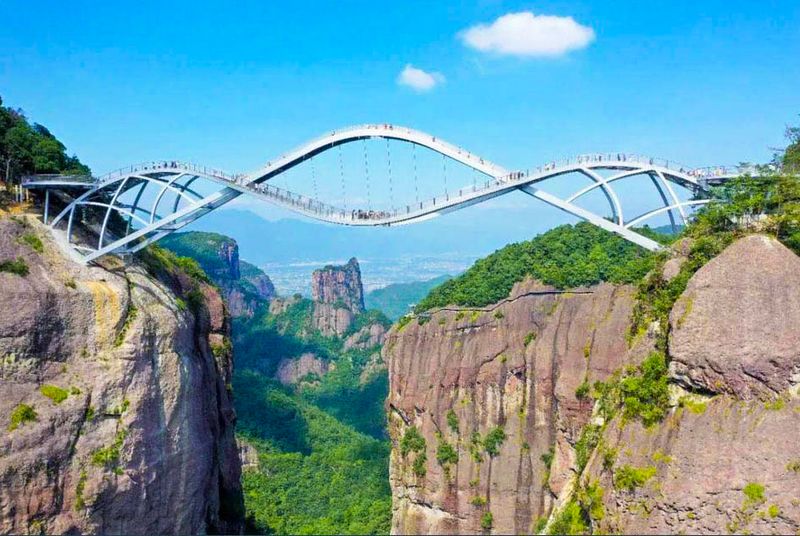
The wind taps your jacket first, then the drop registers. One hundred meters in length sounds manageable until the 140-meter void under the glass stares back.
People go quiet, then laugh at themselves, then edge forward as if negotiating a truce with gravity.
Look down and the forest turns miniature, like a model set laid out for inspection. Knees feel a fraction looser than usual, a reminder that our bodies prefer opaque floors.
That nervous thrill is why even height lovers admit glass bridges are different.
At midspan the ground seems farther away than logic allows. You sense movement in the valley, a bird drifting, a ribbon of cloud sliding past rock, and suddenly distance has texture.
The measure on paper fades beside the feeling in your chest.
It Opened in 2020 – But Took Years to Build
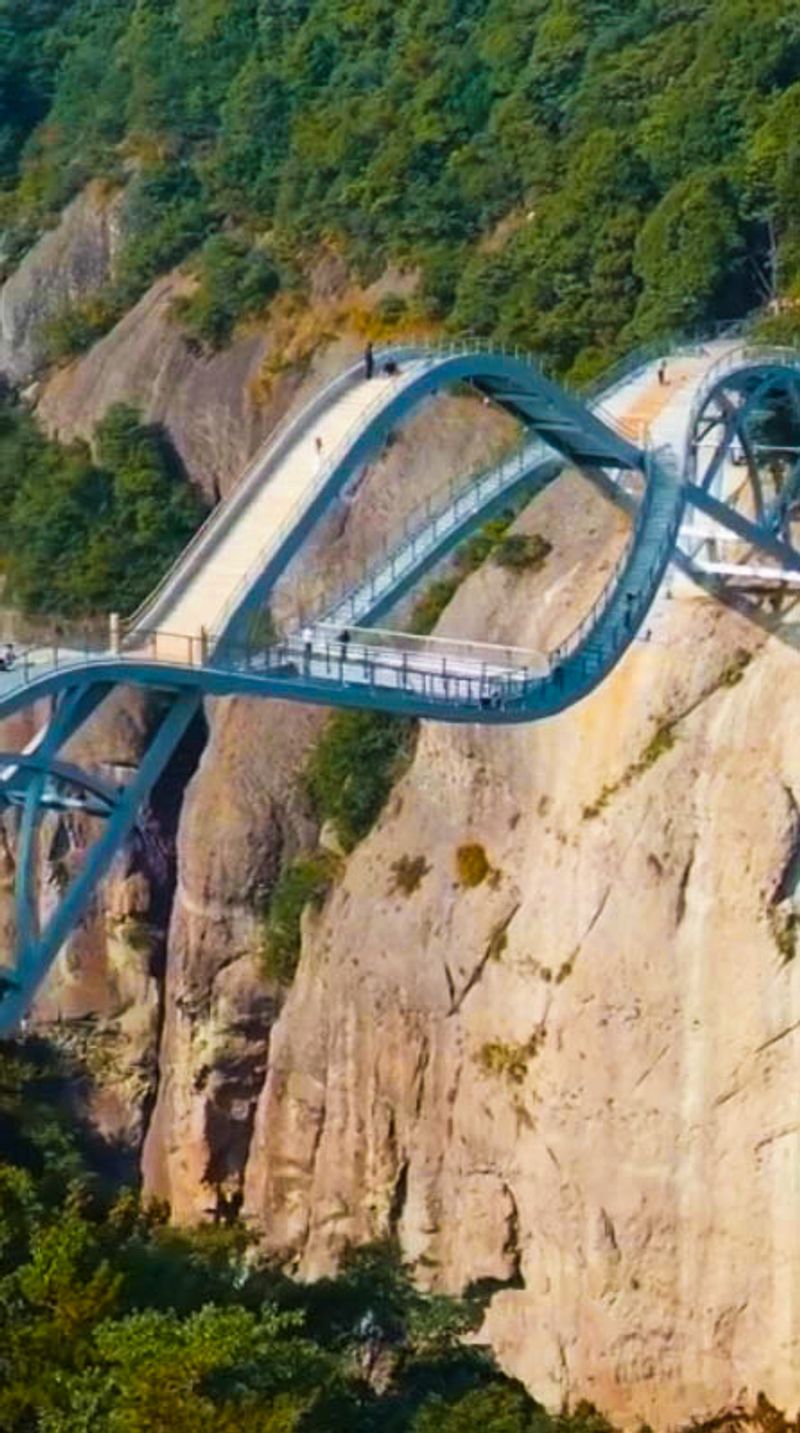
A worker’s thermos on a ledge tells a quieter story than the viral clips. This bridge did not just appear; it was built across years, piece by measured piece.
Construction started in 2017 and culminated with a September 2020 opening, right when the world craved fresh horizons.
Time matters because spectacle without substance fades fast. The Ruyi Bridge carries the weight of testing, review, and refinement baked into its bones.
You feel that in the stiffness of the deck and the confidence of each anchoring curve.
Some attractions pose for the camera and wobble under scrutiny. This one holds still.
The engineering patience shows in how calmly it meets wind and visitors, trading gimmicks for longevity. Viral fame came later, pulled along by the work already done.
The Highest Point Is a Giant Arch – And You Can Climb It
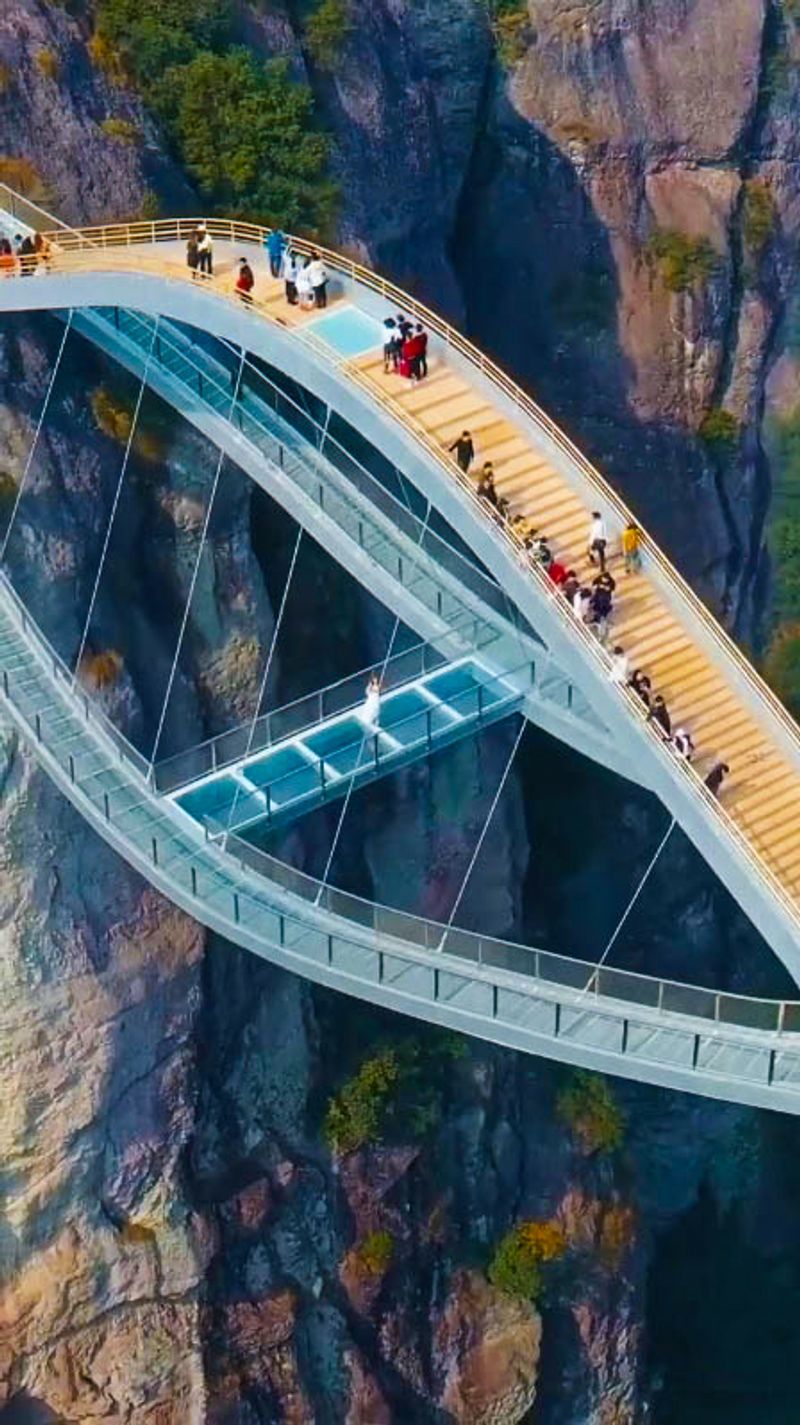
A line of tiny figures climbs the arch like notes on a staff. Stairs lead up to the highest point, where the valley opens wider than expected and the air tastes sharper.
It is not just a crossing; it is an ascent built into the bridge itself.
Take the steps slowly and the perspective flips. The deck below becomes a looping sculpture, and the mountains stack like stage sets around it.
Photos flatten this drama, but standing there, the curve feels alive under your shoes.
Climbing adds purpose beyond a selfie. It turns spectators into participants, and the pay-off is a view that justifies the pulse spike.
I gripped the rail for one beat, laughed at the rush, then kept going.
The Name Ruyi Comes from a Symbol of Power and Luck
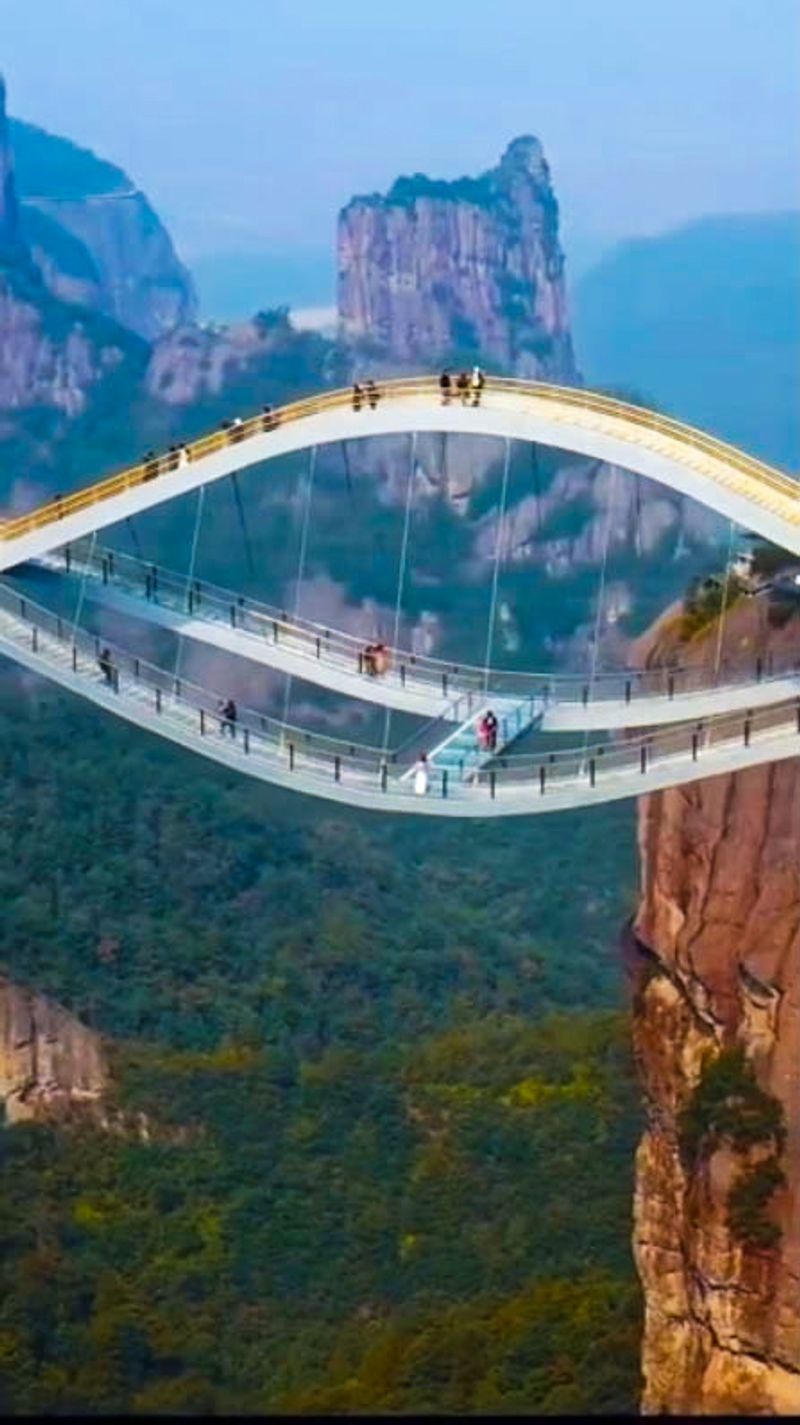
A souvenir stand shows a small ruyi scepter pendant, the clue many miss. The bridge’s name and outline echo that ceremonial symbol, long tied to good fortune and authority.
Look at the curve and you can see the lineage in metal and glass.
Design here is not random; it is a cultural wink folded into modern engineering. That connection gives the structure a voice, not just a silhouette.
Visitors read the shape even if they do not know the reference, sensing intention in its sweep.
Meaning changes how you move through a place. You walk the arc with the quiet superstition that wishes might travel farther at altitude.
Whether or not luck answers, the association lands softly and lingers.
The Metal Structure Looks Like a Giant Floating Ribbon
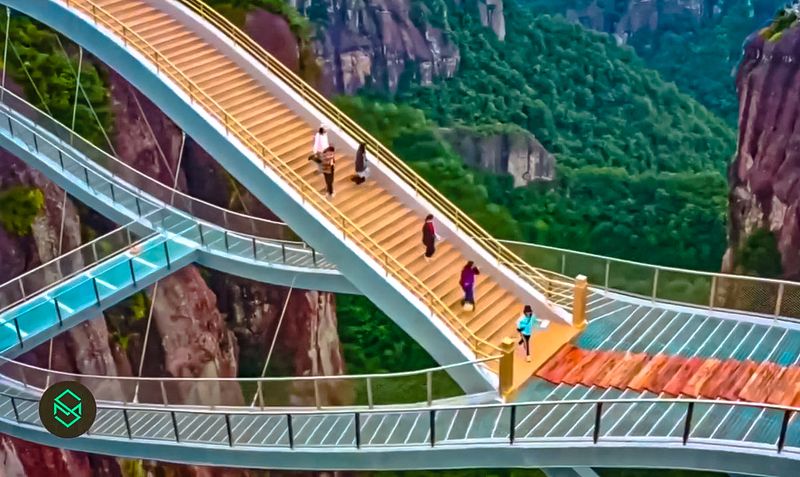
A metallic gleam skims the sunlight and then slides into shadow. The Ruyi Bridge reads as a ribbon suspended mid-gesture, its steel twisting in a way that feels effortless.
That grace is deliberate, a careful balance of structure and show.
Stand beneath a segment and the ribs reveal their muscle. Welds, bolts, and plates hide in tidy lines, proof that elegance can be engineered.
The mountains offer rough texture; the bridge answers with precise calm.
From a distance, the loop seems to float clear of its anchors. Up close, contact points tuck into rock with surgical neatness.
The effect is both playful and exact, a line drawn through the air that never wavers.
It Was Designed by a World-Famous Architect
A guide mentioned the designer casually, then smiled at our raised eyebrows. He Yunchang’s name carries weight, thanks in part to the Bird’s Nest legacy in Beijing.
That pedigree shows up here in confidence and clarity rather than repetition.
The bridge feels authored, not generic. You sense a mind comfortable with spectacle but serious about structure, comfortable with crowds but precise about flow.
It is an object you can read from multiple angles without finding a messy sentence.
Design fame can invite cynicism. On site, the work disarms it, because the piece lands exactly where imagination meets engineering.
You leave thinking less about celebrity and more about craft.
It’s Located in Shenxianju – a Valley That Looks Like a Painting
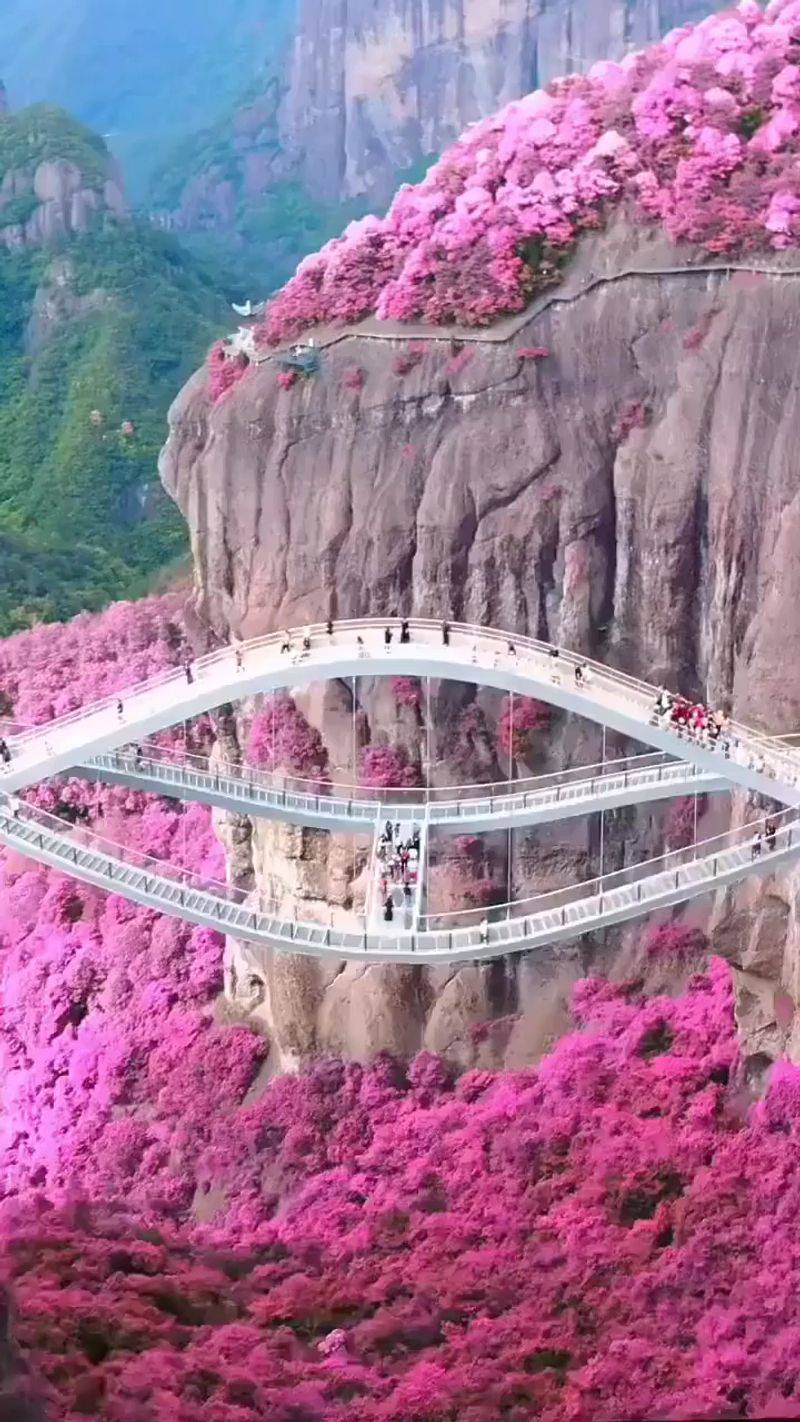
Pine sap rides the air and mist threads the cliffs like silk. Shenxianju gives the bridge its magic, turning geometry into myth.
Without this valley, the lines would be impressive; with it, they feel enchanted.
Walk a few meters and the framing shifts. Sheer rock faces lean in, a cloud drifts low, and the bridge becomes a brushstroke across a living canvas.
People stop mid-step just to watch the weather repaint the scene.
Even if you skipped the crossing, the valley would justify the trip. Add the structure, and the experience levels up from scenic to unforgettable.
Nature sets the stage; the bridge cues the gasp.
Hundreds of Thousands of People Have Already Visited
A vendor counts bottled waters while a queue coils along the entrance. Since 2020, the crowd has not really thinned; it has matured.
People come for the feeling as much as the photo, and that keeps turnstiles clicking.
Trends usually spike, then fade. Here, momentum hung on because the in-person surge beats the scroll.
The bridge rewards the trip with a visceral mix of height, wind, and awe that an algorithm cannot compress.
I watched a group cheer a friend through her first steps on the glass. Ten minutes later, she led them to the arch, laughing at her earlier nerves.
That is the arc you see here, repeated daily.
It’s Not Just About Fear – It’s About Wonder
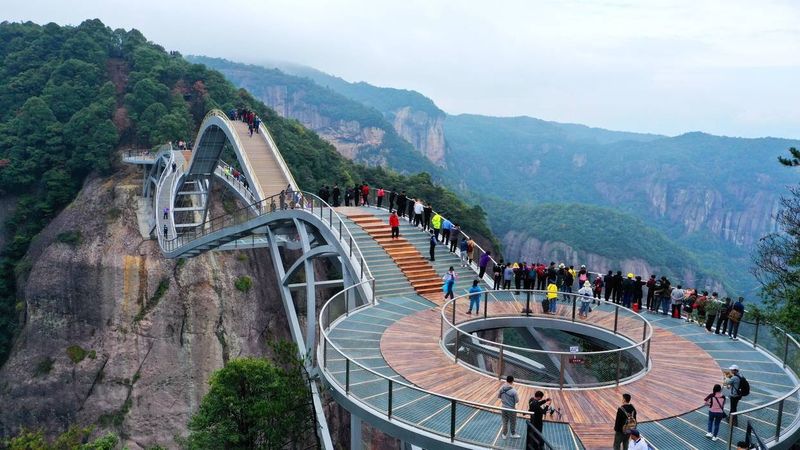
A hush spreads at sunset when the mountains turn violet. Fear gets headlines, but wonder keeps people lingering on the deck.
The bridge stages that feeling, opening a theater of sky, stone, and distance.
Take a minute without your camera. Watch clouds slide through the notches and fade behind a ridge, and let the valley set the tempo.
The architecture does not dominate nature; it frames it with precision.
That sense of smallness lands like a balm. You feel lighter, oddly grounded by the view below your shoes.
It is the rare attraction that raises your pulse and your perspective at the same time.
It Represents a New Era of Instagram Architecture
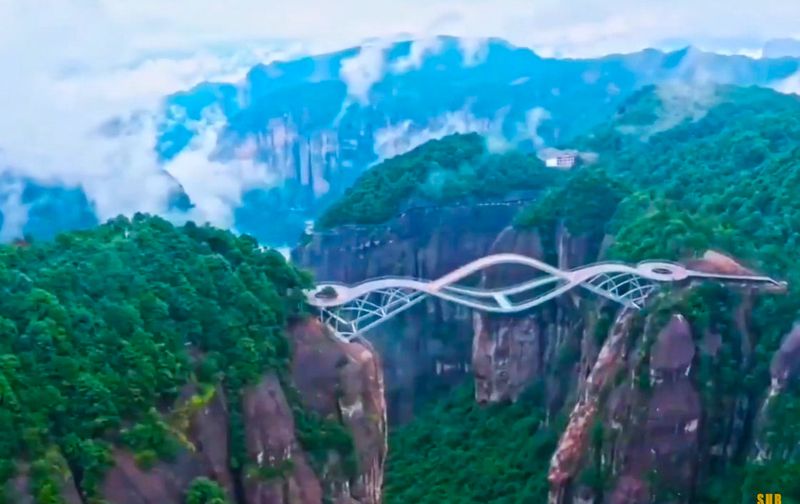
A flash of phones is inevitable, but the scene holds up after the shutter. The Ruyi Bridge nails the sweet spot between photogenic and profound, a tough balance in the era of instant feeds.
It looks unbelievable online and delivers more offline.
Plenty of attractions are built as backdrops. This one functions as a journey, with angles and height that only resolve when your body occupies the space.
The algorithm gets the preview; your senses get the full cut.
That is why the hype sticks. The bridge is not a prop; it is an experience with staying power.
You leave with pictures, sure, but also a memory that resists compression.
Why People Still Don’t Believe It’s Real
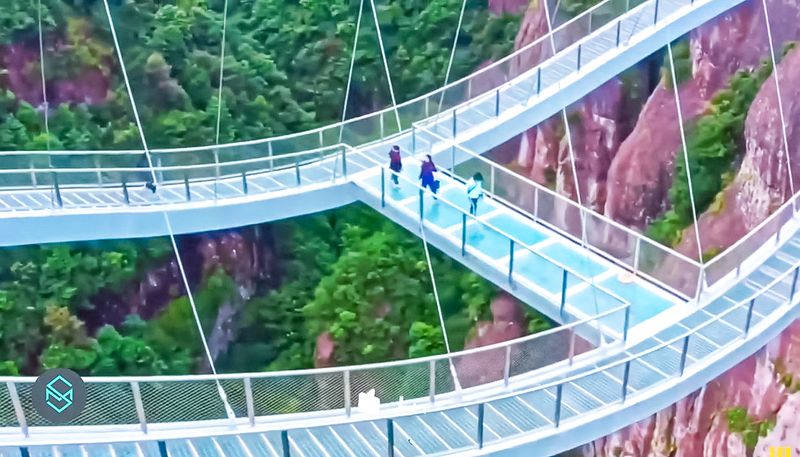
A stranger beside me muttered, this has to be CGI, then laughed at his own feet on the glass. The bridge clicks every fake trigger: flawless curves, hard edges, and a backdrop that looks curated.
Add transparency and your brain short-circuits.
Even after years online, disbelief persists because the images resemble renders more than snapshots. Perspective lines are too clean, the setting too cinematic, the steel too serene.
Real life rarely arrives this composed.
Yet the proof is tactile. Wind pushes your sleeve, the deck hums softly, and the valley breathes below.
Reality, in this case, outperforms the file.



