The Mediterranean is filled with coastal villages that seem almost impossible from a distance, with homes and narrow streets built directly into cliffs overlooking deep blue water. These places are not just scenic viewpoints.
Many have existed for centuries, shaped by fishermen, traders, and generations of people adapting to rugged coastlines and dramatic terrain.
From the whitewashed villages of Greece to the colorful harbor towns of Italy and the limestone cliffs of Corsica, each destination on this list offers its own mix of history, architecture, and unforgettable scenery. Whether you are planning a future trip or simply looking for inspiration, these 12 Mediterranean cliff villages prove some of the world’s most remarkable places are still built on the edge.
1. Positano, Amalfi Coast, Italy
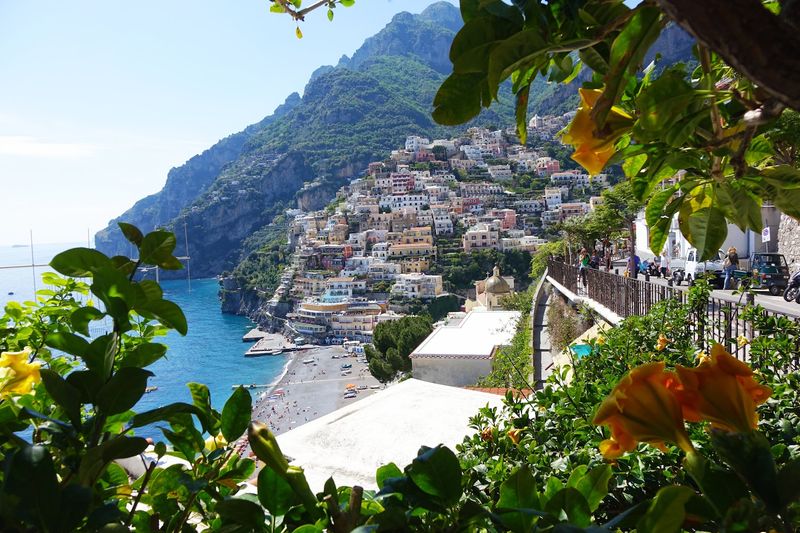
Gravity seems to have had very little say in how Positano was built. Colorful homes stack vertically up the cliffside in layers of terracotta, peach, and gold, connected by steep stairways and narrow paths that zigzag down to a pebble beach at the bottom.
The town developed around a 9th-century abbey and later became a favorite of ancient Romans who appreciated its dramatic coastal position. Today it attracts a mix of honeymooners, fashion lovers, and curious travelers who come for the views and stay for the food.
Family-run restaurants line the waterfront, serving pasta with fresh-caught fish and house-made lemon dishes that reflect the region’s agricultural roots. The boutiques along the lanes carry handmade sandals and ceramics that have been crafted locally for generations.
Positano is glamorous but not pretentious.
2. Bonifacio, Corsica, France
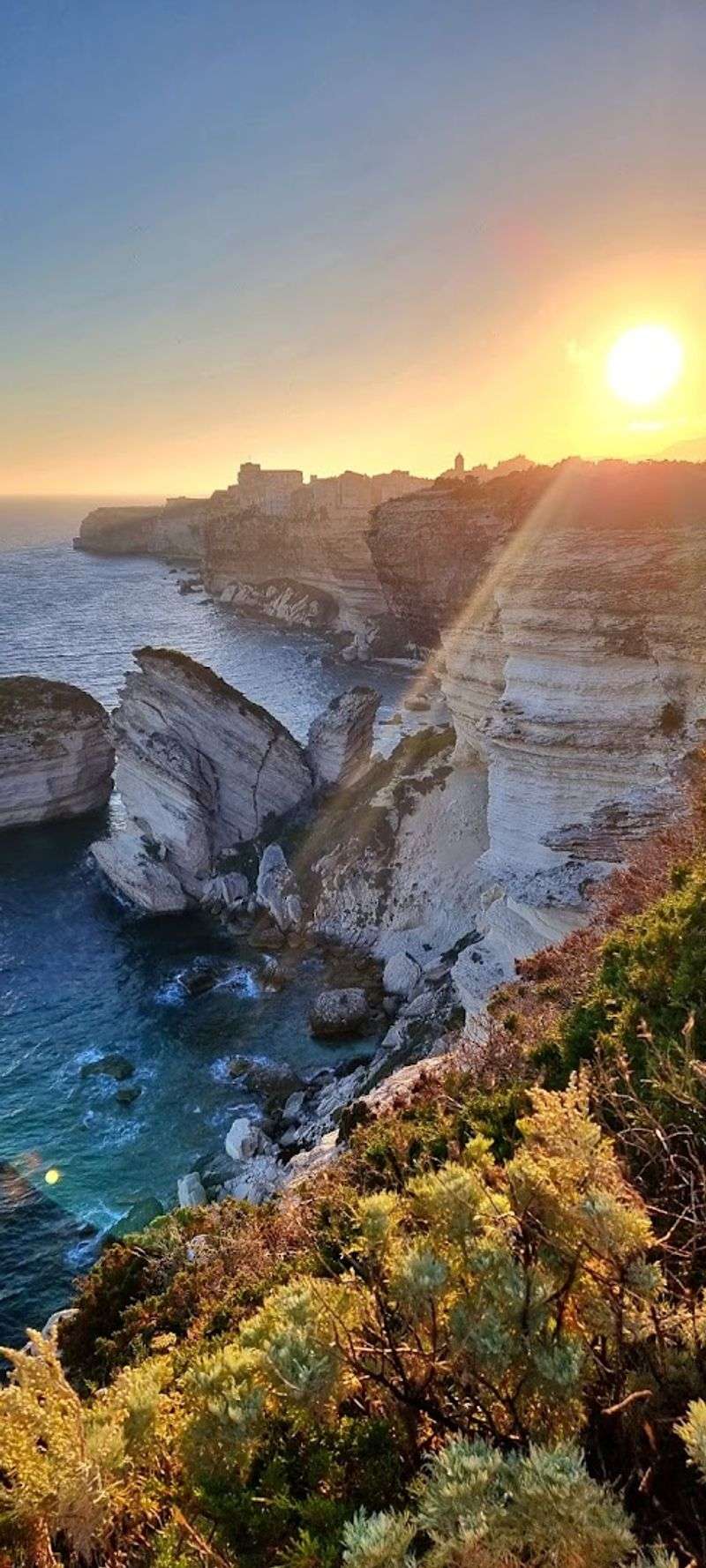
Bonifacio holds the title of one of the most dramatically positioned towns in the entire Mediterranean without much competition. Perched 70 meters above the sea on white limestone cliffs that have been undercut by centuries of waves, the old town appears to lean out over the water as if peering down at the boats below.
The medieval architecture here is well-preserved and compact, with narrow alleys, Genoese-era buildings, and panoramic terraces that reveal the Strait of Bonifacio stretching toward Sardinia. The cliffs themselves are the real spectacle, turning shades of cream and grey against the intense blue of the sea.
The marina below the cliffs draws sailing enthusiasts from across Europe, and the surrounding area includes sea caves and protected coves accessible by boat. Bonifacio rewards slow exploration and punishes anyone who rushes through it.
3. Manarola, Cinque Terre, Italy
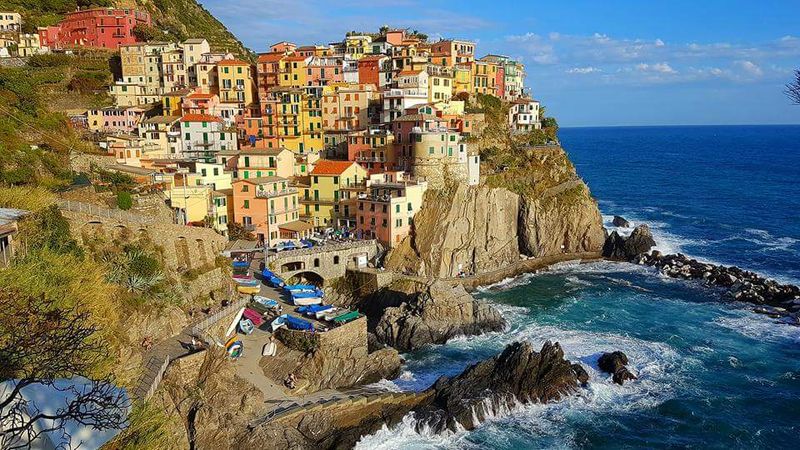
Manarola is the kind of place that ends up on posters, postcards, and phone wallpapers without anyone quite meaning for it to happen. The village clings to steep cliffs above the Ligurian Sea, and its rows of brightly painted houses create a vertical patchwork of color that photographers have been chasing for decades.
Standing approximately 230 feet above the water, Manarola is one of five villages in the Cinque Terre region, which earned UNESCO World Heritage status in 1997. The church bell tower in the village once served as a watchtower against pirate raids, which gives it a more layered history than its pretty exterior suggests.
The Via dell’Amore, a coastal path carved into the cliff, connects Manarola to the neighboring village of Riomaggiore. Evenings bring locals and visitors together along the rocky harbor for fresh seafood and conversation.
It is compact, beautiful, and surprisingly authentic.
4. Castellammare del Golfo, Sicily, Italy
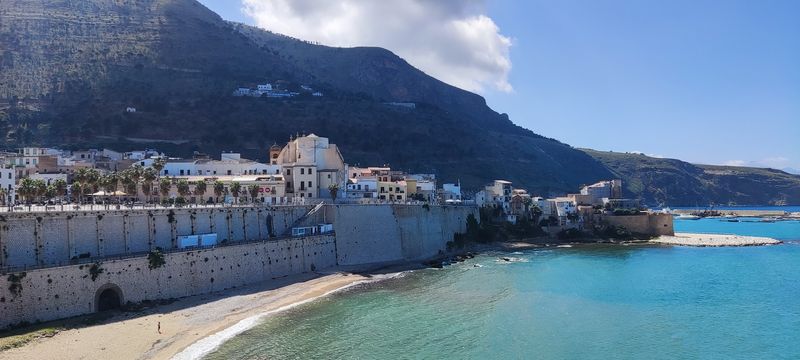
Not every cliff village on the Mediterranean is obsessed with its own beauty, and Castellammare del Golfo is refreshingly self-assured about that. This Sicilian town gets on with being a real fishing community first and a tourist destination second, which makes it all the more appealing to visit.
The harbor is active and genuine, with colorful fishing boats returning each morning while the old streets above wind uphill toward watchtower ruins and lookout points with wide gulf views. The surrounding coastline offers rocky coves and accessible beaches that attract visitors looking for something quieter than Sicily’s more famous resorts.
Historic buildings, including an Aragonese castle right at the harbor entrance, add architectural interest throughout the town. Nearby nature reserves and sea caves make Castellammare a solid base for exploring the western Sicilian coast.
Travelers who find it tend to stay longer than they originally planned.
5. Oia, Santorini, Greece
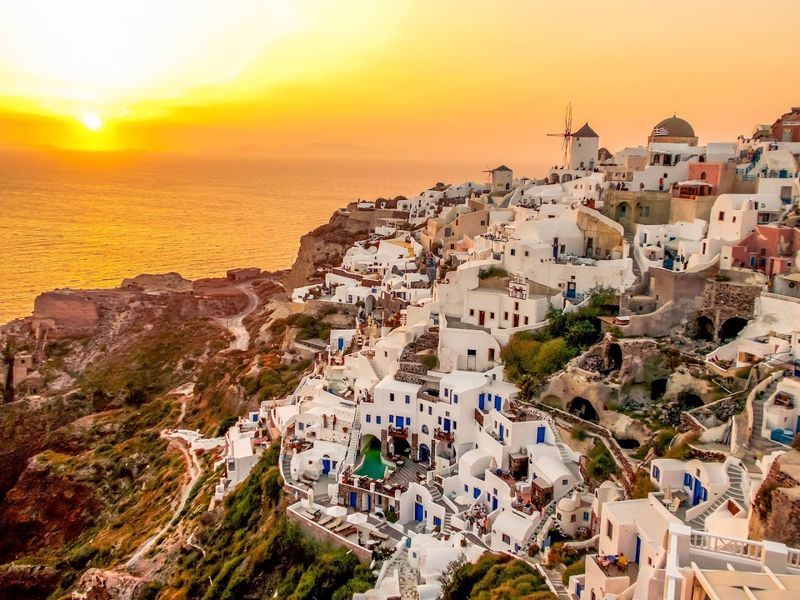
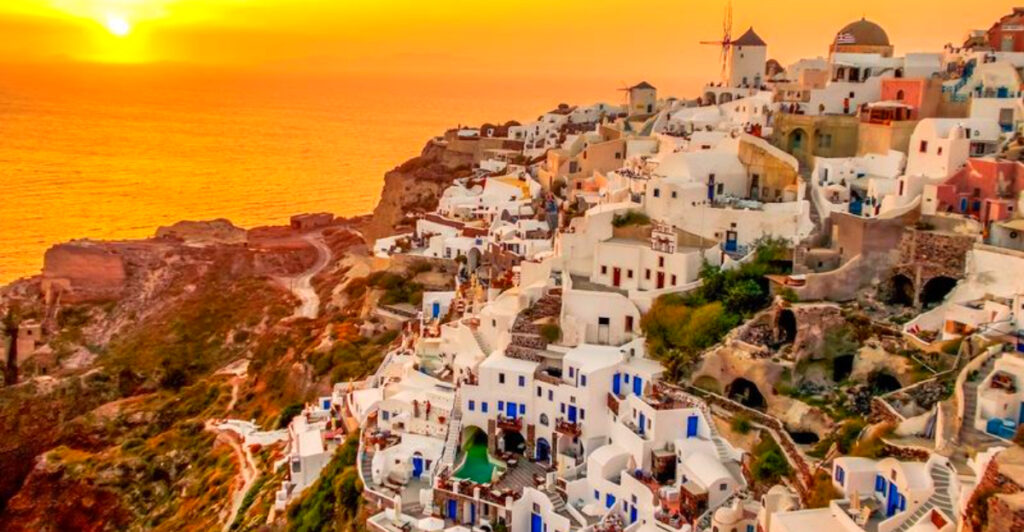
Few places on earth have been photographed more than Oia, and yet seeing it in person still catches people off guard. Built along the rim of an ancient volcanic caldera, this village sits at the northern tip of Santorini with the Aegean stretching endlessly below its white walls.
The architecture here is unlike anything on the mainland. Cave houses carved into the volcanic rock, narrow staircases connecting terraces, and blue-domed churches at every turn create a layout that feels more sculpted than built.
Oia is famous for its sunsets, and crowds gather at the castle ruins each evening to watch the sky change color above the caldera. Arrive early for a good spot.
Beyond the views, the village has excellent restaurants, art galleries, and boutique shops tucked into its winding lanes.
6. Cadaqués, Catalonia, Spain
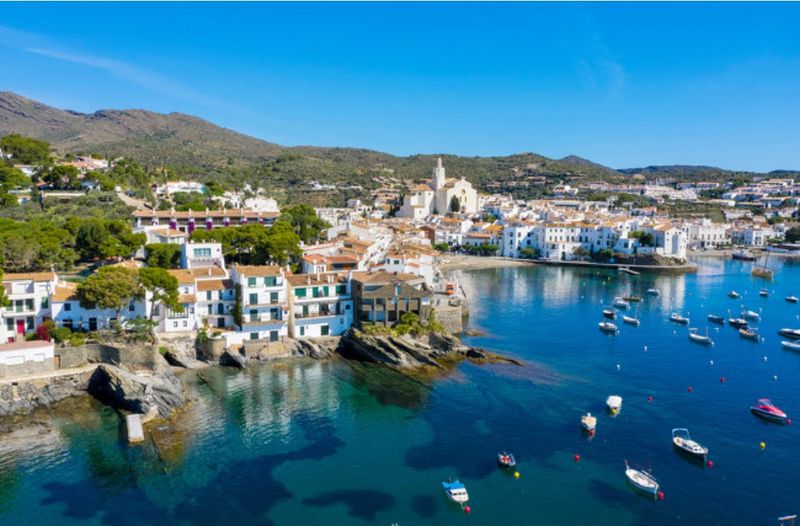
Salvador Dali chose Cadaqués as his retreat, and once you see the place, the choice makes complete sense. This Catalonian village sits on a rugged stretch of the Costa Brava that was only accessible by mountain road until the 1960s, which helped it preserve a character that more connected towns lost long ago.
Whitewashed buildings cluster tightly around rocky coves, with fishing boats pulled up on pebbly shores and narrow lanes climbing between houses that have barely changed in a century. Dali’s former home, Casa Museu Dali in nearby Port Lligat, draws visitors with an interest in the artist’s unusual domestic arrangements and creative history.
The surrounding Cap de Creus natural park protects some of the wildest coastal scenery in Spain, with dramatic rock formations and clear water coves that reward hikers and swimmers alike. Cadaqués has a relaxed, artistic energy that is easy to absorb and hard to leave behind.
7. Sidi Bou Said, Tunis Governorate, Tunisia
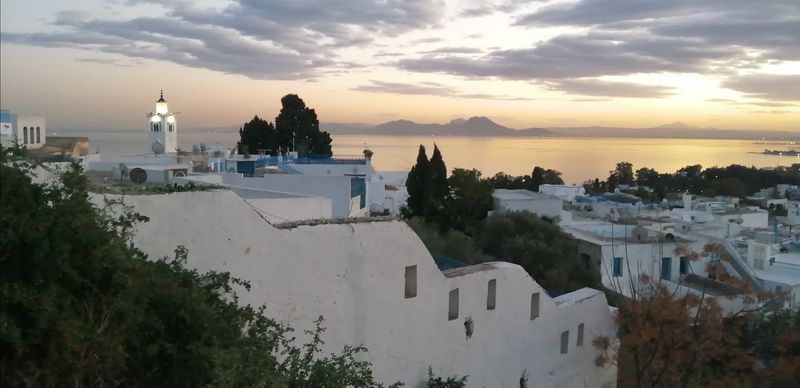
Across the sea from Europe, Tunisia offers one of the Mediterranean’s most visually distinctive cliff villages in Sidi Bou Said. The town is immediately recognizable for its strict color scheme: white walls and brilliant blue doors, shutters, and ironwork railings that line every street without exception.
Perched above the Gulf of Tunis, the village overlooks a harbor filled with small sailboats and offers wide sea views from its café terraces and hilltop lookout points. Artists and musicians have been drawn here since the early 20th century, and the town retains a creative, contemplative atmosphere that sets it apart from busier coastal resorts.
The main street climbs from the train station to the hilltop in a single winding stretch lined with souvenir stalls, tea houses, and small galleries. Sidi Bou Said is close enough to Tunis for a day trip but atmospheric enough to justify staying overnight.
8. Vernazza, Cinque Terre, Italy
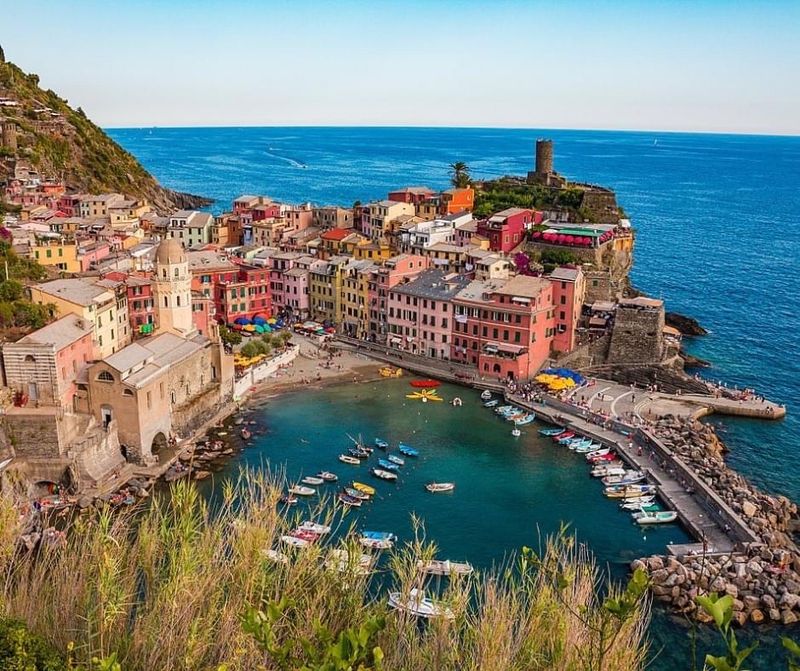
Among the five villages of Cinque Terre, Vernazza has the most complete harbor, and that single geographic feature gives it a slightly different energy from its neighbors. A natural rocky inlet creates a small port where boats sit in calm water surrounded on three sides by colorful houses and on the fourth by the open Ligurian Sea.
A medieval watchtower called the Doria Castle stands at the harbor’s edge and can be climbed for views across the rooftops and out to sea. The village piazza sits just back from the water and serves as the social center, with café tables filling the space throughout the day.
Hiking trails connecting Vernazza to the other Cinque Terre villages rank among the most scenic coastal walks in Europe, passing through vineyards and along cliff edges with constant sea views. The seafood here is simple, fresh, and served with very little ceremony, which is exactly the right approach.
9. Nafplio, Peloponnese, Greece
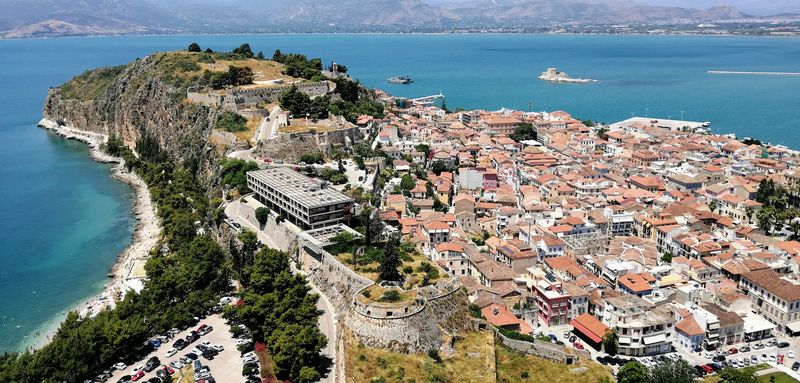
History has left a particularly heavy footprint in Nafplio, a town that served as the first capital of modern Greece after independence in the 1820s. The neoclassical buildings along its waterfront promenade reflect that moment of national ambition, while the Palamidi Fortress looming on the cliffs above tells a much older story.
The fortress requires climbing 999 steps to reach the top, a number that sounds intimidating but delivers proportionally impressive views across Nafplio Bay and the surrounding Peloponnese landscape. The effort is well worth it for anyone with reasonably cooperative knees.
Down in the old town, Venetian-era buildings line narrow streets that open onto small squares with outdoor tavernas and local bakeries. The harbor includes the small island fortress of Bourtzi, accessible by short boat trip.
Nafplio combines Greek history, coastal scenery, and everyday town life in a balance that feels genuinely satisfying rather than curated for tourism.
10. Atrani, Amalfi Coast, Italy
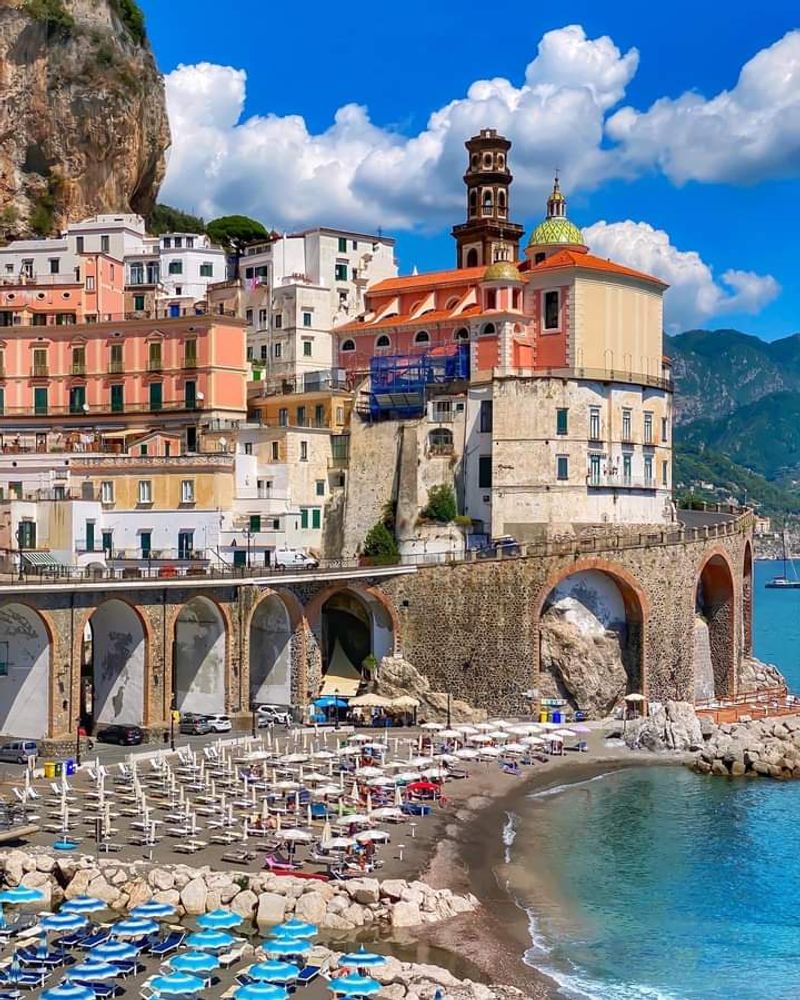
Atrani has a secret that its more famous neighbor Amalfi has never quite managed to keep: it is smaller, quieter, and almost entirely bypassed by the tour bus crowds that fill the coast road each summer. The two towns are separated by just a few hundred meters, but the difference in atmosphere is considerable.
The village is built around a tiny piazza that sits just steps from a small beach hemmed in by steep cliffs on both sides. Arched passageways connect different levels of the town, and the Chiesa di San Salvatore de Birecto, a 10th-century church in the main square, adds genuine historical weight to the setting.
Atrani was once an important settlement in the medieval Amalfi Republic and retains old architectural details that larger towns have lost to renovation. For travelers who want the Amalfi Coast scenery without the Amalfi Coast crowds, this small, unhurried village is the obvious answer.
11. Kotor Old Town, Bay of Kotor, Montenegro
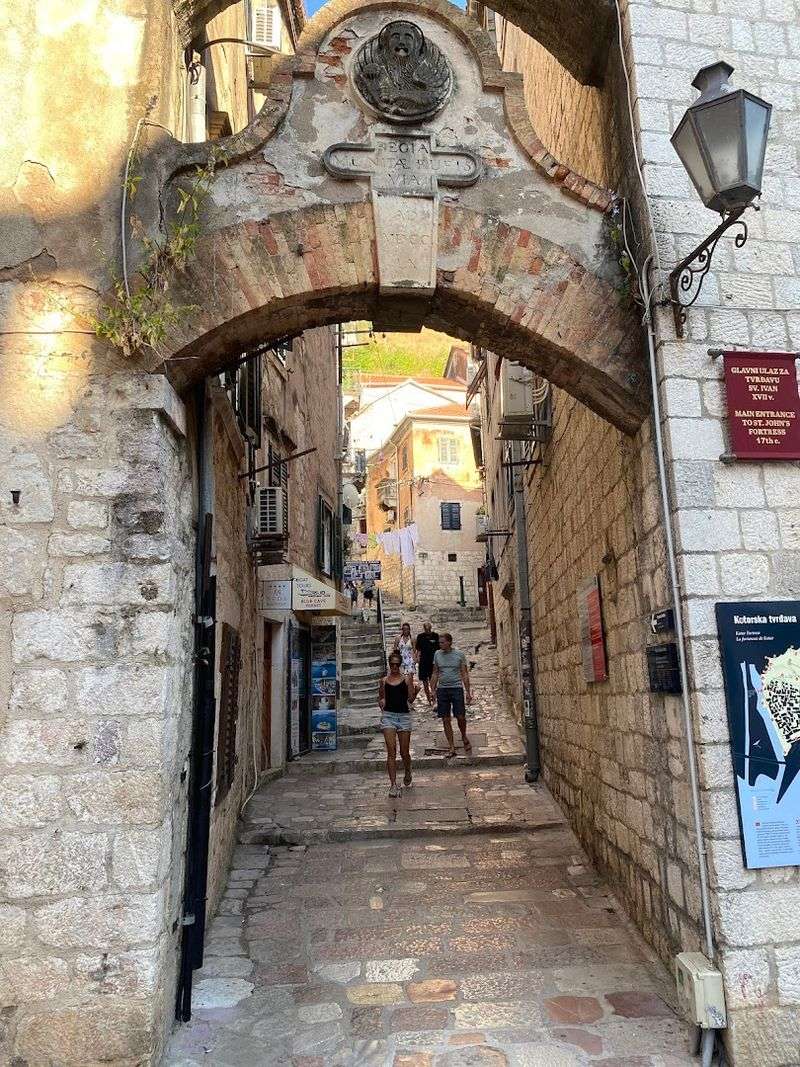
Kotor makes an impression before you even get out of the car. The Bay of Kotor, one of the deepest natural harbors in the Mediterranean, wraps around the medieval old town in a horseshoe of dark water and steep mountains that gives the entire scene an almost theatrical quality.
Stone walls built between the 9th and 19th centuries climb the cliffs directly above the town, rising 260 meters to the fortress of San Giovanni at the top. The walls can be hiked, and the views from the upper sections across the bay and surrounding peaks are among the most dramatic in the Balkans.
Inside the old town walls, labyrinthine streets reveal Romanesque churches, small squares, and cafés that have been operating in the same stone buildings for generations. Kotor earned UNESCO World Heritage status in 1979, and the preservation of its medieval structure remains remarkably intact.
It rewards visitors who take their time.
12. Piran, Slovenian Littoral, Slovenia
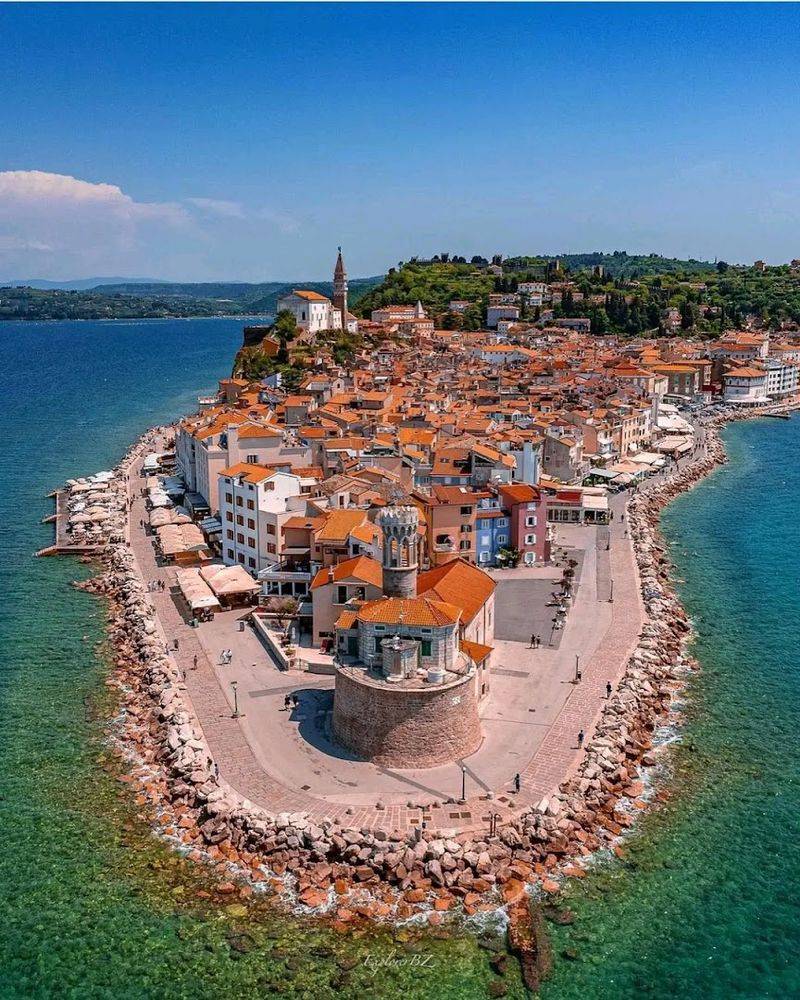
Slovenia does not have much coastline, but what it does have, it uses extremely well. Piran occupies a narrow peninsula jutting into the Adriatic and packs an extraordinary amount of Venetian-influenced architecture, steep stone streets, and hilltop viewpoints into a very small amount of space.
The town’s layout reflects its medieval past as part of the Venetian Republic, with a central square named after composer Giuseppe Tartini, who was born here in 1692. Narrow lanes climb from the waterfront toward old city walls that offer sweeping views across the sea toward Italy and Croatia on clear days.
Piran is smaller and less visited than its Croatian neighbors, which works in its favor. The waterfront has cafés and seafood restaurants, while the hilltop cathedral provides the best panoramic platform in town.
The pace here is genuinely unhurried, and that is a large part of its appeal.
Share this story