A surprising number of wildlife-related injuries happen in places tourists consider safe. National parks, beaches, hiking trails, and popular snorkeling spots are full of animals that appear calm, harmless, or easy to approach, right up until they are not.
What makes these encounters dangerous is how often people underestimate the risks. A bison grazing near a roadside, a seemingly harmless marine creature, or a wild animal accustomed to seeing visitors can all cause serious injuries when approached too closely.
This list highlights 15 animals that travelers frequently misjudge, along with the reasons they deserve far more caution and respect than they usually receive.
1. Bison
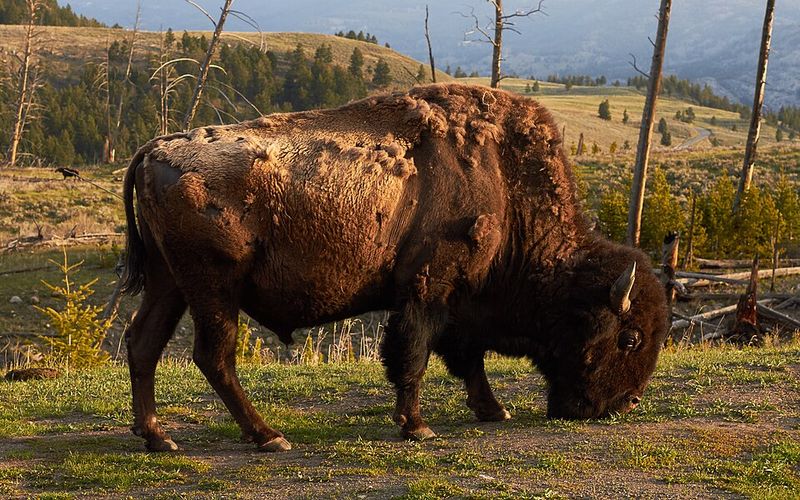
No animal in Yellowstone has sent more visitors to the medical center than the bison, and yet people still walk toward them with smartphones raised. These animals weigh up to 2,000 pounds and can sprint at 35 miles per hour, which is considerably faster than any tourist in sandals.
Park rangers at Yellowstone respond to bison-related incidents every single season, many involving people who simply wanted a closer photo. The required minimum distance is 25 yards, but that rule gets broken constantly.
Bison do not give many warning signs before charging. A raised tail or a lowered head can signal a reaction is coming, but by then the gap closes fast.
Treat every bison sighting as a wildlife moment to observe from your car window, not a photo opportunity that requires you to get out.
2. Moose
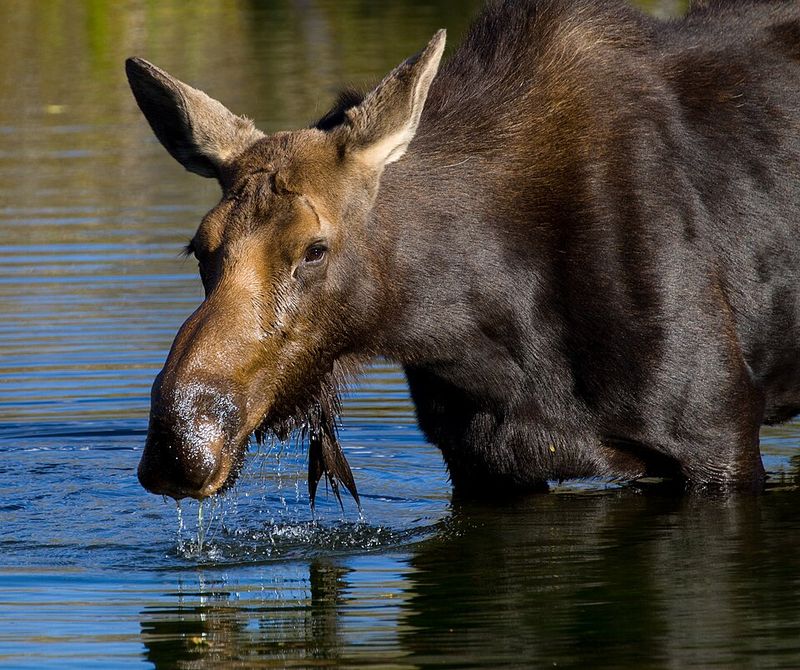
Awkward, gangly, and almost comical in appearance, the moose is one of North America’s most underestimated animals. That relaxed, lumbering look is deeply misleading.
A full-grown bull moose can stand over six feet at the shoulder and weigh more than 1,500 pounds.
Moose are involved in more wildlife attacks on humans in Alaska than bears, which surprises most visitors. Mothers with calves are especially unpredictable, and a cow moose protecting her young will charge without much hesitation.
A charging moose kicks forward with its front hooves, and those strikes can cause serious injury. Unlike bears, moose rarely bluff.
If one starts moving toward you, get behind a large solid object like a tree or a vehicle immediately. Respecting their space is not optional in moose country, it is simply smart travel.
3. Hippopotamus
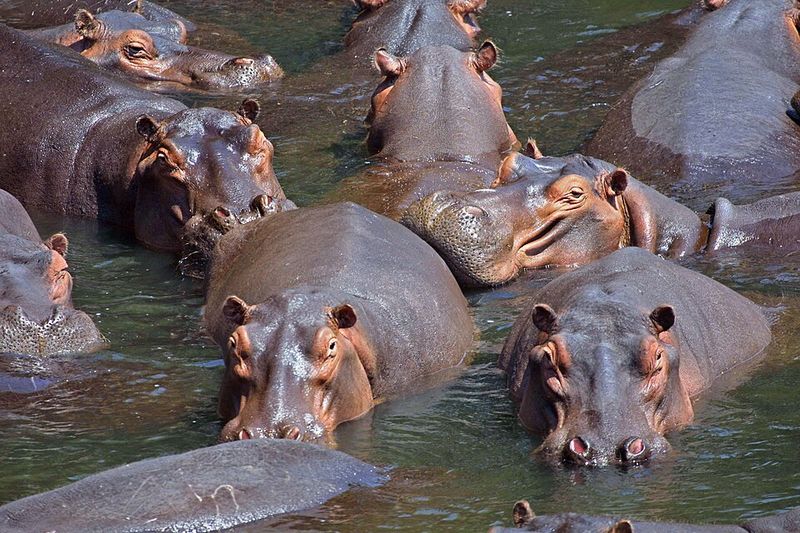
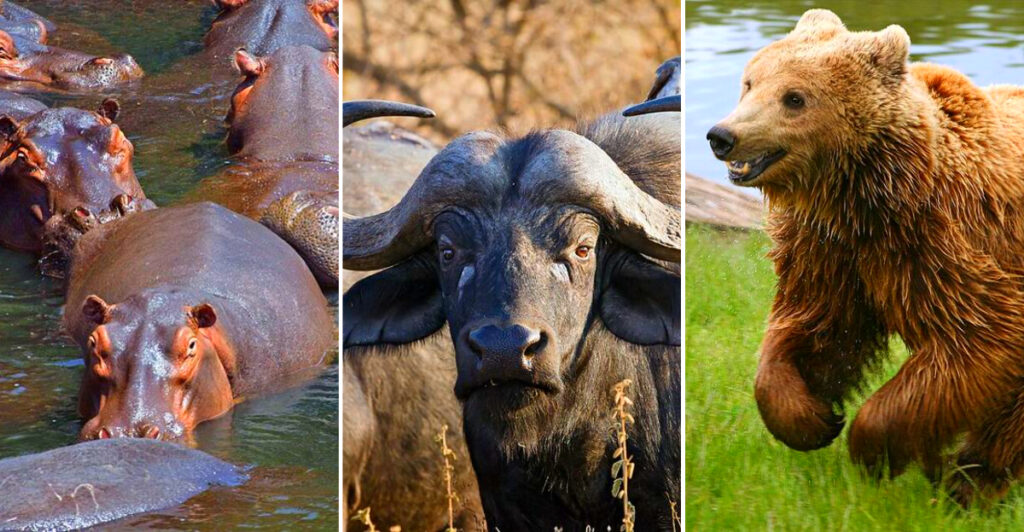
Hippos look like enormous, slow-moving sculptures when they are resting in the river, which is exactly why so many boat tours drift too close. That calm surface hides one of Africa’s most territorial and aggressive large animals.
Responsible for more large-animal fatalities on the African continent than almost any other species, hippos are fiercely protective of their space in the water. They can run at speeds up to 20 miles per hour on land, which catches most people completely off guard.
Their jaws can open nearly four feet wide and generate enormous crushing force. Tour operators on the Chobe River are experienced and generally cautious, but accidents happen when visitors pressure guides to get closer for a better shot.
A hippo yawning widely is not being friendly, it is issuing a very clear warning to back off immediately.
4. Saltwater Crocodile
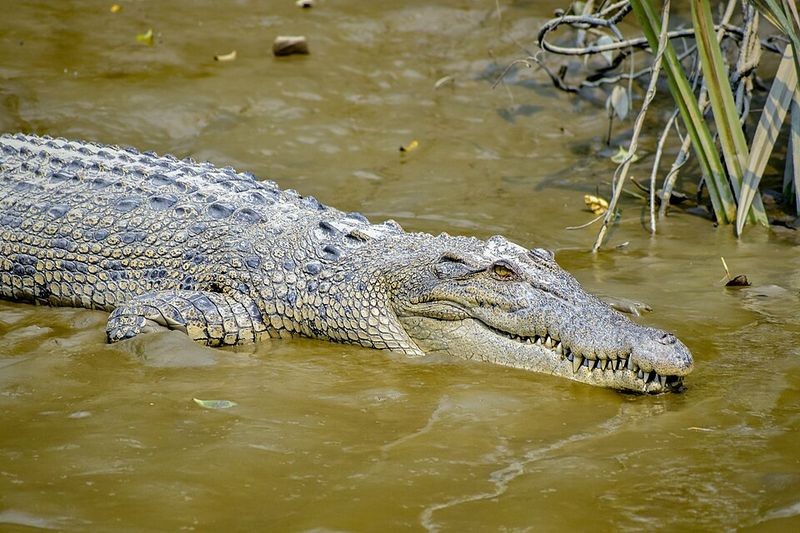
Australia posts warning signs near waterways for a reason, and that reason is often a saltwater crocodile waiting just below the surface. These reptiles are the largest living crocodilians on Earth, with some individuals exceeding 20 feet in length.
What makes them especially dangerous is their ability to remain almost completely invisible in the water. A croc can position itself within feet of a riverbank without creating a single ripple.
Tourists who ignore posted signs to swim, fish from the edge, or even crouch near the water have encountered them with no warning whatsoever.
The Northern Territory records crocodile incidents regularly, and wildlife authorities take the threat seriously year-round. Saltwater crocs do not limit themselves to rivers either, they are comfortable in estuaries and coastal saltwater.
If a sign says stay back, that sign was put there after something happened.
5. Cape Buffalo
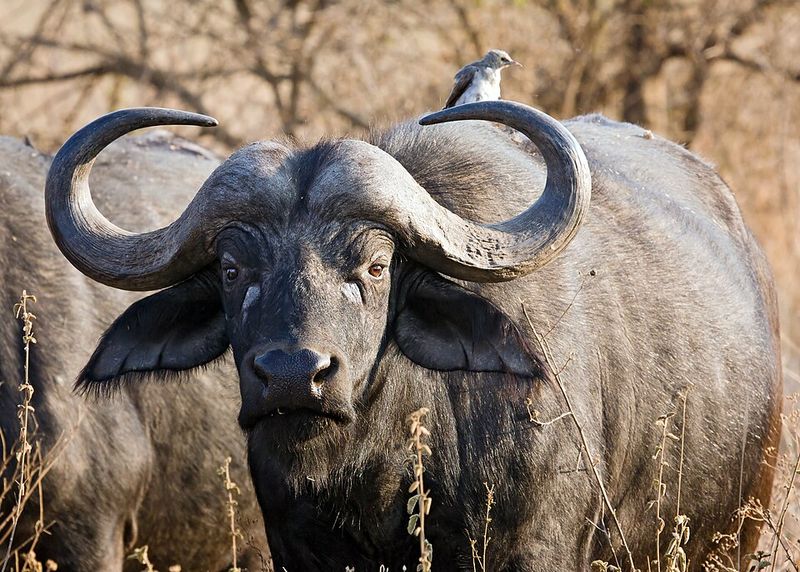
Safari guides in Kruger have a saying about Cape buffalo: they look at you like you owe them money. That flat, unflinching stare is not curiosity, it is assessment, and these animals have a well-earned reputation for following through on perceived threats.
Often called one of Africa’s most dangerous animals, Cape buffalo have been known to charge vehicles, pursue predators, and circle back to confront threats they have already passed. They do not startle and run.
They startle and charge.
A herd of buffalo provides some protection for individuals, but a lone bull separated from the group is considered especially unpredictable. Safari visitors are always advised to stay inside vehicles and keep noise to a minimum.
Getting out of a jeep for a closer look at a Cape buffalo is the kind of decision that ruins a vacation very quickly.
6. Elk
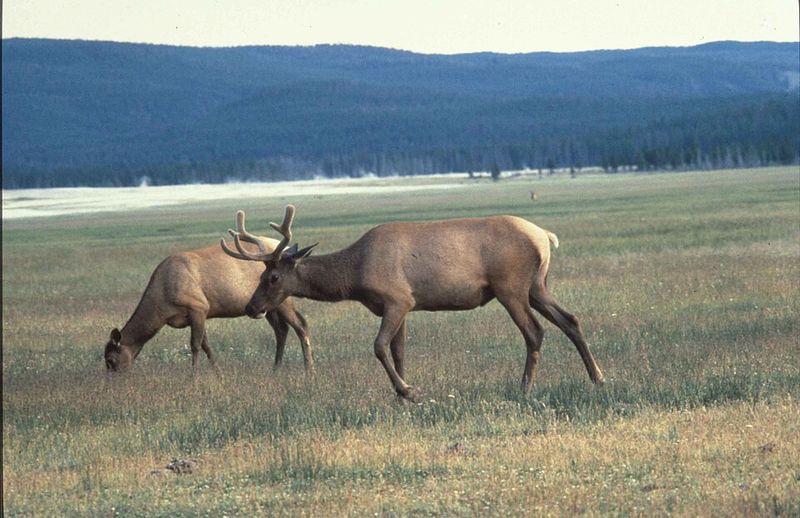
Every autumn, Rocky Mountain National Park fills with visitors hoping to witness the elk rut, and every autumn, rangers have to remind those visitors that the bulls are not in a friendly mood. Rutting season turns normally manageable elk into territorial, adrenaline-charged animals that see anything nearby as a potential rival or threat.
Bull elk during the rut have charged cars, knocked over adults, and sent hikers scrambling for cover. Their antlers can span five feet across, and their body weight backs up every move they make.
Despite clear signage and regular ranger announcements, people still approach for selfies.
The park recommends staying at least 75 feet from all elk at all times, and double that during the rut. Female elk protecting calves in spring are also known to kick without warning.
The rut is spectacular to watch, just watch it from a reasonable distance.
7. Komodo Dragon
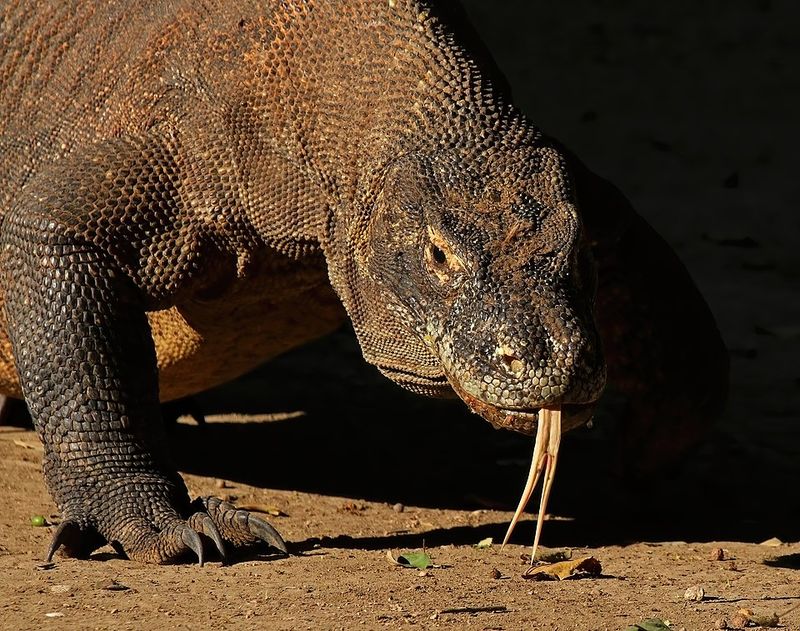
There are not many places on Earth where a licensed guide carries a forked stick as standard equipment, but Komodo National Park is one of them. That stick is not decorative.
Komodo dragons are the world’s largest lizards, reaching up to ten feet in length and capable of moving with surprising speed when motivated.
Their mouths contain bacteria and venom that complicate any wound significantly. Most visitors are so fascinated by the prehistoric appearance of these animals that they edge closer without realizing how quickly the situation could change.
Park guides manage visitor movement carefully and for good reason. There have been recorded attacks on humans in the park, most involving people who broke away from the group or crouched down to get a better angle for a photograph.
The dragons are genuinely remarkable to observe, but the forked stick exists because the wonder cuts both ways.
8. Elephant
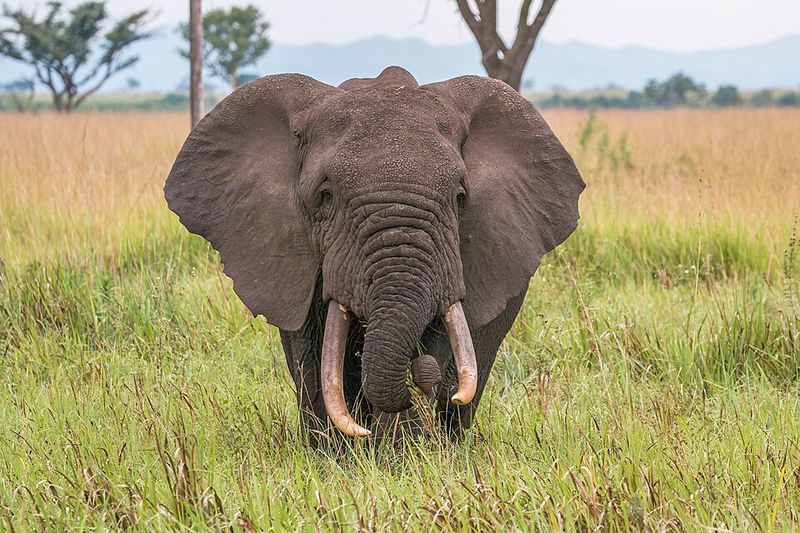
Few wildlife encounters feel as emotionally powerful as being near a wild African elephant, and that emotional pull is part of what makes the situation risky. Elephants are highly intelligent and socially complex, but they are also the largest land animals on Earth, and a defensive charge is not something anyone walks away from easily.
Mothers with calves are particularly protective, and bulls in musth, a hormonal state that can last weeks, become highly unpredictable. Vehicles in Amboseli have been flipped by agitated elephants, and on foot encounters carry even greater risk.
The key detail most tourists miss is that a mock charge and a real charge can look identical until the very last moment. Safari guides read body language carefully and position vehicles accordingly.
Trusting your guide’s judgment over your desire for a closer shot is the single most important decision you can make on any elephant encounter.
9. American Alligator
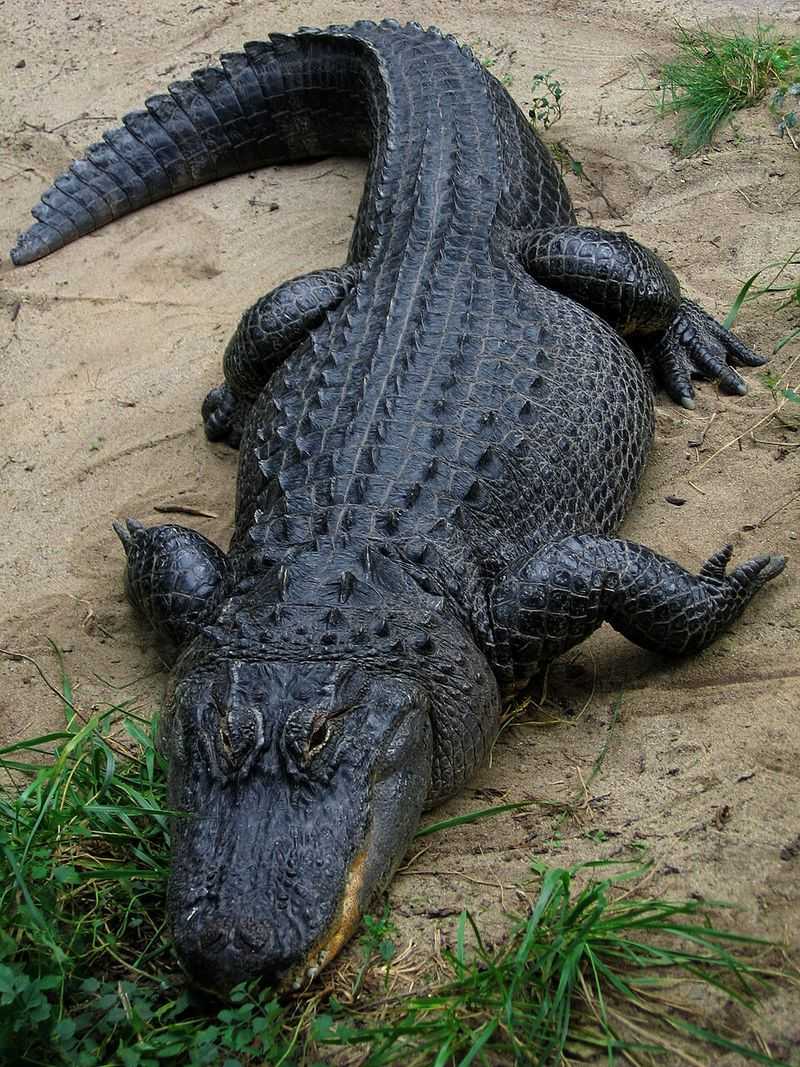
Alligators are so common in the Everglades that visitors sometimes treat them the way people treat pigeons in a city park. That familiarity is a problem.
An alligator sitting motionless on a bank is not ignoring you, it is doing exactly what an ambush predator does before it moves.
Florida wildlife officials receive thousands of nuisance alligator calls every year, and many incidents involve people who fed alligators, which is both illegal and genuinely dangerous. Feeding them removes their natural wariness of humans, making future encounters far more hazardous for everyone.
The recommended safe distance is at least 60 feet, but on busy Everglades boardwalks, that gap shrinks fast. Alligators can lunge forward with explosive speed over short distances.
Children and small pets near the water’s edge face the highest risk. The Everglades is one of the most extraordinary ecosystems in North America, and alligators are a central part of it, best appreciated from a respectful distance.
10. Brown Bear
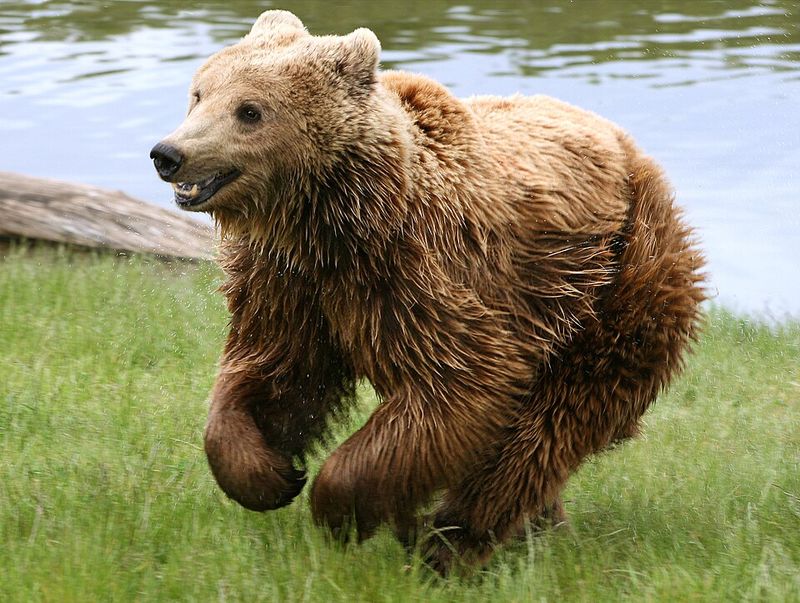
Brooks Falls in Katmai is one of the most photographed wildlife spots in the world, where brown bears gather each summer to catch sockeye salmon mid-leap. The viewing platforms are carefully positioned, and the setup works beautifully when visitors follow the rules.
Problems arise when people wander off designated paths or linger near areas where bears are actively feeding. A bear focused on catching fish is not paying attention to tourists, but that can change instantly if it feels crowded or surprised.
Park regulations require visitors to stay at least 50 yards from bears at all times, and 100 yards from mothers with cubs. Brown bears in Katmai are habituated to human presence on the platforms, but habituated does not mean tame.
These are wild animals weighing up to 1,500 pounds. The platforms exist precisely because getting closer is not a good idea for anyone involved.
11. Wild Boar
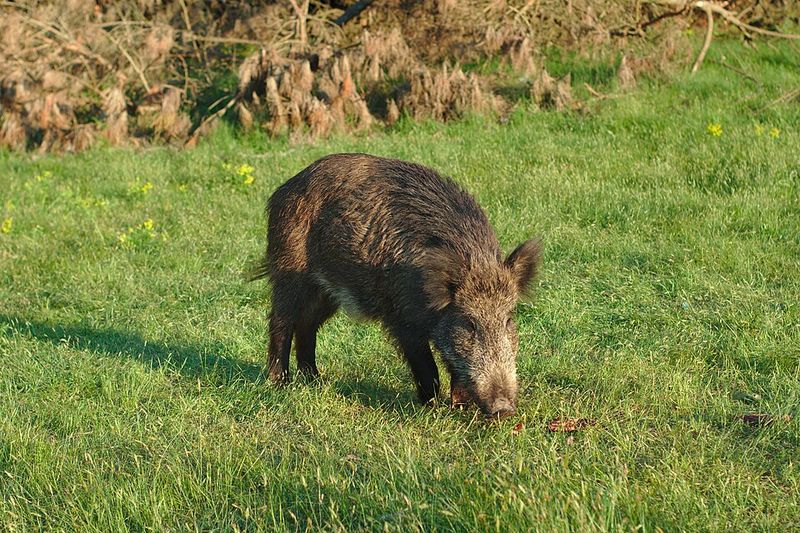
Wild boars have expanded their range across much of Europe and are now regularly spotted near hiking trails, campsites, and even suburban parks in countries like Germany, France, and Italy. Most of the time they want nothing to do with people, but most of the time is not all of the time.
A surprised boar, particularly a sow with piglets, can respond with a fast, aggressive charge. Their tusks are not decorative.
They are used for digging, fighting, and defending, and a tusk wound from a panicked boar requires serious medical attention.
Hikers in boar territory are advised to make noise on the trail to avoid surprising them and to give any boar they spot a wide berth. Never position yourself between a mother and her young.
Wild boars are genuinely fascinating animals with a long history across European landscapes, but they have very little patience for being cornered.
12. Sea Lion
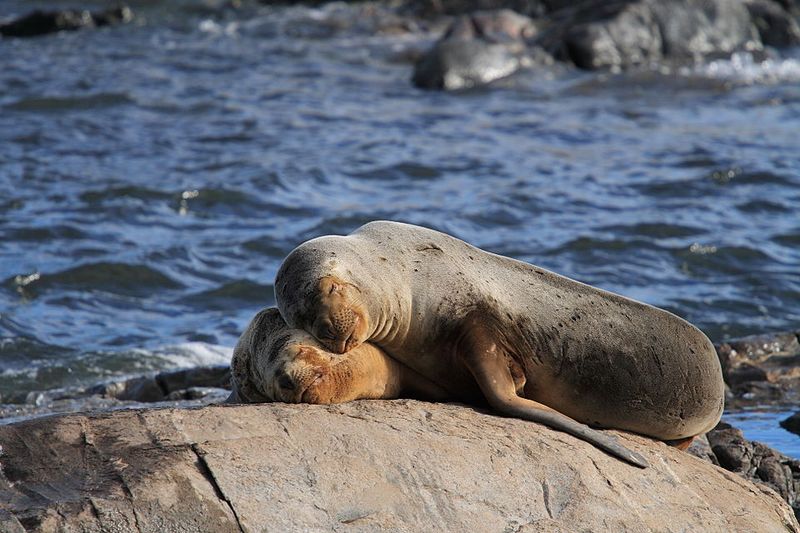
Sea lions at Pier 39 in San Francisco have become one of the city’s most popular attractions, and their boisterous, barking presence is genuinely entertaining. That crowd-pleasing reputation has led a lot of visitors to assume all sea lions on all California beaches are equally relaxed about human company.
They are not. Wild sea lions haul out on beaches to rest, regulate their body temperature, and care for pups, and they do not appreciate being approached, touched, or herded back into the water for someone’s amusement.
Bites from sea lions are serious, capable of causing deep puncture wounds and infection.
The Marine Mammal Protection Act prohibits harassing sea lions, and violations carry real penalties.
13. Cassowary
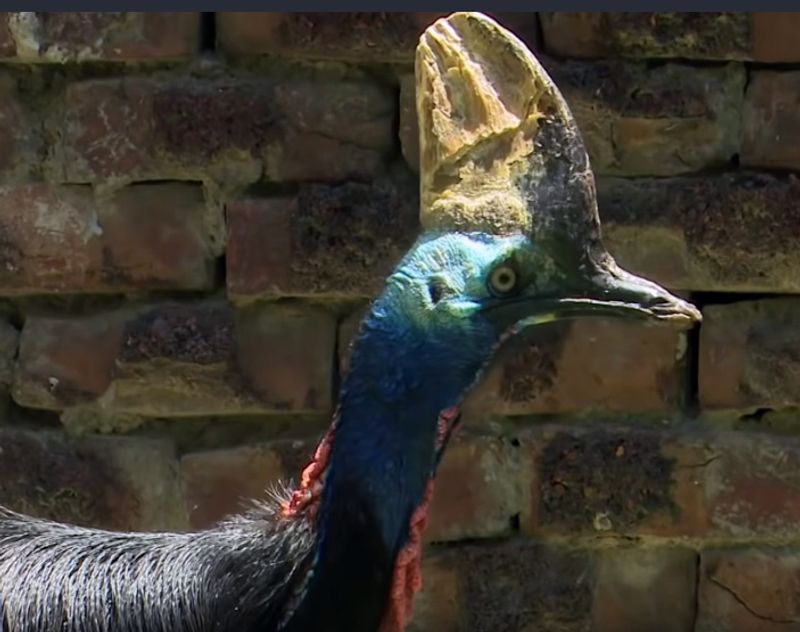
Australia has a talent for producing animals that look extraordinary and behave accordingly. The cassowary, a large flightless bird found in the rainforests of Queensland, falls squarely into that category.
It stands nearly six feet tall, weighs up to 130 pounds, and has an inner toe equipped with a claw that can reach five inches in length.
Cassowaries are generally shy and prefer to avoid people, but they become dangerous when they feel cornered or when tourists offer food. Feeding cassowaries is one of the fastest ways to create a habitually aggressive bird that no longer keeps its distance.
Queensland wildlife authorities classify the cassowary as potentially dangerous, and attacks, while uncommon, have caused serious injuries.
14. Polar Bear
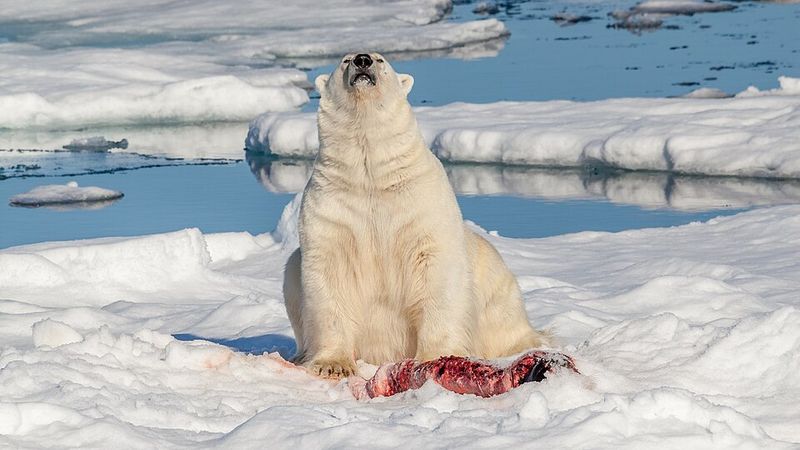
Svalbard is one of the very few places on Earth where polar bears outnumber people, and the Norwegian archipelago takes that ratio seriously. Every person venturing outside the main settlement of Longyearbyen is strongly advised to carry a firearm or travel with an armed guide, not as a formality but as a genuine safety measure.
Polar bears are not naturally fearful of humans. Unlike most large predators that have learned to avoid people over generations, polar bears in remote Arctic regions may approach out of curiosity or hunger, which makes them uniquely unpredictable in ways that other bears are not.
15. Cone Snail
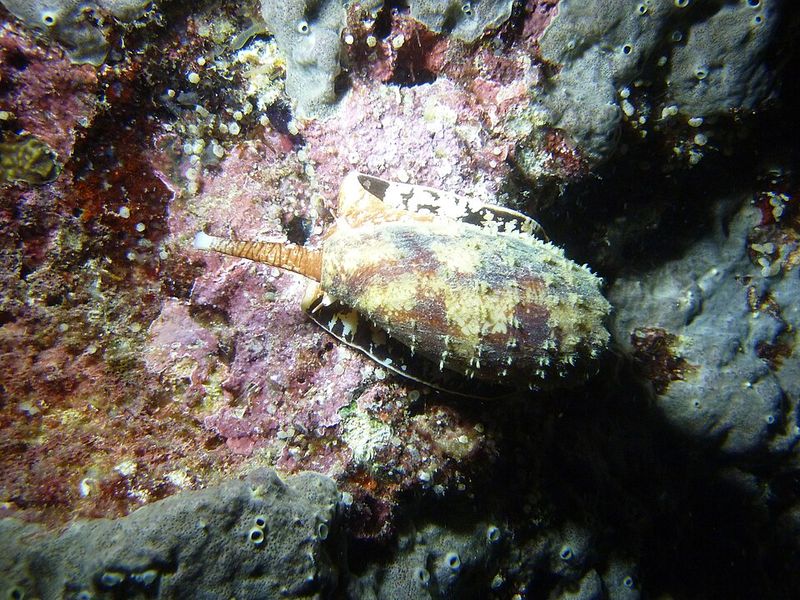
Of all the animals on this list, the cone snail is probably the one most people would pick up without a second thought. The shells are genuinely beautiful, intricately patterned in browns, whites, and oranges, and they look like natural souvenirs just waiting to be collected from a tropical beach.
That is exactly the problem. Cone snails are active predators that fire a venomous harpoon-like tooth called a radula from any part of the shell opening.
There is no antivenom for cone snail venom, and some species carry enough toxin to cause serious medical emergencies.
The geography cone snail, found widely across the Indo-Pacific, is considered the most dangerous species. Symptoms can develop quickly and include muscle paralysis and breathing difficulty.
Share this story